

Royal Danish Theatre 15 November 2022 - The Handmaid's Tale | GoComGo.com

The Handmaid's Tale

Royal Danish Theatre, The Opera House - Main Stage, Copenhagen, Denmark
All photos (6)
Select date and time
8 PM

E-tickets: Print at home or at the box office of the event if so specified. You will find more information in your booking confirmation email.

You can only select the category, and not the exact seats.
If you order 2 or 3 tickets: your seats will be next to each other.
If you order 4 or more tickets: your seats will be next to each other, or, if this is not possible, we will provide a combination of groups of seats (at least in pairs, for example 2+2 or 2+3).

Important Info
Type: Opera
City: Copenhagen, Denmark
Starts at: 20:00
Intervals: 1
Duration: 2h 50min

E-tickets: Print at home or at the box office of the event if so specified. You will find more information in your booking confirmation email.

You can only select the category, and not the exact seats.
If you order 2 or 3 tickets: your seats will be next to each other.
If you order 4 or more tickets: your seats will be next to each other, or, if this is not possible, we will provide a combination of groups of seats (at least in pairs, for example 2+2 or 2+3).

Overview

Poul Ruders’ opera is a chilling societal portrait. A powerful musical depiction of a repressively patriarchal and totalitarian regime set in a barren and fanatical United States of the future.

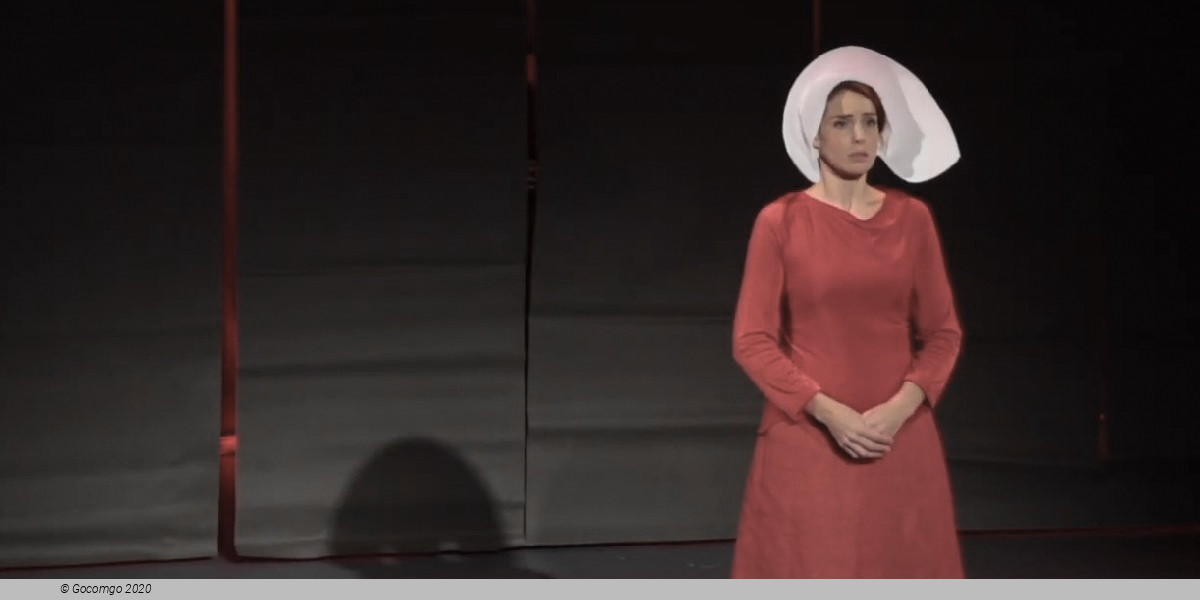
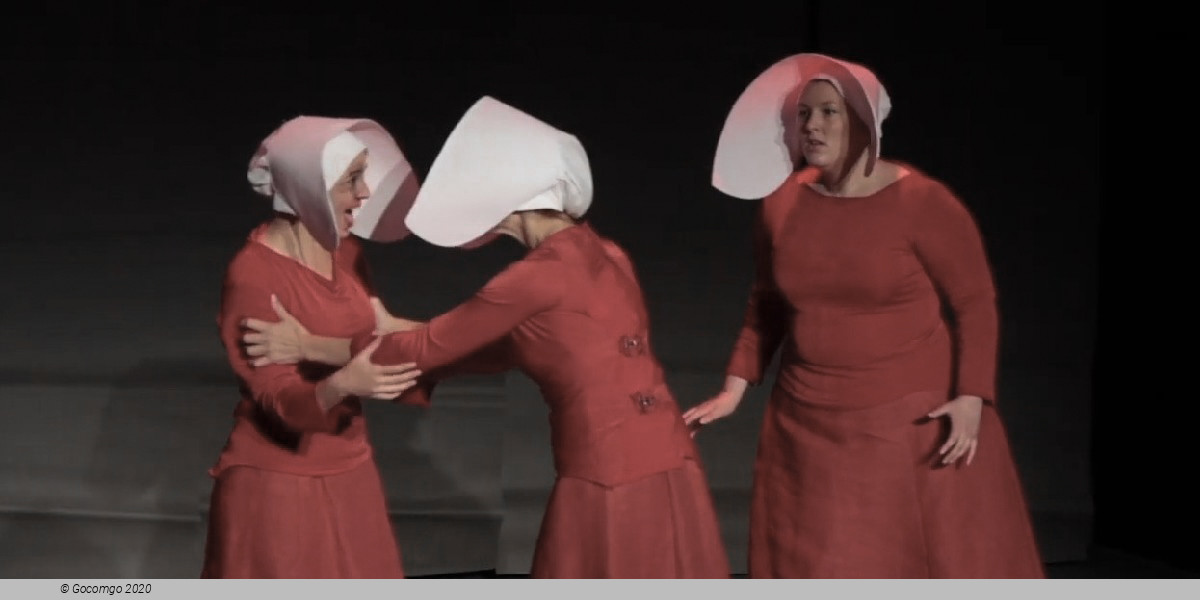
A global environmental catastrophe resulting in subsequent human infertility has created fertile ground for a coup where a religious terror group has seized power. Fertile women are now forced into pregnancy and to hand over their new-born children to the elite regime. If they rebel, they are sentenced to slavery and certain death.

Canadian writer Margaret Atwood’s award-winning dystopian novel The Handmaid's Tale was penned in 1985 and has since been adapted to film as well as an award-winning television series.Danish composer Poul Ruders’ opera with libretto by Paul Bentley remains hyper-current, now 22 years after its Danish world premiere at the Royal Danish Theatre, and new productions are now being staged at several of the world’s opera houses.“Atwood takes aim at her large neighbour to the south, the United States, where she is aware there are forces lurking that if they gained the power they intend, they would be no strangers to the idea of enforcing an iron-grip religious regime, which the fictional Gilead in the opera indeed represents,” Ruders said in 2000.

The music is interpreted by the Royal Danish Orchestra, ranging from moments of intense intimacy to symphonic eruptions.

History
Premiere of this production: 06 March 2000, Danish Royal Opera, Copenhagen

The Handmaid's Tale is a 1998 opera by Danish composer Poul Ruders, setting a libretto by Paul Bentley based on the novel of the same name by Margaret Atwood. The action takes place in the 21st-century United States taken over by a right-wing theocracy named Gilead; it starts with a newsreel-like collage: the narrative first frame.

Synopsis

Prologue

In AD 2195, the 12th Symposium on the Republic of Gilead is meeting via videoconference. The Republic was formed after Christian fundamentalists assassinated the President and most of Congress in order to establish a dictatorship based on Biblical principles within the United States. Women in the Republic have no suffrage, right to work, right to education, or right to property. Women who live in sin are taken to Red Centres where they are indoctrinated as Handmaids by Aunts. The Handmaids are sent to barren households, where they are required to be ritually inseminated once a month. Professor Pieixoto introduces an audio cassette recorded by a Handmaid who is in hiding. She had been taken from her second husband Luke and their daughter.

The Red Centre Prelude

The centre is run by Aunt Lydia. Moira, a friend of the Handmaid who recorded the tape, is captured after an escape attempt. Janine, another woman at the Centre, suffers a breakdown. Moira eventually manages to escape while other Handmaids graduate from the Centre.

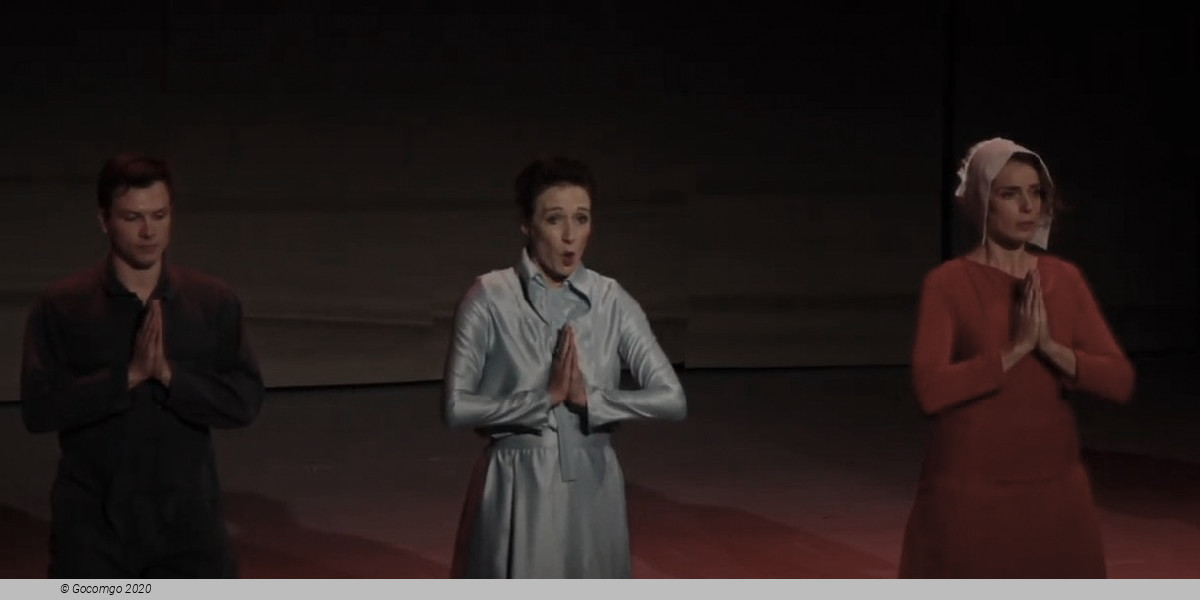
Here the Red Centre showcases the multiple practices of indoctrination, which leads to Offred being posted to the home of a higher up Commander. The handmaids are taught a new set of rules based on the Ten Commandments.

Act 1

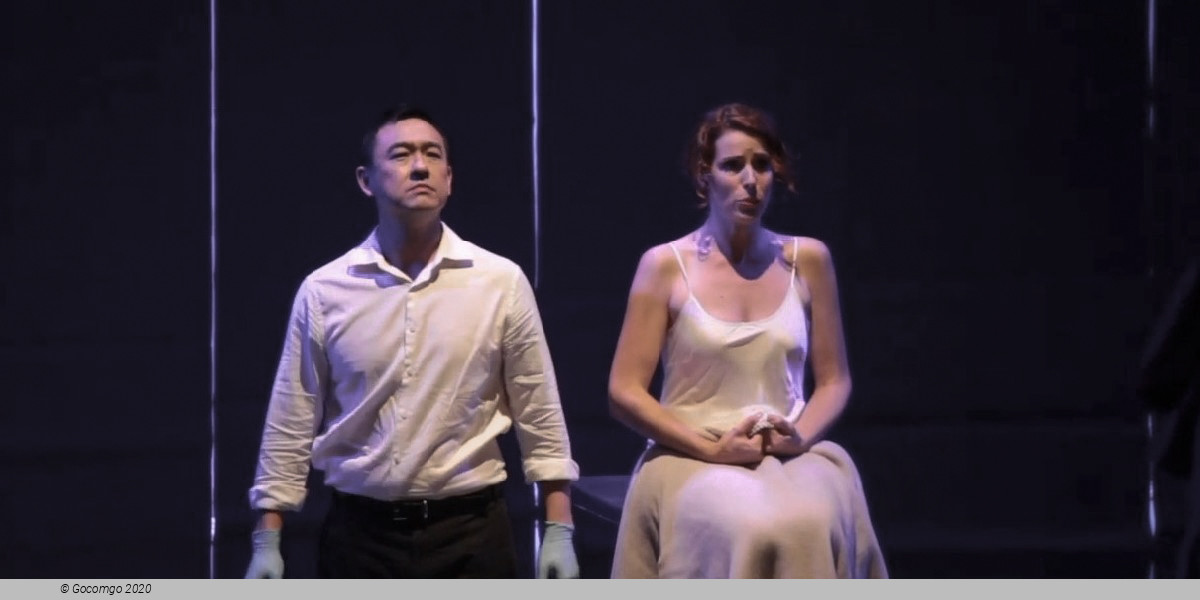
The Handmaid is assigned to a new posting under the command of Fred. She is therefore known as Offred (Of Fred). The wife of the household is Serena Joy, a former Gospel singer. Offred and Ofglen, another Handmaid, go shopping where they encounter the pregnant Janine. A doctor offers to impregnate Offred, but she declines in fear. At her new posting, the handyman Nick and Fred both have illegal contact with Offred when they talk to her and approach her bedroom. The household gathers for the ritual impregnation, and Nick tells Offred that Fred wants to see her privately afterwards, which is also illegal.

Instead of treating Offred as a sexual surrogate, the Commander finds himself attracted to her, which is an unpardonable sin leading to much of the disaster throughout the story.

The next day, the birth of Janine's child prompts all the Wives and Handmaids of the district to gather in celebration. Offred visits Fred that night in private, and once she is back in her bedroom, she collapses in a fit of hysterical laughter. This is Offred's way of acknowledging the hopelessness of her situation after the Commander makes her kiss him 'as if she meant it,' as well as it's a way to represent a woman's response to the experience of Gilead as a whole. The inconclusive ending of Act One foreshadows the ending of Act Two.

Act 2

Rita discovers Offred the next morning on the floor of her room. Offred visits Fred again in private, and during their next ritual, he caresses Offred. She fears that Serena Joy will notice the tender gesture. During another round of shopping, Offred and Ofglen confide that they are both breaking the law, as Ofglen talks about the resistance movement. Janine joins them before breaking down again, as a result of the execution of her defective child. Janine is taken off for execution.

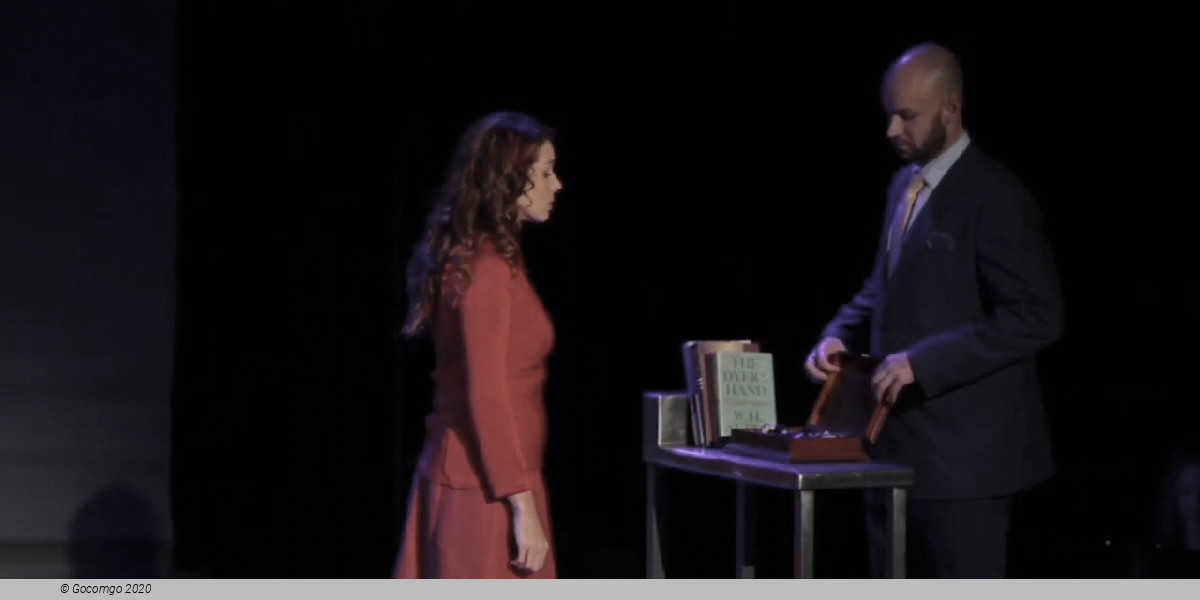
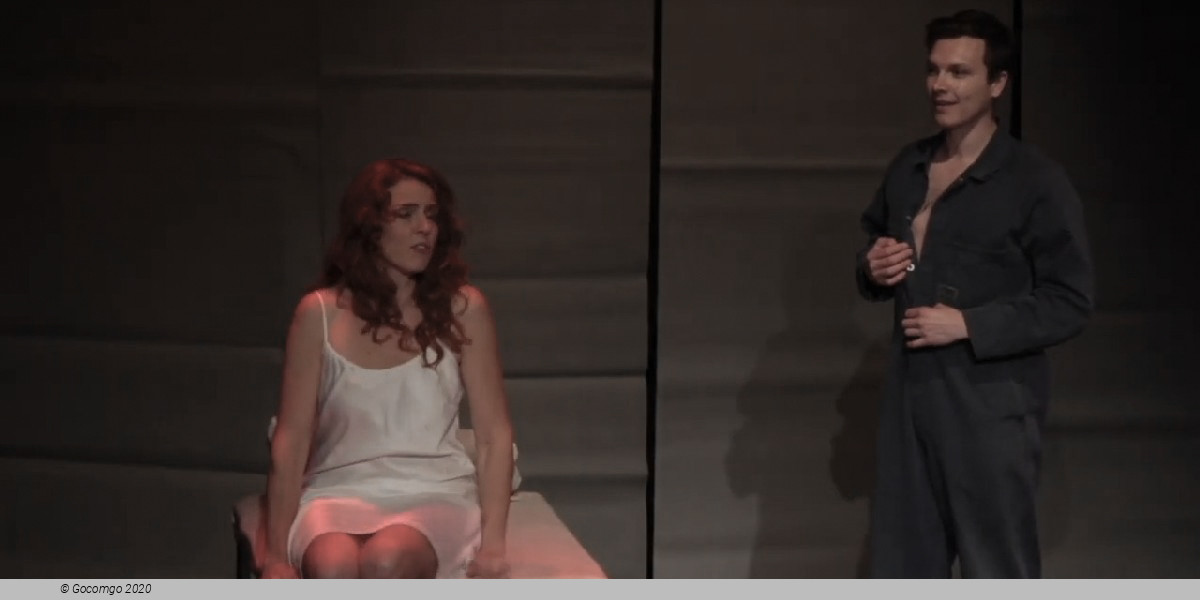
Offred continues to see Fred privately. Serena Joy tries to bribe Offred into a union with Nick by showing her a photo of Offred's missing daughter. Offred and Nick begin an affair. At a public execution, the Handmaids are given the opportunity to hang a 'rapist', who is part of the underground. Ofglen kicks him into unconsciousness in order to spare him the pain of hanging. Meanwhile, Serena Joy discovers Offred's affair with Fred. The "Eyes of God", the secret police, arrest Offred.

Epilogue

In the video conference context, Professor Pieixoto asks for any questions, prompting the end of the opera with the lights turning on in the theatre. Professor Pieixoto reveals that no one knows what happened to Offred.

Venue Info

Royal Danish Theatre - Copenhagen
Location   August Bournonvilles Passage 2-8

The Royal Danish Theatre is the major opera house in Denmark. It has been located at Kongens Nytorv in Copenhagen since 1748, originally designated as the king's theatre but with public access. The theatre presents opera, the Royal Danish Ballet, classical music concerts (by the Royal Danish Orchestra, which dates back to 1448), and drama in several locations.

The Royal Danish Theatre organization is under the control of the Danish Ministry of Culture, and its objectives are to ensure the staging of outstanding performances that do justice to the various stages that it controls.

The first edifice on the site was designed by court architect Nicolai Eigtved, who also masterminded Amalienborg Palace. In 1774, the old theatre seating 800 theatergoers were reconstructed by architect C.F. Harsdorff to accommodate a larger audience.

During the theatre's first seasons the staffing was modest. Originally, the ensemble consisted of eight actors, four actresses, two male dancers, and one female dancer. Gradually over the following decades, the Royal Danish Theatre established itself as the kind of multi-theatre we know today, home to drama, opera, ballet, and concerts – all under the same roof and management.

An important prerequisite for the theatre's artistic development is its schools. The oldest is the ballet school, established at the theatre in 1771. Two years later, a vocal academy was established as a forerunner for the opera academy. A number of initiatives were considered regarding a drama school, which was established much later.

King Frederik VI, who ascended the throne in 1808, is probably the monarch who most actively took part in the management of the Royal Danish Theatre, not as an arbiter of taste but as its supreme executive chef.

The theatre's bookkeeping accounts of these years show numerous endorsements where the king took personal decisions on everything from wage increases and bonuses to the purchase of shoelaces for the ballerinas. Indeed, the Royal Danish Theatre became the preoccupation of an introverted nation, following the English Wars had suffered a state bankruptcy. "In Denmark, there is only one city and one theatre," as philosopher Søren Kierkegaard put it.

This was the theatre to which the 14-year-old fairytale storyteller Hans Christian Andersen devoted his early ambition. This was also the theatre that became the social and artistic focal point of the many brilliant artists of Denmark's Golden Age.

After the abolition of absolute monarchy in 1849, the Royal Danish Theatre's status as "the city's theatre" fell into decline. No longer enjoying a monopoly within the performing arts, the Royal Danish Theatre was now required by its new owner, the state, to serve the entire nation. The dilapidated building at Kongens Nytorv also found it hard to compete with the splendor of the new popular stage that was rapidly emerging across town. The solution was to construct a brand new theatre building. It was designed in the Historicist style of the times by architects William Dahlerup and Ove Pedersen and situated alongside the old theatre, which was subsequently demolished.

The inauguration of what we today call the Old Stage took place on 15 October 1874. Here opera and ballet were given ample scope. But due to the scale of the building, the auditorium was less suited for spoken drama, which is why a new playhouse was required.

The Royal Danish Theatre has over the past decade undergone the most extensive transformation ever in its over 250-year history. The Opera House in Copenhagen was inaugurated in January 2005, donated by the AP Møller and Chastine Mc-Kinney Møller Foundation, and designed by architect Henning Larsen. And the Royal Danish Playhouse was completed in 2008. Located by Nyhavn Canal across from the Opera House, the playhouse is designed by architects Boje Lundgaard and Lene Tranberg.

Today, the Royal Danish Theatre comprises the Old Stage, located by Kongens Nytorv, the Opera House, and the Royal Danish Playhouse. 

Important Info
Type: Opera
City: Copenhagen, Denmark
Starts at: 20:00
Intervals: 1
Duration: 2h 50min
Top of page