
Royal Danish Theatre 15 May 2022 - Manualen and Die sieben Todsünden | GoComGo.com

Manualen and Die sieben Todsünden

Royal Danish Theatre, The Opera House - Main Stage, Copenhagen, Denmark
All photos (4)
Select date and time
3 PM

E-tickets: Print at home or at the box office of the event if so specified. You will find more information in your booking confirmation email.

You can only select the category, and not the exact seats.
If you order 2 or 3 tickets: your seats will be next to each other.
If you order 4 or more tickets: your seats will be next to each other, or, if this is not possible, we will provide a combination of groups of seats (at least in pairs, for example 2+2 or 2+3).

Important Info
Type: Opera
City: Copenhagen, Denmark
Starts at: 15:00
Duration: 2h 15min
Sung in: Danish

E-tickets: Print at home or at the box office of the event if so specified. You will find more information in your booking confirmation email.

You can only select the category, and not the exact seats.
If you order 2 or 3 tickets: your seats will be next to each other.
If you order 4 or more tickets: your seats will be next to each other, or, if this is not possible, we will provide a combination of groups of seats (at least in pairs, for example 2+2 or 2+3).

Overview

Premiere

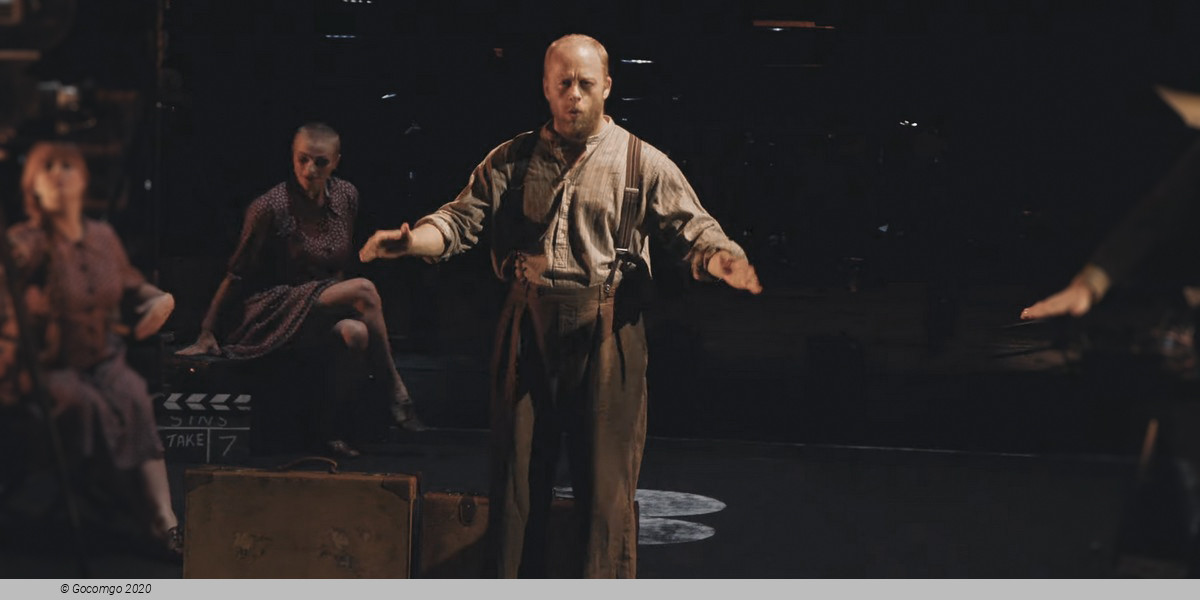
A unique world premiere awaits with the award-winning composer Louise Alenius’ Manualen, which can be experienced in tandem with Kurt Weill’s Die sieben Todsünden. Death plays the lead, embodied by soloists from the Royal Danish Opera, the Royal Danish Orchestra, the Royal Danish Opera Chorus, the Danish Dance Theatre and Danish singer Oh Land.

Alenius’ Manualen is based on Danish physician Svend Lings’ suicide manual. The entire Opera House stage setting and auditorium are incorporated in Alenius’ unique universe rendered as a giant body with Consciousness, Pain and Organs.

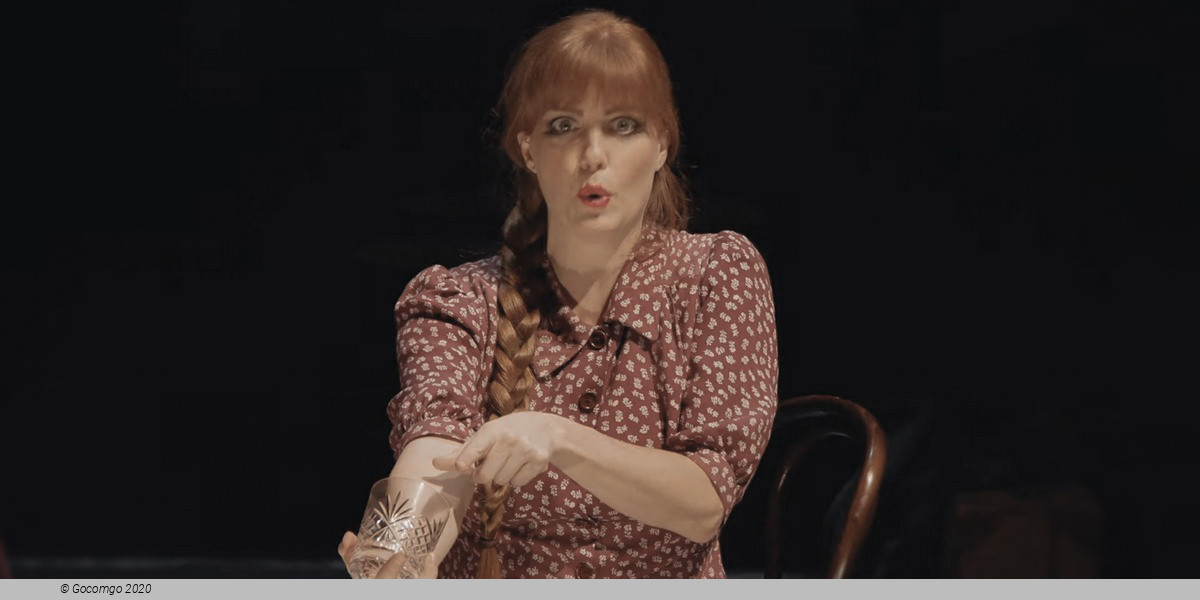
The leading role as Consciousness is performed by the Royal Danish Opera’s Elisabeth Jansson, with Sofie Elkjær Jensen by her side in the role of Death. They are additionally surrounded by the various Organs that are subject to decisions taken by the Consciousness in its quest to quell pain forever.

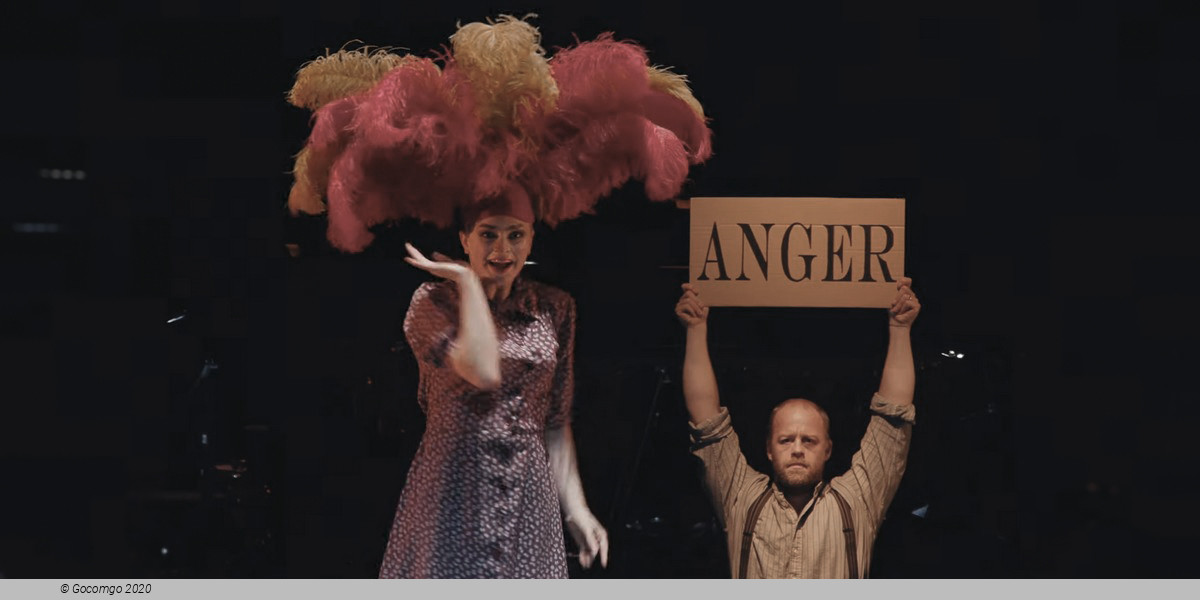
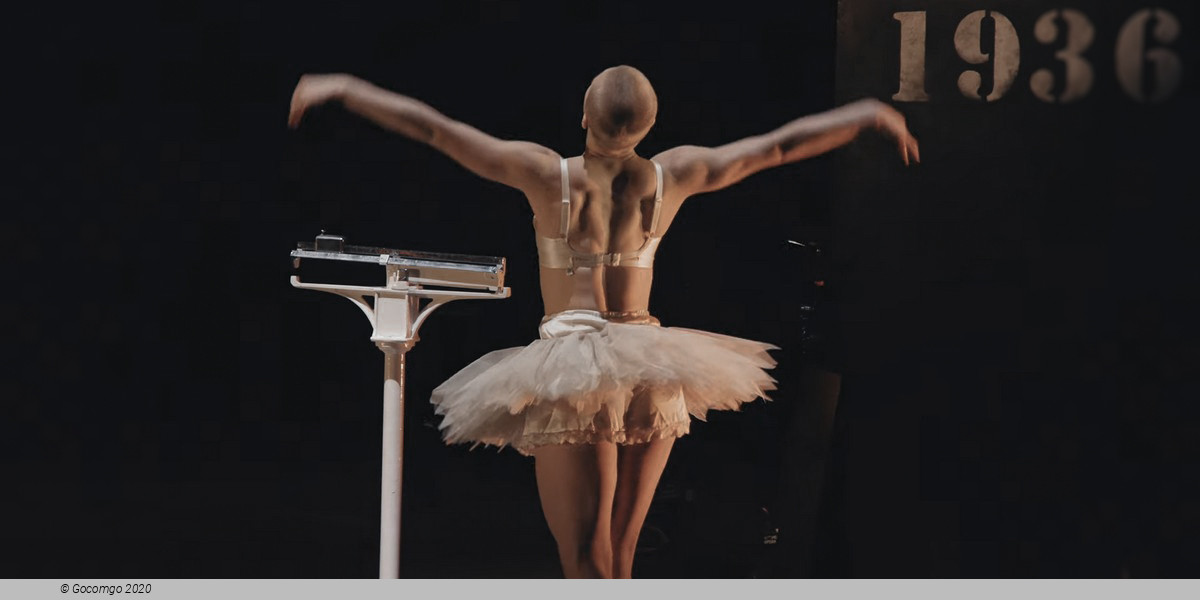
Brecht and Weill’s socially critical classic Die sieben Todsünden – a ballet with song – is a tale of dysfunctional family relationships and double standards set to some of Weill’s most accomplished music. Embodied by celebrated Danish singer Oh Land, Anna travels to earn a living for the family, and meets the seven deadly sins along the way.

Co-production with the Danish Dance Theatre.

History
Premiere of this production: 07 June 1933, Théâtre des Champs-Élysées, Paris

The Seven Deadly Sins is a satirical ballet chanté ("sung ballet") in seven scenes (nine movements, including a Prologue and Epilogue) composed by Kurt Weill to a German libretto by Bertolt Brecht in 1933 under a commission from Boris Kochno and Edward James. It was translated into English by W. H. Auden and Chester Kallman. It was the last major collaboration between Weill and Brecht.

Synopsis

The Seven Deadly Sins tells the story of two sisters, Anna I and Anna II. Anna I, the singer, is the principal vocal role. Anna II, the dancer, is heard only infrequently and the text hints at the possibility that the two Annas are the same person: "To convey the ambivalence inherent in the 'sinner', Brecht splits the personality of Anna into Anna I, the cynical impresario with a practical sense and conscience, and Anna II, the emotional, impulsive, artistic beauty, the salable product with an all too human heart." Anna I sings:

She's the one with the looks. I'm realistic. She's just a little mad, my head is on straight. But we're really one divided being, even though you see two of us. And both of us are Anna. Together we've but a single past, a single future, one heart, and one saving account and we only do what suits each other best. Right, Anna?

"The Family", a male quartet, fills the role of a Greek chorus. They refer to Anna as a single daughter of the family, making a verbal allusion to her divided nature: "Will our Anna pull herself together?" The sisters set out from the banks of the Mississippi River in Louisiana to find their fortune in the big cities, intending to send their family enough money to build a little house on the river. After the prologue, in which Anna I introduces the sisters and their plans, each of seven scenes is devoted to one of the seven deadly sins, each encountered in a different American city:

Prologue
Faulheit / Sloth (city unnamed)
Stolz / Pride (Memphis)
Zorn / Wrath (Los Angeles)
Völlerei / Gluttony (Philadelphia)
Unzucht / Lust (Boston)
Habsucht / Greed (Tennessee, in posthumous versions Baltimore)
Neid / Envy (San Francisco)
Epilogue (home, in the new little house)

While securing the means to build the little house over the course of seven years, Anna II envies those who can engage in the sins she must abjure. The epilogue ends on a sober note, as Anna II's responds with resignation to her sister: "Yes, Anna."

Venue Info

Royal Danish Theatre - Copenhagen
Location   August Bournonvilles Passage 2-8

The Royal Danish Theatre is the major opera house in Denmark. It has been located at Kongens Nytorv in Copenhagen since 1748, originally designated as the king's theatre but with public access. The theatre presents opera, the Royal Danish Ballet, classical music concerts (by the Royal Danish Orchestra, which dates back to 1448), and drama in several locations.

The Royal Danish Theatre organization is under the control of the Danish Ministry of Culture, and its objectives are to ensure the staging of outstanding performances that do justice to the various stages that it controls.

The first edifice on the site was designed by court architect Nicolai Eigtved, who also masterminded Amalienborg Palace. In 1774, the old theatre seating 800 theatergoers were reconstructed by architect C.F. Harsdorff to accommodate a larger audience.

During the theatre's first seasons the staffing was modest. Originally, the ensemble consisted of eight actors, four actresses, two male dancers, and one female dancer. Gradually over the following decades, the Royal Danish Theatre established itself as the kind of multi-theatre we know today, home to drama, opera, ballet, and concerts – all under the same roof and management.

An important prerequisite for the theatre's artistic development is its schools. The oldest is the ballet school, established at the theatre in 1771. Two years later, a vocal academy was established as a forerunner for the opera academy. A number of initiatives were considered regarding a drama school, which was established much later.

King Frederik VI, who ascended the throne in 1808, is probably the monarch who most actively took part in the management of the Royal Danish Theatre, not as an arbiter of taste but as its supreme executive chef.

The theatre's bookkeeping accounts of these years show numerous endorsements where the king took personal decisions on everything from wage increases and bonuses to the purchase of shoelaces for the ballerinas. Indeed, the Royal Danish Theatre became the preoccupation of an introverted nation, following the English Wars had suffered a state bankruptcy. "In Denmark, there is only one city and one theatre," as philosopher Søren Kierkegaard put it.

This was the theatre to which the 14-year-old fairytale storyteller Hans Christian Andersen devoted his early ambition. This was also the theatre that became the social and artistic focal point of the many brilliant artists of Denmark's Golden Age.

After the abolition of absolute monarchy in 1849, the Royal Danish Theatre's status as "the city's theatre" fell into decline. No longer enjoying a monopoly within the performing arts, the Royal Danish Theatre was now required by its new owner, the state, to serve the entire nation. The dilapidated building at Kongens Nytorv also found it hard to compete with the splendor of the new popular stage that was rapidly emerging across town. The solution was to construct a brand new theatre building. It was designed in the Historicist style of the times by architects William Dahlerup and Ove Pedersen and situated alongside the old theatre, which was subsequently demolished.

The inauguration of what we today call the Old Stage took place on 15 October 1874. Here opera and ballet were given ample scope. But due to the scale of the building, the auditorium was less suited for spoken drama, which is why a new playhouse was required.

The Royal Danish Theatre has over the past decade undergone the most extensive transformation ever in its over 250-year history. The Opera House in Copenhagen was inaugurated in January 2005, donated by the AP Møller and Chastine Mc-Kinney Møller Foundation, and designed by architect Henning Larsen. And the Royal Danish Playhouse was completed in 2008. Located by Nyhavn Canal across from the Opera House, the playhouse is designed by architects Boje Lundgaard and Lene Tranberg.

Today, the Royal Danish Theatre comprises the Old Stage, located by Kongens Nytorv, the Opera House, and the Royal Danish Playhouse. 

Important Info
Type: Opera
City: Copenhagen, Denmark
Starts at: 15:00
Duration: 2h 15min
Sung in: Danish
Top of page