
Royal Danish Theatre 5 April 2023 - L`Orfeo | GoComGo.com

L`Orfeo

Royal Danish Theatre, The Old Stage, Copenhagen, Denmark
All photos (9)
Select date and time
7:30 PM

E-tickets: Print at home or at the box office of the event if so specified. You will find more information in your booking confirmation email.

You can only select the category, and not the exact seats.
If you order 2 or 3 tickets: your seats will be next to each other.
If you order 4 or more tickets: your seats will be next to each other, or, if this is not possible, we will provide a combination of groups of seats (at least in pairs, for example 2+2 or 2+3).

Important Info
Type: Opera
City: Copenhagen, Denmark
Starts at: 19:30
Intervals: 1
Duration: 2h 10min

E-tickets: Print at home or at the box office of the event if so specified. You will find more information in your booking confirmation email.

You can only select the category, and not the exact seats.
If you order 2 or 3 tickets: your seats will be next to each other.
If you order 4 or more tickets: your seats will be next to each other, or, if this is not possible, we will provide a combination of groups of seats (at least in pairs, for example 2+2 or 2+3).

Overview

The power of song can move us deeply. But can music and song also change our destiny and bring the dead back to life? That is the question posed in Monteverdi’s 400-year-old yet still very timely opera.

The musician Orfeo loses his beloved Euridice and ventures into the underworld to retrieve her from the dead through song. The myths of ancient Greece have been the source of many operas, and the fateful story of Orfeo has especially struck the artistic veins of many a composer.

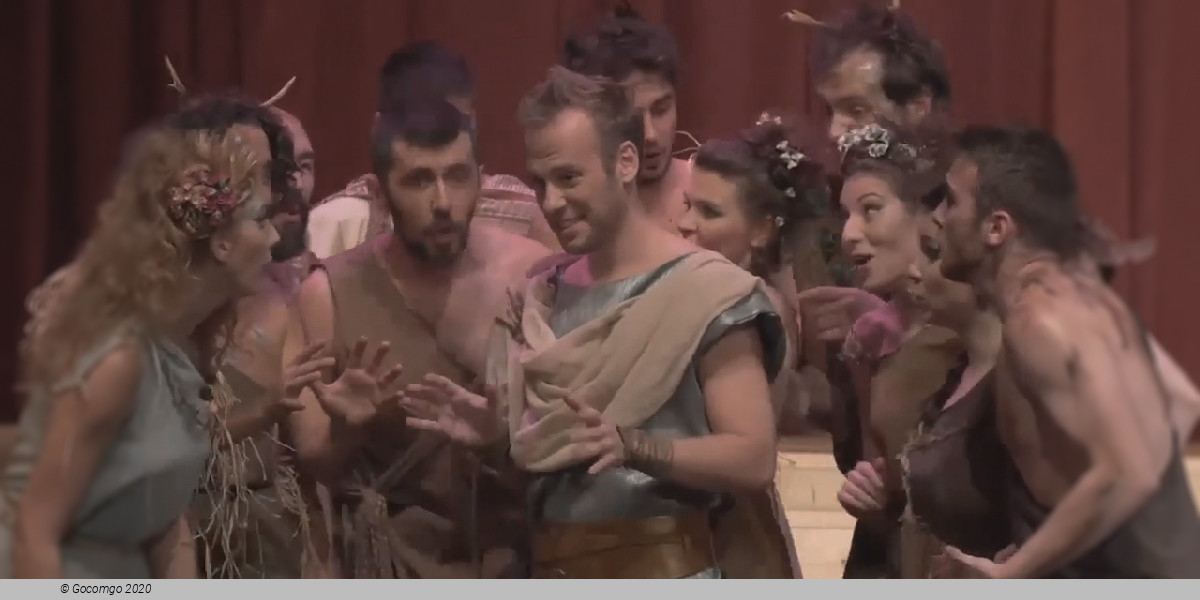
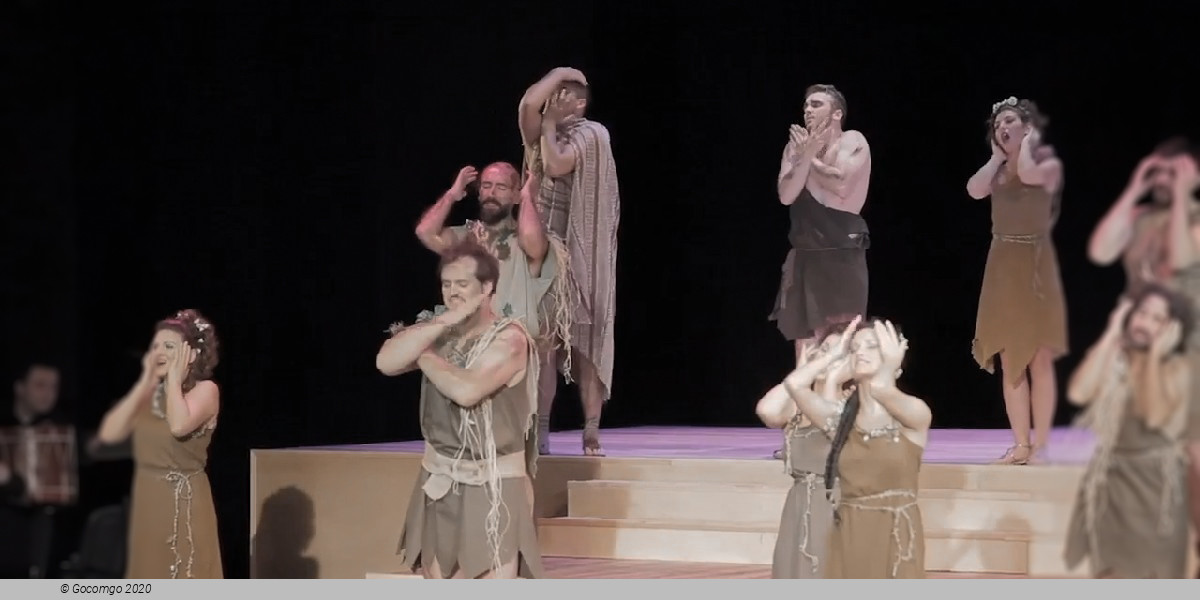
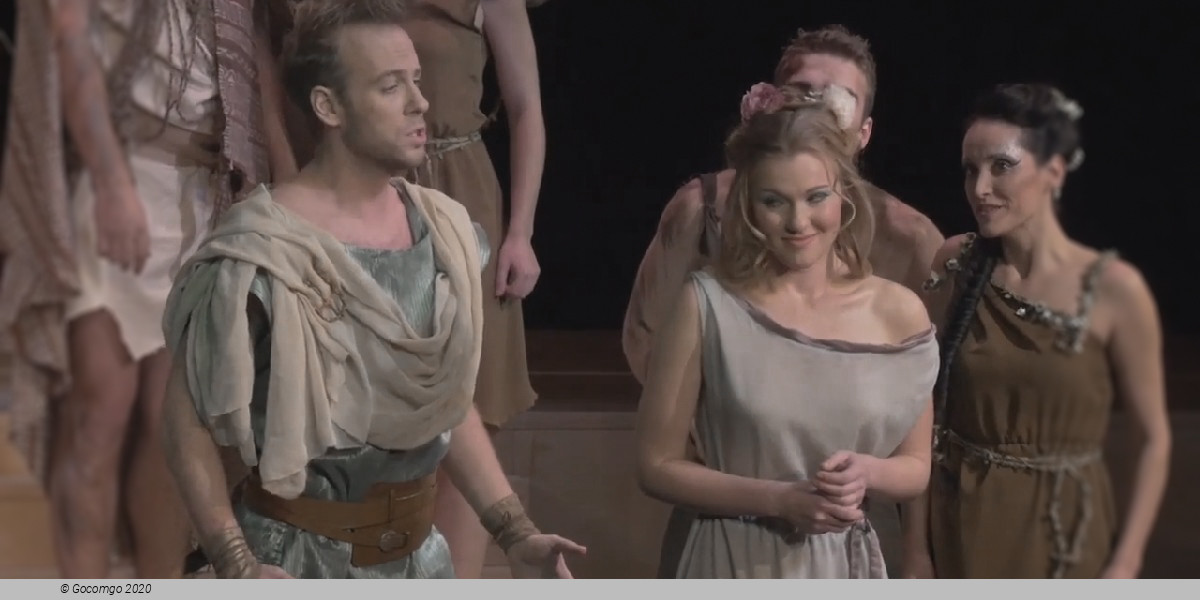
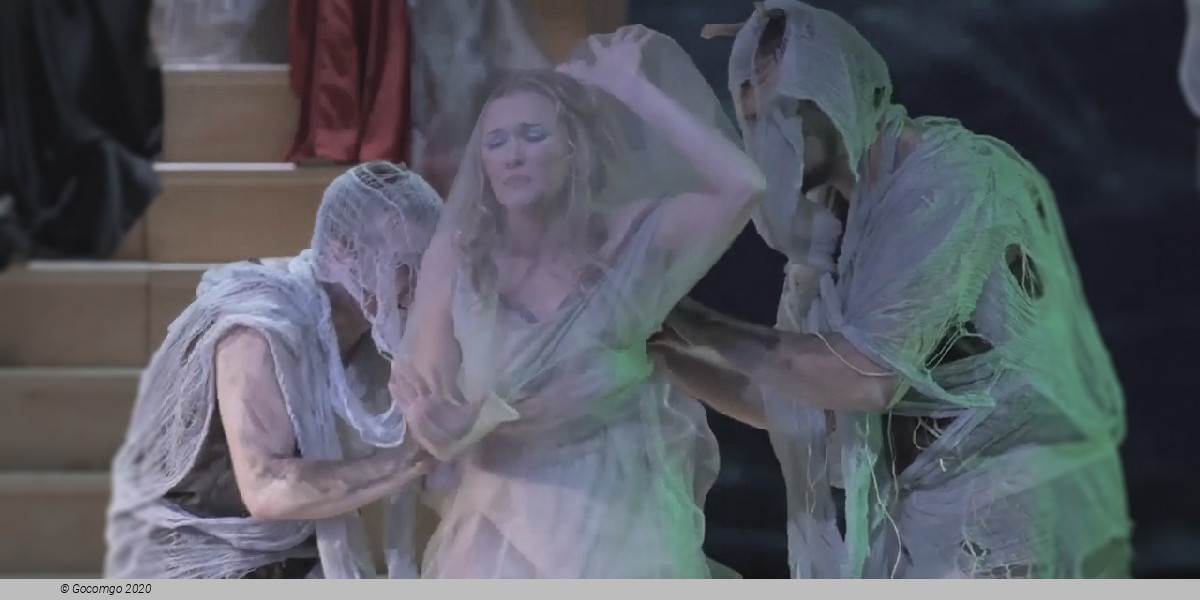
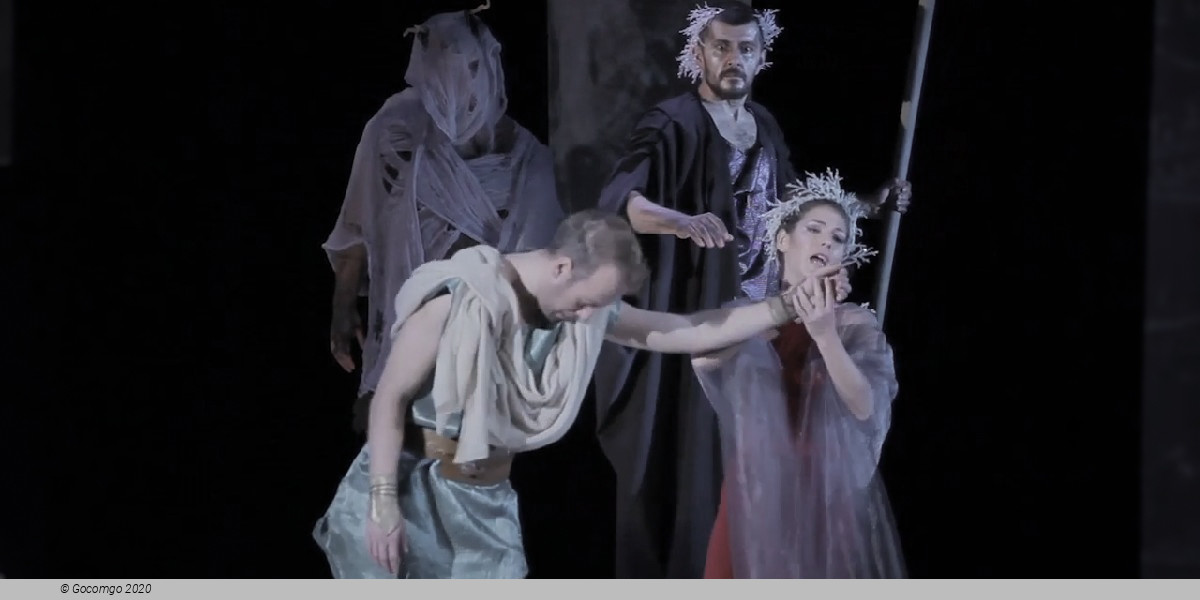
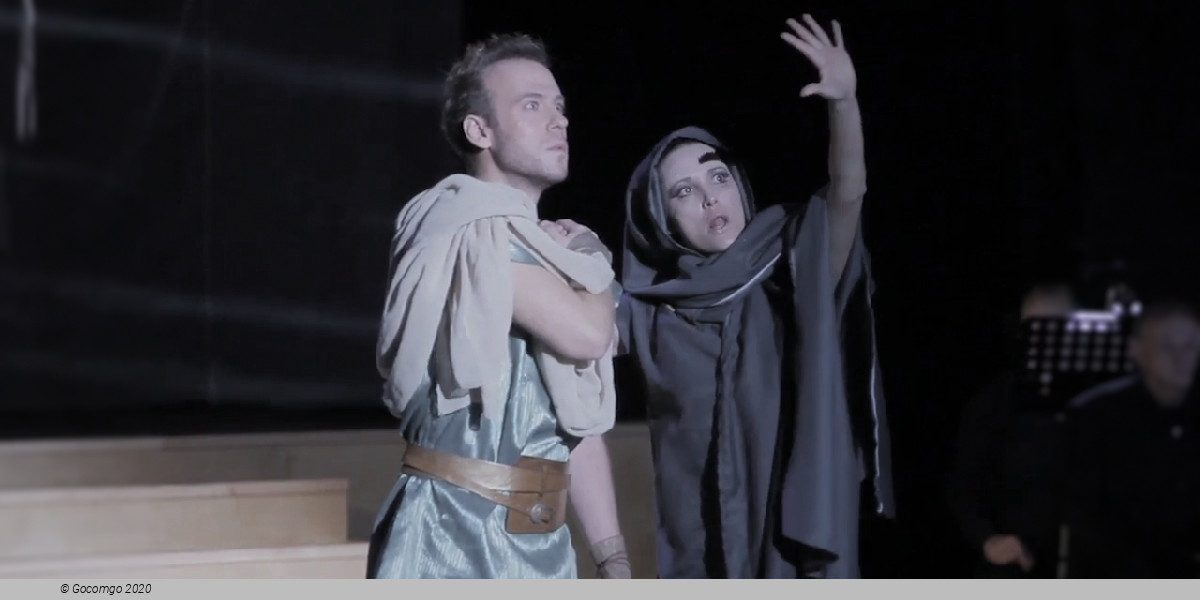
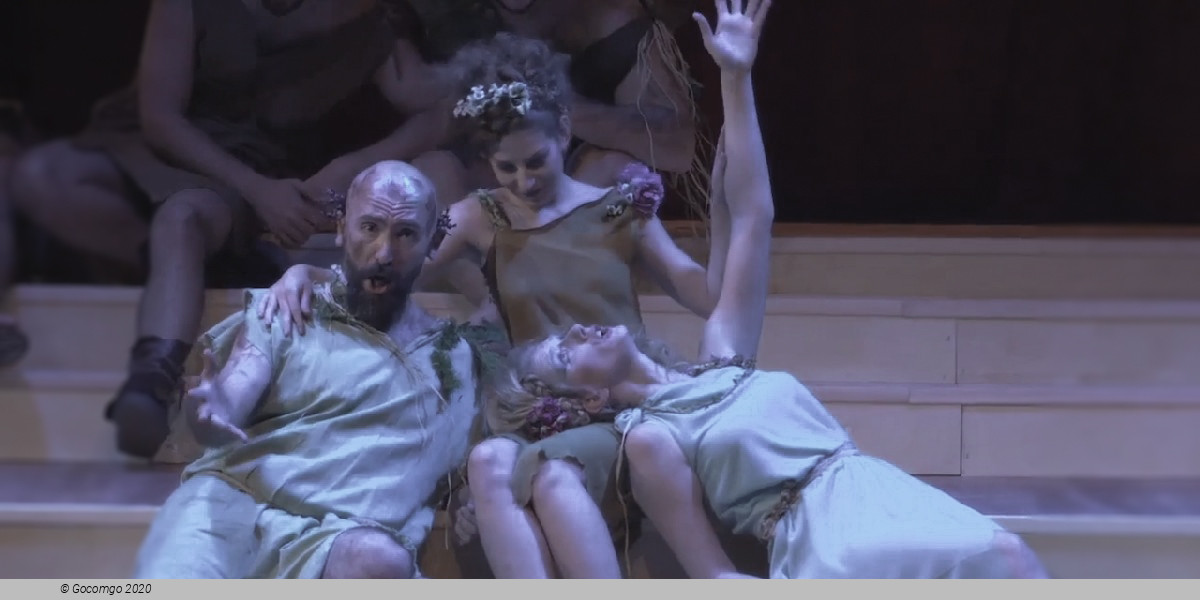
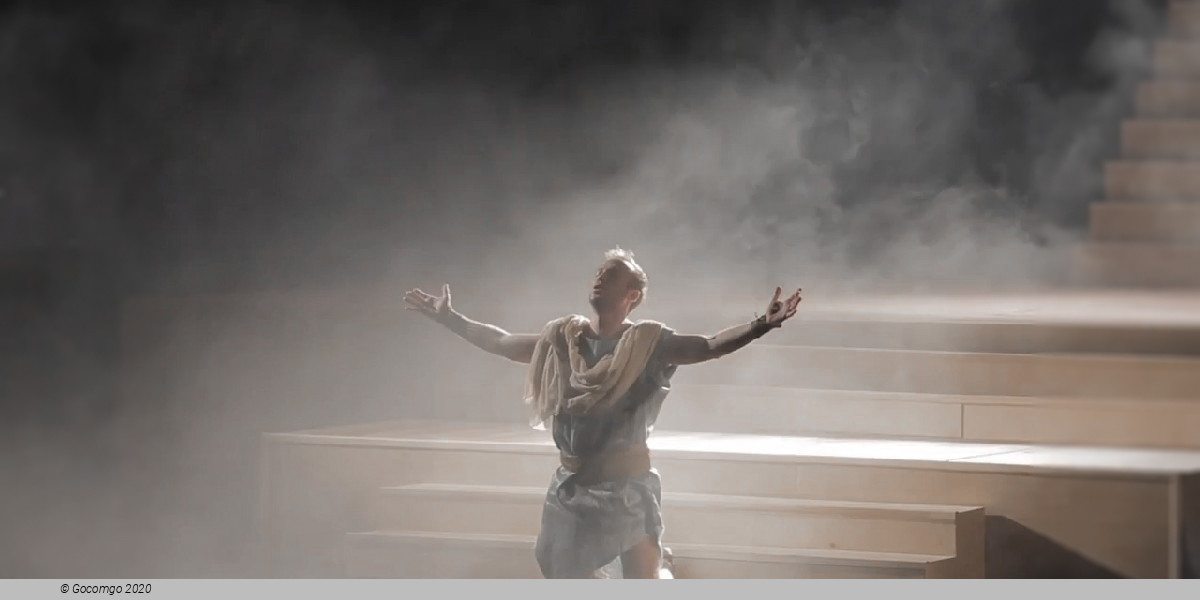
Monteverdi’s dynamic melodies and powerful timbre in L’Orfeo are so timeless that it seems unreal that the opera is four centuries old. The music feels eternal in the company of Jetske Mijnssen’s impelling staging, which a reviewer in 2020 described as “hypnotically beautiful.” The performance deals with the healing processing of loss and grief, employing a simple stage set and with dreamlike choreography.

Concerto Copenhagen with its renowned conductor, Baroque music virtuoso Lars Ulrik Mortensen, has for 30 years been a pioneer of Danish music, staging early music performances of unusually high standard. In 2022, Concerto Copenhagen was further honoured as P2 Artist of the year.

The young vocal team consists of strong ensemble and guest soloists led by the highly accomplished French singer, Marc Mauillon, in the title role as Orfeo.

History
Premiere of this production: 24 February 1607, Carnival season Mantua

L'Orfeo is a late Renaissance/early Baroque favola in musica, or opera, by Claudio Monteverdi, with a libretto by Alessandro Striggio. It is based on the Greek legend of Orpheus, and tells the story of his descent to Hades and his fruitless attempt to bring his dead bride Eurydice back to the living world. It was written in 1607 for a court performance during the annual Carnival at Mantua. While Jacopo Peri's Dafne is generally recognised as the first work in the opera genre, and the earliest surviving opera is Peri's Euridice, L'Orfeo is the earliest that is still regularly performed.

Synopsis

The action takes place in two contrasting locations: the fields of Thrace (acts 1, 2 and 5) and the Underworld (acts 3 and 4). An instrumental toccata (English: "tucket", meaning a flourish on trumpets) precedes the entrance of La musica, representing the "spirit of music", who sings a prologue of five stanzas of verse. After a gracious welcome to the audience she announces that she can, through sweet sounds, "calm every troubled heart." She sings a further paean to the power of music, before introducing the drama's main protagonist, Orfeo, who "held the wild beasts spellbound with his song".

Act 1

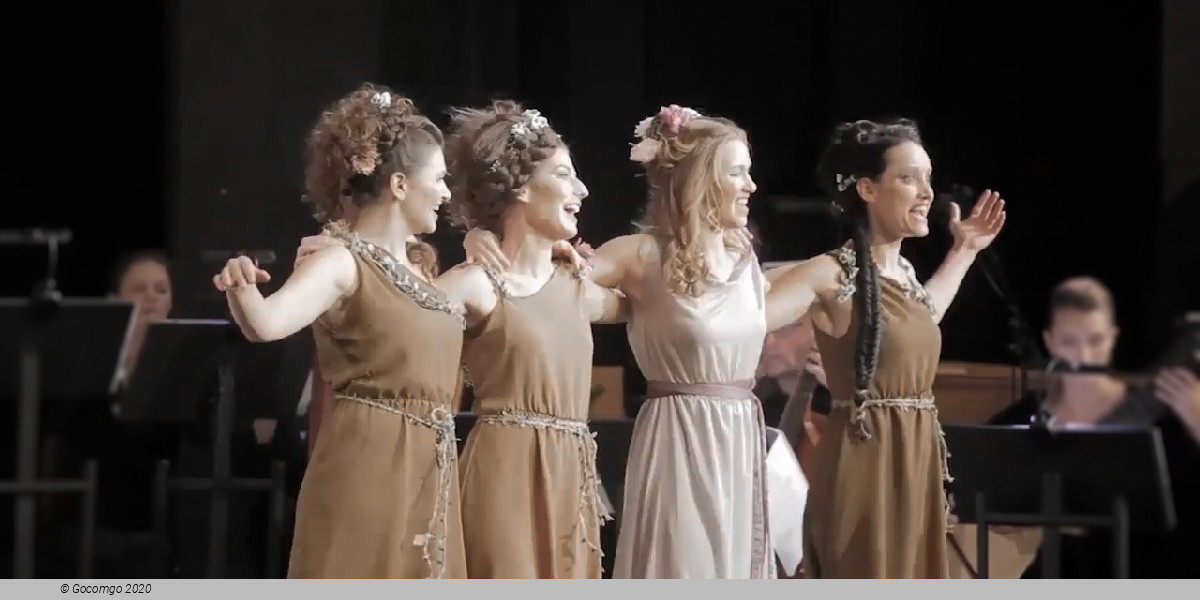
After La musica's final request for silence, the curtain rises on act 1 to reveal a pastoral scene. Orfeo and Euridice enter together with a chorus of nymphs and shepherds, who act in the manner of a Greek chorus, commenting on the action both as a group and as individuals. A shepherd announces that this is the couple's wedding day; the chorus responds, first in a stately invocation ("Come, Hymen, O come") and then in a joyful dance ("Leave the mountains, leave the fountains"). Orfeo and Euridice sing of their love for each other before leaving with most of the group for the wedding ceremony in the temple. Those left on stage sing a brief chorus, commenting on how Orfeo used to be one "for whom sighs were food and weeping was drink" before love brought him to a state of sublime happiness.

Act 2

Orfeo returns with the main chorus, and sings with them of the beauties of nature. Orfeo then muses on his former unhappiness, but proclaims: "After grief one is more content, after pain one is happier". The mood of contentment is abruptly ended when La messaggera enters, bringing the news that, while gathering flowers, Euridice has received a fatal snakebite. The chorus expresses its anguish: "Ah, bitter happening, ah, impious and cruel fate!", while the Messaggera castigates herself as the bearing of bad tidings ("For ever I will flee, and in a lonely cavern lead a life in keeping with my sorrow"). Orfeo, after venting his grief and incredulity ("Thou art dead, my life, and I am breathing?"), declares his intention to descend into the Underworld and persuade its ruler to allow Euridice to return to life. Otherwise, he says, "I shall remain with thee in the company of death". He departs, and the chorus resumes its lament.

Act 3

Orfeo is guided by Speranza to the gates of Hades. Having pointed out the words inscribed on the gate ("Abandon hope, all ye who enter here"), Speranza leaves. Orfeo is now confronted with the ferryman Caronte, who addresses Orfeo harshly and refuses to take him across the river Styx. Orfeo attempts to persuade Caronte by singing a flattering song to him ("Mighty spirit and powerful divinity"), but the ferryman is unmoved. However, when Orfeo takes up his lyre and plays, Caronte is soothed into sleep. Seizing his chance, Orfeo steals the ferryman's boat and crosses the river, entering the Underworld while a chorus of spirits reflects that nature cannot defend herself against man: "He has tamed the sea with fragile wood, and disdained the rage of the winds."

Act 4

In the Underworld, Proserpina, Queen of Hades, who has been deeply affected by Orfeo's singing, petitions King Plutone, her husband, for Euridice's release. Moved by her pleas, Plutone agrees on the condition that, as he leads Euridice towards the world, Orfeo must not look back. If he does, "a single glance will condemn him to eternal loss". Orfeo enters, leading Euridice and singing confidently that on that day he will rest on his wife's white bosom. But as he sings a note of doubt creeps in: "Who will assure me that she is following?". Perhaps, he thinks, Plutone, driven by envy, has imposed the condition through spite? Suddenly distracted by an off-stage commotion, Orfeo looks round; immediately, the image of Euridice begins to fade. She sings, despairingly: "Losest thou me through too much love?" and disappears. Orfeo attempts to follow her but is drawn away by an unseen force. The chorus of spirits sings that Orfeo, having overcome Hades, was in turn overcome by his passions.

Act 5

Back in the fields of Thrace, Orfeo has a long soliloquy in which he laments his loss, praises Euridice's beauty and resolves that his heart will never again be pierced by Cupid's arrow. An off-stage echo repeats his final phrases. Suddenly, in a cloud, Apollo descends from the heavens and chastises him: "Why dost thou give thyself up as prey to rage and grief?" He invites Orfeo to leave the world and join him in the heavens, where he will recognise Euridice's likeness in the stars. Orfeo replies that it would be unworthy not to follow the counsel of such a wise father, and together they ascend. A shepherds' chorus concludes that "he who sows in suffering shall reap the fruit of every grace", before the opera ends with a vigorous moresca.

Original libretto ending

In Striggio's 1607 libretto, Orfeo's act 5 soliloquy is interrupted, not by Apollo's appearance but by a chorus of maenads or Bacchantes—wild, drunken women—who sing of the "divine fury" of their master, the god Bacchus. The cause of their wrath is Orfeo and his renunciation of women; he will not escape their heavenly anger, and the longer he evades them the more severe his fate will be. Orfeo leaves the scene and his destiny is left uncertain, as the Bacchantes devote themselves for the rest of the opera to wild singing and dancing in praise of Bacchus. The early music authority Claude Palisca believes that the two endings are not incompatible; Orfeo might evade the fury of the Bacchantes and be rescued by Apollo. However, this alternative ending in any case nearer to original classic myth, where the Bacchantes also appear, but it is made explicit that they torture him to his death, followed by reunion as a shade with Euridice but no apotheosis nor any interaction with Apollo.

Venue Info

Royal Danish Theatre - Copenhagen
Location   August Bournonvilles Passage 2-8

The Royal Danish Theatre is the major opera house in Denmark. It has been located at Kongens Nytorv in Copenhagen since 1748, originally designated as the king's theatre but with public access. The theatre presents opera, the Royal Danish Ballet, classical music concerts (by the Royal Danish Orchestra, which dates back to 1448), and drama in several locations.

The Royal Danish Theatre organization is under the control of the Danish Ministry of Culture, and its objectives are to ensure the staging of outstanding performances that do justice to the various stages that it controls.

The first edifice on the site was designed by court architect Nicolai Eigtved, who also masterminded Amalienborg Palace. In 1774, the old theatre seating 800 theatergoers were reconstructed by architect C.F. Harsdorff to accommodate a larger audience.

During the theatre's first seasons the staffing was modest. Originally, the ensemble consisted of eight actors, four actresses, two male dancers, and one female dancer. Gradually over the following decades, the Royal Danish Theatre established itself as the kind of multi-theatre we know today, home to drama, opera, ballet, and concerts – all under the same roof and management.

An important prerequisite for the theatre's artistic development is its schools. The oldest is the ballet school, established at the theatre in 1771. Two years later, a vocal academy was established as a forerunner for the opera academy. A number of initiatives were considered regarding a drama school, which was established much later.

King Frederik VI, who ascended the throne in 1808, is probably the monarch who most actively took part in the management of the Royal Danish Theatre, not as an arbiter of taste but as its supreme executive chef.

The theatre's bookkeeping accounts of these years show numerous endorsements where the king took personal decisions on everything from wage increases and bonuses to the purchase of shoelaces for the ballerinas. Indeed, the Royal Danish Theatre became the preoccupation of an introverted nation, following the English Wars had suffered a state bankruptcy. "In Denmark, there is only one city and one theatre," as philosopher Søren Kierkegaard put it.

This was the theatre to which the 14-year-old fairytale storyteller Hans Christian Andersen devoted his early ambition. This was also the theatre that became the social and artistic focal point of the many brilliant artists of Denmark's Golden Age.

After the abolition of absolute monarchy in 1849, the Royal Danish Theatre's status as "the city's theatre" fell into decline. No longer enjoying a monopoly within the performing arts, the Royal Danish Theatre was now required by its new owner, the state, to serve the entire nation. The dilapidated building at Kongens Nytorv also found it hard to compete with the splendor of the new popular stage that was rapidly emerging across town. The solution was to construct a brand new theatre building. It was designed in the Historicist style of the times by architects William Dahlerup and Ove Pedersen and situated alongside the old theatre, which was subsequently demolished.

The inauguration of what we today call the Old Stage took place on 15 October 1874. Here opera and ballet were given ample scope. But due to the scale of the building, the auditorium was less suited for spoken drama, which is why a new playhouse was required.

The Royal Danish Theatre has over the past decade undergone the most extensive transformation ever in its over 250-year history. The Opera House in Copenhagen was inaugurated in January 2005, donated by the AP Møller and Chastine Mc-Kinney Møller Foundation, and designed by architect Henning Larsen. And the Royal Danish Playhouse was completed in 2008. Located by Nyhavn Canal across from the Opera House, the playhouse is designed by architects Boje Lundgaard and Lene Tranberg.

Today, the Royal Danish Theatre comprises the Old Stage, located by Kongens Nytorv, the Opera House, and the Royal Danish Playhouse. 

Important Info
Type: Opera
City: Copenhagen, Denmark
Starts at: 19:30
Intervals: 1
Duration: 2h 10min
Top of page