
Royal Danish Theatre 16 September 2023 - La clemenza di Tito | GoComGo.com

La clemenza di Tito

Royal Danish Theatre, The Opera House - Main Stage, Copenhagen, Denmark
All photos (6)
Select date and time
8 PM

E-tickets: Print at home or at the box office of the event if so specified. You will find more information in your booking confirmation email.

You can only select the category, and not the exact seats.
If you order 2 or 3 tickets: your seats will be next to each other.
If you order 4 or more tickets: your seats will be next to each other, or, if this is not possible, we will provide a combination of groups of seats (at least in pairs, for example 2+2 or 2+3).

Important Info
Type: Opera
City: Copenhagen, Denmark
Starts at: 20:00
Intervals: 1
Duration: 2h 30min
Sung in: Italian
Titles in: Danish

E-tickets: Print at home or at the box office of the event if so specified. You will find more information in your booking confirmation email.

You can only select the category, and not the exact seats.
If you order 2 or 3 tickets: your seats will be next to each other.
If you order 4 or more tickets: your seats will be next to each other, or, if this is not possible, we will provide a combination of groups of seats (at least in pairs, for example 2+2 or 2+3).

Overview

Dramatic opera accompanied by a stream of beautiful Mozart melodies.

La clemenza di Tito is a dramatic tale of lust for power, seduction and attempted assassination in ancient Rome.  

Mozart composed the opera in the year of his death, and his great experience in the operatic field is ardently evident. The arias and ensembles reflect a high level of musical elegance and psychological depth. High-note voices take centre stage where Mozart lends scope for impressive coloraturas. 

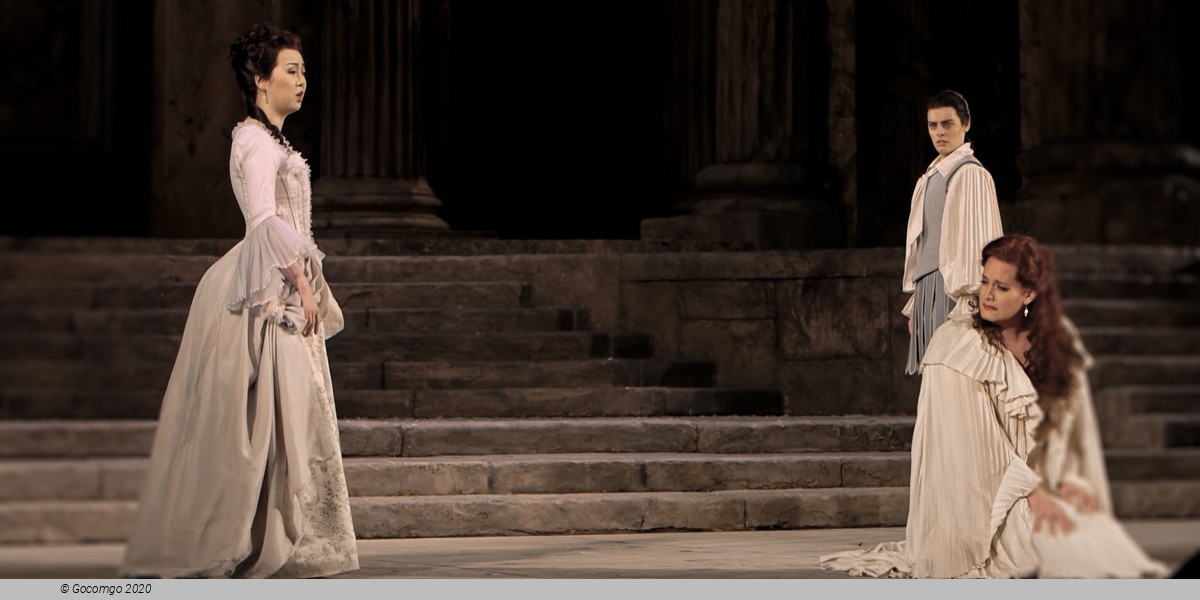
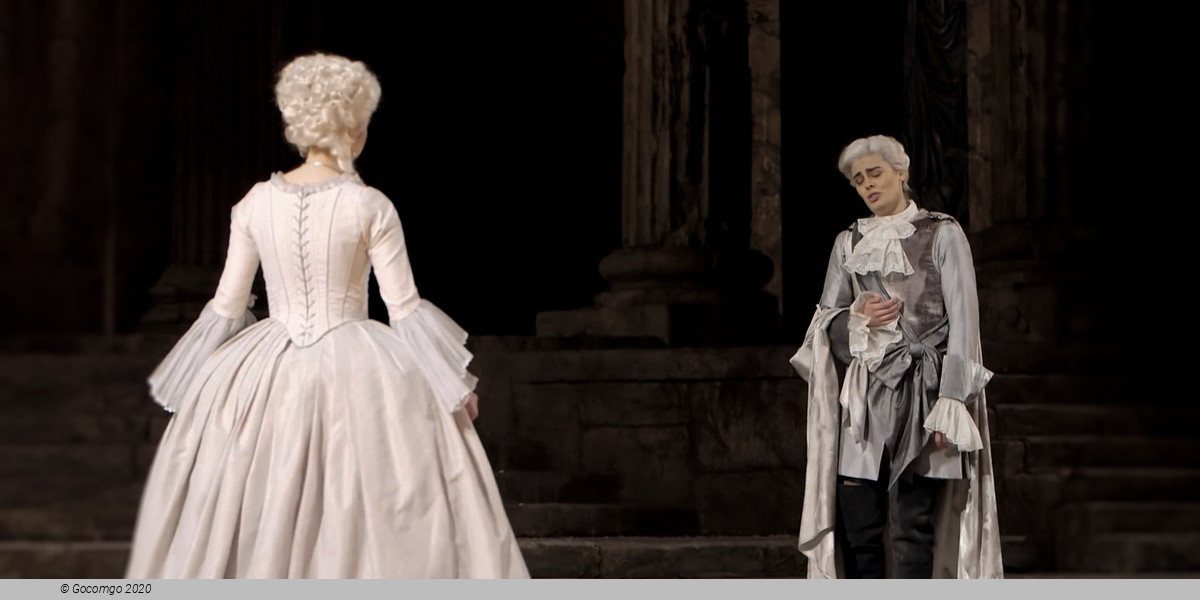
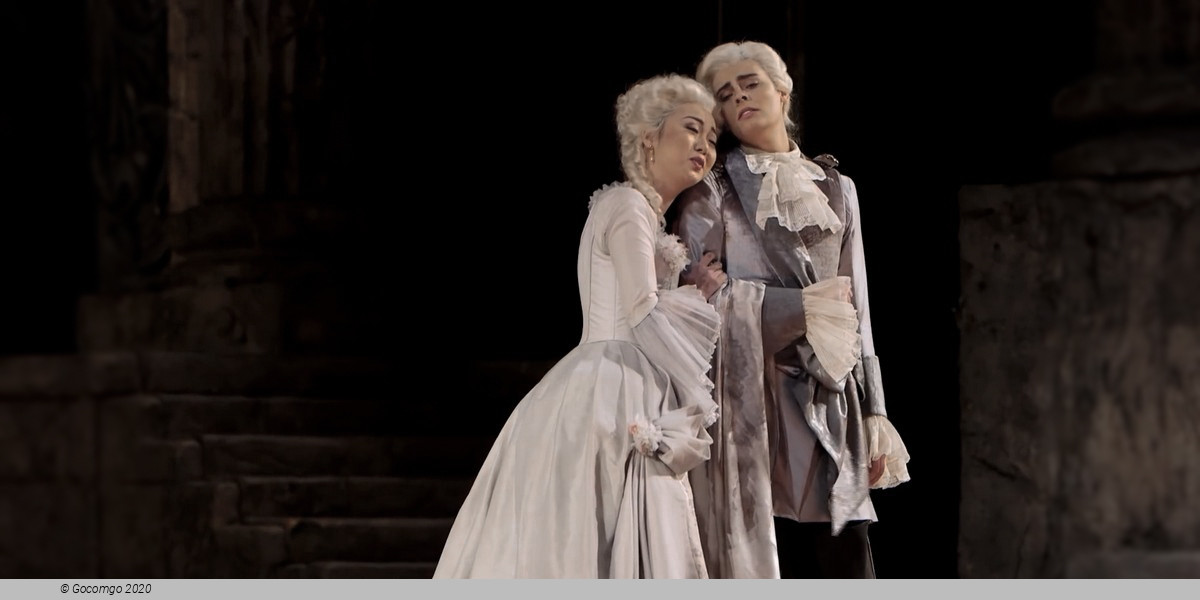
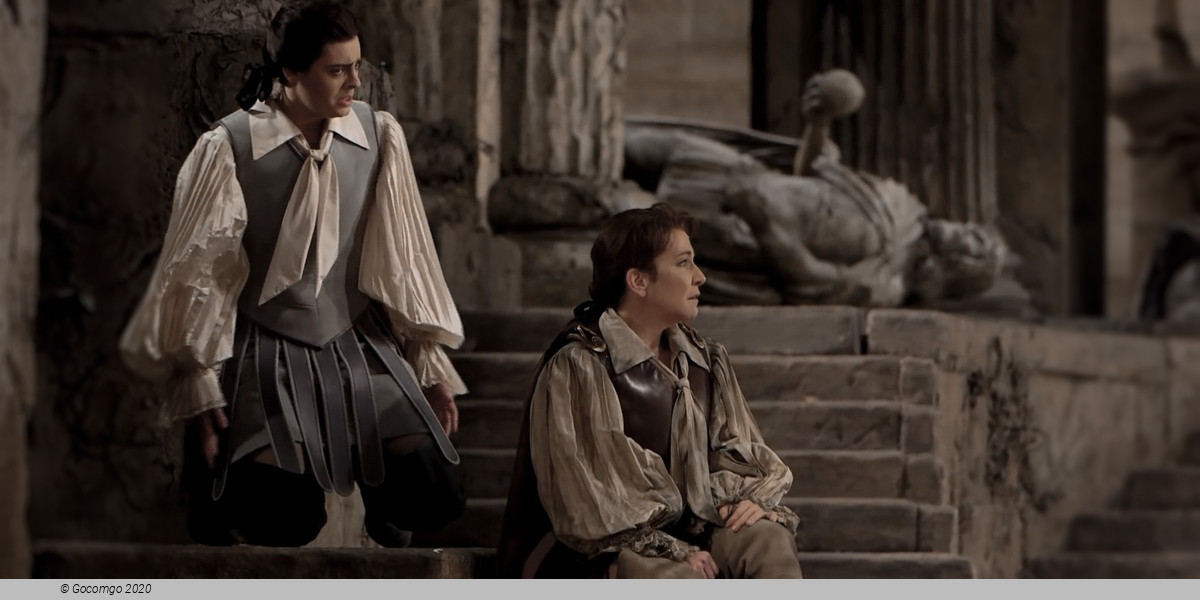
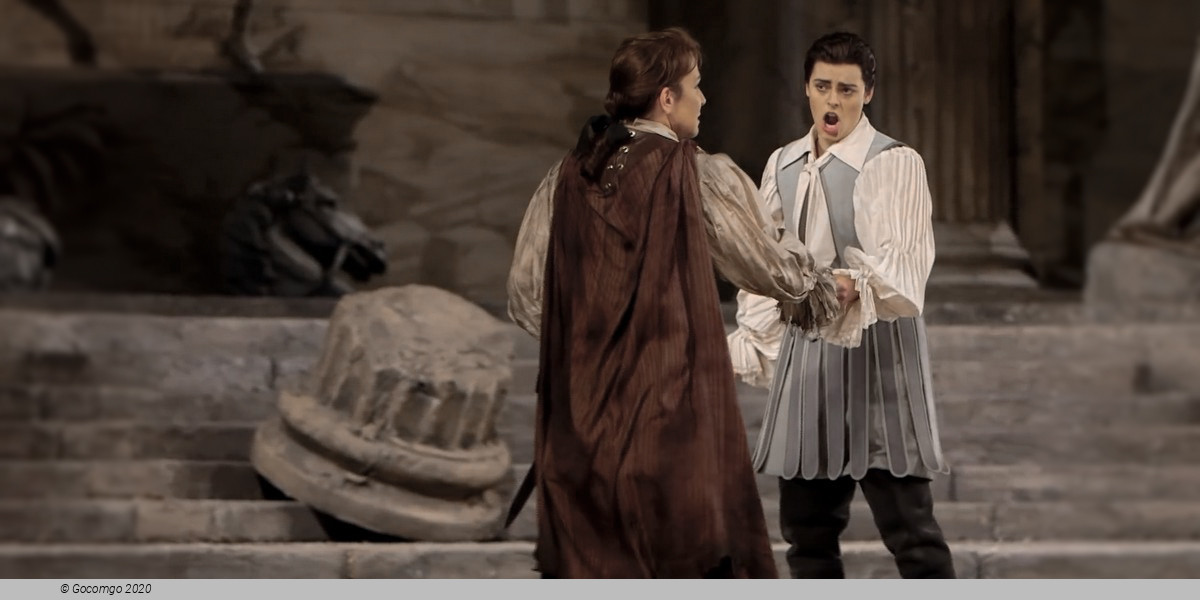
Tito is the emperor of Rome, but the former emperor’s daughter, Vitellia, plans to assassinate him to seize power for herself. She persuades her lover, Sesto, who is a friend of the emperor, to set fire to the Capitol. The coup fails, but Tito pardons both Sesto and Vitellia, and the people of Rome praise the compassionate emperor.

Dutch opera director Jetske Mijnssen, who most recently staged Monteverdi's L’Orfeo at the Royal Danish Opera, is a much sought-after director throughout Europe due to her unique ability to make the music visible on stage. 

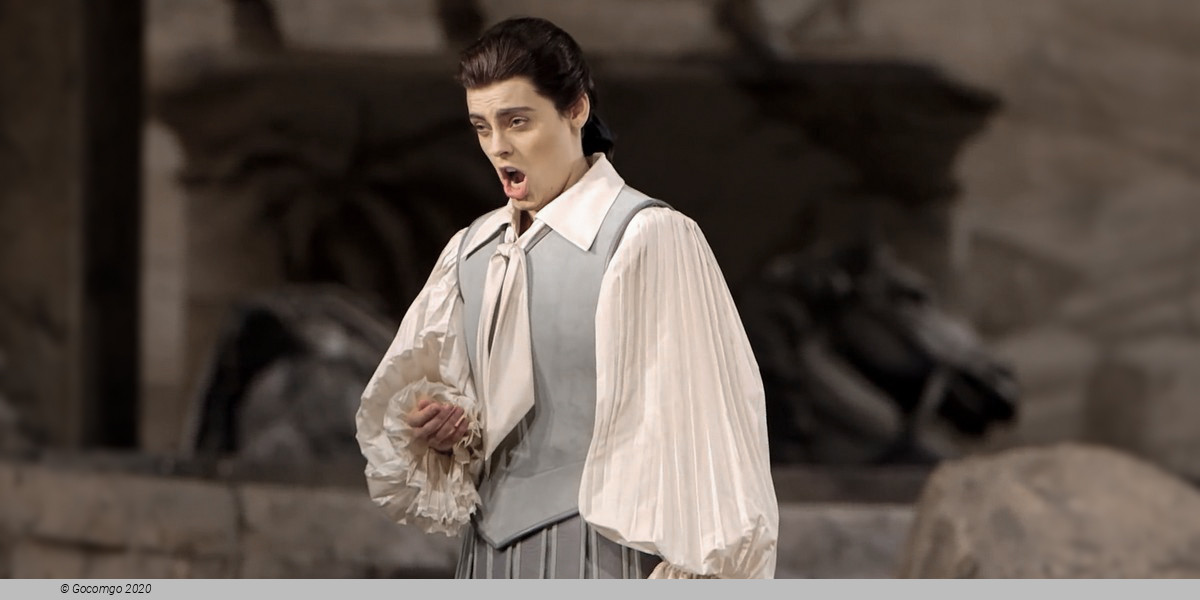
La clemenza di Tito is conducted by Mozart virtuoso Julia Jones. The title role of Tito is performed by young Lithuanian tenor Edgaras Montvidas, who has previously embodied the role at the Royal Opera House, Covent Garden. The Royal Danish Opera’s own Sine Bundgaard and Elisabeth Jansson will perform the masterly roles of Vitellia and Sesto.

History
Premiere of this production: 06 September 1791, Estates Theatre, Prague

La clemenza di Tito is an opera seria in two acts composed by Wolfgang Amadeus Mozart to an Italian libretto by Caterino Mazzolà, after Pietro Metastasio. It was started after the bulk of Die Zauberflöte (The Magic Flute), the last opera that Mozart worked on, was already written. The work premiered on 6 September 1791 at the Estates Theatre in Prague.

Synopsis

Place and time: Rome, in the year 79.

Act One
Vitellia, daughter of the late emperor Vitellio (who had been deposed by Tito's father Vespasian), wants revenge against Tito. She stirs up Tito's vacillating friend Sesto, who is in love with her, to act against him (duet Come ti piace, imponi). But when she hears word that Tito has sent Berenice of Cilicia, of whom she was jealous, back to Jerusalem, Vitellia tells Sesto to delay carrying out her wishes, hoping Tito will choose her (Vitellia) as his empress (aria Deh, se piacer mi vuoi).

Tito, however, decides to choose Sesto's sister Servilia to be his empress, and orders Annio (Sesto's friend) to bear the message to Servilia (aria Del più sublime soglio). Since Annio and Servilia, unbeknownst to Tito, are in love, this news is very unwelcome to both (duet Ah, perdona al primo affetto). Servilia decides to tell Tito the truth but also says that if Tito still insists on marrying her, she will obey. Tito thanks the gods for Servilia's truthfulness, and immediately forswears the idea of coming between her and Annio (aria Ah, se fosse intorno al trono).

In the meantime, however, Vitellia has heard the news about Tito's interest in Servilia and is again boiling with jealousy. She urges Sesto to assassinate Tito. He agrees, singing one of the opera's most famous arias (Parto, parto, ma tu, ben mio with basset clarinet obbligato). Almost as soon as he leaves, Annio and the guard Publio arrive to escort Vitellia to Tito, who has now chosen her as his empress. She is torn with feelings of guilt and worry over what she has sent Sesto to do.

Sesto, meanwhile, is at the Capitol wrestling with his conscience (recitativo Oh Dei, che smania è questa), as he and his accomplices go about to burn it down. The other characters (except Tito) enter severally and react with horror to the burning Capitol. Sesto reenters and announces that he saw Tito slain, but Vitellia stops him from incriminating himself as the assassin. The others lament Tito in a slow, mournful conclusion to act one.

Act Two
The act begins with Annio telling Sesto that Emperor Tito is in fact alive and has just been seen; in the smoke and chaos, Sesto mistook another for Tito. Sesto wants to leave Rome, but Annio persuades him not to (aria Torna di Tito a lato). Soon Publio arrives to arrest Sesto, bearing the news that it was one of Sesto's co-conspirators who dressed himself in Tito's robes and was stabbed, though not mortally, by Sesto. The Senate tries Sesto as Tito waits impatiently, sure that his friend will be exonerated; Publio expresses his doubts (aria Tardi s'avvede d'un tradimento) and leaves for the Senate. Annio begs Tito to show clemency towards his friend (aria Tu fosti tradito). Publio returns and announces that Sesto has been found guilty and an anguished Tito must sign Sesto's death sentence.

He decides to send for Sesto first, attempting to obtain further details about the plot. Sesto takes all the guilt on himself and says he deserves death (rondo Deh, per questo istante solo), so Tito tells him he shall have it and sends him away. But after an extended internal struggle, Tito tears up the execution warrant for Sesto. He determines that, if the world wishes to accuse him (Tito) of anything, it should charge him with showing too much mercy, rather than with having a vengeful heart (aria Se all'impero).

Vitellia at this time is torn by guilt, but Servilia warns her that tears alone will not save Sesto (aria S'altro che lagrime). Vitellia finally decides to confess all to Tito, giving up her hopes of empire (rondo Non più di fiori with basset horn obbligato). In the amphitheatre, the condemned (including Sesto) are waiting to be thrown to the wild beasts. Tito is about to show mercy, when Vitellia offers her confession as the instigator of Sesto's plot. Although shocked, the emperor includes her in the general clemency he offers (recitativo accompagnato Ma che giorno è mai questo?). The opera concludes with all the subjects praising the extreme generosity of Tito; he then asks that the gods cut short his days, should he ever cease to care for the good of Rome.

Venue Info

Royal Danish Theatre - Copenhagen
Location   August Bournonvilles Passage 2-8

The Royal Danish Theatre is the major opera house in Denmark. It has been located at Kongens Nytorv in Copenhagen since 1748, originally designated as the king's theatre but with public access. The theatre presents opera, the Royal Danish Ballet, classical music concerts (by the Royal Danish Orchestra, which dates back to 1448), and drama in several locations.

The Royal Danish Theatre organization is under the control of the Danish Ministry of Culture, and its objectives are to ensure the staging of outstanding performances that do justice to the various stages that it controls.

The first edifice on the site was designed by court architect Nicolai Eigtved, who also masterminded Amalienborg Palace. In 1774, the old theatre seating 800 theatergoers were reconstructed by architect C.F. Harsdorff to accommodate a larger audience.

During the theatre's first seasons the staffing was modest. Originally, the ensemble consisted of eight actors, four actresses, two male dancers, and one female dancer. Gradually over the following decades, the Royal Danish Theatre established itself as the kind of multi-theatre we know today, home to drama, opera, ballet, and concerts – all under the same roof and management.

An important prerequisite for the theatre's artistic development is its schools. The oldest is the ballet school, established at the theatre in 1771. Two years later, a vocal academy was established as a forerunner for the opera academy. A number of initiatives were considered regarding a drama school, which was established much later.

King Frederik VI, who ascended the throne in 1808, is probably the monarch who most actively took part in the management of the Royal Danish Theatre, not as an arbiter of taste but as its supreme executive chef.

The theatre's bookkeeping accounts of these years show numerous endorsements where the king took personal decisions on everything from wage increases and bonuses to the purchase of shoelaces for the ballerinas. Indeed, the Royal Danish Theatre became the preoccupation of an introverted nation, following the English Wars had suffered a state bankruptcy. "In Denmark, there is only one city and one theatre," as philosopher Søren Kierkegaard put it.

This was the theatre to which the 14-year-old fairytale storyteller Hans Christian Andersen devoted his early ambition. This was also the theatre that became the social and artistic focal point of the many brilliant artists of Denmark's Golden Age.

After the abolition of absolute monarchy in 1849, the Royal Danish Theatre's status as "the city's theatre" fell into decline. No longer enjoying a monopoly within the performing arts, the Royal Danish Theatre was now required by its new owner, the state, to serve the entire nation. The dilapidated building at Kongens Nytorv also found it hard to compete with the splendor of the new popular stage that was rapidly emerging across town. The solution was to construct a brand new theatre building. It was designed in the Historicist style of the times by architects William Dahlerup and Ove Pedersen and situated alongside the old theatre, which was subsequently demolished.

The inauguration of what we today call the Old Stage took place on 15 October 1874. Here opera and ballet were given ample scope. But due to the scale of the building, the auditorium was less suited for spoken drama, which is why a new playhouse was required.

The Royal Danish Theatre has over the past decade undergone the most extensive transformation ever in its over 250-year history. The Opera House in Copenhagen was inaugurated in January 2005, donated by the AP Møller and Chastine Mc-Kinney Møller Foundation, and designed by architect Henning Larsen. And the Royal Danish Playhouse was completed in 2008. Located by Nyhavn Canal across from the Opera House, the playhouse is designed by architects Boje Lundgaard and Lene Tranberg.

Today, the Royal Danish Theatre comprises the Old Stage, located by Kongens Nytorv, the Opera House, and the Royal Danish Playhouse. 

Important Info
Type: Opera
City: Copenhagen, Denmark
Starts at: 20:00
Intervals: 1
Duration: 2h 30min
Sung in: Italian
Titles in: Danish
Top of page