








Royal Danish Theatre 28 September 2022 - La Cenerentola | GoComGo.com

La Cenerentola

Royal Danish Theatre, The Opera House - Main Stage, Copenhagen, Denmark
All photos (6)
Select date and time
7:30 PM

E-tickets: Print at home or at the box office of the event if so specified. You will find more information in your booking confirmation email.

You can only select the category, and not the exact seats.
If you order 2 or 3 tickets: your seats will be next to each other.
If you order 4 or more tickets: your seats will be next to each other, or, if this is not possible, we will provide a combination of groups of seats (at least in pairs, for example 2+2 or 2+3).

Important Info
Type: Opera
City: Copenhagen, Denmark
Starts at: 19:30
Intervals: 1
Duration: 2h 55min

E-tickets: Print at home or at the box office of the event if so specified. You will find more information in your booking confirmation email.

You can only select the category, and not the exact seats.
If you order 2 or 3 tickets: your seats will be next to each other.
If you order 4 or more tickets: your seats will be next to each other, or, if this is not possible, we will provide a combination of groups of seats (at least in pairs, for example 2+2 or 2+3).

Overview

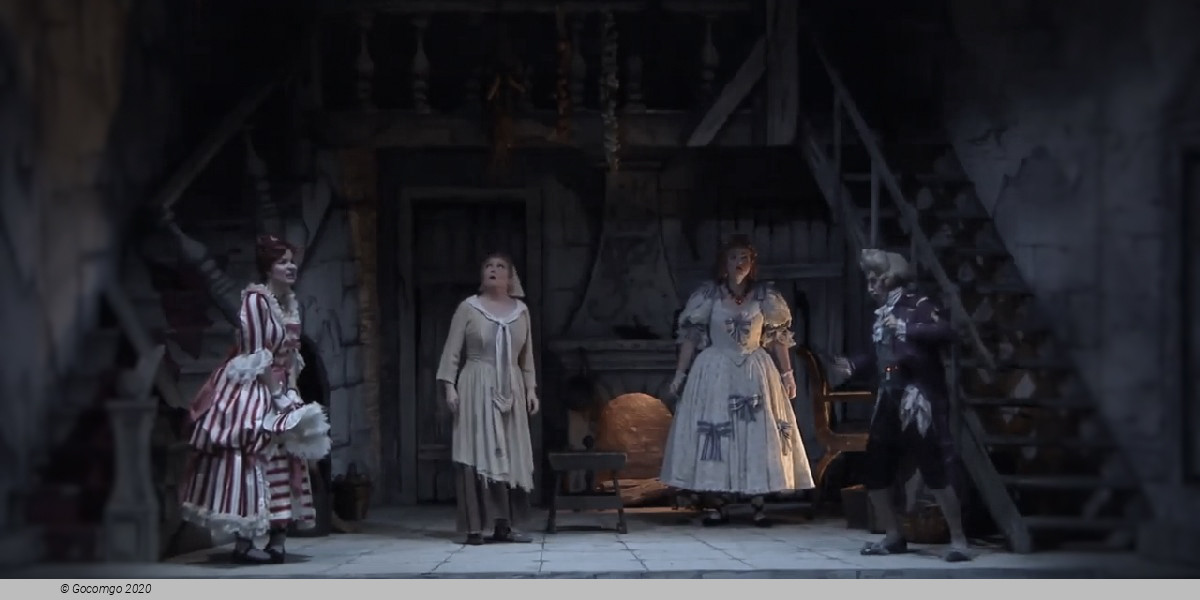
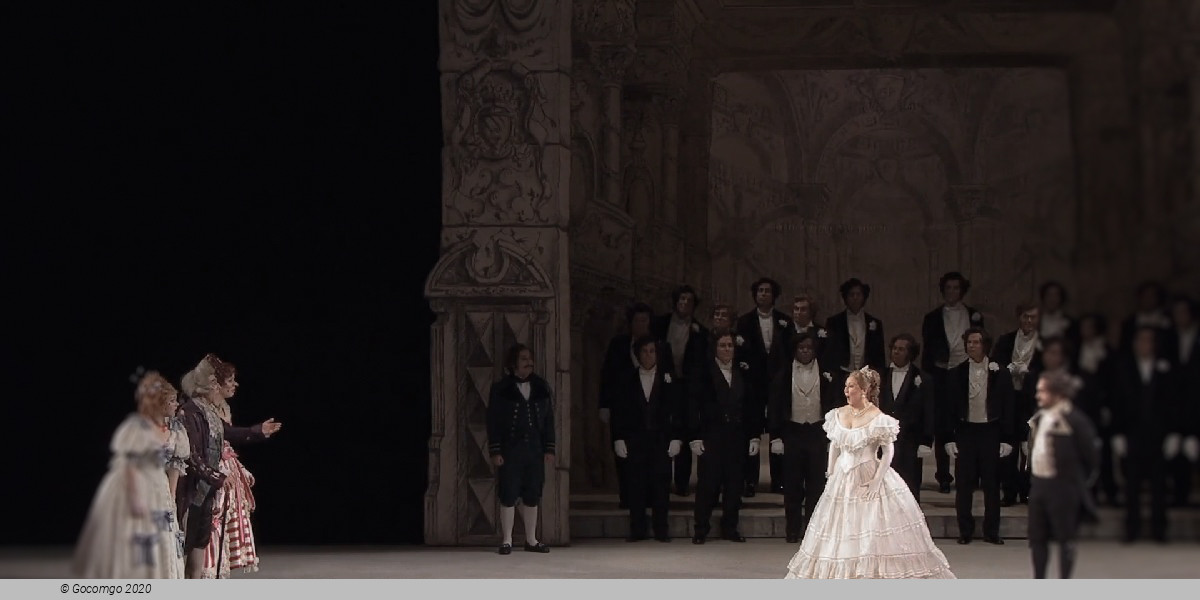
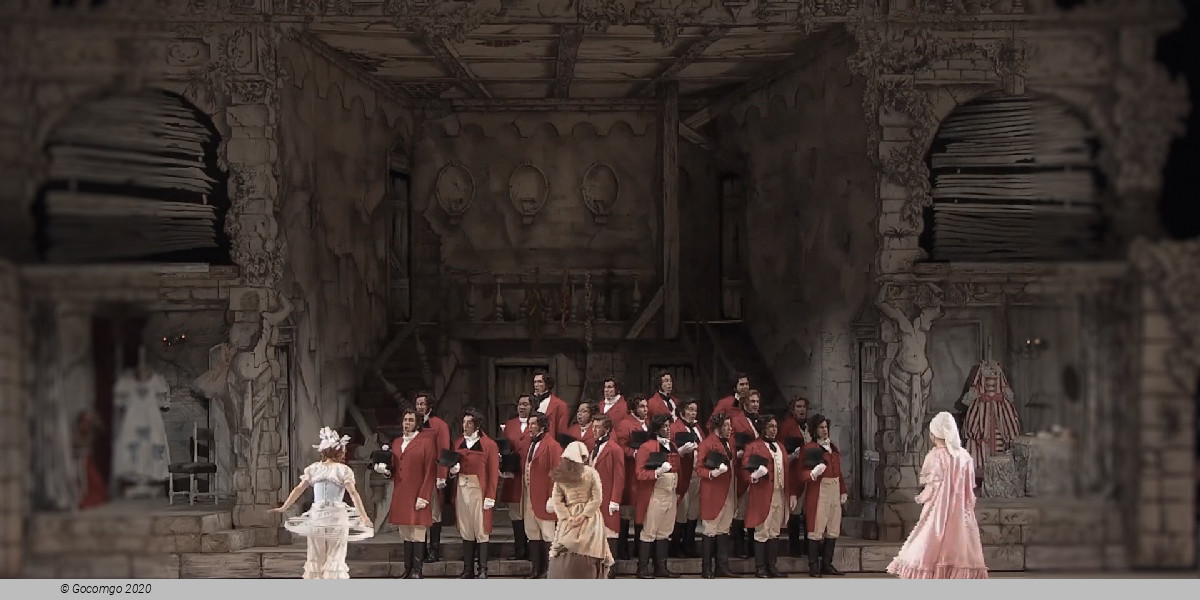
Norwegian reviewers lauded this production of the fabled story as “The most spectacular staging (of La Cenerentola) ever.” A fairytale opera that combines masterly song and rollicking comedy.

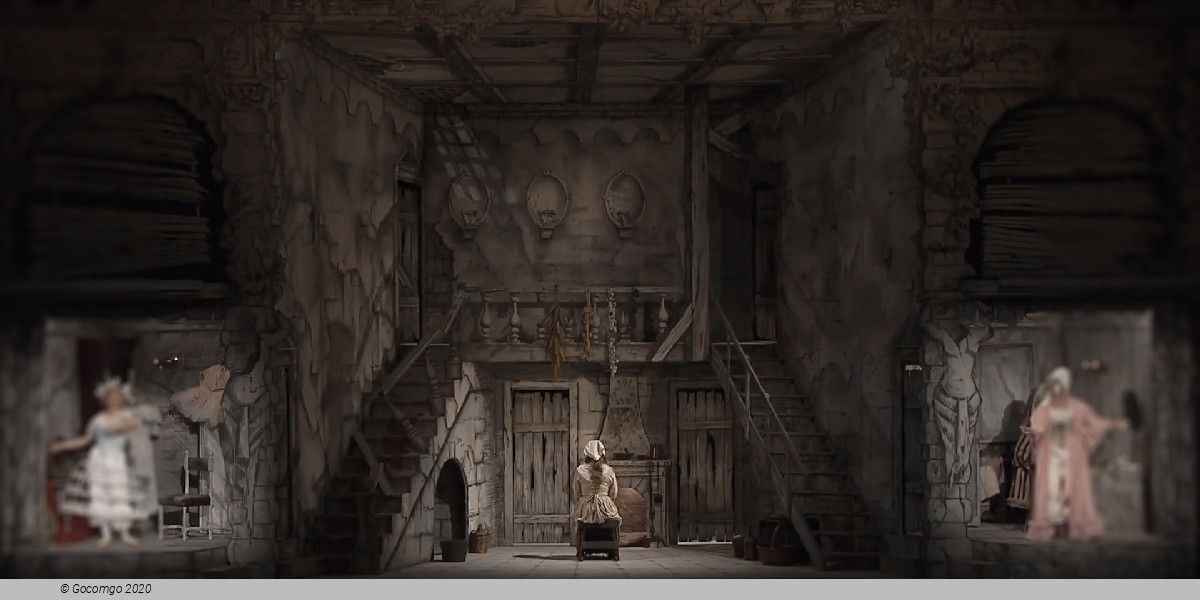
Clorinda and Tisbe are maliciously mean towards their stepsister Angelina (Cinderella), who dreams of meeting her one and only, all while covered in ash and confined to her chores in the family kitchen. Charles Perrault’s fairytale collection Mother Goose Tales (1697) was the starting point for 24-year-old Rossini’s libretto. Indeed, these fantastical stories have throughout the years inspired other celebrated composers, including Ravel.

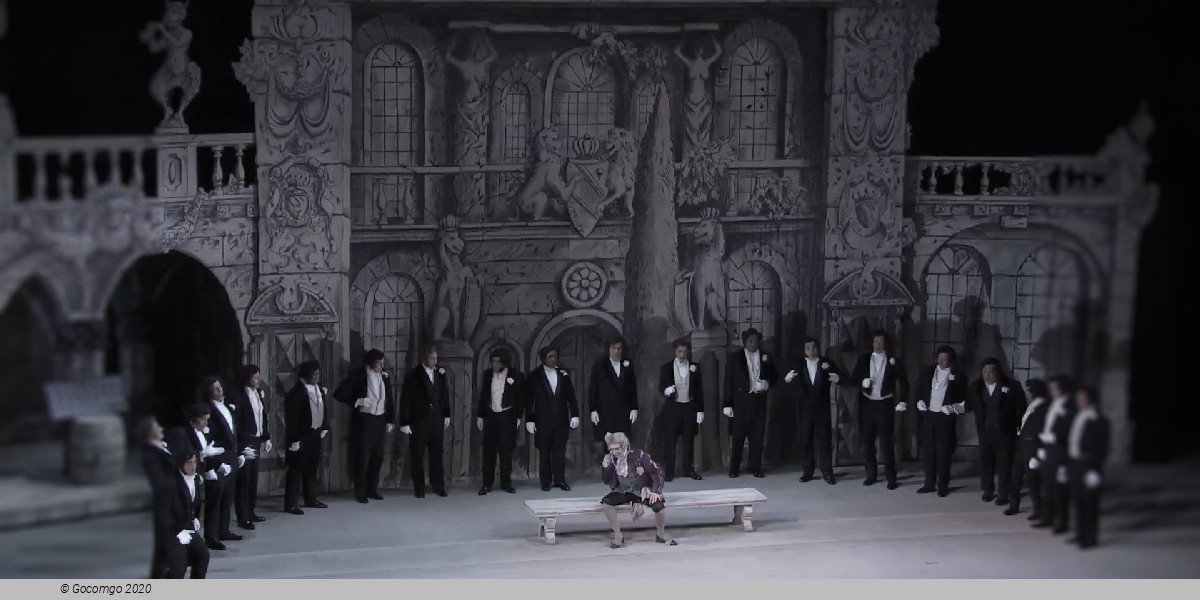
Despite its 200 years, La Cenerentola the opera is as fresh and captivating as in the age of Rossini. Norwegian Stefan Herheim and his talented artistic team have created a vibrant, festive show, and a visionary video design takes Cinderella and her Prince to new dimensions in this playful rendition of Rossini’s glorious bel canto opera.

Indeed, a breakneck performance as swift and speedy as the composer himself, who wrote the opera in just 24 days. Brazilian mezzo-soprano Josy Santos will appear in the role of Cinderella, and Italian tenor Matteo Macchioni, who embodied the role of Ferrando in Così fan tutte a few seasons ago, will perform Don Ramiro, Prince of Salerno.

History
Premiere of this production: 25 January 1817, Teatro Valle, Rome

La Cenerentola, ossia La bontà in trionfo (Cinderella, or Goodness Triumphant) is an operatic dramma giocoso in two acts by Gioachino Rossini. The libretto was written by Jacopo Ferretti, based on the fairy tale Cendrillon by Charles Perrault. The opera was first performed in Rome's Teatro Valle on 25 January 1817.

Synopsis

In this variation of the fairy tale, the wicked stepmother is replaced by a stepfather, Don Magnifico. The Fairy Godmother is replaced by Alidoro, a philosopher and tutor to the Prince. Cinderella is identified not by a glass slipper but by her bracelet. The supernatural elements that traditionally characterize the Cinderella story were removed from the libretto, simply for ease of staging.

Time: Late 18th century – early 19th century
Place: Salerno (Italy)

Act 1

Angelina, known to her stepfather and stepsisters as "Cenerentola", is forced to serve as the maid in her own home. She sings of a king who married a common girl ("Una volta c’era un rè"). A beggar arrives; her stepsisters, Clorinda and Tisbe, want to send him away, but Cenerentola gives him bread and coffee. Courtiers follow, announcing that Prince Ramiro will come to visit while he searches for the most beautiful girl in the land to wed. Cenerentola's stepfather, Don Magnifico, hopes to use this as an opportunity to save his own failing fortune.

When the room is empty, Ramiro enters alone, disguised as a valet. The "beggar" - in fact, his tutor, Alidoro - has informed him of a goodhearted young woman spotted here. Ramiro intends to find her incognito. Cenerentola returns, and she and Ramiro are attracted to each other (duet: "Un soave non-so che"), but when he asks who she is, she's overwhelmed and flees.

Finally, the "prince" arrives – the real valet, Dandini, who has taken his master's place - and Magnifico, Clorinda, and Tisbe fall over themselves to flatter him. He invites the family to a ball that evening, where he plans to find his bride; Cenerentola asks to join them, but Magnifico refuses (quintet: "Signor, una parola"). This callousness isn't lost on Ramiro. Alidoro, still in his rags, returns to inquire after a third daughter in the house; Magnifico claims she has died. Left alone with Cenerentola, Alidoro promises to take her to the ball himself, and that God will reward her kindness ("Là del ciel nell’arcano profondo").

The prince and his valet have retired to Ramiro's country house in some confusion, as neither of Magnifico's daughters resembled the worthy bride Alidoro had described. When Clorinda and Tisbe arrive, Dandini gives them a little test: he offers his "valet" to whichever sister the "prince" does not marry. The ladies are outraged at the idea of marrying a servant. Alidoro then arrives with a beautiful, unknown lady who strangely resembles Cenerentola. Unable to make sense of the situation, they all sit down to supper, feeling as if they are in a dream.

Act 2

Magnifico frets over the competition his daughters now face from the strange lady ("Sia qualunque delle figlie"), but Cenerentola isn't interested in the "prince," saying she's fallen in love with his servant. An overjoyed Ramiro steps forward; however, Cenerentola tells him that she's going home and doesn't want him to follow her. If he really cares for her, she says, he will find her, giving him one of a matching pair of bracelets. The prince determines to do exactly that ("Sì, ritrovarla io giuro").

Meanwhile, Magnifico confronts the disguised Dandini, insisting that he choose one of his daughters to marry. Dandini tries to stall, but is forced to admit that he's actually the valet and not the prince at all (duet: "Un segreto d’importanza").

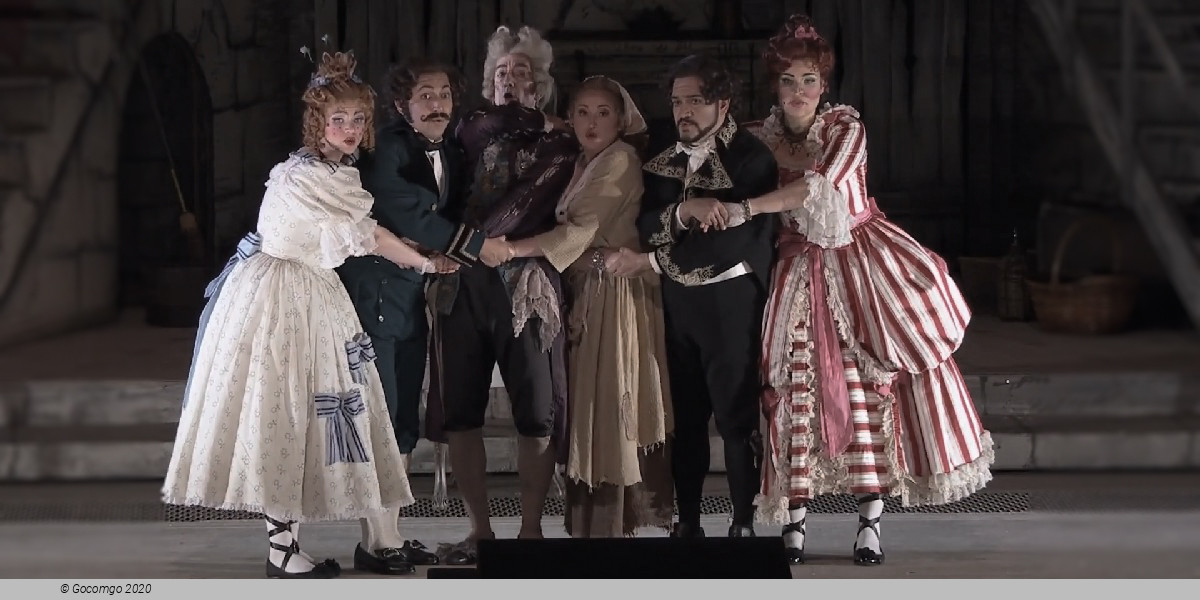
A furious Magnifico and his daughters return home, where they order Cenerentola, back in rags, to serve them. A storm is thundering outside. Alidoro sabotages Ramiro's carriage so that it breaks down in front of Magnifico's manor, forcing the prince to take refuge within. Cenerentola and Ramiro recognize each other's bracelets; the others comment on the situation (sextet: "Siete voi?"). When Ramiro threatens Cenerentola's recalcitrant family, she asks him to forgive them.

Ramiro and Cenerentola are married, and celebrate their wedding at the palace. Magnifico tries to win the favor of the new princess, but she asks only to be acknowledged, at last, as his daughter. She reflects on the misfortune to which she was born and the sudden reversal of her fate, then forgives her family for all her past unhappiness, adding that her days of sitting sadly by the fire are over ("Nacqui all'affanno... Non più mesta"). Everyone present acknowledges that she truly is worthy of the throne.

Venue Info

Royal Danish Theatre - Copenhagen
Location   August Bournonvilles Passage 2-8

The Royal Danish Theatre is the major opera house in Denmark. It has been located at Kongens Nytorv in Copenhagen since 1748, originally designated as the king's theatre but with public access. The theatre presents opera, the Royal Danish Ballet, classical music concerts (by the Royal Danish Orchestra, which dates back to 1448), and drama in several locations.

The Royal Danish Theatre organization is under the control of the Danish Ministry of Culture, and its objectives are to ensure the staging of outstanding performances that do justice to the various stages that it controls.

The first edifice on the site was designed by court architect Nicolai Eigtved, who also masterminded Amalienborg Palace. In 1774, the old theatre seating 800 theatergoers were reconstructed by architect C.F. Harsdorff to accommodate a larger audience.

During the theatre's first seasons the staffing was modest. Originally, the ensemble consisted of eight actors, four actresses, two male dancers, and one female dancer. Gradually over the following decades, the Royal Danish Theatre established itself as the kind of multi-theatre we know today, home to drama, opera, ballet, and concerts – all under the same roof and management.

An important prerequisite for the theatre's artistic development is its schools. The oldest is the ballet school, established at the theatre in 1771. Two years later, a vocal academy was established as a forerunner for the opera academy. A number of initiatives were considered regarding a drama school, which was established much later.

King Frederik VI, who ascended the throne in 1808, is probably the monarch who most actively took part in the management of the Royal Danish Theatre, not as an arbiter of taste but as its supreme executive chef.

The theatre's bookkeeping accounts of these years show numerous endorsements where the king took personal decisions on everything from wage increases and bonuses to the purchase of shoelaces for the ballerinas. Indeed, the Royal Danish Theatre became the preoccupation of an introverted nation, following the English Wars had suffered a state bankruptcy. "In Denmark, there is only one city and one theatre," as philosopher Søren Kierkegaard put it.

This was the theatre to which the 14-year-old fairytale storyteller Hans Christian Andersen devoted his early ambition. This was also the theatre that became the social and artistic focal point of the many brilliant artists of Denmark's Golden Age.

After the abolition of absolute monarchy in 1849, the Royal Danish Theatre's status as "the city's theatre" fell into decline. No longer enjoying a monopoly within the performing arts, the Royal Danish Theatre was now required by its new owner, the state, to serve the entire nation. The dilapidated building at Kongens Nytorv also found it hard to compete with the splendor of the new popular stage that was rapidly emerging across town. The solution was to construct a brand new theatre building. It was designed in the Historicist style of the times by architects William Dahlerup and Ove Pedersen and situated alongside the old theatre, which was subsequently demolished.

The inauguration of what we today call the Old Stage took place on 15 October 1874. Here opera and ballet were given ample scope. But due to the scale of the building, the auditorium was less suited for spoken drama, which is why a new playhouse was required.

The Royal Danish Theatre has over the past decade undergone the most extensive transformation ever in its over 250-year history. The Opera House in Copenhagen was inaugurated in January 2005, donated by the AP Møller and Chastine Mc-Kinney Møller Foundation, and designed by architect Henning Larsen. And the Royal Danish Playhouse was completed in 2008. Located by Nyhavn Canal across from the Opera House, the playhouse is designed by architects Boje Lundgaard and Lene Tranberg.

Today, the Royal Danish Theatre comprises the Old Stage, located by Kongens Nytorv, the Opera House, and the Royal Danish Playhouse. 

Important Info
Type: Opera
City: Copenhagen, Denmark
Starts at: 19:30
Intervals: 1
Duration: 2h 55min
Top of page