
Royal Danish Theatre 11 October 2022 - Kát’a Kabanová | GoComGo.com

Kát’a Kabanová

Royal Danish Theatre, The Old Stage, Copenhagen, Denmark
All photos (8)
Select date and time
8 PM

E-tickets: Print at home or at the box office of the event if so specified. You will find more information in your booking confirmation email.

You can only select the category, and not the exact seats.
If you order 2 or 3 tickets: your seats will be next to each other.
If you order 4 or more tickets: your seats will be next to each other, or, if this is not possible, we will provide a combination of groups of seats (at least in pairs, for example 2+2 or 2+3).

Important Info
Type: Opera
City: Copenhagen, Denmark
Starts at: 20:00
Intervals: 1
Duration: 2h 10min

E-tickets: Print at home or at the box office of the event if so specified. You will find more information in your booking confirmation email.

You can only select the category, and not the exact seats.
If you order 2 or 3 tickets: your seats will be next to each other.
If you order 4 or more tickets: your seats will be next to each other, or, if this is not possible, we will provide a combination of groups of seats (at least in pairs, for example 2+2 or 2+3).

Overview

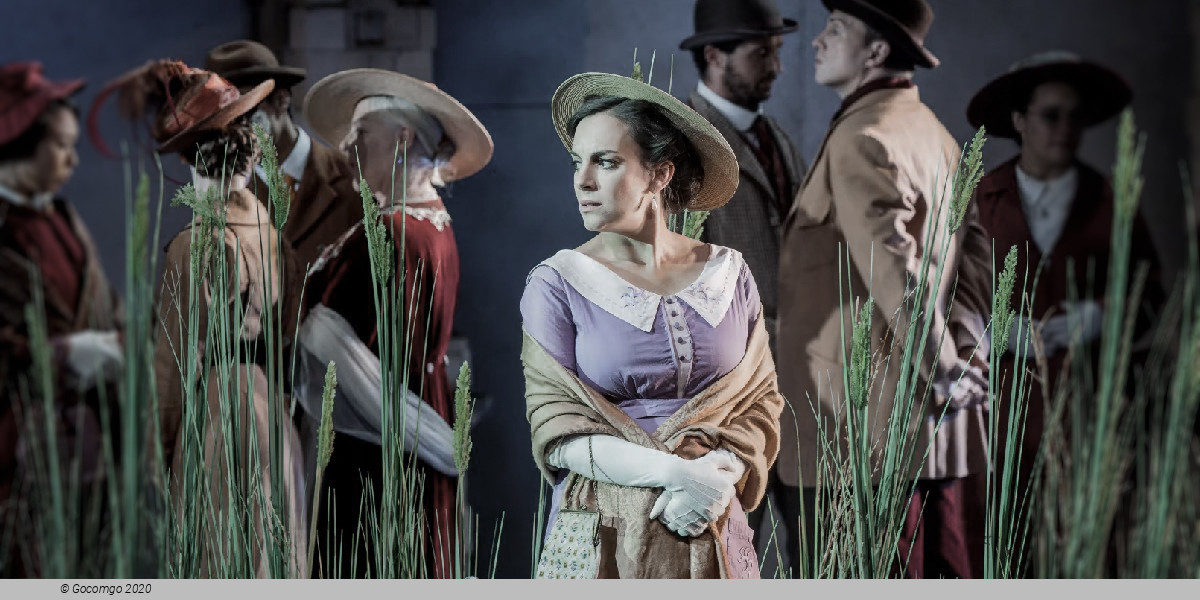
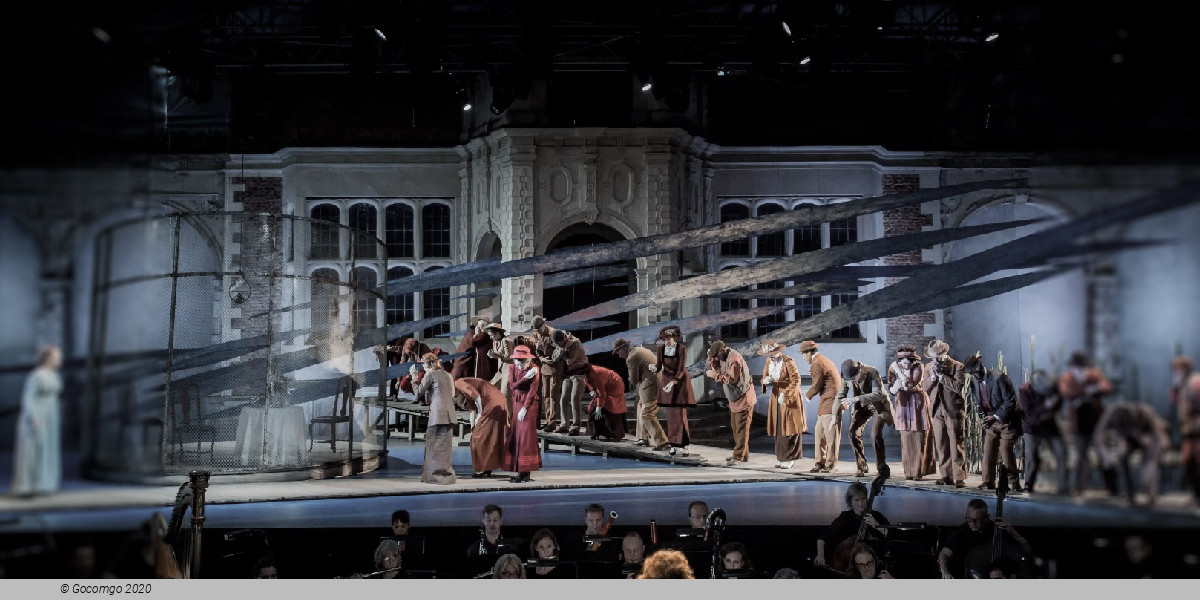
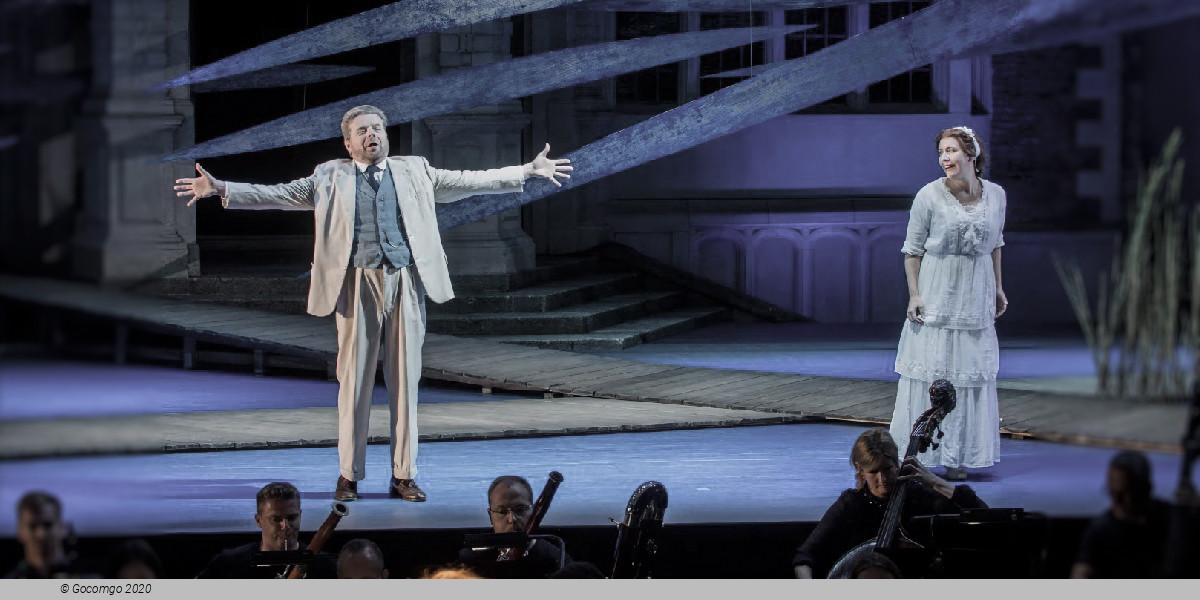
Experience Janáček’s dramatic opera classic about Kát’a Kabanová’s desperate struggle for freedom, dealing with the constraints of society, unrequited love and life’s great decisions.

She is treated with contempt by her tyrannical mother-in-law, who blames her son for having to share his attention with his young wife. Katja’s emotional starvation sends her tumbling into an affair, with fatal consequences.

Kát’a Kabanová mirrors Janáček’s own painful love life. He experienced an all-consuming infatuation with an unattainable and much younger married woman whom he had met during a spa stay. He also found inspiration in Russian playwright Alexander Ostrovsky’s The Storm, whose characters helped him fulfil the idea of composing an intense musical drama about loneliness and unrequited love.

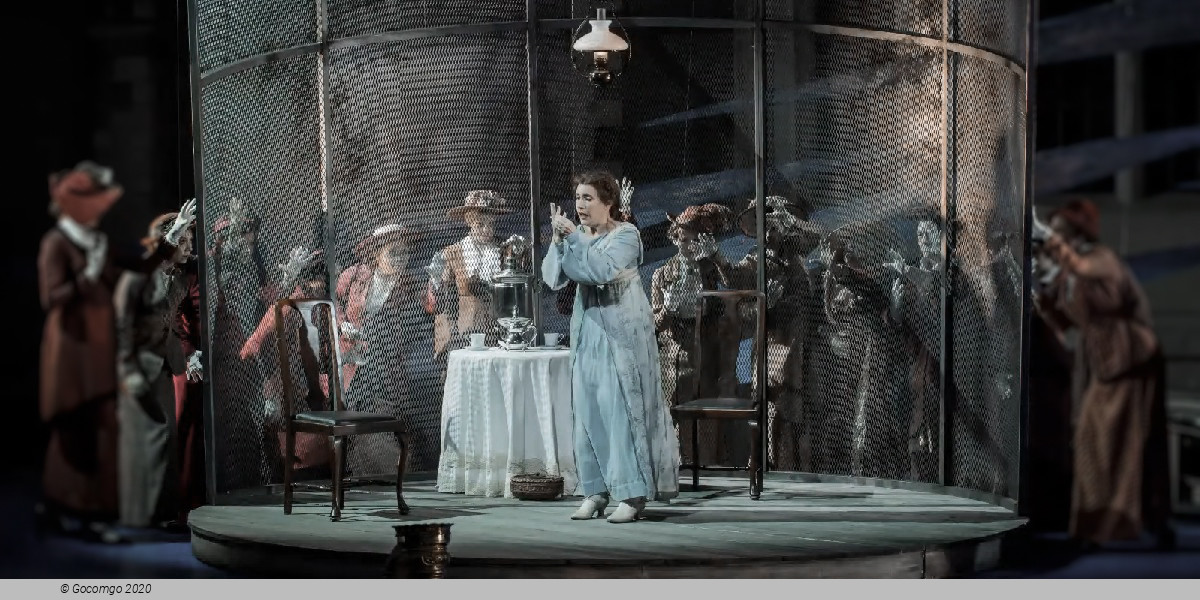
“A shocking and accomplished drama of truth,” critics wrote about Damiano Michieletto’s staging of Puccini’s Il trittico at the Opera House in 2013. Now, Michieletto is back at the Royal Danish Theatre with the story of Kát’a Kabanová, which is portrayed through the eyes of the protagonist. A personal drama of forbidden love, dreams of freedom and the consequences of life’s tortuous decisions.

History
Premiere of this production: 23 November 1921, National Theatre, Brno

Káťa Kabanová (also known in various spellings including Katia, Katja, Katya, and Kabanowa) is an opera in three acts, with music by Leoš Janáček to a libretto by Vincenc Červinka, based on The Storm, a play by Alexander Ostrovsky. The opera was also largely inspired by Janáček's love for Kamila Stösslová. This is often considered his first "mature" opera, despite the fact that he was 67 when it was premiered. Káťa Kabanová is a clear response to Janáček's feelings for Kamila, and the work is dedicated to her.

Synopsis

Place: The Russian town of Kalinov on the shores of the Volga River
Time: The 1860s

Act 1
Vána Kudrjás admires the view of the Volga River, which amuses the more literal-minded housekeeper of the adjoining Kabanov estate. Two men approach, Dikoj and his nephew, Boris Grigorjevic, where Dikoj is berating Boris. Dikoj learns that Kabanicha, the Kabanov family matriarch, is not at home. Dikoj leaves, and Boris explains to Vána Kudrjás why he tolerates the abuse: his parents are dead, and to be able collect his inheritance, he must respect his uncle no matter what his uncle says to him. Boris also tells Vána Kudrjás that he is secretly in love with Káťa, the young wife of Tichon. Káťa appears and Kabanicha reproaches her son Tichon – Kata's husband – for his inattentiveness. Tichon and Káťa try to calm her down, but Kabanicha will have none of it, telling Tichon that he spoils Káťa. Tichon complains to Varvara, the family's foster daughter, who rebukes him for retreating into drinking more than defending Káťa.

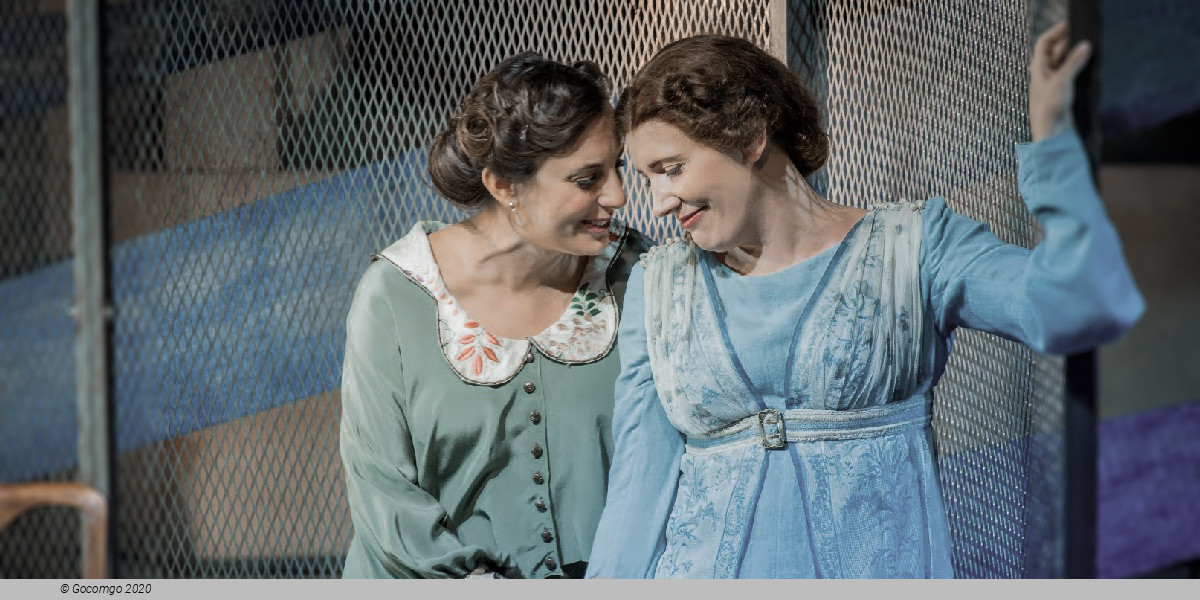
In the house, Káťa tells Varvara of her happy childhood, and dreams of having a man who truly loves her. Tichon enters to say good-bye, as he is journeying to Kazan on business, for Kabanicha. Káťa asks to accompany him or for him not to go, but he insists. Káťa then asks him to make her swear an oath to speak to no strangers during his absence, which puzzles Tichon. Kabanicha announces that Tichon must go, but not before instructing Káťa how to behave in his absence. Tichon dutifully says that Káťa must treat Kabanicha like her own mother and always act properly. He bows to Kabanicha and kisses her and Kát'a before he departs.

Act 2
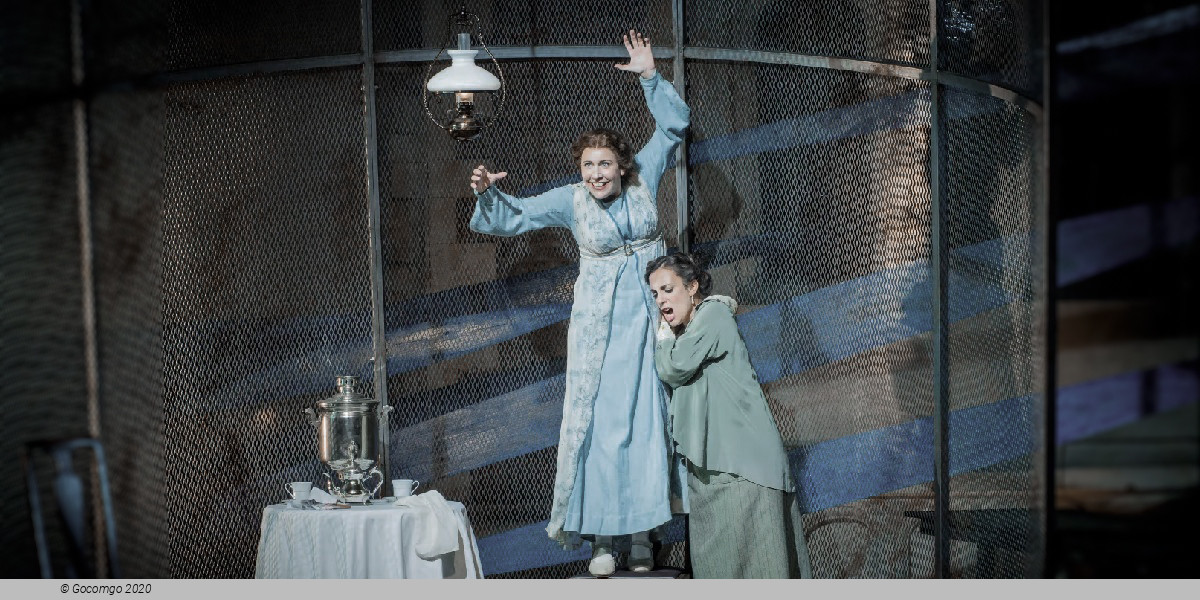
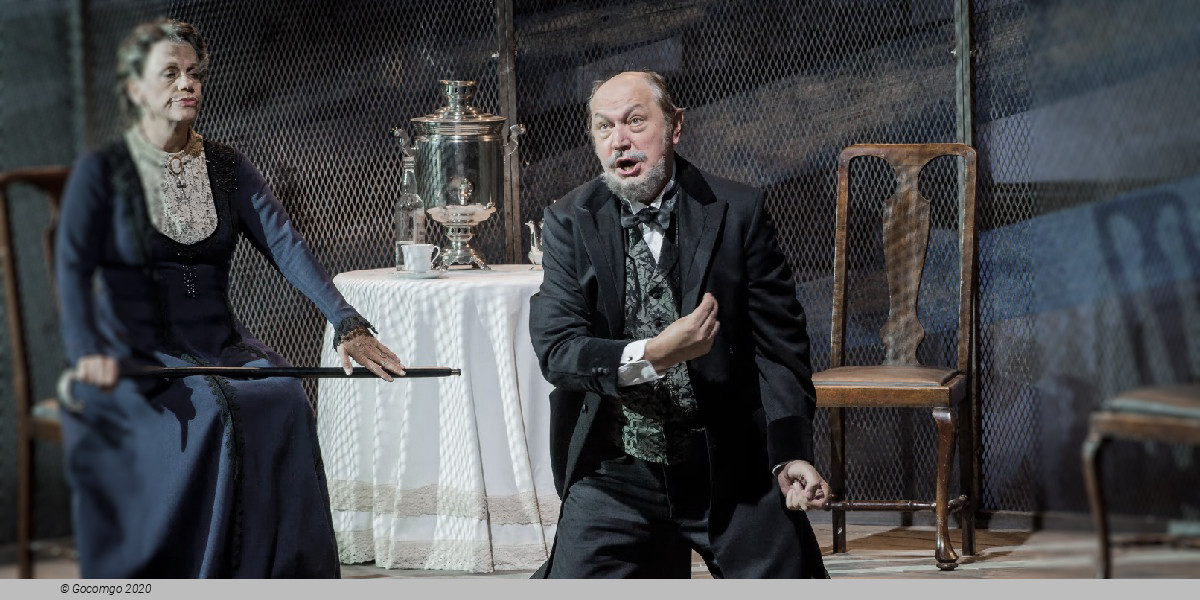
The women are working on embroidery. Kabanicha criticizes Káťa for not appearing more sorrowful at Tichon's absence. After Kabanicha leaves, Varvara shows Káťa the key to the far part of the garden. Varvara intends to meet Vána, her lover, there. She hints at the same suggestion for Káťa, and puts the key in her hand. Káťa is hesitant, but then surrenders to fate and will meet Boris. She steps outside as evening comes on. Kabanicha reappears with Dikoj, who is drunk and complaining that people take advantage of his softhearted nature. However, Kabanicha chastises him.

Vána Kudrjás is waiting for Varvara in the garden. Boris then unexpectedly appears, after receiving a message to go there. Varvara arrives, and she and Vána go for a walk by the river. Káťa then appears, and Boris declares his love for her. She is at first worried about social ruin, but finally she reciprocates, confessing her secret feelings for him. They embrace and themselves leave for a walk. Vána and Varvara return, as she explains her precautions in case Kabanicha suddenly appears. Káťa and Boris are heard in wordless, ecstatic duet as Vána and Varvara say that it is time to return home.

Act 3
Ten days later
Vána Kudrjás and Kuligin are strolling near the river when an approaching storm causes them to take shelter in a ruined building. Other people join them, including Dikoj. Vána tries to calm Dikoj with scientific explanations about a new invention, the lightning rod. However, this only angers Dikoj, who insists that lightning is not caused by electricity but is the punishment from God. The rain dies down, and people start to leave the shelter. Vána meets Boris and Varvara. Varvara says that Tichon has returned, and Káťa is very agitated. Kabanicha arrives with Tichon and Káťa. The storm returns, and people assume initially that this is what upsets Káťa. However, she confesses to Tichon in front of everyone her assignation with Boris during her husband's absence. Then she runs out into the storm.

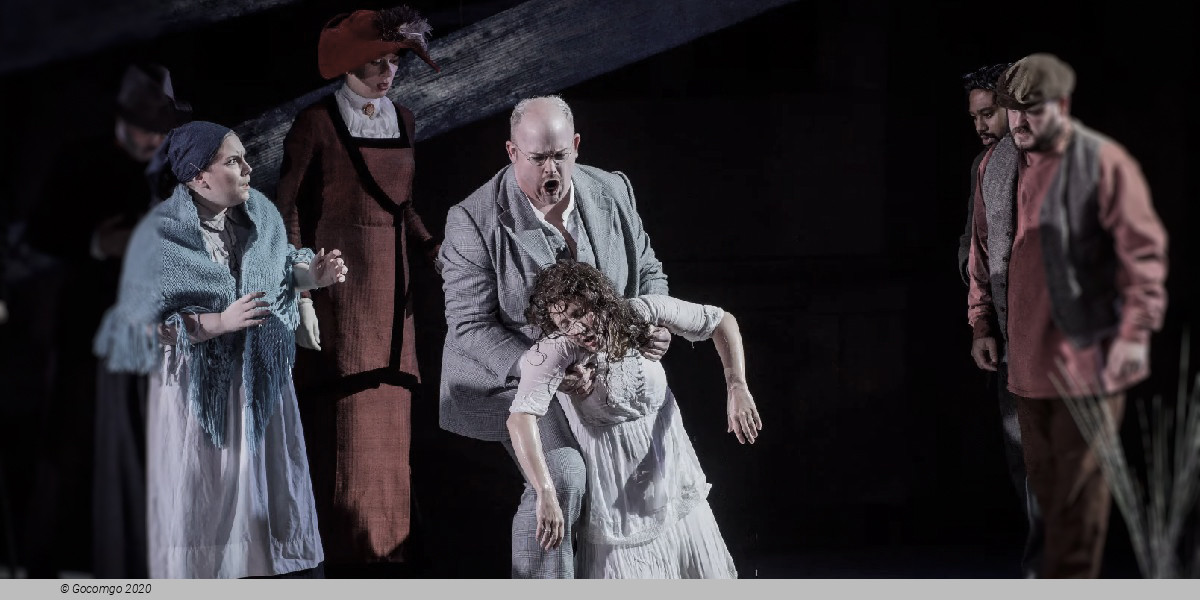
Evening approaches after the storm has ended. Tichon and a search party are looking for Káťa. At first among the party, Varvara and Vána then decide to leave the village for Moscow and start a new life. They leave, and as the searchers continue, Káťa appears. She knows that her confession has dishonoured her and humiliated Boris. She feels tormented and wants to meet Boris one more time. Boris appears and sees her, and the two embrace. Boris says that his uncle is sending him away to another town, but asks her what will become of her. As her sanity deteriorates, she first begs him to be allowed to accompany him, then insists that she could not and bids him farewell; he leaves in sorrow. After thinking of how nature will continue to flourish over her grave, Káťa throws herself into the river. Kuligin sees this from the far bank and calls for help. Tichon appears, followed by Kabanicha. Tichon tries to help Káťa but is restrained by Kabanicha; he blames her for Káťa's suicide. Dikoj appears with Káťa's body and lays her on the ground. Tichon cries over the body as, without any emotion, Kabanicha thanks the bystanders—or, as often done, the audience—for their help.

Venue Info

Royal Danish Theatre - Copenhagen
Location   August Bournonvilles Passage 2-8

The Royal Danish Theatre is the major opera house in Denmark. It has been located at Kongens Nytorv in Copenhagen since 1748, originally designated as the king's theatre but with public access. The theatre presents opera, the Royal Danish Ballet, classical music concerts (by the Royal Danish Orchestra, which dates back to 1448), and drama in several locations.

The Royal Danish Theatre organization is under the control of the Danish Ministry of Culture, and its objectives are to ensure the staging of outstanding performances that do justice to the various stages that it controls.

The first edifice on the site was designed by court architect Nicolai Eigtved, who also masterminded Amalienborg Palace. In 1774, the old theatre seating 800 theatergoers were reconstructed by architect C.F. Harsdorff to accommodate a larger audience.

During the theatre's first seasons the staffing was modest. Originally, the ensemble consisted of eight actors, four actresses, two male dancers, and one female dancer. Gradually over the following decades, the Royal Danish Theatre established itself as the kind of multi-theatre we know today, home to drama, opera, ballet, and concerts – all under the same roof and management.

An important prerequisite for the theatre's artistic development is its schools. The oldest is the ballet school, established at the theatre in 1771. Two years later, a vocal academy was established as a forerunner for the opera academy. A number of initiatives were considered regarding a drama school, which was established much later.

King Frederik VI, who ascended the throne in 1808, is probably the monarch who most actively took part in the management of the Royal Danish Theatre, not as an arbiter of taste but as its supreme executive chef.

The theatre's bookkeeping accounts of these years show numerous endorsements where the king took personal decisions on everything from wage increases and bonuses to the purchase of shoelaces for the ballerinas. Indeed, the Royal Danish Theatre became the preoccupation of an introverted nation, following the English Wars had suffered a state bankruptcy. "In Denmark, there is only one city and one theatre," as philosopher Søren Kierkegaard put it.

This was the theatre to which the 14-year-old fairytale storyteller Hans Christian Andersen devoted his early ambition. This was also the theatre that became the social and artistic focal point of the many brilliant artists of Denmark's Golden Age.

After the abolition of absolute monarchy in 1849, the Royal Danish Theatre's status as "the city's theatre" fell into decline. No longer enjoying a monopoly within the performing arts, the Royal Danish Theatre was now required by its new owner, the state, to serve the entire nation. The dilapidated building at Kongens Nytorv also found it hard to compete with the splendor of the new popular stage that was rapidly emerging across town. The solution was to construct a brand new theatre building. It was designed in the Historicist style of the times by architects William Dahlerup and Ove Pedersen and situated alongside the old theatre, which was subsequently demolished.

The inauguration of what we today call the Old Stage took place on 15 October 1874. Here opera and ballet were given ample scope. But due to the scale of the building, the auditorium was less suited for spoken drama, which is why a new playhouse was required.

The Royal Danish Theatre has over the past decade undergone the most extensive transformation ever in its over 250-year history. The Opera House in Copenhagen was inaugurated in January 2005, donated by the AP Møller and Chastine Mc-Kinney Møller Foundation, and designed by architect Henning Larsen. And the Royal Danish Playhouse was completed in 2008. Located by Nyhavn Canal across from the Opera House, the playhouse is designed by architects Boje Lundgaard and Lene Tranberg.

Today, the Royal Danish Theatre comprises the Old Stage, located by Kongens Nytorv, the Opera House, and the Royal Danish Playhouse. 

Important Info
Type: Opera
City: Copenhagen, Denmark
Starts at: 20:00
Intervals: 1
Duration: 2h 10min
Top of page