
Royal Danish Theatre 22 September 2021 - Faust | GoComGo.com

Faust

Royal Danish Theatre, The Opera House - Main Stage, Copenhagen, Denmark
All photos (4)
Select date and time
7 PM

E-tickets: Print at home or at the box office of the event if so specified. You will find more information in your booking confirmation email.

You can only select the category, and not the exact seats.
If you order 2 or 3 tickets: your seats will be next to each other.
If you order 4 or more tickets: your seats will be next to each other, or, if this is not possible, we will provide a combination of groups of seats (at least in pairs, for example 2+2 or 2+3).

Important Info
Type: Opera
City: Copenhagen, Denmark
Starts at: 19:00
Intervals: 1
Duration: 3h 10min

E-tickets: Print at home or at the box office of the event if so specified. You will find more information in your booking confirmation email.

You can only select the category, and not the exact seats.
If you order 2 or 3 tickets: your seats will be next to each other.
If you order 4 or more tickets: your seats will be next to each other, or, if this is not possible, we will provide a combination of groups of seats (at least in pairs, for example 2+2 or 2+3).

Overview

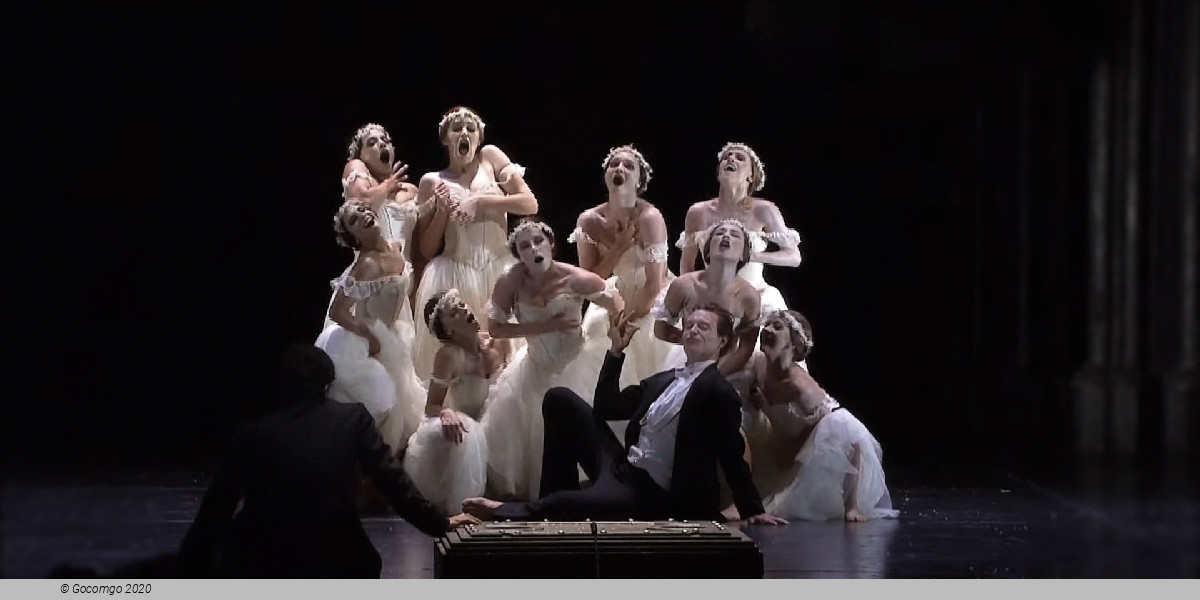
The scientist Faust is consumed by a thirst for unrestrained power and eternal youth – and trades his soul to achieve it. Based on Goethe’s Faust, composer Charles Gounod created one of Romanticism’s most-loved French operas.

The Faust myth is one of the central narratives of world literature and deals with insatiable lust for knowledge and the quest of omnipotence and ultimate freedom. Goethe’s Faust inspired Gounod to create a loyal portrait of the calculated desires of his contemporary times.

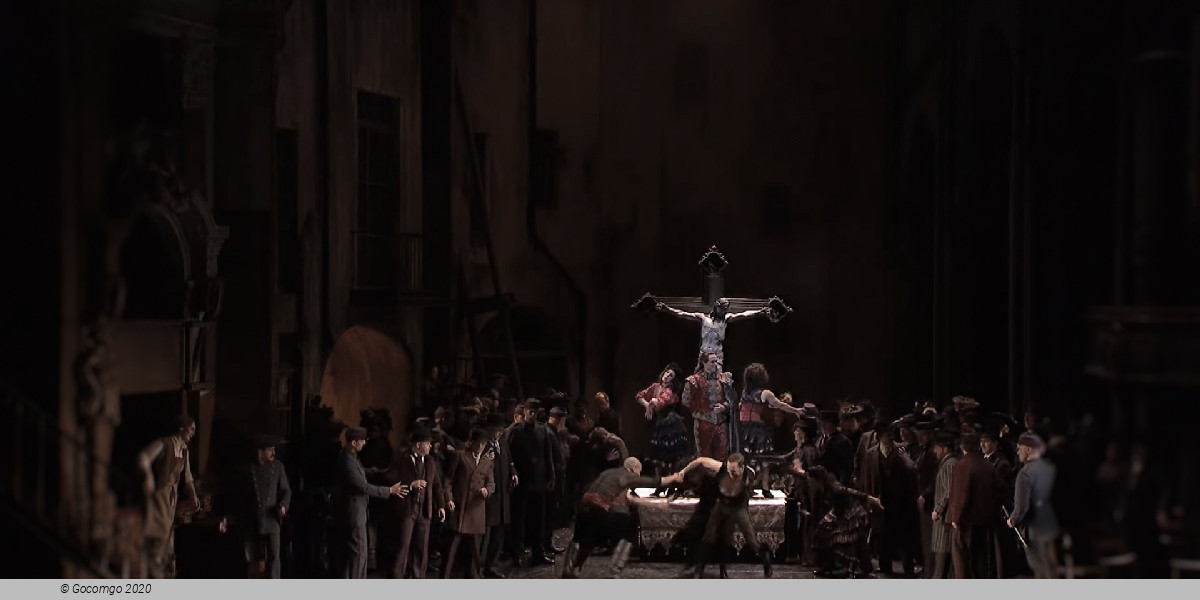
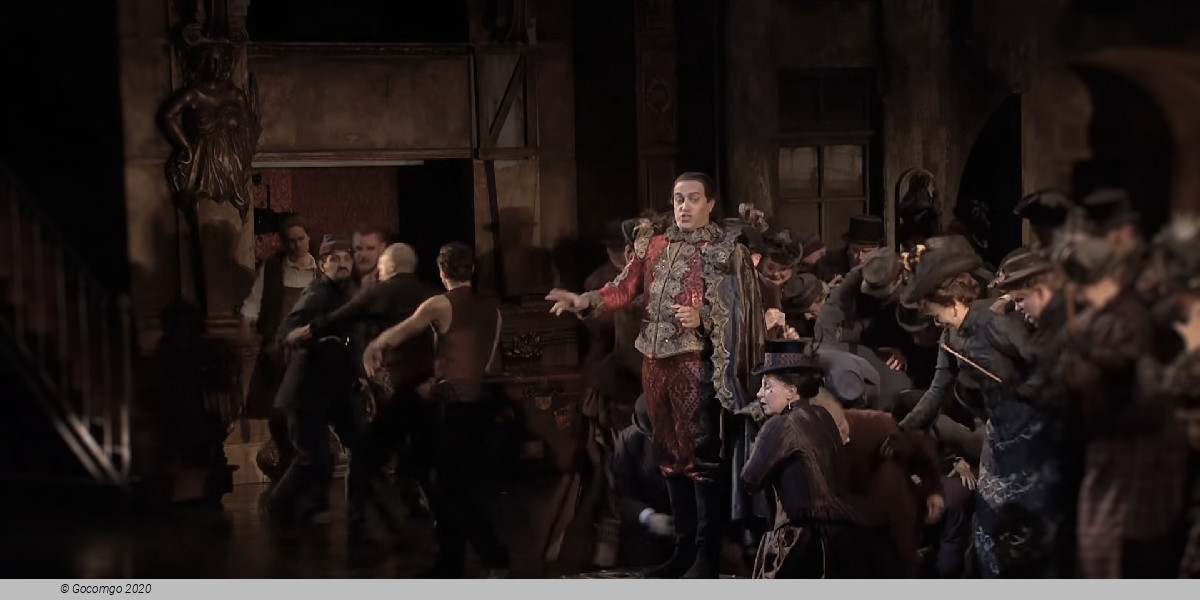
Gounod’s masterpiece is staged with classic grace by German director Jan Philipp Gloger. The countless musical highlights include ‘Valentin’s Prayer’, Marguerite’s ‘The Jewel Song’ and the ‘Soldiers’ Chorus’, the latter performed by the Opera Ensemble Chorus.

Tragedy strikes the young Marguerite as she falls victim to Faust’s possessive appetite – a theme that in many ways mirrors the revelations of violations, harassment and abuse of our own times.

Niels Jørgen Riis of the Royal Danish Opera Ensemble makes his debut as Faust, who seals his pact with the devil. Sofie Elkjær Jensen also stages her inaugural appearance in the role as the pure-hearted Marguerite, the object of Faust’s desires.

Mephistopheles, the true protagonist whose curse has immured Marguerite, is performed by Kyungil Ko.

History
Premiere of this production: 19 March 1859, Théâtre Lyrique , Paris

Faust is an opera in five acts by Charles Gounod to a French libretto by Jules Barbier and Michel Carré from Carré's play Faust et Marguerite, in turn loosely based on Johann Wolfgang von Goethe's Faust, Part One. It debuted at the Théâtre Lyrique on the Boulevard du Temple in Paris on 19 March 1859, with influential sets designed by Charles-Antoine Cambon and Joseph Thierry, Jean Émile Daran, Édouard Desplechin, and Philippe Chaperon.

Synopsis

Place: Germany
Time: 16th century

Act 1

Faust's cabinet

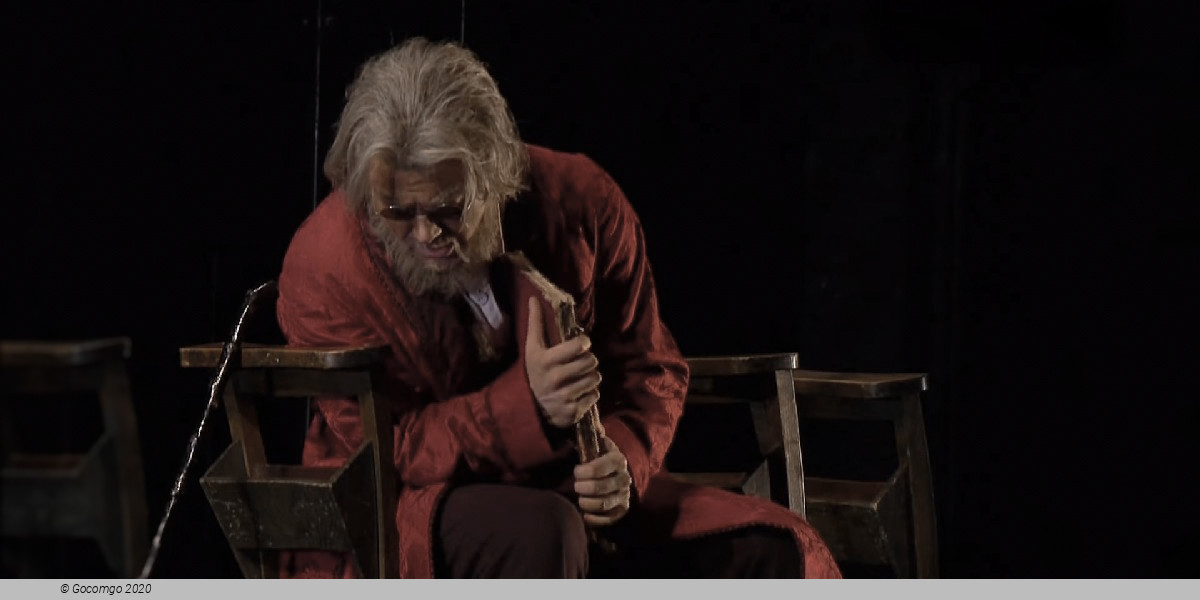
Faust, an aging scholar, determines that his studies have come to nothing and have only caused him to miss out on life and love (Rien! En vain j'interroge). He attempts to kill himself (twice) with poison but stops each time when he hears a choir. He curses hope and faith, and asks for infernal guidance. Méphistophélès appears (duet: Me voici) and, with a tempting image of Marguerite at her spinning wheel, persuades Faust to buy Méphistophélès's services on earth in exchange for Faust's in Hell. Faust's goblet of poison is magically transformed into an elixir of youth, making the aged doctor a handsome young gentleman; the strange companions then set out into the world.

Act 2

At the city gates

A chorus of students, soldiers and villagers sings a drinking song (Vin ou Bière). Valentin, leaving for war with his friend Wagner, entrusts the care of his sister Marguerite to his youthful friend Siébel (O sainte médaille ... Avant de quitter ces lieux). Méphistophélès appears, provides the crowd with wine, and sings a rousing, irreverent song about the Golden Calf (Le veau d'or). Méphistophélès maligns Marguerite, and Valentin tries to strike him with his sword, which shatters in the air. Valentin and friends use the cross-shaped hilts of their swords to fend off what they now know is an infernal power (chorus: De l'enfer). Méphistophélès is joined by Faust and the villagers in a waltz (Ainsi que la brise légère). Marguerite appears and Faust declares his admiration, but she refuses Faust's arm out of modesty, a quality that makes him love her even more.

Act 3

Marguerite's garden

The lovesick boy Siébel leaves a bouquet for Marguerite (Faites-lui mes aveux). Faust sends Méphistophélès in search of a gift for Marguerite and sings a cavatina (Salut, demeure chaste et pure) idealizing Marguerite as a pure child of nature. Méphistophélès brings in a decorated box containing exquisite jewelry and a hand mirror and leaves it on Marguerite's doorstep, next to Siébel's flowers. Marguerite enters, pondering her encounter with Faust at the city gates, and sings a melancholy ballad about the King of Thule (Il était un roi de Thulé). Marthe, Marguerite's neighbour, notices the jewellery and says it must be from an admirer. Marguerite tries on the jewels and is captivated by how they enhance her beauty, as she sings in the famous aria, the Jewel Song (Ah! je ris de me voir si belle en ce miroir). Méphistophélès and Faust join the women in the garden and romance them. Marguerite allows Faust to kiss her (Laisse-moi, laisse-moi contempler ton visage), but then asks him to go away. She sings at her window for his quick return, and Faust, listening, returns to her. Under the watchful eye and malevolent laughter of Méphistophélès, it is clear that Faust's seduction of Marguerite will be successful.

Act 4

Marguerite's room / A public square outside her house / A cathedral

[Note: The scenes of acts 4 and 5 are sometimes given in a different order and portions are sometimes shortened or cut in performance.]

After being made pregnant and seemingly abandoned by Faust, Marguerite has given birth and is a social outcast. She sings an aria at her spinning wheel (Il ne revient pas). Siébel stands by her. The scene shifts to the square outside Marguerite's house. Valentin's company returns from the war to a military march (Deposons les armes and Gloire immortelle de nos aïeux, the well-known "soldiers' chorus"). Siébel asks Valentin to forgive Marguerite. Valentin rushes to her cottage. While he is inside Faust and Méphistophélès appear, and Méphistophélès, knowing that Marguerite is not in there alone, sings a mocking burlesque of a lover's serenade under Marguerite's window (Vous qui faites l'endormie). Valentin takes the bait and comes out of the cottage, now knowing that Faust has debauched his sister. The two men fight, but Faust is reluctant to hurt the brother of the woman he adores. Méphistophélès blocks Valentin's sword, allowing Faust to make the fatal thrust. With his dying breath Valentin blames Marguerite for his death and condemns her to Hell before the assembled townspeople (Ecoute-moi bien Marguerite). Marguerite goes to the church and tries to pray there but is stopped, first by the sadistic Méphistophélès and then by a choir of devils. She finishes her prayer but faints when she is cursed again by Méphistophélès.

Act 5

The Harz mountains on Walpurgis Night / A cavern / The interior of a prison

Méphistophélès and Faust are surrounded by witches (Un, deux et trois). Faust is transported to a cave of queens and courtesans, and Méphistophélès promises to provide Faust with the love of the greatest and most beautiful women in history. An orgiastic ballet suggests the revelry that continues throughout the night. As dawn approaches, Faust sees a vision of Marguerite and calls for her. Méphistophélès helps Faust enter the prison where Marguerite is being held for killing her child. They sing a love duet (Oui, c'est toi que j'aime). Méphistophélès states that only a mortal hand can deliver Marguerite from her fate, and Faust offers to rescue her from the hangman, but she prefers to trust her fate to God and His angels (Anges purs, anges radieux). At the end she asks why Faust's hands are covered in blood, pushes him away, and falls down motionless. Méphistophélès curses, as a voice on high sings "Sauvée!" ("Saved!"). The bells of Easter sound and a chorus of angels sings "Christ est ressuscité!" ('"Christ is risen!"). The walls of the prison open, and Marguerite's soul rises to heaven. In despair Faust follows it with his eyes; he falls to his knees and prays. Méphistophélès is turned away by the shining sword of the archangel.

Venue Info

Royal Danish Theatre - Copenhagen
Location   August Bournonvilles Passage 2-8

The Royal Danish Theatre is the major opera house in Denmark. It has been located at Kongens Nytorv in Copenhagen since 1748, originally designated as the king's theatre but with public access. The theatre presents opera, the Royal Danish Ballet, classical music concerts (by the Royal Danish Orchestra, which dates back to 1448), and drama in several locations.

The Royal Danish Theatre organization is under the control of the Danish Ministry of Culture, and its objectives are to ensure the staging of outstanding performances that do justice to the various stages that it controls.

The first edifice on the site was designed by court architect Nicolai Eigtved, who also masterminded Amalienborg Palace. In 1774, the old theatre seating 800 theatergoers were reconstructed by architect C.F. Harsdorff to accommodate a larger audience.

During the theatre's first seasons the staffing was modest. Originally, the ensemble consisted of eight actors, four actresses, two male dancers, and one female dancer. Gradually over the following decades, the Royal Danish Theatre established itself as the kind of multi-theatre we know today, home to drama, opera, ballet, and concerts – all under the same roof and management.

An important prerequisite for the theatre's artistic development is its schools. The oldest is the ballet school, established at the theatre in 1771. Two years later, a vocal academy was established as a forerunner for the opera academy. A number of initiatives were considered regarding a drama school, which was established much later.

King Frederik VI, who ascended the throne in 1808, is probably the monarch who most actively took part in the management of the Royal Danish Theatre, not as an arbiter of taste but as its supreme executive chef.

The theatre's bookkeeping accounts of these years show numerous endorsements where the king took personal decisions on everything from wage increases and bonuses to the purchase of shoelaces for the ballerinas. Indeed, the Royal Danish Theatre became the preoccupation of an introverted nation, following the English Wars had suffered a state bankruptcy. "In Denmark, there is only one city and one theatre," as philosopher Søren Kierkegaard put it.

This was the theatre to which the 14-year-old fairytale storyteller Hans Christian Andersen devoted his early ambition. This was also the theatre that became the social and artistic focal point of the many brilliant artists of Denmark's Golden Age.

After the abolition of absolute monarchy in 1849, the Royal Danish Theatre's status as "the city's theatre" fell into decline. No longer enjoying a monopoly within the performing arts, the Royal Danish Theatre was now required by its new owner, the state, to serve the entire nation. The dilapidated building at Kongens Nytorv also found it hard to compete with the splendor of the new popular stage that was rapidly emerging across town. The solution was to construct a brand new theatre building. It was designed in the Historicist style of the times by architects William Dahlerup and Ove Pedersen and situated alongside the old theatre, which was subsequently demolished.

The inauguration of what we today call the Old Stage took place on 15 October 1874. Here opera and ballet were given ample scope. But due to the scale of the building, the auditorium was less suited for spoken drama, which is why a new playhouse was required.

The Royal Danish Theatre has over the past decade undergone the most extensive transformation ever in its over 250-year history. The Opera House in Copenhagen was inaugurated in January 2005, donated by the AP Møller and Chastine Mc-Kinney Møller Foundation, and designed by architect Henning Larsen. And the Royal Danish Playhouse was completed in 2008. Located by Nyhavn Canal across from the Opera House, the playhouse is designed by architects Boje Lundgaard and Lene Tranberg.

Today, the Royal Danish Theatre comprises the Old Stage, located by Kongens Nytorv, the Opera House, and the Royal Danish Playhouse. 

Important Info
Type: Opera
City: Copenhagen, Denmark
Starts at: 19:00
Intervals: 1
Duration: 3h 10min
Top of page