

Royal Danish Theatre: Der ferne Klang Tickets | Event Dates & Schedule | GoComGo.com

Der ferne Klang Tickets

Royal Danish Theatre, Copenhagen, Denmark
All photos (6)
1 / 6
Available Dates: 7 - 24 Mar, 2027 (6 events)
Important Info
Type: Opera
City: Copenhagen, Denmark
Duration: 3h 35min with 2 intervals
Intervals: 2
Sung in: German
Titles in: English,Danish

E-tickets: Print at home or at the box office of the event if so specified. You will find more information in your booking confirmation email.

You can only select the category, and not the exact seats.
If you order 2 or 3 tickets: your seats will be next to each other.
If you order 4 or more tickets: your seats will be next to each other, or, if this is not possible, we will provide a combination of groups of seats (at least in pairs, for example 2+2 or 2+3).

Cast
Performers
Choose the date to see the peformers
Creators
Composer: Franz Schreker
Director: Christof Loy
Librettist: Franz Schreker
Opera Company: The Royal Danish Opera Academy
Overview

It can be hard to see the wood for the trees – in art as in love. The composer Fritz learns this lesson at a devastating cost.

The artist’s all-consuming pursuit of perfection lies at the heart of Franz Schreker’s sumptuously orchestrated opera. We meet the young composer Fritz, driven by a desperate desire to recapture “the distant sound” he once heard so clearly. What begins as artistic longing becomes an obsession. He abandons everything – even his beloved Grete – and sets out into the world in search of the elusive sound, which seems only to fade the further he travels. Fritz fails to understand that the sound he seeks springs from the love of the woman he left behind. The question is whether he will realise this truth before it is too late.

Schreker wrote both libretto and music for Der ferne Klang. The opera was an immediate success and heralded a new flowering of German-language opera in the early 20th century. For two decades it remained a staple of the repertoire. But when the Nazis came to power, Schreker’s music was branded “degenerate” and banned because of his Jewish heritage. His operas, rich in colour and sensuous orchestration, are now – thankfully – returning to the world’s great opera stages.

The acclaimed director Christof Loy signs the production, while the Royal Danish Theatre’s Principal Conductor, Marie Jacquot, leads the Royal Danish Orchestra and an outstanding cast, including last season’s critically acclaimed Apollo in Orest, Thomas Blondelle, in the title role of Fritz.

History
Premiere of this production: 18 August 1912, Oper Frankfurt

Der ferne Klang (The Distant Sound) is an opera by Franz Schreker, set to his own libretto. Begun in 1903, it was first performed by the Oper Frankfurt on 18 August 1912. It was the composer's breakthrough to fame, and was frequently performed up until 1931, shortly after which the composer's music was proscribed by the Nazi regime. Largely forgotten after World War II, it has been revived by several opera companies in the 21st century.

Synopsis

Act 1
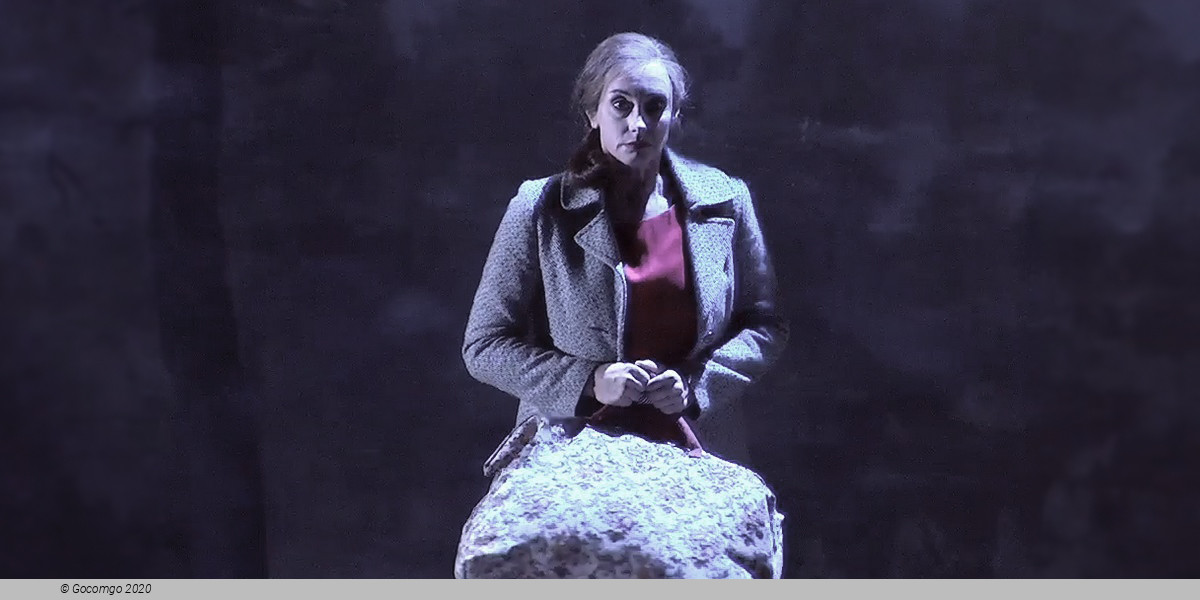
Fritz, a composer, and Grete Graumann, the daughter of a poor retired officer, are in love. Fritz wants to marry Grete, but he tells her that before that happens, he has to write a great piece of music and discover the mysterious distant sound ("der ferne Klang") which he hears within him. Grete tries in vain to convince him to stay with her. Fritz leaves his childhood sweetheart and goes in search of the distant sound.

As Grete is returning to her house, she meets a strange old woman, who asks the surprised girl about Fritz and promises to help Grete if she needs it. Grete continues on her way home.

Back at home, Grete's mother, Frau Graumann, speaks to Grete about the debts the family has accrued. Frau Graumann has decided that instead of borrowing money, Grete should get a job to help improve the money situation. Grete complains that her father drinks too much.

Just as she is saying this, Grete's father, Graumann, arrives with his drinking companions, an actor and Dr. Vigelius. Graumann has just gambled his daughter away to his landlord in a dice game and they have come to collect the debt. When Grete refuses, her father becomes furious. Before he can do violence to his daughter, his comrades drag Graumann back to the pub.

To calm her mother down, Grete pretends to be happy to marry the landlord. But when her mother leaves her alone in the room, she jumps out of the window and hurries away to find Fritz.

Grete cannot catch up with Fritz, and falls exhausted on the bank of a lake. She thinks of drowning herself, but then becomes conscious of the beauty of nature at night. She falls asleep, dreaming of their loving. The old woman, in reality a prostitute, appears again and promises to bring Grete a shining future if she will only follow her.

Act 2
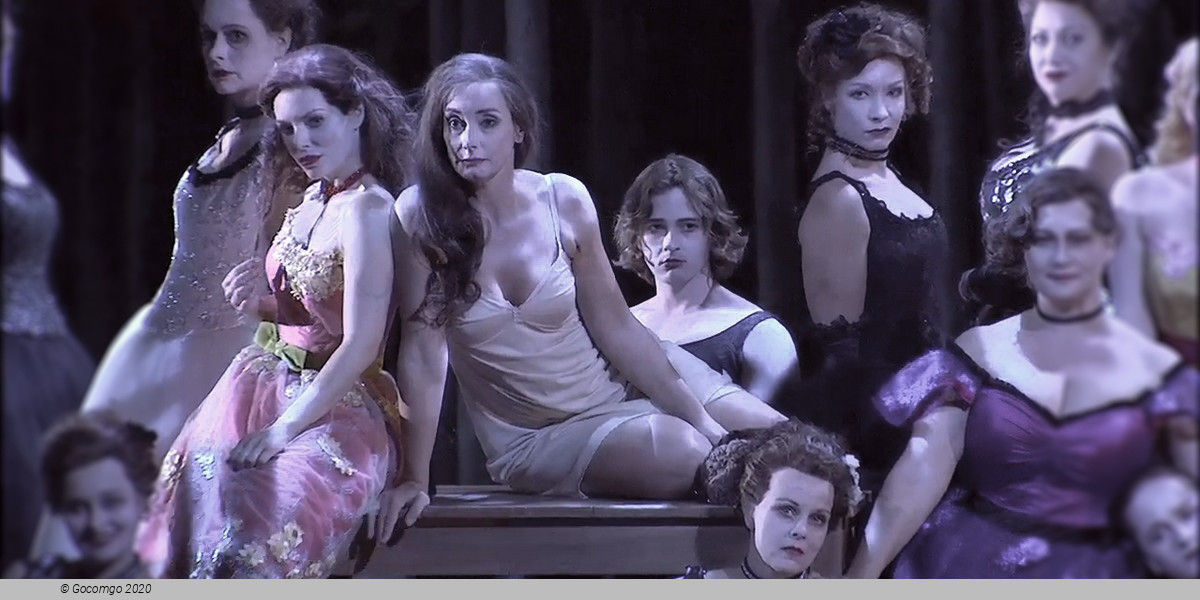
Ten years later, Grete is the celebrated queen of the demimonde on an island in the gulf of Venice, where we find her in the famous dance salon "La Casa di Maschere". But even with her fame and success, she still thinks of Fritz.

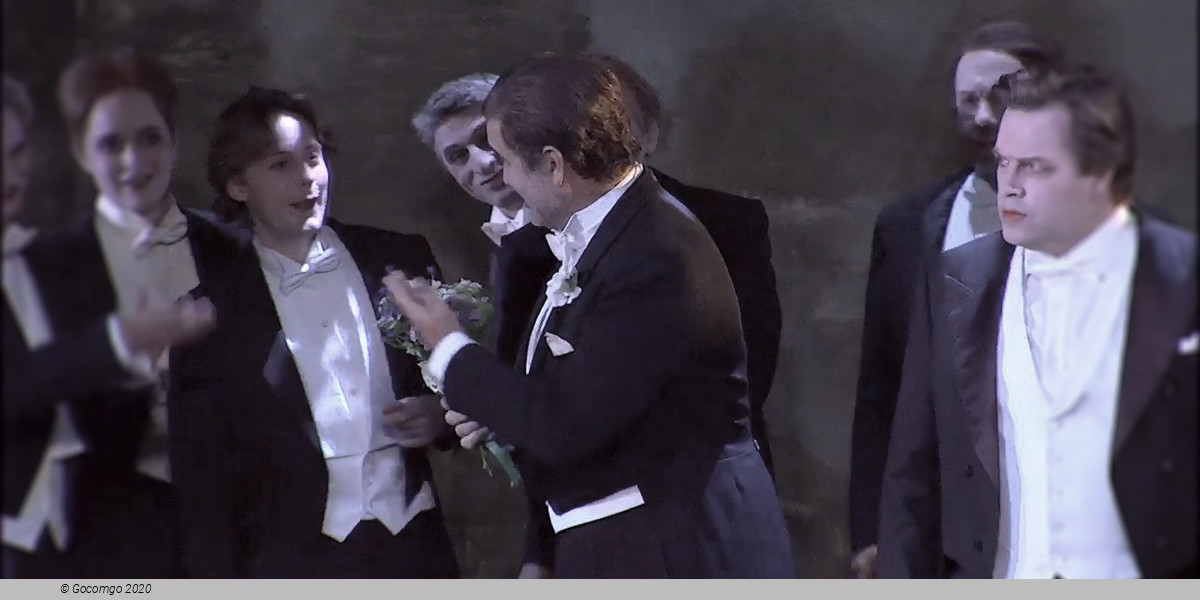
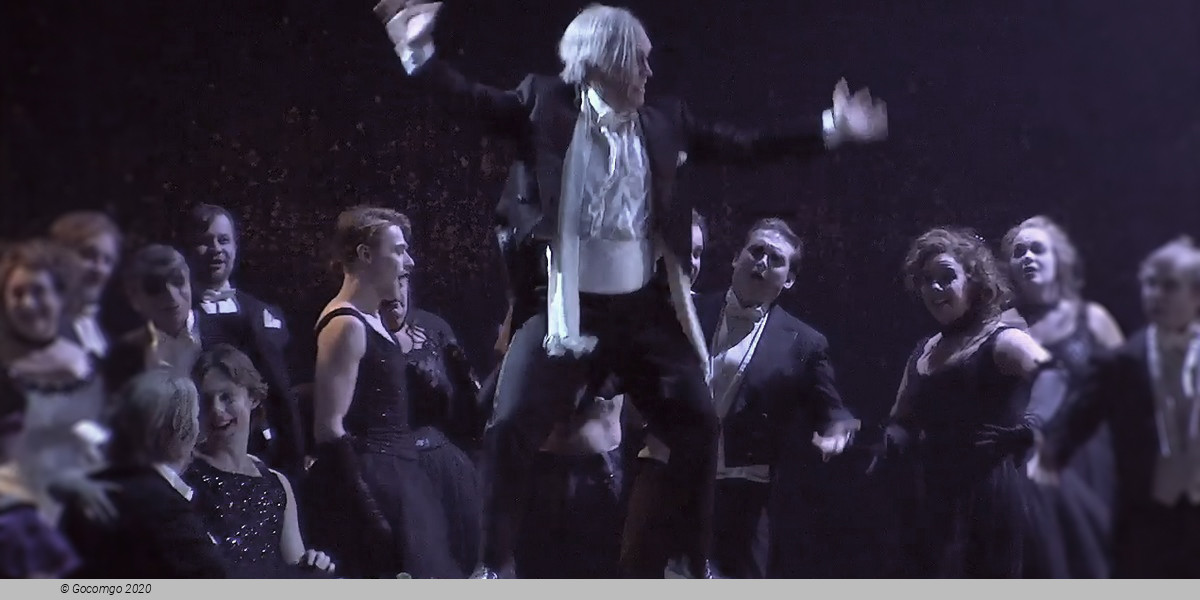
This particular day, she promises that she will end the suffering of her suitors and decide on her next lover, announcing that whoever can touch her heart the most deeply with a song will win her. The Count sings "In einem Lande ein bleicher König", a sad but beautiful song, which the crowd applauds. The Chevalier counters with "Das Blumenmädchen von Sorrent", a bawdy song that the crowd enjoys as they noisily join in the singing.

As Grete is making up her mind, a stranger appears in the midst. It is Fritz, who recognizes Grete immediately and goes straight to her. He tells her that he has not found the distant sound that has been eluding him these past ten years, so he has gone in search of her instead and now wants to make her his wife.

While Grete is still in love with Fritz and would like to be with him, she decides she must reveal to him that she is a courtesan, and then asks if he still wants to marry her. At first he does not believe it, but when the Count challenges him to a duel, Fritz, shaken and disappointed, refuses to duel and departs. Grete, in her despair, falls into the arms of the Count.

Act 3
Five more years have passed, and Fritz has completed his opera, Die Harfe. During the premiere, the first act goes well, but the second act ends with an audience riot because nobody likes the music.

Grete, meanwhile, has lost the protection of the Count and is now a common streetwalker. She hears of the riot and is concerned for Fritz. On the way home, she is accosted by someone on the street, and Dr. Vigelius and the actors, who are staying in a hotel close by, appear and save her from being molested. Dr. Vigelius escorts Grete to his house, telling her that he very much regrets allowing Graumann to gamble away his daughter.

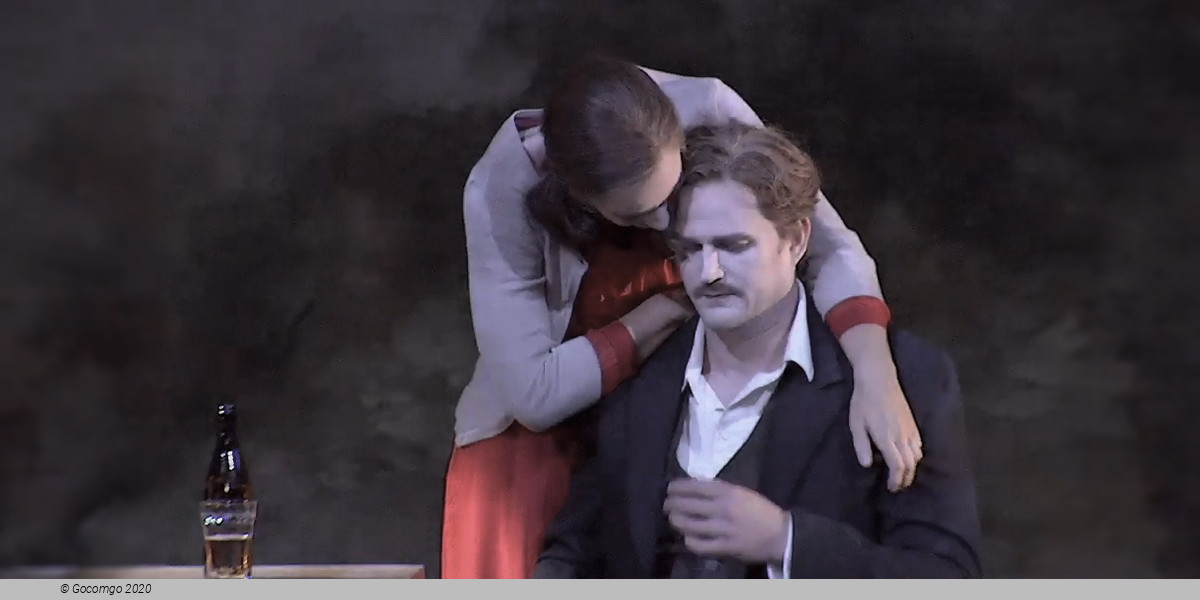
Fritz sits at home, old and depressed. He recognizes too late that he has destroyed not only his life, but also his love. In vain, his friend Rudolf tries to cheer him up and reminds him that there is still time to rewrite the opera. Fritz tells him that he is near the end of his life and only wants to see Grete, whom he foolishly pushed away twice. Rudolf goes to look for her, but Dr. Vigelius arrives instead, bringing Grete.

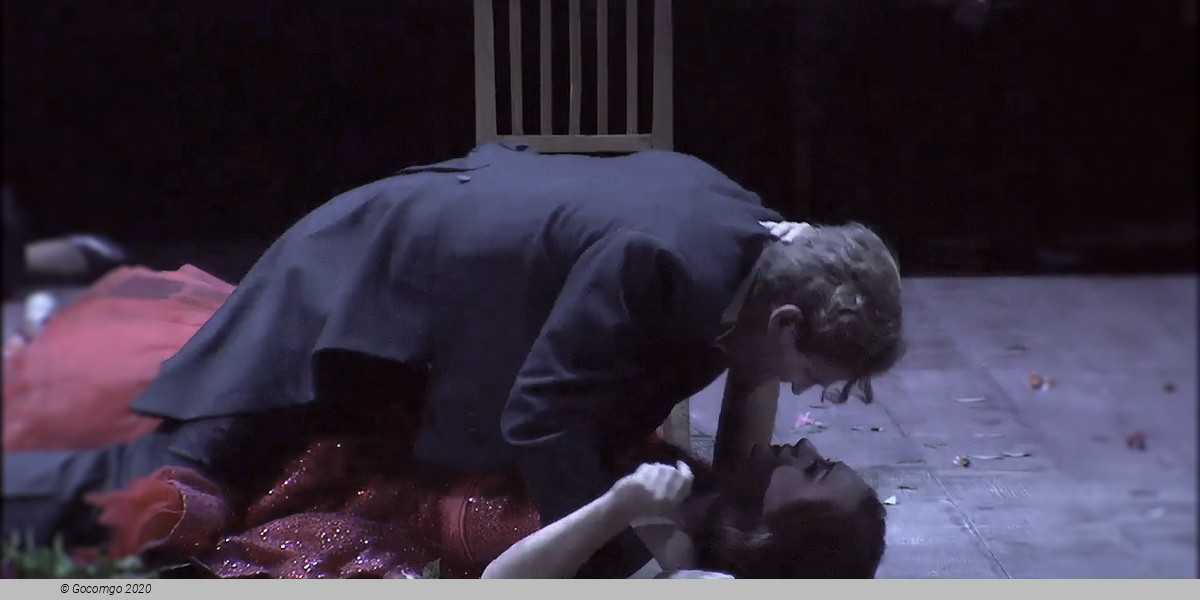
Grete and Fritz gratefully sink into each other's arms. Finally the composer hears the distant sound, which, it seems, was always within reach. He joyfully begins to write a new ending to his opera, but before he can finish, he dies in the arms of his beloved.

Venue Info

Royal Danish Theatre - Copenhagen
Location   August Bournonvilles Passage 2-8

The Royal Danish Theatre is the major opera house in Denmark. It has been located at Kongens Nytorv in Copenhagen since 1748, originally designated as the king's theatre but with public access. The theatre presents opera, the Royal Danish Ballet, classical music concerts (by the Royal Danish Orchestra, which dates back to 1448), and drama in several locations.

The Royal Danish Theatre organization is under the control of the Danish Ministry of Culture, and its objectives are to ensure the staging of outstanding performances that do justice to the various stages that it controls.

The first edifice on the site was designed by court architect Nicolai Eigtved, who also masterminded Amalienborg Palace. In 1774, the old theatre seating 800 theatergoers were reconstructed by architect C.F. Harsdorff to accommodate a larger audience.

During the theatre's first seasons the staffing was modest. Originally, the ensemble consisted of eight actors, four actresses, two male dancers, and one female dancer. Gradually over the following decades, the Royal Danish Theatre established itself as the kind of multi-theatre we know today, home to drama, opera, ballet, and concerts – all under the same roof and management.

An important prerequisite for the theatre's artistic development is its schools. The oldest is the ballet school, established at the theatre in 1771. Two years later, a vocal academy was established as a forerunner for the opera academy. A number of initiatives were considered regarding a drama school, which was established much later.

King Frederik VI, who ascended the throne in 1808, is probably the monarch who most actively took part in the management of the Royal Danish Theatre, not as an arbiter of taste but as its supreme executive chef.

The theatre's bookkeeping accounts of these years show numerous endorsements where the king took personal decisions on everything from wage increases and bonuses to the purchase of shoelaces for the ballerinas. Indeed, the Royal Danish Theatre became the preoccupation of an introverted nation, following the English Wars had suffered a state bankruptcy. "In Denmark, there is only one city and one theatre," as philosopher Søren Kierkegaard put it.

This was the theatre to which the 14-year-old fairytale storyteller Hans Christian Andersen devoted his early ambition. This was also the theatre that became the social and artistic focal point of the many brilliant artists of Denmark's Golden Age.

After the abolition of absolute monarchy in 1849, the Royal Danish Theatre's status as "the city's theatre" fell into decline. No longer enjoying a monopoly within the performing arts, the Royal Danish Theatre was now required by its new owner, the state, to serve the entire nation. The dilapidated building at Kongens Nytorv also found it hard to compete with the splendor of the new popular stage that was rapidly emerging across town. The solution was to construct a brand new theatre building. It was designed in the Historicist style of the times by architects William Dahlerup and Ove Pedersen and situated alongside the old theatre, which was subsequently demolished.

The inauguration of what we today call the Old Stage took place on 15 October 1874. Here opera and ballet were given ample scope. But due to the scale of the building, the auditorium was less suited for spoken drama, which is why a new playhouse was required.

The Royal Danish Theatre has over the past decade undergone the most extensive transformation ever in its over 250-year history. The Opera House in Copenhagen was inaugurated in January 2005, donated by the AP Møller and Chastine Mc-Kinney Møller Foundation, and designed by architect Henning Larsen. And the Royal Danish Playhouse was completed in 2008. Located by Nyhavn Canal across from the Opera House, the playhouse is designed by architects Boje Lundgaard and Lene Tranberg.

Today, the Royal Danish Theatre comprises the Old Stage, located by Kongens Nytorv, the Opera House, and the Royal Danish Playhouse. 

Important Info
Type: Opera
City: Copenhagen, Denmark
Duration: 3h 35min with 2 intervals
Intervals: 2
Sung in: German
Titles in: English,Danish

E-tickets: Print at home or at the box office of the event if so specified. You will find more information in your booking confirmation email.

You can only select the category, and not the exact seats.
If you order 2 or 3 tickets: your seats will be next to each other.
If you order 4 or more tickets: your seats will be next to each other, or, if this is not possible, we will provide a combination of groups of seats (at least in pairs, for example 2+2 or 2+3).

From
$ 117
Top of page