Time: 1519.
Place: Aragon, Aachen, and Zaragoza.
Act 1
Mountains of Aragon
The bandits demand the reason for Ernani's gloom (Chorus: Evviva! Beviam! Beviam! / "To you we drink"; Ernani pensoso! / "Ernani, so gloomy? Why, oh strong one, does care sit on your brow?"). Ernani replies that he loves Elvira (Recitative: "Thanks, dear friends"; Cavatina: Come rugiada al cespite / "As the flower turns to the sun"), who is about to be married against her will to old Gomez de Silva (O tu che l'alma adora). He asks the bandits to abduct her.
In Elvira's chamber
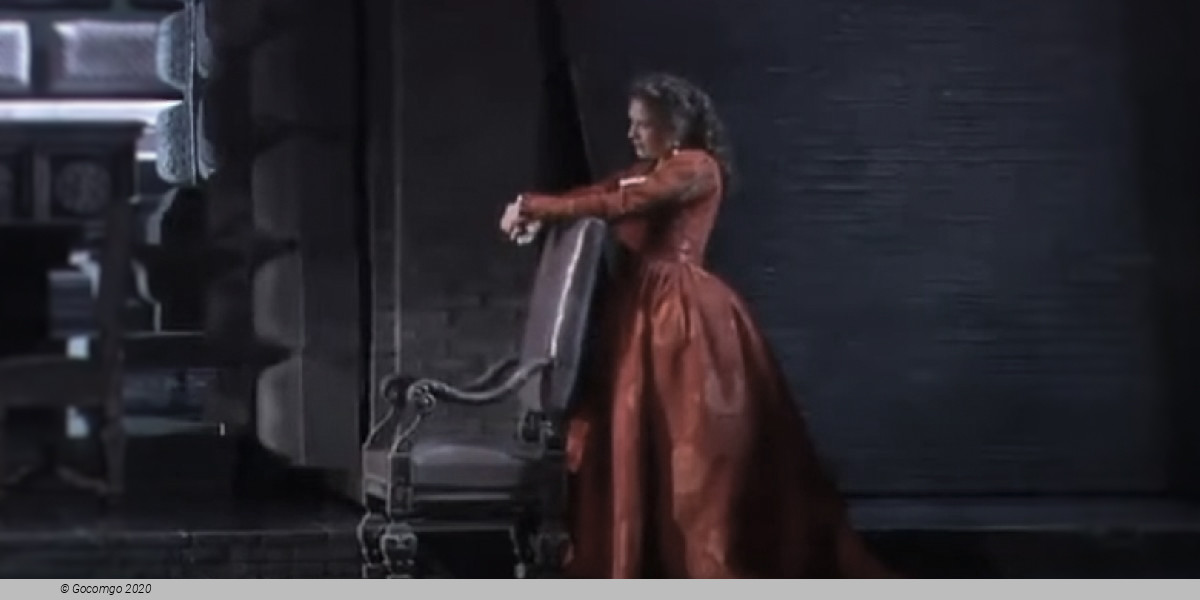
Elvira worries about her upcoming marriage (Scena: "Now sinks the sun and Silva does not return"; Cavatina: Ernani, Ernani involami / "Ernani, Ernani, save me") as servants deliver Silva's wedding presents to her. She reaffirms her love for Ernani (Tutto sprezzo che d'Ernani / "I scorn everything which does not speak to my heart of Ernani"). King Carlos, disguised as a peasant, enters, but Elvira recognizes him and rejects the love that he offers her. As he attempts to use force, she grasps a dagger, but Ernani suddenly arrives and stops Carlos (Trio: "A friend comes quickly to your aid"). Carlos recognizes Ernani as the leader of the bandits. Ernani replies that Carlos robbed him of his lands and forced him into a life of banditry. As he invites Carlos to fight, Silva appears and sees Ernani (Infelice!... e tu credevi... che mai vegg'io! / "Dreadful sight"; Silva's cavatina: "Unhappy man! You thought this lovely...was yours").
Ernani offers to fight them both when Riccardo approaches and recognises the king. Silva is horrified and apologizes to the king, while Ernani whispers to Elvira to prepare to flee.
Act 2
A hall in Silva's palace
Ernani enters disguised as a pilgrim. He asks for shelter, which Silva grants him, and then learns from Silva that he is about to marry Elvira, who believes Ernani to be dead. Ernani reveals his true identity to Elvira and she tells him that she plans to kill herself at the altar (Duet: Ah, morir potessi adesso / "Ah, if I could die now"). Silva walks in at that moment, discovers the pair, but agrees to keep his word to Ernani and protect him from the king, for which Ernani will owe him a perpetual debt. (Trio: No, vendetta più tremenda / "No, I want to keep a greater revenge"). Carlos arrives and wishes to know why the castle is barred. Silva refuses to surrender Ernani (Carlos' aria: Lo vedremo, veglio audace / "We shall see, you bold old man") and Don Carlos's men cannot find Ernani's hiding place. Silva keeps his word, even when the king secures Elvira as a hostage. Silva releases Ernani, and then challenges him to a duel. Ernani refuses to fight, but unites with Silva in his plans to free Elvira from the king. Ernani swears to appear at the summons of Silva, wherever he may be at that time (Odi il voto o grande Iddio / "Oh God, hear the vow"),
[Added for Parma, 26 December 1844: "at Rossini's request, Verdi wrote a grand aria for the tenor Nicola Ivanoff". Ernani gathers his men to him. His aria of vengeance: Sprezzo la vita né più m'alletta / "Life means nothing to me, only hope of vengeance" concludes the act].
Act 3
In the burial vault of Charles the Great at Aachen
Carlos visits the grave of the emperor Charlemagne (Carlo Magno), whose successor, the new Holy Roman Emperor, is being elected by delegates from the relevant countries. Carlos resolves to change his life if he is crowned (Cavatina: Oh, de' verd'anni miei/ "Oh, the dreams and deceits of my youth"). Hiding behind the vault, he overhears a gathering of conspirators including Silva and Ernani. Ernani swears to murder Carlos. The conspiracy is foiled when Carlos's attendants enter and surprise the conspirators. The king commands that all the traitorous noblemen be executed. Ernani steps forward, declaring that thus he must die too; he is not the bandit Ernani, but Don Juan of Aragon, whose lands were taken from him. Elvira, who had been brought to Carlos as his intended empress, begs mercy for her lover, and Carlos, whose mood has changed, forgives them both and places Elvira's hand in that of Ernani.
Act 4
Ernani's Castle
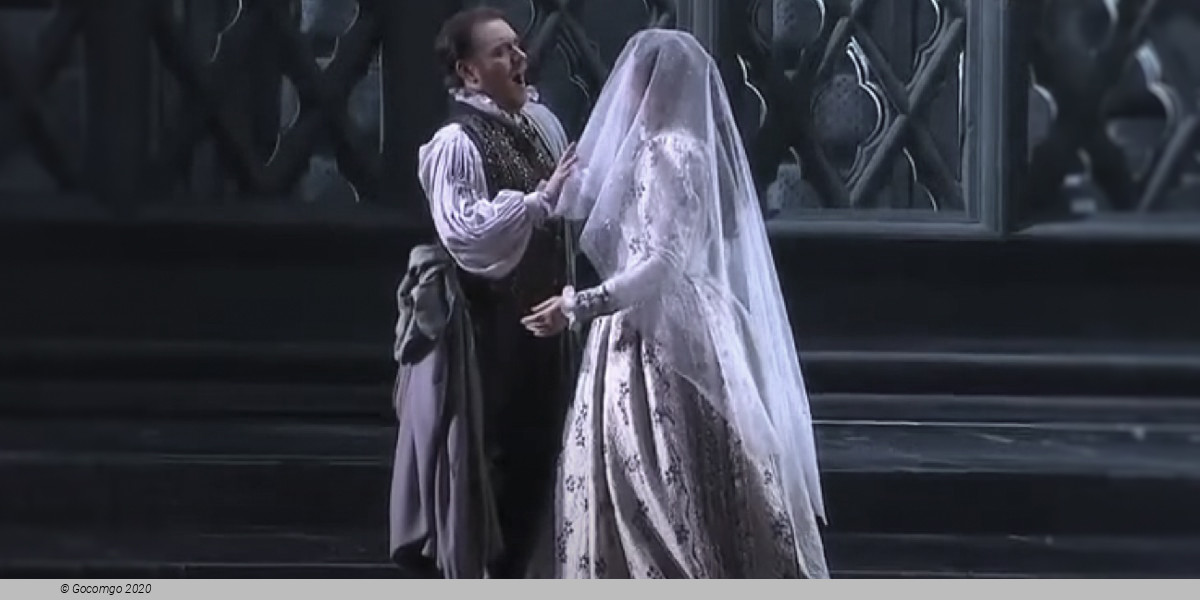
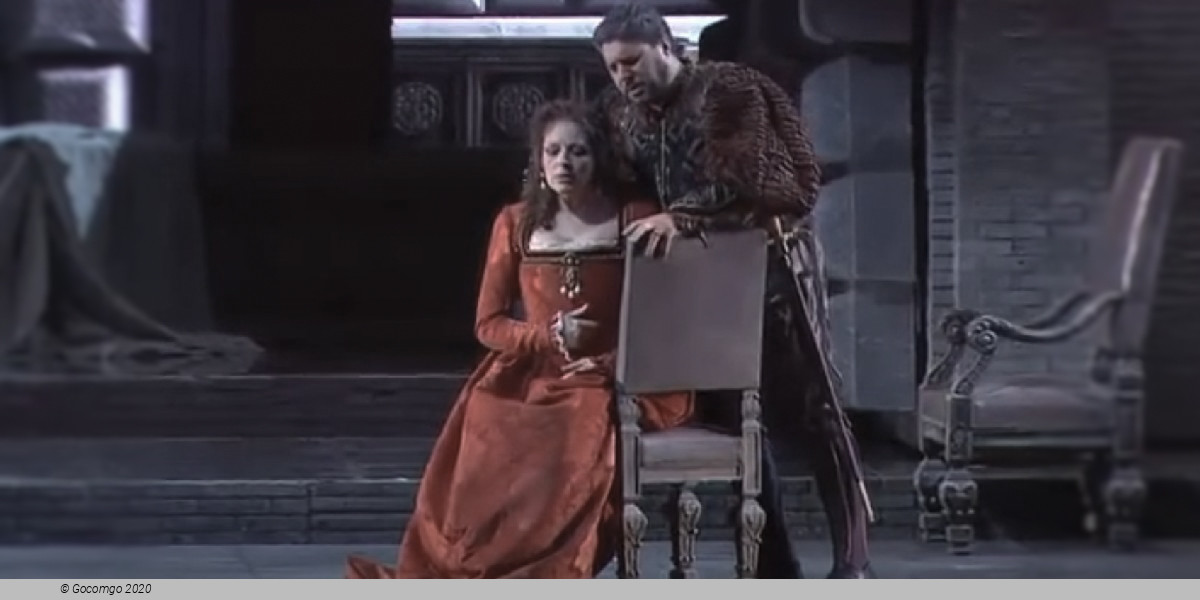
Elvira and Ernani have just been married, when, in consternation, Ernani hears a bugle call. Silva arrives and silently hands Ernani a dagger. Ernani asks for time to "sip from the cup of love" (Ascolta, ascolta un detto ancor/ "Listen, just one word...") but, cursed by Silva as a coward, Ernani keeps his oath and stabs himself in the heart (Trio with Silva: È vano, o donna, il piangere, è vano / "Your weeping is in vain, woman"). He dies in Elvira's arms, telling her to live.


 Av. del Professor López Piñero, 1