
Prague National Theatre 27 January 2024 - Mefistofele | GoComGo.com

Mefistofele

Prague National Theatre, The State Opera, Prague, Czech Republic
All photos (9)
Select date and time
7 PM

E-tickets: Print at home or at the box office of the event if so specified. You will find more information in your booking confirmation email.

You can only select the category, and not the exact seats.
If you order 2 or 3 tickets: your seats will be next to each other.
If you order 4 or more tickets: your seats will be next to each other, or, if this is not possible, we will provide a combination of groups of seats (at least in pairs, for example 2+2 or 2+3).

Important Info
Type: Opera
City: Prague, Czech Republic
Starts at: 19:00
Duration: 2h 45min

E-tickets: Print at home or at the box office of the event if so specified. You will find more information in your booking confirmation email.

You can only select the category, and not the exact seats.
If you order 2 or 3 tickets: your seats will be next to each other.
If you order 4 or more tickets: your seats will be next to each other, or, if this is not possible, we will provide a combination of groups of seats (at least in pairs, for example 2+2 or 2+3).

Overview

For a long time, Arrigo Boito (1842-1918) was more acclaimed as a writer and translator than as a composer. He supplied a number of Italian opera creators with librettos and there is no doubt that his excellent texts played a role in the success of Verdi’s final works Otello and Falstaff. In Mefistofele, his one and only complete opera, Boito turned to the Faust theme. He considered the previous, extremely popular setting of Goethe’s Faust by Charles Gounod a superficial intellectual treatment of the multilayered drama. Boito himself made use of the celebrated German poet’s text almost literally, including the far less frequently staged second part. The premiere of Mefistofele at Milan’s La Scala on 5 March 1868 was a flop. Even though the Prologue in Heaven, one of the most amazing opera scenes there is, enraptured the audience, their enthusiasm gradually ebbed away, to be ultimately replaced by booing, hissing and misunderstanding. Seven years later, Boito thoroughly revised and radically shortened the score. The first performance of the opera’s new version, on 4 October 1875 at the Teatro Comunale in Bologna, was an unqualified success. Boito continued to make changes to Mefistofele until the definitive version was presented in 1881 at La Scala to great acclaim. 

History
Premiere of this production: 05 March 1868, La Scala, Milan

Mefistofele is an opera in a prologue and five acts, later reduced to four acts and an epilogue, the only completed opera with music by the Italian composer-librettist Arrigo Boito. 

Synopsis

Prologue

A heavenly chorus of angels praises God the Creator. Mefistofele scornfully declares that he can win the soul of Faust. His challenge is accepted by the Forces of Good.

Act 1
Scene 1, Easter Sunday

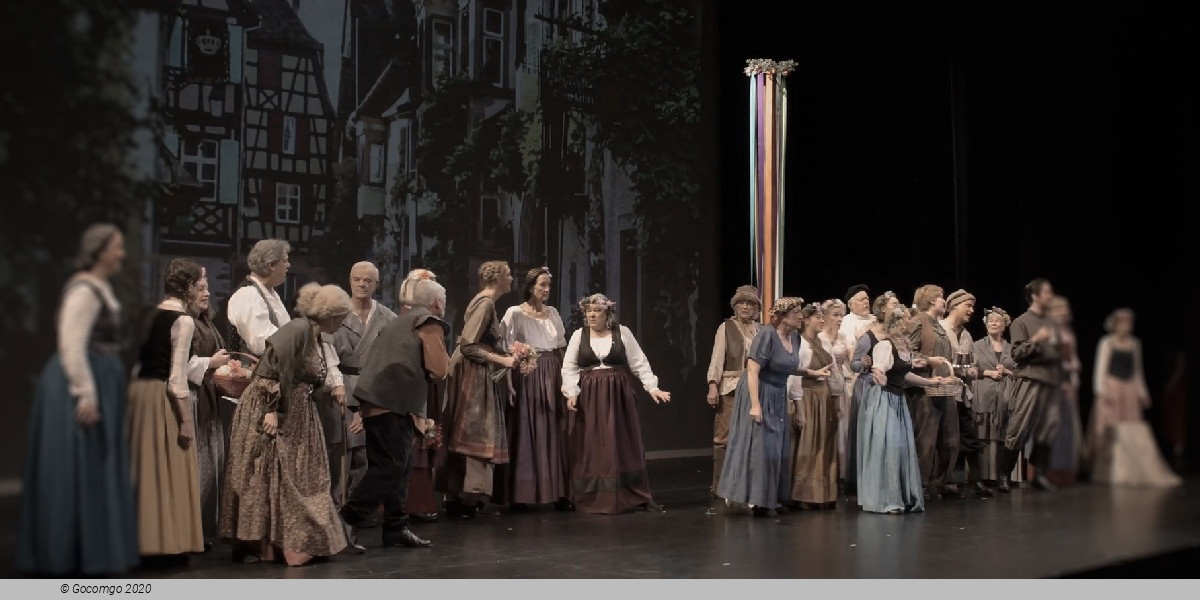
The aged Dr. Faust and his pupil Wagner are watching the Easter celebrations in the main square in Frankfurt. Faust senses that they are being followed by a mysterious friar, about whom he senses something evil. Wagner dismisses his master’s feelings of unease and as darkness falls they return to Faust’s home.

Scene 2, The Pact

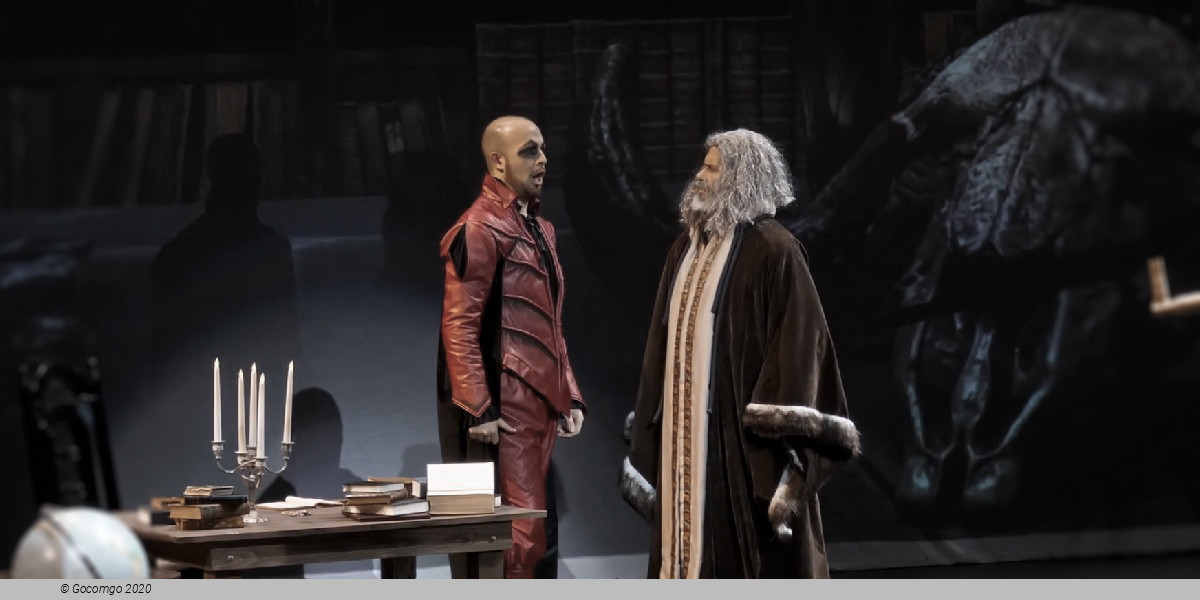
Faust is in his study, deep in contemplation. His thoughts are disturbed in dramatic fashion by the sudden appearance of the sinister friar, whom he now recognizes as a manifestation of the Devil (Mefistofele). Far from being terrified, Faust is intrigued and enters into a discussion with Mefistofele culminating in an agreement by which he will give his soul to the devil on his death in return for worldly bliss for the remainder of his life.

Act 2
Scene 1, The Garden

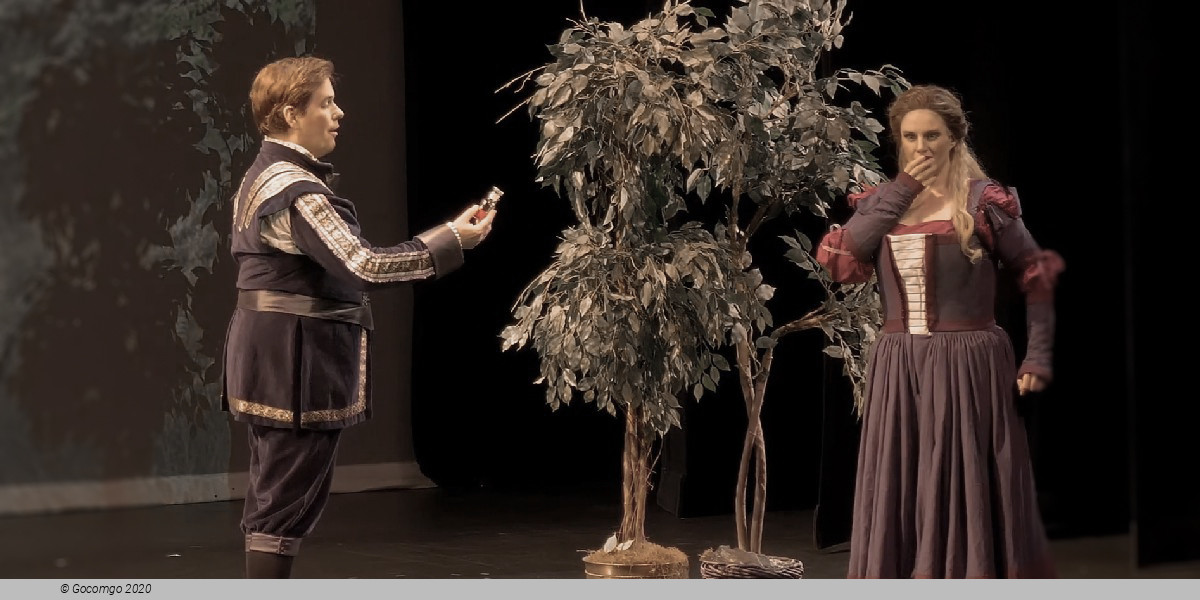
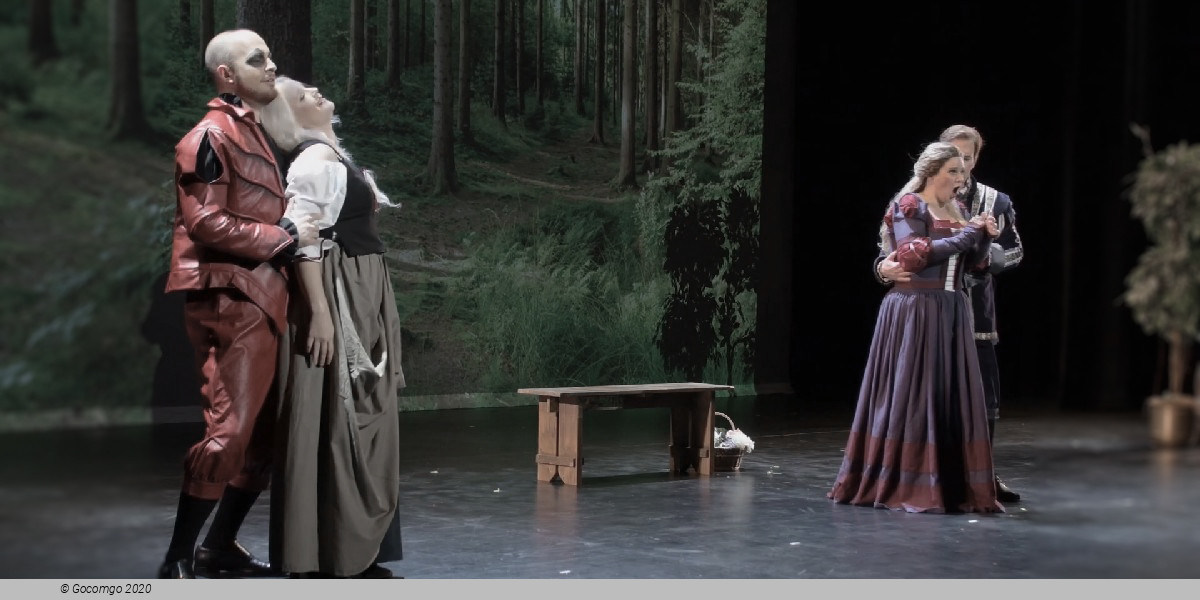
Restored to his youth, Faust has infatuated Margareta, an unsophisticated village girl. She is unable to resist his seductive charms and agrees to drug her mother with a sleeping draught and meet him for a night of passion. Meanwhile, Mefistofele amuses himself with Martha, another of the village girls.

Scene 2, The Witches Sabbath

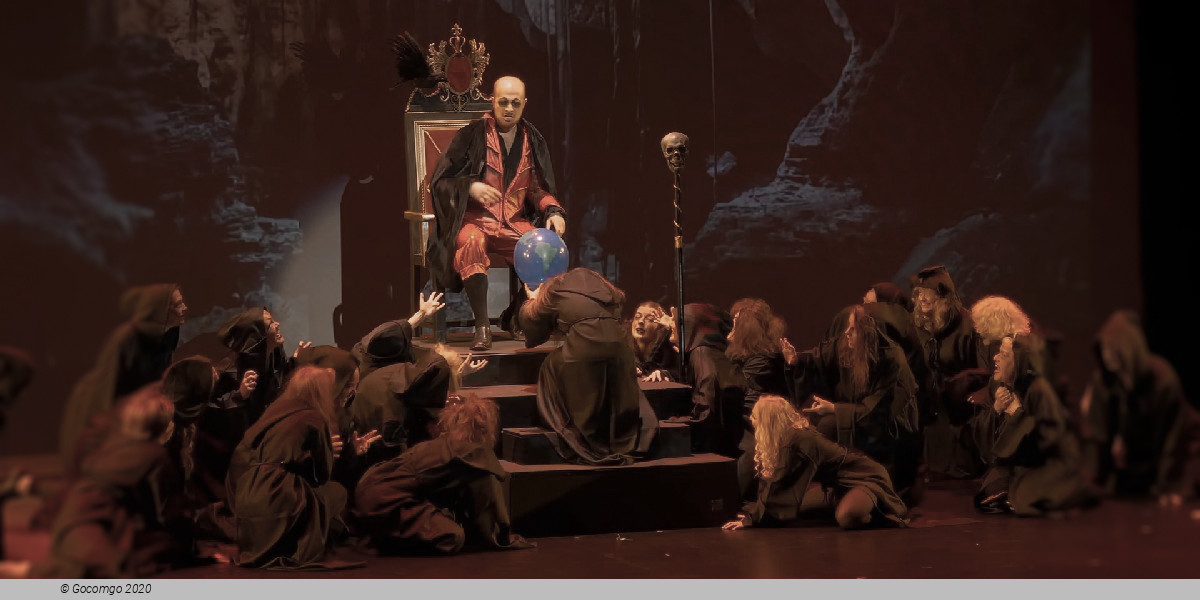
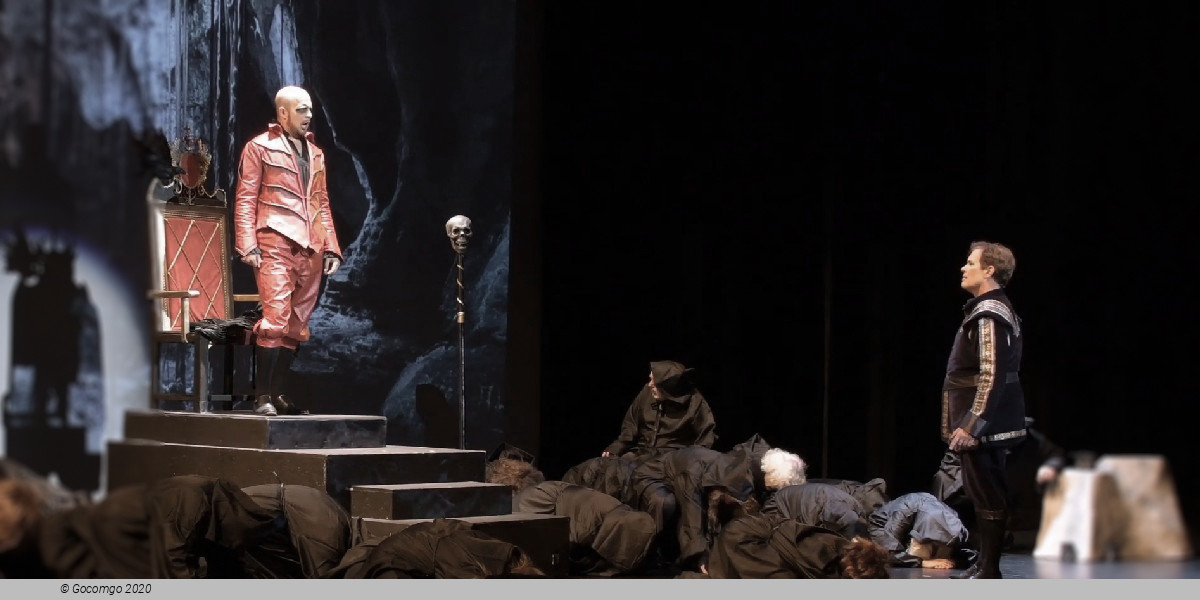
Mefistofele has carried Faust away to witness a Witches' Sabbath on the Brocken mountain. They reach to the top and hear the sound of witches approaching from below. They draw near and Mefistofele, declaring himself king, calls to them to bow down before him. The devil mounts his throne and proclaims his contempt for the World and all its worthless inhabitants. As the orgy reaches its climax, Faust sees a vision of Margherita, apparently in chains and with her throat cut. Mefistofele reassures him that the vision was a false illusion. The revels continue.

Act 3

Faust's vision had been true. Margareta lies in a dismal cell, her mind in a state of confusion and despair. She has been imprisoned and condemned to death for poisoning her mother with the sleeping draught supplied by Faust and for drowning the baby she had borne him. Faust begs Mefistofele to help them escape together. They enter the cell and at first Margareta does not recognize her rescuers. Her joy at being reunited with Faust turns to horror when she sees Mefistofele and recognizes that he is the Devil. Refusing to succumb to further evil, Margareta begs for divine forgiveness. She collapses to the cell floor as the Celestial choir proclaims her redemption.

Act 4

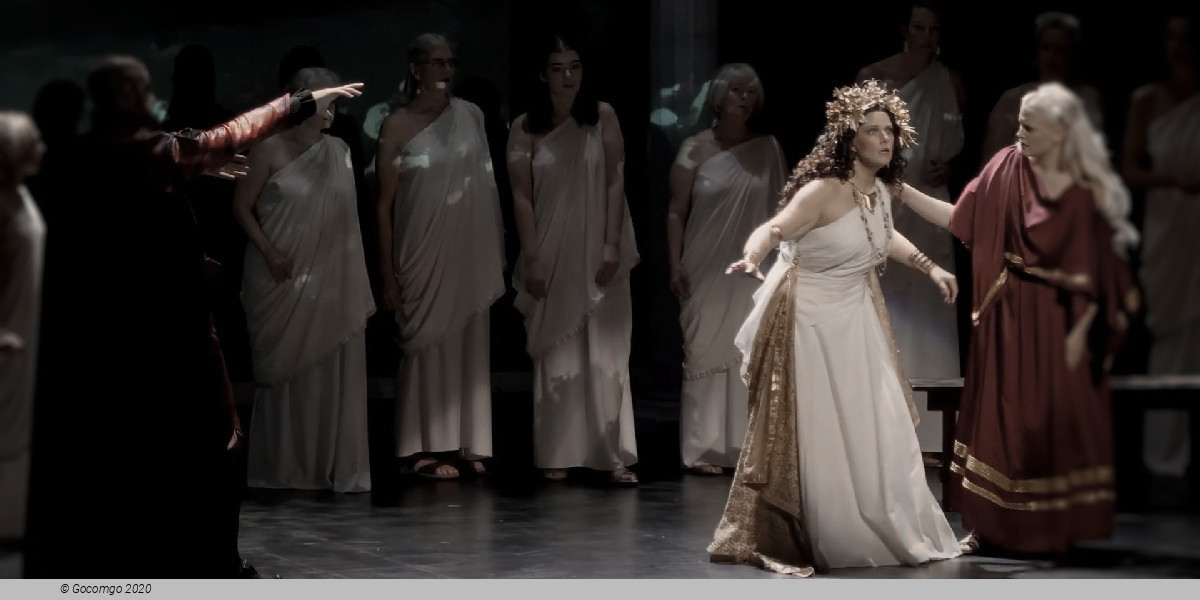
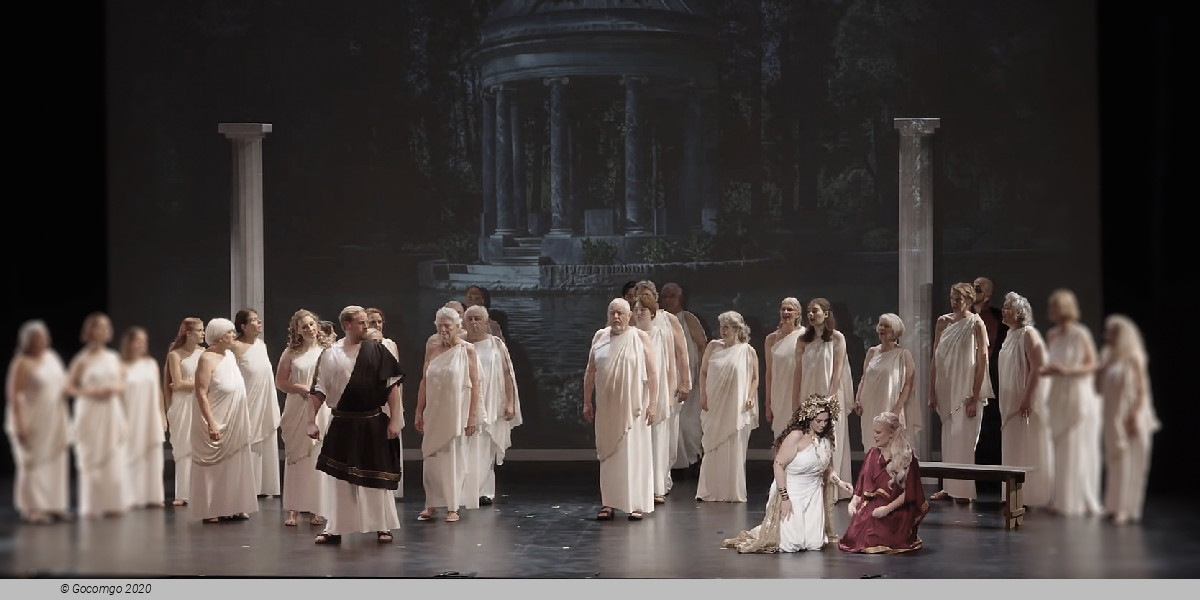
Mefistofele has now transported Faust back in time to Ancient Greece. Helen of Troy and her followers are enjoying the luxurious and exotic surroundings on the banks of a magnificent river. Faust, attired more splendidly than ever, is easily able to win the heart of the beautiful princess. In a passionate outpouring, they declare their undying love and devotion to each other.

Epilogue
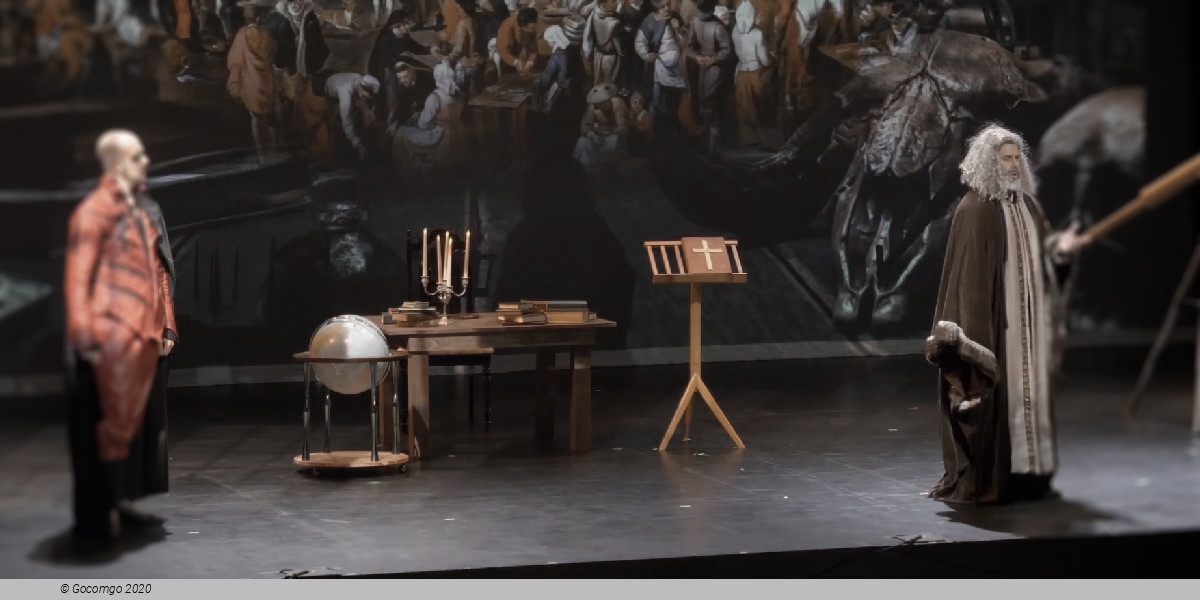
Back in his study, Faust, once more an old man, reflects that neither in the world of reality nor of illusion was he able to find the perfect experience he craved. He feels that the end of his life is close, but desperate for his final victory, Mefistofele urges him to embark on more exotic adventures. For a moment Faust hesitates, but suddenly seizing his Bible he cries out for God's forgiveness. Mefistofele has been thwarted; he disappears into the background as Faust dies and the Celestial choir once more sings of ultimate redemption.

Venue Info

Prague National Theatre - Prague
Location   Národní 2

The National Theatre is the prime stage of the Czech Republic. It is also one of the symbols of national identity and a part of the European cultural space, with a tradition spanning more than 130 years. It is the bearer of the national cultural heritage, as well as a space for free artistic creation.

The National Theatre (Czech: Národní divadlo) in Prague is known as the alma mater of Czech opera, and as the national monument of Czech history and art.

The National Theatre belongs to the most important Czech cultural institutions, with a rich artistic tradition, which helped to preserve and develop the most important features of the nation–the Czech language and a sense for a Czech musical and dramatic way of thinking.

Today, the National Theatre is made up of four artistic companies – the Opera, Drama, Ballet and Laterna magika. It artistically manages four stages – the three historical buildings: the National Theatre (1883), the State Opera (1888), and the Estates Theatre (1783), and the more recently opened New Stage (1983). The Opera, Drama and Ballet companies perform not only titles from the ample classical legacy, in addition to Czech works, they also focus on contemporary international creation.

Grand opening

The National Theatre was opened for the first time on 11 June 1881, to honour the visit of Crown Prince Rudolf of Austria. Bedřich Smetana's opera Libuše was given its world premiere, conducted by Adolf Čech. Another 11 performances were presented after that. Then the theatre was closed down to enable the completion of the finishing touches. While this work was under way a fire broke out on 12 August 1881, which destroyed the copper dome, the auditorium, and the stage of the theatre.

The fire was seen as a national catastrophe and was met with a mighty wave of determination to take up a new collection: Within 47 days a million guldens were collected. This national enthusiasm, however, did not correspond to the behind-the-scenes battles that flared up following the catastrophe. Architect Josef Zítek was no longer in the running, and his pupil architect Josef Schulz was summoned to work on the reconstruction. He was the one to assert the expansion of the edifice to include the block of flats belonging to Dr. Polák that was situated behind the building of the Provisional Theatre. He made this building a part of the National Theatre and simultaneously changed somewhat the area of the auditorium to improve visibility. He did, however, take into account with utmost sensitivity the style of Zítek's design, and so he managed to merge three buildings by various architects to form an absolute unity of style.

Important Info
Type: Opera
City: Prague, Czech Republic
Starts at: 19:00
Duration: 2h 45min
Top of page