
Oslo Opera House 12 October 2020 - Suor Angelica | GoComGo.com

Suor Angelica

Oslo Opera House, Main Stage, Oslo, Norway
All photos (7)
Select date and time
7 PM
Request for Tickets
Important Info
Type: Opera
City: Oslo, Norway
Starts at: 19:00
Acts: 1
Duration: 1h 15min

E-tickets: Print at home or at the box office of the event if so specified. You will find more information in your booking confirmation email.

You can only select the category, and not the exact seats.
If you order 2 or 3 tickets: your seats will be next to each other.
If you order 4 or more tickets: your seats will be next to each other, or, if this is not possible, we will provide a combination of groups of seats (at least in pairs, for example 2+2 or 2+3).

Overview

Concert performance of Puccini’s opera

In as little as one hour, Puccini’s Suor Angelica shows us how music can evoke truly powerful emotions. The opera is about the strength of a mother’s love – and deep sorrow.

Every day without fail, the nun Angelica has pined for the son who was taken away from her. When her aunt comes to the convent to tell her that her little boy died several years ago, Angelica’s world collapses. We hear her sorrow in “Senza mamma”, one of the most beautiful arias that Puccini ever wrote for the soprano voice.

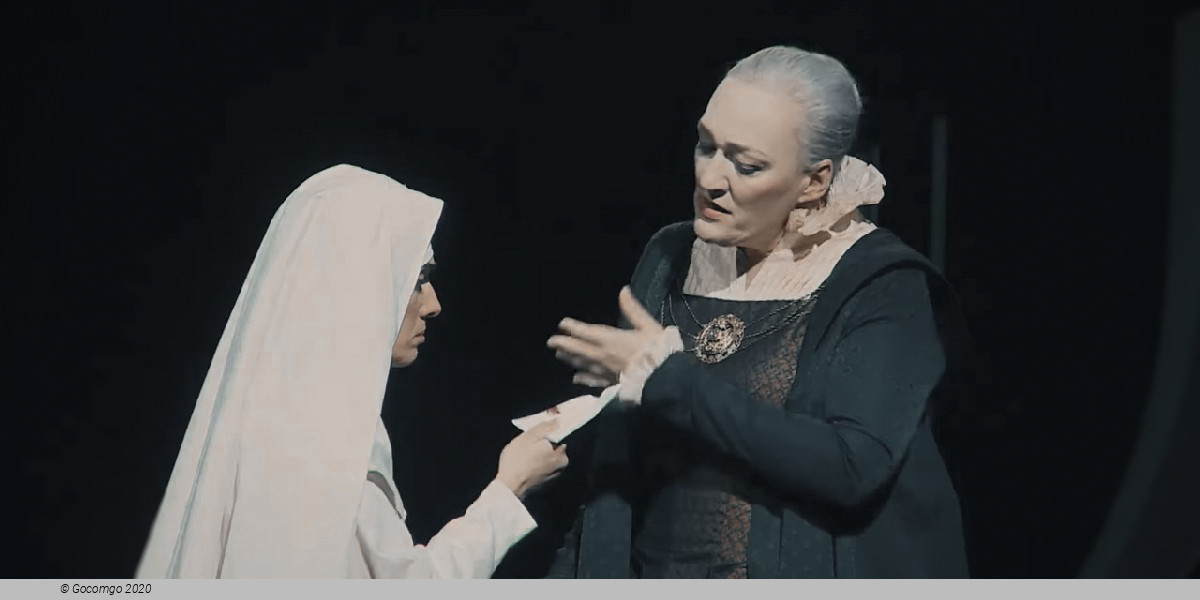
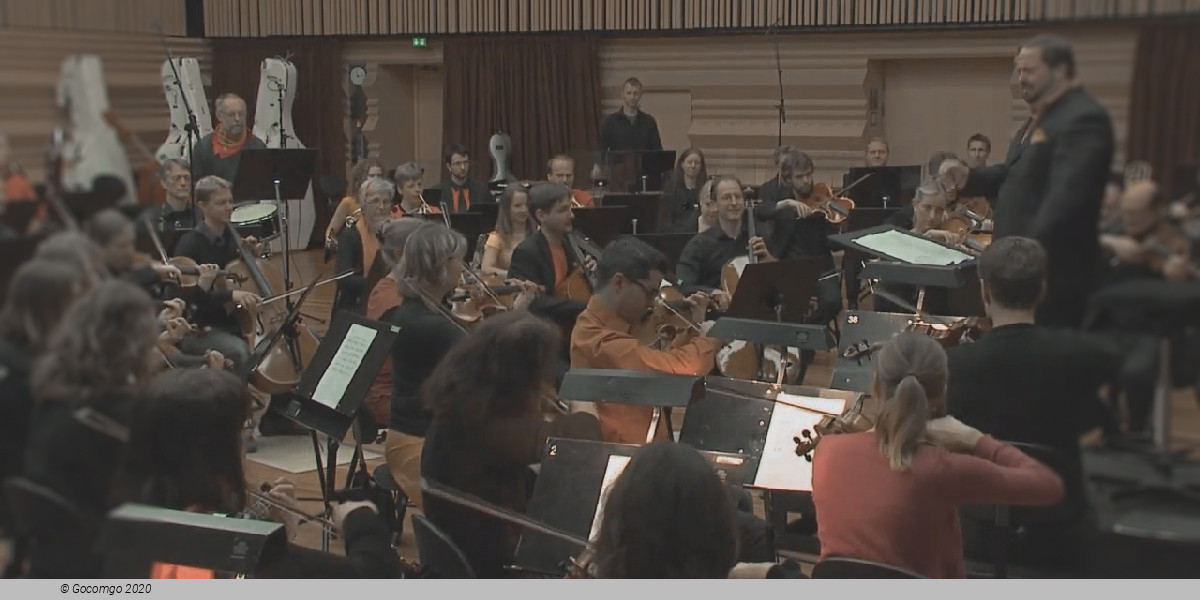
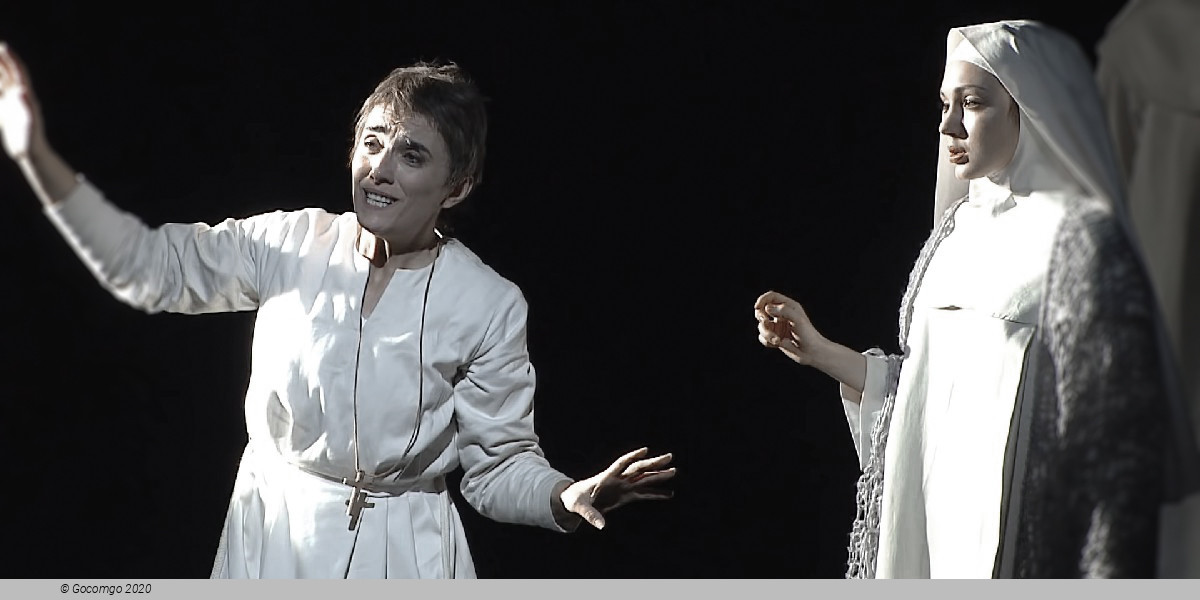
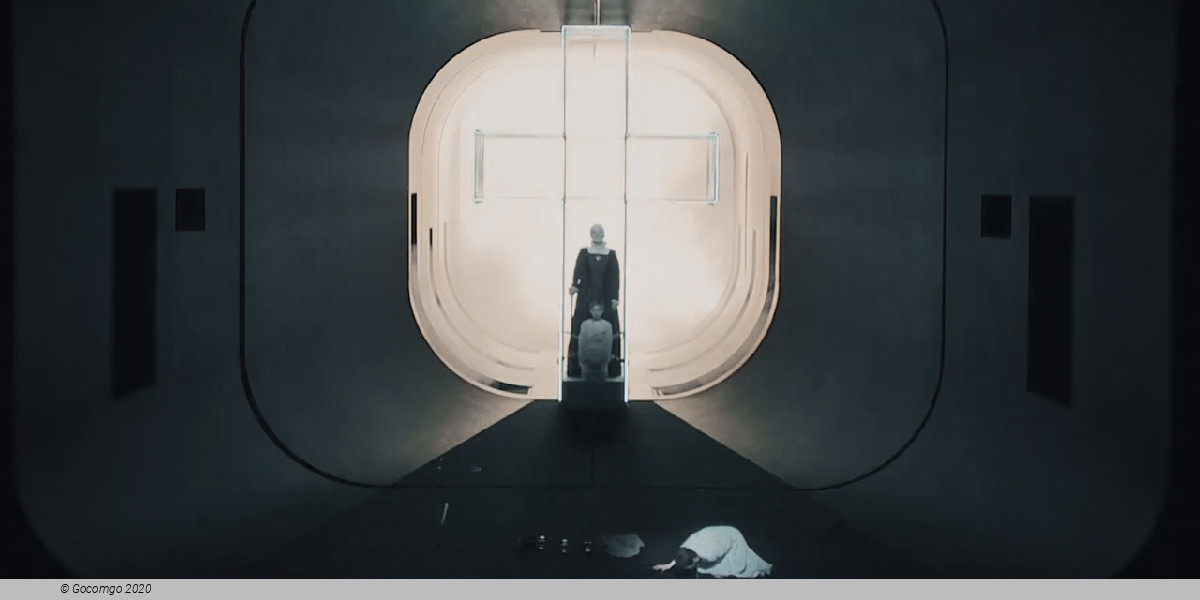
Suor Angelica – an opera with an exclusively female cast – is performed in concert form, with soloists, the Opera Chorus and Norwegian National Opera Orchestra on the Main Stage.

About the composer

The composer Giacomo Puccini (1858–1924) is the man behind some of the most frequently performed and beloved operas in the world, including Madama Butterfly, Tosca and Turandot. He had a special relationship with Suor Angelica, possibly because of the fact that his older sister ran a convent outside Lucca, and he himself described the opera as one of his personal favourites.

About the work

Suor Angelica was written as part of the Il trittico trilogy, which also includes Il tabarro and Gianni Schicchi. The one-act opera was intended to form a contrast to the dark and melodramatic Il tabarro. Although death is a recurring theme in all three of the operas, the music in Suor Angelica conjures up associations with heaven. The opera opens with bells ringing in the distance and birdsong described by piccolos, creating an atmosphere of mystery and expectation. Perhaps all is not as happy and harmonic as it may first appear? The music is already depicting an aura of glory around Angelica in the first scene. She is absolutely pure, like an angel, despite the fact that she once committed a mistake that shut her in behind the convent walls.

The work first premiered as part of Il trittico at the Metropolitan Opera in 1918 – one month after the end of the First World War – and was Puccini’s penultimate operatic work.

History
Premiere of this production: 14 December 1918, Metropolitan Opera

Suor Angelica (Sister Angelica) is an opera in one act by Giacomo Puccini to an original Italian libretto by Giovacchino Forzano. It is the second opera of the trio of operas known as Il trittico (The Triptych). It received its world premiere at the Metropolitan Opera on December 14, 1918.

Synopsis

Place: A convent in Italy
Time: The latter part of the 17th century


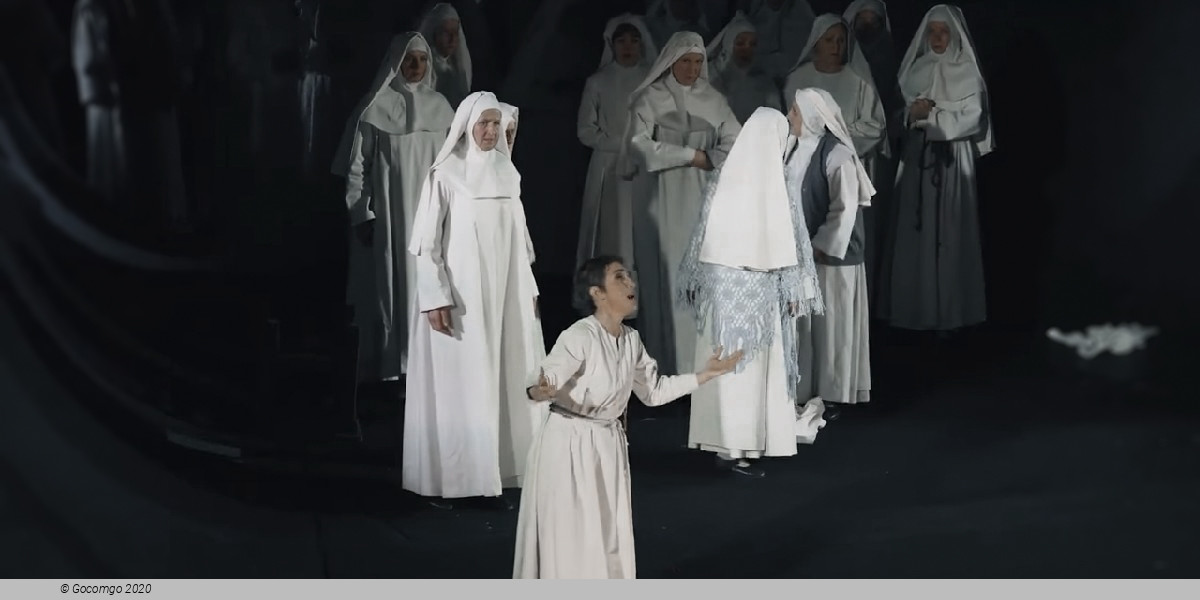
The opera opens with scenes showing typical aspects of life in the convent – all the sisters sing hymns, the Monitor scolds two lay-sisters, everyone gathers for recreation in the courtyard. The sisters rejoice because, as the mistress of novices explains, this is the first of three evenings that occur each year when the setting sun strikes the fountain so as to turn its water golden. This event causes the sisters to remember Bianca Rosa, a sister who has died. Sister Genevieve suggests they pour some of the "golden" water onto her tomb.

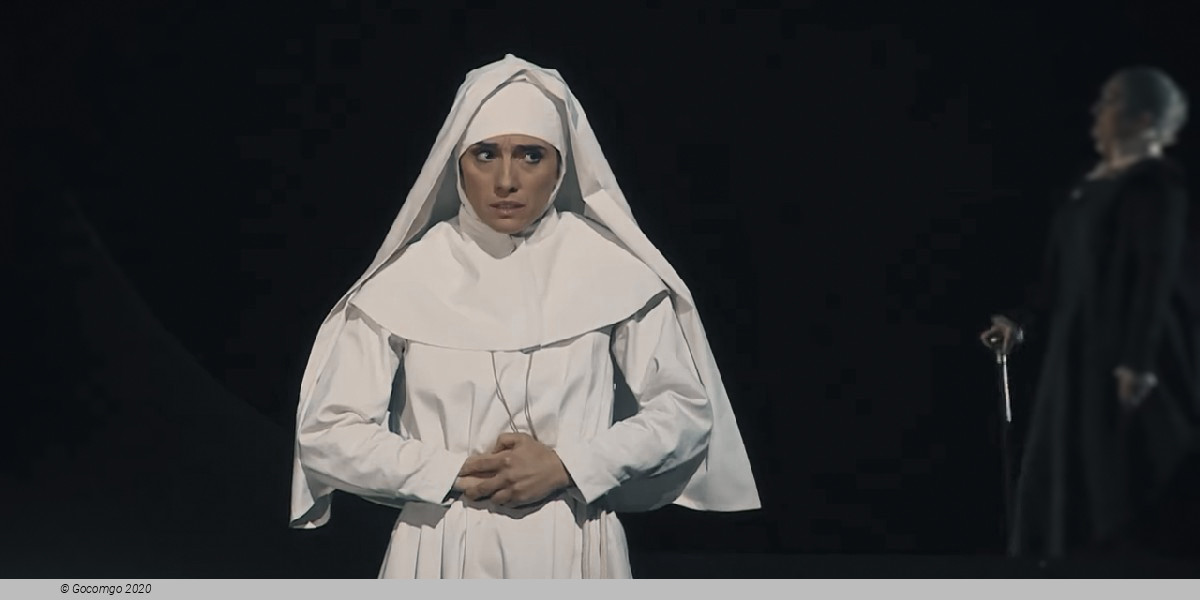
The nuns discuss their desires. While the Monitor believes that any desire at all is wrong, Sister Genevieve confesses that she wishes to see lambs again because she used to be a shepherdess when she was a girl, and Sister Dolcina wishes for something good to eat. Sister Angelica claims to have no desires, but as soon as she says so, the nuns begin gossiping – Sister Angelica has lied, because her true desire is to hear from her wealthy, noble family, whom she has not heard from in seven years. Rumors are that she was sent to the convent in punishment.

The conversation is interrupted by the Infirmary Sister, who begs Sister Angelica to make a herbal remedy, her specialty. Two tourières arrive, bringing supplies to the convent, and news that a grand coach is waiting outside. Sister Angelica becomes nervous and upset, thinking rightly that someone in her family has come to visit her. The Abbess chastises Sister Angelica for her inappropriate excitement and announces the visitor, the Princess, Sister Angelica's aunt.

The Princess explains that Angelica's sister is to be married and that Angelica must sign a document renouncing her claim to her inheritance. Angelica replies that she has repented for her sin, but she cannot offer up everything in sacrifice to the Virgin – she cannot forget the memory of her illegitimate son, who was taken from her seven years ago. The Princess at first refuses to speak, but finally informs Sister Angelica that her son died of fever two years ago. Sister Angelica, devastated, signs the document and collapses in tears. The Princess leaves.

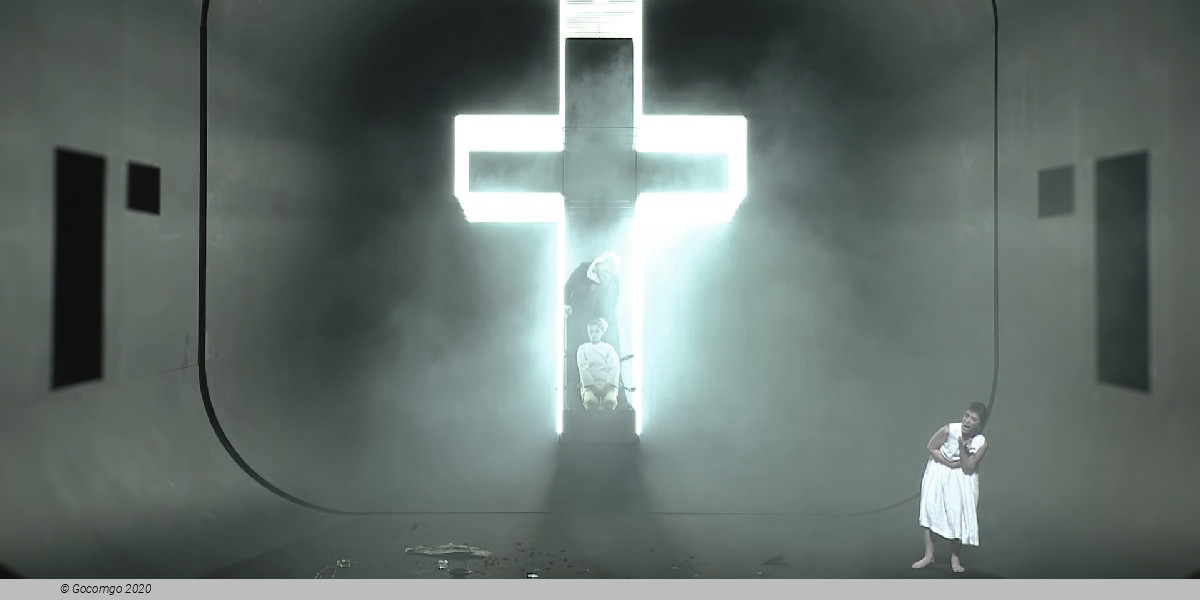
Sister Angelica is seized by a heavenly vision – she believes she hears her son calling for her to meet him in paradise. She makes a poison and drinks it, but realizes that in committing suicide, she has committed a mortal sin and has damned herself to eternal separation from her son. She begs the Virgin Mary for mercy and, as she dies, she sees a miracle: the Virgin Mary appears, along with Sister Angelica's son, who runs to embrace her.

Venue Info

Oslo Opera House - Oslo
Location   Kirsten Flagstads Plass 1

The Oslo Opera House is the home of The Norwegian National Opera and Ballet, and the national opera theatre in Norway. The building is situated in the Bjørvika neighbourhood of central Oslo, at the head of the Oslofjord. It is operated by Statsbygg, the government agency which manages property for the Norwegian government. The structure contains 1,100 rooms in a total area of 38,500 m2 (414,000 sq ft). The main auditorium seats 1,364 and two other performance spaces can seat 200 and 400. The main stage is 16 m (52 ft) wide and 40 m (130 ft) deep. The angled exterior surfaces of the building are covered with marble from Carrara, Italy and white granite and make it appear to rise from the water. It is the largest cultural building constructed in Norway since Nidarosdomen was completed circa 1300.

In 1999, after a long national debate, the Norwegian legislature decided to construct a new opera house in the city. A design competition was held and, of the 350 entries received, the judges chose that of Snøhetta. Construction started in 2003 and was completed in 2007, ahead of schedule and 300 million NOK (~US$52 million) under its budget of 4.4 billion NOK (~US$760 million). The gala opening on 12 April 2008 was attended by His Majesty King Harald, Queen Margrethe II of Denmark and President Tarja Halonen of Finland and other leaders. During the first year of operation, 1.3 million people passed through the building's doors.

The Opera House won the culture award at the World Architecture Festival in Barcelona in October 2008 and the 2009 European Union Prize for Contemporary Architecture.

The roof of the building angles to ground level, creating a large plaza that invites pedestrians to walk up and enjoy the panoramic views of Oslo. While much of the building is covered in white granite and La Facciata, a white Italian carrara marble, the stage tower is clad in white aluminium, in a design by Løvaas & Wagle that evokes old weaving patterns.

The lobby is surrounded by 15 m (49 ft) tall windows with minimal framing and special glass that allows maximum views of the water. The roof is supported by thin angled columns also designed not to interfere with views.

Interior surfaces are covered in oak to bring warmth to spaces in contrast to the coolness of the white exterior. The main auditorium is a horseshoe shape and illuminated by an oval chandelier containing 5,800 handmade crystals. Seats include monitors for the electronic libretto system, allowing audiences to follow opera libretti in Norwegian and English in addition to the original language.

Several art projects were commissioned for the interior and exterior of the Opera House. The most notable is She Lies, a sculpture constructed of stainless steel and glass panels by Monica Bonvicini. It is permanently installed on a concrete platform in the fjord adjacent to Opera House and floats on the water moving in response to tides and wind to create an ever-changing face to viewers. The work was unveiled by Her Majesty Queen Sonja on 11 May 2010.

A perforated wall panel which covers roof supports in the lobby was designed by Olafur Eliasson. It features hexagonal opening and is illuminated from below and behind to create the illusion of melting ice. Other artists involved in the construction include Kristian Blystad, Jorunn Sannes and Kalle Grude, who designed the shape of the pavers on the forecourt and roof; Bodil Furu and Trine Lise Nedreaas, who created a film and video project; Marte Aas, Talleiv Taro Manum, Tom Sandberg, Gerd Tinglum and Nina Witoszek Fitzpatrick, who created the art book Site Seeing; and Linus Elmes and Ludvig Löfgren, who created the foundation stone.

The main stage curtain is the work of Pae White who designed it to look like crumpled aluminum foil. White scanned a crumpled piece of foil into a computer which translated the information to a loom that wove the curtain from wool, cotton and polyester to create a three-dimensional effect. The curtain was manufactured by the German-based theatrical equipment company Gerriets GmbH. The finished curtain measures 74 ft (23 m) wide and 36 ft (11 m) and weighs 1,100 lb (500 kg).

Important Info
Type: Opera
City: Oslo, Norway
Starts at: 19:00
Acts: 1
Duration: 1h 15min
Top of page