

Oslo Opera House 20 August 2019 - L`elisir d`amore | GoComGo.com

L`elisir d`amore

Oslo Opera House, Oslo, Norway
All photos (15)
Select date and time
7 PM
Request for Tickets
Important Info
Type: Opera
City: Oslo, Norway
Starts at: 19:00
Acts: 2
Intervals: 1
Duration:
Sung in: Italian
Titles in: English,Norwegian

E-tickets: Print at home or at the box office of the event if so specified. You will find more information in your booking confirmation email.

You can only select the category, and not the exact seats.
If you order 2 or 3 tickets: your seats will be next to each other.
If you order 4 or more tickets: your seats will be next to each other, or, if this is not possible, we will provide a combination of groups of seats (at least in pairs, for example 2+2 or 2+3).

Overview

Main Stage

Romance, intoxication and slapstick

L'elisir d'amore is all about the wonderful intoxication of both love and wine. Italian composer Donizetti’s most beloved opera will make you warm and happy!

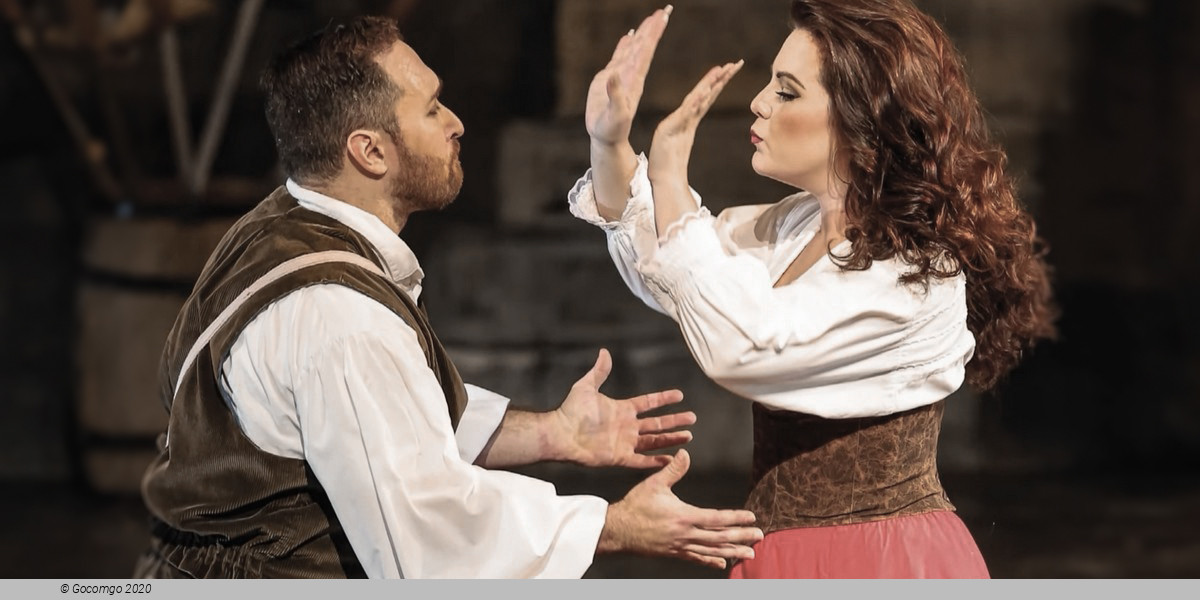
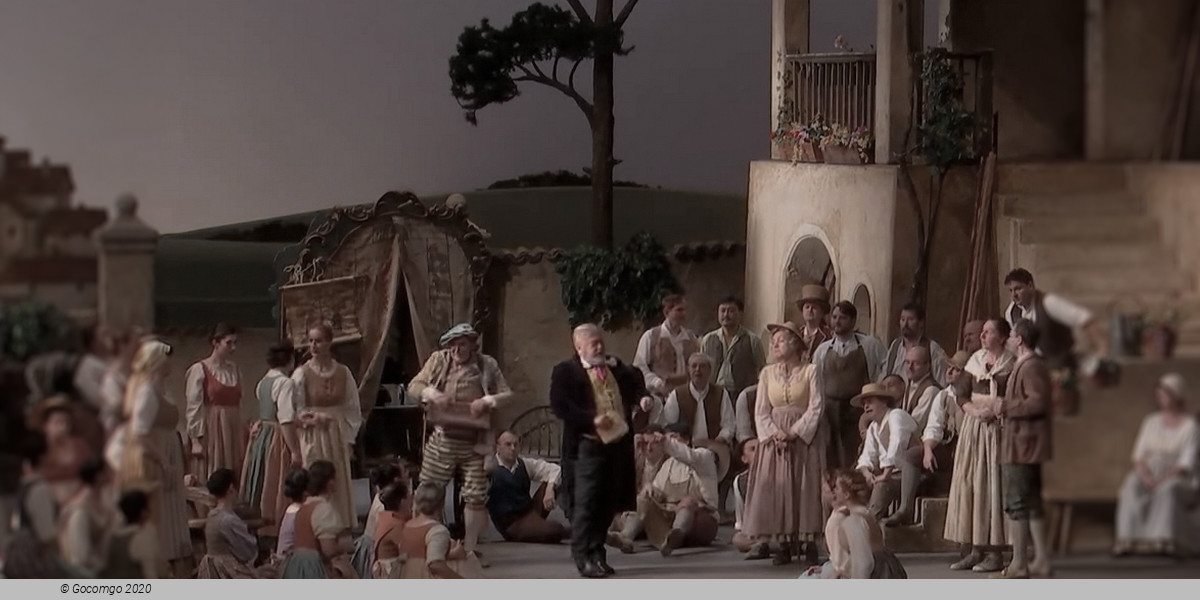
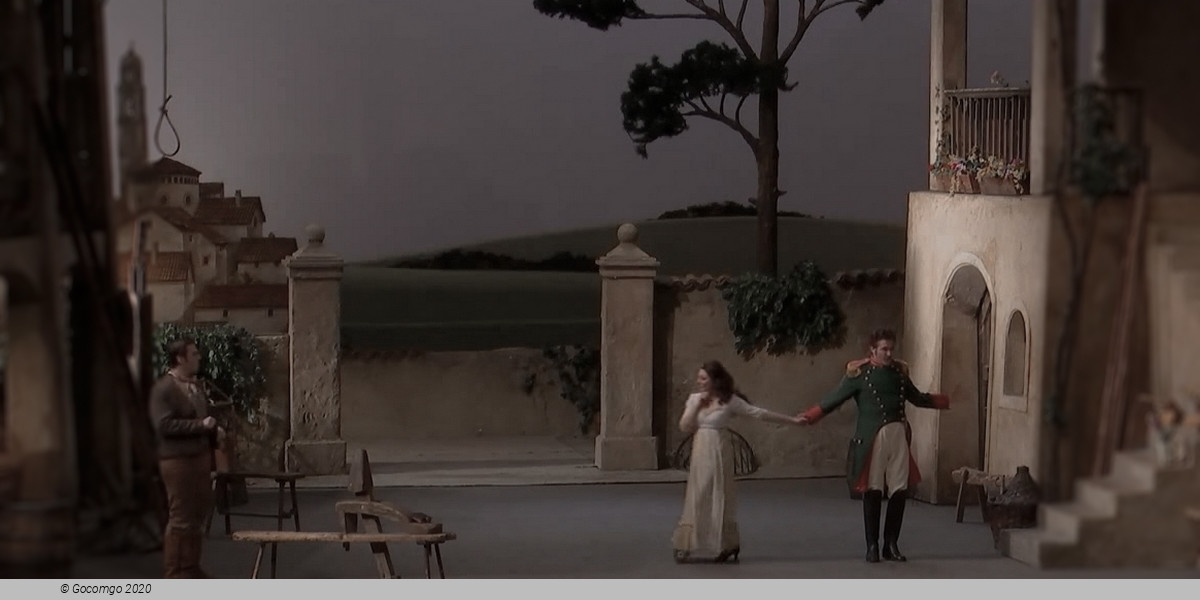
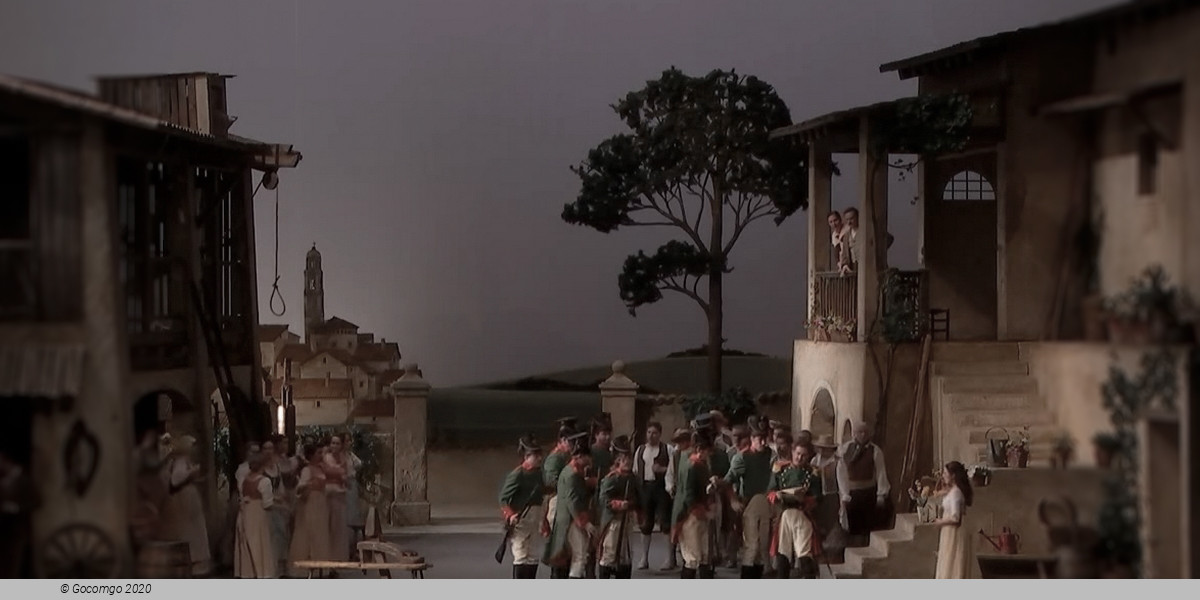
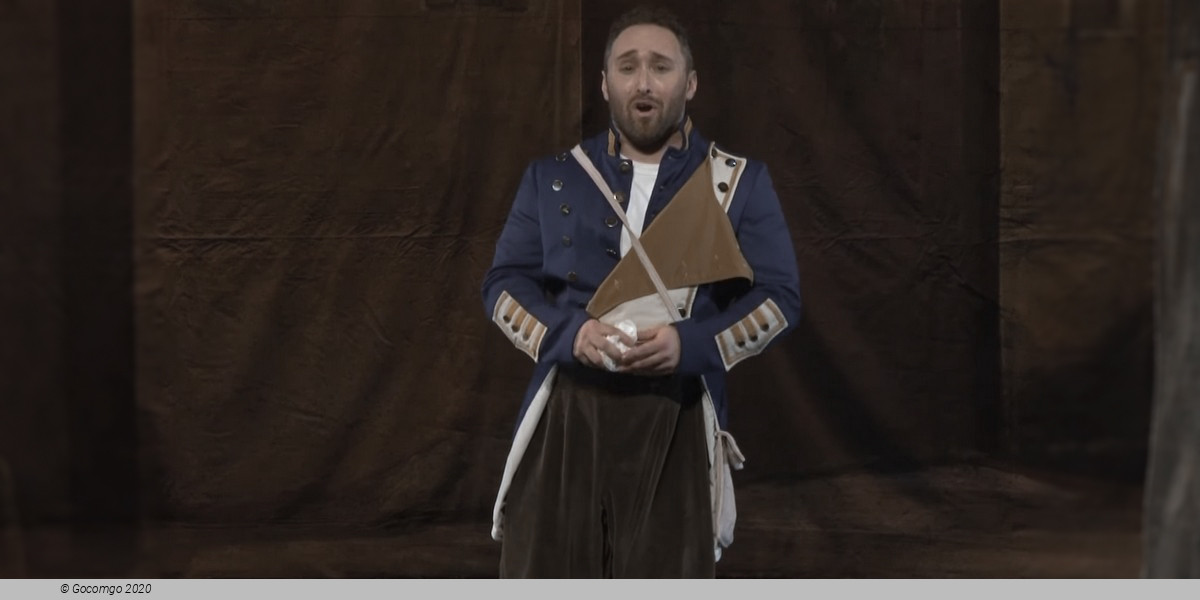
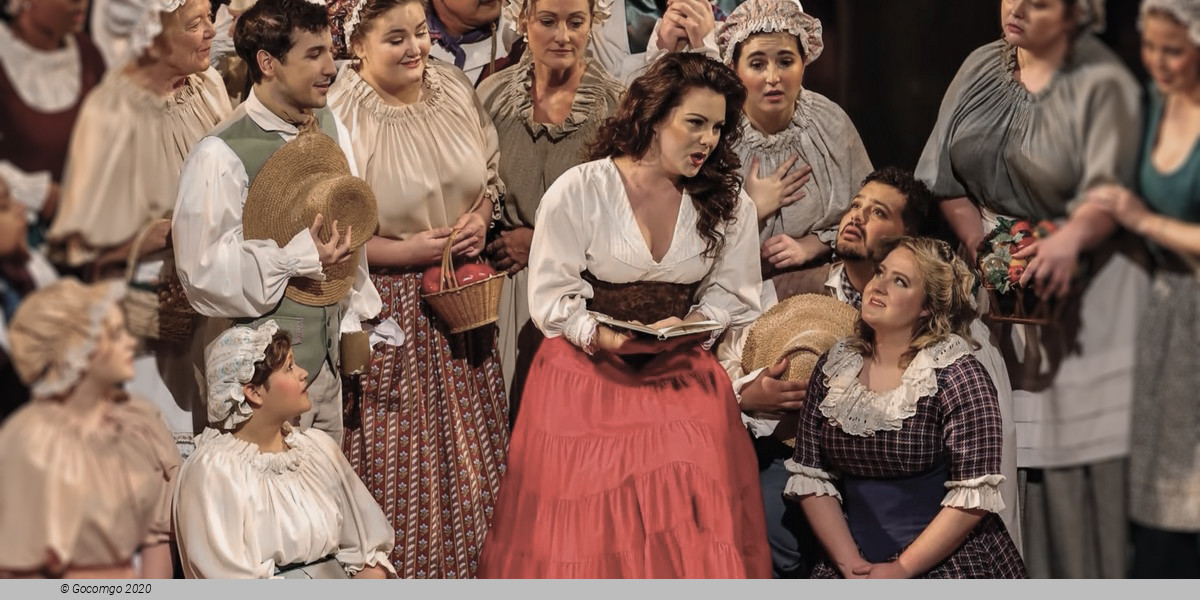
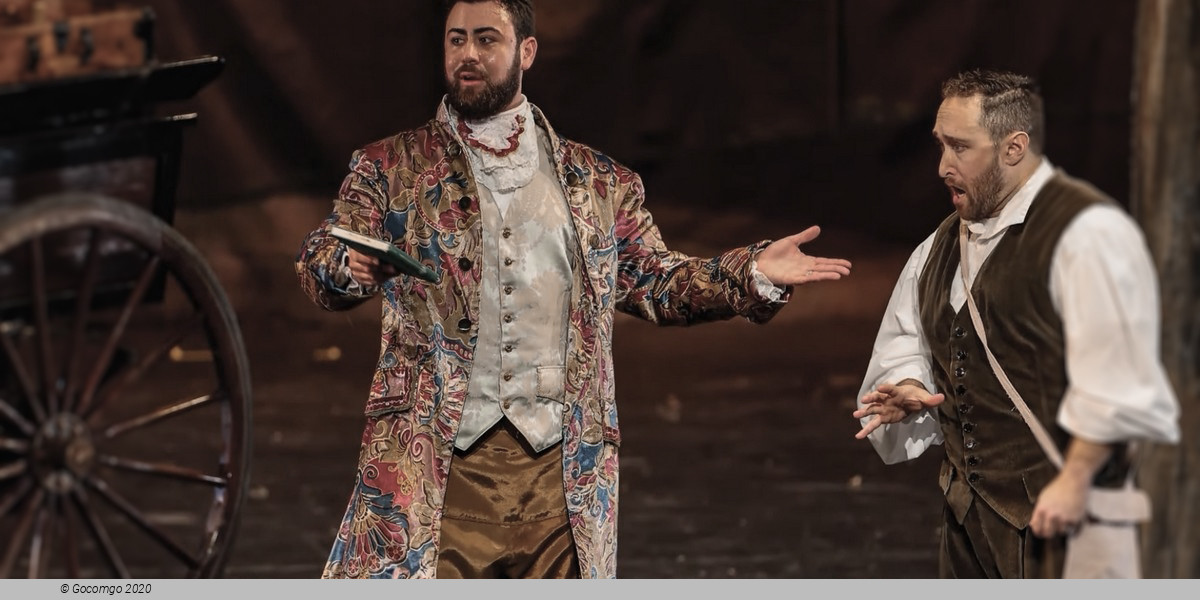
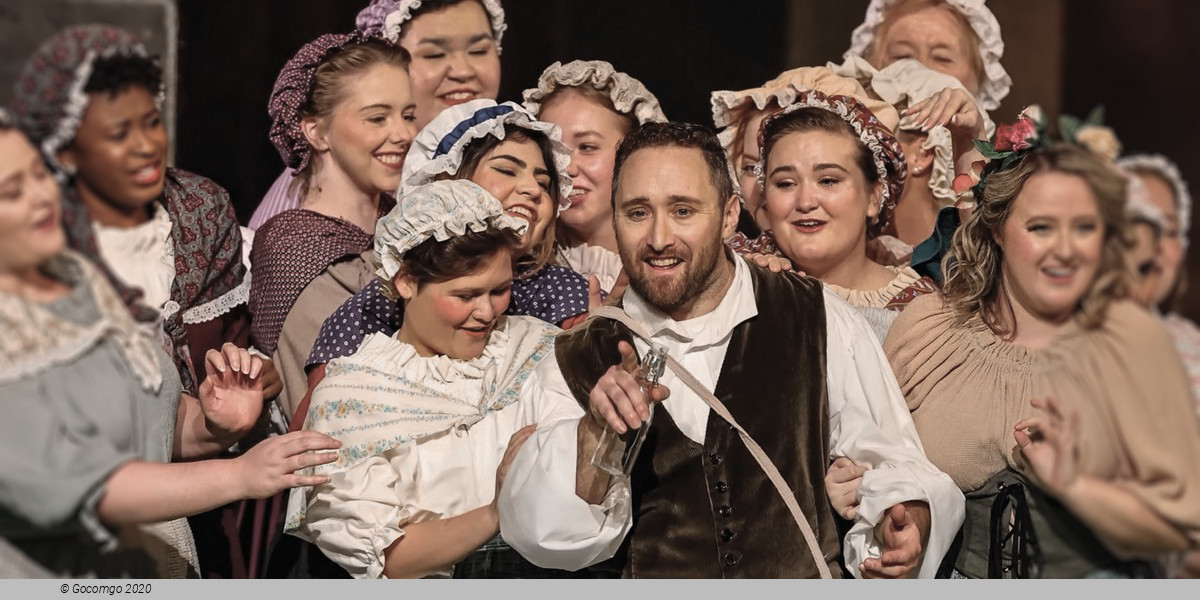
Director Oliver Mears places the action at a British college in the 1970s. The slightly nerdy student Nemorino falls madly in love with the young teacher Adina when he hears her read stories about Tristan, Isolde and the love potion that brings them together. But it appears that Nemorino does not have a chance, especially not when the handsome Sergeant Belcore shows up to enlist young men for service. That’s when the science teacher and quack Dulcamara propose a quick fix in the form of a love potion!

Donizetti wrote L'elisir d'amore in a little less than six weeks and the story mirrored his own life: like Nemorino, Donizetti avoided being drafted into military service because a wealthy woman bought him out. The opera premiered in Milan in 1832 and was an immediate success.

Like Rossini and Bellini, Donizetti is referred to as a representative of the bel canto style. Bel canto is Italian for ‘beautiful singing’, but also refers to a period in opera history and a special type of opera singing in which the singers demonstrate their skills in impressive runs and sparkling melodies.

Based on a production by the Northern Ireland Opera


History
Premiere of this production: 12 May 1832, Teatro della Canobbiana, Milan

L'elisir d'amore (The Elixir of Love) is a comic opera (melodramma giocoso) in two acts by the Italian composer Gaetano Donizetti. Felice Romani wrote the Italian libretto, after Eugène Scribe's libretto for Daniel Auber's Le philtre (1831). The opera premiered on 12 May 1832 at the Teatro della Canobbiana in Milan.

Synopsis

Place: A small village in the Basque Country
Time: The end of the 18th century

Act 1
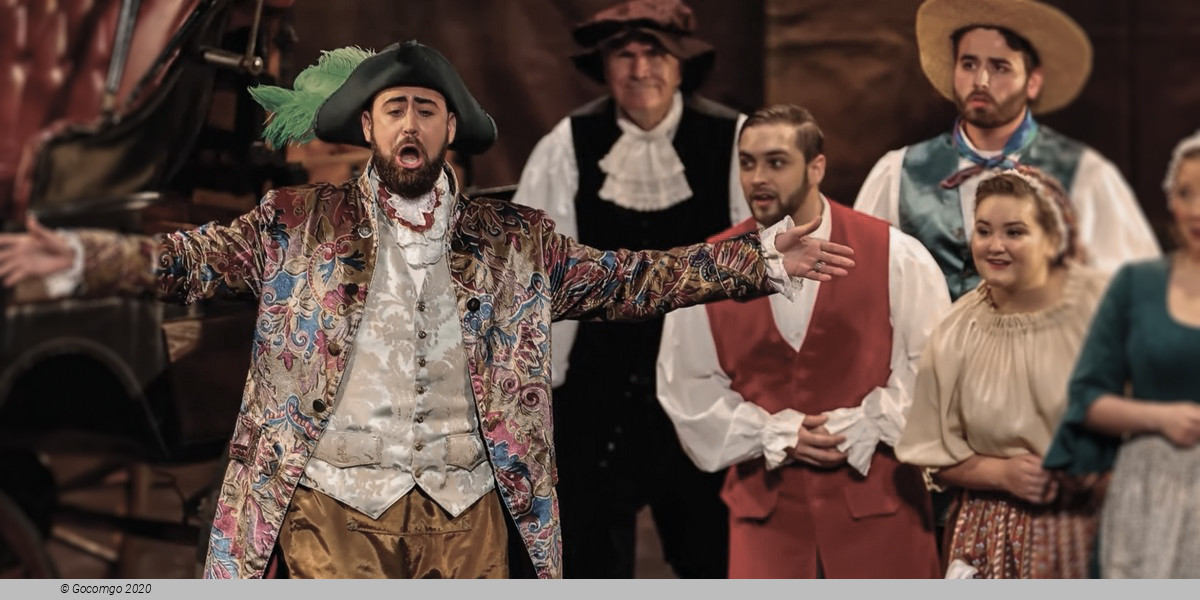
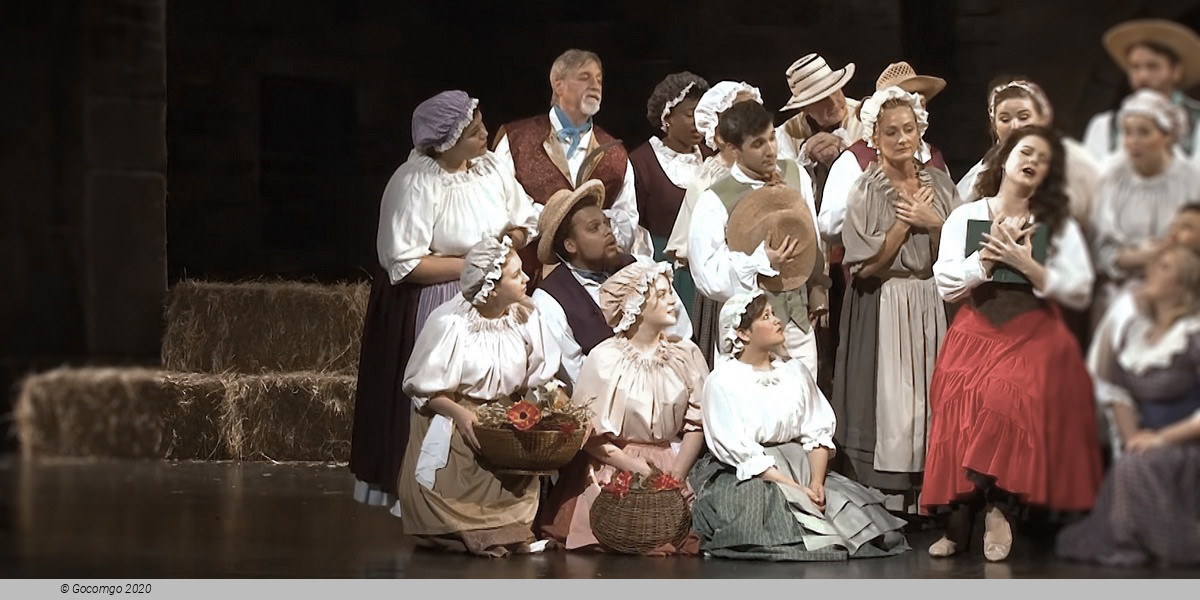
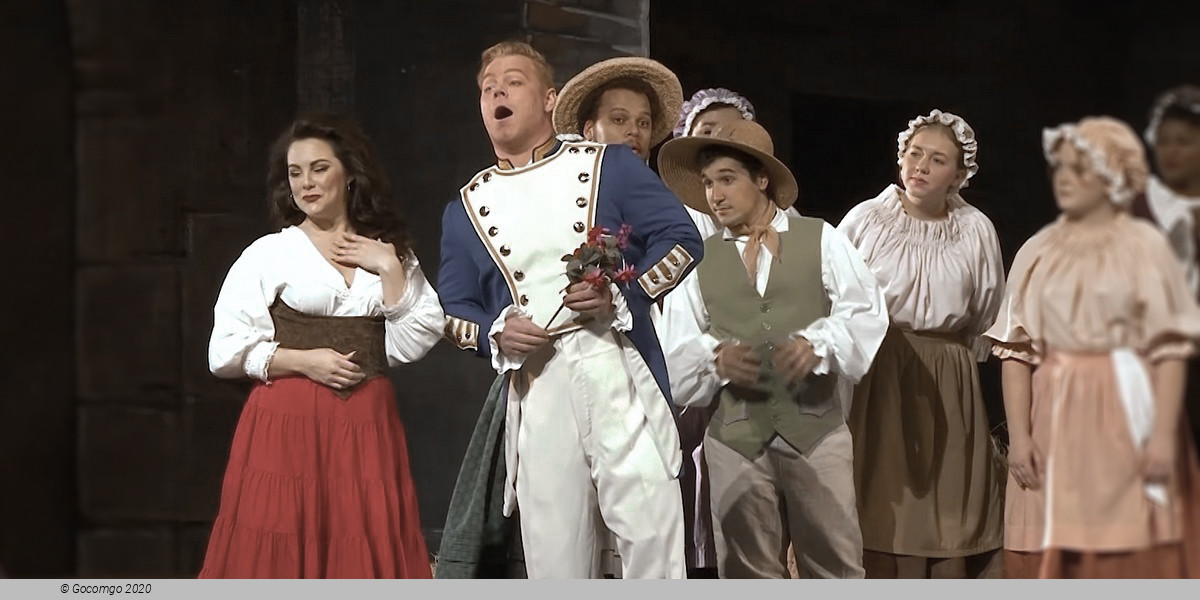
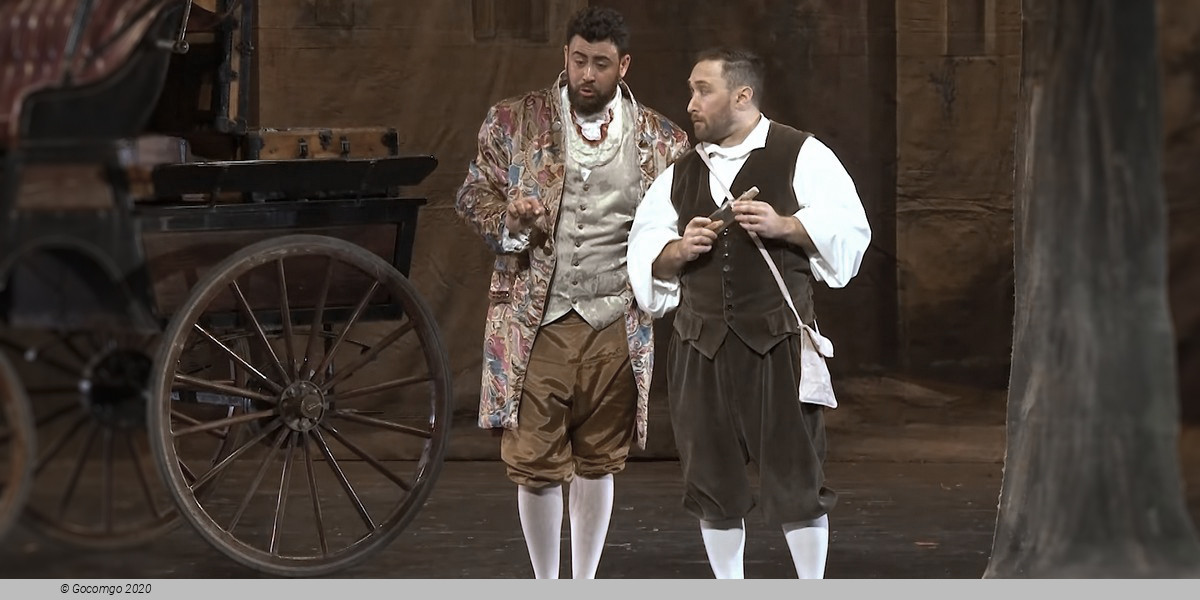
Nemorino, a poor peasant, is in love with Adina, a beautiful landowner, who torments him with her indifference. When Nemorino hears Adina reading to her workers the story of Tristan and Isolde, he is convinced that a magic potion will help him to gain Adina's love. The self-important Sergeant Belcore appears with his regiment and immediately sets about courting Adina in front of everyone. Nemorino becomes anxious (although, Adina meanwhile secretly derides Belcore's complacency) and, alone with Adina, reveals his love for her. Yet Adina rebuffs him, saying she wants a different lover every day and following her example would do Nemorino better. Nemorino declares that his feelings will never change. The travelling quack doctor, Dulcamara (the self-proclaimed Dr. Encyclopedia), arrives, selling his bottled cure-all to the townspeople. Nemorino innocently asks Dulcamara if he has any of Isolde's love potion. Despite failing to recognise the name "Isolde", Dulcamara's commercial talents nevertheless enable him to sell a bottle of the cure-all – in reality only cheap wine – to Nemorino, withdrawing all his savings.

To make a safe escape, Dulcamara tells Nemorino the potion needs 24 hours to take effect – by which time, the doctor will be long gone. Nemorino drinks the potion in a haste in order to watch the effect tomorrow. Emboldened by the "elixir" (in fact, drunk), Nemorino feigns indifference when he encounters Adina, as he expects that the elixir will facilitate his conquest of Adina the following day. She becomes increasingly annoyed; perhaps she has feelings for Nemorino after all? Belcore returns and proposes marriage to Adina. Still riled by Nemorino and wishing to give him a lesson, Adina falsely promises to marry Belcore in six days' time. Yet Nemorino only laughs in response: such confidence is sustained in the belief in the magic potion. However, when Belcore learns that his regiment must leave the next morning, Adina promises to marry him before his departure. This of course panics Nemorino, who cries out for Dr. Dulcamara to come to his aid. Adina, meanwhile, invites everyone to the wedding.

Act 2
Adina and Belcore's wedding party is in full swing. Dr. Dulcamara encourages Adina to sing a duet with him to entertain the guests. The notary arrives to make the marriage official. Adina is annoyed to see that Nemorino has not appeared, for the whole deal has been intended only to punish him. While everyone goes to witness the signing of the wedding contract, Dulcamara stays behind, helping himself to food and drink. Having seen the notary, Nemorino appears, depressed, as he believes that he has lost Adina. He sees Dulcamara and frantically begs him for a more powerful, faster-acting elixir. Although Dulcamara is proud to boast of his philanthropy, upon discovering that Nemorino now has no money he changes his tune and marches off, refusing to supply him anything. Belcore emerges, musing about why Adina has suddenly put off the wedding and signing of the contract. He spots Nemorino and asks his rival why he is depressed. When Nemorino says he needs cash, Belcore suggests joining the army, as he'll receive funds on the spot. Belcore tries to excite Nemorino with tales of military life, while Nemorino only thinks of getting the potion and thus winning Adina, if only for a day before departure. Belcore produces a contract, which Nemorino signs in return for the money. Nemorino privately vows to rush and buy more potion, while Belcore muses about how sending Nemorino off to war has so easily dispatched his rival.

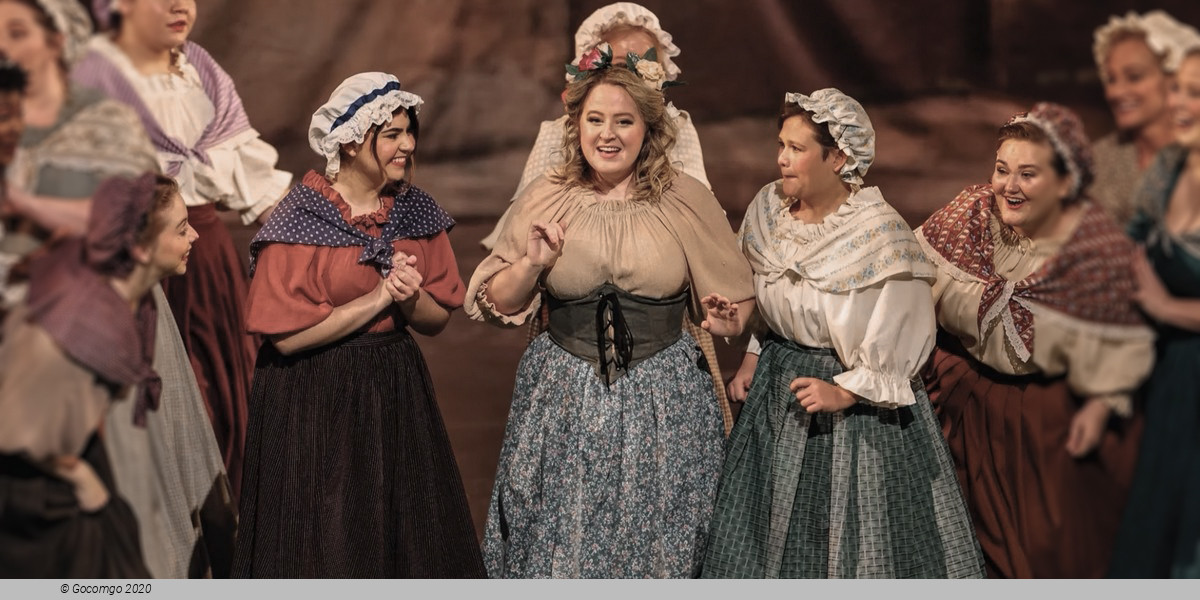
After the two men have left, Giannetta gossips with the women of the village. Swearing them all to secrecy, she reveals that Nemorino's uncle has just died and left his nephew a large fortune. However, neither Nemorino nor Adina is yet aware of this. Nemorino enters, having spent his military signing bonus on – and consumed – a large amount of the fake elixir from Dr. Dulcamara. Hoping to share his fortune, the women approach Nemorino with overly friendly greetings. So out of character is this that Nemorino takes it as proof of the elixir's efficacy. Adina sees Nemorino with the women, is rattled by his newfound popularity, and asks Dr. Dulcamara for an explanation. Unaware that Adina is the object of Nemorino's affection, Dulcamara explains that Nemorino spent his last penny on the elixir and joined the army for money to get more, so desperate was he to win the love of some unnamed cruel beauty. Adina immediately recognises Nemorino's sincerity, regrets her behaviour and realises that she has loved Nemorino all along. Although Dulcamara seizes the opportunity to try to sell her some of his potion to win back Nemorino, Adina declares that she has full confidence in her own powers of attraction.

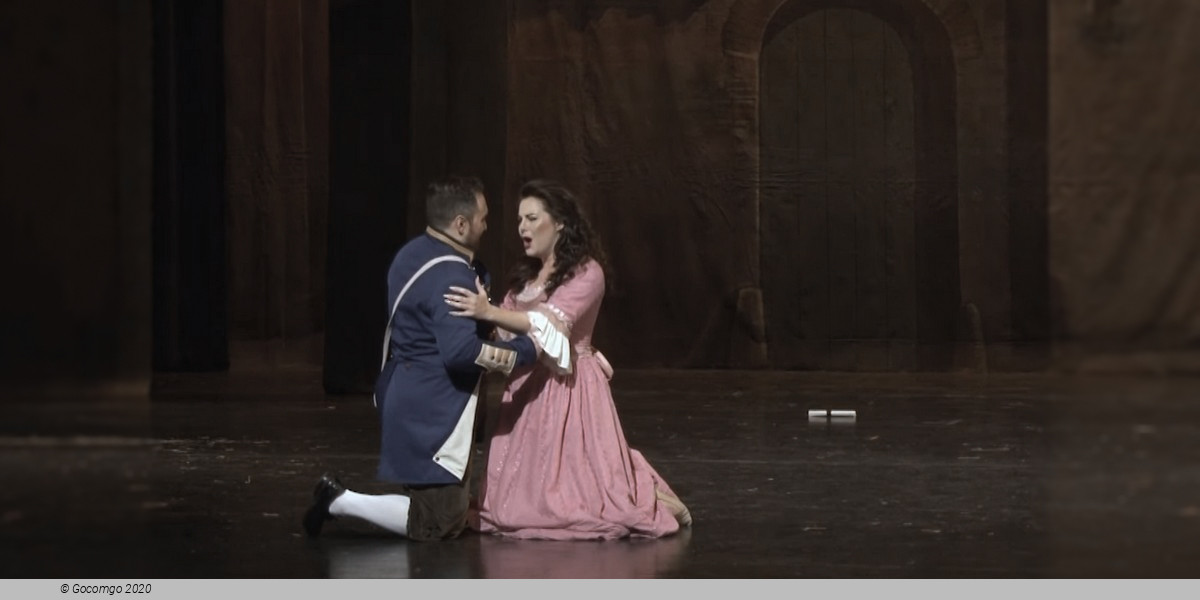
Nemorino appears alone, pensive, reflecting on a tear he saw in Adina's eye when he was ignoring her earlier. Solely based on that, he convinces himself that Adina loves him. She enters and asks why he has chosen to join the army and leave the village. When Nemorino explains that he was seeking a better life, Adina responds that he is loved and that she has purchased back his military contract from Sergeant Belcore. She offers the cancelled contract to Nemorino and reassures him that, if he stays, he will be happy. As he takes the contract, Adina turns to leave. Nemorino believes she is abandoning him and flies into a desperate fit, vowing that if he is not loved he might as well go off and die a soldier. Deeply moved by his fidelity, Adina finally declares that she will love Nemorino forever. Nemorino is ecstatic. Adina begs him to forgive her, which he does with a kiss. Belcore returns to see Nemorino and Adina in an embrace. When Adina explains that she loves Nemorino, the Sergeant takes the news in stride, noting that there are plenty of other women in the world. Adina and Nemorino learn about the inheritance from his uncle. Dulcamara returns and boasts of the success of his elixir: Nemorino is now not only loved but also rich. He exults in the boost this will bring to the sales of his product. As he prepares to leave, everyone queues up to buy the elixir and hails Dulcamara as a great physician.

Venue Info

Oslo Opera House - Oslo
Location   Kirsten Flagstads Plass 1

The Oslo Opera House is the home of The Norwegian National Opera and Ballet, and the national opera theatre in Norway. The building is situated in the Bjørvika neighbourhood of central Oslo, at the head of the Oslofjord. It is operated by Statsbygg, the government agency which manages property for the Norwegian government. The structure contains 1,100 rooms in a total area of 38,500 m2 (414,000 sq ft). The main auditorium seats 1,364 and two other performance spaces can seat 200 and 400. The main stage is 16 m (52 ft) wide and 40 m (130 ft) deep. The angled exterior surfaces of the building are covered with marble from Carrara, Italy and white granite and make it appear to rise from the water. It is the largest cultural building constructed in Norway since Nidarosdomen was completed circa 1300.

In 1999, after a long national debate, the Norwegian legislature decided to construct a new opera house in the city. A design competition was held and, of the 350 entries received, the judges chose that of Snøhetta. Construction started in 2003 and was completed in 2007, ahead of schedule and 300 million NOK (~US$52 million) under its budget of 4.4 billion NOK (~US$760 million). The gala opening on 12 April 2008 was attended by His Majesty King Harald, Queen Margrethe II of Denmark and President Tarja Halonen of Finland and other leaders. During the first year of operation, 1.3 million people passed through the building's doors.

The Opera House won the culture award at the World Architecture Festival in Barcelona in October 2008 and the 2009 European Union Prize for Contemporary Architecture.

The roof of the building angles to ground level, creating a large plaza that invites pedestrians to walk up and enjoy the panoramic views of Oslo. While much of the building is covered in white granite and La Facciata, a white Italian carrara marble, the stage tower is clad in white aluminium, in a design by Løvaas & Wagle that evokes old weaving patterns.

The lobby is surrounded by 15 m (49 ft) tall windows with minimal framing and special glass that allows maximum views of the water. The roof is supported by thin angled columns also designed not to interfere with views.

Interior surfaces are covered in oak to bring warmth to spaces in contrast to the coolness of the white exterior. The main auditorium is a horseshoe shape and illuminated by an oval chandelier containing 5,800 handmade crystals. Seats include monitors for the electronic libretto system, allowing audiences to follow opera libretti in Norwegian and English in addition to the original language.

Several art projects were commissioned for the interior and exterior of the Opera House. The most notable is She Lies, a sculpture constructed of stainless steel and glass panels by Monica Bonvicini. It is permanently installed on a concrete platform in the fjord adjacent to Opera House and floats on the water moving in response to tides and wind to create an ever-changing face to viewers. The work was unveiled by Her Majesty Queen Sonja on 11 May 2010.

A perforated wall panel which covers roof supports in the lobby was designed by Olafur Eliasson. It features hexagonal opening and is illuminated from below and behind to create the illusion of melting ice. Other artists involved in the construction include Kristian Blystad, Jorunn Sannes and Kalle Grude, who designed the shape of the pavers on the forecourt and roof; Bodil Furu and Trine Lise Nedreaas, who created a film and video project; Marte Aas, Talleiv Taro Manum, Tom Sandberg, Gerd Tinglum and Nina Witoszek Fitzpatrick, who created the art book Site Seeing; and Linus Elmes and Ludvig Löfgren, who created the foundation stone.

The main stage curtain is the work of Pae White who designed it to look like crumpled aluminum foil. White scanned a crumpled piece of foil into a computer which translated the information to a loom that wove the curtain from wool, cotton and polyester to create a three-dimensional effect. The curtain was manufactured by the German-based theatrical equipment company Gerriets GmbH. The finished curtain measures 74 ft (23 m) wide and 36 ft (11 m) and weighs 1,100 lb (500 kg).

Important Info
Type: Opera
City: Oslo, Norway
Starts at: 19:00
Acts: 2
Intervals: 1
Duration:
Sung in: Italian
Titles in: English,Norwegian
Top of page