
Oslo Opera House 6 April 2022 - Jenufa | GoComGo.com

Jenufa

Oslo Opera House, Main Stage, Oslo, Norway
All photos (9)
Select date and time
7 PM

E-tickets: Print at home or at the box office of the event if so specified. You will find more information in your booking confirmation email.

You can only select the category, and not the exact seats.
If you order 2 or 3 tickets: your seats will be next to each other.
If you order 4 or more tickets: your seats will be next to each other, or, if this is not possible, we will provide a combination of groups of seats (at least in pairs, for example 2+2 or 2+3).

Important Info
Type: Opera
City: Oslo, Norway
Starts at: 19:00
Intervals: 1
Duration: 3h
Sung in: Czech
Titles in: Norwegian,English

E-tickets: Print at home or at the box office of the event if so specified. You will find more information in your booking confirmation email.

You can only select the category, and not the exact seats.
If you order 2 or 3 tickets: your seats will be next to each other.
If you order 4 or more tickets: your seats will be next to each other, or, if this is not possible, we will provide a combination of groups of seats (at least in pairs, for example 2+2 or 2+3).

Overview

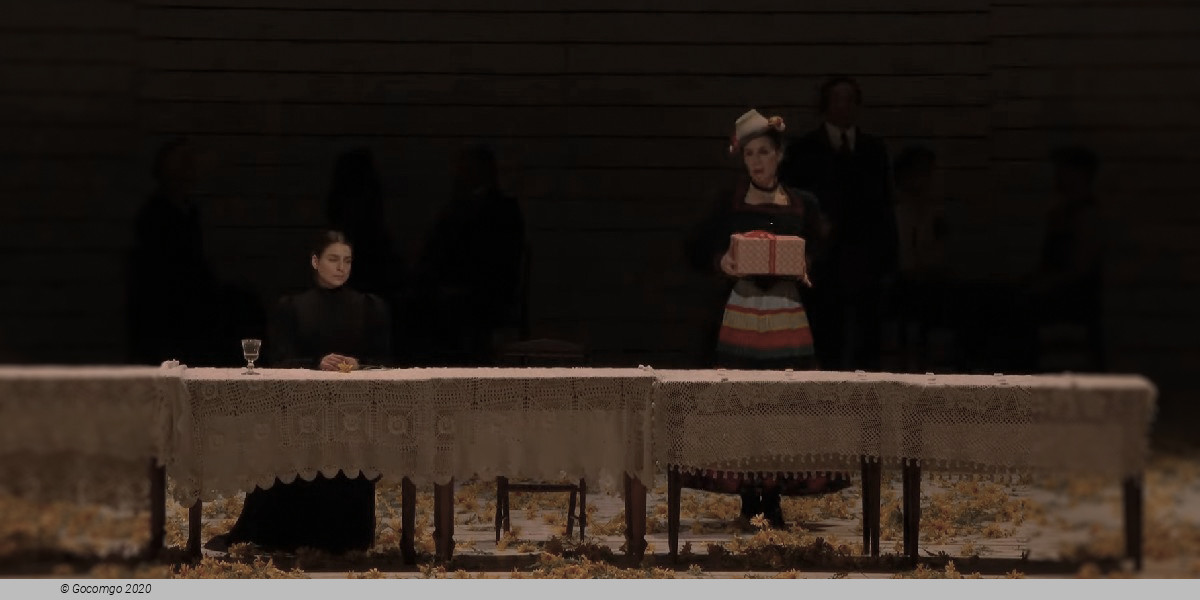
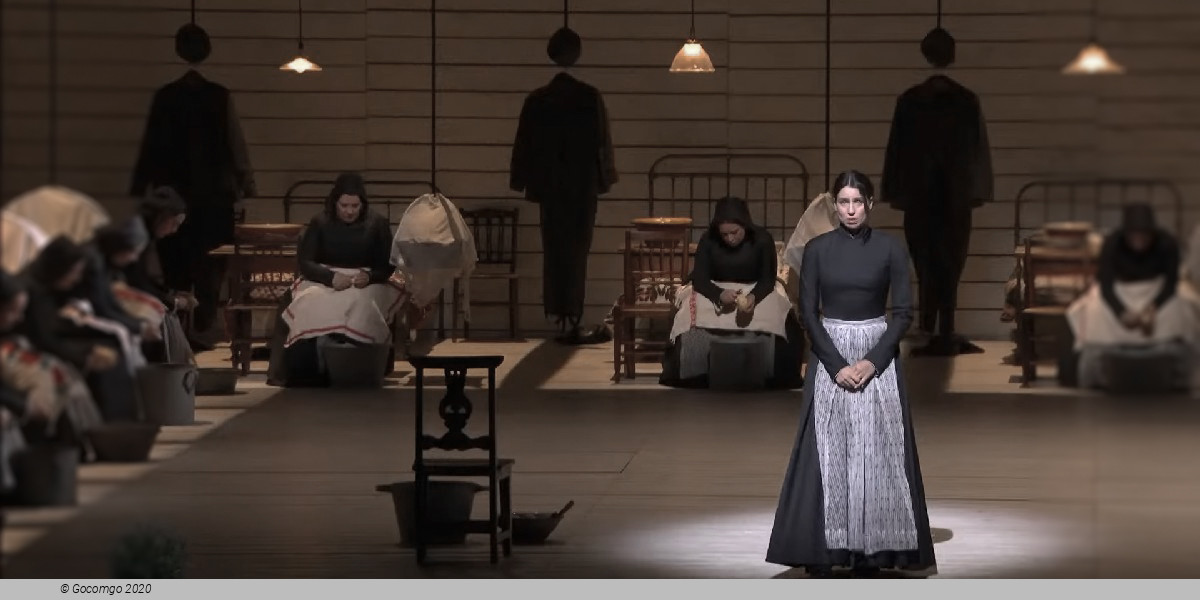
Family drama at its most intense. In Janacek’s stunning opera Jenufa, life is claustrophobic, wretched and rigid. But an enduring hope that love can set you free is springing forth just below the surface.

The young Jenufa dreams about real love. She lives in a world where innocence and beauty are the currency of women. When Jenufa becomes pregnant and has her face mutilated, she loses all prospects of such a future. Out of love for her stepdaughter, Jenufa’s stepmother commits a horrible crime in order to win back her freedom – and the family honor.
To those who may think that Jenufa is a depressing opera, think again! It portrays a burning hope for a better world and has made Czech Janacek one of the twentieth century’s greatest opera composers.

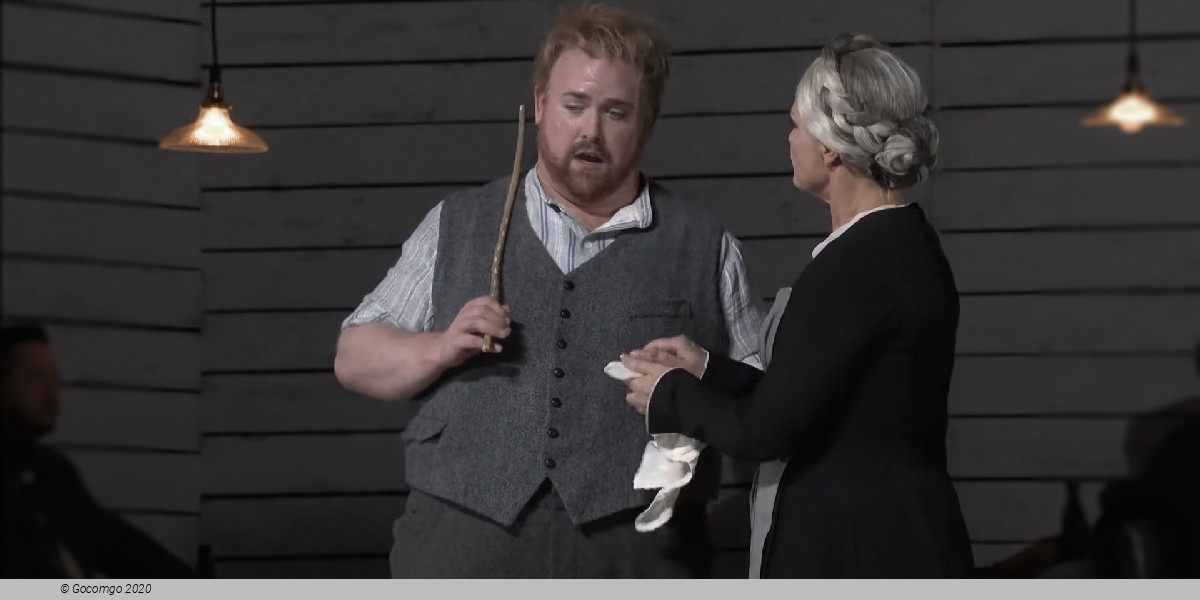
In this new production, Jenufa is staged by the accomplished director Keith Warner, with a star-studded cast of international and Norwegian soloists performing on stage.

The ‘village beast’, shame and honor
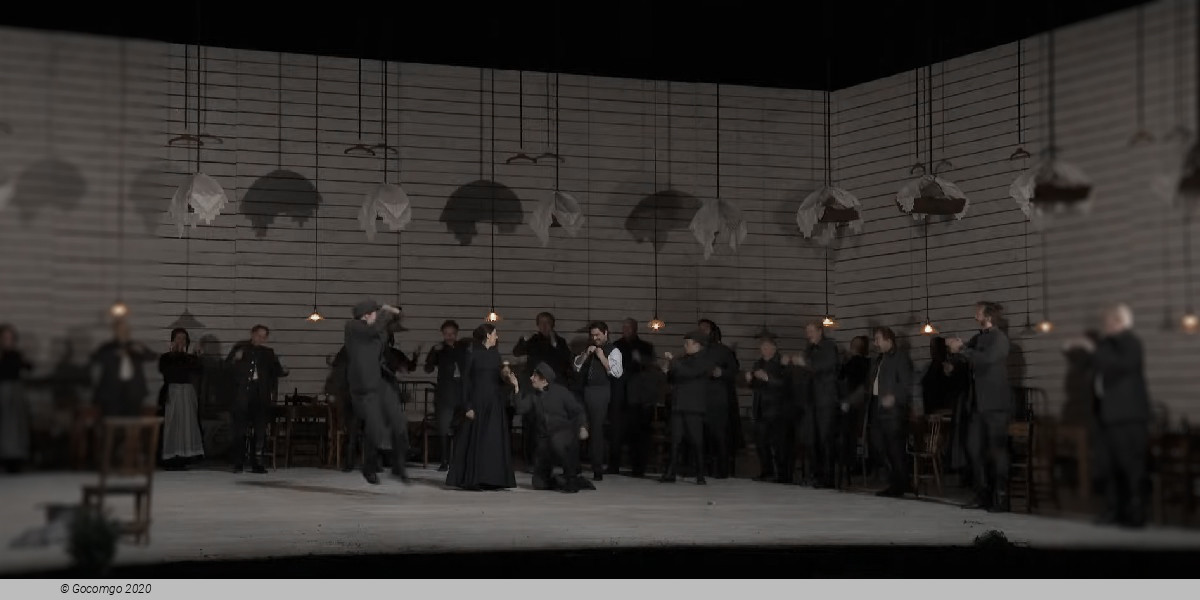
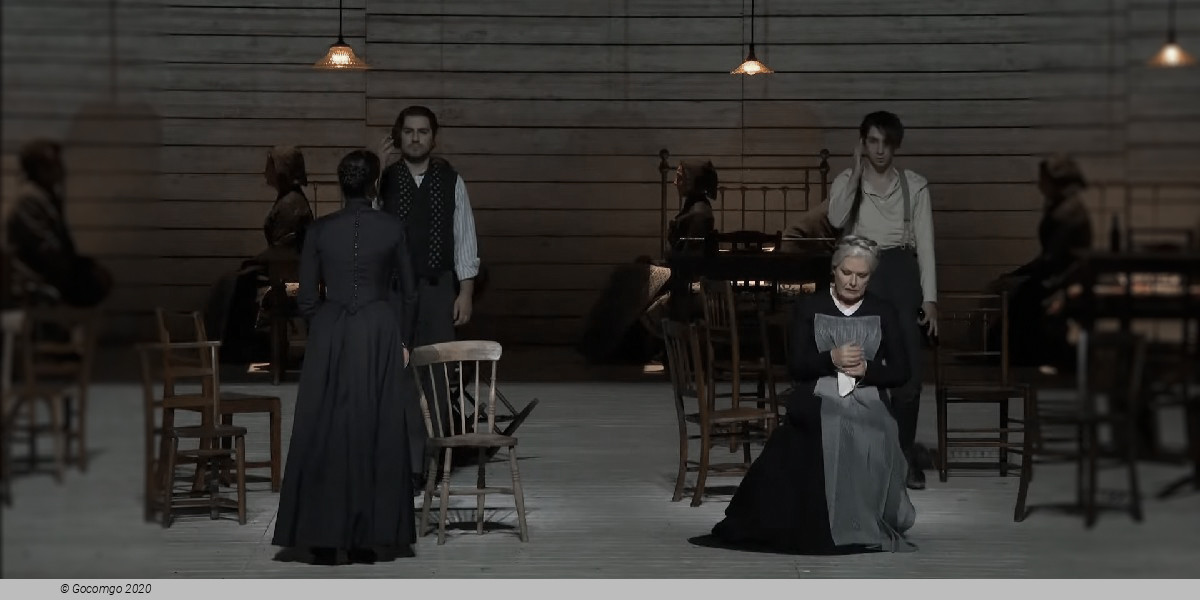
We find ourselves in a rural community where Jenufa lives with her stepmother Kostelnicka, grandmother Buryja and cousins Steva and Laca. Not only does the old family mill tower above them, but also the critical gazes of the villagers, religious dogma, and strong codes of honor.
Jenufa shows that people try to do the right thing, but end up getting it all wrong anyway. The opera paints an intensely psychological portrait of interpersonal relationships. It includes one of the twentieth century’s most exquisite opera scenes in which love is put to the test. Is it possible to forgive the unforgivable?

To a dying daughter

Jenufa is based on the play Her stepdaughter (Jeji pastorkyna) by Gabriela Preissová. The opera was completed while the composer’s daughter Olga was seriously ill and Janacek just managed to perform it for her before she died. It was later dedicated to Olga and a father’s love for a young girl’s fate can perhaps be heard even more distinctly in the second and third acts.

Sounds of real life

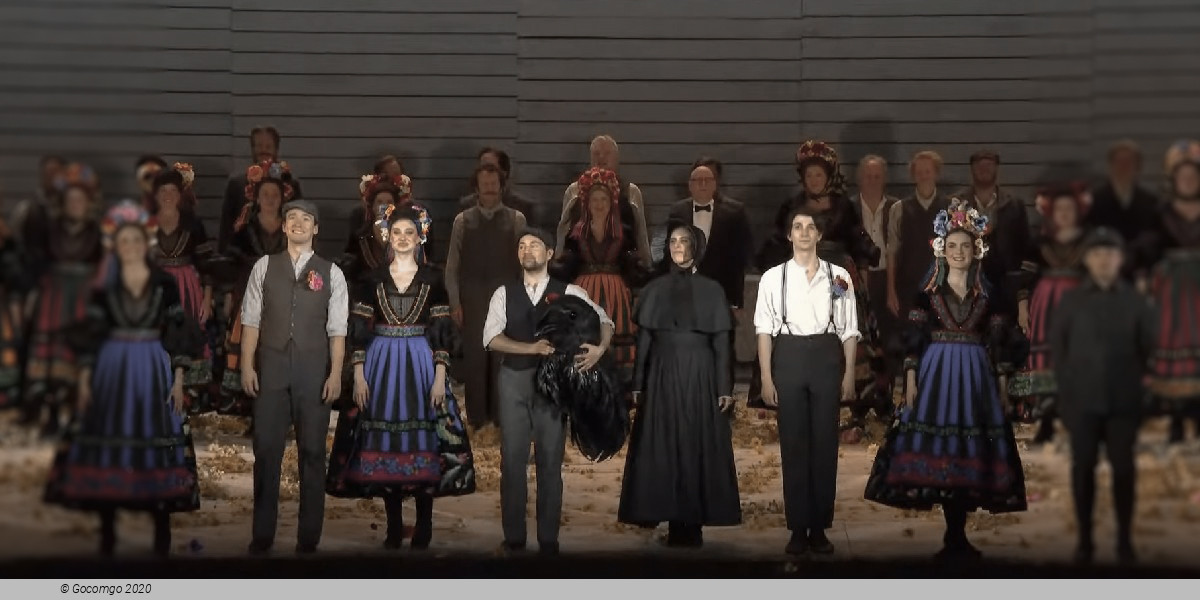
Like in a film, there are no arias or numbers in Jenufa. Janacek wrote music that reflected real life in the early 1900s. He listened for the tones of melodies along the streets of his hometown of Brno. Where others heard only everyday chatting, Janacek could hear the undertones of tears, longing or love in the words spoken between people. We clearly hear this in Jenufa. The music takes us into the world of captivating Czech feasts and folklore.

History
Premiere of this production: 21 January 1904, National Theatre, Brno

Jenůfa ("Her Stepdaughter" in Czech) is an opera in three acts by Leoš Janáček to a Czech libretto by the composer, based on the play Její pastorkyňa by Gabriela Preissová. It was first performed at the National Theatre, Brno on 21 January 1904. Composed between 1896 and 1902, it is among the first operas written in prose.

Synopsis

Place:  A Moravian village
Time: the nineteenth century

The plot depends on a tangled set of village relationships. Before the opera begins, the mill-owner Grandmother Buryja's two sons have both married twice, fathered children, and died. Their wives have also died, except for the Kostelnička (widow of the churchwarden), the younger son's second wife and Jenůfa's stepmother. Custom dictates that only Števa, the elder son's child by his first marriage, will inherit the mill, leaving his half-brother Laca and cousin Jenůfa to earn their livings.

Act 1

Jenůfa, Laca, and Grandmother Buryja wait for Števa to return home. Jenůfa, in love with Števa and secretly pregnant with his child, worries that he may have been drafted into the army. Laca, in love with Jenůfa, expresses bitterness against his half-brother's favored position at home. As he complains he plays with a knife and, finding it blunt, gives it to the mill foreman to be sharpened.

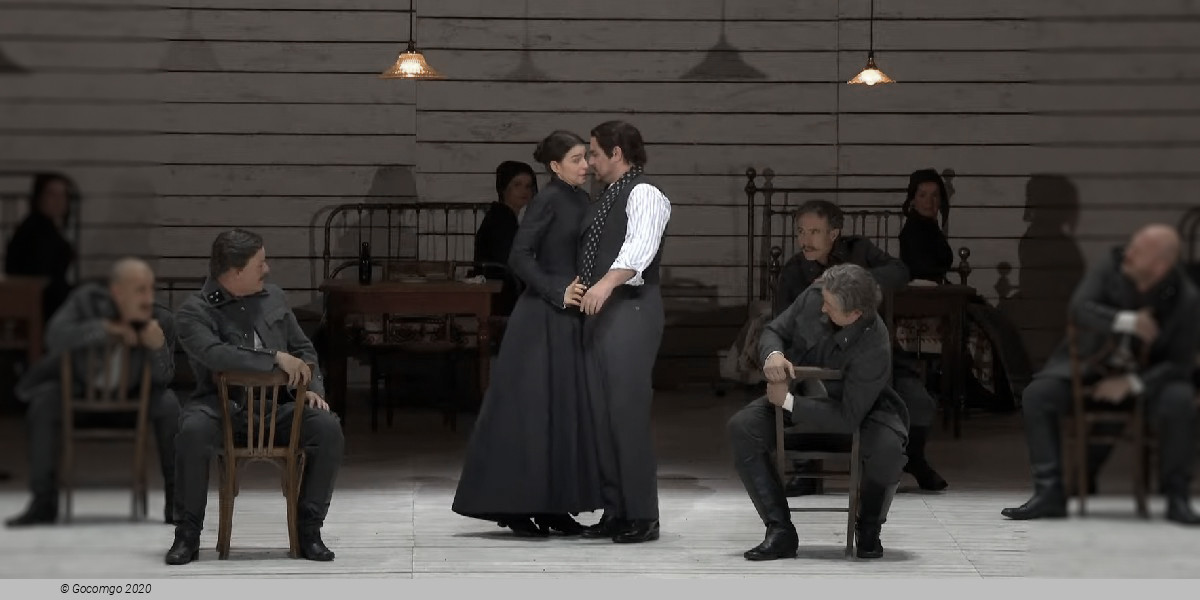
The foreman informs the family that Števa has not been drafted, to Jenůfa's relief and Laca's increased frustration. The others leave, and Jenůfa waits to greet Števa. He appears with a group of soldiers, drunk and boasting of his prowess with the girls. He calls for music and drags the miserable Jenůfa into dancing with him.

Then Kostelnička steps into this rowdy scene, silences the musicians and, shocked by Števa's behavior, forbids him to marry Jenůfa until he can stay sober for one full year. The soldiers and the family leave Števa and Jenůfa alone, and she begs him to love her, but he, unaware of her pregnancy, gives her casual answers and leaves.

Laca returns, as bitter as ever. He attempts to goad Jenůfa into criticizing Števa, but she takes her lover's side despite everything. Laca rages that Števa would never even look at her if it weren't for her rosy cheeks, then slashes her across the cheek with his knife.

Act 2

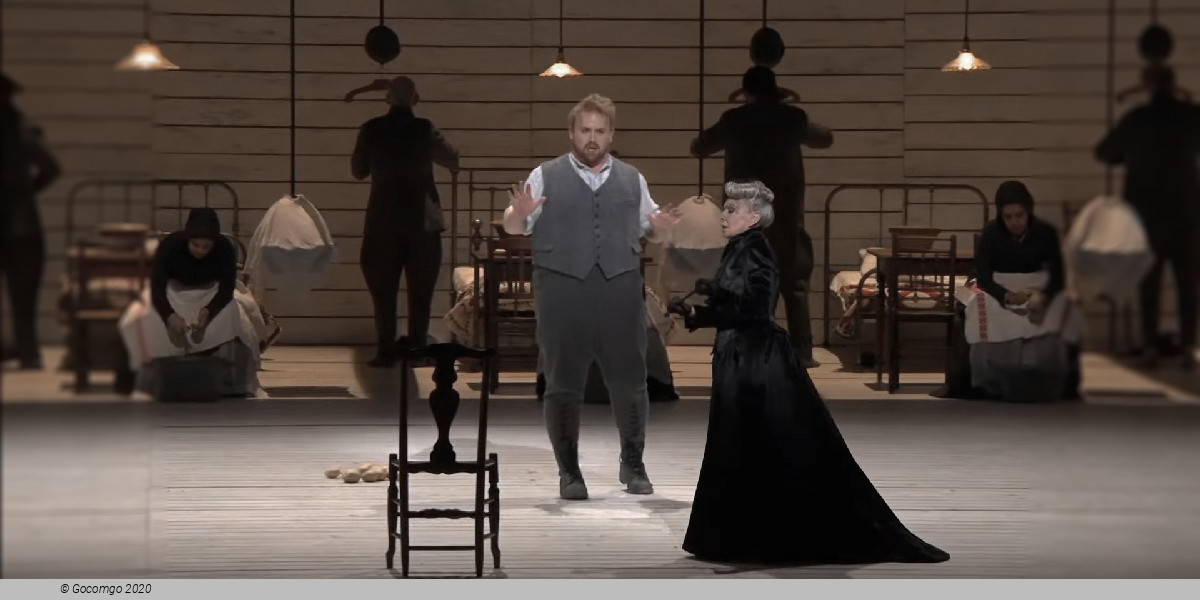
Months later, it is winter. The baby has been born, but Števa has not yet come to visit his child. Jenůfa's face is still disfigured, but she is happy in her love for the baby. While Jenůfa sleeps, the Kostelnička summons Števa and demands that he take responsibility. He answers that while he will provide money in secret, no one must know the baby is his. His love for Jenůfa died when Laca spoiled her beauty, and he is now engaged to marry Karolka, the mayor's pretty daughter.

Števa leaves, and Laca enters. He still doesn't know the truth about the baby, and when the Kostelnička tells him, his first reaction is disgust at the thought of taking Števa's child under his wing. Fearful that Jenůfa will be left with no one to marry, Kostelnička hastily lies that the baby is dead. Laca leaves, and the Kostelnička is faced with the necessity of making the lie true. She wraps the baby in a shawl and leaves the house.

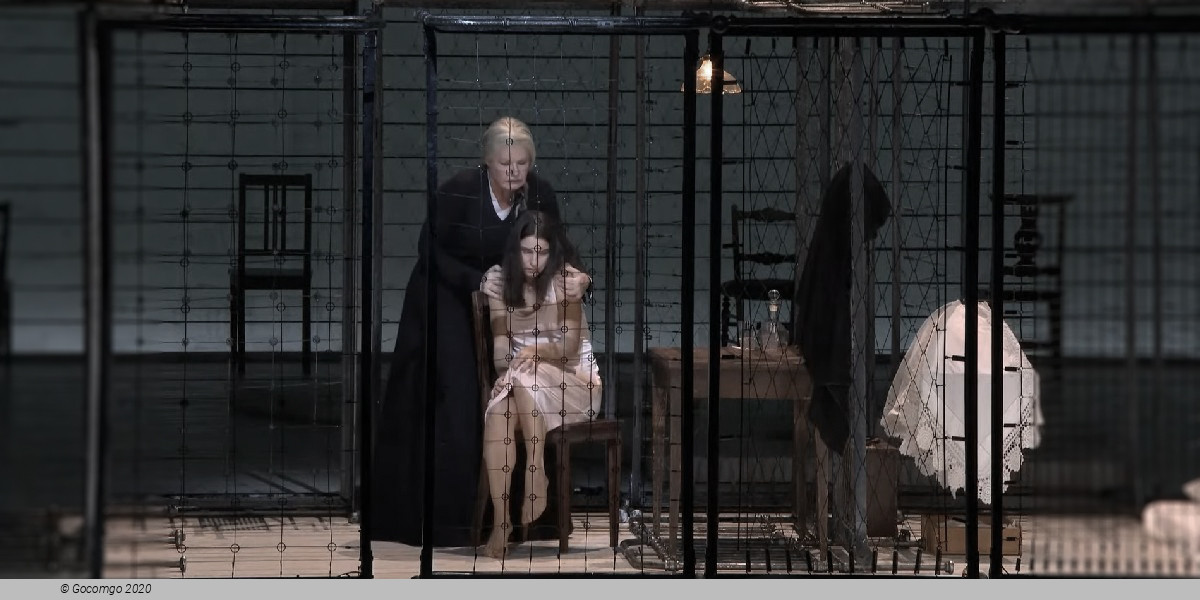
Jenůfa wakes up and says a prayer for her child's future, but the Kostelnička, returning, tells her that the baby died while she slept. Laca appears and comforts Jenůfa gently, asking that they spend the rest of their lives together. Seeing the tenderness of the couple, the Kostelnička tries to convince herself that she has acted for the best.

Act 3

It is now spring, and Laca and Jenůfa's wedding day. All seems right again, except that the Kostelnička is a nervous wreck. Števa and Karolka visit, and a chorus of village girls sings a wedding song. Just then, screams are heard. The body of the baby has been discovered in the mill-stream under the melting ice. Jenůfa immediately says that the baby is hers, and in her grief appears guilty of the murder. The village is ready to exact immediate justice against Jenůfa, but the Kostelnička calms them and says that the crime is hers. Hearing the whole story, Jenůfa forgives her stepmother. The crowd takes the Kostelnička off to jail. Jenůfa and Laca are left alone. Jenůfa asks Laca to leave her, as she cannot expect him to marry her now. He replies that he will not leave her, and that he wishes to spend the rest of his life with her.

Venue Info

Oslo Opera House - Oslo
Location   Kirsten Flagstads Plass 1

The Oslo Opera House is the home of The Norwegian National Opera and Ballet, and the national opera theatre in Norway. The building is situated in the Bjørvika neighbourhood of central Oslo, at the head of the Oslofjord. It is operated by Statsbygg, the government agency which manages property for the Norwegian government. The structure contains 1,100 rooms in a total area of 38,500 m2 (414,000 sq ft). The main auditorium seats 1,364 and two other performance spaces can seat 200 and 400. The main stage is 16 m (52 ft) wide and 40 m (130 ft) deep. The angled exterior surfaces of the building are covered with marble from Carrara, Italy and white granite and make it appear to rise from the water. It is the largest cultural building constructed in Norway since Nidarosdomen was completed circa 1300.

In 1999, after a long national debate, the Norwegian legislature decided to construct a new opera house in the city. A design competition was held and, of the 350 entries received, the judges chose that of Snøhetta. Construction started in 2003 and was completed in 2007, ahead of schedule and 300 million NOK (~US$52 million) under its budget of 4.4 billion NOK (~US$760 million). The gala opening on 12 April 2008 was attended by His Majesty King Harald, Queen Margrethe II of Denmark and President Tarja Halonen of Finland and other leaders. During the first year of operation, 1.3 million people passed through the building's doors.

The Opera House won the culture award at the World Architecture Festival in Barcelona in October 2008 and the 2009 European Union Prize for Contemporary Architecture.

The roof of the building angles to ground level, creating a large plaza that invites pedestrians to walk up and enjoy the panoramic views of Oslo. While much of the building is covered in white granite and La Facciata, a white Italian carrara marble, the stage tower is clad in white aluminium, in a design by Løvaas & Wagle that evokes old weaving patterns.

The lobby is surrounded by 15 m (49 ft) tall windows with minimal framing and special glass that allows maximum views of the water. The roof is supported by thin angled columns also designed not to interfere with views.

Interior surfaces are covered in oak to bring warmth to spaces in contrast to the coolness of the white exterior. The main auditorium is a horseshoe shape and illuminated by an oval chandelier containing 5,800 handmade crystals. Seats include monitors for the electronic libretto system, allowing audiences to follow opera libretti in Norwegian and English in addition to the original language.

Several art projects were commissioned for the interior and exterior of the Opera House. The most notable is She Lies, a sculpture constructed of stainless steel and glass panels by Monica Bonvicini. It is permanently installed on a concrete platform in the fjord adjacent to Opera House and floats on the water moving in response to tides and wind to create an ever-changing face to viewers. The work was unveiled by Her Majesty Queen Sonja on 11 May 2010.

A perforated wall panel which covers roof supports in the lobby was designed by Olafur Eliasson. It features hexagonal opening and is illuminated from below and behind to create the illusion of melting ice. Other artists involved in the construction include Kristian Blystad, Jorunn Sannes and Kalle Grude, who designed the shape of the pavers on the forecourt and roof; Bodil Furu and Trine Lise Nedreaas, who created a film and video project; Marte Aas, Talleiv Taro Manum, Tom Sandberg, Gerd Tinglum and Nina Witoszek Fitzpatrick, who created the art book Site Seeing; and Linus Elmes and Ludvig Löfgren, who created the foundation stone.

The main stage curtain is the work of Pae White who designed it to look like crumpled aluminum foil. White scanned a crumpled piece of foil into a computer which translated the information to a loom that wove the curtain from wool, cotton and polyester to create a three-dimensional effect. The curtain was manufactured by the German-based theatrical equipment company Gerriets GmbH. The finished curtain measures 74 ft (23 m) wide and 36 ft (11 m) and weighs 1,100 lb (500 kg).

Important Info
Type: Opera
City: Oslo, Norway
Starts at: 19:00
Intervals: 1
Duration: 3h
Sung in: Czech
Titles in: Norwegian,English
Top of page