

Oslo Opera House 24 January 2020 - Ibsen`s Ghosts | GoComGo.com

Ibsen`s Ghosts

Oslo Opera House, Main Stage, Oslo, Norway
All photos (1)
Select date and time
7 PM
Request for Tickets
Important Info
Type: Ballet
City: Oslo, Norway
Starts at: 19:00
Duration:

E-tickets: Print at home or at the box office of the event if so specified. You will find more information in your booking confirmation email.

You can only select the category, and not the exact seats.
If you order 2 or 3 tickets: your seats will be next to each other.
If you order 4 or more tickets: your seats will be next to each other, or, if this is not possible, we will provide a combination of groups of seats (at least in pairs, for example 2+2 or 2+3).

Overview

Internationally acclaimed Ibsen thriller returns home

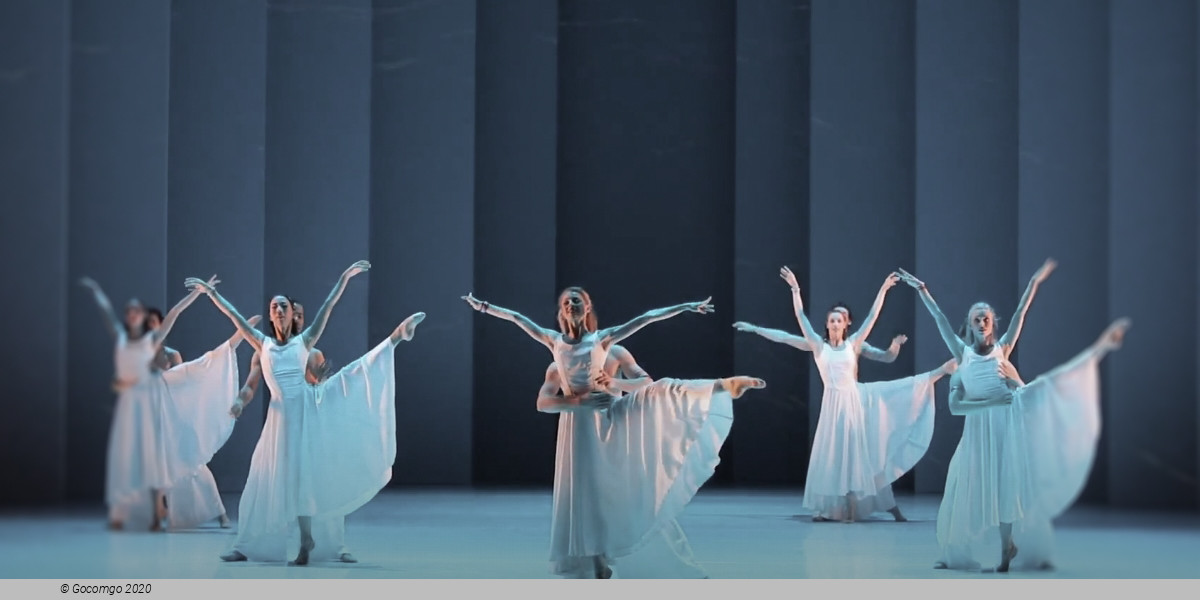
The dance version of Ibsen’s drama Gengangere has become a signature work and an export commodity for the Norwegian National Ballet. The production is now returning to the Main Stage!

Dark secrets

Norwegian audiences now have a new opportunity to experience the dance drama in a venue created especially for it, the Main House of the Oslo Opera House. This is where the Norwegian National Ballet dances the dark secrets of the past in scenes that are both harrowing and tender. The result is an intense experience in which Ibsen’s story directly impacts our emotional state through the language of dance – to the accompaniment Nils Petter Molvær’s music, which he performs personally on stage.

“Gengangere is a genuine thriller in which the characters learn increasingly more about their own history. It’s about how the unspoken can grow and become insurmountable. It takes considerable courage to confront a lifelong lie and sometimes it is too late,” says Director Marit Moum Aune, who created the performance together with choreographer Cina Espejord.

Signature piece on film

Moum Aune was nominated for the best libretto in the renowned Prix Benois de la Danse, while Espejord received the Norwegian Dance Critics Award for the choreography. Ghosts was also made into a movie by the French film company Bel Air and has been shown at several international film festivals.

Ibsen's Ghosts is being performed in the Main Stage right before Hedda Gabler. Both were created in close collaboration with the dancers and both are signature pieces for the Norwegian National Ballet.

It is not often that a Norwegian dance production receives as much international attention as the Norwegian National Ballet’s production ofIbsen's Ghosts. The performance has thrilled audiences and critics both in Norway and abroad. “A powerful experience,” wrote VG after the original premiere in 2014. The magazine Dance Europe called the production “an extraordinary accomplishment” and proclaimed it the best premiere of the season. The Norwegian National Ballet has since toured with Ibsen's Ghoststo Houston, Berlin, Vienna, Shanghai and Hong Kong.

History

Ghosts (Danish: Gengangere) is a play by the Norwegian playwright Henrik Ibsen. It was written in 1881 and first staged in 1882 in Chicago, Illinois, in a production by a Danish company on tour. Like many of Ibsen's plays, Ghosts is a scathing commentary on 19th-century morality. Because of its subject matter, which includes religion, venereal disease, incest, and euthanasia, it immediately generated strong controversy and negative criticism. Since then the play has fared better, and is considered a “great play” that historically holds a position of “immense importance”. Theater critic Maurice Valency wrote in 1963, "From the standpoint of modern tragedy Ghosts strikes off in a new direction.... Regular tragedy dealt mainly with the unhappy consequences of breaking the moral code. Ghosts, on the contrary, deals with the consequences of not breaking it."

Synopsis

Helen Alving is about to dedicate an orphanage she has built in memory of her late husband, Captain Alving. She reveals to Pastor Manders that her marriage was secretly miserable because her husband was unfaithful. She has built the orphanage to deplete her husband's wealth so that their son Oswald will not inherit anything from him. Pastor Manders once advised her to return to her husband despite his philandering, and she followed his advice in the hope that she could reform him. But her husband continued his affairs until his death, and Mrs. Alving stayed with him to protect her son from the taint of scandal and for fear of being shunned by the community.

In the course of the play, she discovers that her son Oswald (whom she had sent away to avoid his being corrupted by his father) is suffering from syphilis that she believes he inherited from his father. She also discovers that Oswald has fallen in love with her maid Regina Engstrand, who is revealed to be the illegitimate daughter of Captain Alving and is therefore Oswald's half-sister.

A sub-plot involves a carpenter, Jacob Engstrand, who married Regina's mother when she was already pregnant. He regards Regina as his own daughter. He is with unaware, or pretends to be, that Captain Alving was Regina's father. Having recently completed his work building Mrs. Alving's orphanage, Engstrand announces his ambition to open a hostel for seafarers. He tries to persuade Regina to leave Mrs. Alving and help him run the hostel, but she refuses. The night before the orphanage is due to open, Engstrand asks Pastor Manders to hold a prayer-meeting there. Later that night, the orphanage burns down. Earlier, Manders had persuaded Mrs. Alving not to insure the orphanage, as to do so would imply a lack of faith in divine providence. Engstrand says the blaze was caused by Manders' carelessness with a candle and offers to take the blame, which Manders readily accepts. Manders in turn offers to support Engstrand's hostel.

When Regina and Oswald's sibling relationship is exposed, Regina departs, leaving Oswald in anguish. He asks his mother to help him avoid the late stages of syphilis with a fatal morphine overdose. She agrees, but only if it becomes necessary. The play concludes with Mrs. Alving having to confront the decision of whether or not to euthanize her son in accordance with his wishes.

Venue Info

Oslo Opera House - Oslo
Location   Kirsten Flagstads Plass 1

The Oslo Opera House is the home of The Norwegian National Opera and Ballet, and the national opera theatre in Norway. The building is situated in the Bjørvika neighbourhood of central Oslo, at the head of the Oslofjord. It is operated by Statsbygg, the government agency which manages property for the Norwegian government. The structure contains 1,100 rooms in a total area of 38,500 m2 (414,000 sq ft). The main auditorium seats 1,364 and two other performance spaces can seat 200 and 400. The main stage is 16 m (52 ft) wide and 40 m (130 ft) deep. The angled exterior surfaces of the building are covered with marble from Carrara, Italy and white granite and make it appear to rise from the water. It is the largest cultural building constructed in Norway since Nidarosdomen was completed circa 1300.

In 1999, after a long national debate, the Norwegian legislature decided to construct a new opera house in the city. A design competition was held and, of the 350 entries received, the judges chose that of Snøhetta. Construction started in 2003 and was completed in 2007, ahead of schedule and 300 million NOK (~US$52 million) under its budget of 4.4 billion NOK (~US$760 million). The gala opening on 12 April 2008 was attended by His Majesty King Harald, Queen Margrethe II of Denmark and President Tarja Halonen of Finland and other leaders. During the first year of operation, 1.3 million people passed through the building's doors.

The Opera House won the culture award at the World Architecture Festival in Barcelona in October 2008 and the 2009 European Union Prize for Contemporary Architecture.

The roof of the building angles to ground level, creating a large plaza that invites pedestrians to walk up and enjoy the panoramic views of Oslo. While much of the building is covered in white granite and La Facciata, a white Italian carrara marble, the stage tower is clad in white aluminium, in a design by Løvaas & Wagle that evokes old weaving patterns.

The lobby is surrounded by 15 m (49 ft) tall windows with minimal framing and special glass that allows maximum views of the water. The roof is supported by thin angled columns also designed not to interfere with views.

Interior surfaces are covered in oak to bring warmth to spaces in contrast to the coolness of the white exterior. The main auditorium is a horseshoe shape and illuminated by an oval chandelier containing 5,800 handmade crystals. Seats include monitors for the electronic libretto system, allowing audiences to follow opera libretti in Norwegian and English in addition to the original language.

Several art projects were commissioned for the interior and exterior of the Opera House. The most notable is She Lies, a sculpture constructed of stainless steel and glass panels by Monica Bonvicini. It is permanently installed on a concrete platform in the fjord adjacent to Opera House and floats on the water moving in response to tides and wind to create an ever-changing face to viewers. The work was unveiled by Her Majesty Queen Sonja on 11 May 2010.

A perforated wall panel which covers roof supports in the lobby was designed by Olafur Eliasson. It features hexagonal opening and is illuminated from below and behind to create the illusion of melting ice. Other artists involved in the construction include Kristian Blystad, Jorunn Sannes and Kalle Grude, who designed the shape of the pavers on the forecourt and roof; Bodil Furu and Trine Lise Nedreaas, who created a film and video project; Marte Aas, Talleiv Taro Manum, Tom Sandberg, Gerd Tinglum and Nina Witoszek Fitzpatrick, who created the art book Site Seeing; and Linus Elmes and Ludvig Löfgren, who created the foundation stone.

The main stage curtain is the work of Pae White who designed it to look like crumpled aluminum foil. White scanned a crumpled piece of foil into a computer which translated the information to a loom that wove the curtain from wool, cotton and polyester to create a three-dimensional effect. The curtain was manufactured by the German-based theatrical equipment company Gerriets GmbH. The finished curtain measures 74 ft (23 m) wide and 36 ft (11 m) and weighs 1,100 lb (500 kg).

Important Info
Type: Ballet
City: Oslo, Norway
Starts at: 19:00
Duration:
Top of page