








Opera National de Paris 8 February 2023 - Il Trovatore | GoComGo.com

Il Trovatore

Opera National de Paris, Opéra Bastille, Paris, France
All photos (7)
Select date and time
7:30 PM

E-tickets: Print at home or at the box office of the event if so specified. You will find more information in your booking confirmation email.

You can only select the category, and not the exact seats.
If you order 2 or 3 tickets: your seats will be next to each other.
If you order 4 or more tickets: your seats will be next to each other, or, if this is not possible, we will provide a combination of groups of seats (at least in pairs, for example 2+2 or 2+3).

Important Info
Type: Opera
City: Paris, France
Starts at: 19:30
Acts: 4
Intervals: 1
Duration: 2h 55min
Sung in: Italian
Titles in: French,English

E-tickets: Print at home or at the box office of the event if so specified. You will find more information in your booking confirmation email.

You can only select the category, and not the exact seats.
If you order 2 or 3 tickets: your seats will be next to each other.
If you order 4 or more tickets: your seats will be next to each other, or, if this is not possible, we will provide a combination of groups of seats (at least in pairs, for example 2+2 or 2+3).

Overview

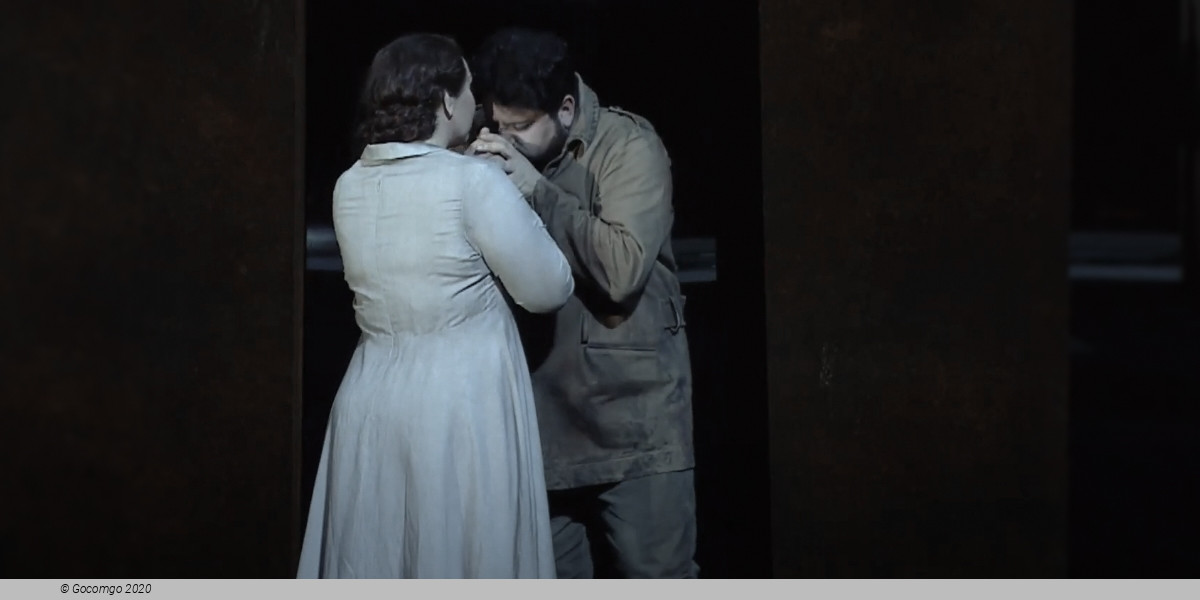
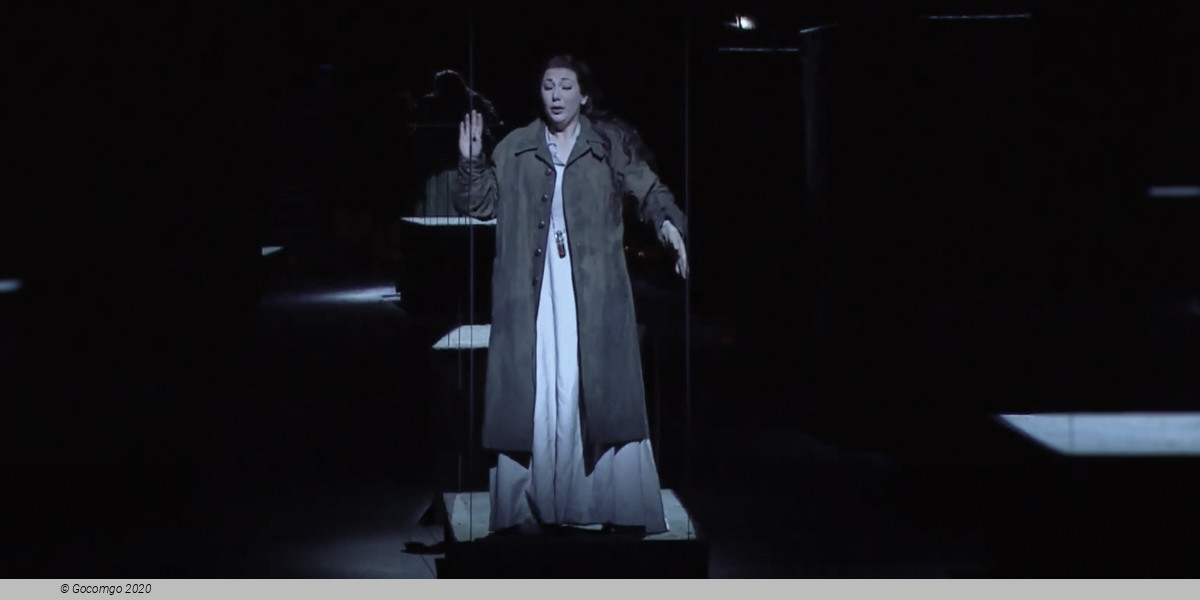
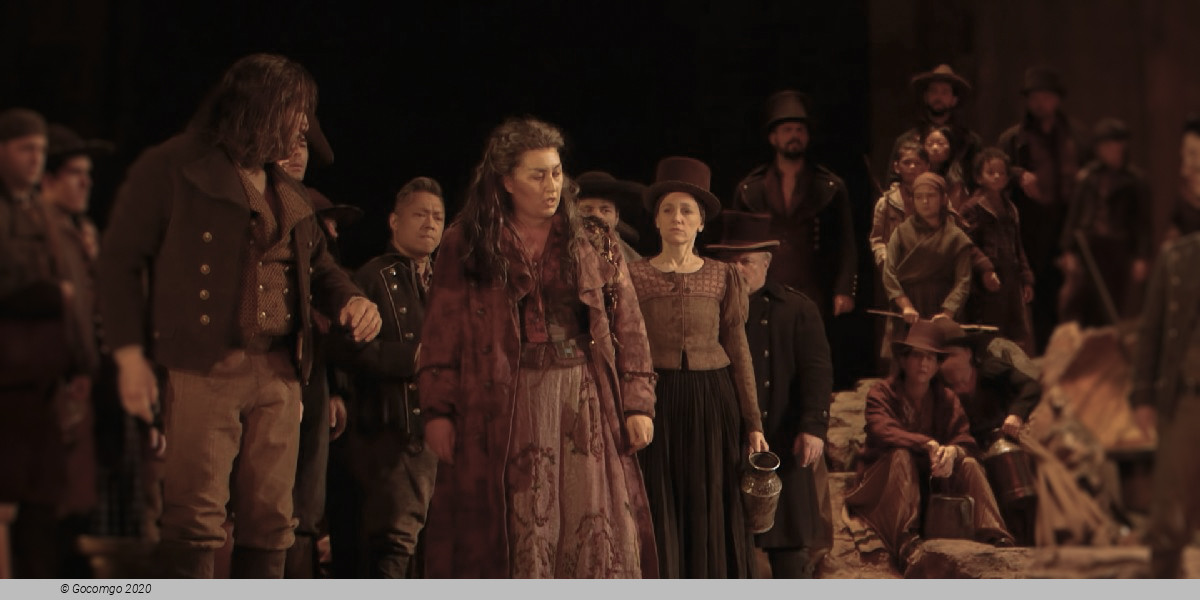
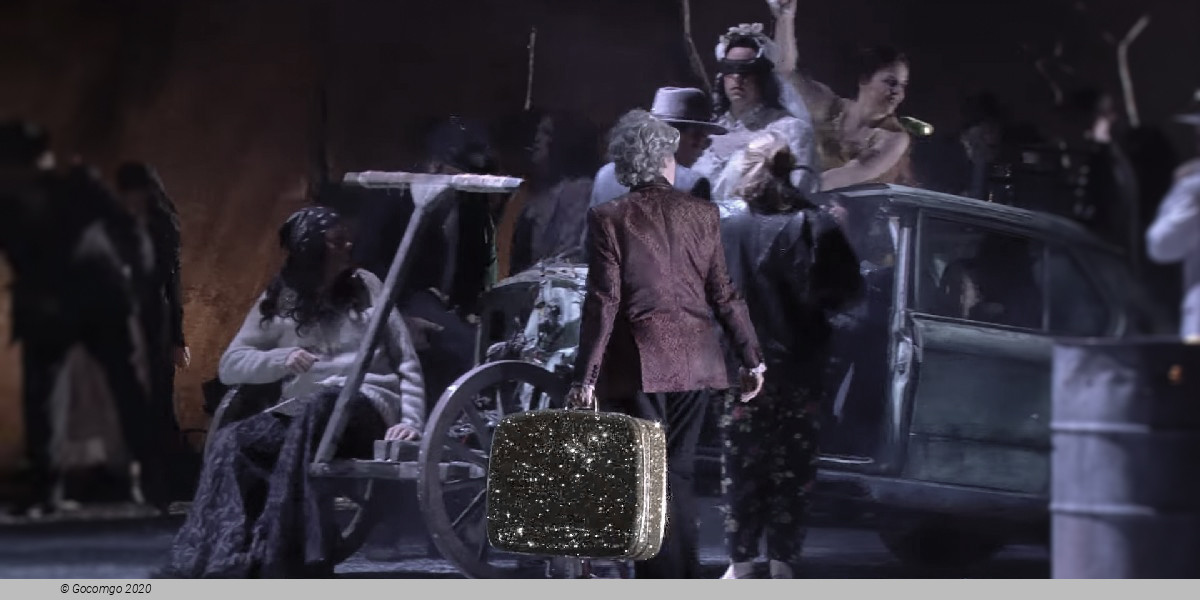
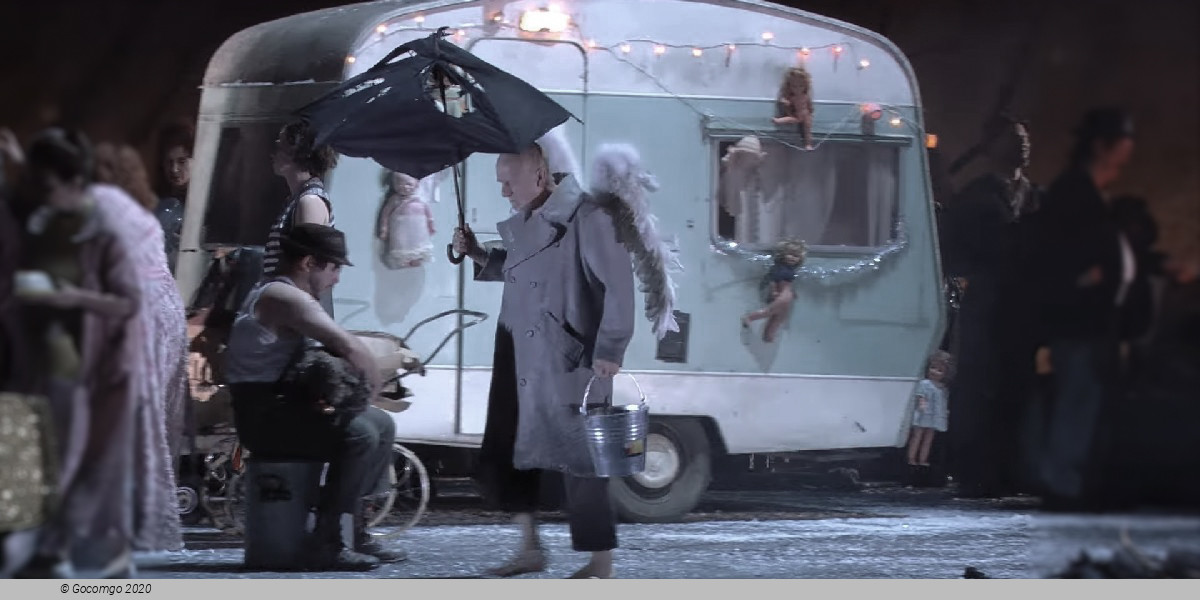
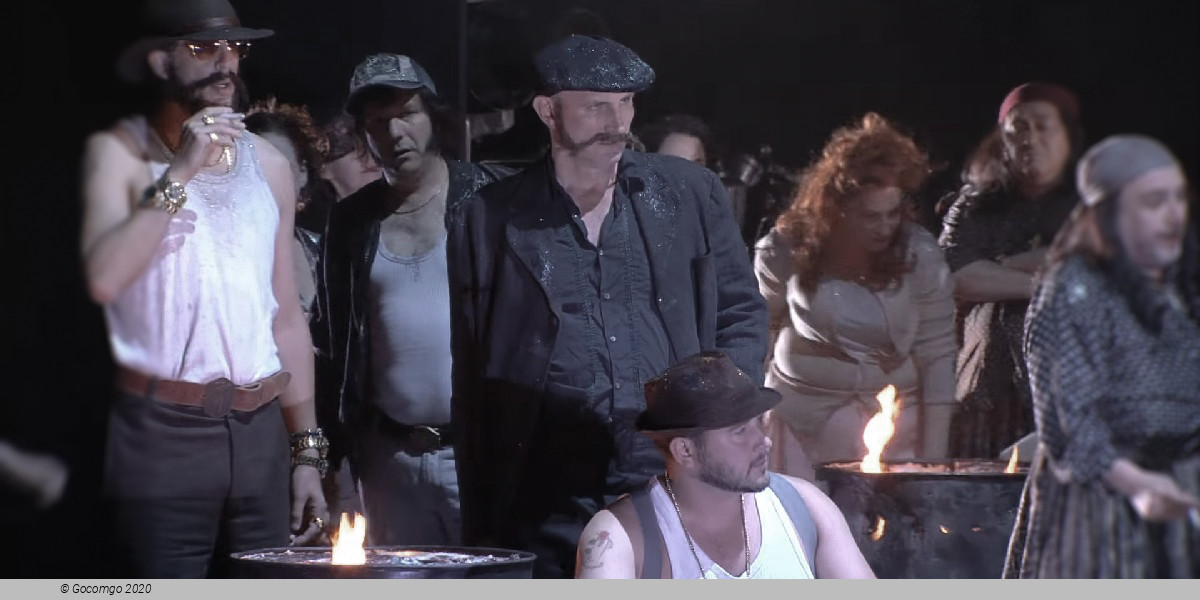
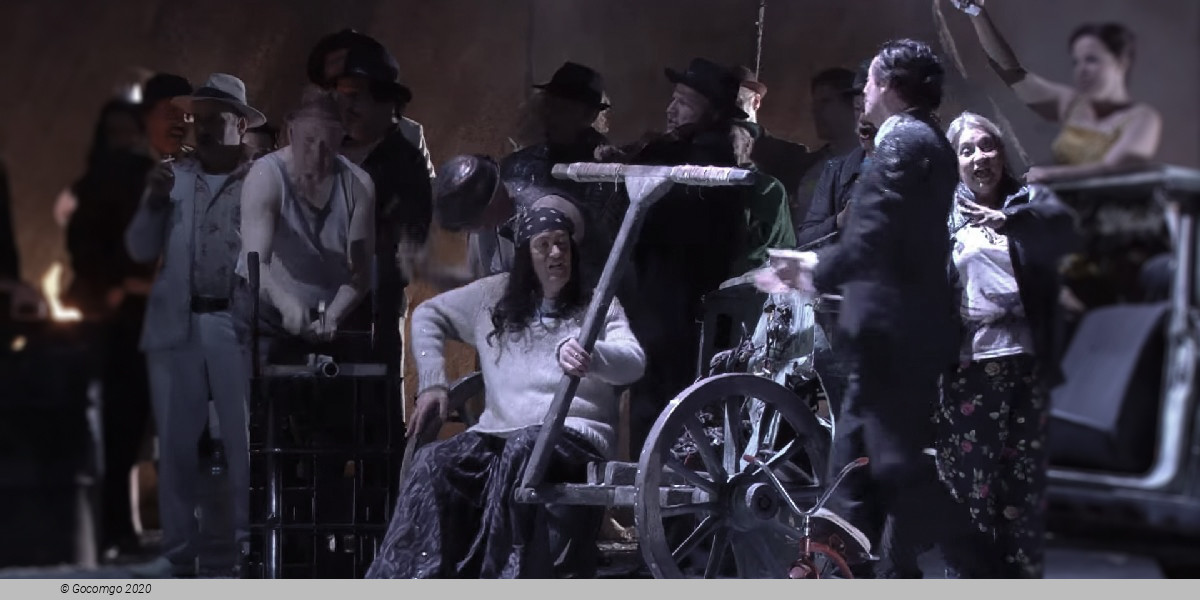
In the wake of Rigoletto, Verdi’s one aspiration was to do something new. Yet despite his eagerness, the project of adapting the Spanish playwright Antonio Garcia Gutiérrez’s El Trovado, a play with a rocambolesque plot set in medieval Spain and featuring troubadours along with a gypsy’s curse, inspired his librettist, Salvatore Cammarano, with only mild enthusiasm. However, Verdi succeeded in transcending this story of love and death through the vertiginous beauty of his music: since its first performance in 1853, this particularly inspired work has become one of the mainstays of the repertoire. Thanks to the clarity of his staging, set amid the noise and fury of a fratricidal war, Àlex Ollé makes night, castles, soldiers, pyres and eternal hatred instantly believable.

History
Premiere of this production: 19 January 1853, Teatro Apollo, Rome

Il trovatore is an opera in four acts by Giuseppe Verdi to an Italian libretto largely written by Salvadore Cammarano, based on the play El trovador (1836) by Antonio García Gutiérrez. It was Gutiérrez's most successful play, one which Verdi scholar Julian Budden describes as "a high flown, sprawling melodrama flamboyantly defiant of the Aristotelian unities, packed with all manner of fantastic and bizarre incident."

Synopsis

ACT I - THE DUEL

Ferrando tells his soldiers the story of a gypsy who was burned at the stake for having bewitched the younger of the two sons of the old Count di Luna. Soon thereafter, the gypsy’s daughter abducted the child out of vengeance and its charred remains were discovered on the very spot where her mother had been tortured to death. Ferrando has not yet found the gypsy’s daughter but he is certain that he will be able to recognise her in spite of all the years that have passed. It is evening and Leonora awaits her lover, the troubadour Manrico. She tells Ines, her confidante, how she met him. Ines advises Leonora to forget Manrico. The present Count di Luna, who is also enamoured of Leonora, approaches, having finally decided to declare his love for her. Just then, the melodious voice of Manrico is heard. Fooled by the darkness, Leonora rushes towards the Count, but she soon realises her mistake when Manrico appears. Furious, the Count regards the singer not just as a rival, but also as a political adversary. Their dispute will be settled by a duel.

ACT II - THE GYPSY WOMAN

In their camp, the gypsies prepare for their day. The sight of the flames reminds Azucena of her mother burning at the stake. Even though Manrico emerged victorious from the duel with the Count di Luna, he left the latter alive in order to confront him in armed combat later. Left for dead on the battlefield, he was nursed back to health by his mother Azucena. The gypsy recounts how her mother was consumed by the flames and how, out of vengeance, and in a moment of mental confusion, she threw her own son into the flames and not the Count’s child. Manrico asks her: if he is not her son, then who is he in reality? Azucena composes herself and manages to reassure him. A messenger arrives with news that Leonora, believing Manrico to be dead, is about to enter a convent. Manrico races to her side to prevent her from doing so. The Count di Luna, who has also learned of Leonora’s intentions, decides to abduct her but Manrico gets there first and the two lovers escape together.

ACT III - THE GYPSY WOMAN’S SON

The Count di Luna’s soldiers prepare to attack Manrico and Leonora’s hiding place. The Count fears that he has lost Leonora to his rival forever. Azucena, who has come in search of Manrico, is arrested near the lovers’ refuge and is accused of spying. Ferrando recognises her as the woman who abducted the brother of the young Count several years earlier. When she calls on Manrico, her presumed son, for help, Luna also realises that she is the mother of his enemy and he sentences her to death. Manrico and Leonora prepare to marry in secret. Ruiz, Manrico’s friend, arrives and informs them that Azucena has been imprisoned. Manrico calls on his friends to help him free the gypsy woman whom he believes to be his mother.

ACT IV - THE PUNISHMENT

Manrico’s attempts to free his mother have failed. He and Azucena are now imprisoned at the mercy of the Count di Luna and are to be executed at dawn. Leonora, who nevertheless managed to escape, persuades Ruiz to take her to the prison where Manrico and his mother are to be executed the following morning at dawn. She begs the Count di Luna to spare Manrico and is even ready to give herself to him in exchange. The Count accepts the offer. However, in order to avoid keeping her promise, she secretly swallowsa poison. Leonora reaches the prison. She tries to convince Manrico to flee without her. Believing he has been betrayed, Manrico curses his beloved. However, when the poison starts to take effect, he realises that she has sacrificed herself out of love for him. The Count di Luna, who has been listening to everything, realises that Leonora has deceived him. He orders the immediate execution of Manrico and forces Azucena to witness the death of her presumed son, after which the gypsy reveals the terrible truth to the Count: Manrico was his brother.

Place: Biscay and Aragon (Spain)
Time: Fifteenth century.

Act 1: The Duel
Scene 1: The guard room in the castle of Luna (The Palace of Aljafería, Zaragoza, Spain)

Ferrando, the captain of the guards, orders his men to keep watch while Count di Luna wanders restlessly beneath the windows of Leonora, lady-in-waiting to the Princess. Di Luna loves Leonora and is jealous of his successful rival, a troubadour whose identity he does not know. In order to keep the guards awake, Ferrando narrates the history of the count (Racconto: Di due figli vivea padre beato / "The good Count di Luna lived happily, the father of two sons"): many years ago, a gypsy was wrongfully accused of having bewitched the youngest of the di Luna children; the child had fallen sick, and for this the gypsy had been burnt alive as a witch, her protests of innocence ignored. Dying, she had commanded her daughter Azucena to avenge her, which she did by abducting the baby. Although the burnt bones of a child were found in the ashes of the pyre, the father refused to believe his son's death. Dying, the father commanded his firstborn, the new Count di Luna, to seek Azucena.

Scene 2: Garden in the palace of the princess

Leonora confesses her love for the Troubadour to her confidante, Ines (Cavatina:Tacea la notte placida / "The peaceful night lay silent"... Di tale amor / "A love that words can scarcely describe"), in which she tells how she fell in love with a mystery knight, victor at a tournament: lost track of him when a civil war broke out: then encountered him again, in disguise as a wandering troubadour who sang beneath her window. When they have gone, Count di Luna enters, intending to pay court to Leonora himself, but hears the voice of his rival, in the distance: (Deserto sulla terra / "Alone upon this earth"). Leonora in the darkness briefly mistakes the count for her lover, until the Troubadour himself enters the garden, and she rushes to his arms. The Count challenges his rival to reveal his true identity, which he does: Manrico, a knight now outlawed and under death sentence for his allegiance to a rival prince. Manrico in turn challenges him to call the guards, but the Count regards this encounter as a personal rather than political matter, and challenges Manrico instead to a duel over their common love. Leonora tries to intervene, but cannot stop them from fighting (Trio: Di geloso amor sprezzato / "The fire of jealous love" ).

Act 2: The Gypsy Woman
Scene 1: The gypsies' camp

The gypsies sing the Anvil Chorus: Vedi le fosche notturne / "See! The endless sky casts off her sombre nightly garb...". Azucena, the daughter of the Gypsy burnt by the count, is still haunted by her duty to avenge her mother (Canzone: Stride la vampa / "The flames are roaring!"). The Gypsies break camp while Azucena confesses to Manrico that after stealing the di Luna baby she had intended to burn the count's little son along with her mother, but overwhelmed by the screams and the gruesome scene of her mother's execution, she became confused and threw her own child into the flames instead (Racconto: Condotta ell'era in ceppi / "They dragged her in bonds").

Manrico realises that he is not the son of Azucena, but loves her as if she were indeed his mother, as she has always been faithful and loving to him - and, indeed, saved his life only recently, discovering him left for dead on a battlefield after being caught in ambush. Manrico tells Azucena that he defeated di Luna in their earlier duel, but was held back from killing him by a mysterious power (Duet: Mal reggendo / "He was helpless under my savage attack"): and Azucena reproaches him for having stayed his hand then, especially since it was the Count's forces that defeated him in the subsequent battle of Pelilla. A messenger arrives and reports that Manrico's allies have taken Castle Castellor, which Manrico is ordered to hold in the name of his prince: and also that Leonora, who believes Manrico dead, is about to enter a convent and take the veil that night. Although Azucena tries to prevent him from leaving in his weak state (Ferma! Son io che parlo a te! / "I must talk to you"), Manrico rushes away to prevent her from carrying out this intent.

Scene 2: In front of the convent

Di Luna and his attendants intend to abduct Leonora and the Count sings of his love for her (Aria: Il balen del suo sorriso / "The light of her smile" ... Per me ora fatale / "Fatal hour of my life"). Leonora and the nuns appear in procession, but Manrico prevents di Luna from carrying out his plans and takes Leonora away with him, although once again leaving the Count behind unharmed, as the soldiers on both sides back down from bloodshed, the Count being held back by his own men.

Act 3: The Son of the Gypsy Woman

Scene 1: Di Luna's camp

Di Luna and his army are attacking the fortress Castellor where Manrico has taken refuge with Leonora (Chorus: Or co' dadi ma fra poco / "Now we play at dice"). Ferrando drags in Azucena, who has been captured wandering near the camp. When she hears di Luna’s name, Azucena’s reactions arouse suspicion and Ferrando recognizes her as the supposed murderer of the count’s brother. Azucena cries out to her son Manrico to rescue her and the count realizes that he has the means to flush his enemy out of the fortress. He orders his men to build a pyre and burn Azucena before the walls.

Scene 2: A chamber in the castle

Inside the castle, Manrico and Leonora are preparing to be married. She is frightened; the battle with di Luna is imminent and Manrico’s forces are outnumbered. He assures her of his love (Aria: Ah sì, ben mio, coll'essere / "Ah, yes, my love, in being yours"), even in the face of death. When news of Azucena’s capture reaches him, he summons his men and desperately prepares to attack (Cabaletta: Di quella pira l'orrendo foco / "The horrid flames of that pyre"). Leonora faints.

Act 4: The Punishment
Scene 1: Before the dungeon keep

Manrico has failed to free Azucena and has been imprisoned himself. Leonora attempts to free him (Aria: D'amor sull'ali rosee / "On the rosy wings of love"; Chorus & Duet: Miserere / "Lord, thy mercy on this soul") by begging di Luna for mercy and offers herself in place of her lover. She promises to give herself to the count, but secretly swallows poison from her ring in order to die before di Luna can possess her (Duet: Mira, d'acerbe lagrime / "See the bitter tears I shed").

Scene 2: In the dungeon

Manrico and Azucena are awaiting their execution. Manrico attempts to soothe Azucena, whose mind wanders to happier days in the mountains (Duet: Ai nostri monti ritorneremo / "Again to our mountains we shall return"). At last the gypsy slumbers. Leonora comes to Manrico and tells him that he is saved, begging him to escape. When he discovers she cannot accompany him, he refuses to leave his prison. He believes Leonora has betrayed him until he realizes that she has taken poison to remain true to him. As she dies in agony in Manrico's arms she confesses that she prefers to die with him than to marry another (Trio: Prima che d'altri vivere / "Rather than live as another's"). The count has heard Leonora's last words and orders Manrico's execution. Azucena awakes and tries to stop di Luna. Once Manrico is dead, she cries: Egli era tuo fratello! Sei vendicata, o madre. / "He was your brother ... You are avenged, oh mother!"

Venue Info

Opera National de Paris - Paris
Location   Palais Garnier: Place de l’Opéra, 75009 Paris; Opéra Bastille: Place de la Bastille, 75012 Paris

The Paris Opera is the primary opera and ballet company of France. It was founded in 1669 by Louis XIV as the Académie d'Opéra, and shortly thereafter was placed under the leadership of Jean-Baptiste Lully and officially renamed the Académie Royale de Musique, but continued to be known more simply as the Opéra. Classical ballet as it is known today arose within the Paris Opera as the Paris Opera Ballet and has remained an integral and important part of the company. Currently called the Opéra National de Paris, it mainly produces operas at its modern 2700-seat theatre Opéra Bastille which opened in 1989, and ballets and some classical operas at the older 1970-seat Palais Garnier which opened in 1875. Small scale and contemporary works are also staged in the 500-seat Amphitheatre under the Opéra Bastille.

The company's annual budget is in the order of 200 million euros, of which 100 million come from the French state and 70 million from box office receipts. With this money, the company runs the two houses and supports a large permanent staff, which includes the orchestra of 170, a chorus of 110 and the corps de ballet of 150.

Each year, the Opéra presents about 380 performances of opera, ballet and other concerts, to a total audience of about 800,000 people (of whom 17% come from abroad), which is a very good average seat occupancy rate of 94%. In the 2012/13 season, the Opéra presented 18 opera titles (two in a double bill), 13 ballets, 5 symphonic concerts and two vocal recitals, plus 15 other programmes. The company's training bodies are also active, with 7 concerts from the Atelier Lyrique and 4 programmes from the École de Danse.

The Opera under Louis XIV
Pierre Perrin

The poet Pierre Perrin began thinking and writing about the possibility of French opera in 1655, more than a decade before the official founding of the Paris Opera as an institution. He believed that the prevailing opinion of the time that the French language was fundamentally unmusical was completely incorrect. Seventeenth-century France offered Perrin essentially two types of organization for realizing his vision: a royal academy or a public theater. In 1666 he proposed to the minister Colbert that "the king decree 'the establishment of an Academy of Poetry and Music' whose goal would be to synthesize the French language and French music into an entirely new lyric form."

Even though Perrin's original concept was of an academy devoted to discussions of French opera, the king's intention was in fact a unique hybrid of royal academy and public theatre, with an emphasis on the latter as an institution for performance. On 28 June 1669, Louis XIV signed the Privilège accordé au Sieur Perrin pour l'établissement d'une Académie d'Opéra en musique, & Vers François (Privilege granted to Sir Perrin for the establishment of an Academy of Opera in music, & French Verse). The wording of the privilège, based in part on Perrin's own writings, gave him the exclusive right for 12 years to found anywhere in France academies of opera dedicated to the performance of opera in French. He was free to select business partners of his choice and to set the price of tickets. No one was to have the right of free entry including members of the royal court, and no one else could set up a similar institution. Although it was to be a public theatre, it retained its status as royal academy in which the authority of the king as the primary stakeholder was decisive. The monopoly, originally intended to protect the enterprise from competition during its formative phase, was renewed for subsequent recipients of the privilege up to the early French Revolution. As Victoria Johnson points out, "the Opera was an organization by nature so luxurious and expensive in its productions that its very survival depended on financial protection and privilege."

Perrin converted the Bouteille tennis court, located on the Rue des Fossés de Nesles (now 42 Rue Mazarine), into a rectangular facility with provisions for stage machinery and scenery changes and a capacity of about 1200 spectators. His first opera Pomone with music by Robert Cambert opened on 3 March 1671 and ran for 146 performances. A second work, Les peines et les plaisirs de l'amour, with a libretto by Gabriel Gilbert and music by Cambert, was performed in 1672.

Jean-Baptiste Lully

Despite this early success, Cambert and two other associates did not hesitate to swindle Perrin, who was imprisoned for debt and forced to concede his privilege on 13 March 1672 to the surintendant of the king's music Jean-Baptiste Lully. The institution was renamed the Académie Royale de Musique and came to be known in France simply as the Opéra. Within one month Lully had convinced the king to expand the privilege by restricting the French and Italian comedians to using two singers rather than six, and six instrumentalists, rather than twelve. Because of legal difficulties Lully could not use the Salle de la Bouteille, and a new theatre was built by Carlo Vigarani at the Bel-Air tennis court on the Rue de Vaugirard.[9] Later, Lully and his successors bitterly negotiated the concession of the privilege, in whole or in part, from the entrepreneurs in the provinces: in 1684 Pierre Gautier bought the authorisation to open a music academy in Marseille, then the towns of Lyon, Rouen, Lille and Bordeaux followed suit in the following years. During Lully's tenure, the only works performed were his own. The first productions were the pastorale Les fêtes de l'Amour et de Bacchus (November 1672) and his first tragedie lyrique called Cadmus et Hermione (27 April 1673).

After Molière's death in 1673, his troupe merged with the players at the Théâtre du Marais to form the Théâtre Guénégaud (at the same theatre that had been used by the Académie d'Opéra), and no longer needed the theatre built by Richelieu at his residence the Palais-Royal, near the Louvre. (In 1680 the troupe at the Guénégaud merged again with the players from the Hôtel de Bourgogne forming the Comédie-Française.) Richelieu's theatre had been designed by Jacques Le Mercier and had opened in 1641, and unlike the huge theatre at the Tuileries Palace, which could accommodate 6,000 to 8,000 spectators, was of a size consistent with good acoustics. Lully greatly desired a better theatre and persuaded the king to let him use the one at the Palais-Royal free of charge. The Théâtre du Palais-Royal had been altered in 1660 and 1671, but Lully, with 3,000 livres received from the king, had further changes made by Vigarani in 1674.

The first production in the new theatre was Alceste on 19 January 1674. The opera was bitterly attacked by those enraged at the restrictions that Lully had caused to be placed on the French and Italian comedians. To mitigate the damage, Louis XIV arranged for new works to be premiered at the court, usually at the Chateau Vieux of the Château de Saint-Germain-en-Laye. This had the further advantage of subsidizing the cost of rehearsals, as well as most of the machinery, sets, and costumes, which were donated to the Opéra for use in Paris. During Lully's time at the Opéra, performances were given all year, except for three weeks at Easter. Regular performances were on Tuesdays, Fridays, and Sundays. The premieres presented at court were usually during Carnival and were moved to the Palais-Royal after Easter, where the openings were on Thursdays. About two to three new works were mounted each year. In all, thirteen of Lully's tragédie en musique were performed there (see the list of compositions by Jean-Baptiste Lully).

After Lully

After Lully died (in 1687), the number of new works per year almost doubled, since his successors (Pascal Collasse, Henri Desmarets, André Campra, André Cardinal Destouches, and Marin Marais) had greater difficulty sustaining the interest of the public. Revivals of Lully's works were common. French composers at the Opéra generally wrote music to new librettos, which had to be approved by the directors of the company. The Italian practice of preparing new settings of existing librettos was considered controversial and did not become the norm in Paris until around 1760. One of the most important of the new works during this period was an opéra-ballet by Campra called L'Europe galante presented in 1697.

Ballet
In 1661 Louis XIV, who was a dancer himself and one of the great architects of baroque ballet (the art form which would one day evolve into classical ballet), established the Académie Royale de Danse, intended to codify court and character dances and to certify dance teachers by examination. From 1680 until Lully's death, it was under the direction of the great dancing master Pierre Beauchamp, the man who codified the five positions of the feet. When Lully took over the Opéra in 1672, he and Beauchamp made theatrical ballet an important part of the company's productions. The ballet of that time was merely an extension of the opera, having yet to evolve into an independent form of theatrical art. As it became more important, however, the dance component of the company began to be referred to as the Paris Opera Ballet. In 1713 an associated ballet school was opened, today known as the Paris Opera Ballet School. The Académie Royale de Danse remained separate, and with the fall of the monarchy in 1789 it disappeared.

The company's names after the Revolution

With the French Revolution and the founding of the Republic, the company changed names several times, dropping its association with the royal family (see the List of official company names for details), and in 1794, moved into the Théâtre National de la rue de la Loi (capacity 2800) where it took the name Théâtre des Arts. In 1797, it was renamed the Théâtre de la République et des Arts.

Napoleon took control of the company in 1802 and with the declaration of the French Empire in 1804, renamed the company the Académie Impériale de Musique. With the Restoration in 1814, the company was renamed the Académie Royale de Musique. It became part of the Académie des Beaux-Arts in 1816. In 1821, the company moved to the Salle Le Peletier, which had a capacity of 1900 spectators and where it remained until the building was destroyed by fire in 1873.

In the second half of the 19th century, with the ascension of Napoleon III in 1851, the name Académie Impériale de Musique was reinstated and after 1870 with the formation of the Third Republic, was changed to Théâtre National de l'Opéra.

In 1875, the institution occupied a new home, the Palais Garnier. Between 1908 and 1914 Henri Benjamin Rabaud conducted at Palais Garnier. Rabaud also composed several works which first premiered at Opéra-Comique, but were later also performed at Palais Garnier.

In 1939, the Opéra was merged with the Opéra-Comique and the company name became Réunion des Théâtres Lyriques Nationaux. The Opéra-Comique was closed in 1972 with the appointment of Rolf Liebermann as general administrator of the Théâtre National de l'Opéra de Paris (1973–1980), but in 1976, the Opéra-Comique was restored.

In 1990 the Opéra moved its primary venue to the new Opéra-Bastille, becoming the Opéra de Paris, although it continued to mount productions, primarily ballet, at the Palais Garnier; and the Opéra-Comique regained its autonomy. In 1994 the Opéra de Paris became the Opéra National de Paris. Regardless of all the changes in its "official" name, the company and its theatres were commonly referred to as the Opéra.

Important Info
Type: Opera
City: Paris, France
Starts at: 19:30
Acts: 4
Intervals: 1
Duration: 2h 55min
Sung in: Italian
Titles in: French,English
Top of page