
Opera de Monte-Carlo tickets 24 January 2027 - L`Italiana in Algeri | GoComGo.com

L`Italiana in Algeri

Opera de Monte-Carlo, Salle Garnier, Monaco, Monaco
All photos (6)
Select date and time
3 PM
From
US$ 194

E-tickets: Print at home or at the box office of the event if so specified. You will find more information in your booking confirmation email.

You can only select the category, and not the exact seats.
If you order 2 or 3 tickets: your seats will be next to each other.
If you order 4 or more tickets: your seats will be next to each other, or, if this is not possible, we will provide a combination of groups of seats (at least in pairs, for example 2+2 or 2+3).

Important Info
Type: Opera
City: Monaco, Monaco
Starts at: 15:00

E-tickets: Print at home or at the box office of the event if so specified. You will find more information in your booking confirmation email.

You can only select the category, and not the exact seats.
If you order 2 or 3 tickets: your seats will be next to each other.
If you order 4 or more tickets: your seats will be next to each other, or, if this is not possible, we will provide a combination of groups of seats (at least in pairs, for example 2+2 or 2+3).

Cast
Performers
Mezzo-Soprano: Cecilia Bartoli (Isabella)
Bass-Baritone: Erwin Schrott (Mustafà)
Conductor: Gianluca Capuano
Baritone: Alessandro Corbelli (Taddeo)
Tenor: Dave Monaco (Lindoro)
Soprano: Rebeca Olvera (Elvira)
Baritone: Renato Dolcini (Haly)
Mezzo-Soprano: Rosa Bove (Zulma)
Creators
Composer: Gioachino Rossini
Composer: Luigi Mosca
Poet: Angelo Anelli
Costume designer: Gianluca Falaschi
Choir director: Stefano Visconti
Light: Ulrich Schneider
Overview

A comic opera (opera buffa) by Gioachino Rossini about a clever Italian woman, Isabella, who outwits the Bey of Algiers to rescue her lover and escape back to Italy.

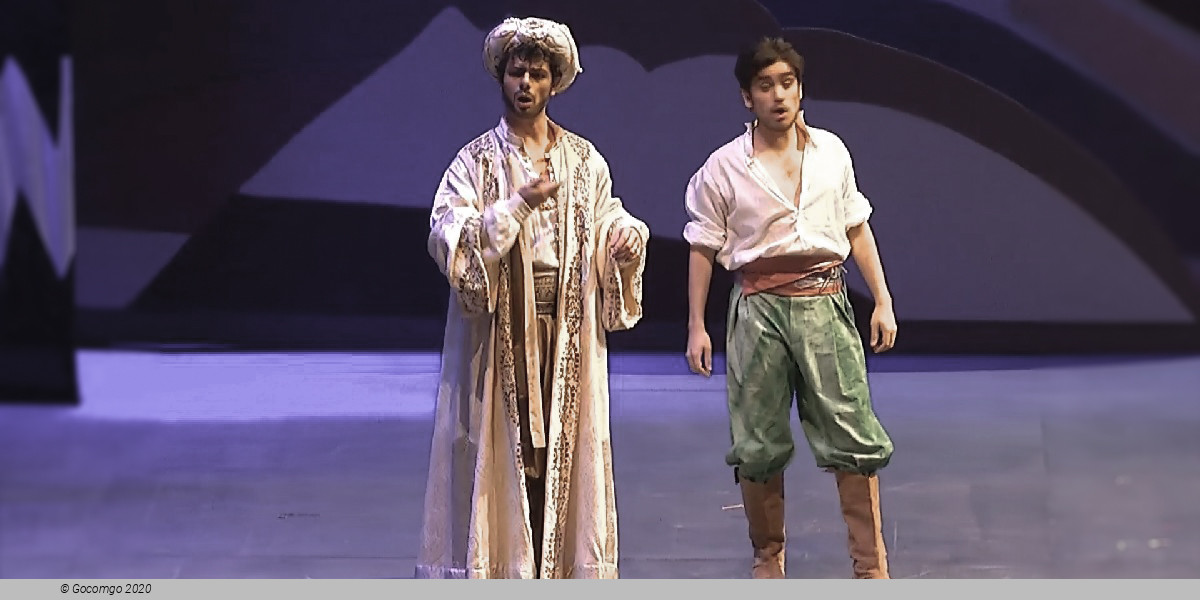
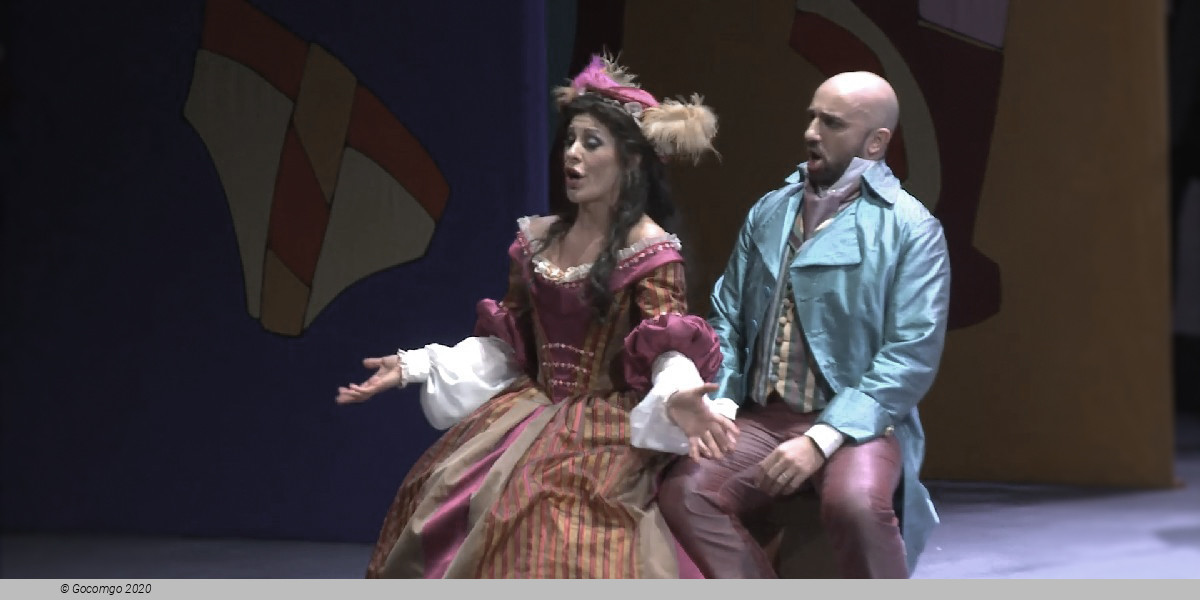
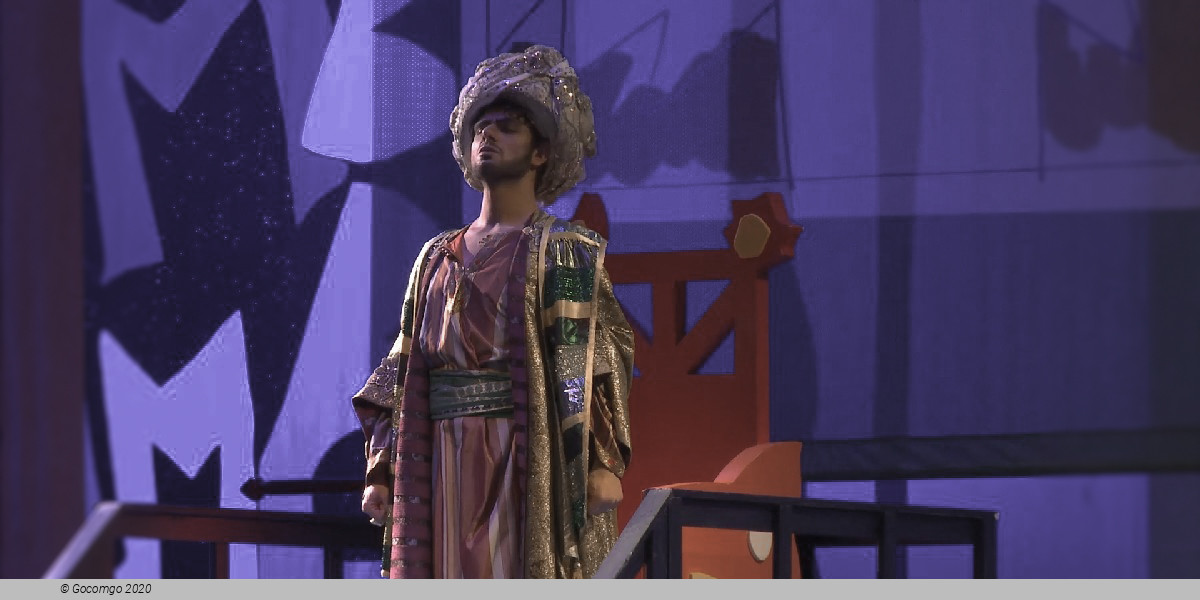
L’italiana in Algeri (1813) is a lively opera buffa set in Algiers. Isabella, a resourceful Italian woman, arrives to find her lover Lindoro, who is held by Mustafà, the Bey. Mustafà, bored with his wife Elvira, becomes fascinated with Isabella.

Instead of submitting, Isabella cleverly manipulates Mustafà and those around him while secretly planning an escape. Through disguises, humor, and quick thinking, she creates confusion in the court and gains control of the situation.

In the end, Isabella successfully frees Lindoro and the other Italians, and they return home, leaving Mustafà embarrassed. The opera is celebrated for its energetic music, comic timing, and strong, witty heroine.

History
Premiere of this production: 22 May 1813, Teatro San Benedetto, Venice

L'Italiana in Algeri (The Italian Girl in Algiers) is an operatic dramma giocoso in two acts by Gioachino Rossini to an Italian libretto by Angelo Anelli, based on his earlier text set by Luigi Mosca. It premiered at the Teatro San Benedetto in Venice on 22 May 1813. The music is characteristic of Rossini's style, remarkable for its fusion of sustained, manic energy with elegant, pristine melodies.

Synopsis

Place: Algiers
Time: The past

Act 1

The palace of the Bey of Algiers

Elvira accompanied by her slave Zulma regrets the loss of the love of her husband, the Turkish Bey Mustafà. Left alone with Haly (since the Italian 'h' is silent, this corresponds to the name Ali, more familiar in the English-speaking world), Captain of the Corsairs, Mustafà reveals his plan to marry Elvira off to Lindoro, his Italian slave. The Bey is bored with his submissive harem, desiring a new challenge to his virility: he wants an Italian girl, and Haly must find one! Lindoro enters alone and sings about Isabella, his true love (Languir per una bella). Mustafà comes in to explain Lindoro's impending marriage. The enthusiastic Bey describes the attractions of the match, while Lindoro struggles to refuse (Se inclinassi a prender moglie).

The seashore

A ship has been wrecked in a storm. Its passengers include Isabella, in search of Lindoro, and Taddeo, her travelling companion and would-be lover. Isabella enters with a sorrowful cavatina Cruda sorte! Amor tiranno!, however she is not afraid (Già so per pratica) and will master the situation. Haly and his men take them prisoner. She passes off Taddeo as her uncle. Haly is delighted to learn she is an Italian – exactly what the Bey wanted! Left to consider their fate, Isabella is irritated by Taddeo's jealousy of Lindoro (Ai capricci della sorte), but they resolve to join forces.

The palace

Back in the palace, Lindoro and Elvira do not wish to marry, but Mustafà offers Lindoro passage on a ship returning to Italy if he takes Elvira. Lindoro agrees, admitting a vague possibility of marrying her in Italy. Haly enters with news of the arrival of the Italian beauty. Mustafà is elated (Già d'insolito ardore nel petto agitare).

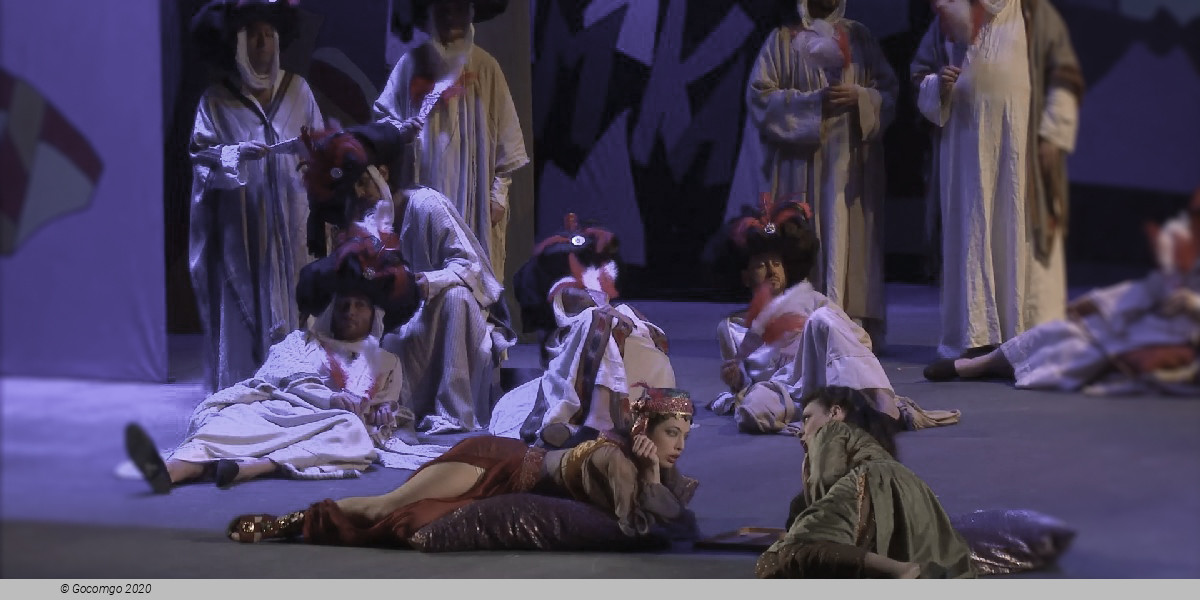
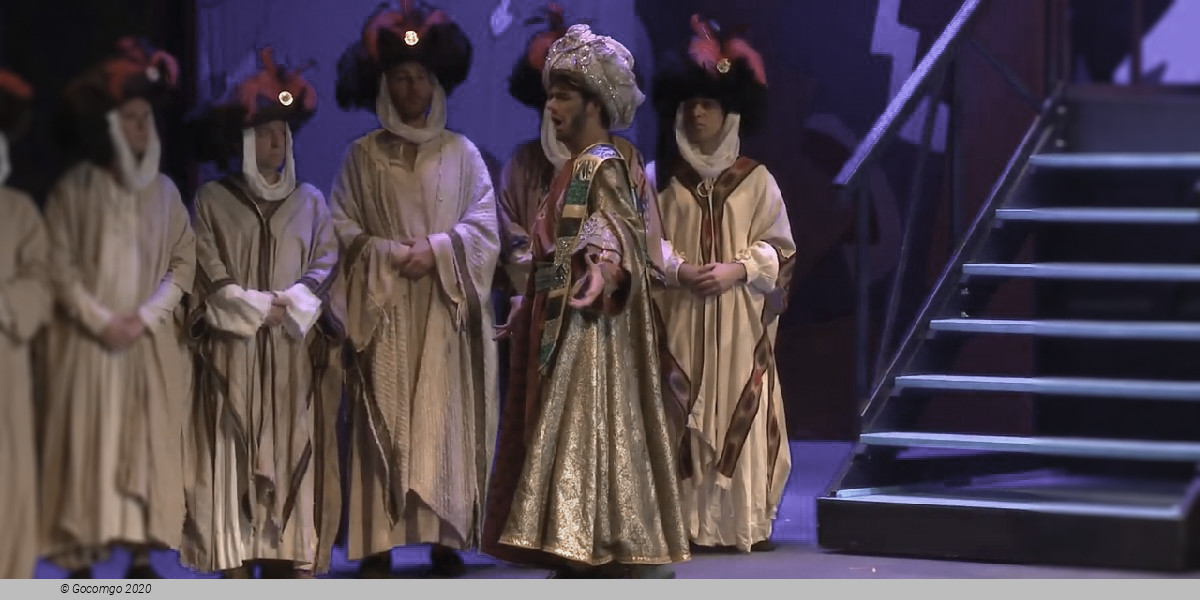
Surrounded by eunuchs (Viva, viva il flagel delle donne), Mustafà receives Isabella in a grand hall. He is enchanted, though she is rather amused by his appearance (Oh! Che muso, che figura!). At that moment, Lindoro, Elvira and Zulma arrive to say goodbye to Mustafà (Pria di dividerci da voi, Signore). Lindoro and Isabella are astonished to come face to face. Recovering herself, Isabella asks about Elvira, learning she is Mustafà's ex-wife, to be remarried to Lindoro! The act ends with an ensemble of confusion (Confusi e stupidi).

Act 2

In the palace

Elvira and Zulma (who have remained in Algiers after all) note Isabella's skill with men. Mustafà reveals his strategy for seducing Isabella: he installs Lindoro as Isabella's servant and his informer, and Taddeo will also be induced to help. Elvira and Zulma must tell Isabella he is coming to take coffee with her.

Isabella and Lindoro are alone. He explains that he had no intention of marrying Elvira. They agree to escape together and Lindoro sings of his happiness (Ah come il cor di giubilo). Mustafà enters with a reluctant Taddeo, acclaimed by the Turks as "Lord Kaimakan" (Viva il grande Kaimakan). He dislikes interceding with Isabella for the Bey, but is frightened to refuse (Ho un gran peso sulla testa).

In her apartment

Isabella is dressing in Turkish style. Zulma and Elvira deliver Mustafà's message: he is coming for coffee. Isabella orders three cups. Elvira should wait in a side room. As Mustafà approaches, Isabella sings a romantic cavatina, Per lui che adoro - she will receive him. Mustafà tells Taddeo to leave when he sneezes (Ti presento di mia man). Isabella greets Mustafà warmly and he sneezes, but Taddeo ignores the signal. Isabella calls for coffee and then – to Mustafà's horror and amazement – invites Elvira to join them.

Elsewhere in the palace

Haly sings in praise of the women of Italy (Le femmine d'Italia). The Italians enter, and Taddeo reveals to a surprised Lindoro that he is not her uncle but her lover (he himself is unaware of the other man's true identity). Lindoro tells Mustafà that Isabella will declare him her adored pappataci (literally a "silent eater": a man unable to resist the opposite sex). This, as Lindoro explains (Pappataci! Che mai sento!), is an Italian custom and a great honour, as the pappataci enjoy an idyllic life dedicated to eating, drinking and sleeping. Zulma and Haly speculate about Isabella's real intentions and the quantity of alcohol ordered for the ceremony.

Isabella's apartment

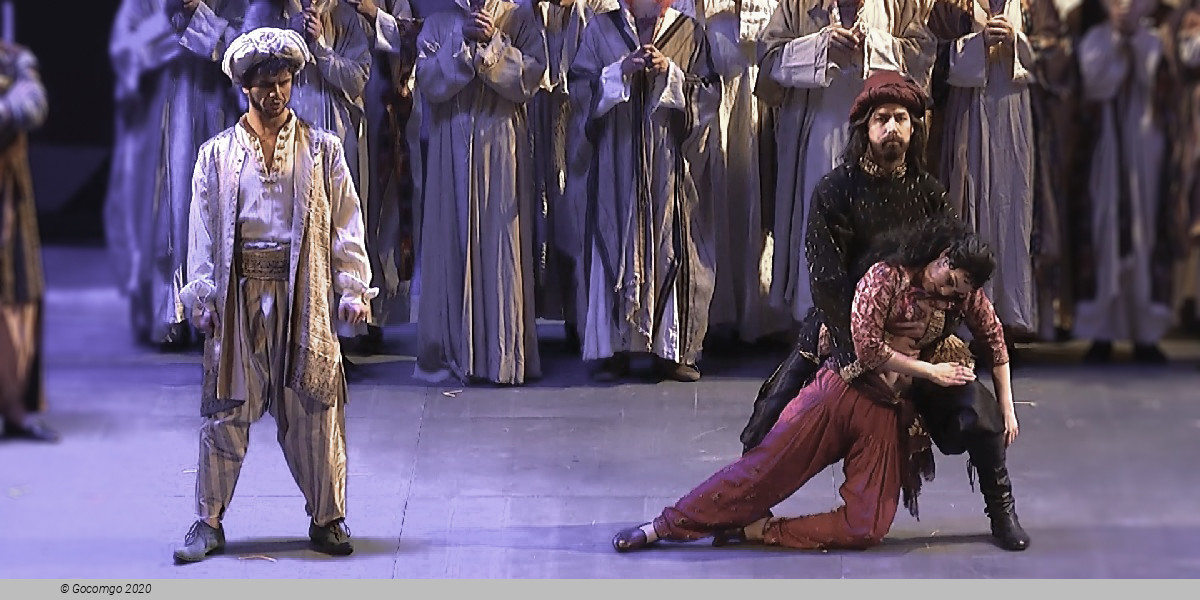
She addresses the Italian slaves who will be pappataci in the ceremony - she will lead them to freedom (Pensa alla patria). The ceremony begins (Dei pappataci s'avanza il coro); Mustafà is delighted with his new honour and changes into appropriate costume. Isabella explains his obligations. He must swear an oath of eating, drinking, and keeping silent, repeating the words after Taddeo. Following that his oath is tested, under provocation by Isabella and Lindoro.

A European ship lies alongside the palace: time to escape! Taddeo finally realizes who Lindoro is, but decides to go along with them anyway. Elvira, Zulma and Haly find the Bey still acting as a mad pappataci. Suddenly recovering his sanity, Mustafà calls his troops but they are all drunk. The Italians bid farewell and Mustafà begs Elvira's forgiveness. No more Italian girls for him!

Venue Info

Opera de Monte-Carlo - Monaco
Location   Place du Casino

The Opéra de Monte-Carlo is an opera house, which is part of the Monte Carlo Casino located in the Principality of Monaco. With the lack of cultural diversions available in Monaco in the 1870s, Prince Charles III, along with the Société des Bains de mer, decided to include a concert hall as part of the casino. The main public entrance to the hall was from the casino, while Charles III's private entrance was on the western side. It opened in 1879 and became known as the Salle Garnier, after the architect Charles Garnier, who designed it During the renovation of the Salle Garnier in 2004–05, the company presented operas at the Salle des Princes in the local Grimaldi Forum, a modern conference and performance facility where Les Ballets de Monte Carlo and the Monte-Carlo Philharmonic Orchestra regularly perform.

Salle Garnier

The architect Charles Garnier also designed the Paris opera house now known as the Palais Garnier. The Salle Garnier is much smaller, seating 524, compared to about 2,000 for the Palais Garnier, and unlike the Paris theatre, which was started in 1861 and only completed in 1875, the Salle Garnier was constructed in only eight and a half months. Nevertheless, its ornate style was heavily influenced by that of the Palais Garnier, and many of the same artists worked on both theatres. Although the Monte Carlo theatre was not originally intended for opera, it was soon used frequently for that purpose and was remodeled in 1898–99 by Henri Schmit, primarily in the stage area, to make it more suitable for opera.

The hall was inaugurated on 25 January 1879 with a performance by Sarah Bernhardt dressed as a nymph. The first opera performed there was Robert Planquette's Le Chevalier Gaston on 8 February 1879, followed by three additional operas in the first season.

With the influence of the first director, Jules Cohen (who was instrumental in bringing Adelina Patti) and the fortunate combination of Raoul Gunsbourg, the new director from 1892, and Princess Alice, the opera-loving American wife of Charles III's successor, Albert I, the company was thrust onto the world's opera community stage. Gunsbourg remained for sixty years, overseeing such premiere productions as Hector Berlioz's La damnation de Faust in 1893, and the first appearances in January 1894 of the heroic Italian tenor Francesco Tamagno in Verdi's Otello, whose title role he had created for the opera's premiere in Italy. Conductor Arturo Vigna served as music director of the Monte Carlo Opera from 1895-1903.

By the early years of the twentieth century, the Salle Garnier was to see such great performers as Nellie Melba and Enrico Caruso in La bohème and Rigoletto (in 1902), and Feodor Chaliapin in the premiere of Jules Massenet's Don Quichotte (1910). This production formed part of a long association between the company and Massenet and his operas, two of which were presented there posthumously.

Other famous twentieth-century singers to appear at Monte Carlo included Titta Ruffo, Geraldine Farrar, Mary Garden, Tito Schipa, Beniamino Gigli, Claudia Muzio, Georges Thill, Lily Pons, and Mary McCormic.

Apart from Massenet, composers whose works had their first performances at Monte Carlo included: Saint-Saëns (Hélène, 1904); Mascagni (Amica, 1905); and Puccini (La rondine, 1917). Indeed, since its inauguration, the theatre has hosted 45 world premiere productions of operas. René Blum was retained to found the Ballet de l'Opéra. The "Golden Age" of the Salle Garnier has passed, since small companies with small houses are not able to mount highly expensive productions. Nonetheless, the present day company still presents a season containing five or six operas.

Gala Events in Salle Garnier

Twice in its 130-year history the Opéra was transformed into a spectacular venue to host gala-dinners. The first occasion was in 1966 for the celebration of centenary of Monte-Carlo hosted by Grace Kelly and Rainier III; the second was for the royal wedding of Prince Albert II and Princess Charlene. The Opéra was transformed for the third time on 27 July 2013 to host the Love Ball, a fundraising gala event organised by the Naked Heart Foundation.

Important Info
Type: Opera
City: Monaco, Monaco
Starts at: 15:00
Top of page