








Opera de Monte-Carlo 20 March 2021 - I Lombardi alla Prima Crociata | GoComGo.com

I Lombardi alla Prima Crociata

Opera de Monte-Carlo, Monaco, Monaco
All photos (9)
Select date and time
8 PM
Request for Tickets
Important Info
Type: Opera
City: Monaco, Monaco
Starts at: 20:00
Acts: 4
Duration:

E-tickets: Print at home or at the box office of the event if so specified. You will find more information in your booking confirmation email.

You can only select the category, and not the exact seats.
If you order 2 or 3 tickets: your seats will be next to each other.
If you order 4 or more tickets: your seats will be next to each other, or, if this is not possible, we will provide a combination of groups of seats (at least in pairs, for example 2+2 or 2+3).

Overview

Production Teatro Regio de Parme

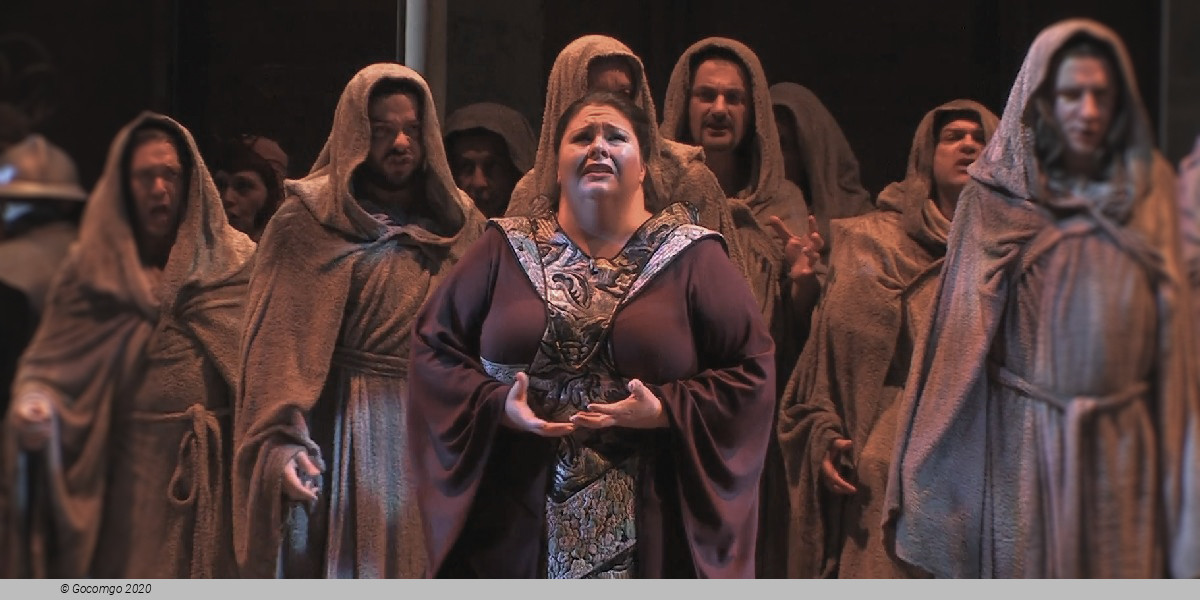
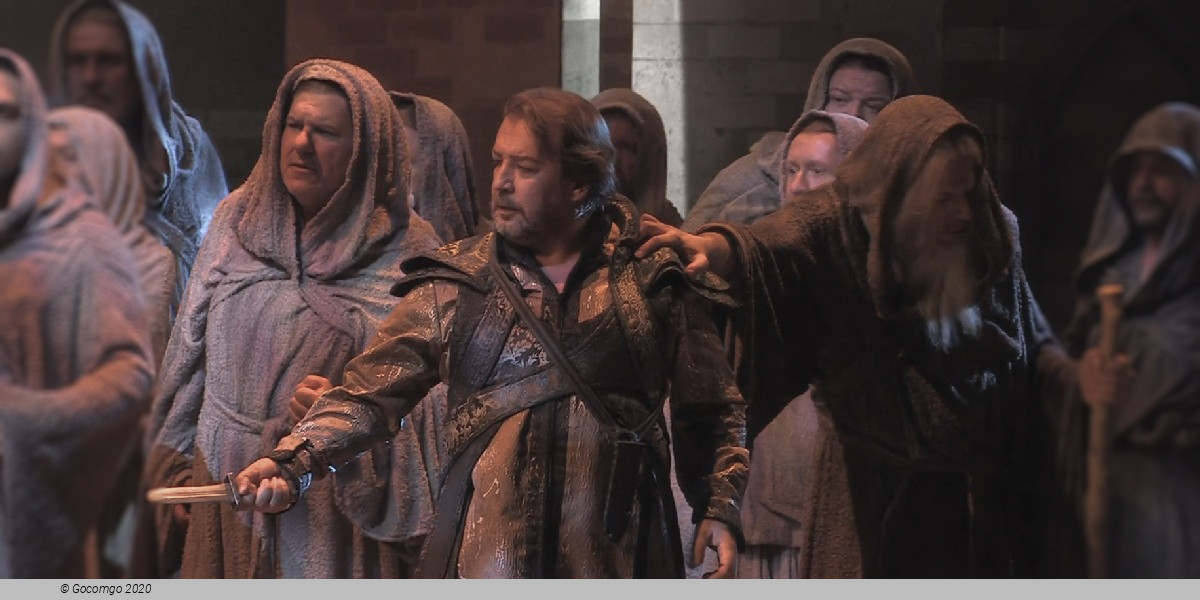
While resounding the clamors of the Milanese public, carried away by the ardor and the beauty of the choirs of Nabucco, Giuseppe Verdi and the director of La Scala wonder how to succeed this shattering triumph. The composer will be convinced by a story of crusaders, sibling rivalry and impossible love: I Lombardi alla prima crociata. And it is once again a success! As in Nabucco, the independence fever of the Milanese will find something to ignite, Giuseppina Strepponi (Giselda) enough to show off her immense technical and dramatic qualities and the baritone interpreter of Pagano will also be given a role as theatrically tormented as vocally. sumptuous. Even if Verdi chose to present himself to the Parisian public with a reworked version of Lombardi (Jerusalem), the work soon met the fate of the latter, quickly relegated to oblivion by a Verdian production of ever-increasing quality.

The triumphant cover of the Lombardi in 1969 in Rome (Luciano Pavarotti, Renata Scotto), will be the trigger for a rediscovery of this vibrant opus of innumerable beauty.

History
Premiere of this production: 11 February 1843, Teatro alla Scala

I Lombardi alla Prima Crociata (The Lombards on the First Crusade) is an operatic dramma lirico in four acts by Giuseppe Verdi to an Italian libretto by Temistocle Solera, based on an epic poem by Tommaso Grossi, which was "very much a child of its age; a grand historical novel with a patriotic slant". Its first performance was given at the Teatro alla Scala in Milan on 11 February 1843. Verdi dedicated the score to Maria Luigia, the Habsburg Duchess of Parma, who died a few weeks after the premiere. In 1847, the opera was significantly revised to become Verdi's first grand opera for performances in France at the Salle Le Peletier of the Paris Opera under the title of Jérusalem.

Synopsis

Act 1: La Vendetta

Scene 1: A square outside the church of Sant' Ambrogio in Milan

The two sons of Lord Folco, Pagano and Arvino, are reconciled, having previously feuded over which man would win the hand of Viclinda. Pagano, who once threatened the life of his brother, has returned from exile. A throng gathers in front of the church of Sant'Ambrogio to celebrate. Viclinda, now Arvino's wife, and their daughter Giselda are on hand to witness the reconciliation. A crusade to the Holy Land is announced and Arvino is to lead it. Pagano secretly vents his enduring frustration to Pirro, Arvino's squire: he still desires Viclinda (Sciagurata! hai tu creduto / "Wretched woman! Did you believe that I could forget you..."). As nuns sing in the background, Pirro and a gang of cut-throats agree to help Pagano take Viclinda for himself.

Scene 2: The Folco palace

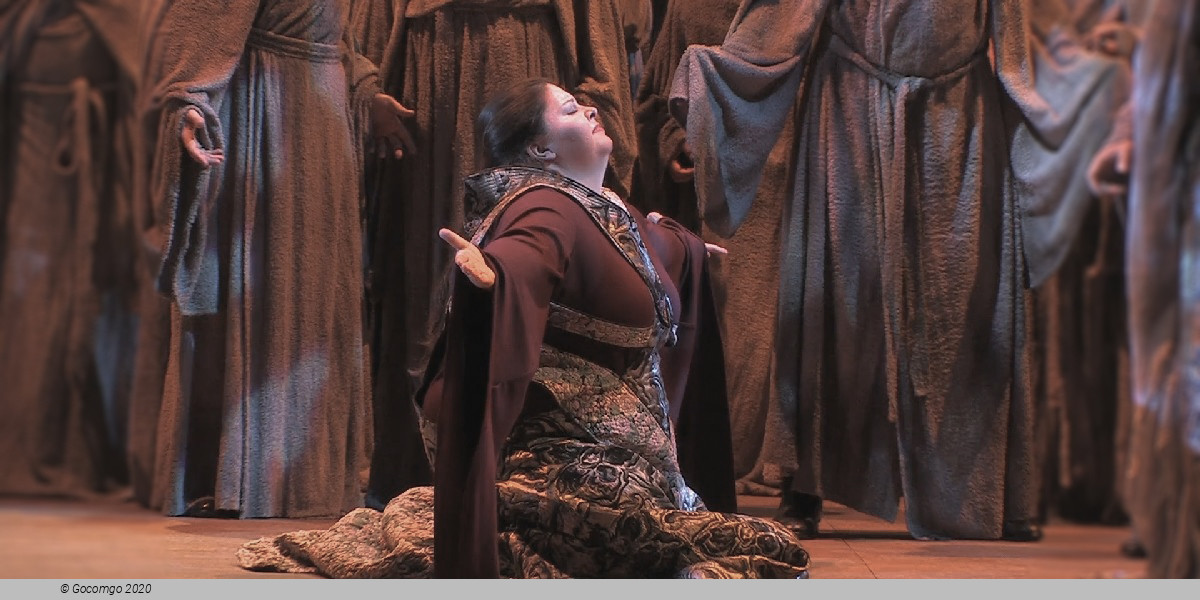
Viclinda and Giselda are concerned about Pagano and his supposed reformation. Arvino asks them to watch his elderly father, Lord Folco, who is spending the night in Arvino's chambers. Giselda prays (Aria: Salve Maria / "Hail Mary!"). Pirro and Pagano and their assassins storm the palace. Pagano draws his sword and enters Arvino's chambers. He emerges with a bloody sword and with Viclinda in his custody. Arvino suddenly appears and Pagano is shocked to learn that in the darkness he has killed his father, not his brother (Orror! / "Horror! Dreadful monster of Hell..."). A throng calls for Pagano's death, but Giselda protests against more bloodshed. So Pagano is once again sent into exile.

Act 2: L'uomo della Caverna

Scene 1: Acciano's palace in Antioch

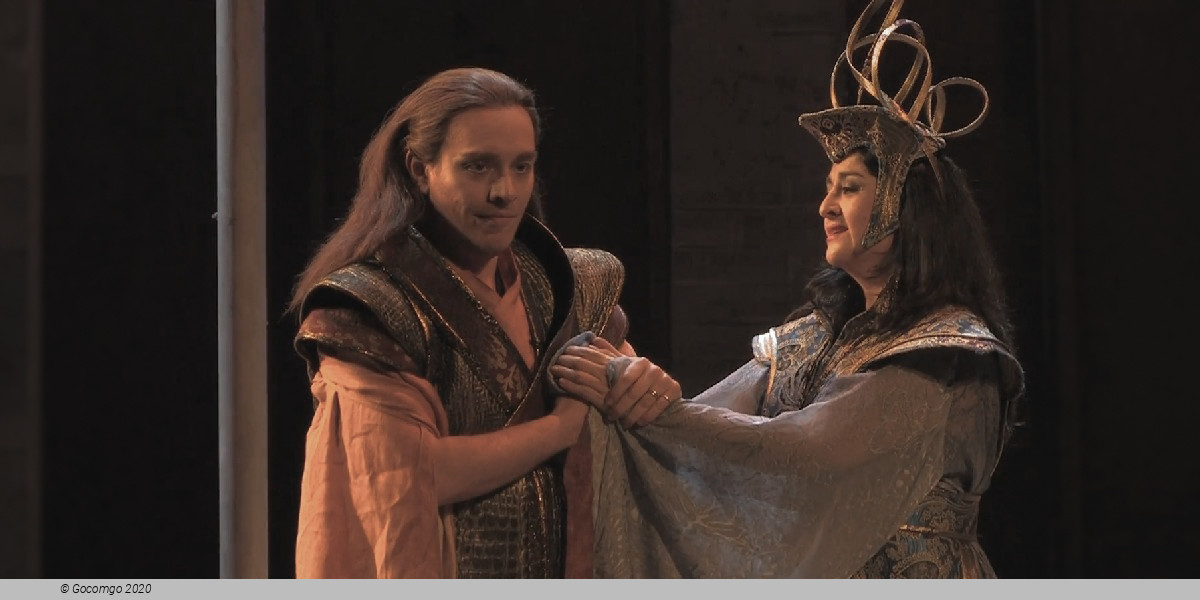
Acciano and representatives from surrounding territories plot their continued resistance to the marauding crusaders. They have captured Giselda, who is now held captive within Acciano's harem. Sofia, Acciano's head wife and a secret Christian, enters with her son Oronte. Oronte has fallen in love with the captive Giselda (Aria: La mia letizia infondere / "Would that I could instill my gladness into her dear heart"). As Oronte sings of his love, Sofia sees Giselda as a means of converting her son to Christianity (Come poteva un angelo / "How could Heaven create an angel so pure").

Scene 2: A cave in the desert outside Antioch

A hermit waits for the arrival of the crusaders. A man appears at the cave and asks the hermit how he may receive forgiveness for his past sins. The man is Pirro, who has become a confidante of Acciano and now controls the gates of Antioch. The hermit counsels Pirro that he will achieve forgiveness if he opens the gates to the approaching crusaders. Thereafter, the crusaders, led by Arvino, appear at the cave. The hermit learns that Arvino's daughter has been captured by Acciano. The hermit assures them that they will succeed in taking Antioch.

Scene 3: Acciano's harem

The members of the harem sing of Giselda's luck in attracting the attentions of Oronte. As Giselda prays (Aria: Oh madre, dal cielo / "O mother, from heaven hear my lament") sudden shouts warn that the crusaders have invaded Antioch. Sofia rushes in to say that both Acciano and Oronte have been killed. Arvino enters with the hermit. Sofia identifies Arvino as the murderer of her husband and son. Giselda is horrified and recoils at her father's attempted embrace. She declares that this crusade was not the will of God. Arvino draws his sword and threatens to kill her for her blasphemy, but he is stopped by the hermit and Sofia. Arvino declares that his daughter has gone mad.

Act 3: La Conversione

Scene 1: The valley of Jehoshaphat; Jerusalem is in the distance

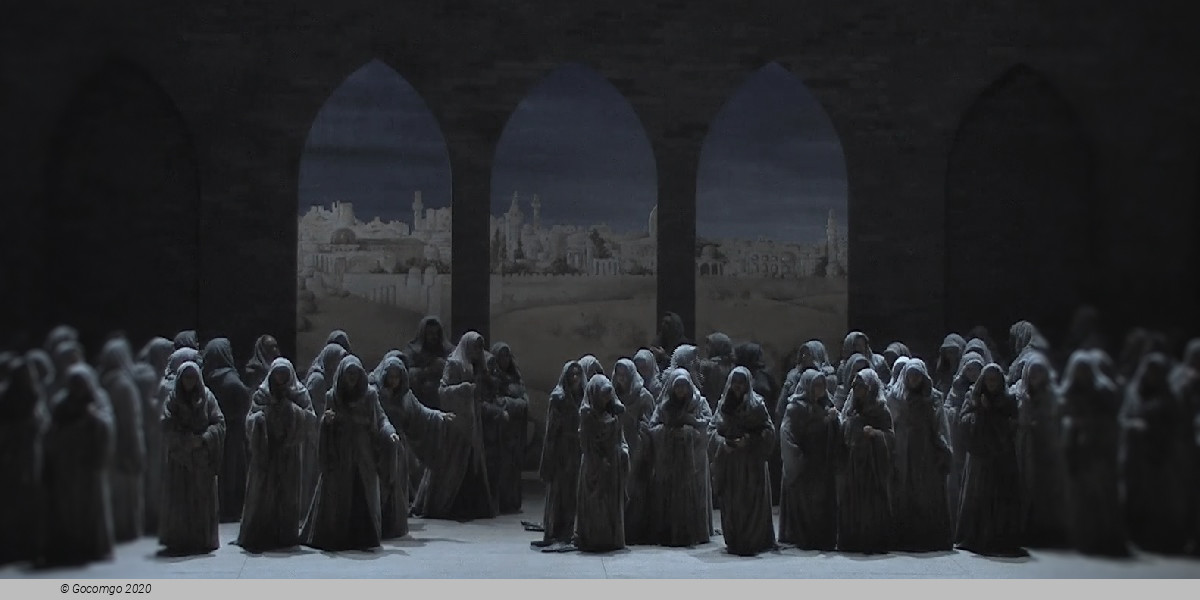
The crusaders, joined by Christian pilgrims, sing of the beauty of Jerusalem and the Holy Land. Giselda has wandered away from her father's camp. Suddenly, Oronte appears! He was merely wounded, not killed, by Arvino's sword. Giselda and Oronte decide to flee together (Duet: Oh belle, a questa misera / "O Lombard tents, fair to this unhappy girl, farewell!").

Scene 2: Arvino's tent

Arvino rages against his daughter's betrayal. Soldiers arrive to tell him that Pagano has been seen in camp and they call for his capture and death. Arvino agrees.

Scene 3: A grotto near the River Jordan

After a violin prelude, Giselda and Oronte appear. Oronte has been wounded and Giselda bitterly laments God's cruelty. The hermit appears. He tells Giselda and Oronte that their love is sinful but may be purified by Oronte's conversion and baptism. The hermit completes the baptism, and Giselda laments as Oronte dies from his wounds, promising to see her in heaven (Trio: Qual voluttà trascorrere / "What wondrous pleasure I feel").

Act 4: Il Santo Sepolcro

Scene 1: A cave, near Jerusalem

As Giselda dreams, Oronte appears to her in a vision and tells her that God has granted his prayer: the crusaders will find strength in the waters of the fountain of Siloam (Aria: In cielo benedetto / "Through you, Giselda, I am blessed in heaven"). Giselda wakes and sings of her miraculous vision (Aria: Qual prodigio ... Non fu sogno! / "A miracle!... It was not a dream").

Scene 2: The Lombards' tents

The crusaders and pilgrims are despairing that God has abandoned them in the desert (O signore, dal tetto natio / "O Lord, Thou dids't call us"). Giselda rushes in, announcing the discovery of a spring of water. As all rejoice, Arvino assures his crusaders of his confidence that they will now take Jerusalem.

Scene 3: Arvino's tent Dying from wounds, the hermit is brought in by Giselda and Arvino. The hermit reveals that he is really Pagano. In his dying moments, he confesses to Arvino his penitence for their father's murder and begs forgiveness. Arvino embraces his brother, and Pagano asks for a final view of the Holy City. As Jerusalem appears in the distance, Pagano dies, and the crusaders praise heaven (Te lodiamo, gran Dio di vittoria / "We praise Thee, great God of Victory").

Venue Info

Opera de Monte-Carlo - Monaco
Location   Place du Casino

The Opéra de Monte-Carlo is an opera house, which is part of the Monte Carlo Casino located in the Principality of Monaco. With the lack of cultural diversions available in Monaco in the 1870s, Prince Charles III, along with the Société des Bains de mer, decided to include a concert hall as part of the casino. The main public entrance to the hall was from the casino, while Charles III's private entrance was on the western side. It opened in 1879 and became known as the Salle Garnier, after the architect Charles Garnier, who designed it During the renovation of the Salle Garnier in 2004–05, the company presented operas at the Salle des Princes in the local Grimaldi Forum, a modern conference and performance facility where Les Ballets de Monte Carlo and the Monte-Carlo Philharmonic Orchestra regularly perform.

Salle Garnier

The architect Charles Garnier also designed the Paris opera house now known as the Palais Garnier. The Salle Garnier is much smaller, seating 524, compared to about 2,000 for the Palais Garnier, and unlike the Paris theatre, which was started in 1861 and only completed in 1875, the Salle Garnier was constructed in only eight and a half months. Nevertheless, its ornate style was heavily influenced by that of the Palais Garnier, and many of the same artists worked on both theatres. Although the Monte Carlo theatre was not originally intended for opera, it was soon used frequently for that purpose and was remodeled in 1898–99 by Henri Schmit, primarily in the stage area, to make it more suitable for opera.

The hall was inaugurated on 25 January 1879 with a performance by Sarah Bernhardt dressed as a nymph. The first opera performed there was Robert Planquette's Le Chevalier Gaston on 8 February 1879, followed by three additional operas in the first season.

With the influence of the first director, Jules Cohen (who was instrumental in bringing Adelina Patti) and the fortunate combination of Raoul Gunsbourg, the new director from 1892, and Princess Alice, the opera-loving American wife of Charles III's successor, Albert I, the company was thrust onto the world's opera community stage. Gunsbourg remained for sixty years, overseeing such premiere productions as Hector Berlioz's La damnation de Faust in 1893, and the first appearances in January 1894 of the heroic Italian tenor Francesco Tamagno in Verdi's Otello, whose title role he had created for the opera's premiere in Italy. Conductor Arturo Vigna served as music director of the Monte Carlo Opera from 1895-1903.

By the early years of the twentieth century, the Salle Garnier was to see such great performers as Nellie Melba and Enrico Caruso in La bohème and Rigoletto (in 1902), and Feodor Chaliapin in the premiere of Jules Massenet's Don Quichotte (1910). This production formed part of a long association between the company and Massenet and his operas, two of which were presented there posthumously.

Other famous twentieth-century singers to appear at Monte Carlo included Titta Ruffo, Geraldine Farrar, Mary Garden, Tito Schipa, Beniamino Gigli, Claudia Muzio, Georges Thill, Lily Pons, and Mary McCormic.

Apart from Massenet, composers whose works had their first performances at Monte Carlo included: Saint-Saëns (Hélène, 1904); Mascagni (Amica, 1905); and Puccini (La rondine, 1917). Indeed, since its inauguration, the theatre has hosted 45 world premiere productions of operas. René Blum was retained to found the Ballet de l'Opéra. The "Golden Age" of the Salle Garnier has passed, since small companies with small houses are not able to mount highly expensive productions. Nonetheless, the present day company still presents a season containing five or six operas.

Gala Events in Salle Garnier

Twice in its 130-year history the Opéra was transformed into a spectacular venue to host gala-dinners. The first occasion was in 1966 for the celebration of centenary of Monte-Carlo hosted by Grace Kelly and Rainier III; the second was for the royal wedding of Prince Albert II and Princess Charlene. The Opéra was transformed for the third time on 27 July 2013 to host the Love Ball, a fundraising gala event organised by the Naked Heart Foundation.

Important Info
Type: Opera
City: Monaco, Monaco
Starts at: 20:00
Acts: 4
Duration:
Top of page