




Oper Leipzig 10 December 2020 - The Flying Dutchman | GoComGo.com

The Flying Dutchman

Oper Leipzig, Opernhaus, Leipzig, Germany
All photos (18)
Select date and time
7:30 PM
Request for Tickets
Important Info
Type: Opera
City: Leipzig, Germany
Starts at: 19:30
Acts: 3
Intervals: 1
Duration:
Sung in: German
Titles in: German,English

E-tickets: Print at home or at the box office of the event if so specified. You will find more information in your booking confirmation email.

You can only select the category, and not the exact seats.
If you order 2 or 3 tickets: your seats will be next to each other.
If you order 4 or more tickets: your seats will be next to each other, or, if this is not possible, we will provide a combination of groups of seats (at least in pairs, for example 2+2 or 2+3).

Overview

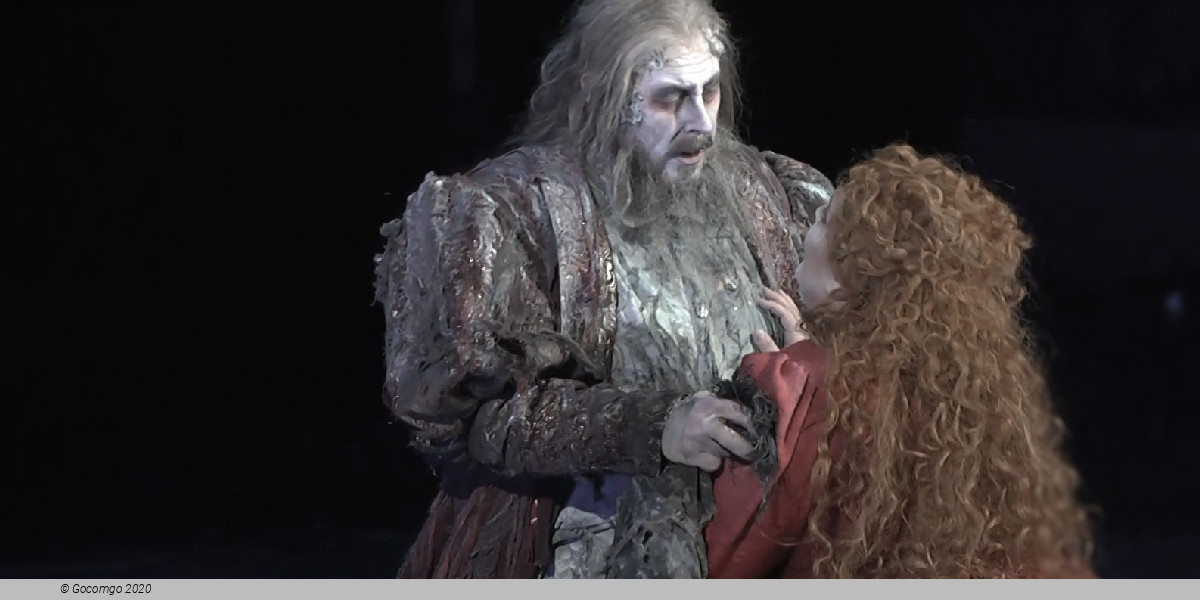
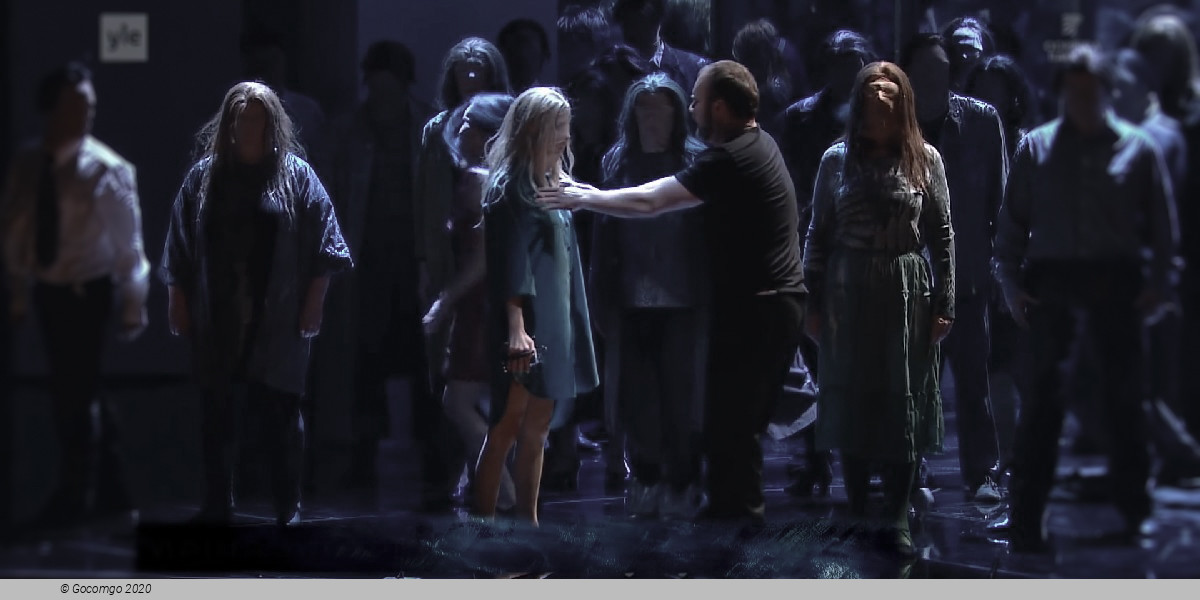
The Flying Dutchman navigates the earth, accursed, tirelessly searching for salvation. But he can only find deliverance if he finds a woman who will promise to be faithful to him, even in death. Wagner’s atmospheric thriller encompasses the search for home and the desire for another.

History
Premiere of this production: 02 January 1843, Königliches Hoftheater, Dresden

The Flying Dutchman (German: Der fliegende Holländer) is a German-language opera, with libretto and music by Richard Wagner. The central theme is redemption through love. Wagner conducted the premiere at the Königliches Hoftheater in Dresden in 1843. Wagner claimed in his 1870 autobiography Mein Leben that he had been inspired to write the opera following a stormy sea crossing he made from Riga to London in July and August 1839. However, in his 1843 Autobiographic Sketch, Wagner acknowledged he had taken the story from Heinrich Heine's retelling of the legend in his 1833 satirical novel The Memoirs of Mister von Schnabelewopski (Aus den Memoiren des Herrn von Schnabelewopski).

Synopsis

Place: On the coast of Norway

Act 1

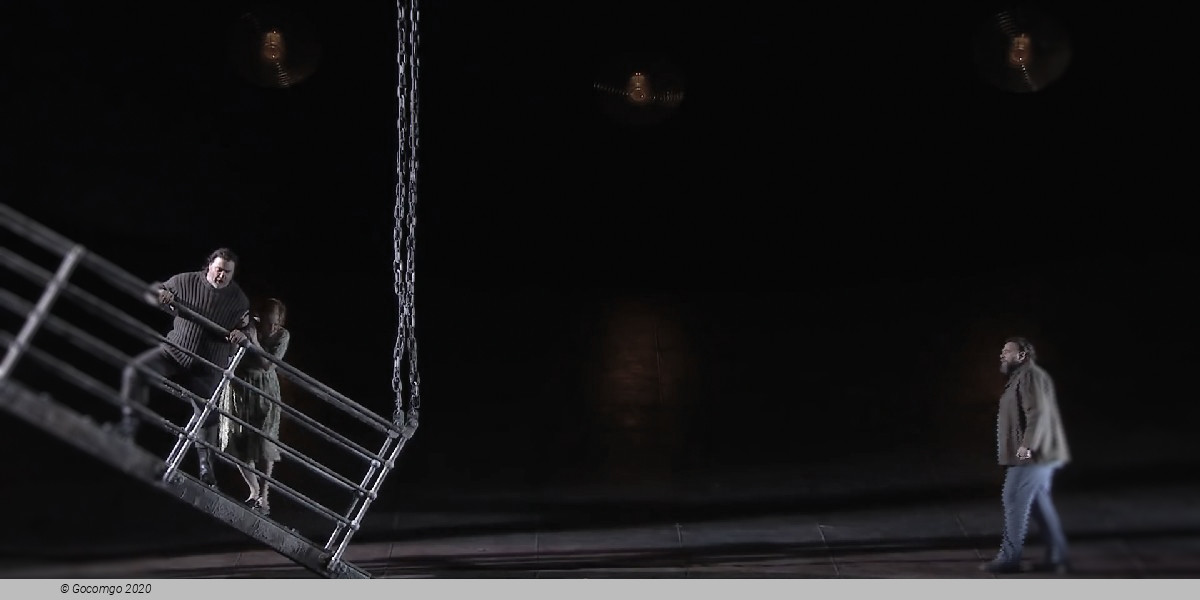
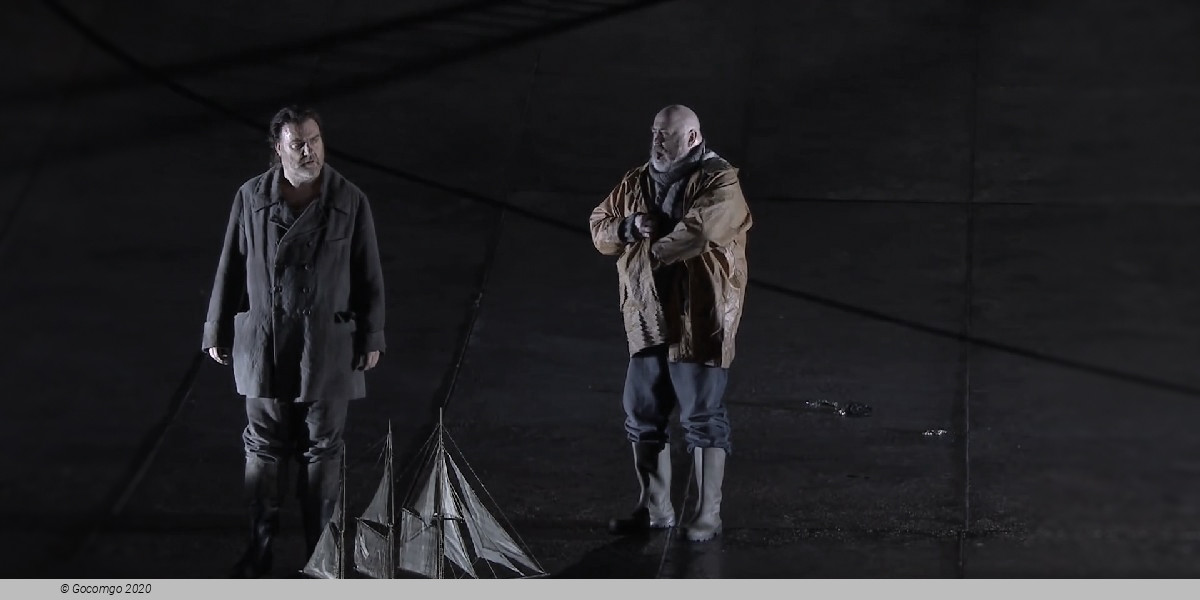
On his homeward journey, the sea captain Daland is compelled by stormy weather to seek a port of refuge near Sandwike in southern Norway. He leaves the helmsman on watch and he and the sailors retire. (Song of the helmsman: "Mit Gewitter und Sturm aus fernem Meer" — "With tempest and storm on distant seas.") The helmsman falls asleep. A ghostly vessel appearing astern is dashed against Daland's vessel by the sea and the grappling irons hold the two ships together. Invisible hands furl the sails. A man of pale aspect, dressed in black, his face framed by a thick black beard, steps ashore. He laments his fate. (Aria: "Die Frist ist um, und abermals verstrichen sind sieben Jahr" — "The time has come and seven years have again elapsed") Because he once invoked Satan, the ghost captain is cursed to roam the sea forever without rest. An angel brought to him the terms of his redemption: Every seven years the waves will cast him upon the shore; if he can find a wife who will be true to him he will be released from his curse.

Daland wakes up and meets the stranger. The stranger hears that Daland has an unmarried daughter named Senta, and he asks for her hand in marriage, offering a chest of treasure as a gift. Tempted by gold, Daland agrees to the marriage. The southwind blows and both vessels set sail for Daland's home.

Act 2

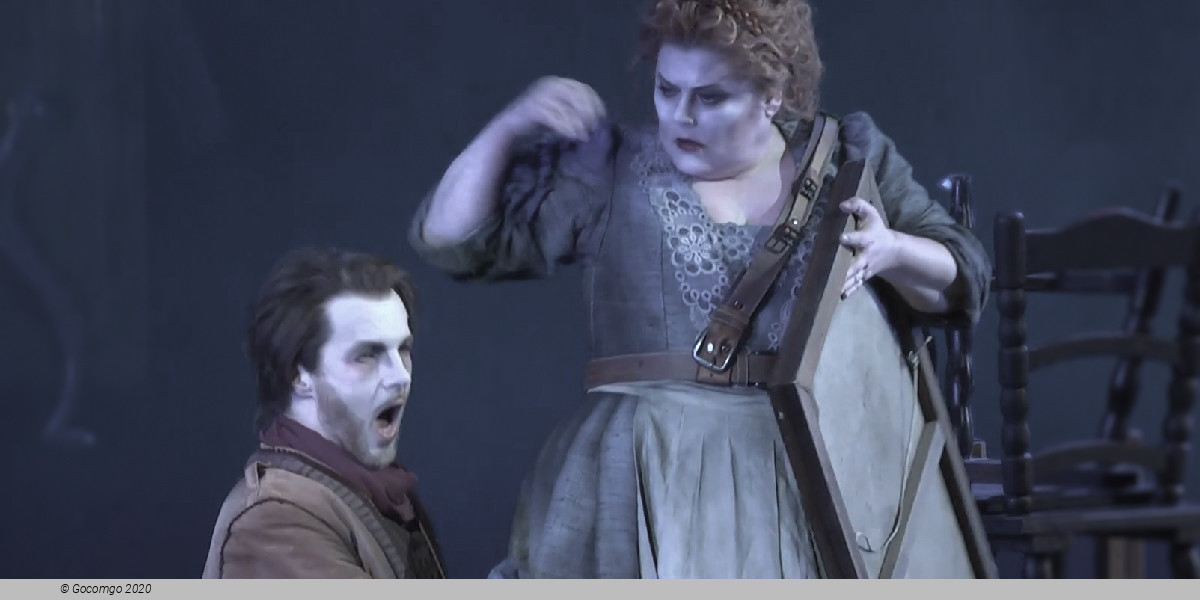
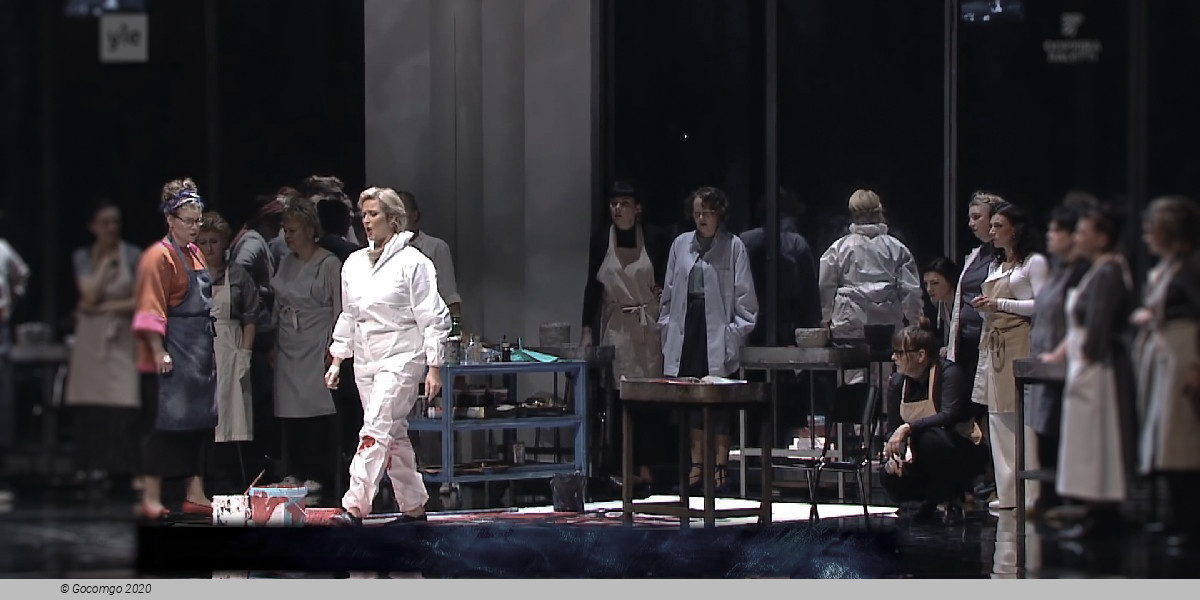
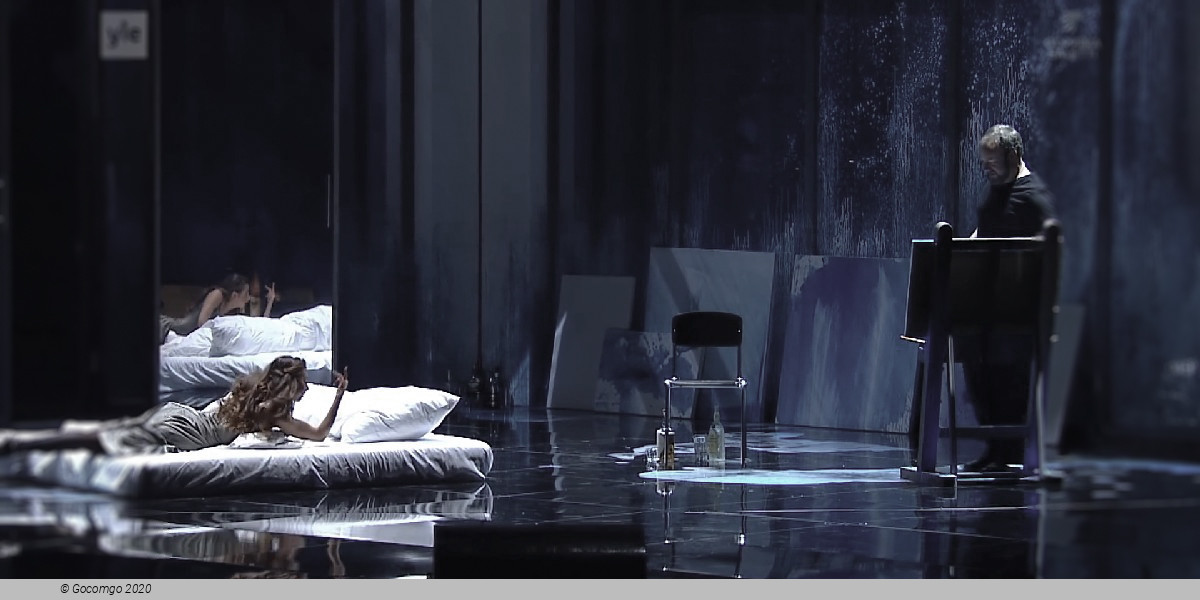
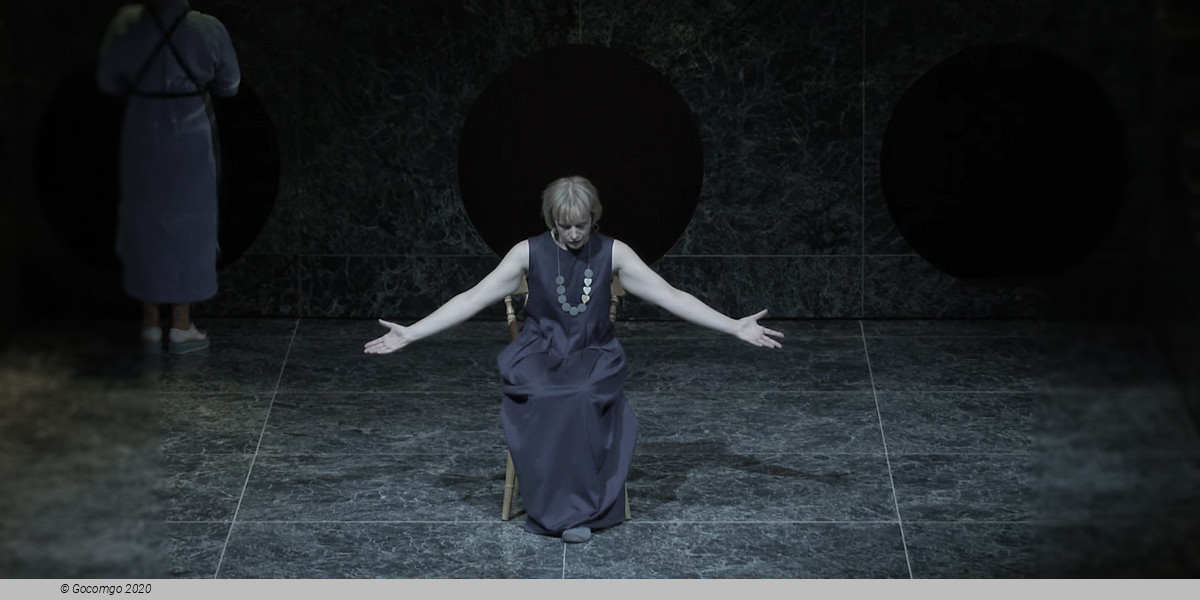
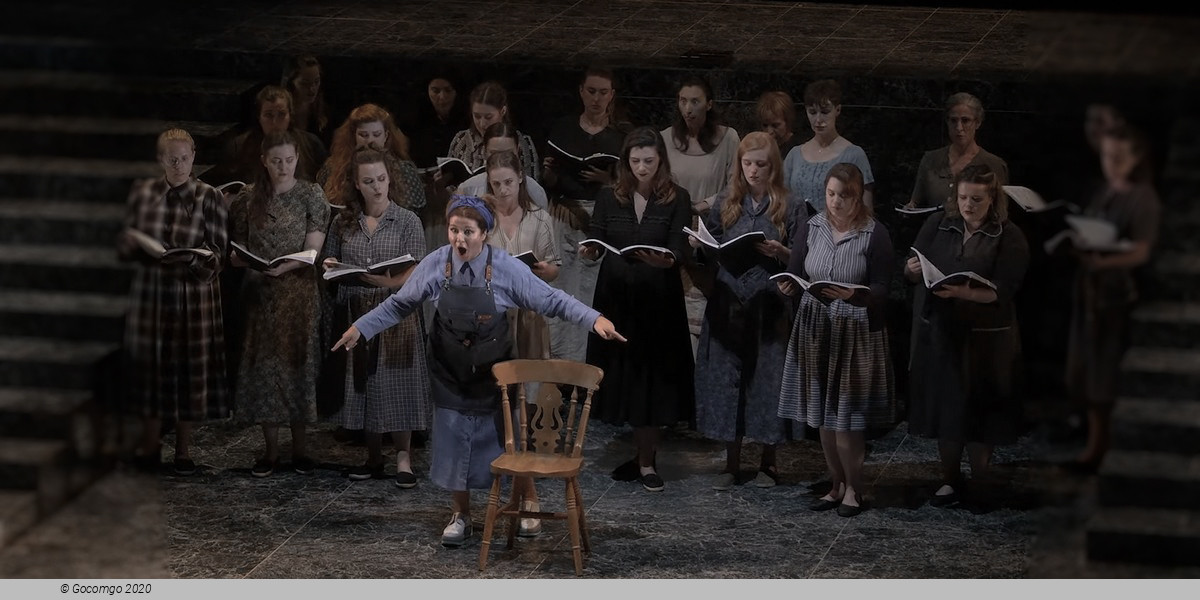
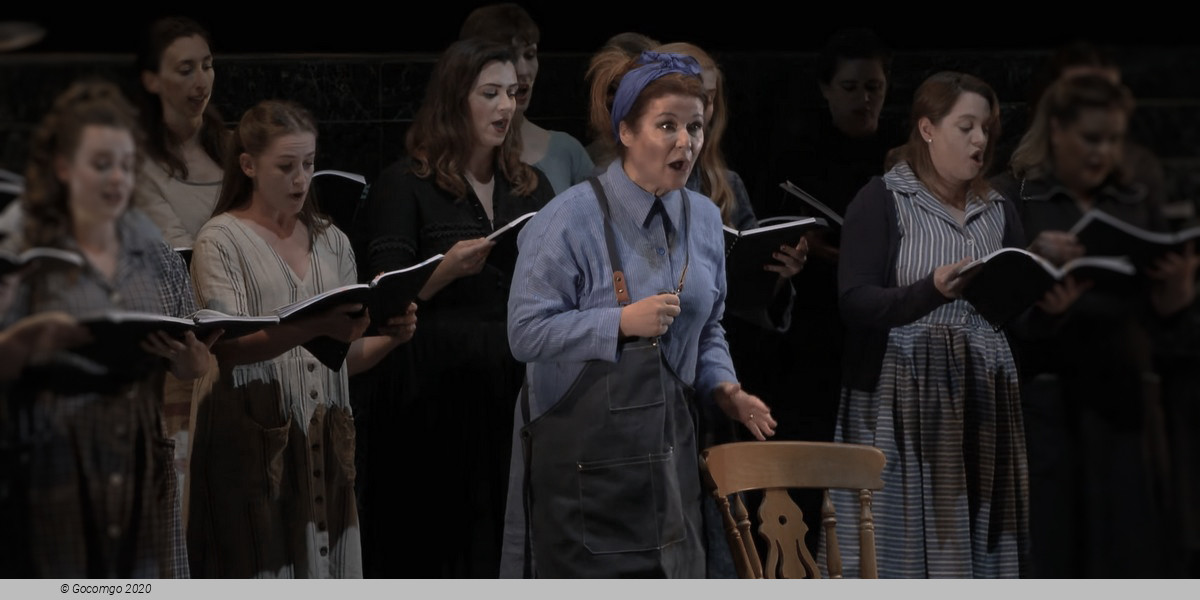
A group of local girls are singing and spinning in Daland's house. (Spinning chorus: "Summ und brumm, du gutes Rädchen" — "Whir and whirl, good wheel") Senta, Daland's daughter, dreamily gazes upon a gorgeous picture of the legendary Dutchman that hangs from the wall; she desires to save him. Against the will of her nurse, she sings to her friends the story of the Dutchman (Ballad with the Leitmotiv), how Satan heard him swear and took him at his word. She vows to save him by her fidelity.

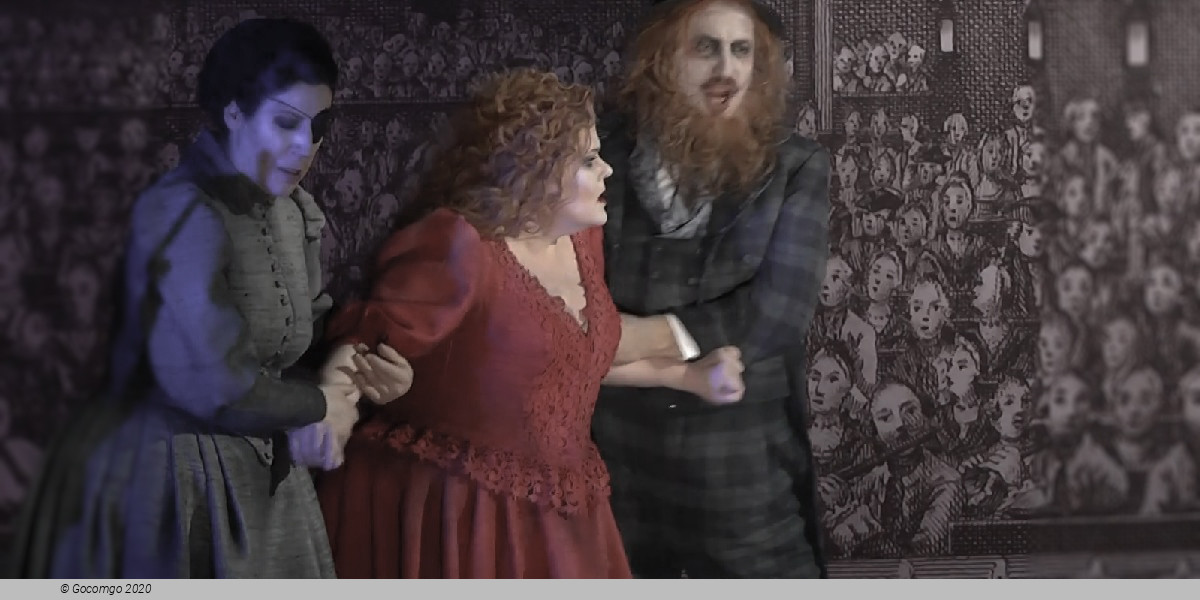
The huntsman Erik, Senta's former boyfriend, arrives and hears her; the girls depart, and the huntsman, who loves the maiden, warns her, telling her of his dream, in which Daland returned with a mysterious stranger, who carried her off to sea. She listens with delight, and Erik leaves in despair.

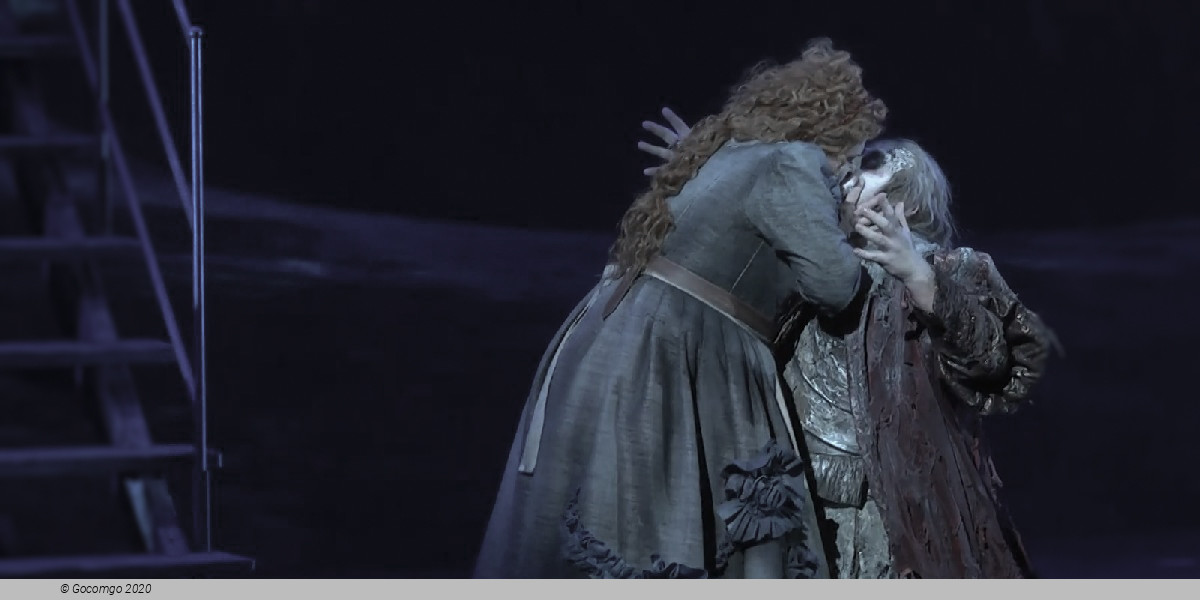
Daland arrives with the stranger; he and Senta stand gazing at each other in silence. Daland is scarcely noticed by his daughter, even when he presents his guest as her betrothed. In the following duet, which closes the act, Senta swears to be true till death.

Act 3

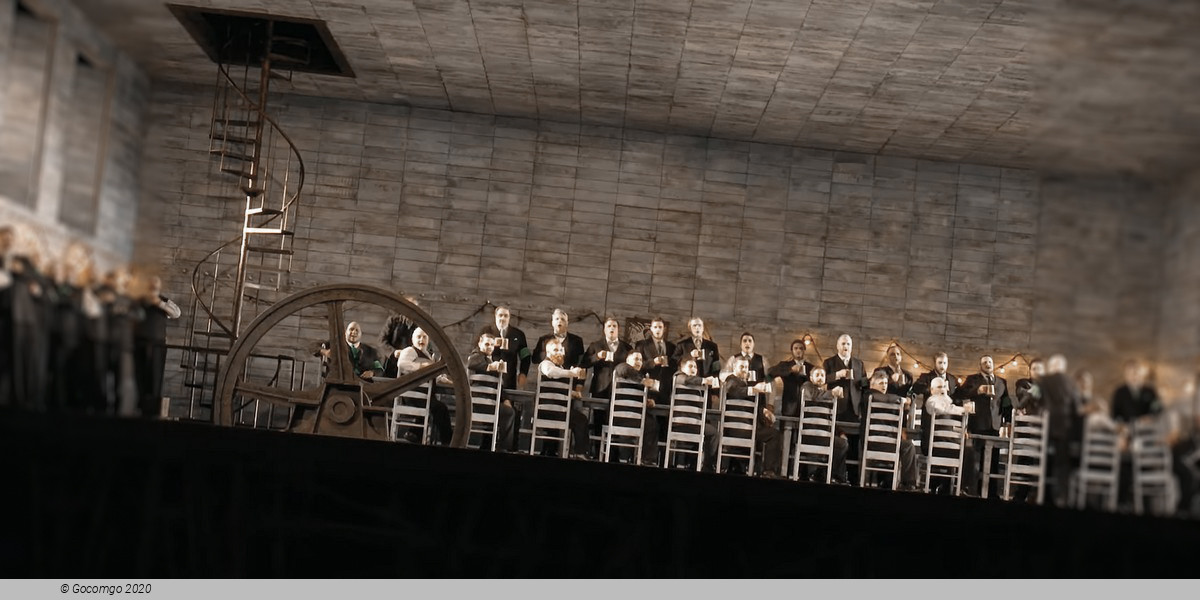
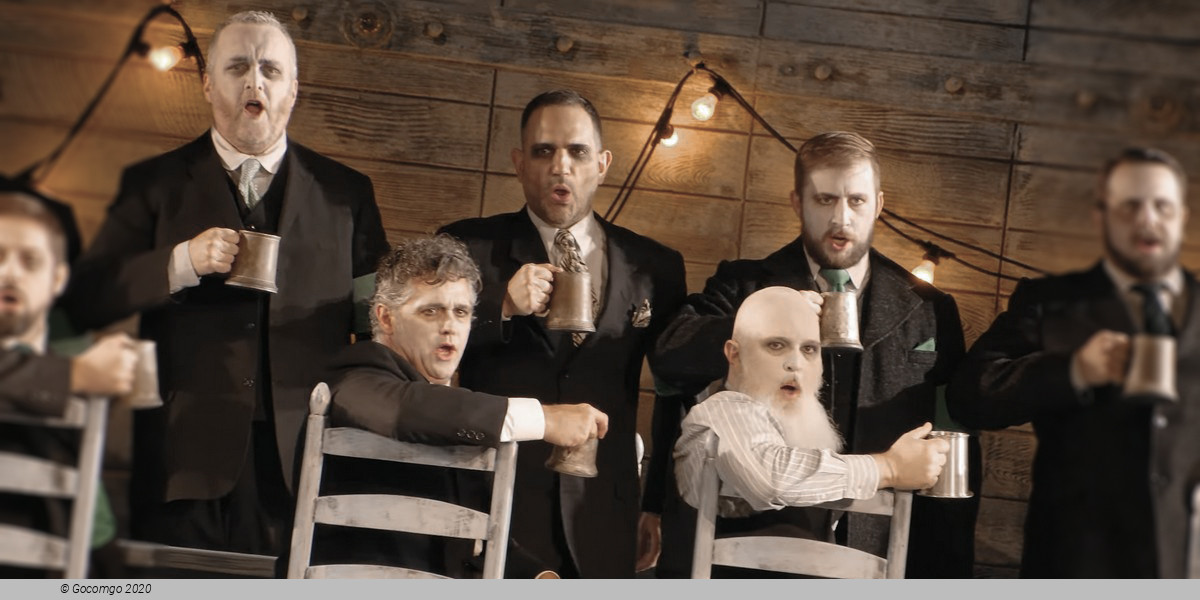
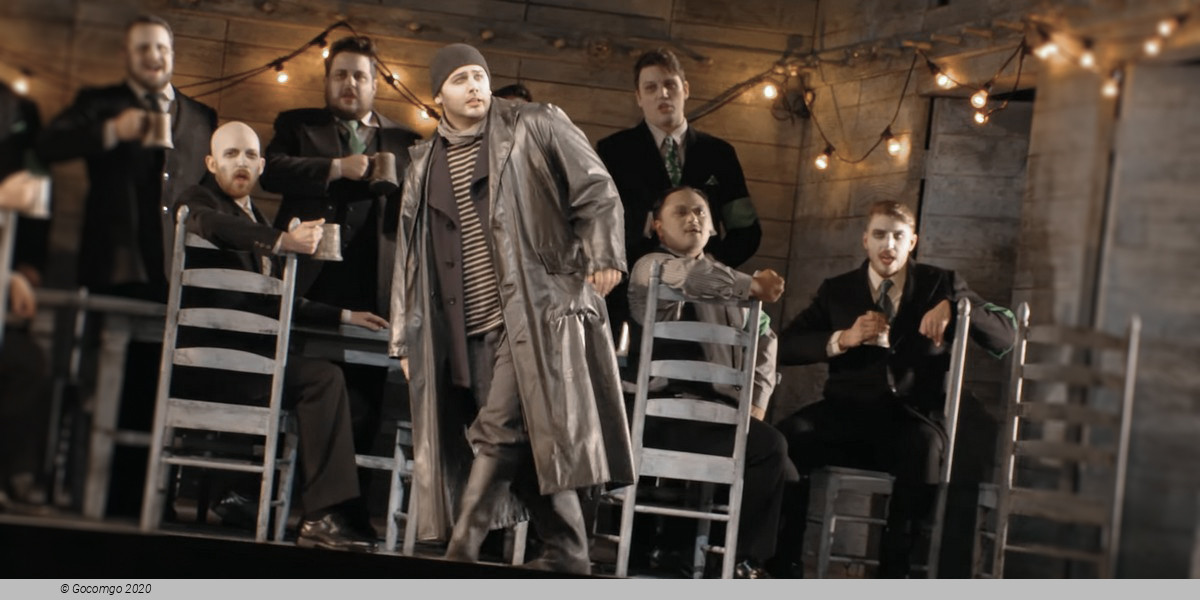
Later in the evening, the local girls bring Daland's men food and drink. They invite the crew of the strange vessel to join in the merry-making, but in vain. The girls retire in wonder; ghostly forms appear at work upon the vessel The Flying Dutchman, and Daland's men retreat in fear.

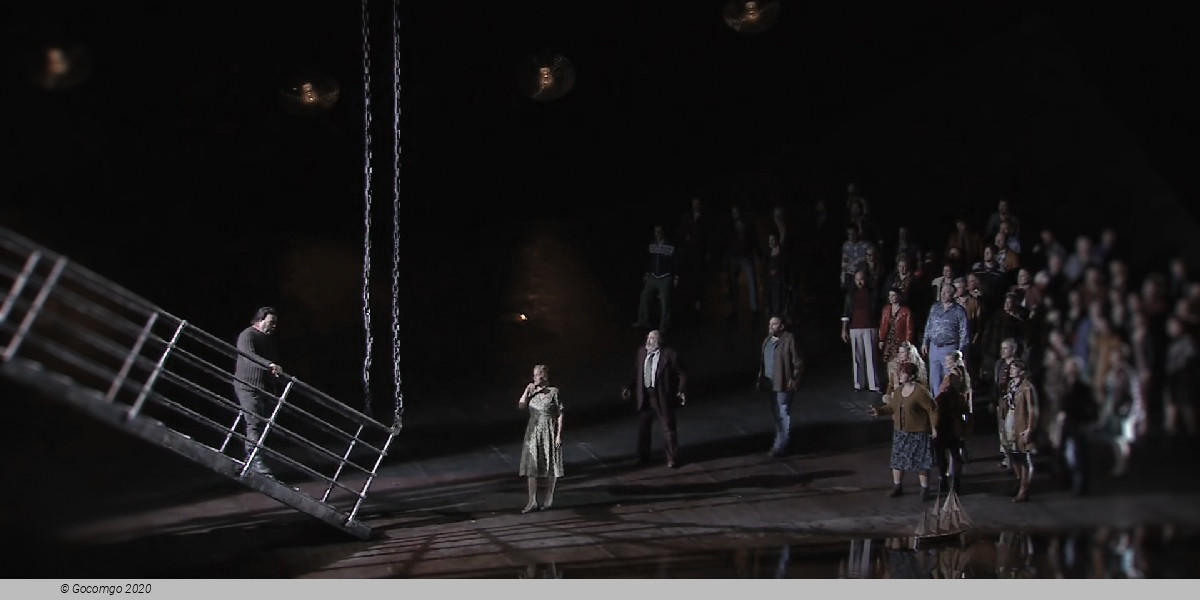
Senta arrives, followed by Erik, who reproves her for deserting him, as she had formerly loved him and vowed constancy. When the stranger, who has been listening, hears these words, he is overwhelmed with despair, as he thinks he is now forever lost. He summons his men, tells Senta of the curse, and to the consternation of Daland and his crew declares that he is the "Flying Dutchman".

As the Dutchman sets sail, Senta throws herself into the sea, claiming that she will be faithful to him unto death. This is his salvation. The spectral ship disappears, and Senta and the Dutchman are seen ascending to heaven.

Venue Info

Oper Leipzig - Leipzig
Location   Augustusplatz 12

Oper Leipzig is one of the most famous and oldest opera houses in Europe. Oper Leipzig stands for the highest musical and craft quality. It is based on active ensemble culture and the promotion of young singers. The program ranges from opera, opera, operetta, musical to classic and modern ballet. There are also numerous offers and in-house productions for children, young adults and families.

Oper Leipzig forms the roof for a three-division house consisting of an opera, Leipzig ballet and musical comedy. Located in the Opera House (Opera & Leipzig Ballet) in the center of Leipzig and in the Dreilinden House (Musical Comedy) in the Lindenau district, it has a tradition of more than 325 years of musical theater care in Leipzig. In 1693 the first opera house on Brühl was opened as the third bourgeois music theater in Europe after Venice and Hamburg. Since 1840, the world-famous Gewandhaus Orchestra has played on all performances of opera and ballet. Prof. Ulf Schirmer has been General Music Director of the Leipzig Opera since the 2009/10 season. Under his musical direction, Richard Wagner and Richard Strauss' works in particular become the focus of the repertoire.

Performances of opera in Leipzig trace back to Singspiel performances beginning in the year 1693. The director of many of those early operas at the original Opernhaus auf dem Brühl was Telemann.

The Leipzig Opera does not have its own opera orchestra – the Leipzig Gewandhaus Orchestra performs as its orchestra. This relationship began in 1766 with performances of the Singspiel Die verwandelten Weiber, oder Der Teufel ist los by Johann Adam Hiller.

The previous theater (the "Neues Theater") was inaugurated on 28 January 1868 with Jubilee Overture by Carl Maria von Weber and the overture for Iphigénie en Aulide by Gluck and Goethe's play Iphigenia in Tauris. From 1886 to 1888, Gustav Mahler was the second conductor; Arthur Nikisch was his superior. During an air raid in the night of 3 December 1943, part of the bombing of Leipzig in World War II, the theater was destroyed, as were all Leipzig's theatres.

Construction of the modern opera house began in 1956. The theater was inaugurated on 8 October 1960 with a performance of Wagner's Die Meistersinger von Nürnberg.

Since 2009, Ulf Schirmer is the Generalmusikdirektor (General Music Director, or GMD); he was elected artistic director in 2011 for a five-year term.

Important Info
Type: Opera
City: Leipzig, Germany
Starts at: 19:30
Acts: 3
Intervals: 1
Duration:
Sung in: German
Titles in: German,English
Top of page