

Oper Leipzig 19 June 2021 - Rienzi, the last of the Tribunes | GoComGo.com

Rienzi, the last of the Tribunes

Oper Leipzig, Opernhaus, Leipzig, Germany
All photos (5)
Select date and time
6 PM
Request for Tickets
Important Info
Type: Opera
City: Leipzig, Germany
Starts at: 18:00
Acts: 5
Sung in: German
Titles in: German,English

E-tickets: Print at home or at the box office of the event if so specified. You will find more information in your booking confirmation email.

You can only select the category, and not the exact seats.
If you order 2 or 3 tickets: your seats will be next to each other.
If you order 4 or more tickets: your seats will be next to each other, or, if this is not possible, we will provide a combination of groups of seats (at least in pairs, for example 2+2 or 2+3).

Overview

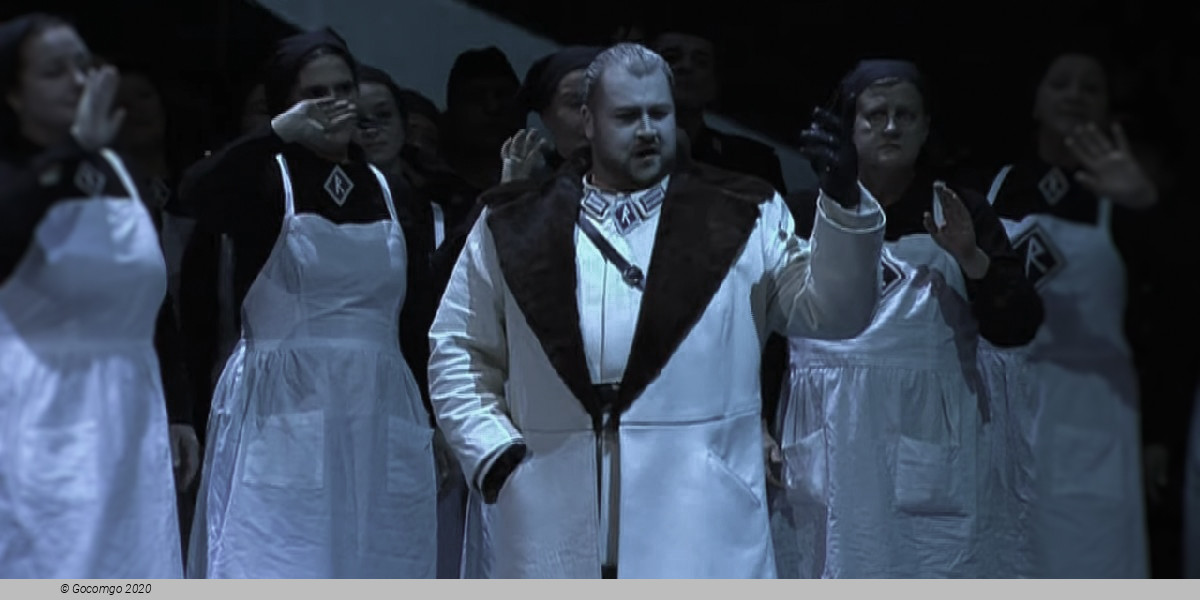
This early work by Richard Wagner tells the story of the rise and fall of Rienzi, the people’s tribune, whose misjudgment of societal and political reality condemns him to failure. A journey through time takes us to medieval Rome, where anarchic conditions and bitter feuds between patrician families endanger public life.

History
Premiere of this production: 20 October 1842, Königliches Hoftheater, Dresden

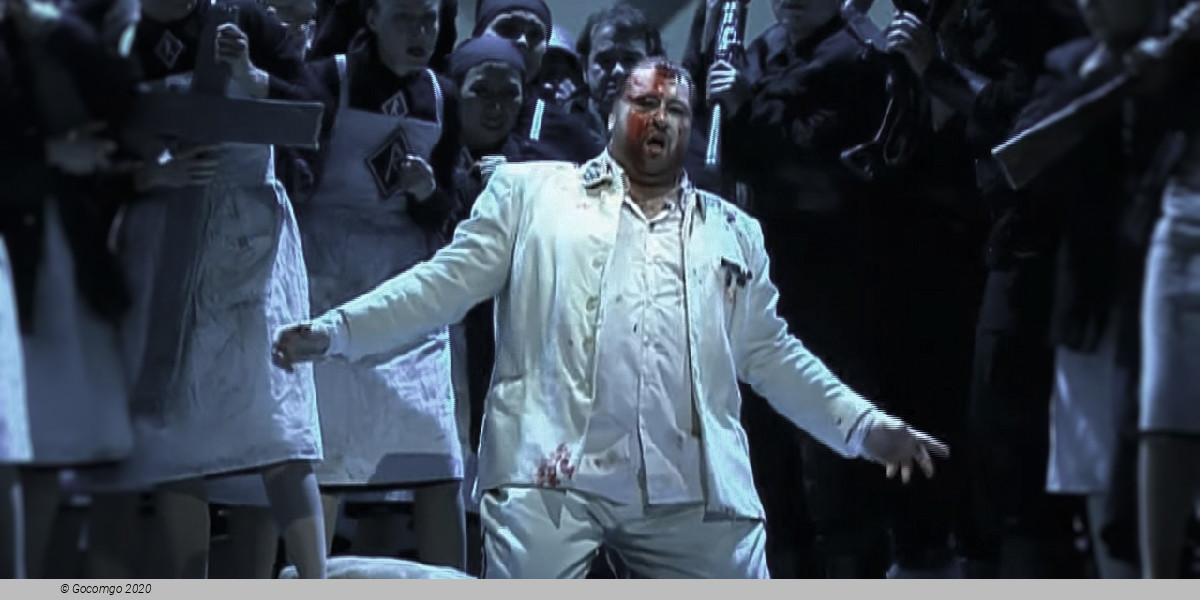
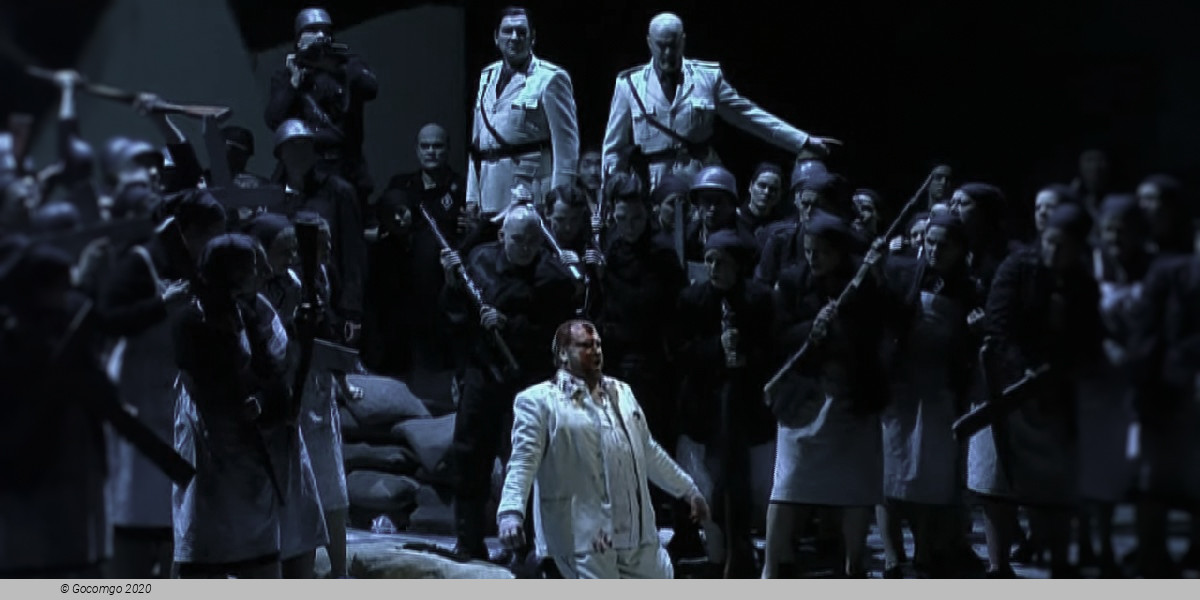
The opera is set in Rome and is based on the life of Cola di Rienzi (1313–1354), a late medieval Italian populist figure who succeeds in outwitting and then defeating the nobles and their followers and in raising the power of the people. Magnanimous at first, he is forced by events to crush the nobles' rebellion against the people's power, but popular opinion changes and even the Church, which had urged him to assert himself, turns against him. In the end the populace burns the Capitol, in which Rienzi and a few adherents have made a last stand.

Synopsis

Overture

The opera opens with a substantial overture which begins with a trumpet call (which in act 3 we learn is the war call of the Colonna family) and features the melody of Rienzi's prayer at the start of act 5, which became the opera's best-known aria. The overture ends with a military march.

Act 1
Outside Rienzi's house

The patrician Orsini and his cronies attempt to kidnap Rienzi's sister Irene. Stefano Colonna, also a patrician but inclined to support Rienzi, prevents them. Raimondo appeals to the parties in the name of the Church to stop their fighting; Rienzi's eventual appearance (marked by a dramatic key shift, from D to E flat) quells the riot. The Roman people support Rienzi's condemnation of the nobles. Irene and Adriano realise their mutual attraction (duet "Ja, eine Welt voll Leiden" – Yes, a world of sorrows). A gathering crowd of plebeians, inspired by Rienzi's speeches, offers Rienzi the crown; he demurs, insisting that he wishes only to be a Tribune of the Roman people.

Act 2
A hall in the Capitol

The patricians plot the death of Rienzi; Adriano is horrified when he learns of this. Rienzi greets a group of ambassadors for whom an entertainment is laid on (a lengthy ballet). Orsini attempts to stab Rienzi, who however is protected by a vest of chain mail. Adriano pleads with Rienzi for mercy to the nobles, which Rienzi grants.

The act 2 ballet is noteworthy as Wagner made a clear attempt to make it relevant to the action of the opera (whereas in most Grand Operas the ballet was simply an entertaining diversion). The Rienzi ballet was intended to tell the tale of the 'Rape of Lucretia'. This storyline (in which Tarquinius, the last king of Rome, attempts to rape the virtuous Lucretia), parallels both the action of Rienzi (Orsini's attempt on Irene) and its background (patricians versus the people). In its original form the ballet lasts for over half an hour – in modern performances and recordings it is generally drastically cut.

Act 3
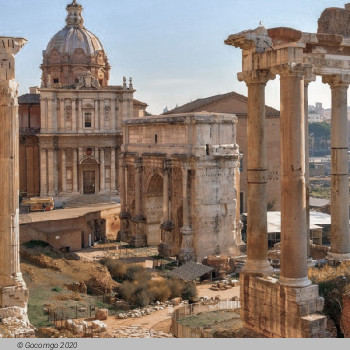
The Roman Forum

The patricians have recruited an army to march on Rome. The people are alarmed. Rienzi rouses the people and leads them to victory over the nobles, in the course of which Adriano's father Stefano is killed. Adriano swears revenge, but Rienzi dismisses him.

Act 4
Before the Lateran Church

Cecco and other citizens discuss the negotiations of the patricians with the Pope and with the Emperor of Germany. Adriano's intention to kill Rienzi wavers when Rienzi arrives together with Irene. Raimondo now announces that the Pope has laid a papal ban on Rienzi, and that his associates risk excommunication. Despite Adriano's urgings, Irene resolves to stay with Rienzi.

Act 5
Scene 1: A room in the Capitol

Rienzi in his prayer "Allmächt'ger Vater" (Almighty Father!) asserts his faith in the people of Rome. He suggests to Irene that she seek safety with Adriano, but she demurs. An apologetic Adriano enters and tells the pair that the Capitol is to be burnt and they are at risk.

Scene 2: The Capitol is ablaze

Rienzi's attempts to speak are met with stones and insults from the fickle crowd. Adriano, in trying to rescue Rienzi and Irene, is killed with them as the building collapses.

In the original performances, Rienzi's final words are bitter and pessimistic: "May the town be accursed and destroyed! Disintegrate and wither, Rome! Your degenerate people wish it so." However, for the 1847 Berlin performance Wagner substituted a more upbeat rhetoric: "Ever while the seven hills of Rome remain, ever while the eternal city stands, you will see Rienzi's return!".

Venue Info

Oper Leipzig - Leipzig
Location   Augustusplatz 12

Oper Leipzig is one of the most famous and oldest opera houses in Europe. Oper Leipzig stands for the highest musical and craft quality. It is based on active ensemble culture and the promotion of young singers. The program ranges from opera, opera, operetta, musical to classic and modern ballet. There are also numerous offers and in-house productions for children, young adults and families.

Oper Leipzig forms the roof for a three-division house consisting of an opera, Leipzig ballet and musical comedy. Located in the Opera House (Opera & Leipzig Ballet) in the center of Leipzig and in the Dreilinden House (Musical Comedy) in the Lindenau district, it has a tradition of more than 325 years of musical theater care in Leipzig. In 1693 the first opera house on Brühl was opened as the third bourgeois music theater in Europe after Venice and Hamburg. Since 1840, the world-famous Gewandhaus Orchestra has played on all performances of opera and ballet. Prof. Ulf Schirmer has been General Music Director of the Leipzig Opera since the 2009/10 season. Under his musical direction, Richard Wagner and Richard Strauss' works in particular become the focus of the repertoire.

Performances of opera in Leipzig trace back to Singspiel performances beginning in the year 1693. The director of many of those early operas at the original Opernhaus auf dem Brühl was Telemann.

The Leipzig Opera does not have its own opera orchestra – the Leipzig Gewandhaus Orchestra performs as its orchestra. This relationship began in 1766 with performances of the Singspiel Die verwandelten Weiber, oder Der Teufel ist los by Johann Adam Hiller.

The previous theater (the "Neues Theater") was inaugurated on 28 January 1868 with Jubilee Overture by Carl Maria von Weber and the overture for Iphigénie en Aulide by Gluck and Goethe's play Iphigenia in Tauris. From 1886 to 1888, Gustav Mahler was the second conductor; Arthur Nikisch was his superior. During an air raid in the night of 3 December 1943, part of the bombing of Leipzig in World War II, the theater was destroyed, as were all Leipzig's theatres.

Construction of the modern opera house began in 1956. The theater was inaugurated on 8 October 1960 with a performance of Wagner's Die Meistersinger von Nürnberg.

Since 2009, Ulf Schirmer is the Generalmusikdirektor (General Music Director, or GMD); he was elected artistic director in 2011 for a five-year term.

Important Info
Type: Opera
City: Leipzig, Germany
Starts at: 18:00
Acts: 5
Sung in: German
Titles in: German,English
Top of page