Act 1
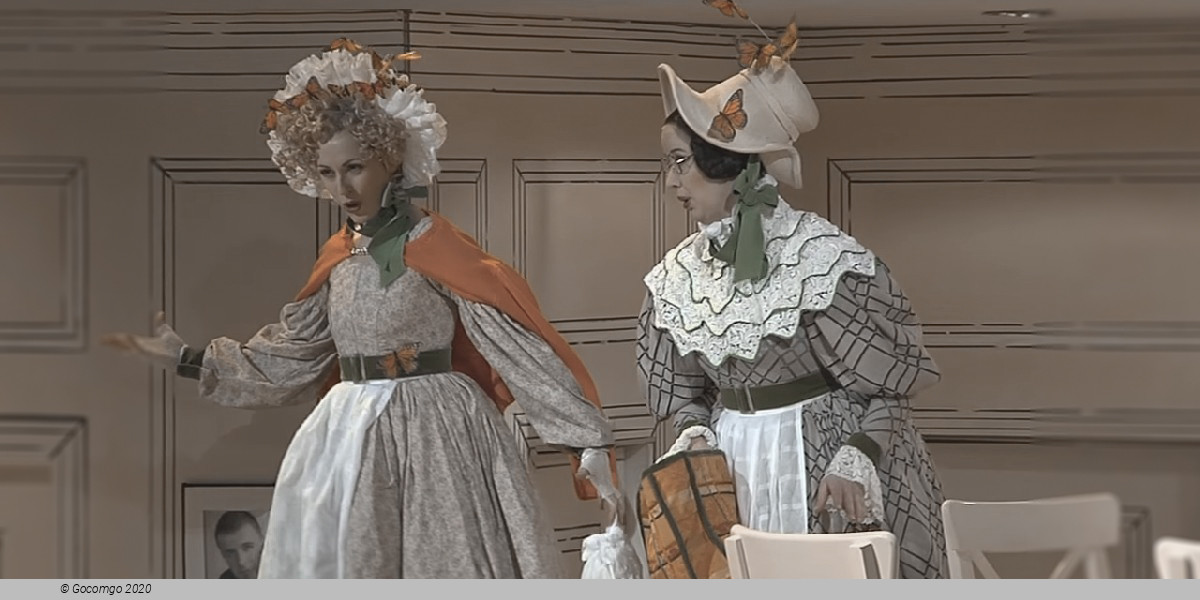
While other fairies amuse themselves in a fairy garden, Zemina and Farzana discuss how their mistress Ada, a half-fairy, has renounced her immortality to spend her life with Arindal, the mortal whom she loves. The fairy-king has set a condition which Farzana believes that Arindal will not fulfil even with the help of the magician Groma. Nevertheless, they get the other fairies and spirits to pledge their help in separating Ada from the mortal.
In a rocky wilderness Morald and Gunther meet Gernot. The former pair have been sent to find out what has happened to Arindal, who disappeared eight years ago. In the meantime his father, the king, has died from grief and the kingdom is being attacked by their enemy Murold who demands they surrender Arindal's sister Lora as his wife. Gernot relates how he and Arindal had hunted a beautiful doe to a river where it vanished. They heard a voice and jumped into the river where they found a beautiful woman in luxurious surroundings. She declared her love for Arindal and said they could stay together provided Arindal could go eight years without asking who she is. But the day before he did ask her, and Arindal and Gernot found themselves in the wilderness. Morald and Gunther depart before Arindal can know of their presence. Arindal appears and sings of his grief at the loss of Ada (Wo find ich dich, wo wird mir Trost?). Gernot tries to argue him round to believing that Ada is a sorceress who has abandoned him and that he should return to his kingdom. He sings of an evil witch who had disguised herself as a beautiful woman (War einst 'ne böse Hexe wohl). Gunther returns, disguised as a priest, and continues the attempt to persuade Arindal that he will be turned into a wild beast by the witch unless he returns at once; Morald similarly disguises himself as the ghost of Arindal's father and announces that his kingdom is threatened. Each disguise is magically destroyed just as Arindal is about to be convinced. However, the three are finally able to persuade him of his country's need. They agree to depart in the morning, although Arindal fears he will not see Ada again. When he is left alone he falls into an enchanted sleep.
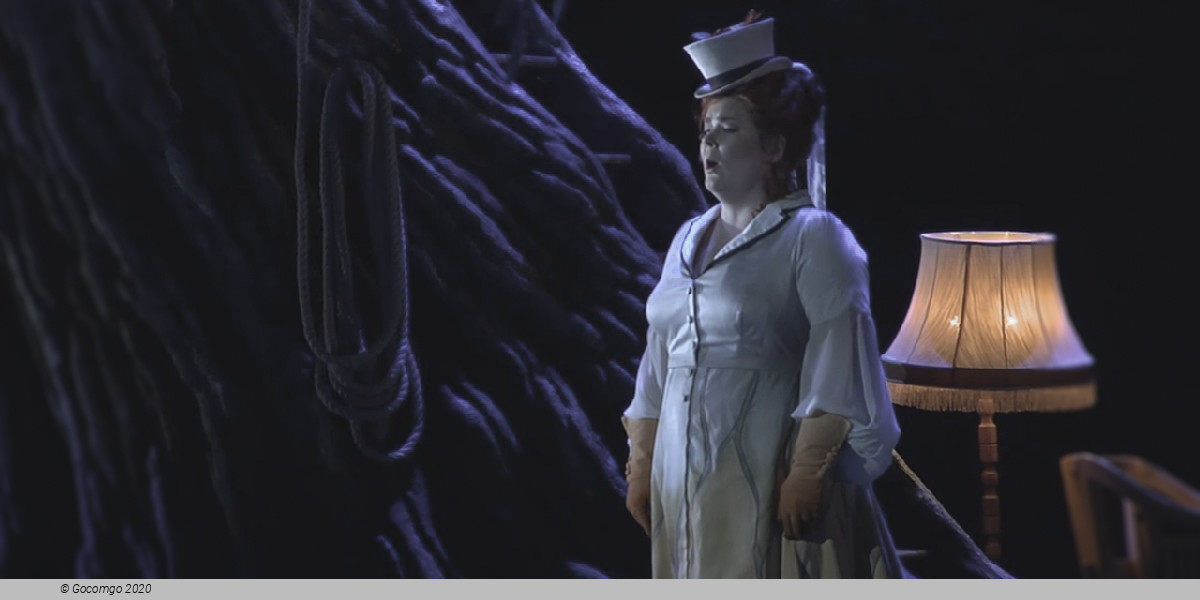
The scene changes again to a fairy garden with a palace in the background out of which Ada comes. She sings of how she is willing to sacrifice her immortality and pay the price, however hard it is, necessary to win Arindal (Wie muss ich doch beklagen). Arindal awakens and declares his joy at seeing Ada again, but she announces that he will abandon her the next day. Gernot, Gunther and Morald arrive with companions to fetch Arindal. Those who have not seen her before are struck by Ada's beauty and fear Arindal will not come. A procession of fairies comes out of the palace and Zemina and Farzana tell Ada that her father has died and she is now queen. Ada tells Arindal that they must part now but she will see him tomorrow. She asks him to swear that whatever happens he will not curse her. He swears it even though she takes back her request. She expresses her fear that they will both go under as a result of his breaking the oath.
Act 2
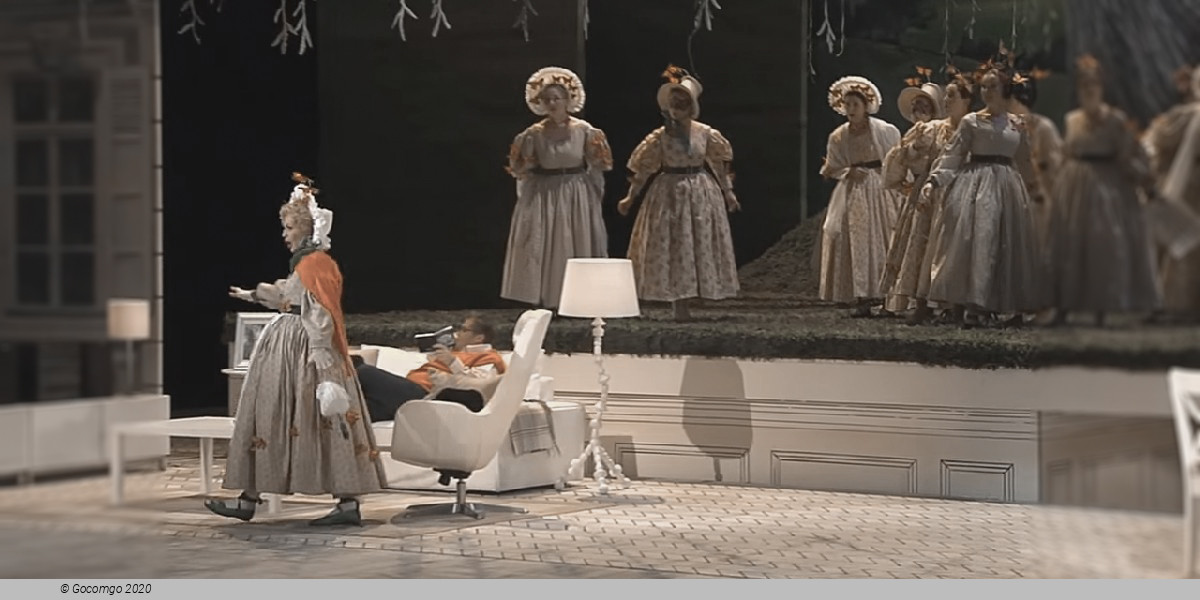
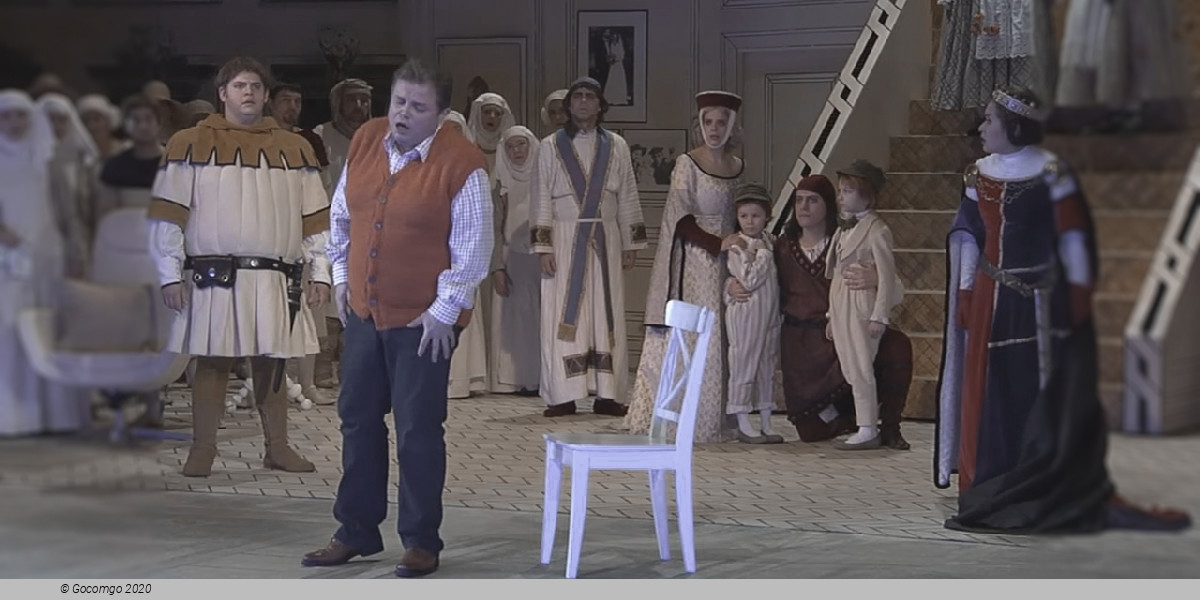
The people and warriors in Arindal's capital are panicking because they are under attack. Lora berates them, saying that she herself stands firm even though she has lost father, brother and lover. She reminds them of Groma's prophecy that the kingdom will not fall if Arindal returns, but the chorus express doubts. Just as she begins to fear that they are right (O musst du Hoffnung schwinden), a messenger arrives to announce that Arindal is on his way. The new king is greeted joyously by his people, but Arindal himself expresses his fears that he is not strong enough for battle. Meanwhile, Morald and Lora express their mutual love.
Gernot and Gunther talk of the terrible omens of the night and morning. Gernot asks Gunther if Drolla is still beautiful and still loyal to him. Gunther says he believes so but says Gernot should ask her himself as she is nearby. Gernot and Drolla test each other with stories of the many people who love them. Each becomes jealous before they realise that they both truly love each other.
Ada is with Zemina and Farzana. She complains to them of how they heartlessly drive her on. They, however, express hope that she will renounce Arindal and remain immortal. She sings (Weh' mir, so nah' die fürchterliche Stunde) of her fears that Arindal will be cursed with madness and death, and she with being turned to a statue, but then expresses hope that Arindal's love will prove strong.
Battle is raging outside. Arindal is anxious and refuses to lead the army out. Morald does so instead. Ada appears with her two children by Arindal. She seems to throw them into a fiery abyss. Meanwhile, defeated warriors rush in. Ada refuses to console Arindal saying she has come to torment him instead. More defeated warriors arrive with reports that Morald has disappeared, captured or dead. Then Harald, who was sent to bring reinforcements, comes. He reports that his army was defeated by one led by Ada. Arindal curses her. Zemina and Farzana express joy that Ada will remain immortal. But she sorrowfully explains that the fairy-king had required as a condition of her renouncing her immortality, that she conceal her fairy background from Arindal for eight years and on the last day torment him as best she can. If he cursed her, she would remain immortal and be turned to stone for a hundred years while he would go mad and die. In truth, Morald is not dead, the army Harald led was full of traitors, and the children are still alive. Already Arindal can feel his sanity slipping.
Act 3
A chorus hail Morald and Lora as the King and Queen who have brought them peace. The couple say they cannot rejoice, because of Arindal's fate. All pray for the curse to be lifted.
Arindal is hallucinating that he is hunting a doe. As it is killed, he realises it is his wife. He continues to experience visions (Ich seh' den Himmel) before falling asleep. The voice of the petrified but weeping Ada is heard calling for him. Then the voice of Groma calls to him too. A sword, shield and lyre appear which Groma says can win Arindal victory and a greater reward. Zemina and Farzana, enter. The former expresses her pity for Arindal while the latter says he deserves punishment for seeking to take Ada from them. They wake him and announce they will lead him to Ada to rescue her. He expresses his willingness to die for her. The two fairies hope this will actually happen.
They lead Arindal to a portal guarded by earth spirits. He is about to be defeated when the voice of Groma reminds him of the shield. The earth spirits disappear when he holds it up. The fairies express their surprise but are sure he will not triumph again. Meanwhile, he thanks Groma's power. Next they encounter bronze men who guard a holy sanctuary. The shield fails Arindal but when Groma advises him to hold up the sword, the bronze men vanish. The fairies again express their surprise whilst Groma's spirit urges Arindal on. They now have reached a grotto where Ada has been turned to stone. The two fairies taunt Arindal with the threat that failure will mean that he too is turned to stone. But the voice of Groma urges him to play the lyre. When he does so (O ihr, des Busens Hochgefühle), Ada is freed from the stone. The two fairies realise that Groma is responsible.
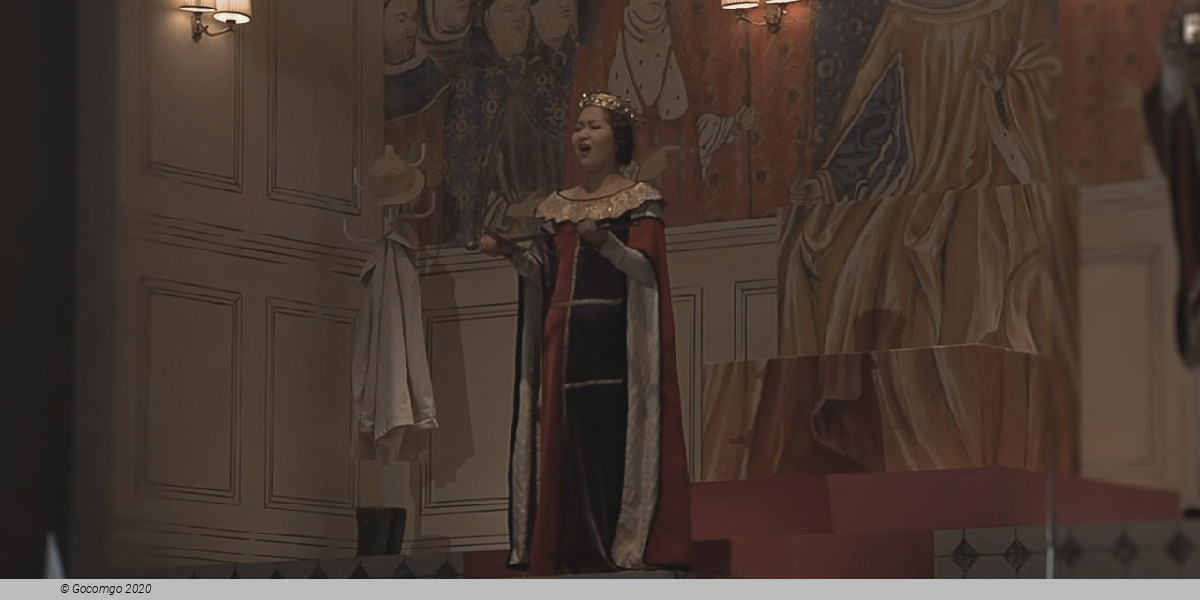
The scene changes to the fairy king's throne room. He has decided to grant Arindal immortality. Ada invites him to rule her fairyland with her. Arindal grants his mortal kingdom to Morald and Lora. Everyone rejoices; even Zemina and Farzana are happy now that Ada remains immortal.










 Augustusplatz 12