


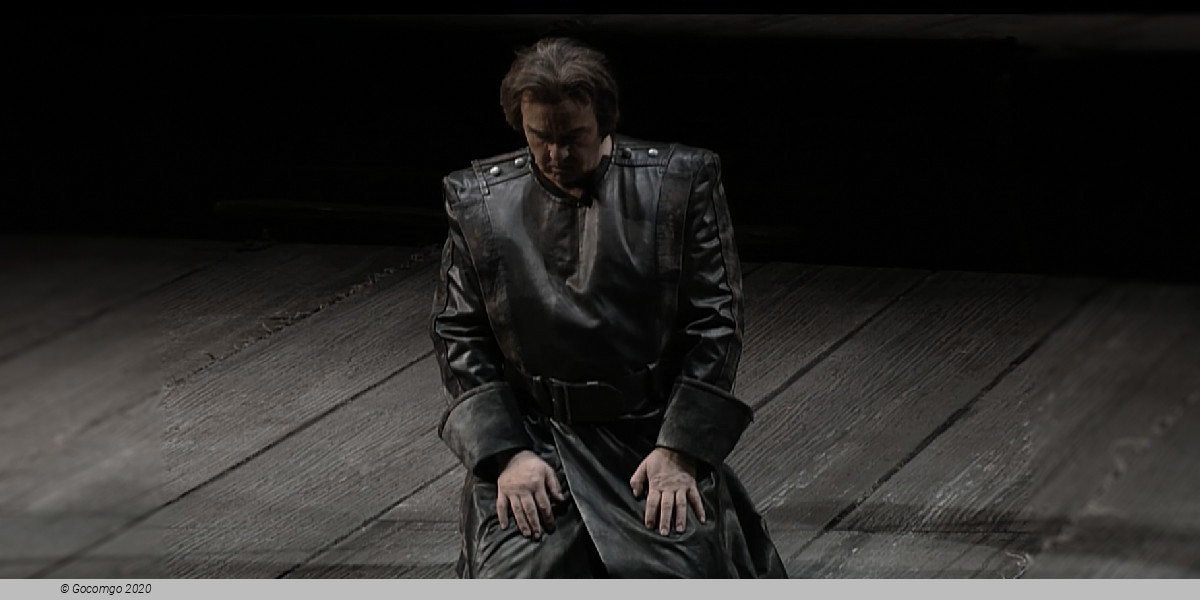
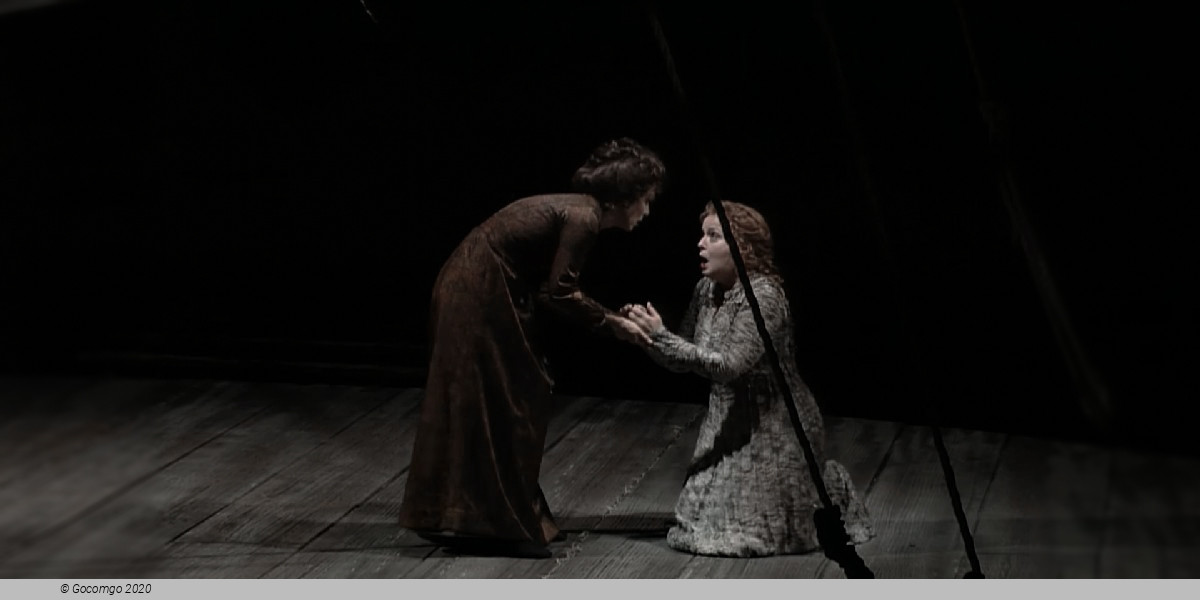
Oper Frankfurt 20 June 2020 - Tristan und Isolde | GoComGo.com

Tristan und Isolde

Oper Frankfurt, Opera House, Frankfurt am Main, Germany
All photos (10)
Select date and time
5 PM
Request for Tickets
Important Info
Type: Opera
City: Frankfurt am Main, Germany
Starts at: 17:00
Intervals: 2
Duration: 4h 45min
Sung in: German
Titles in: English,German

E-tickets: Print at home or at the box office of the event if so specified. You will find more information in your booking confirmation email.

You can only select the category, and not the exact seats.
If you order 2 or 3 tickets: your seats will be next to each other.
If you order 4 or more tickets: your seats will be next to each other, or, if this is not possible, we will provide a combination of groups of seats (at least in pairs, for example 2+2 or 2+3).

Overview

Introductory talks, in German, in the Holzfoyer half an hour before performances begin.

History
Premiere of this production: 10 June 1865, Königliches Hof- und Nationaltheater, Munich

Tristan und Isolde (Tristan and Isolde, or Tristan and Isolda, or Tristran and Ysolt) is an opera, or music drama, in three acts by Richard Wagner to a German libretto by the composer, based largely on the 12th-century romance Tristan by Gottfried von Strassburg. It was composed between 1857 and 1859 and premiered at the Königliches Hof- und Nationaltheater in Munich on 10 June 1865 with Hans von Bülow conducting. Wagner referred to the work, not as an opera but called it "eine Handlung" (literally a drama, a plot, or an action), which was the equivalent of the term used by the Spanish playwright Calderón for his dramas.

Synopsis

Thrown together by fate, unable to be united in life. Where can a relationship lead which is faced with the impossible from the very start? Is this impossibility itself a basic prerequisite for existential longing and abandon?

For Richard Wagner setting this middle ages story to music was the fulfiflment of a self declared need to "let himself ", with complete abandon and no consideration at all of theory. He revolutionised harmony with his much discussed Tristan chord, laying the foundation for modern music: the tension of dissonance no longer, as the rules of harmony demand, resolved in consonance, but remains as a question or answer in the midst of an emotional world which Wagner established between "the most extreme longing for bliss and all decisive longing for death".

Act 1

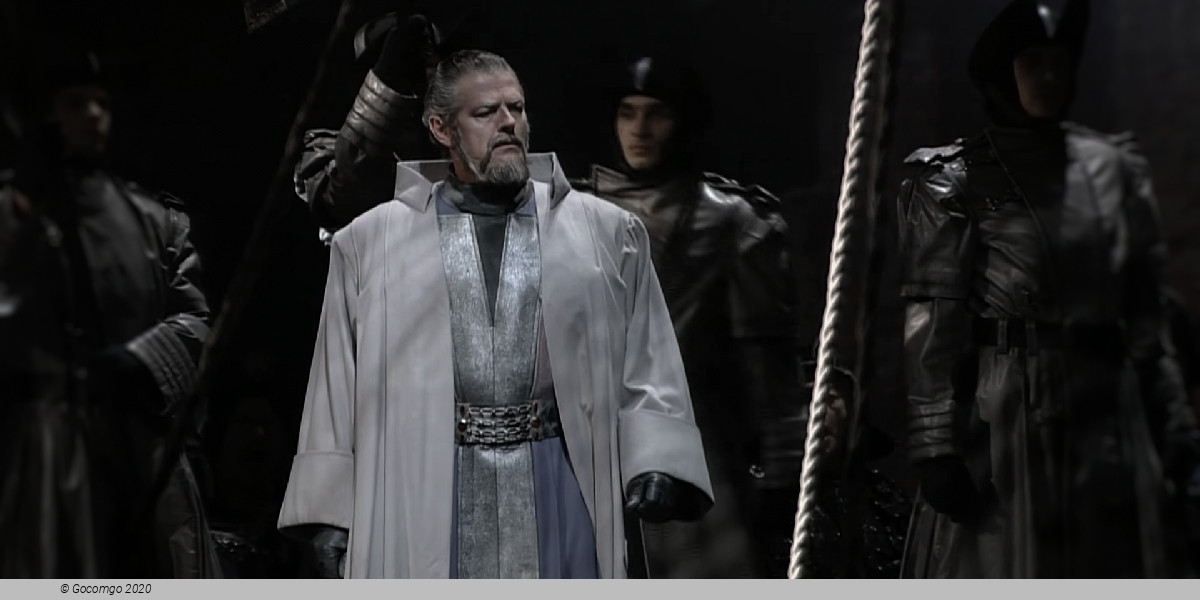
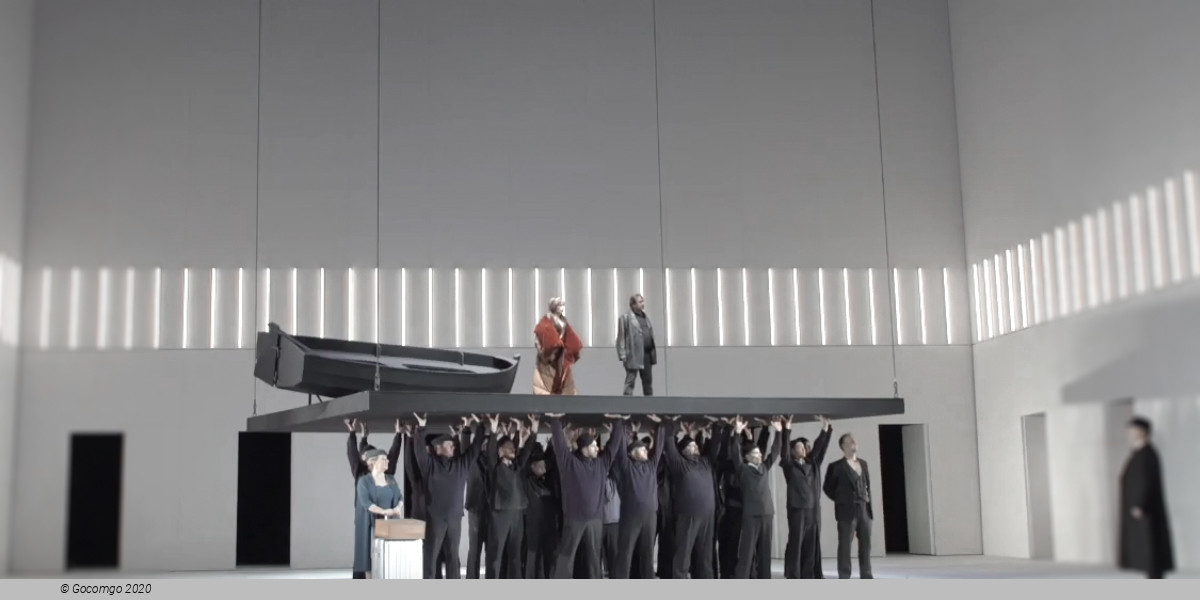
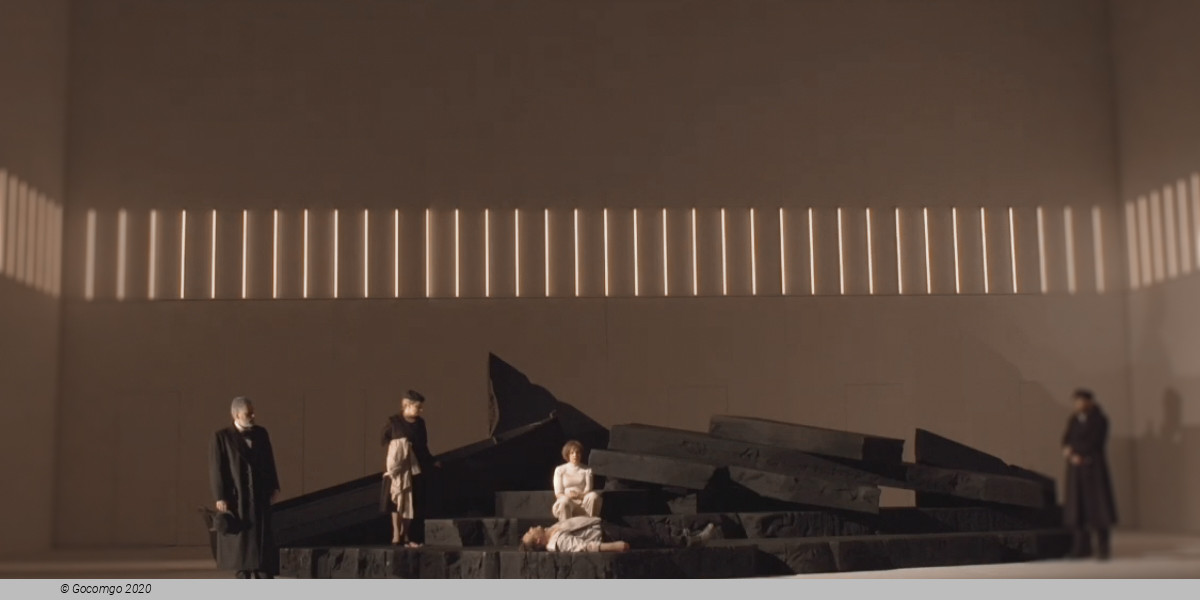
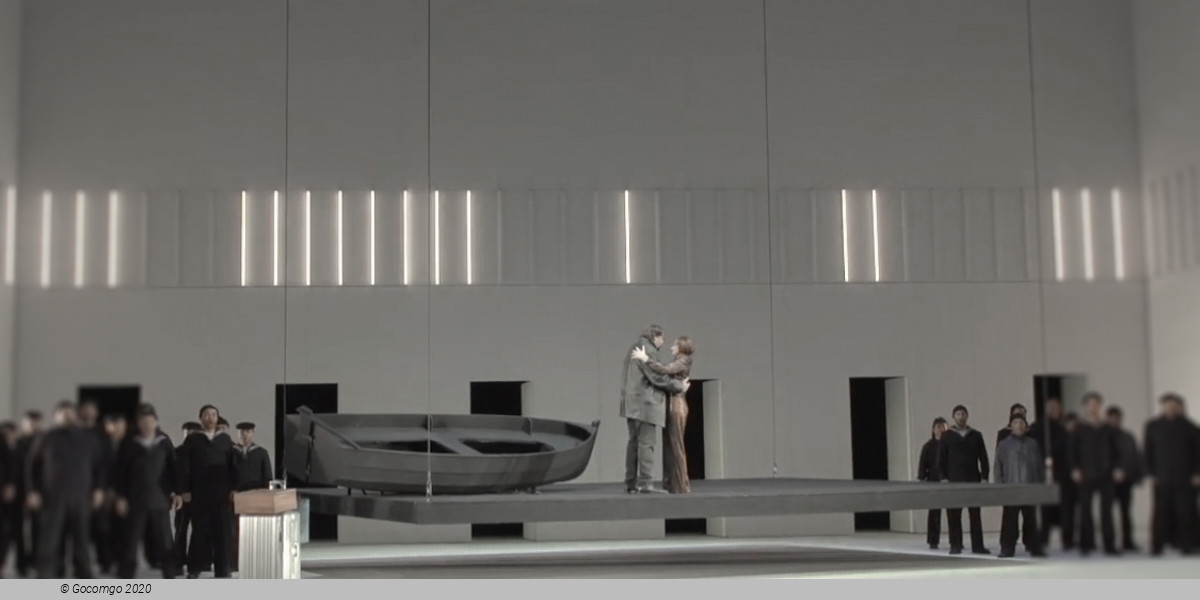
Isolde, promised to King Marke in marriage, and her handmaid, Brangäne, are quartered aboard Tristan's ship being transported to the king's lands in Cornwall. The opera opens with the voice of a young sailor singing of a "wild Irish maid", ("Westwärts schweift der Blick") which Isolde construes to be a mocking reference to herself. In a furious outburst, she wishes the seas to rise up and sink the ship, killing herself and all on board ("Erwache mir wieder, kühne Gewalt"). Her scorn and rage are directed particularly at Tristan, the knight responsible for taking her to Marke, and Isolde sends Brangäne to command Tristan to appear before her ("Befehlen liess' dem Eigenholde"). Tristan, however, refuses Brangäne's request, claiming that his place is at the helm. His henchman, Kurwenal, answers more brusquely, saying that Isolde is in no position to command Tristan and reminds Brangäne that Isolde's previous fiancé, Morold, was killed by Tristan ("Herr Morold zog zu Meere her").

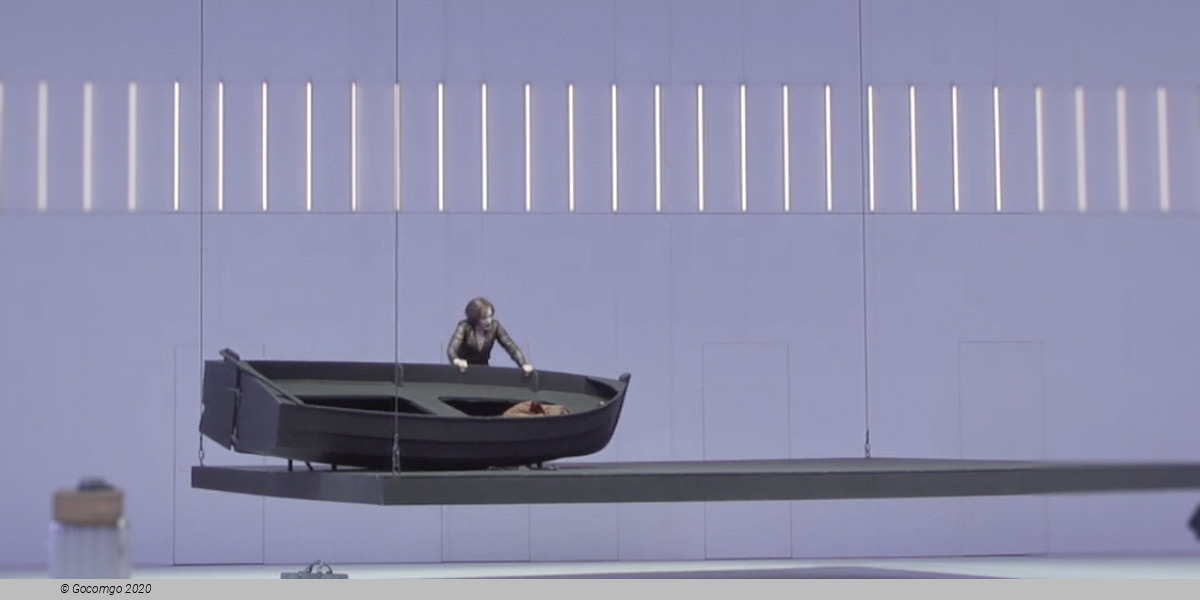
Brangäne returns to Isolde to relate these events, and Isolde, in what is termed the "narrative and curse", sadly tells her of how, following the death of Morold, she happened upon a stranger who called himself Tantris. Tantris was found mortally wounded in a barge ("von einem Kahn, der klein und arm") and Isolde used her healing powers to restore him to health. She discovered during Tantris' recovery, however, that he was actually Tristan, the murderer of her fiancé. Isolde attempted to kill the man with his own sword as he lay helpless before her. However, Tristan looked not at the sword that would kill him or the hand that wielded the sword, but into her eyes ("Er sah' mir in die Augen"). His action pierced her heart and she was unable to slay him. Tristan was allowed to leave with the promise never to come back, but he later returned with the intention of marrying Isolde to his uncle, King Marke. Isolde, furious at Tristan's betrayal, insists that he drink atonement to her, and from her medicine chest produces a vial to make the drink. Brangäne is shocked to see that it is a lethal poison.

Kurwenal appears in the women's quarters ("Auf auf! Ihr Frauen!") and announces that the voyage is coming to an end. Isolde warns Kurwenal that she will not appear before the King if Tristan does not come before her as she had previously ordered and drink atonement to her. When Tristan arrives, Isolde reproaches him about his conduct and tells him that he owes her his life and how his actions have undermined her honour, since she blessed Morold's weapons before battle and therefore she swore revenge. Tristan first offers his sword but Isolde refuses; they must drink atonement. Brangäne brings in the potion that will seal their pardon; Tristan knows that it may kill him, since he knows Isolde's magic powers ("Wohl kenn' ich Irland's Königin"). The journey almost at its end, Tristan drinks and Isolde takes half the potion for herself. The potion seems to work but it does not bring death but relentless love ("Tristan!" "Isolde!"). Kurwenal, who announces the imminent arrival on board of King Marke, interrupts their rapture. Isolde asks Brangäne which potion she prepared and Brangäne replies, as the sailors hail the arrival of King Marke, that it was not poison, but rather a love potion.

Act 2

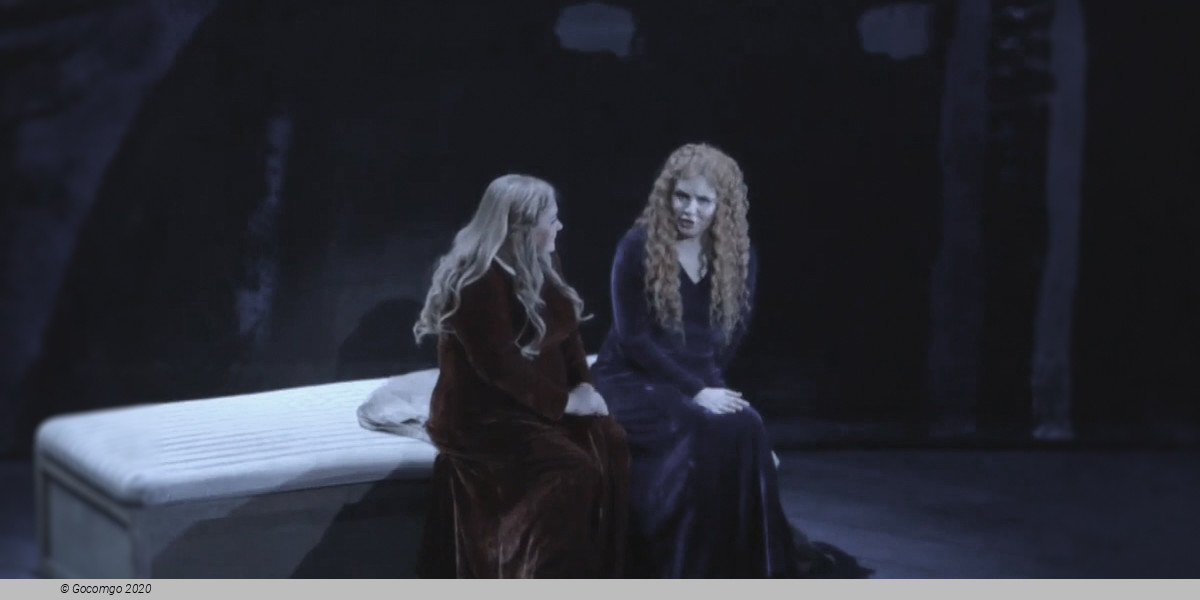
King Marke leads a hunting party out into the night, leaving Isolde and Brangäne alone in the castle, who both stand beside a burning brazier. Isolde, listening to the hunting horns, believes several times that the hunting party is far enough away to warrant the extinguishing of the brazier – the prearranged signal for Tristan to join her ("Nicht Hörnerschall tönt so hold"). Brangäne warns Isolde that Melot, one of King Marke's knights, has seen the amorous looks exchanged between Tristan and Isolde and suspects their passion ("Ein Einz'ger war's, ich achtet' es wohl"). Isolde, however, believes Melot to be Tristan's most loyal friend, and, in a frenzy of desire, extinguishes the flames. Brangäne retires to the ramparts to keep watch as Tristan arrives.

The lovers, at last alone and freed from the constraints of courtly life, declare their passion for each other. Tristan decries the realm of daylight which is false, unreal, and keeps them apart. It is only in night, he claims, that they can truly be together and only in the long night of death can they be eternally united ("O sink' hernieder, Nacht der Liebe"). During their long tryst, Brangäne calls a warning several times that the night is ending ("Einsam wachend in der Nacht"), but her cries fall upon deaf ears. The day breaks in on the lovers as Melot leads King Marke and his men to find Tristan and Isolde in each other's arms. Marke is heartbroken, not only because of his nephew's betrayal but also because Melot chose to betray his friend Tristan to Marke and because of Isolde's betrayal as well ("Mir – dies? Dies, Tristan – mir?").

When questioned, Tristan says he cannot answer to the King the reason of his betrayal since he would not understand. He turns to Isolde, who agrees to follow him again into the realm of night. Tristan announces that Melot has fallen in love with Isolde too. Melot and Tristan fight, but, at the crucial moment, Tristan throws his sword aside and allows Melot to severely wound him.

Act 3

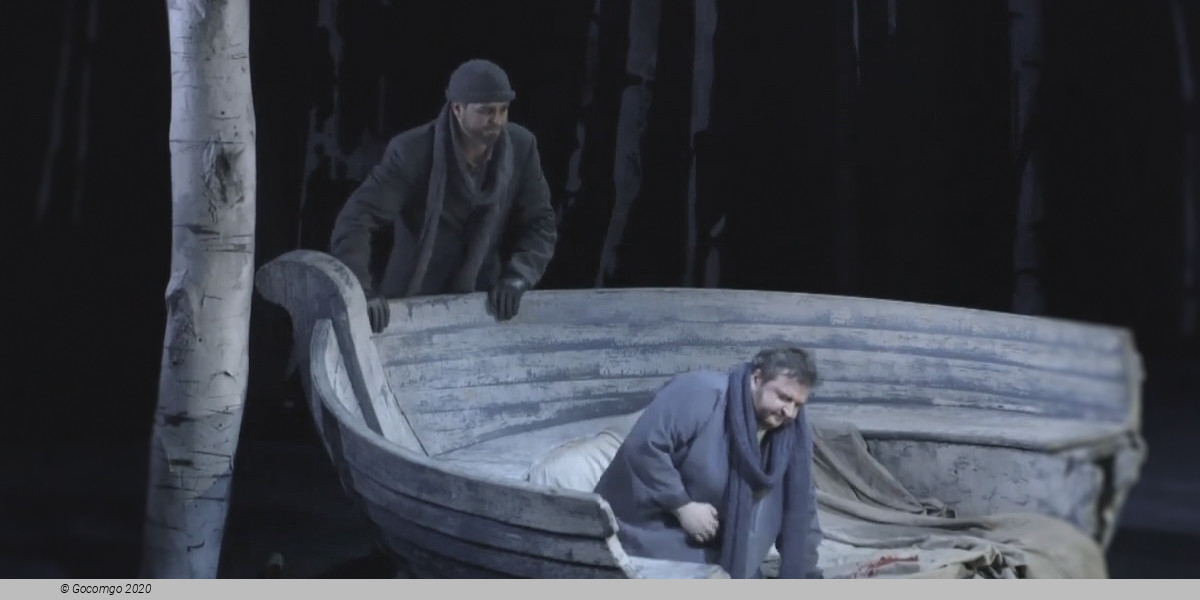
Kurwenal has brought Tristan home to his castle at Kareol in Brittany. A shepherd pipes a mournful tune and asks if Tristan is awake. Kurwenal replies that only Isolde's arrival can save Tristan, and the shepherd offers to keep watch and claims that he will pipe a joyful tune to mark the arrival of any ship. Tristan awakes ("Die alte Weise – was weckt sie mich?") and laments his fate – to be, once again, in the false realm of daylight, once more driven by unceasing unquenchable yearning ("Wo ich erwacht' weilt ich nicht"). Tristan's sorrow ends when Kurwenal tells him that Isolde is on her way. Tristan, overjoyed, asks if her ship is in sight, but only a sorrowful tune from the shepherd's pipe is heard.

Tristan relapses and recalls that the shepherd's mournful tune is the same as was played when he was told of the deaths of his father and mother ("Muss ich dich so versteh'n, du alte, ernst Weise"). He rails once again against his desires and against the fateful love potion ("verflucht sei, furchtbarer Trank!") until, exhausted, he collapses in delirium. After his collapse, the shepherd is heard piping the arrival of Isolde's ship, and, as Kurwenal rushes to meet her, Tristan tears the bandages from his wounds in his excitement ("Hahei! Mein Blut, lustig nun fliesse!"). As Isolde arrives at his side, Tristan dies with her name on his lips.

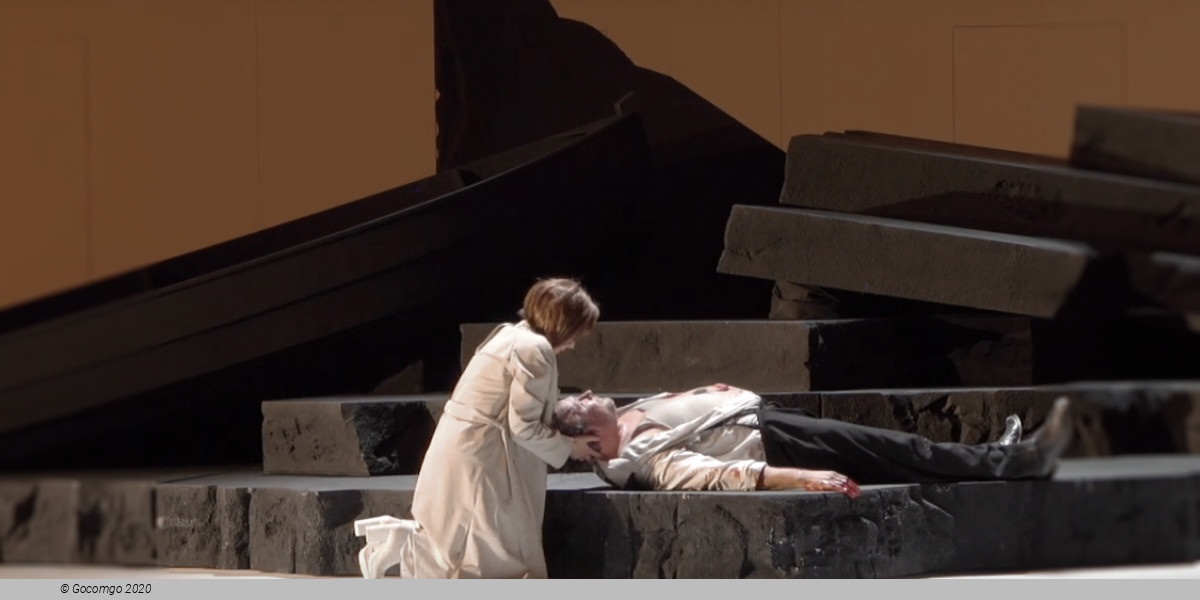
Isolde collapses beside her deceased lover just as the appearance of another ship is announced. Kurwenal spies Melot, Marke and Brangäne arriving ("Tod und Hölle! Alles zur Hand!"). He believes they have come to kill Tristan and, in an attempt to avenge him, furiously attacks Melot. Marke tries to stop the fight to no avail. Both Melot and Kurwenal are killed in the fight. Marke and Brangäne finally reach Tristan and Isolde. Marke, grieving over the body of his "truest friend" ("Tot denn alles!"), explains that Brangäne revealed the secret of the love potion and that he had come not to part the lovers, but to unite them ("Warum Isolde, warum mir das?"). Isolde appears to wake at this and in a final aria describing her vision of Tristan risen again (the "Liebestod", "love death"), dies ("Mild und leise wie er lächelt").

Venue Info

Oper Frankfurt - Frankfurt am Main
Location   Untermainanlage 11

The Oper Frankfurt (Frankfurt Opera) is one of the leading opera companies in Europe, and voted best "Opera house of the year" several times since 1996.

Opera in Frankfurt am Main has a long tradition, with many world premieres such as Franz Schreker's Der ferne Klang in 1912, Fennimore und Gerda by Frederick Delius in 1919, and Carl Orff's Carmina Burana in 1937. Frankfurt's international recognition began in the Gielen Era, 1977 to 1987, when Michael Gielen and stage directors such as Ruth Berghaus collaborated.

A historic opera house from 1880 was destroyed in World War II, and reconstructed as a concert hall, Alte Oper. The present opera house, built in 1963, is under one roof with the stage for drama. The opera orchestra is called Frankfurter Opern- und Museumsorchester. Today's venue for Baroque and contemporary opera is the Bockenheimer Depot, a former tram depot.

Oper Frankfurt is part of the Städtische Bühnen Frankfurt.

Frankfurt's first opera was Johann Theile's Adam und Eva, performed in 1698 by Johann Velten's touring company. The young Goethe's first operas in his home town of Frankfurt were productions by Theobald Marchand's company.

1782 – 1880
Opened in 1782, the Comoedienhaus was the first permanent venue of the Frankfurt Theater (drama and opera). In 1878 German violinist Willy Hess took up the leadership of the Oper Frankfurt. He resigned from that post in 1886 to take up a professorship in the Rotterdam Conservatorium voor Muziek.

1880 – 1944
The first representative opera house of the city was inaugurated in Frankfurt in 1880 at Opernplatz. Under the direction of the first Intendant Emil Claar and the first Kapellmeister Felix Otto Dessoff, the house was opened with Mozart's opera Don Giovanni.

During the 1920s, the opera in Frankfurt had more prominent Jewish singers than any other company in Germany, including the tenor Hermann Schramm, bass Hans Erl (the first King in Schreker's Der Schatzgräber), baritone Richard Breitenfeld and contralto Magda Spiegel, who also toured with Frankfurt Opera performing Wagner in the Netherlands. These singers were forced to leave the opera in June 1933. Orff's Carmina Burana was premiered at Oper Frankfurt in 1937. Jewish members of the opera company among those rounded up at 9 November 1938 at the Festhalle Frankfurt, where Erl sang In diesen Heilgen Hallen, from the Magic Flute for the deportees. Members of Frankfurt Opera were sent to Auschwitz and other camps where they perished.

1945 – 1970s
The opera house was damaged in an air raid in January 1944, and then almost completely destroyed in March. A new house for opera and play was built, completed in 1963 at the Theaterplatz (now Willy-Brandt-Platz). In 1952, Georg Solti became Generalmusikdirektor (GMD) and Intendant of the Oper Frankfurt, where he remained in charge for nine years.

The Gielen Era
From 1977 to 1987, Frankfurt Opera was led by Michael Gielen. This decade became known as the "Gielen Era", notable for the music of a conductor who was also a composer, and directors including Ruth Berghaus and Hans Neuenfels, whose productions of standard works such as Verdi's Aida and Wagner's Ring Cycle were thought-provoking. Operas which received their world premieres at the house were also performed again, including Franz Schreker's Die Gezeichneten.

1987 – present
The stage of the opera house was destroyed by a fire in November 1987. The opera house was rebuilt and opened in April 1991. Many famous singers started their career with the company, including Franz Völker, Edda Moser, Cheryl Studer and Diana Damrau, and many established artists have been engaged there in recent seasons including Christian Gerhaher, whose roles here have included Monteverdi's L'Orfeo and his first Wolfram in Wagner's Tannhäuser, Piotr Beczała in Massenet's Werther and Jan-Hendrik Rootering in Wagner's Parsifal.

Since 2002, Bernd Loebe has served as Intendant of the company. The company's current GMD is Sebastian Weigle, since 2008. Weigle has made commercial recordings of opera with the company for the OEHMS Classics label. He is scheduled to stand down as GMD of Oper Frankfurt at the close of the 2022–2023 season. In October 2021, the company announced the appointment of Thomas Guggeis as the next GMD of the company, effective with the 2023–2024 season, with an initial contract of 5 years.

Oper Frankfurt was voted 1996, 2003, 2015, 2018 and 2020 "Opera House of the Year" by the magazine Opernwelt.

Important Info
Type: Opera
City: Frankfurt am Main, Germany
Starts at: 17:00
Intervals: 2
Duration: 4h 45min
Sung in: German
Titles in: English,German
Top of page