
Oper Frankfurt 11 May 2023 - "The Tsar has his Photograph Taken" and "The Wise Woman" | GoComGo.com

"The Tsar has his Photograph Taken" and "The Wise Woman"

Oper Frankfurt, Opera House, Frankfurt am Main, Germany
All photos (7)
Select date and time
7:30 PM

E-tickets: Print at home or at the box office of the event if so specified. You will find more information in your booking confirmation email.

You can only select the category, and not the exact seats.
If you order 2 or 3 tickets: your seats will be next to each other.
If you order 4 or more tickets: your seats will be next to each other, or, if this is not possible, we will provide a combination of groups of seats (at least in pairs, for example 2+2 or 2+3).

Important Info
Type: Opera
City: Frankfurt am Main, Germany
Starts at: 19:30
Intervals: 1
Duration: 3h 20min
Sung in: German
Titles in: German,English

E-tickets: Print at home or at the box office of the event if so specified. You will find more information in your booking confirmation email.

You can only select the category, and not the exact seats.
If you order 2 or 3 tickets: your seats will be next to each other.
If you order 4 or more tickets: your seats will be next to each other, or, if this is not possible, we will provide a combination of groups of seats (at least in pairs, for example 2+2 or 2+3).

Overview

A delight in toying with different forms of theatre, traditions in story-telling and conventions of music theatre was something Kurt Weill and Carl Orff had in common.

While one wrote a comic opera with his The Tsar has his Photograph Taken in 1928, the other created something amusing yet serious and meaningful with his Die Kluge / The Wise Woman in the 1940s, combining fairy tales, folk theatre and Bavarian humour.

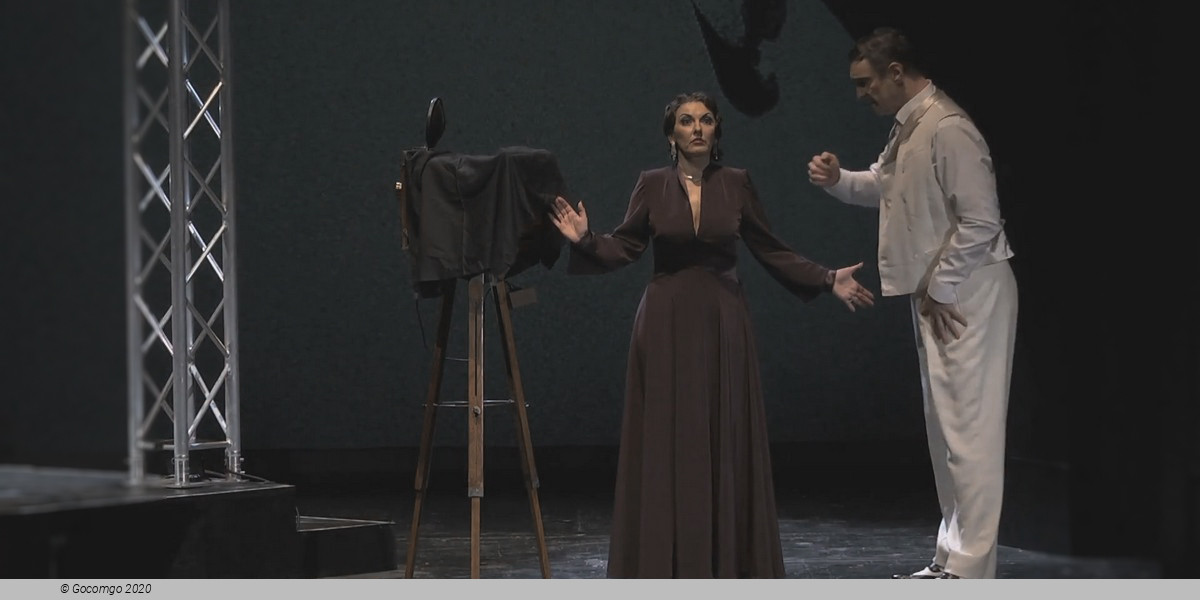
Weill's turbulent one-act opera is about a Tsar who's about to be assassinated in a photographer's studio in Paris. A dangerous flirt begins between the aristocrat and one of the conspirators, who's passing herself off as a photographer called Angèle … Weill's Zeitoper (operas of life as we know it) combines popular music with innovations including a gramophone on which Tango Angèle, top of the charts back then, is played.

In Weill's "Tsar Opera" the story is commented on by a male chorus in top hats and tails, Orff's tale by three Shakespearean minstrel rogues – who the audience at the world premiere in Frankfurt in 1943 heard saying: "Tyranny carries a scepter a long way".

Carl Orff's piece is told in 12 scenes, with equal zest but in a very different style. He used the Grimms’ fairy tale of The Wise Farmer's Daughter, a story about a King and a clever girl which has be told in varying ways all over the world. The language he uses is radical and astutely primitive because he wanted make a powerful, vivid impression on stage. His palette of expression ranges from the spoken and rhythmical word to cantilena. The use of rhyming couplets evokes an artistic folkloric, which often turns into pastiche.

History
Premiere of this production: 18 February 1928, Neues Theater, Leipzig

Der Zar lässt sich photographieren (The Tsar Has his Photograph Taken) is an opera buffa in one act by Kurt Weill, op. 21. The German libretto was written by Georg Kaiser, and Weill composed the music in 1927. It is a Zeitoper, a genre of music theatre which used contemporary settings and characters, satiric plots which often include technology and machinery.

Premiere of this production: 20 February 1943, Frankfurt Opera

Die Kluge. Die Geschichte von dem König und der klugen Frau (The Wise. The Story of the King and the Wise Woman) is an opera in 12 scenes written by Carl Orff. It premiered at the Frankfurt Opera, Germany, on 20 February 1943. Orff referred to this opera as a Märchenoper (fairy tale opera). The composer also wrote the libretto, based on "Die Kluge Bauerntochter" ("The Peasant's Wise Daughter") from Grimms' Fairy Tales.

Synopsis

Place: a photographic studio in Paris
Time: 1914

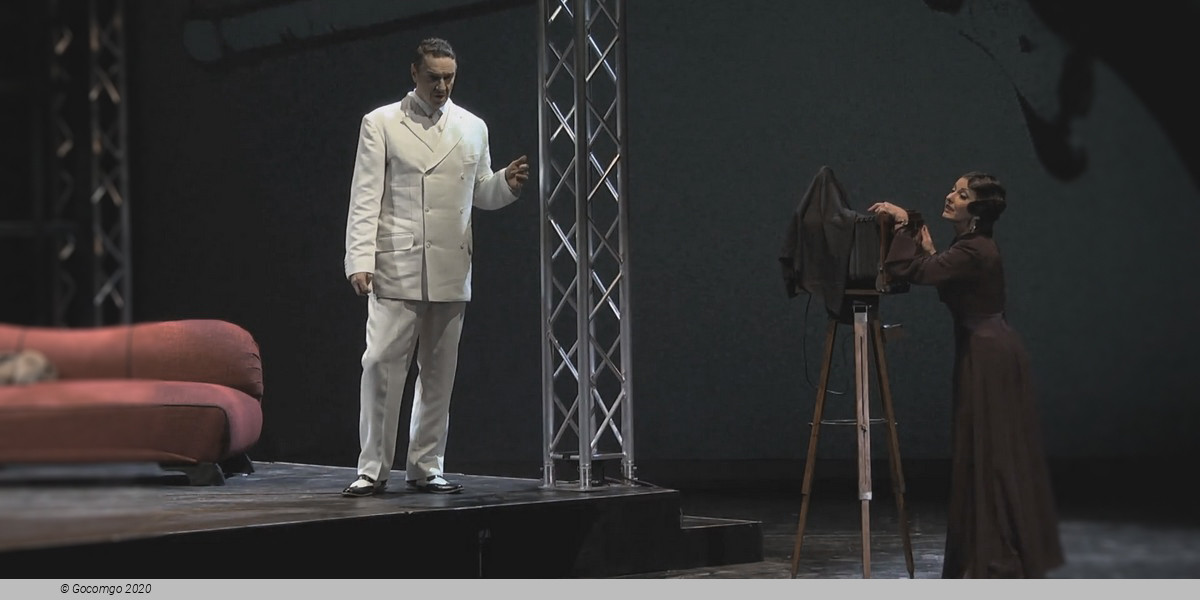
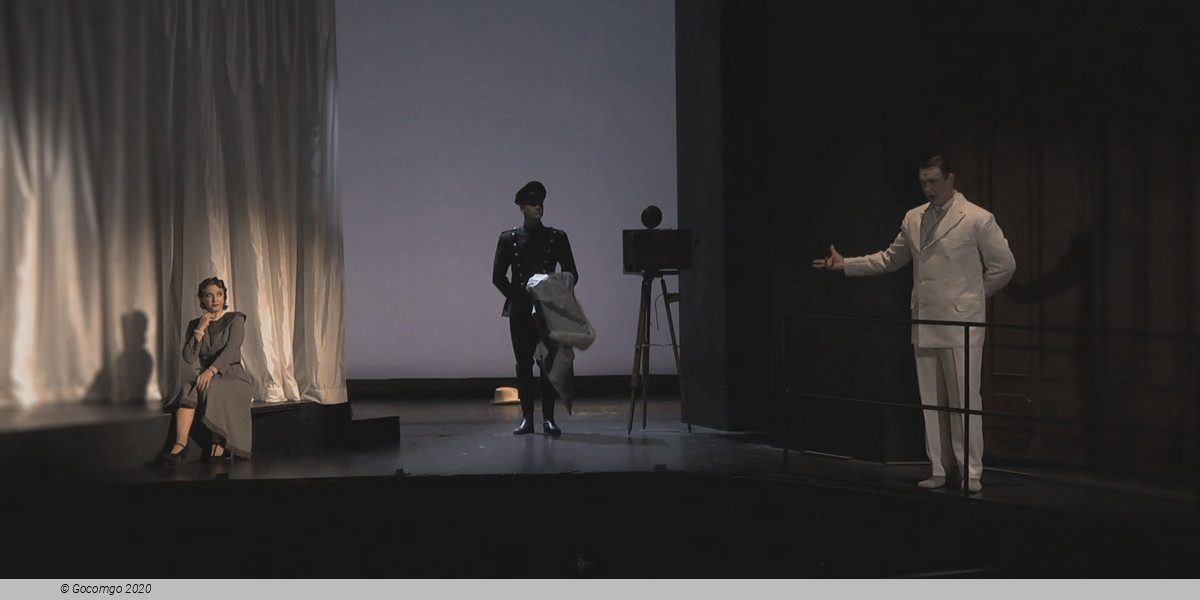
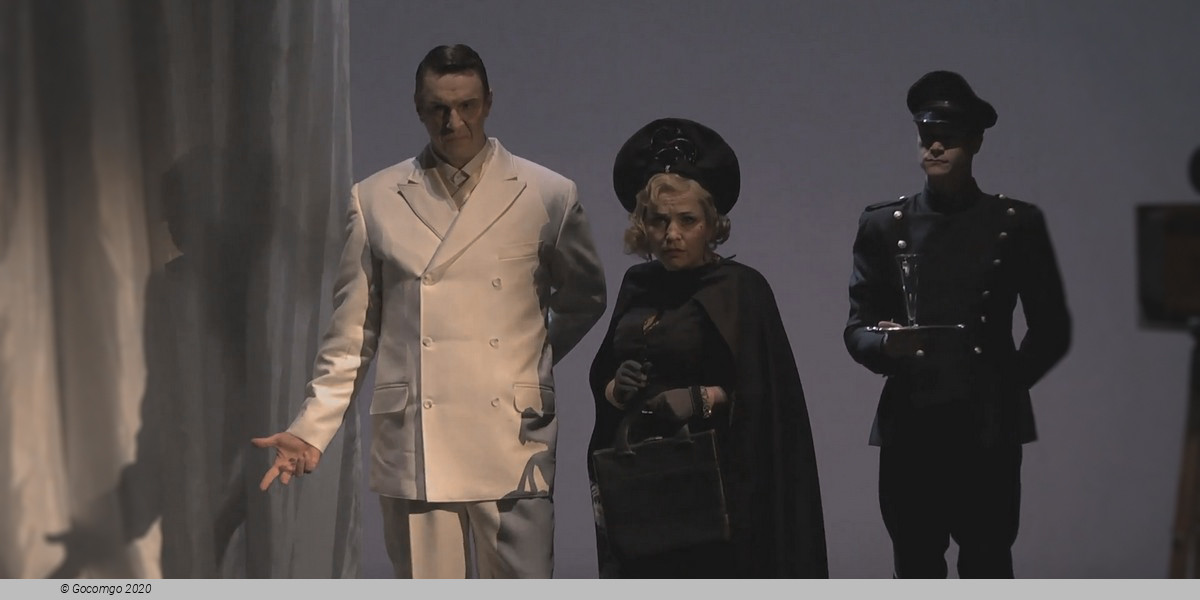
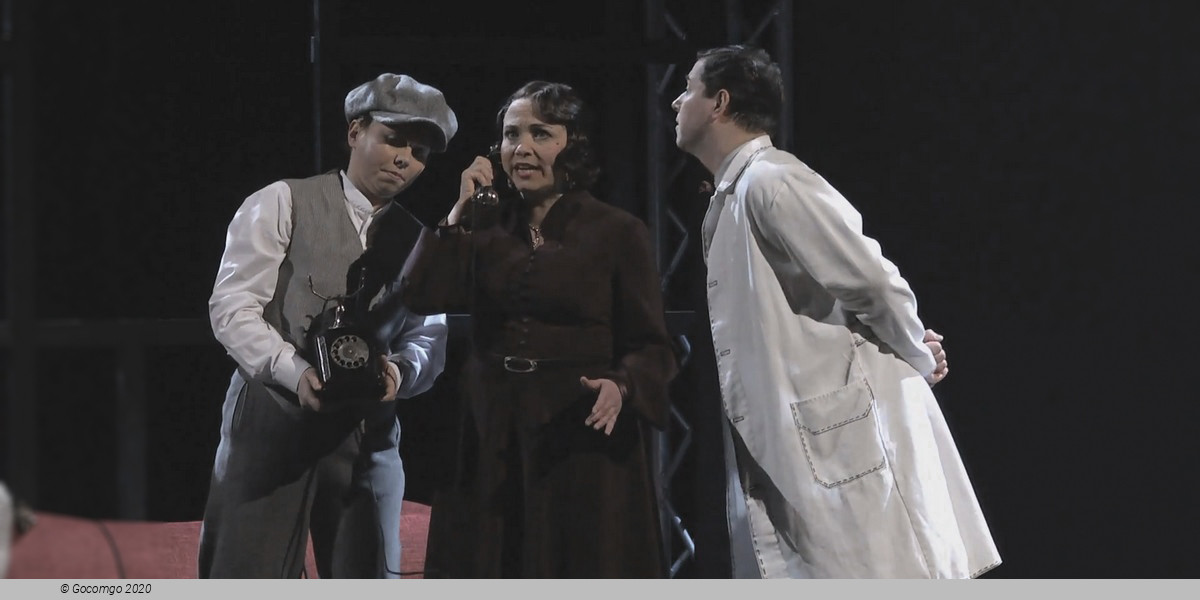
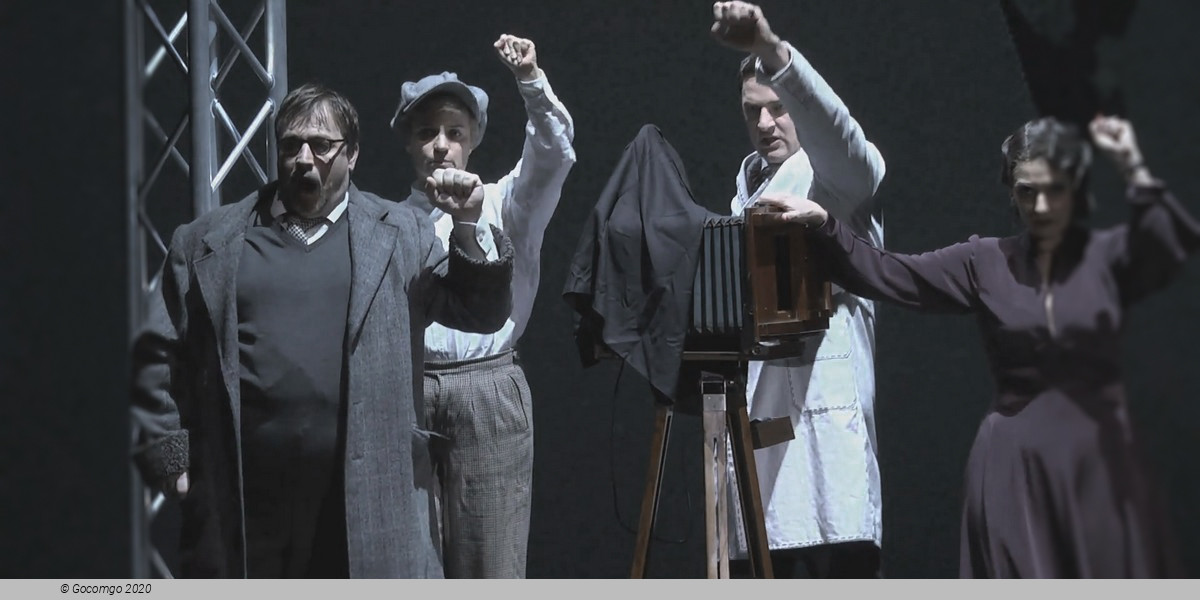
An offstage male chorus chants the opera's title (and comments on the action from time to time). Angèle (the proprietress) and her male assistants, one of them a boy, have little work to do, but a telephone-call brings news that the Tsar wishes to have his photograph taken. A large box-camera is set up, but, before the Tsar arrives, four members of a gang of revolutionaries burst in. They bind and gag Angèle and her staff. Three of the gang dress up as Angèle, her assistant and the boy, and the leader of the gang, proclaiming that the revolution is imminent, conceals a gun in the camera. It will fire at the Tsar when the bulb used for taking the photograph is squeezed. The captives are put in another room, the leader hides, and the Tsar is announced.

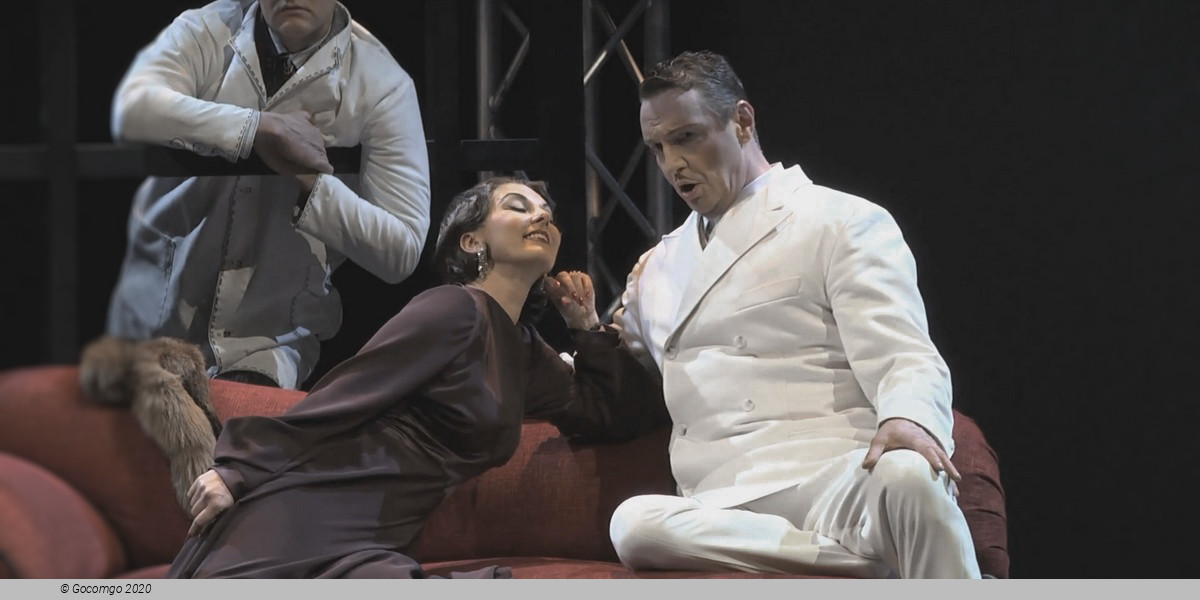
The Tsar is dressed in a summer suit and accompanied only by an equerry. He wants an informal portrait rather than an official one. He is attracted by the False Angèle and asks to be left alone with her. She is keen to take the photograph (i.e. to "shoot" him), but he flirts with her and offers to take her photograph first. She manages to avoid being accidentally shot by the Tsar, and is finally about to press the bulb to shoot him when the equerry re-appears to report that the police have followed some assassins to the studio. The false Angèle, realising that the game is up, puts on a seductive gramophone record (the "Tango Angèle") and asks the Tsar to avert his eyes while she undresses. She and the rest of the gang escape through the window just before the police arrive with the real Angèle and her assistants, who had previously themselves escaped and raised the alarm. The gun is removed from the camera, and the Tsar, though dismayed that the real Angèle is not as attractive as the false one, finally, as the chorus again says, "has his photograph taken".

The plot of the opera is that a poor peasant finds on his land a mortar made out of gold. He decides to take it to the king, thinking that he will be rewarded for being a loyal subject. His wise daughter tells him not to, because the king will throw him in the dungeons thinking that he has stolen the pestle, which in truth he didn't find.

The daughter's prediction comes true, and this is the beginning of the opera. When the king learns that the daughter had wisely known what his actions would be he sends for her to come before him. He tells her she has "talked a noose around her neck" and will give her two choices for how to save her life. She can either gamble for it, or answer three riddles.

The wise daughter chooses to answer the three riddles, and saves her life. The king makes her his queen and all seems happy.

The opera is only half over though. Three scoundrels have stirred up some trouble between the owners of a donkey and of a mule. One morning they found a baby donkey between the two beasts, and the mule owner ridiculously thought it could be his. The king agrees that since the baby was closer to the mule it must belong to it. The queen overhears this and sets up the donkey owner to show the king the error of his foolish judgment. The king realizes that his new wife is mocking him and working against his decision and he sends her away with a large box and tells her to take whatever she wishes and leave. The queen drugs her husband with opiates in his wine, and the opera happily ends with him waking up inside the box, and acknowledging that she truly is a wise woman. She contradicts him and says that no one who loves can be truly wise. Also at the end, the peasant finds the golden pestle which got him sent to the dungeons in the first place.

Venue Info

Oper Frankfurt - Frankfurt am Main
Location   Untermainanlage 11

The Oper Frankfurt (Frankfurt Opera) is one of the leading opera companies in Europe, and voted best "Opera house of the year" several times since 1996.

Opera in Frankfurt am Main has a long tradition, with many world premieres such as Franz Schreker's Der ferne Klang in 1912, Fennimore und Gerda by Frederick Delius in 1919, and Carl Orff's Carmina Burana in 1937. Frankfurt's international recognition began in the Gielen Era, 1977 to 1987, when Michael Gielen and stage directors such as Ruth Berghaus collaborated.

A historic opera house from 1880 was destroyed in World War II, and reconstructed as a concert hall, Alte Oper. The present opera house, built in 1963, is under one roof with the stage for drama. The opera orchestra is called Frankfurter Opern- und Museumsorchester. Today's venue for Baroque and contemporary opera is the Bockenheimer Depot, a former tram depot.

Oper Frankfurt is part of the Städtische Bühnen Frankfurt.

Frankfurt's first opera was Johann Theile's Adam und Eva, performed in 1698 by Johann Velten's touring company. The young Goethe's first operas in his home town of Frankfurt were productions by Theobald Marchand's company.

1782 – 1880
Opened in 1782, the Comoedienhaus was the first permanent venue of the Frankfurt Theater (drama and opera). In 1878 German violinist Willy Hess took up the leadership of the Oper Frankfurt. He resigned from that post in 1886 to take up a professorship in the Rotterdam Conservatorium voor Muziek.

1880 – 1944
The first representative opera house of the city was inaugurated in Frankfurt in 1880 at Opernplatz. Under the direction of the first Intendant Emil Claar and the first Kapellmeister Felix Otto Dessoff, the house was opened with Mozart's opera Don Giovanni.

During the 1920s, the opera in Frankfurt had more prominent Jewish singers than any other company in Germany, including the tenor Hermann Schramm, bass Hans Erl (the first King in Schreker's Der Schatzgräber), baritone Richard Breitenfeld and contralto Magda Spiegel, who also toured with Frankfurt Opera performing Wagner in the Netherlands. These singers were forced to leave the opera in June 1933. Orff's Carmina Burana was premiered at Oper Frankfurt in 1937. Jewish members of the opera company among those rounded up at 9 November 1938 at the Festhalle Frankfurt, where Erl sang In diesen Heilgen Hallen, from the Magic Flute for the deportees. Members of Frankfurt Opera were sent to Auschwitz and other camps where they perished.

1945 – 1970s
The opera house was damaged in an air raid in January 1944, and then almost completely destroyed in March. A new house for opera and play was built, completed in 1963 at the Theaterplatz (now Willy-Brandt-Platz). In 1952, Georg Solti became Generalmusikdirektor (GMD) and Intendant of the Oper Frankfurt, where he remained in charge for nine years.

The Gielen Era
From 1977 to 1987, Frankfurt Opera was led by Michael Gielen. This decade became known as the "Gielen Era", notable for the music of a conductor who was also a composer, and directors including Ruth Berghaus and Hans Neuenfels, whose productions of standard works such as Verdi's Aida and Wagner's Ring Cycle were thought-provoking. Operas which received their world premieres at the house were also performed again, including Franz Schreker's Die Gezeichneten.

1987 – present
The stage of the opera house was destroyed by a fire in November 1987. The opera house was rebuilt and opened in April 1991. Many famous singers started their career with the company, including Franz Völker, Edda Moser, Cheryl Studer and Diana Damrau, and many established artists have been engaged there in recent seasons including Christian Gerhaher, whose roles here have included Monteverdi's L'Orfeo and his first Wolfram in Wagner's Tannhäuser, Piotr Beczała in Massenet's Werther and Jan-Hendrik Rootering in Wagner's Parsifal.

Since 2002, Bernd Loebe has served as Intendant of the company. The company's current GMD is Sebastian Weigle, since 2008. Weigle has made commercial recordings of opera with the company for the OEHMS Classics label. He is scheduled to stand down as GMD of Oper Frankfurt at the close of the 2022–2023 season. In October 2021, the company announced the appointment of Thomas Guggeis as the next GMD of the company, effective with the 2023–2024 season, with an initial contract of 5 years.

Oper Frankfurt was voted 1996, 2003, 2015, 2018 and 2020 "Opera House of the Year" by the magazine Opernwelt.

Important Info
Type: Opera
City: Frankfurt am Main, Germany
Starts at: 19:30
Intervals: 1
Duration: 3h 20min
Sung in: German
Titles in: German,English
Top of page