
Oper Frankfurt 22 April 2022 - The Thieving Magpie | GoComGo.com

The Thieving Magpie

Oper Frankfurt, Opera House, Frankfurt am Main, Germany
All photos (10)
Select date and time
7 PM

E-tickets: Print at home or at the box office of the event if so specified. You will find more information in your booking confirmation email.

You can only select the category, and not the exact seats.
If you order 2 or 3 tickets: your seats will be next to each other.
If you order 4 or more tickets: your seats will be next to each other, or, if this is not possible, we will provide a combination of groups of seats (at least in pairs, for example 2+2 or 2+3).

Important Info
Type: Opera
City: Frankfurt am Main, Germany
Starts at: 19:00
Acts: 2
Intervals: 1
Duration: 3h 15min
Sung in: Italian
Titles in: German,English

E-tickets: Print at home or at the box office of the event if so specified. You will find more information in your booking confirmation email.

You can only select the category, and not the exact seats.
If you order 2 or 3 tickets: your seats will be next to each other.
If you order 4 or more tickets: your seats will be next to each other, or, if this is not possible, we will provide a combination of groups of seats (at least in pairs, for example 2+2 or 2+3).

Overview

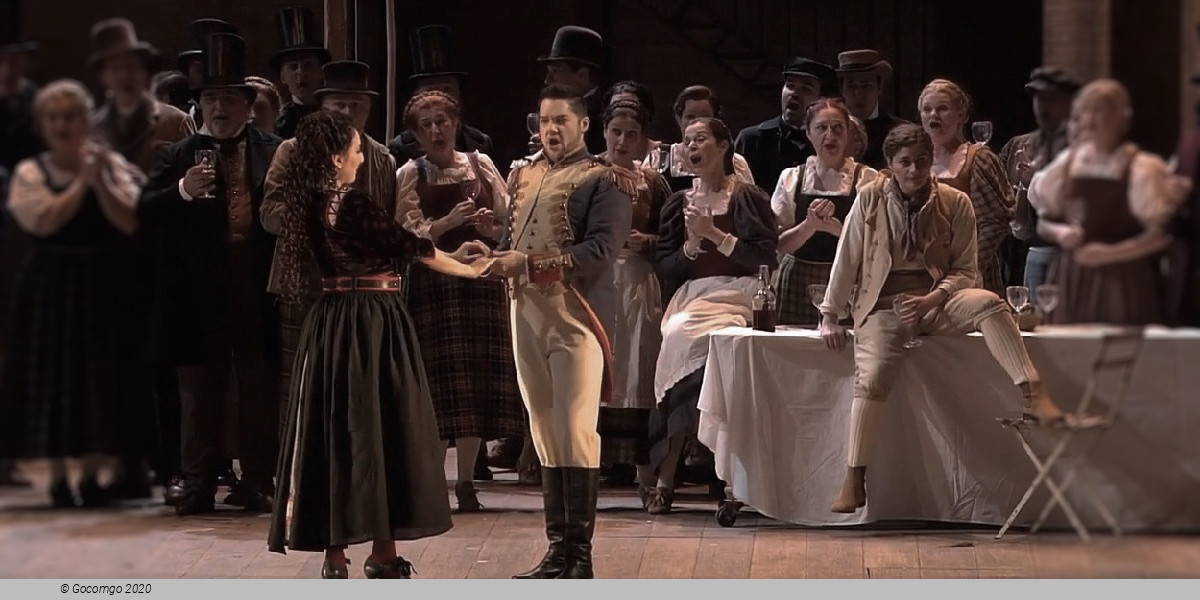
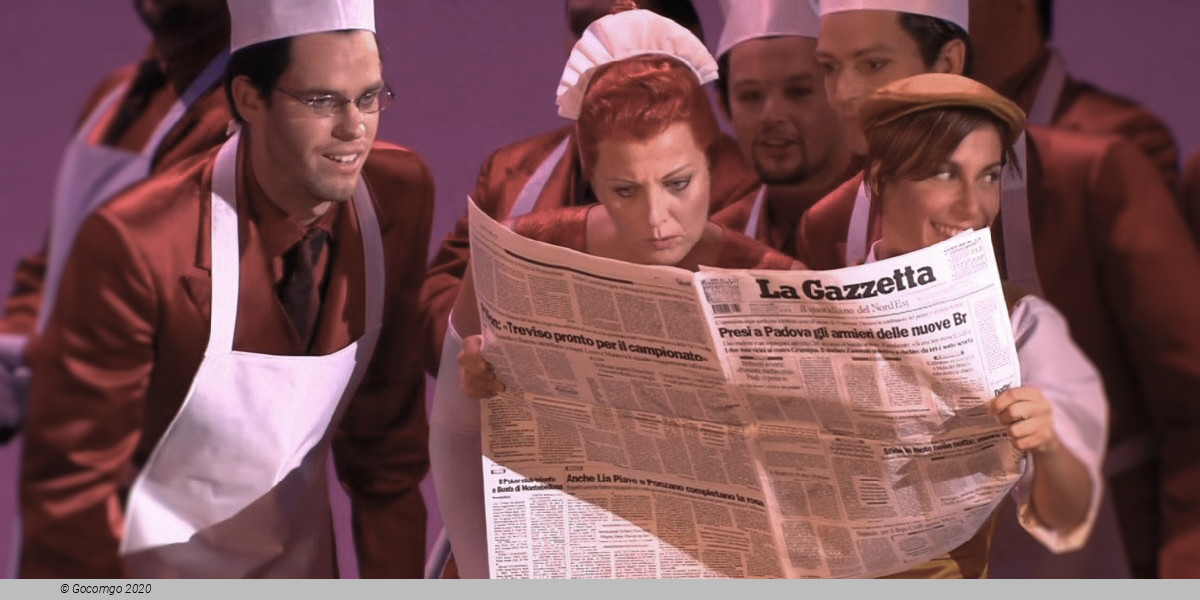
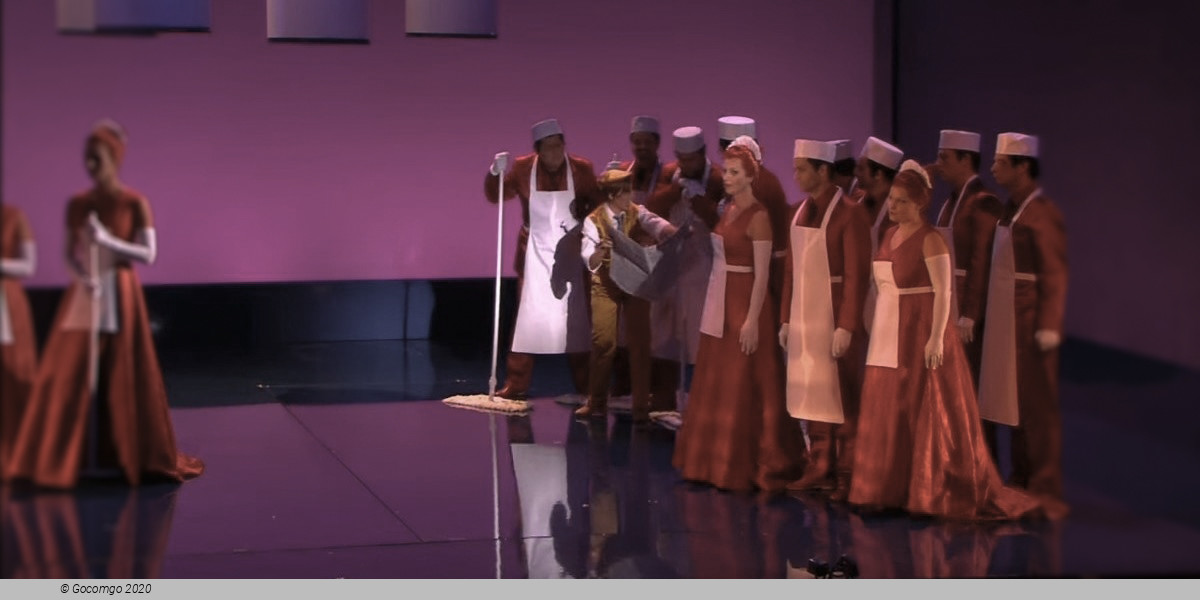
The execution is halted: a magpie was guilty. Two Parisienne playwrites d’Aubigny and Caigniez turned the true story of an innocent servant girl, wrongly sentenced to death, into a melodrama in 1815. When, two years later, Rossini, was searching for something suitable for an opera, he decided on The Thieving Magpie - but with a happy ending. His heroine and victim of injustice is Ninetta. A rejected suitor accuses her of stealing some silver, to help her father, a deserter. The true thief, a magpie, is only discovered at the last minute. The story revolves around this coincidence, causing disastrous problems in the farming community. Rossini's music manages to find a balance between pathos and a firework display of coloratura. The gloomy mood of the original story is retained but combined with amusing scenes and a happy ending. The 25 year old's score was far ahead of its time. His music allows the figures in the bizarre story to switch between tragedy and comedy. Only the bird stays silent, because his chattering was never set to music.

History
Premiere of this production: 31 May 1817, La Scala, Milan

La gazza ladra (The Thieving Magpie) is a melodramma or opera semiseria in two acts by Gioachino Rossini, with a libretto by Giovanni Gherardini based on La pie voleuse by Théodore Baudouin d'Aubigny and Louis-Charles Caigniez. The Thieving Magpie is best known for the overture, which is musically notable for its use of snare drums. This memorable section in Rossini's overture evokes the image of the opera's main subject: a devilishly clever, thieving magpie.

Synopsis

Act 1
At the house of Fabrizio Vingradito and his wife Lucia there is joy for the imminent return of their son Giannetto from the war. One of the servants, Ninetta, is in love with Giannetto and all want the two to marry, except Lucia, who blames Ninetta for the recent loss of a silver fork. Isacco, a local peddler, visits and asks about Ninetta, but Pippo, Fabrizio's manservant, sends him away. Giannetto arrives and goes inside with Lucia while Ninetta prepares for the party. Once they have gone, Ninetta's father, Fernando Villabella, arrives, also from the war. However, he was sentenced to death after fighting with his captain and is now a deserter. He asks his daughter to sell two pieces of family silver to go towards his expenses while he is on the run. The Mayor arrives with intent on seducing Ninetta, and she claims that her father is just some vagrant. The Mayor's assistant delivers the arrest warrant for a deserter (Fernando), but as the Mayor has forgotten his reading glasses, Ninetta is asked to read the warrant, and makes up a description of someone totally unlike her father. The Mayor continues to force his attentions on Ninetta, at which Fernando almost reveals himself in anger. The three leave, and a magpie flies down and steals one of Lucia's silver spoons.

Isacco passes by again, and Ninetta sells him the silver her father had entrusted to her. Giannetto and others return, and Lucia notices that a spoon is missing. The Mayor starts an immediate investigation, stating the draconian penalty for domestic theft: death. Lucia and the Mayor accuse Ninetta, who in her distress drops the money she had exchanged from Isacco. The peddler is brought back and reports that he has already sold the spoon, but he recalls the inscription "F.V.", initials shared by Fabrizio and Fernando. The stunned Ninetta, desperate to protect her father, is unable to refute the accusations, and the Mayor orders her arrest.

Act 2
Antonio, the prison warder, takes pity on Ninetta and says that he will get a message to Pippo and let Giannetto visit her. Ninetta convinces Giannetto that she is innocent. The Mayor now arrives and tells Ninetta that if she accepts his advances he will get her freed – she replies that she would rather die. The Mayor is called away, but Antonio has heard all and offers to help Ninetta any way he can. Ninetta asks Pippo to sell a gold cross and put some money for her father in an agreed hiding place – a chestnut tree. Ninetta is brought to trial, found guilty, and condemned to death. Fernando rushes to the court to save his daughter's life, but is too late; he too is sent to prison.

Ernesto, a military friend of Fernando, bursts in looking for the Mayor and holding a royal pardon for Ninetta's father. Pippo shows him the way and is given a silver coin for helping, but the magpie snatches it and flies up to the tower. Pippo and Antonio pursue the thief.

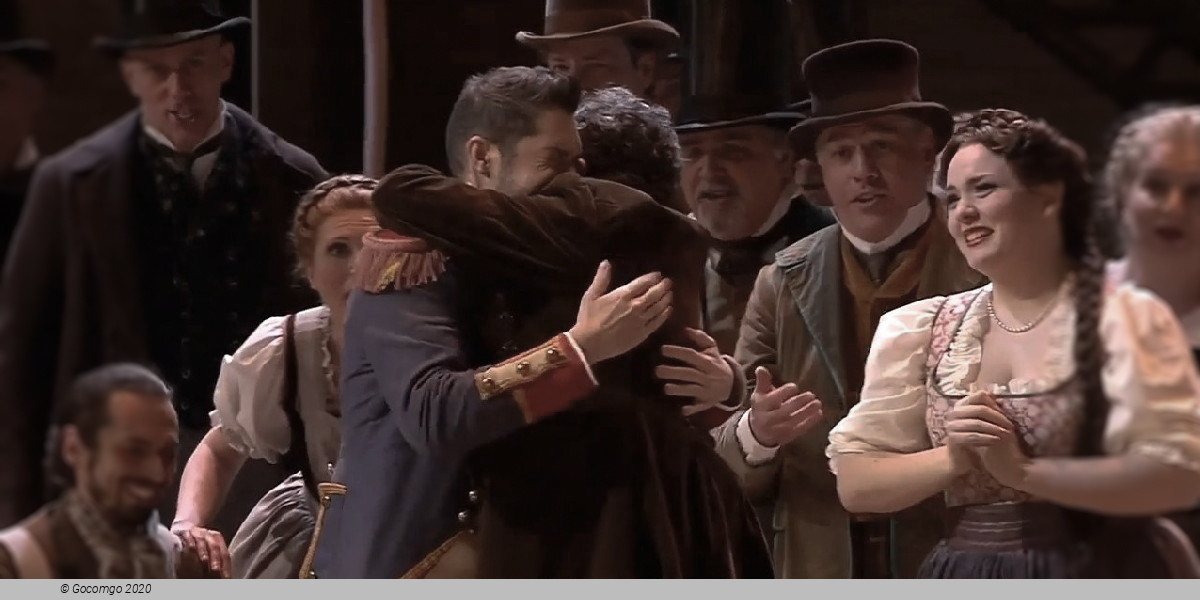
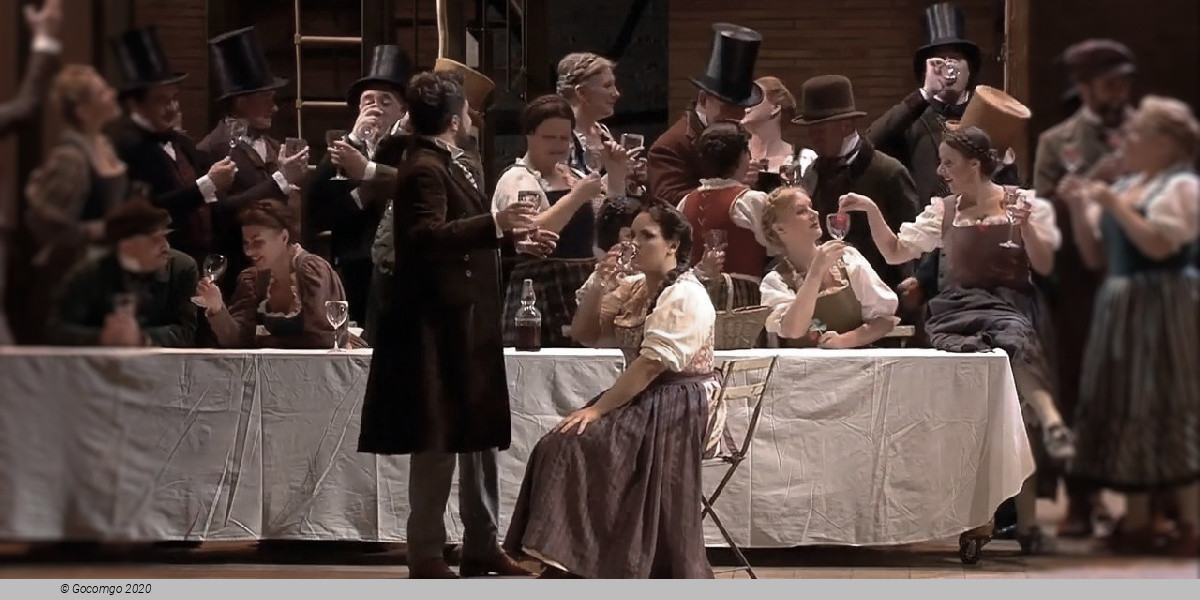
Ninetta is taken to the scaffold and makes her final speech to the crowd. From the tower, Pippo and Antonio cry out that they have found Lucia's silver in the magpie's nest and they ring the bells. The crowd hear their words and hope to save Ninetta, but shots ring out and they conclude that they are too late. However, Ninetta appears walking down the hill – the shots were mere rejoicing. Ninetta celebrates with her companions but is worried about her father. He then appears with Ernesto and all – except the Mayor – enjoy a happy ending.

Venue Info

Oper Frankfurt - Frankfurt am Main
Location   Untermainanlage 11

The Oper Frankfurt (Frankfurt Opera) is one of the leading opera companies in Europe, and voted best "Opera house of the year" several times since 1996.

Opera in Frankfurt am Main has a long tradition, with many world premieres such as Franz Schreker's Der ferne Klang in 1912, Fennimore und Gerda by Frederick Delius in 1919, and Carl Orff's Carmina Burana in 1937. Frankfurt's international recognition began in the Gielen Era, 1977 to 1987, when Michael Gielen and stage directors such as Ruth Berghaus collaborated.

A historic opera house from 1880 was destroyed in World War II, and reconstructed as a concert hall, Alte Oper. The present opera house, built in 1963, is under one roof with the stage for drama. The opera orchestra is called Frankfurter Opern- und Museumsorchester. Today's venue for Baroque and contemporary opera is the Bockenheimer Depot, a former tram depot.

Oper Frankfurt is part of the Städtische Bühnen Frankfurt.

Frankfurt's first opera was Johann Theile's Adam und Eva, performed in 1698 by Johann Velten's touring company. The young Goethe's first operas in his home town of Frankfurt were productions by Theobald Marchand's company.

1782 – 1880
Opened in 1782, the Comoedienhaus was the first permanent venue of the Frankfurt Theater (drama and opera). In 1878 German violinist Willy Hess took up the leadership of the Oper Frankfurt. He resigned from that post in 1886 to take up a professorship in the Rotterdam Conservatorium voor Muziek.

1880 – 1944
The first representative opera house of the city was inaugurated in Frankfurt in 1880 at Opernplatz. Under the direction of the first Intendant Emil Claar and the first Kapellmeister Felix Otto Dessoff, the house was opened with Mozart's opera Don Giovanni.

During the 1920s, the opera in Frankfurt had more prominent Jewish singers than any other company in Germany, including the tenor Hermann Schramm, bass Hans Erl (the first King in Schreker's Der Schatzgräber), baritone Richard Breitenfeld and contralto Magda Spiegel, who also toured with Frankfurt Opera performing Wagner in the Netherlands. These singers were forced to leave the opera in June 1933. Orff's Carmina Burana was premiered at Oper Frankfurt in 1937. Jewish members of the opera company among those rounded up at 9 November 1938 at the Festhalle Frankfurt, where Erl sang In diesen Heilgen Hallen, from the Magic Flute for the deportees. Members of Frankfurt Opera were sent to Auschwitz and other camps where they perished.

1945 – 1970s
The opera house was damaged in an air raid in January 1944, and then almost completely destroyed in March. A new house for opera and play was built, completed in 1963 at the Theaterplatz (now Willy-Brandt-Platz). In 1952, Georg Solti became Generalmusikdirektor (GMD) and Intendant of the Oper Frankfurt, where he remained in charge for nine years.

The Gielen Era
From 1977 to 1987, Frankfurt Opera was led by Michael Gielen. This decade became known as the "Gielen Era", notable for the music of a conductor who was also a composer, and directors including Ruth Berghaus and Hans Neuenfels, whose productions of standard works such as Verdi's Aida and Wagner's Ring Cycle were thought-provoking. Operas which received their world premieres at the house were also performed again, including Franz Schreker's Die Gezeichneten.

1987 – present
The stage of the opera house was destroyed by a fire in November 1987. The opera house was rebuilt and opened in April 1991. Many famous singers started their career with the company, including Franz Völker, Edda Moser, Cheryl Studer and Diana Damrau, and many established artists have been engaged there in recent seasons including Christian Gerhaher, whose roles here have included Monteverdi's L'Orfeo and his first Wolfram in Wagner's Tannhäuser, Piotr Beczała in Massenet's Werther and Jan-Hendrik Rootering in Wagner's Parsifal.

Since 2002, Bernd Loebe has served as Intendant of the company. The company's current GMD is Sebastian Weigle, since 2008. Weigle has made commercial recordings of opera with the company for the OEHMS Classics label. He is scheduled to stand down as GMD of Oper Frankfurt at the close of the 2022–2023 season. In October 2021, the company announced the appointment of Thomas Guggeis as the next GMD of the company, effective with the 2023–2024 season, with an initial contract of 5 years.

Oper Frankfurt was voted 1996, 2003, 2015, 2018 and 2020 "Opera House of the Year" by the magazine Opernwelt.

Important Info
Type: Opera
City: Frankfurt am Main, Germany
Starts at: 19:00
Acts: 2
Intervals: 1
Duration: 3h 15min
Sung in: Italian
Titles in: German,English
Top of page