








Oper Frankfurt 1 July 2020 - The Prince of Homburg | GoComGo.com

The Prince of Homburg

Oper Frankfurt, Opera House, Frankfurt am Main, Germany
All photos (2)
Select date and time
7:30 PM
Request for Tickets
Important Info
Type: Opera
City: Frankfurt am Main, Germany
Starts at: 19:30
Duration: 2h
Sung in: German
Titles in: English,German

E-tickets: Print at home or at the box office of the event if so specified. You will find more information in your booking confirmation email.

You can only select the category, and not the exact seats.
If you order 2 or 3 tickets: your seats will be next to each other.
If you order 4 or more tickets: your seats will be next to each other, or, if this is not possible, we will provide a combination of groups of seats (at least in pairs, for example 2+2 or 2+3).

Overview

Introductory talks, in German, in the Holzfoyer half an hour before performances begin.

History
Premiere of this production: 22 May 1960, Hamburg State Opera

The Prince of Homburg (German: Der Prinz von Homburg, Prinz Friedrich von Homburg, or in full Prinz Friedrich von Homburg oder die Schlacht bei Fehrbellin) is a play by Heinrich von Kleist written in 1809–10, but not performed until 1821, after the author's death.

Synopsis

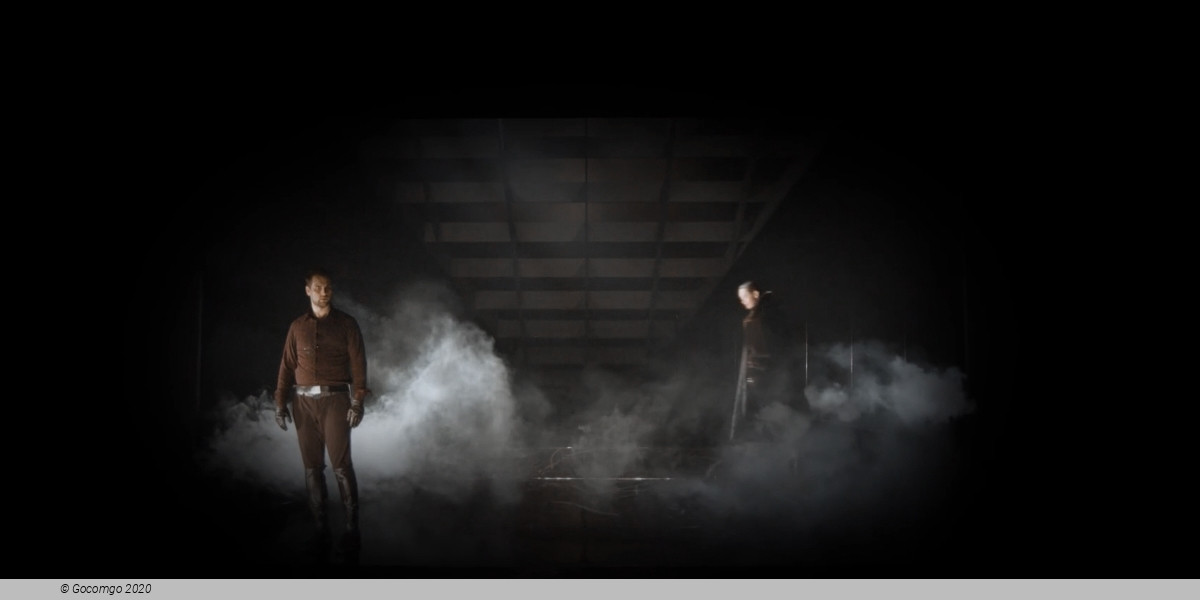
A guide for courage and human kindness and against obeying laws without thinking. Fehrbellin, 1675: Prince Friedrich von Homburg has a dream in which he is the victor in an imminent battle and is laughed at by everybody. Before the real battle begins the order goes out that nobody should start fighting until the electoral prince Kurfürsten gives the order. Homburg, without permission, launches an attack. He is arrested for insubordination and sentenced to death. The electoral prince's niece Natalie, who is in love with the prince, begs her uncle for mercy. He finally agrees to pardon Homburg, if the condemned man finds the judge's sentence unjust … Hans Werner Henze and Ingeborg Bachmann, who met in 1952 at a Gruppe 47 meeting and worked together for many years, developed their own take on Kleist's play (first performed in 1821), shifting the focus from the military to the humane. The music – written for a large chamber orchestra – places two spheres opposite each other: the singable and traditional bound up with a world of dreams, which dances curiously out of focus, and through constructed, twelve tone and serial music.

Action takes place at Fehrbellin and in Berlin, 1675. The Prince of Homburg, a young officer of the Great Elector (Frederick William I, Elector of Brandenburg), is exhausted after a long campaign. Walking in his sleep, he puts on a laurel wreath. Several noblemen notice this, and the Great Elector plays a trick on the Prince, which leads him to declare his love for the Elector's niece, Natalie. He is able to take one of her gloves. After waking from his dream the Prince is puzzled by the glove in his hand. When at the next council of war the plans for the next battle are being discussed, and duties are being handed out, the Prince is thrown into confusion by the appearance of Princess Natalie, who reveals herself as the owner of the glove, and he is distracted to the extent that he fails to take on board his orders, which are not to engage the enemy without a direct order to do so. Contrary to his instructions he attacks the enemy at the Battle of Fehrbellin – and wins.

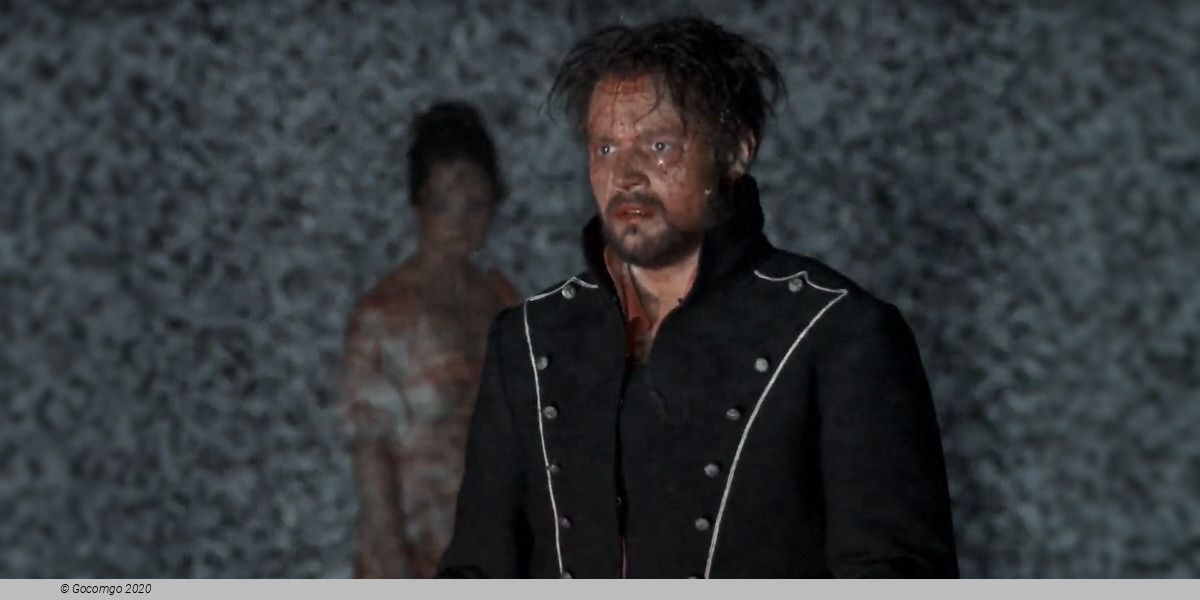
The Elector however is concerned above all with discipline. Regardless of the victory, he has the Prince arrested for disobeying an order and tried at a court martial, where the Prince is condemned to death. He fails initially to grasp the seriousness of the situation, and starts to be truly concerned only when he hears that the Elector has signed his death warrant. The reality of his situation only hits home when he is shown the grave that has been dug for him. In the famous and controversial "fear of death scene" (Todesfurchtszene) the Prince begs for his life, prepared to give up all that is dear to him in return. When the Elector hears of the Prince's reaction, he too is confused, possibly astonished, but claims to have the greatest respect for the Prince's feeling. Instead of simply pardoning him, however, he sets a condition: if the Prince can genuinely call his condemnation unjust, he will be pardoned. The question raises the Prince to a state of enlightenment: he conquers his fear of death and is prepared to "glorify" the sentence by a suicide. It remains debatable whether he really considers his sentence justified. Nor does it ever come to light to what extent the Elector may have planned all this to teach him a lesson.

Meanwhile, Natalie, without a legitimate order, has recalled Kottwitz's regiment to obtain support for Homburg's pardon. In the face of the general pressure now put on him, the Elector now listens to his officers. Kottwitz is of the opinion that what counts on the field of battle is victory, and that there is nothing with which to reproach the Prince. Hohenzollern goes further and attributes the guilt to the Elector, as he caused the Prince's confusion and consequent insubordination by the trick he played on him, and therefore bears the responsibility himself. Finally the Elector asks the officers if they are happy to continue to trust themselves to the Prince's leadership – to which all say yes.

The Prince learns nothing of his pardon, but is led blindfolded into the open air, in the belief that he is about to be executed. But there is no bullet: instead, the niece of the Elector crowns him with a laurel wreath. To his question whether this is a dream, Kottwitz replies, "A dream, what else" ("Ein Traum, was sonst"). The Prince faints.

Venue Info

Oper Frankfurt - Frankfurt am Main
Location   Untermainanlage 11

The Oper Frankfurt (Frankfurt Opera) is one of the leading opera companies in Europe, and voted best "Opera house of the year" several times since 1996.

Opera in Frankfurt am Main has a long tradition, with many world premieres such as Franz Schreker's Der ferne Klang in 1912, Fennimore und Gerda by Frederick Delius in 1919, and Carl Orff's Carmina Burana in 1937. Frankfurt's international recognition began in the Gielen Era, 1977 to 1987, when Michael Gielen and stage directors such as Ruth Berghaus collaborated.

A historic opera house from 1880 was destroyed in World War II, and reconstructed as a concert hall, Alte Oper. The present opera house, built in 1963, is under one roof with the stage for drama. The opera orchestra is called Frankfurter Opern- und Museumsorchester. Today's venue for Baroque and contemporary opera is the Bockenheimer Depot, a former tram depot.

Oper Frankfurt is part of the Städtische Bühnen Frankfurt.

Frankfurt's first opera was Johann Theile's Adam und Eva, performed in 1698 by Johann Velten's touring company. The young Goethe's first operas in his home town of Frankfurt were productions by Theobald Marchand's company.

1782 – 1880
Opened in 1782, the Comoedienhaus was the first permanent venue of the Frankfurt Theater (drama and opera). In 1878 German violinist Willy Hess took up the leadership of the Oper Frankfurt. He resigned from that post in 1886 to take up a professorship in the Rotterdam Conservatorium voor Muziek.

1880 – 1944
The first representative opera house of the city was inaugurated in Frankfurt in 1880 at Opernplatz. Under the direction of the first Intendant Emil Claar and the first Kapellmeister Felix Otto Dessoff, the house was opened with Mozart's opera Don Giovanni.

During the 1920s, the opera in Frankfurt had more prominent Jewish singers than any other company in Germany, including the tenor Hermann Schramm, bass Hans Erl (the first King in Schreker's Der Schatzgräber), baritone Richard Breitenfeld and contralto Magda Spiegel, who also toured with Frankfurt Opera performing Wagner in the Netherlands. These singers were forced to leave the opera in June 1933. Orff's Carmina Burana was premiered at Oper Frankfurt in 1937. Jewish members of the opera company among those rounded up at 9 November 1938 at the Festhalle Frankfurt, where Erl sang In diesen Heilgen Hallen, from the Magic Flute for the deportees. Members of Frankfurt Opera were sent to Auschwitz and other camps where they perished.

1945 – 1970s
The opera house was damaged in an air raid in January 1944, and then almost completely destroyed in March. A new house for opera and play was built, completed in 1963 at the Theaterplatz (now Willy-Brandt-Platz). In 1952, Georg Solti became Generalmusikdirektor (GMD) and Intendant of the Oper Frankfurt, where he remained in charge for nine years.

The Gielen Era
From 1977 to 1987, Frankfurt Opera was led by Michael Gielen. This decade became known as the "Gielen Era", notable for the music of a conductor who was also a composer, and directors including Ruth Berghaus and Hans Neuenfels, whose productions of standard works such as Verdi's Aida and Wagner's Ring Cycle were thought-provoking. Operas which received their world premieres at the house were also performed again, including Franz Schreker's Die Gezeichneten.

1987 – present
The stage of the opera house was destroyed by a fire in November 1987. The opera house was rebuilt and opened in April 1991. Many famous singers started their career with the company, including Franz Völker, Edda Moser, Cheryl Studer and Diana Damrau, and many established artists have been engaged there in recent seasons including Christian Gerhaher, whose roles here have included Monteverdi's L'Orfeo and his first Wolfram in Wagner's Tannhäuser, Piotr Beczała in Massenet's Werther and Jan-Hendrik Rootering in Wagner's Parsifal.

Since 2002, Bernd Loebe has served as Intendant of the company. The company's current GMD is Sebastian Weigle, since 2008. Weigle has made commercial recordings of opera with the company for the OEHMS Classics label. He is scheduled to stand down as GMD of Oper Frankfurt at the close of the 2022–2023 season. In October 2021, the company announced the appointment of Thomas Guggeis as the next GMD of the company, effective with the 2023–2024 season, with an initial contract of 5 years.

Oper Frankfurt was voted 1996, 2003, 2015, 2018 and 2020 "Opera House of the Year" by the magazine Opernwelt.

Important Info
Type: Opera
City: Frankfurt am Main, Germany
Starts at: 19:30
Duration: 2h
Sung in: German
Titles in: English,German
Top of page