Nuremberg, towards the middle of the sixteenth century.
Act 1
Prelude (Vorspiel), one of Wagner’s most familiar pieces of music.
Scene 1: Interior of Katharinenkirche (St. Catherine's Church) in Nuremberg, St John's Eve or Midsummer's Eve, June 23
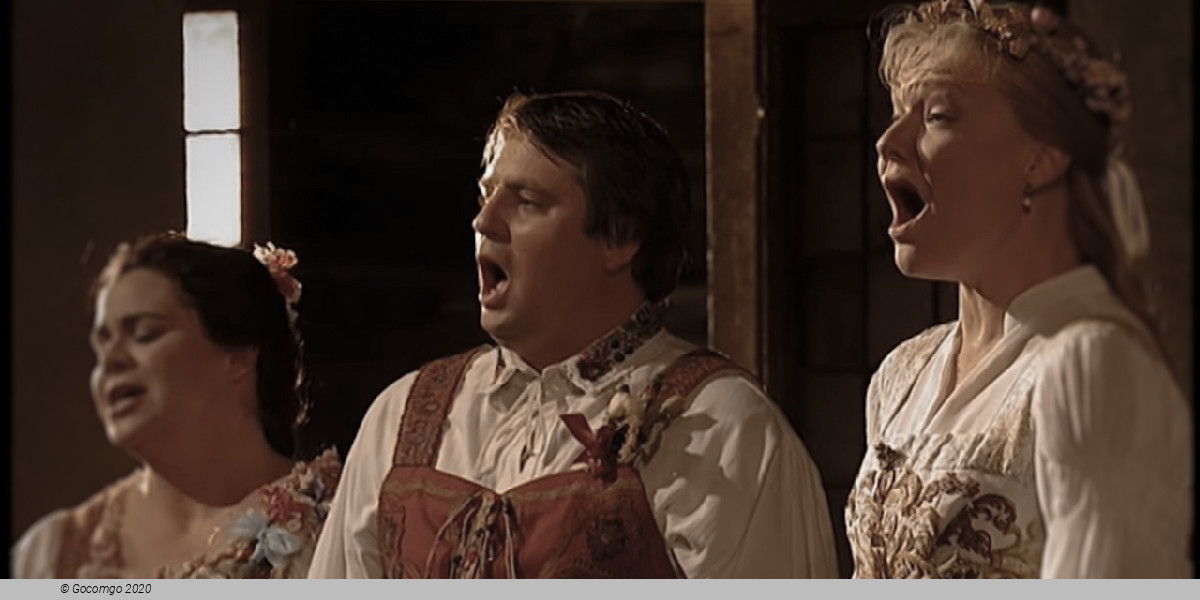
After the prelude, a church service is just ending with a singing of Da zu dir der Heiland kam (When the Saviour came to thee), an impressive pastiche of a Lutheran chorale, as Walther von Stolzing, a young knight from Franconia, addresses Eva Pogner, whom he had met earlier, and asks her if she is engaged to anyone. Eva and Walther have fallen in love at first sight, but she informs him that her father, the goldsmith and mastersinger Veit Pogner, has arranged to give her hand in marriage to the winner of the guild's song contest on St. John's Day (Midsummer's Day), tomorrow. Eva's maid, Magdalena, gets David, Hans Sachs's apprentice, to tell Walther about the mastersingers' art. The hope is for Walther to qualify as a mastersinger during the guild meeting, traditionally held in the church after Mass, and thus earn a place in the song contest despite his utter ignorance of the master-guild's rules and conventions.
Scene 2
As the other apprentices set up the church for the meeting, David warns Walther that it is not easy to become a mastersinger; it takes many years of learning and practice. David gives a confusing lecture on the mastersingers' rules for composing and singing. (Many of the tunes he describes were real master-tunes from the period.) Walther is confused by the complicated rules, but is determined to try for a place in the guild anyway.
Scene 3
The first mastersingers file into the church, including Eva's wealthy father Veit Pogner and the town clerk Beckmesser. Beckmesser, a clever technical singer who was expecting to win the contest without opposition, is distressed to see that Walther is Pogner's guest and intends to enter the contest. Meanwhile, Pogner introduces Walther to the other mastersingers as they arrive. Fritz Kothner the baker, serving as chairman of this meeting, calls the roll. Pogner, addressing the assembly, announces his offer of his daughter's hand for the winner of the song contest. When Hans Sachs argues that Eva ought to have a say in the matter, Pogner agrees that Eva may refuse the winner of the contest, but she must still marry a mastersinger. Another suggestion by Sachs, that the townspeople, rather than the masters, should be called upon to judge the winner of the contest, is rejected by the other masters. Pogner formally introduces Walther as a candidate for admission into the masterguild. Questioned by Kothner about his background, Walther states that his teacher in poetry was Walther von der Vogelweide whose works he studied in his own private library in Franconia, and his teachers in music were the birds and nature itself. Reluctantly the masters agree to admit him, provided he can perform a master-song of his own composition. Walther chooses love as the topic for his song and therefore is to be judged by Beckmesser alone, the "Marker" of the guild for worldly matters. At the signal to begin (Fanget an!), Walther launches into a novel free-form tune (So rief der Lenz in den Wald), breaking all the mastersingers' rules, and his song is constantly interrupted by the scratch of Beckmesser's chalk on his chalkboard, maliciously noting one violation after another. When Beckmesser has completely covered the slate with symbols of Walther's errors, he interrupts the song and argues that there is no point in finishing it. Sachs tries to convince the masters to let Walther continue, but Beckmesser sarcastically tells Sachs to stop trying to set policy and instead, to finish making his (Beckmesser's) new shoes, which are overdue. Raising his voice over the masters' argument, Walther finishes his song, but the masters reject him and he rushes out of the church.
Act 2
Scene 1: Evening in a Nuremberg street, at the corner between Pogner's house and Hans Sachs's house, opposite. A lime tree stands outside Pogner's house, an elder outside Sachs's. The apprentices are closing the shutters
David informs Magdalena of Walther's failure. In her disappointment, Magdalena leaves without giving David the food she had brought for him. This arouses the derision of the other apprentices, and David is about to turn on them when Sachs arrives and hustles his apprentice into the workshop.
Scene 2
Pogner arrives with Eva, engaging in a roundabout conversation: Eva is hesitant to ask about the outcome of Walther's application, and Pogner has private doubts about whether it was wise to offer his daughter's hand in marriage for the song contest. As they enter their house, Magdalena appears and tells Eva about the rumours of Walther's failure. Eva decides to ask Sachs about the matter.
Scene 3
As twilight falls, Hans Sachs takes a seat in front of his house, to work on a new pair of shoes for Beckmesser. He muses on Walther's song, which has made a deep impression on him. ("Was duftet doch der Flieder", often called "the Fliedermonolog")
Scene 4
Eva approaches Sachs, and they discuss tomorrow's song contest. Eva is unenthusiastic about Beckmesser, who appears to be the only eligible contestant. She hints that she would not mind if Sachs, a widower, were to win the contest. Though touched, Sachs protests that he would be too old a husband for her. Upon further prompting, Sachs describes Walther's failure at the guild meeting. This causes Eva to storm off angrily, confirming Sachs's suspicion that she has fallen in love with Walther. Eva is intercepted by Magdalena, who informs her that Beckmesser is coming to serenade her. Eva, determined to search for Walther, tells Magdalena to pose as her (Eva) at the bedroom window.
Scene 5
Just as Eva is about to leave, Walther appears. He tells her that he has been rejected by the mastersingers, and the two prepare to elope. However, Sachs has overheard their plans. As they are passing by, he illuminates the street with his lantern, forcing them to hide in the shadow of Pogner's house. Walther makes up his mind to confront Sachs, but is interrupted by the arrival of Beckmesser.
Scene 6
As Eva and Walther retreat further into the shadows, Beckmesser begins his serenade. Sachs interrupts him by launching into a full-bellied cobbling song, and hammering the soles of the half-made shoes. Annoyed, Beckmesser tells Sachs to stop, but the cobbler replies that he has to finish tempering the soles of the shoes, whose lateness Beckmesser had publicly complained about in Act 1. Sachs offers a compromise: he will be quiet and let Beckmesser sing, but he (Sachs) will be Beckmesser's "marker", and mark each of Beckmesser's musical/poetical errors by striking one of the soles with his hammer. Beckmesser, who has spotted someone at Eva's window (Magdalena in disguise), has no time to argue. He tries to sing his serenade, but he makes so many mistakes (his tune repeatedly places accents on the wrong syllables of the words) that from the repeated knocks Sachs finishes the shoes. David wakes up and sees Beckmesser apparently serenading Magdalena. He attacks Beckmesser in a fit of jealous rage. The entire neighborhood is awakened by the noise. The other apprentices rush into the fray, and the situation degenerates into a full-blown riot. In the confusion, Walther tries to escape with Eva, but Sachs pushes Eva into her home and drags Walther into his own workshop. Quiet is restored as abruptly as it was broken. A lone figure walks through the street – the nightwatchman, calling out the hour.
Act 3, Scenes 1–4
Prelude (Vorspiel), a meditative orchestral introduction using music from two key episodes to be heard in Act 3: Sachs's Scene 1 monologue "Wahn! Wahn!" and the "Wittenburg Nightingale" quasi-chorale sung by the townspeople to greet Sachs in Scene 5.
Scene 1: Sachs's workshop
As morning dawns, Sachs is reading a large book. Lost in thought, he does not respond as David returns from delivering Beckmesser's shoes. David finally manages to attract his master's attention, and they discuss the upcoming festivities – it is St. John's day, Hans Sachs's name day. David recites his verses for Sachs, and leaves to prepare for the festival. Alone, Sachs ponders last night's riot. "Madness! Madness! Everywhere madness!" (Wahn! Wahn! Überall Wahn!) His attempt to prevent an elopement had ended in shocking violence. Nevertheless, he is resolved to make madness work for him today.
Scene 2
Sachs gives Walther an interactive lesson on the history and philosophy of music and mastersinging, and teaches him to moderate his singing according to the spirit (if not the strict letter) of the masters' rules. Walther demonstrates his understanding by composing two sections of a new Prize Song in a more acceptable style than his previous effort from act 1. Sachs writes down the new verses as Walther sings them. A final section remains to be composed, but Walther postpones the task. The two men leave the room to dress for the festival.
Scene 3
Beckmesser, still sore from his drubbing the night before, enters the workshop. He spots the verses of the Prize Song, written in Sachs's handwriting, and infers that Sachs is secretly planning to enter the contest for Eva's hand. The cobbler re-enters the room and Beckmesser confronts him with the verses and asks if he wrote them. Sachs confirms that the handwriting is his, but does not clarify that he was not the author but merely served as scribe. However, he goes on to say that he has no intention of wooing Eva or entering the contest, and he presents the manuscript to Beckmesser as a gift. He promises never to claim the song for his own, and warns Beckmesser that it is a very difficult song to interpret and sing. Beckmesser, his confidence restored by the prospect of using verses written by the famous Hans Sachs, ignores the warning and rushes off to prepare for the song contest. Sachs smiles at Beckmesser's foolishness but expresses hope that Beckmesser will learn to be better in the future.
Scene 4
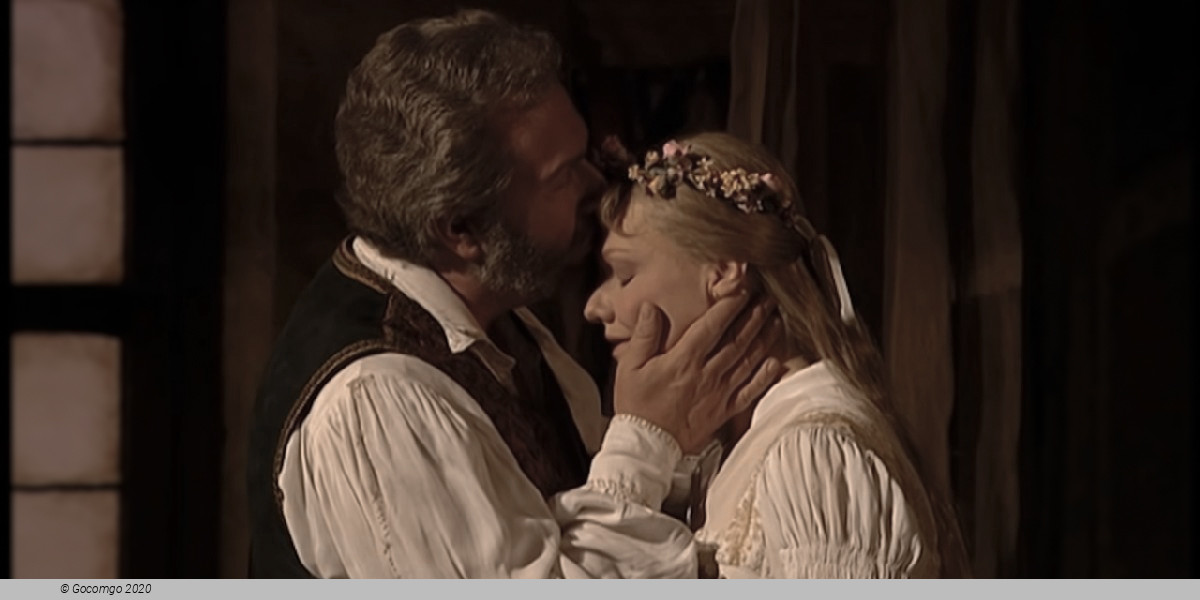
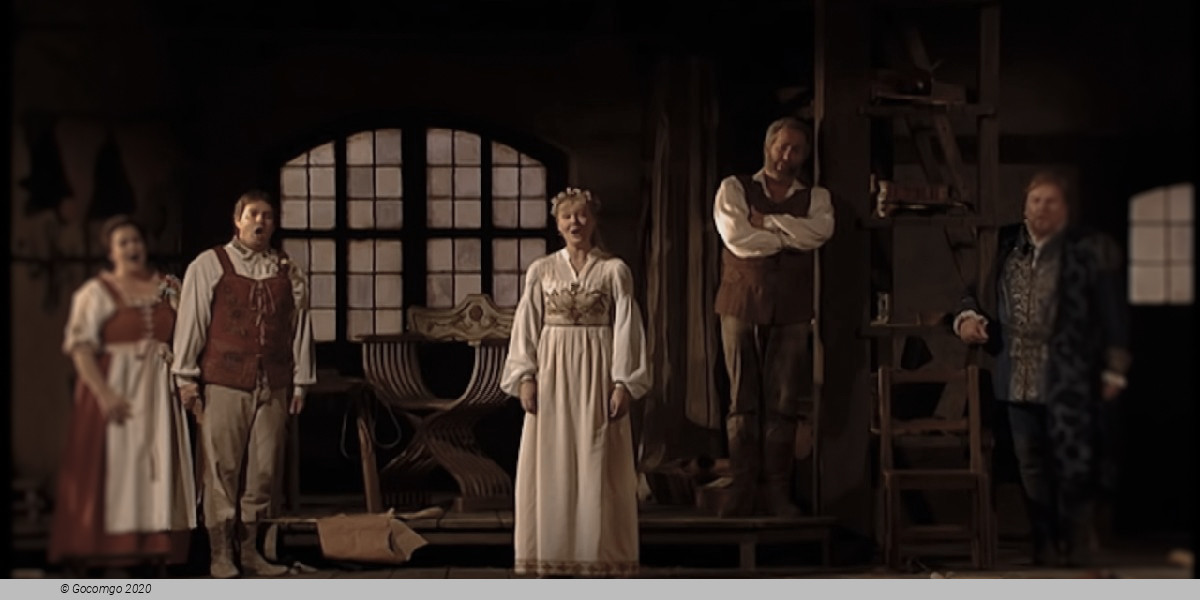
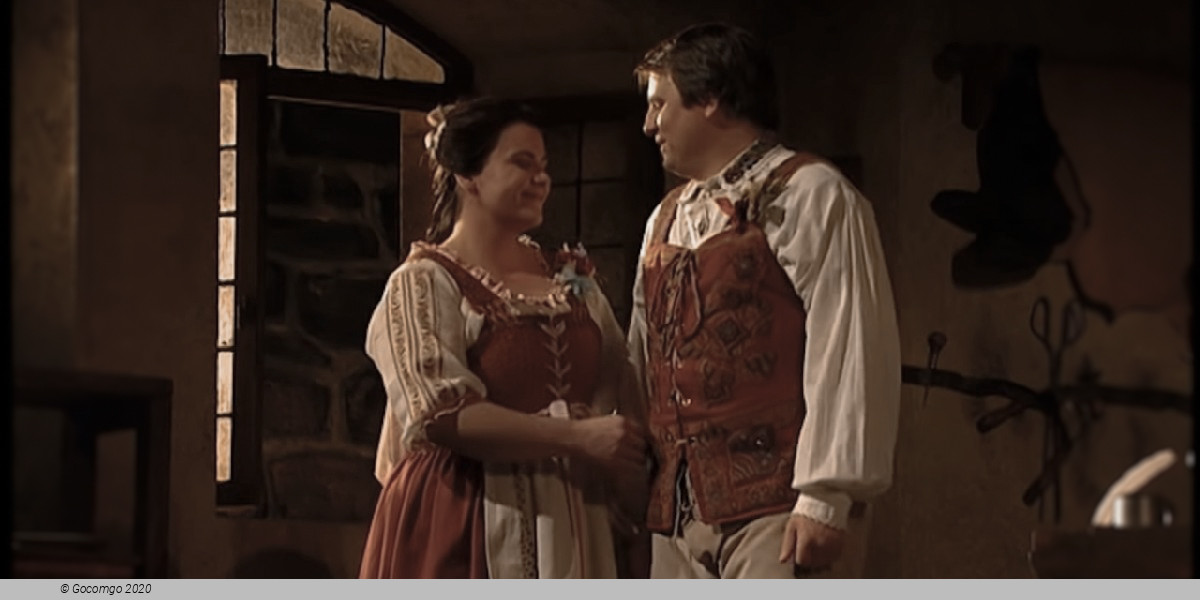
Eva arrives at the workshop. She is looking for Walther, but pretends to have complaints about a shoe that Sachs made for her. Sachs realizes that the shoe is a perfect fit, but pretends to set about altering the stitching. As he works, he tells Eva that he has just heard a beautiful song, lacking only an ending. Eva cries out as Walther enters the room, splendidly attired for the festival, and sings the third and final section of the Prize Song. The couple are overwhelmed with gratitude for Sachs, and Eva asks Sachs to forgive her for having manipulated his feelings. The cobbler brushes them off with bantering complaints about his lot as a shoemaker, poet, and widower. At last, however, he admits to Eva that, despite his feelings for her, he is resolved to avoid the fate of King Marke (a reference to the subject of another Wagner opera, Tristan und Isolde, in which an old man tries to marry a much-younger woman), thus conferring his blessing upon the lovers. David and Magdalena appear. Sachs announces to the group that a new master-song has been born, which, following the rules of the mastersingers, is to be baptized. As an apprentice cannot serve as a witness for the baptism, he promotes David to the rank of journeyman with the traditional cuff on the ear (and by this also "promoting" him as a groom and Magdalena as a bride). He then christens the Prize Song the Morning Dream Song (Selige Morgentraumdeut-Weise). After celebrating their good fortune with an extended quintet (Selig, wie die Sonne meines Glückes lacht) — musically capping the first four scenes of Act III — the group departs for the festival.
Act 3, Scene 5
Almost an act in itself, this scene occupies about 45 minutes of the two hours of Act III and is separated from the preceding four scenes by a Verwandlungsmusik, a transforming Interlude. Meadow on the Pegnitz River. It is the Feast of St. John.
Various guilds enter boasting of their contributions to Nürnberg’s success as a city. Wagner depicts three: the Cobblers, whose chorus, Sankt Krispin, lobet ihn!, uses the signature cry streck! streck! streck!; the Tailors, who sing the chorus Als Nürnberg belagert war with the goat cry meck! meck! meck!; and the Bakers, who cut the tailors off with Hungersnot! Hungersnot!, or Famine, famine!, and its beck! beck! beck!, or bake, bake, bake!
This sequence leads into the well-known Tanz der Lehrbuben, or Dance of the Apprentices. The mastersingers themselves then arrive grandly in a section usually referred to as the “Procession of the Masters.” The crowd sings the praises of Hans Sachs, the most beloved and famous of the mastersingers. Here Wagner provides a rousing chorus, Wach’ auf, es nahet gen den Tag, using words written by the historical Sachs himself and musically relates it to the “Wittenberg Nightingale.”
The prize contest begins. Beckmesser attempts to sing the verses that he had obtained from Sachs. However, he garbles the words (Morgen ich leuchte) and fails to fit them to an appropriate melody, and ends up singing so clumsily that the crowd laughs him off. Before storming off in anger, he yells that the song was not even his: Hans Sachs tricked him into singing it. The crowd is confused. How could the great Hans Sachs have written such a bad song? Sachs tells them that the song is not his own, and also that it is in fact a beautiful song which the masters will love when they hear it sung correctly. To prove this, he calls a witness: Walther. The people are so curious about the song (correctly worded as Morgenlich leuchtend im rosigen Schein) that they allow Walther to sing it, and everyone is won over in spite of its novelty.
They declare Walther the winner, and the mastersingers want to make him a member of their guild on the spot. At first Walther is tempted to reject their offer, but Sachs intervenes once more and explains that art, even ground-breaking, contrary art like Walther’s, can only exist within a cultural tradition, which tradition the art sustains and improves. Walther is convinced; he agrees to join. Pogner places the symbolic master-hood medal around his neck, Eva takes his hand, and the people sing once more the praises of Hans Sachs, the beloved mastersinger of Nuremberg.




 Untermainanlage 11