



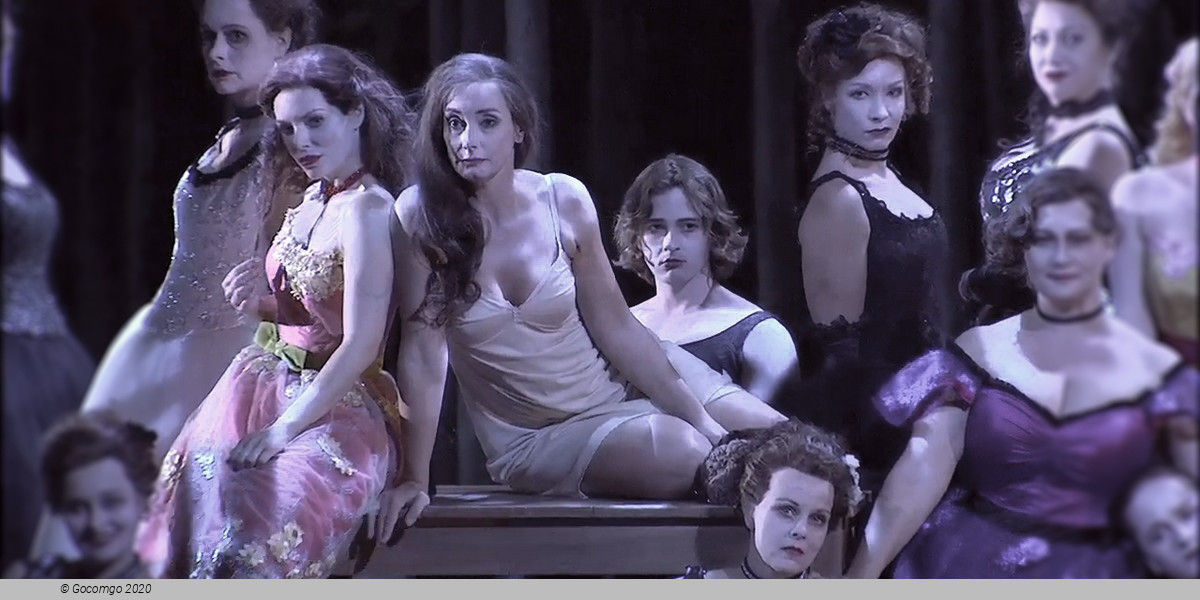
Oper Frankfurt 17 February 2023 - The Distant Sound | GoComGo.com

The Distant Sound

Oper Frankfurt, Opera House, Frankfurt am Main, Germany
All photos (6)
Select date and time
7:30 PM

E-tickets: Print at home or at the box office of the event if so specified. You will find more information in your booking confirmation email.

You can only select the category, and not the exact seats.
If you order 2 or 3 tickets: your seats will be next to each other.
If you order 4 or more tickets: your seats will be next to each other, or, if this is not possible, we will provide a combination of groups of seats (at least in pairs, for example 2+2 or 2+3).

Important Info
Type: Opera
City: Frankfurt am Main, Germany
Starts at: 19:30
Acts: 3
Intervals: 1
Duration: 2h 45min
Sung in: German
Titles in: German,English

E-tickets: Print at home or at the box office of the event if so specified. You will find more information in your booking confirmation email.

You can only select the category, and not the exact seats.
If you order 2 or 3 tickets: your seats will be next to each other.
If you order 4 or more tickets: your seats will be next to each other, or, if this is not possible, we will provide a combination of groups of seats (at least in pairs, for example 2+2 or 2+3).

Overview

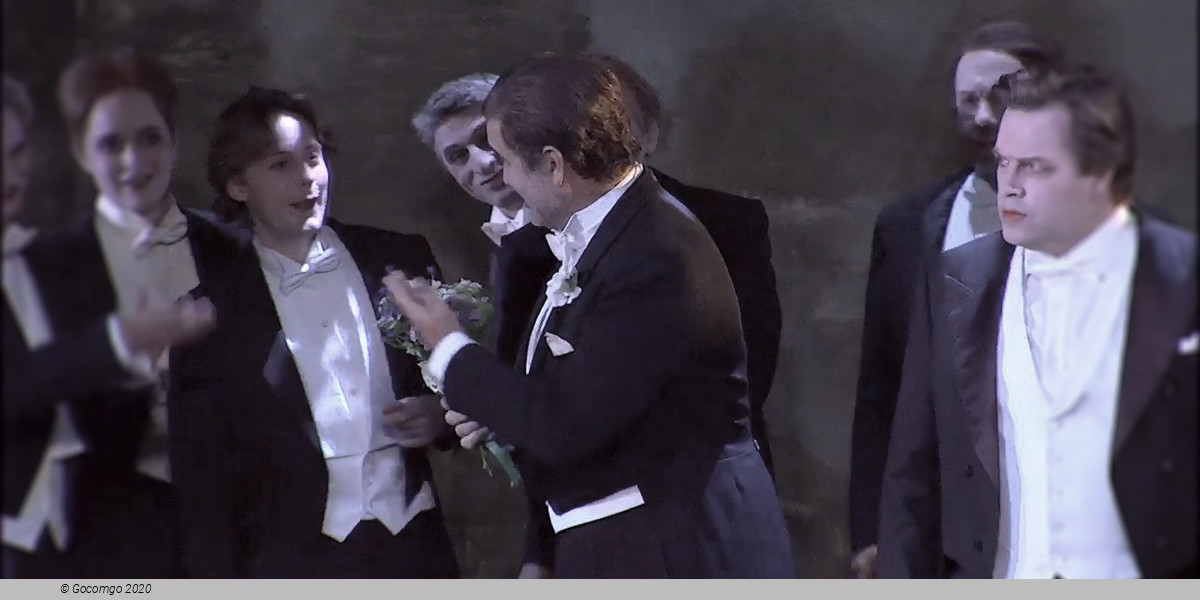
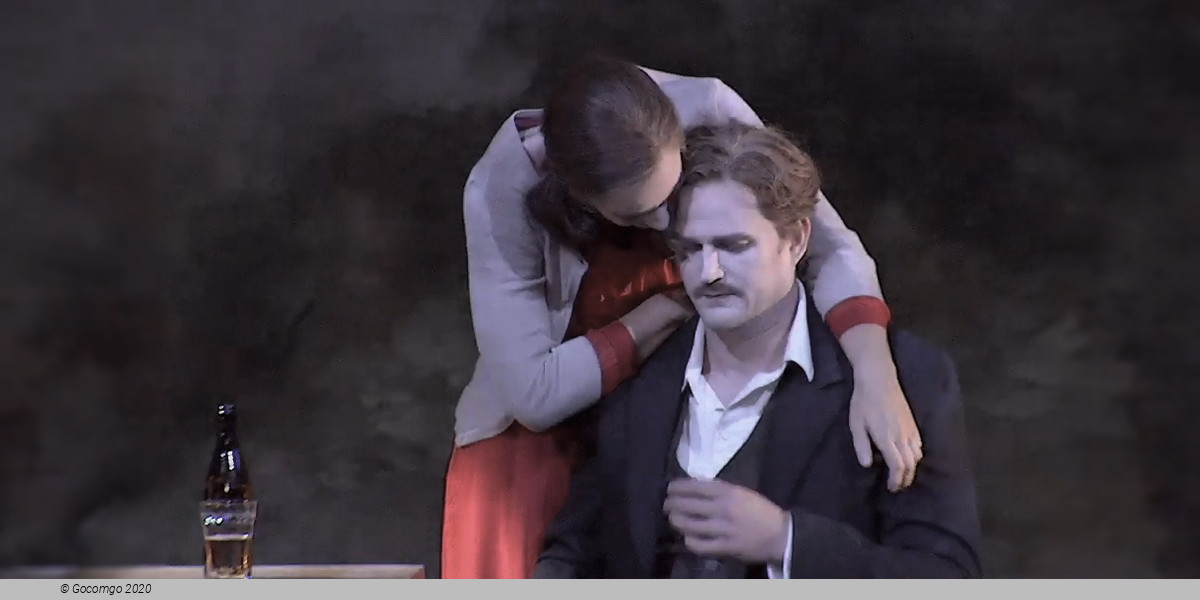
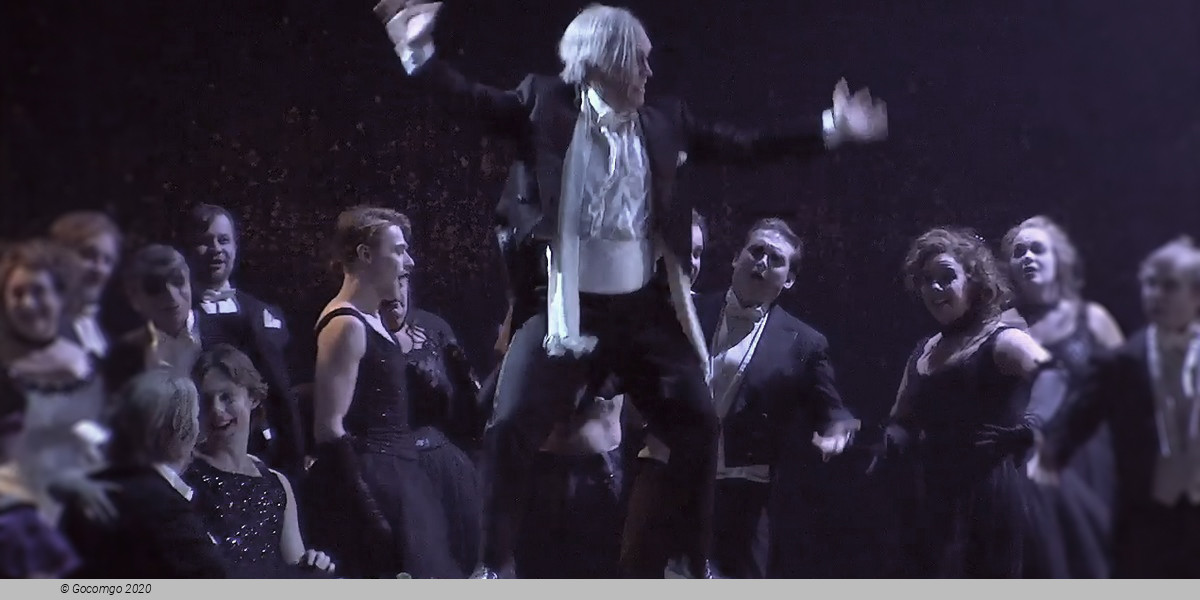
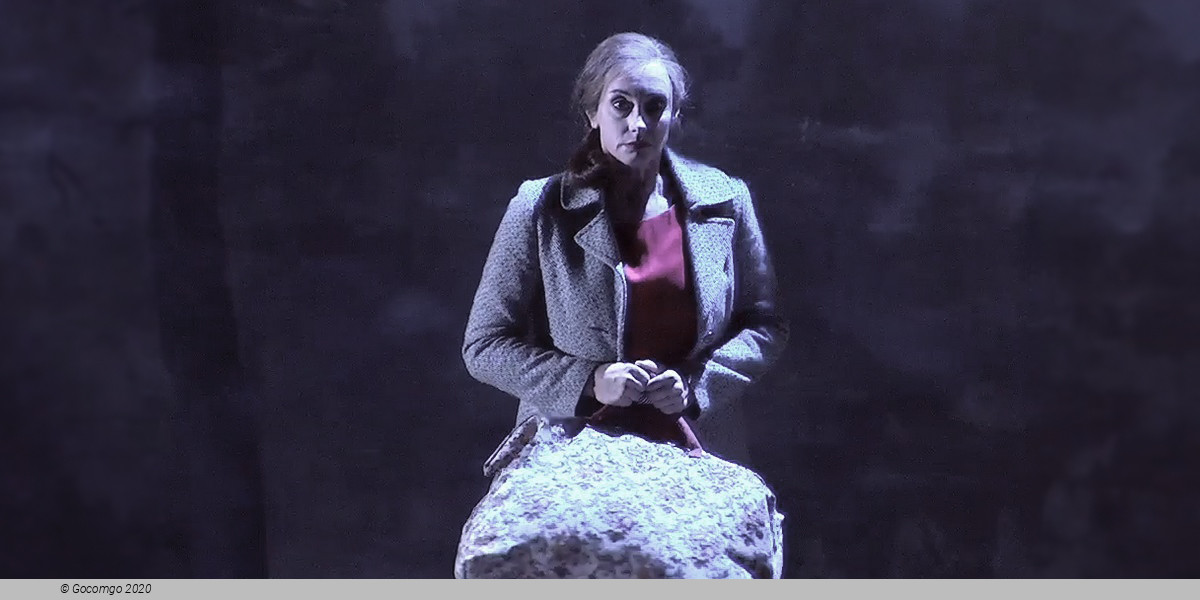
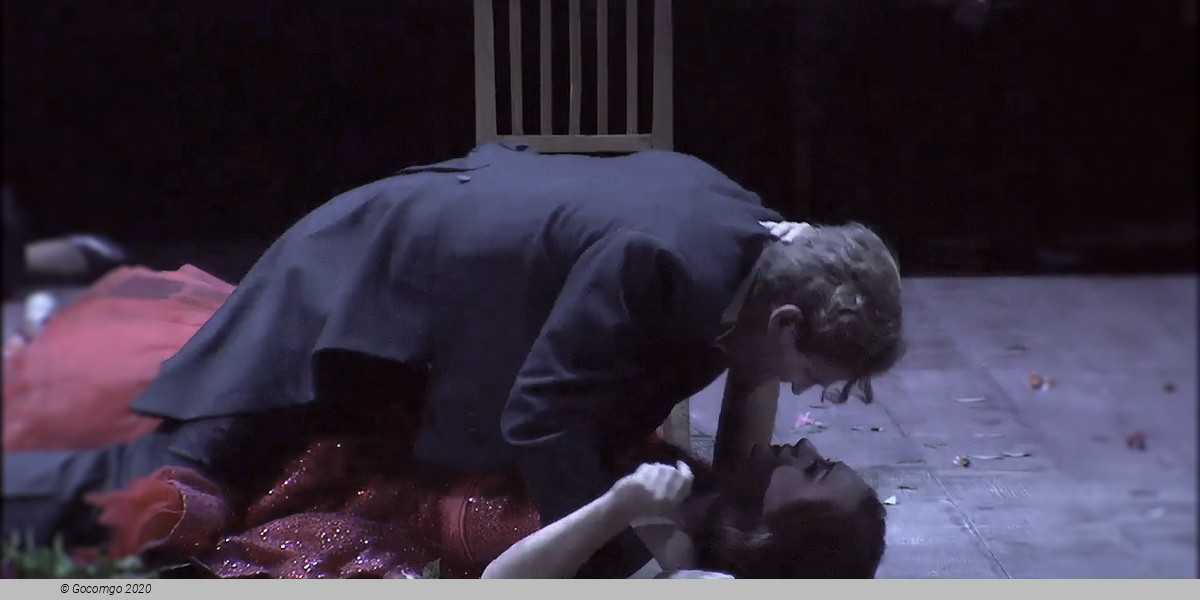
Franz Schreker‘s opera was an overnight success when it received its world premiere in Frankfurt 111 years ago. Now it’s back in Damiano Michieletto’s wonderful production: a deeply psychological intimate work with extravagant theatricality and a logical concept create a place for Schreker’s evocative music.

The composer Fritz is trying to hunt down a mysterious "distant sound"; until he's found this artistic ideal he feels unworthy of Grete’s love. He leaves her and goes out into the world. After overcoming her initial decision to kill herself, Grete leaves home too. They meet again in a demimonde establishment in Venice; but when Fritz realises that Grete’s working as a high-class courtesan, he spurns her again ...

History
Premiere of this production: 18 August 1912, Oper Frankfurt

Der ferne Klang (The Distant Sound) is an opera by Franz Schreker, set to his own libretto. Begun in 1903, it was first performed by the Oper Frankfurt on 18 August 1912. It was the composer's breakthrough to fame, and was frequently performed up until 1931, shortly after which the composer's music was proscribed by the Nazi regime. Largely forgotten after World War II, it has been revived by several opera companies in the 21st century.

Synopsis

Act 1
Fritz, a composer, and Grete Graumann, the daughter of a poor retired officer, are in love. Fritz wants to marry Grete, but he tells her that before that happens, he has to write a great piece of music and discover the mysterious distant sound ("der ferne Klang") which he hears within him. Grete tries in vain to convince him to stay with her. Fritz leaves his childhood sweetheart and goes in search of the distant sound.

As Grete is returning to her house, she meets a strange old woman, who asks the surprised girl about Fritz and promises to help Grete if she needs it. Grete continues on her way home.

Back at home, Grete's mother, Frau Graumann, speaks to Grete about the debts the family has accrued. Frau Graumann has decided that instead of borrowing money, Grete should get a job to help improve the money situation. Grete complains that her father drinks too much.

Just as she is saying this, Grete's father, Graumann, arrives with his drinking companions, an actor and Dr. Vigelius. Graumann has just gambled his daughter away to his landlord in a dice game and they have come to collect the debt. When Grete refuses, her father becomes furious. Before he can do violence to his daughter, his comrades drag Graumann back to the pub.

To calm her mother down, Grete pretends to be happy to marry the landlord. But when her mother leaves her alone in the room, she jumps out of the window and hurries away to find Fritz.

Grete cannot catch up with Fritz, and falls exhausted on the bank of a lake. She thinks of drowning herself, but then becomes conscious of the beauty of nature at night. She falls asleep, dreaming of their loving. The old woman, in reality a prostitute, appears again and promises to bring Grete a shining future if she will only follow her.

Act 2
Ten years later, Grete is the celebrated queen of the demimonde on an island in the gulf of Venice, where we find her in the famous dance salon "La Casa di Maschere". But even with her fame and success, she still thinks of Fritz.

This particular day, she promises that she will end the suffering of her suitors and decide on her next lover, announcing that whoever can touch her heart the most deeply with a song will win her. The Count sings "In einem Lande ein bleicher König", a sad but beautiful song, which the crowd applauds. The Chevalier counters with "Das Blumenmädchen von Sorrent", a bawdy song that the crowd enjoys as they noisily join in the singing.

As Grete is making up her mind, a stranger appears in the midst. It is Fritz, who recognizes Grete immediately and goes straight to her. He tells her that he has not found the distant sound that has been eluding him these past ten years, so he has gone in search of her instead and now wants to make her his wife.

While Grete is still in love with Fritz and would like to be with him, she decides she must reveal to him that she is a courtesan, and then asks if he still wants to marry her. At first he does not believe it, but when the Count challenges him to a duel, Fritz, shaken and disappointed, refuses to duel and departs. Grete, in her despair, falls into the arms of the Count.

Act 3
Five more years have passed, and Fritz has completed his opera, Die Harfe. During the premiere, the first act goes well, but the second act ends with an audience riot because nobody likes the music.

Grete, meanwhile, has lost the protection of the Count and is now a common streetwalker. She hears of the riot and is concerned for Fritz. On the way home, she is accosted by someone on the street, and Dr. Vigelius and the actors, who are staying in a hotel close by, appear and save her from being molested. Dr. Vigelius escorts Grete to his house, telling her that he very much regrets allowing Graumann to gamble away his daughter.

Fritz sits at home, old and depressed. He recognizes too late that he has destroyed not only his life, but also his love. In vain, his friend Rudolf tries to cheer him up and reminds him that there is still time to rewrite the opera. Fritz tells him that he is near the end of his life and only wants to see Grete, whom he foolishly pushed away twice. Rudolf goes to look for her, but Dr. Vigelius arrives instead, bringing Grete.

Grete and Fritz gratefully sink into each other's arms. Finally the composer hears the distant sound, which, it seems, was always within reach. He joyfully begins to write a new ending to his opera, but before he can finish, he dies in the arms of his beloved.

Venue Info

Oper Frankfurt - Frankfurt am Main
Location   Untermainanlage 11

The Oper Frankfurt (Frankfurt Opera) is one of the leading opera companies in Europe, and voted best "Opera house of the year" several times since 1996.

Opera in Frankfurt am Main has a long tradition, with many world premieres such as Franz Schreker's Der ferne Klang in 1912, Fennimore und Gerda by Frederick Delius in 1919, and Carl Orff's Carmina Burana in 1937. Frankfurt's international recognition began in the Gielen Era, 1977 to 1987, when Michael Gielen and stage directors such as Ruth Berghaus collaborated.

A historic opera house from 1880 was destroyed in World War II, and reconstructed as a concert hall, Alte Oper. The present opera house, built in 1963, is under one roof with the stage for drama. The opera orchestra is called Frankfurter Opern- und Museumsorchester. Today's venue for Baroque and contemporary opera is the Bockenheimer Depot, a former tram depot.

Oper Frankfurt is part of the Städtische Bühnen Frankfurt.

Frankfurt's first opera was Johann Theile's Adam und Eva, performed in 1698 by Johann Velten's touring company. The young Goethe's first operas in his home town of Frankfurt were productions by Theobald Marchand's company.

1782 – 1880
Opened in 1782, the Comoedienhaus was the first permanent venue of the Frankfurt Theater (drama and opera). In 1878 German violinist Willy Hess took up the leadership of the Oper Frankfurt. He resigned from that post in 1886 to take up a professorship in the Rotterdam Conservatorium voor Muziek.

1880 – 1944
The first representative opera house of the city was inaugurated in Frankfurt in 1880 at Opernplatz. Under the direction of the first Intendant Emil Claar and the first Kapellmeister Felix Otto Dessoff, the house was opened with Mozart's opera Don Giovanni.

During the 1920s, the opera in Frankfurt had more prominent Jewish singers than any other company in Germany, including the tenor Hermann Schramm, bass Hans Erl (the first King in Schreker's Der Schatzgräber), baritone Richard Breitenfeld and contralto Magda Spiegel, who also toured with Frankfurt Opera performing Wagner in the Netherlands. These singers were forced to leave the opera in June 1933. Orff's Carmina Burana was premiered at Oper Frankfurt in 1937. Jewish members of the opera company among those rounded up at 9 November 1938 at the Festhalle Frankfurt, where Erl sang In diesen Heilgen Hallen, from the Magic Flute for the deportees. Members of Frankfurt Opera were sent to Auschwitz and other camps where they perished.

1945 – 1970s
The opera house was damaged in an air raid in January 1944, and then almost completely destroyed in March. A new house for opera and play was built, completed in 1963 at the Theaterplatz (now Willy-Brandt-Platz). In 1952, Georg Solti became Generalmusikdirektor (GMD) and Intendant of the Oper Frankfurt, where he remained in charge for nine years.

The Gielen Era
From 1977 to 1987, Frankfurt Opera was led by Michael Gielen. This decade became known as the "Gielen Era", notable for the music of a conductor who was also a composer, and directors including Ruth Berghaus and Hans Neuenfels, whose productions of standard works such as Verdi's Aida and Wagner's Ring Cycle were thought-provoking. Operas which received their world premieres at the house were also performed again, including Franz Schreker's Die Gezeichneten.

1987 – present
The stage of the opera house was destroyed by a fire in November 1987. The opera house was rebuilt and opened in April 1991. Many famous singers started their career with the company, including Franz Völker, Edda Moser, Cheryl Studer and Diana Damrau, and many established artists have been engaged there in recent seasons including Christian Gerhaher, whose roles here have included Monteverdi's L'Orfeo and his first Wolfram in Wagner's Tannhäuser, Piotr Beczała in Massenet's Werther and Jan-Hendrik Rootering in Wagner's Parsifal.

Since 2002, Bernd Loebe has served as Intendant of the company. The company's current GMD is Sebastian Weigle, since 2008. Weigle has made commercial recordings of opera with the company for the OEHMS Classics label. He is scheduled to stand down as GMD of Oper Frankfurt at the close of the 2022–2023 season. In October 2021, the company announced the appointment of Thomas Guggeis as the next GMD of the company, effective with the 2023–2024 season, with an initial contract of 5 years.

Oper Frankfurt was voted 1996, 2003, 2015, 2018 and 2020 "Opera House of the Year" by the magazine Opernwelt.

Important Info
Type: Opera
City: Frankfurt am Main, Germany
Starts at: 19:30
Acts: 3
Intervals: 1
Duration: 2h 45min
Sung in: German
Titles in: German,English
Top of page