
Oper Frankfurt 19 January 2024 - Salome | GoComGo.com

Salome

Oper Frankfurt, Opera House, Frankfurt am Main, Germany
All photos (12)
Select date and time
7:30 PM

E-tickets: Print at home or at the box office of the event if so specified. You will find more information in your booking confirmation email.

You can only select the category, and not the exact seats.
If you order 2 or 3 tickets: your seats will be next to each other.
If you order 4 or more tickets: your seats will be next to each other, or, if this is not possible, we will provide a combination of groups of seats (at least in pairs, for example 2+2 or 2+3).

Important Info
Type: Opera
City: Frankfurt am Main, Germany
Starts at: 19:30
Acts: 1
Duration: 1h 45min
Sung in: German
Titles in: German,English

E-tickets: Print at home or at the box office of the event if so specified. You will find more information in your booking confirmation email.

You can only select the category, and not the exact seats.
If you order 2 or 3 tickets: your seats will be next to each other.
If you order 4 or more tickets: your seats will be next to each other, or, if this is not possible, we will provide a combination of groups of seats (at least in pairs, for example 2+2 or 2+3).

Overview

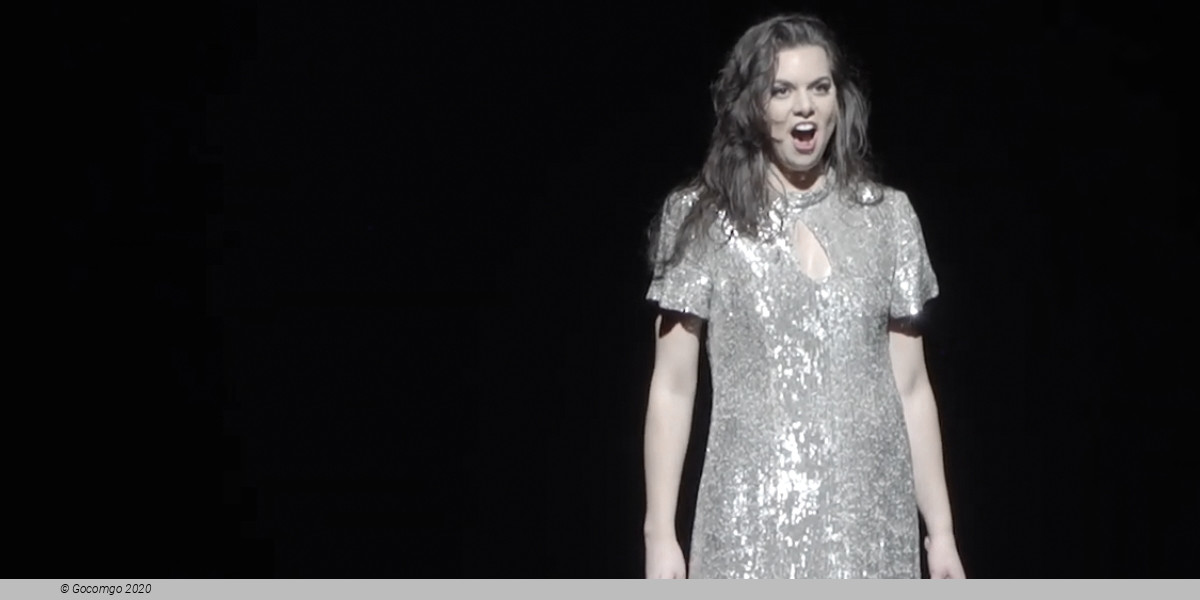
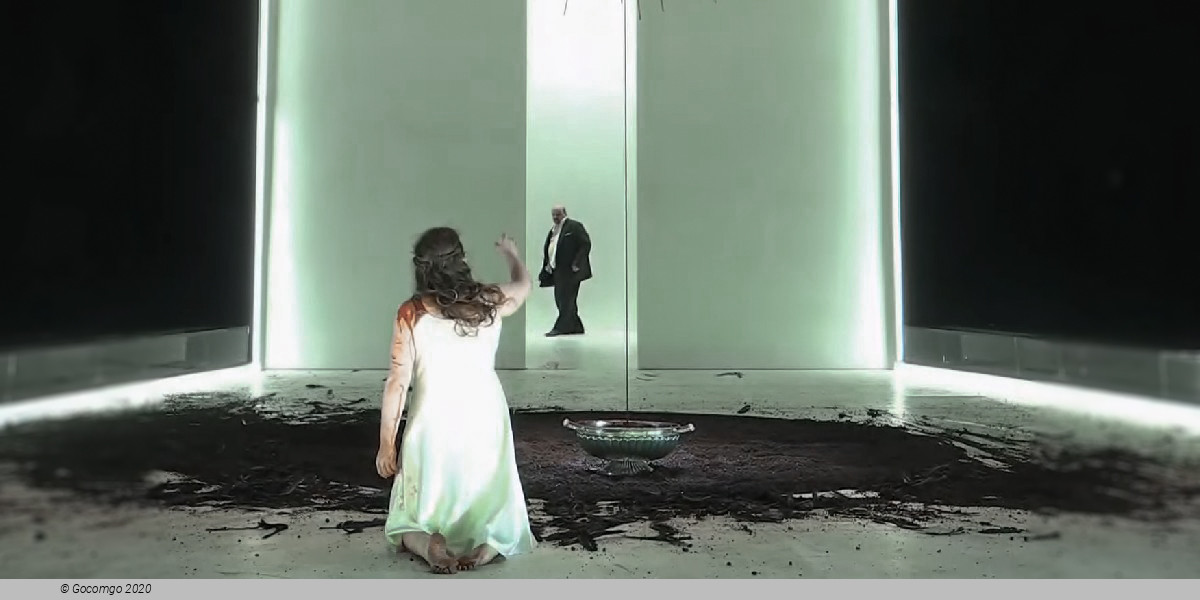
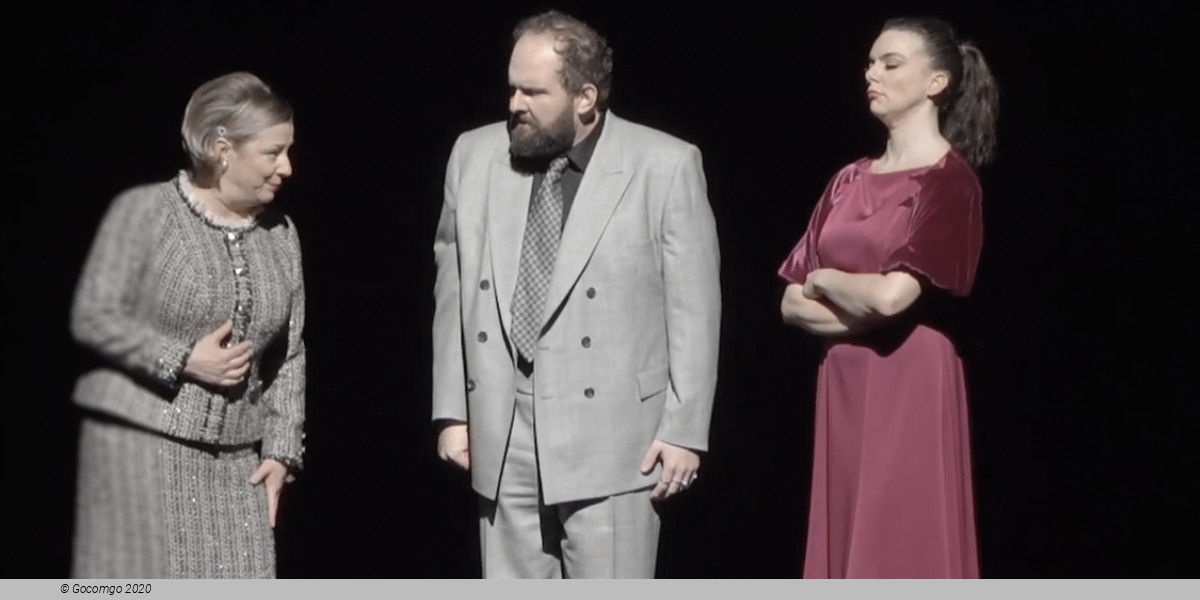
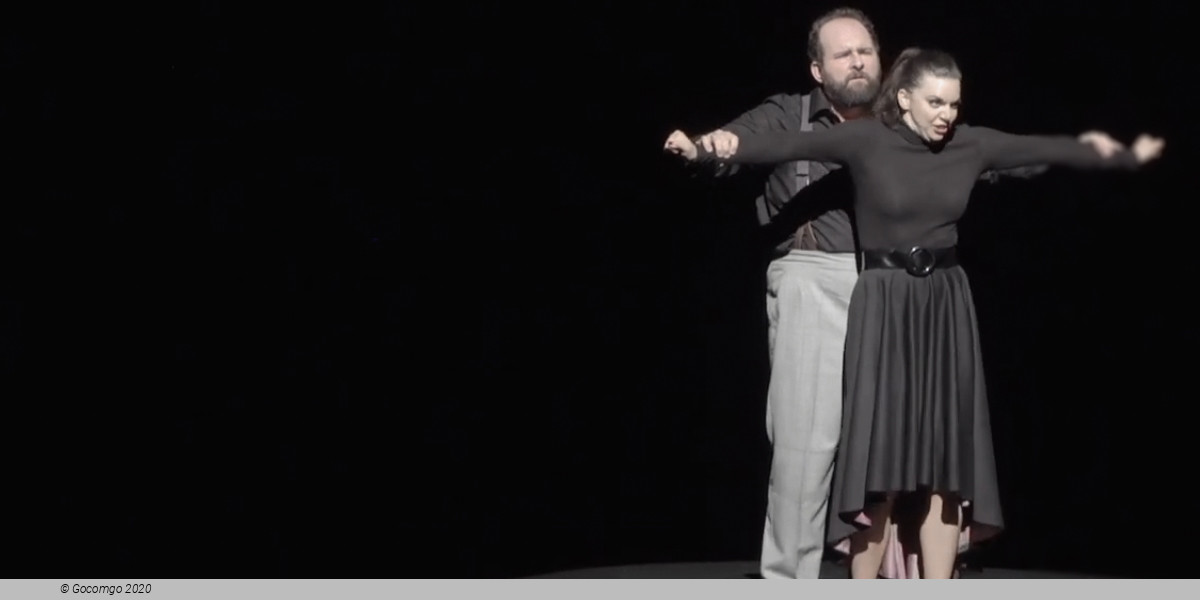
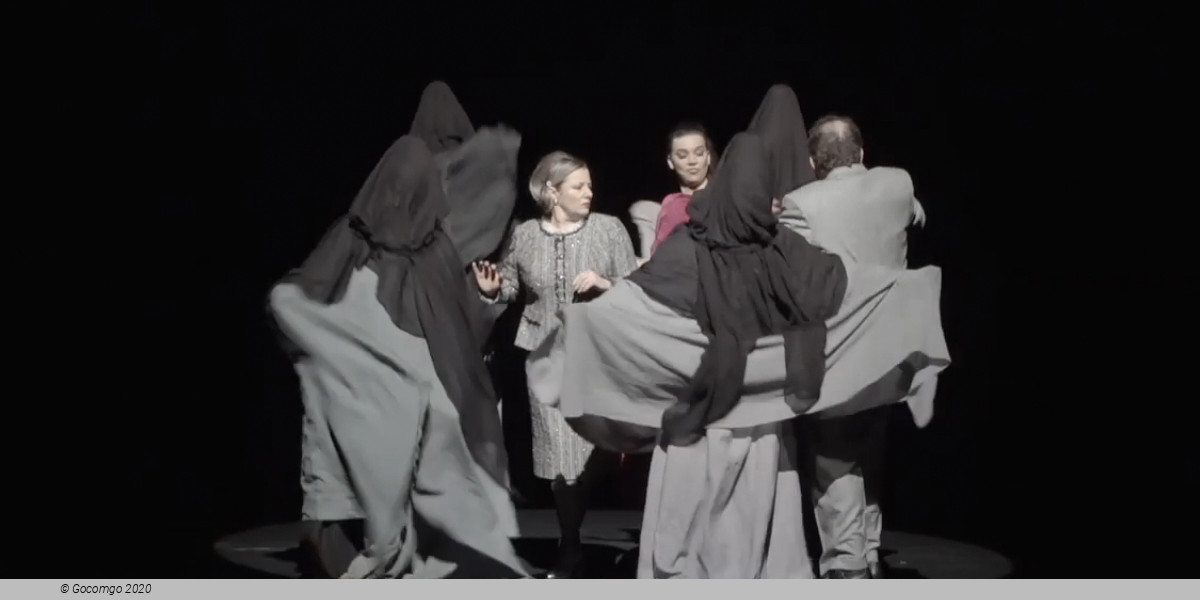
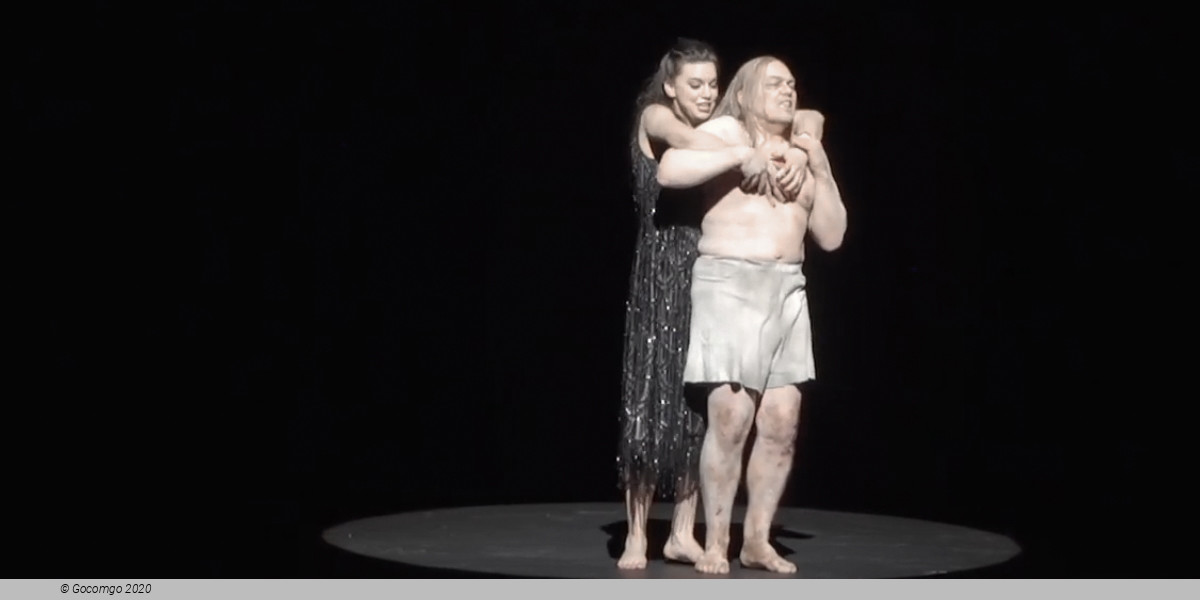
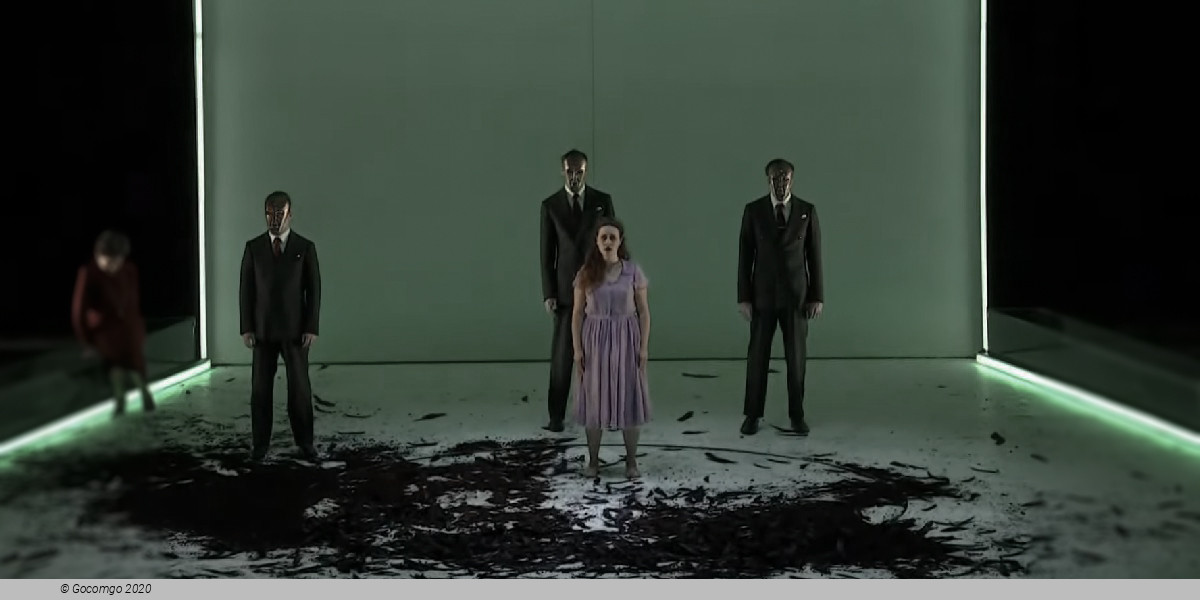
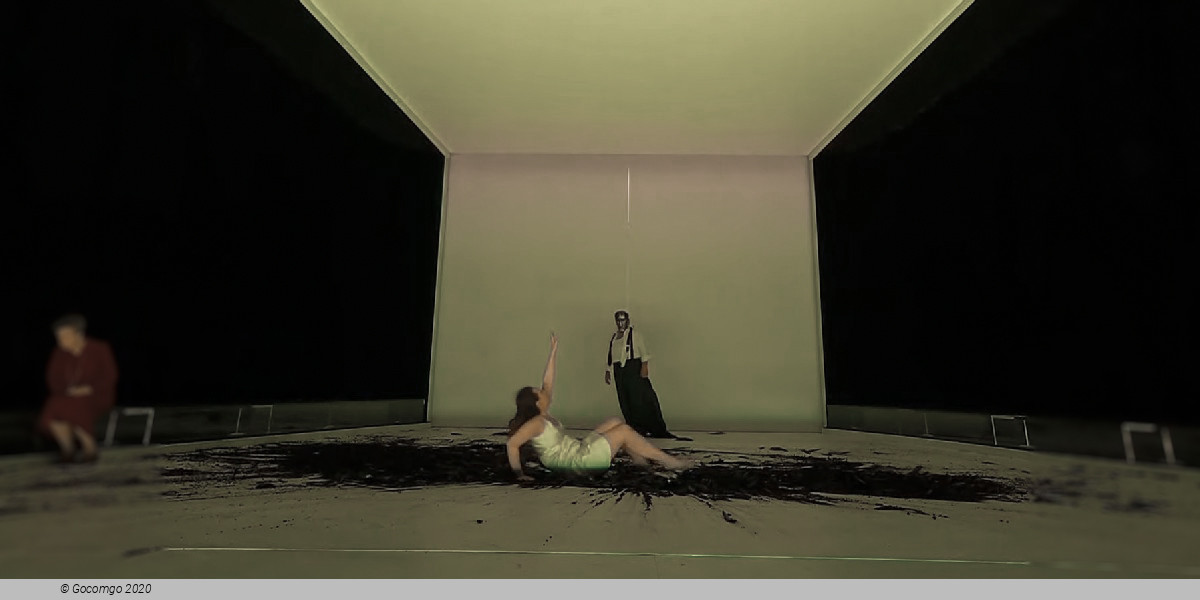
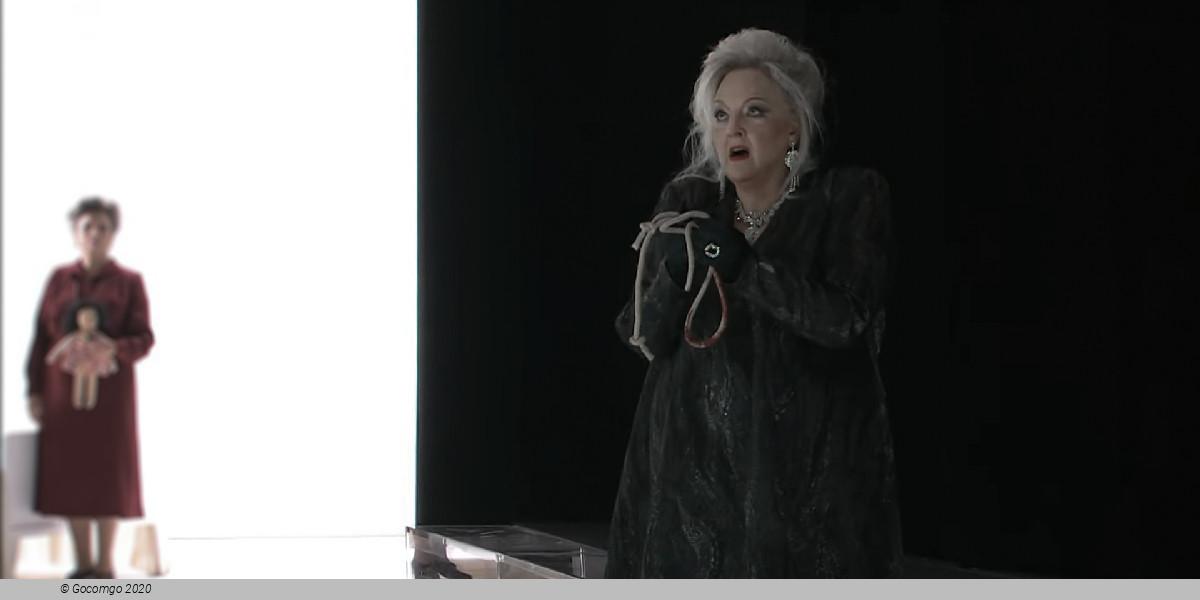
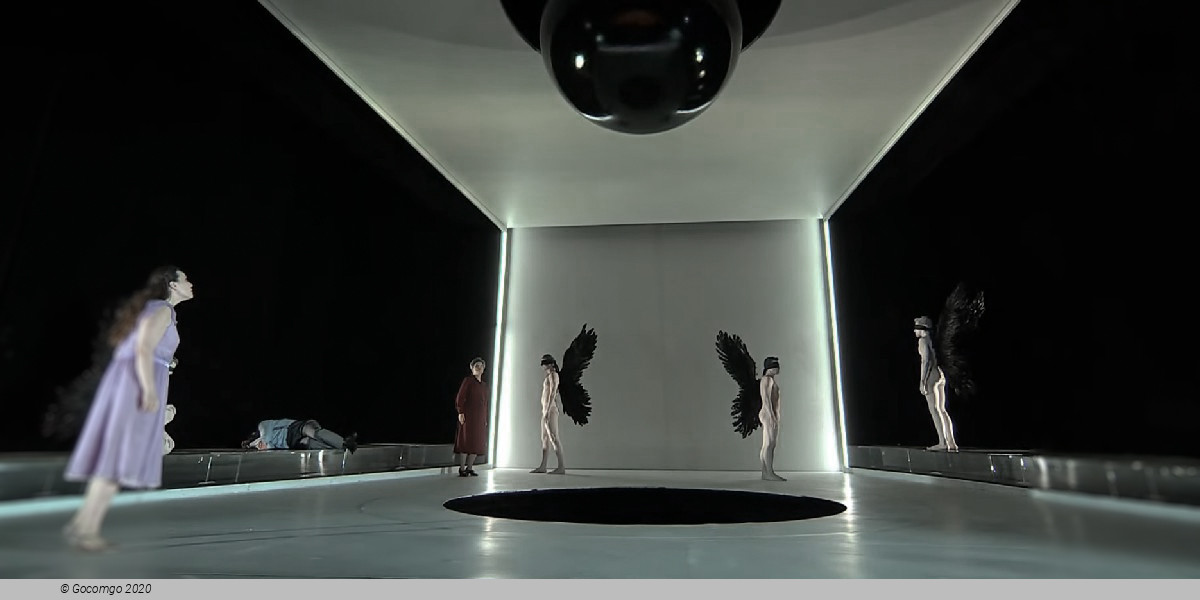
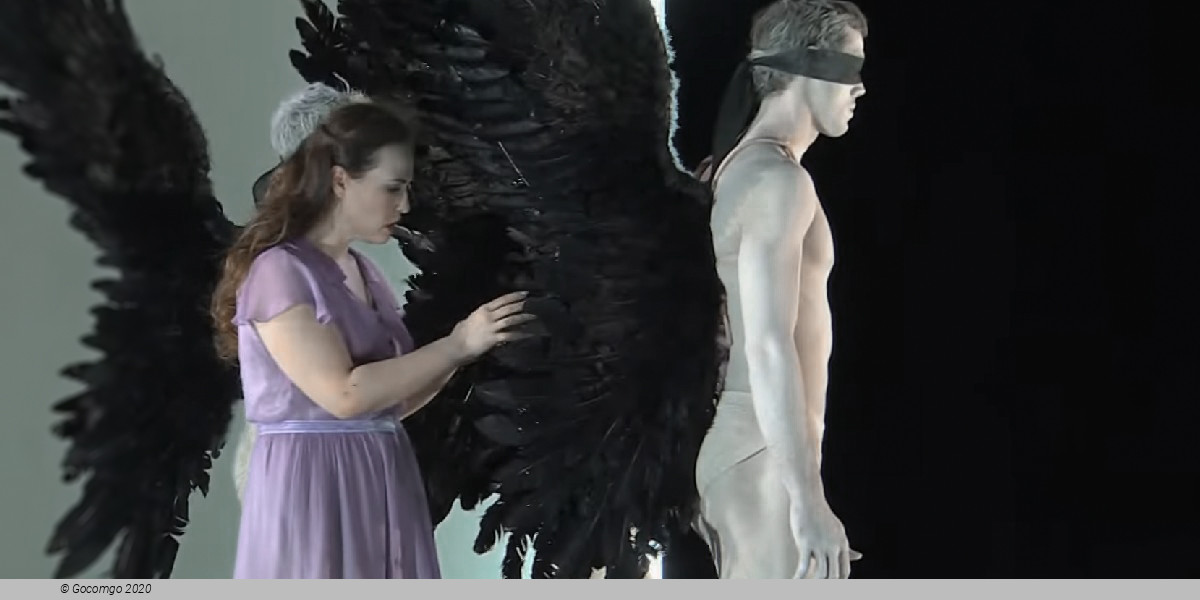
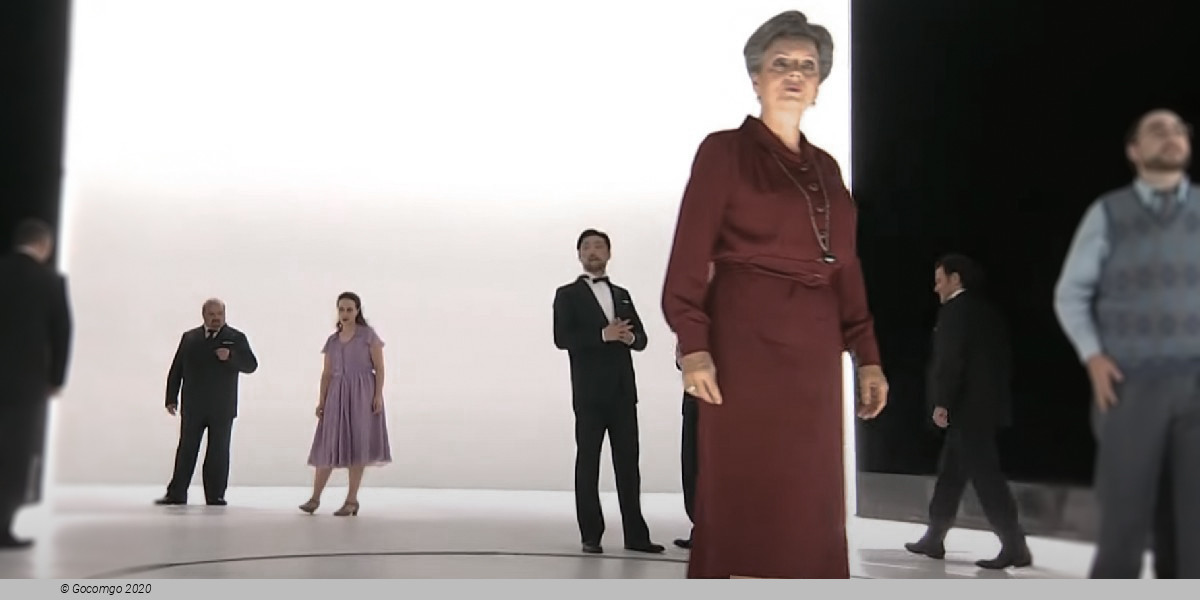
Director Barrie Kosky and set costume designer Katrin Lea Tag tell a love story entirely from Salome’s perspective: a production marked by concentration and breathtaking intensity.

Strauss’ 100+ minute one act opera exploded onto the world of music at a time of turmoil, the turn of the 20th century. Oscar Wilde, whose play inspired the composer to radical innovation, wasn’t the first to plump for the Salome story from the New Testament, but Wilde’s version concentrates on the clash between sensuality and religion: Salome demands the head of the prophet Jochanaan from her step father Herodes because he promised her anything she wanted if she would dance for him, and to pay Jochanaan back for not finding her attractive. Inspired by the fascinating text Strauss' increased his sound language to a never before heard intensity. He didn’t bother creating an atmospheric illustration of the text, concentrating instead on the conflict between Salome and Jochanaan, on their radical differences, making the worlds of love, and ideas of what love might be, collide in one enormous, inevitable climax.

History
Premiere of this production: 09 December 1905, Königliches Opernhaus, Dresden

Salome is an opera in one act by Richard Strauss. The libretto is Hedwig Lachmann's German translation of the French play Salomé by Oscar Wilde, edited by the composer. Strauss dedicated the opera to his friend Sir Edgar Speyer. The opera is famous (at the time of its premiere, infamous) for its "Dance of the Seven Veils". The final scene is frequently heard as a concert-piece for dramatic sopranos.

Synopsis

A great terrace in the Palace of Herod, set above the banqueting hall. Some soldiers are leaning over the balcony. To the right there is a gigantic staircase, to the left, at the back, an old cistern surrounded by a wall of green bronze. The moon is shining very brightly.

Narraboth gazes from a terrace in Herod's palace into the banquet hall at the beautiful Princess Salome; he is in love with her, and apotheosizes her, much to the disgusted fearfulness of the Page of Herodias. The voice of the Prophet Jochanaan is heard from his prison in the palace cistern; Herod fears him and has ordered that no one should contact him, including Jerusalem's High Priest.

Tired of the feast and its guests, Salome flees to the terrace. When she hears Jochanaan cursing her mother (Herodias), Salome's curiosity is piqued. The palace guards will not honor her petulant orders to fetch Jochanaan for her, so she teasingly works on Narraboth to bring Jochanaan before her. Despite the orders he has received from Herod, Narraboth finally gives in after she promises to smile at him.

Jochanaan emerges from the cistern and shouts prophecies regarding Herod and Herodias that no one understands, except Salome when the Prophet refers to her mother. Upon seeing Jochanaan, Salome is filled with an overwhelming desire for him, praising his white skin and asking to touch it, but he rejects her. She then praises his black hair, again asking to touch it, but is rejected once more. She finally begs for a kiss from Jochanaan's lips, and Narraboth, who cannot bear to hear this, kills himself. As Jochanaan is returned to the well, he preaches salvation through the Messiah.

Herod enters, followed by his wife and court. He slips in Narraboth's blood and starts hallucinating. He hears the beating of wings. Despite Herodias' objections, Herod stares lustfully at Salome, who rejects him. Jochanaan harasses Herodias from the well, calling her incestuous marriage to Herod sinful. She demands that Herod silence him. Herod refuses, and she mocks his fear. Five Jews argue concerning the nature of God. Two Nazarenes tell of Christ's miracles; at one point they bring up the raising of Jairus' daughter from the dead, which Herod finds frightening.

Herod asks for Salome to eat with him, drink with him; indolently, she twice refuses, saying she is not hungry or thirsty. Herod then begs Salome to dance for him, Tanz für mich, Salome, though her mother objects. He promises to reward her with her heart's desire – even if it were one half of his kingdom.

After Salome inquires into his promise, and he swears to honor it, she prepares for the "Dance of the Seven Veils". This dance, very oriental in orchestration, has her slowly removing her seven veils, until she lies naked at his feet. Salome then demands the head of the prophet on a silver platter. Her mother cackles in pleasure. Herod tries to dissuade her with offers of jewels, peacocks, and the sacred veil of the Temple. Salome remains firm in her demand for Jochanaan's head, forcing Herod to accede to her demands. After a desperate monologue by Salome, an executioner emerges from the well and delivers the severed head as she requested.

Salome now declares her love for the severed head, caressing it and kissing the prophet's dead lips passionately. Horrified, Herod orders his soldiers, "Kill that woman!" They rush forward and crush Salome under their shields.

Venue Info

Oper Frankfurt - Frankfurt am Main
Location   Untermainanlage 11

The Oper Frankfurt (Frankfurt Opera) is one of the leading opera companies in Europe, and voted best "Opera house of the year" several times since 1996.

Opera in Frankfurt am Main has a long tradition, with many world premieres such as Franz Schreker's Der ferne Klang in 1912, Fennimore und Gerda by Frederick Delius in 1919, and Carl Orff's Carmina Burana in 1937. Frankfurt's international recognition began in the Gielen Era, 1977 to 1987, when Michael Gielen and stage directors such as Ruth Berghaus collaborated.

A historic opera house from 1880 was destroyed in World War II, and reconstructed as a concert hall, Alte Oper. The present opera house, built in 1963, is under one roof with the stage for drama. The opera orchestra is called Frankfurter Opern- und Museumsorchester. Today's venue for Baroque and contemporary opera is the Bockenheimer Depot, a former tram depot.

Oper Frankfurt is part of the Städtische Bühnen Frankfurt.

Frankfurt's first opera was Johann Theile's Adam und Eva, performed in 1698 by Johann Velten's touring company. The young Goethe's first operas in his home town of Frankfurt were productions by Theobald Marchand's company.

1782 – 1880
Opened in 1782, the Comoedienhaus was the first permanent venue of the Frankfurt Theater (drama and opera). In 1878 German violinist Willy Hess took up the leadership of the Oper Frankfurt. He resigned from that post in 1886 to take up a professorship in the Rotterdam Conservatorium voor Muziek.

1880 – 1944
The first representative opera house of the city was inaugurated in Frankfurt in 1880 at Opernplatz. Under the direction of the first Intendant Emil Claar and the first Kapellmeister Felix Otto Dessoff, the house was opened with Mozart's opera Don Giovanni.

During the 1920s, the opera in Frankfurt had more prominent Jewish singers than any other company in Germany, including the tenor Hermann Schramm, bass Hans Erl (the first King in Schreker's Der Schatzgräber), baritone Richard Breitenfeld and contralto Magda Spiegel, who also toured with Frankfurt Opera performing Wagner in the Netherlands. These singers were forced to leave the opera in June 1933. Orff's Carmina Burana was premiered at Oper Frankfurt in 1937. Jewish members of the opera company among those rounded up at 9 November 1938 at the Festhalle Frankfurt, where Erl sang In diesen Heilgen Hallen, from the Magic Flute for the deportees. Members of Frankfurt Opera were sent to Auschwitz and other camps where they perished.

1945 – 1970s
The opera house was damaged in an air raid in January 1944, and then almost completely destroyed in March. A new house for opera and play was built, completed in 1963 at the Theaterplatz (now Willy-Brandt-Platz). In 1952, Georg Solti became Generalmusikdirektor (GMD) and Intendant of the Oper Frankfurt, where he remained in charge for nine years.

The Gielen Era
From 1977 to 1987, Frankfurt Opera was led by Michael Gielen. This decade became known as the "Gielen Era", notable for the music of a conductor who was also a composer, and directors including Ruth Berghaus and Hans Neuenfels, whose productions of standard works such as Verdi's Aida and Wagner's Ring Cycle were thought-provoking. Operas which received their world premieres at the house were also performed again, including Franz Schreker's Die Gezeichneten.

1987 – present
The stage of the opera house was destroyed by a fire in November 1987. The opera house was rebuilt and opened in April 1991. Many famous singers started their career with the company, including Franz Völker, Edda Moser, Cheryl Studer and Diana Damrau, and many established artists have been engaged there in recent seasons including Christian Gerhaher, whose roles here have included Monteverdi's L'Orfeo and his first Wolfram in Wagner's Tannhäuser, Piotr Beczała in Massenet's Werther and Jan-Hendrik Rootering in Wagner's Parsifal.

Since 2002, Bernd Loebe has served as Intendant of the company. The company's current GMD is Sebastian Weigle, since 2008. Weigle has made commercial recordings of opera with the company for the OEHMS Classics label. He is scheduled to stand down as GMD of Oper Frankfurt at the close of the 2022–2023 season. In October 2021, the company announced the appointment of Thomas Guggeis as the next GMD of the company, effective with the 2023–2024 season, with an initial contract of 5 years.

Oper Frankfurt was voted 1996, 2003, 2015, 2018 and 2020 "Opera House of the Year" by the magazine Opernwelt.

Important Info
Type: Opera
City: Frankfurt am Main, Germany
Starts at: 19:30
Acts: 1
Duration: 1h 45min
Sung in: German
Titles in: German,English
Top of page