





Oper Frankfurt 30 April 2020 - Peter Grimes | GoComGo.com

Peter Grimes

Oper Frankfurt, Opera House, Frankfurt am Main, Germany
All photos (11)
Select date and time
7 PM
Request for Tickets
Important Info
Type: Opera
City: Frankfurt am Main, Germany
Starts at: 19:00
Acts: 3
Intervals: 1
Duration: 3h
Sung in: English
Titles in: English,German

E-tickets: Print at home or at the box office of the event if so specified. You will find more information in your booking confirmation email.

You can only select the category, and not the exact seats.
If you order 2 or 3 tickets: your seats will be next to each other.
If you order 4 or more tickets: your seats will be next to each other, or, if this is not possible, we will provide a combination of groups of seats (at least in pairs, for example 2+2 or 2+3).

Overview

Introductory talks, in German, in the Holzfoyer half an hour before performances begin.

History
Premiere of this production: 07 June 1945, Sadler`s Wells, London

Peter Grimes is an opera by Benjamin Britten, with a libretto adapted by Montagu Slater from the narrative poem, "Peter Grimes", in George Crabbe's book The Borough. The "borough" of the opera is a fictional village which shares some similarities with Crabbe's, and later Britten's, own home of Aldeburgh, a town on England's east coast.

Synopsis

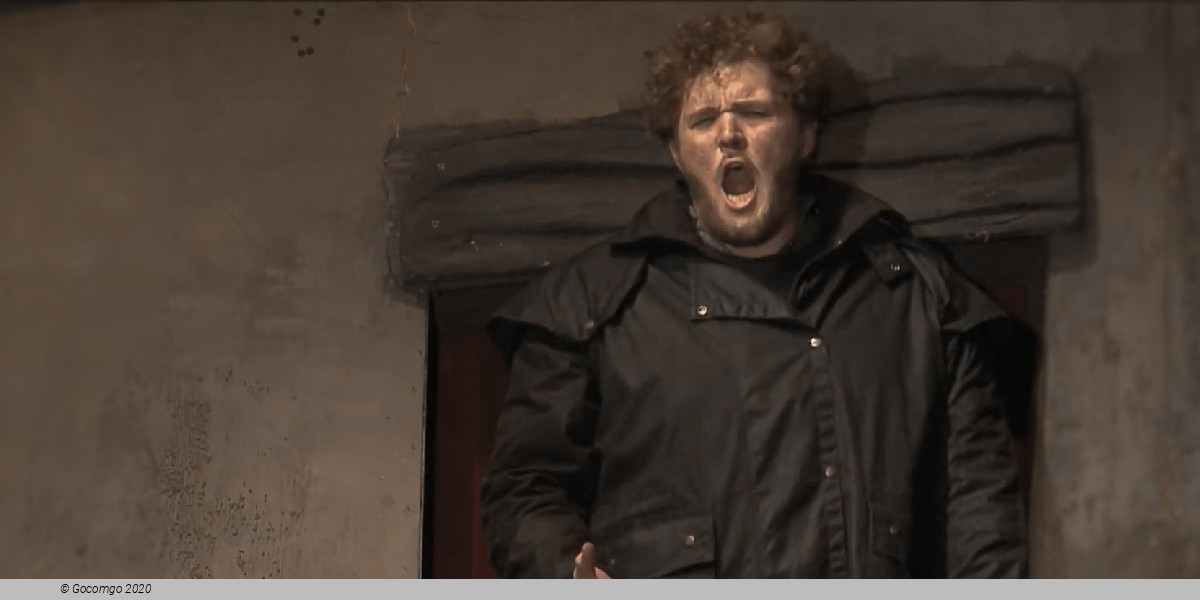
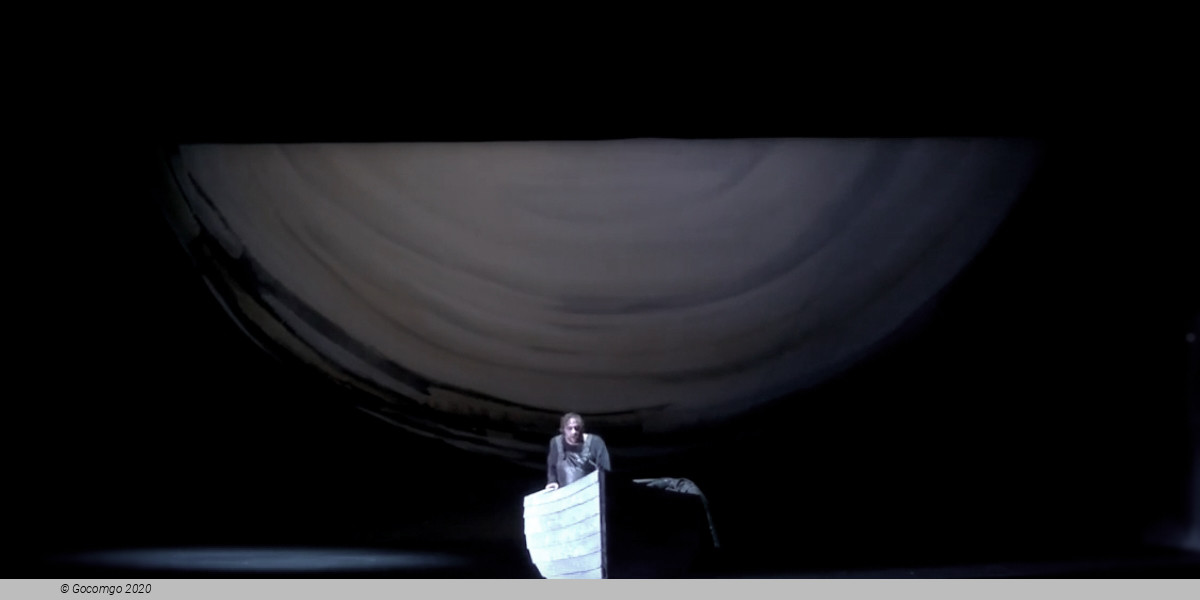
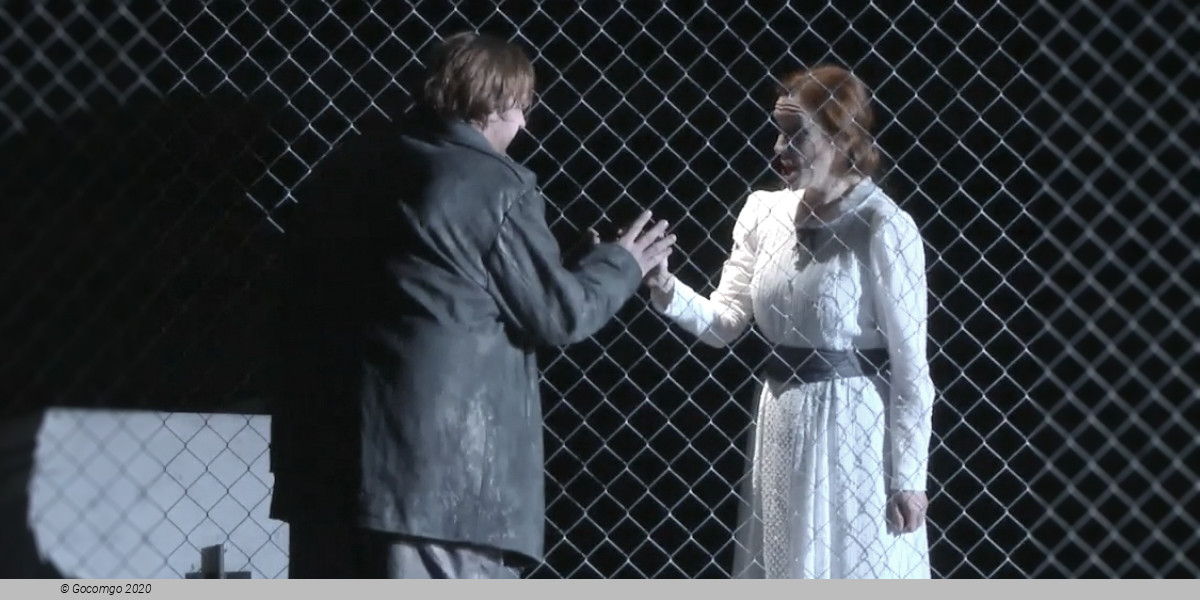
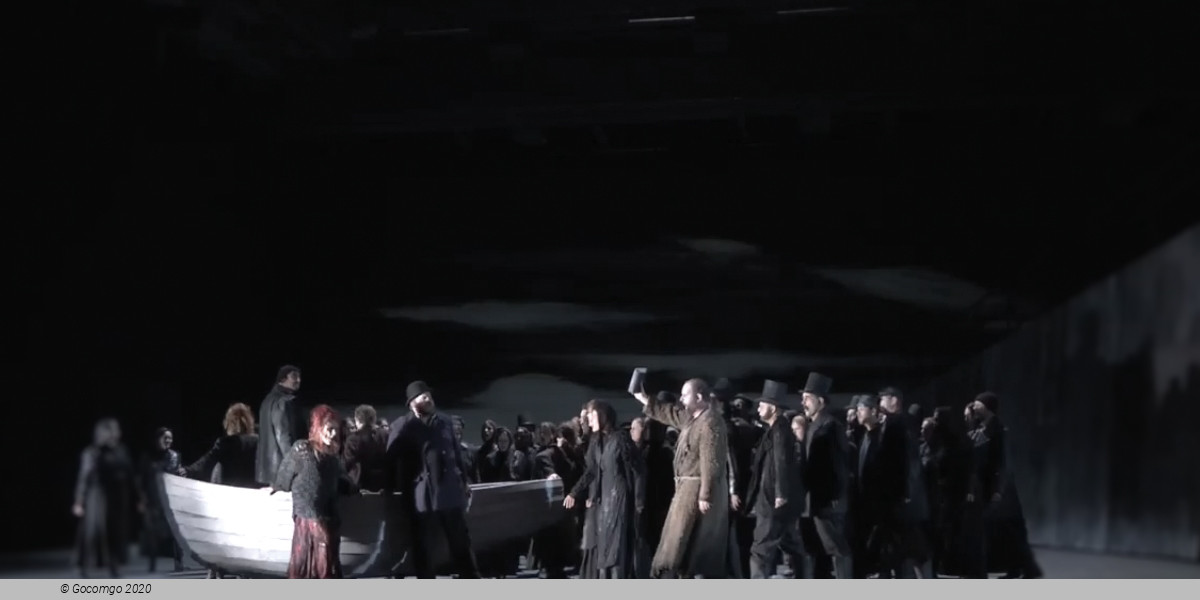
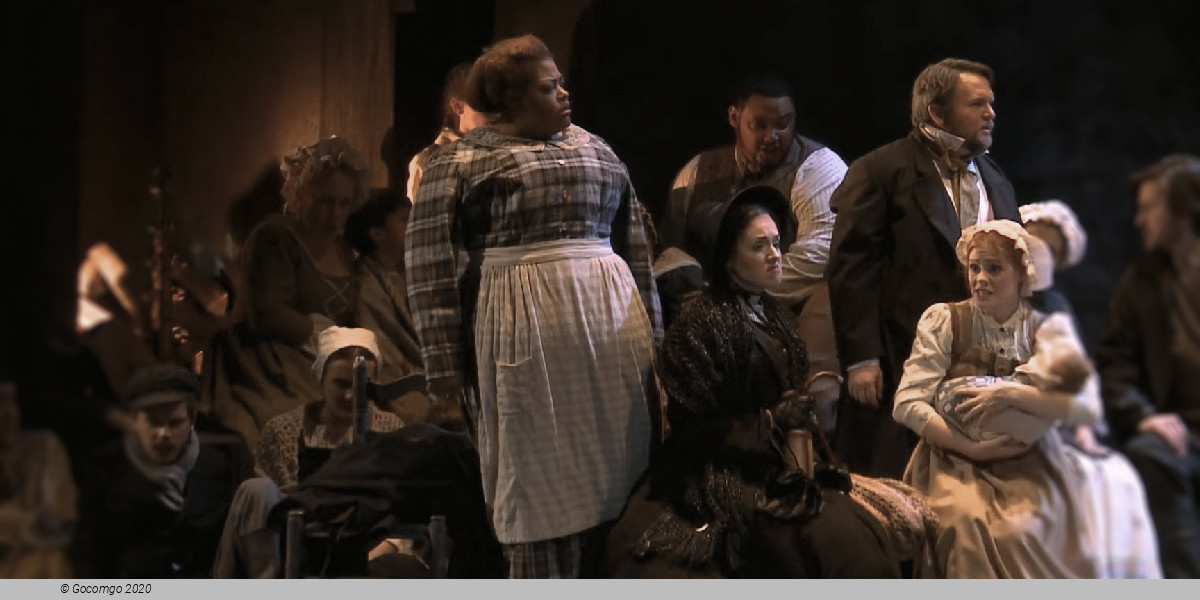
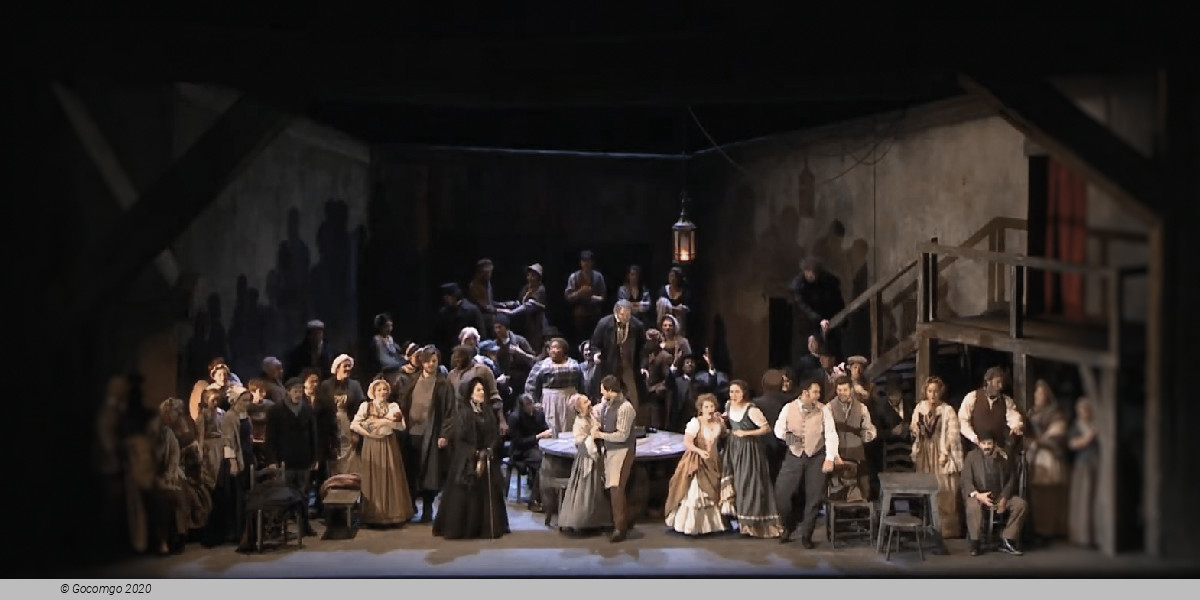
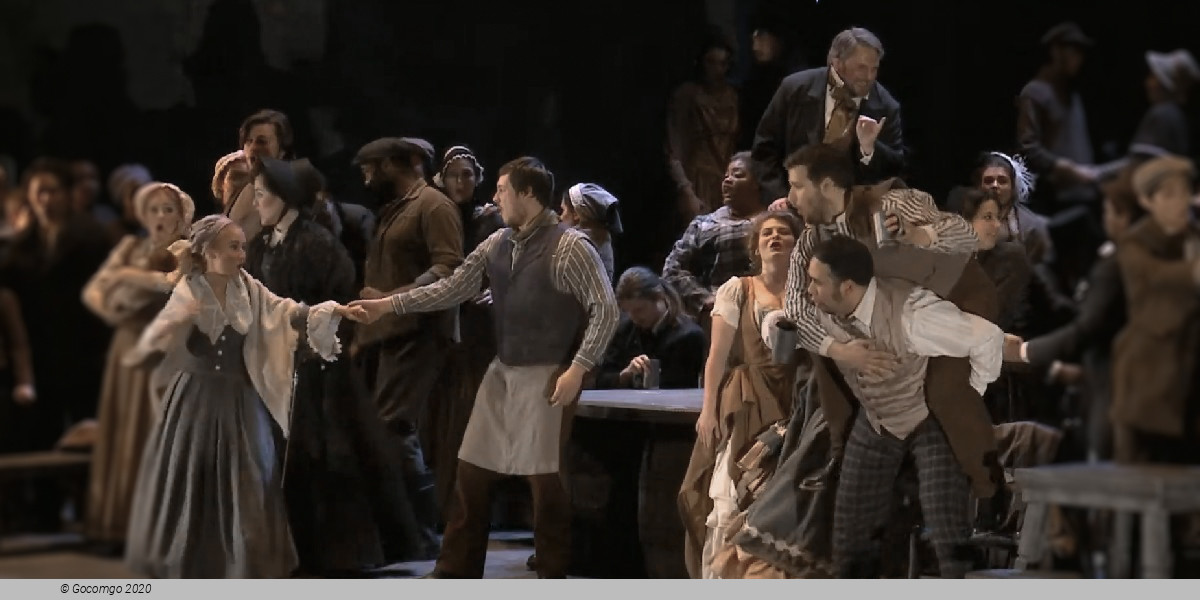
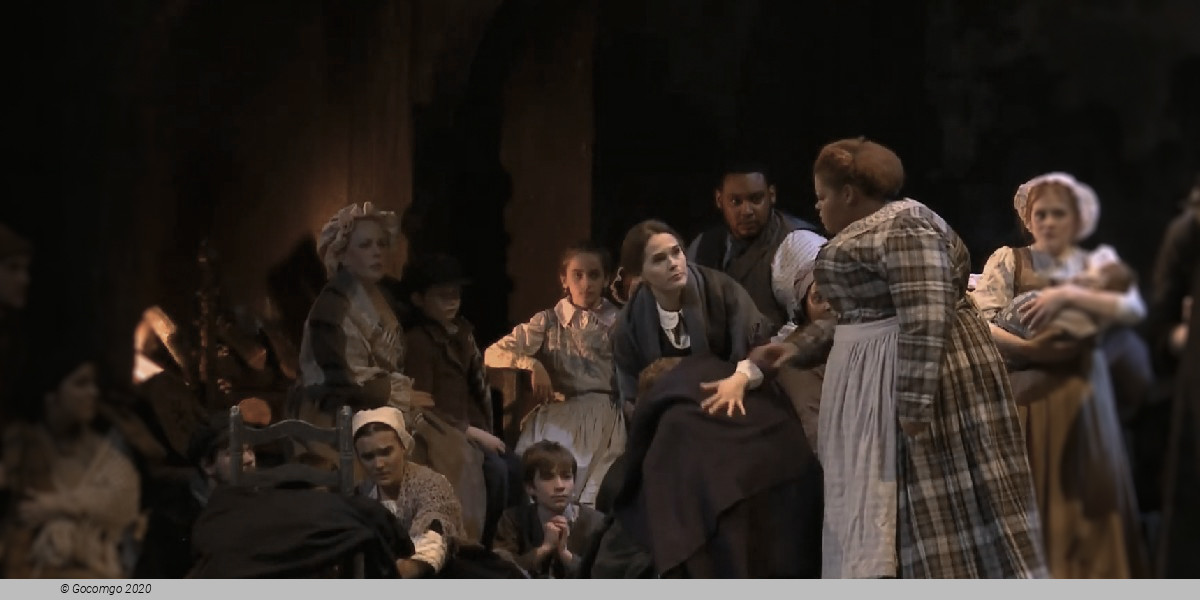
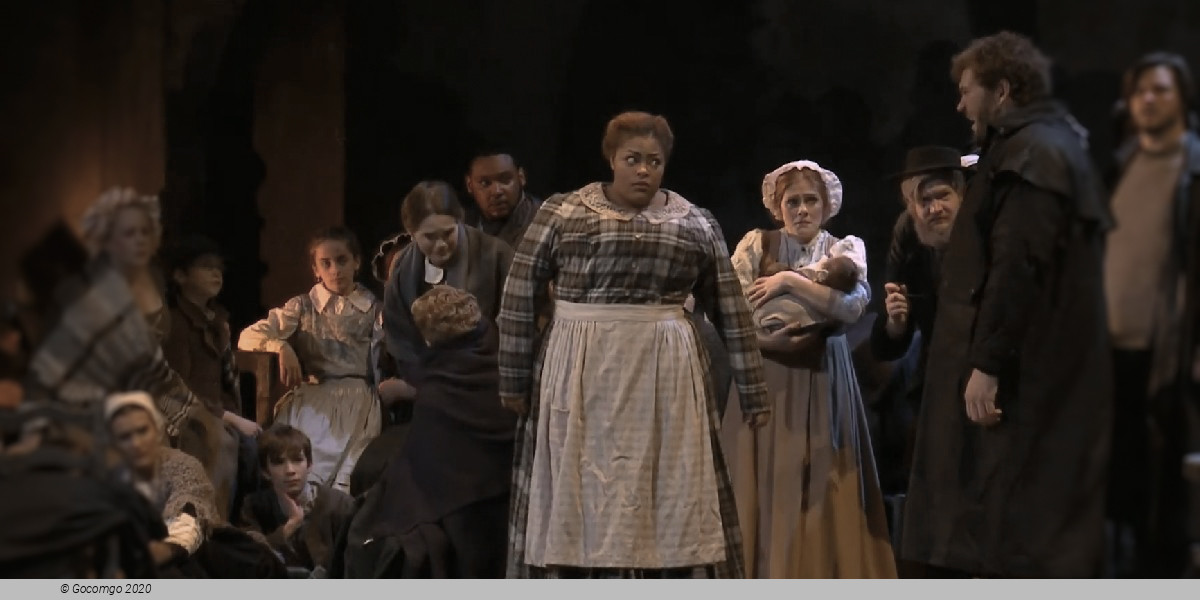
Peter Grimes is driven into a corner, rejected by a community that blames him for his young apprentice's fatal accident. The fisherman is faced with the small-mindedness of a bigotted middle class village. The director Keith Warner draws the typology of a place with vivid enjoyment by portraying strange people and focussing on their relationships. Increasingly isolated, Grimes has no other choice but to find death out at sea. This work by Benjamin Britten, performed for the first time just after the end of World War II, has long been regarded as Britain's national opera. The composer's aim, "to give expression to my knowledge about the never ending struggle of men and women who spend their lives trying to wring a living from the sea", couldn't have been better realised. Vincent Wolfsteiner, who was cheered to the rafters for his portrayal of the lead role when the production first opened, is Peter Grimes again.

Prologue

A Suffolk coastal village, mid-19th century (The date is not specified, but the foghorn in Act III places it later than the date of Crabbe's poem)

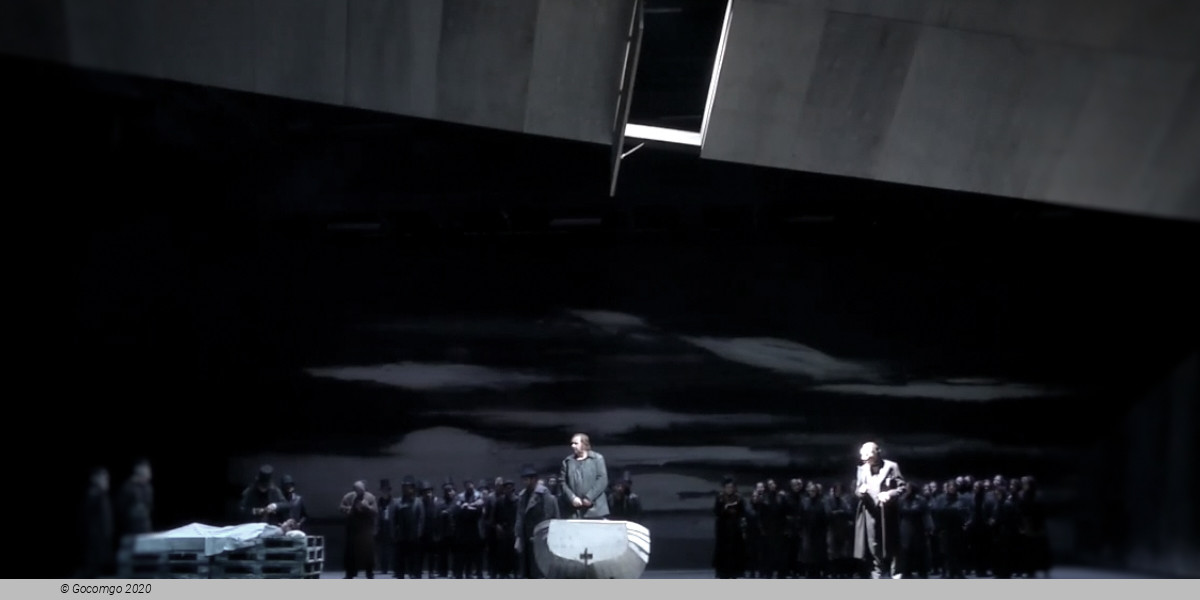
Peter Grimes is questioned at an inquest over the death at sea of his apprentice. The townsfolk, all present, make it clear that they think Grimes is guilty and deserving of punishment. Although the coroner, Mr Swallow, determines the boy's death to be accidental and clears Grimes without a proper trial, he advises Grimes not to get another apprentice—a proposal against which Grimes vigorously protests. As the court is cleared, Ellen Orford, the schoolmistress whom Grimes wishes to marry as soon as he gains the Borough's respect, attempts to comfort Grimes as he rages against what he sees as the community's unwillingness to give him a true second chance.

Act 1

The same, some days later

After the first orchestral Interlude (in the Four Sea Interludes concert version entitled "Dawn"), the chorus, who constitute "the Borough", sing of their weary daily round and their relationship with the sea and the seasons. Grimes calls for help to haul his boat ashore, but is shunned by most of the community. Belatedly, Balstrode and the apothecary, Ned Keene, assist Grimes by turning the capstan. Keene tells Grimes that he has found him a new apprentice (named John) from the workhouse. Nobody will volunteer to fetch the boy, until Ellen offers ("Let her among you without fault...").

As a storm approaches, most of the community—after securing windows and equipment—take shelter in the pub. Grimes stays out, and alone with Balstrode confesses his ambitions: to make his fortune with a "good catch", buy a good home and marry Ellen Orford. Balstrode suggests "without your booty Ellen will have you now", only to provoke Grimes's furious "No, not for pity!" Balstrode abandons Grimes to the storm, as the latter ruminates "What harbour shelters peace?" The storm then breaks with a vengeance (second orchestral Interlude).

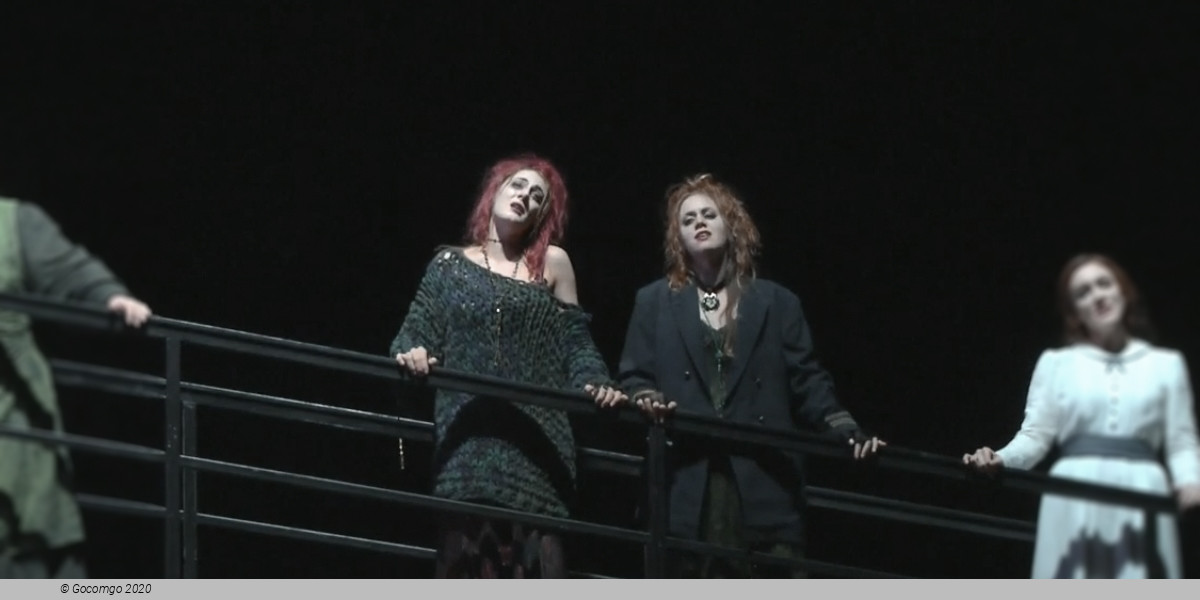
In the pub, tensions are rising due both to the storm and to the fiery Methodist fisherman, Bob Boles, getting increasingly drunk and lecherous after the pub's main attraction, the two "nieces". Grimes suddenly enters ("Now the Great Bear and Pleiades..."), and his wild appearance unites almost the entire community in their fear and mistrust of his "temper". Ned Keene saves the situation by starting a round ("Old Joe has gone fishing"). Just as the round reaches a climax, Ellen arrives with the apprentice, both drenched. Grimes immediately sets off with the apprentice to his hut, despite the terrible storm.

Act 2

The same, some weeks later

On Sunday morning (the third orchestral Interlude), while most of the Borough is at church, Ellen talks with John, the apprentice. She is horrified when she finds a bruise on his neck. When she confronts Grimes about it, he brusquely claims that it was an accident. Growing agitated at her mounting concern and interference, he strikes her and runs off with the boy. This does not go unseen: first Keene, Auntie, and Bob Boles, then the chorus comment on what has happened, the latter developing into a mob to investigate Grimes's hut. As the men march off, Ellen, Auntie, and the nieces sing sadly of the relationship of women with men. The fourth interlude (Passacaglia) follows as the scene changes.

At the hut, Grimes impatiently drives the ever silent John into changing out of his Sunday clothes and into fisherman's gear, and then becomes lost in his memories of his previous, now dead apprentice, reliving the boy's death of thirst. When he hears the mob of villagers approaching, he quickly comes back to reality, stirred both by a paranoid belief that John has been "gossiping" with Ellen, so provoking the "odd procession", and at the same time feeling defiant. He gets ready to set out to sea, and he tells John to be careful climbing down the cliff to his boat, but to no avail: the boy falls to his death. When the mob reaches the hut Grimes is gone, and they find nothing out of order, so they disperse.

Act 3

The same, two days later, night time in the Borough ("Moonlight" in the Sea Interludes).

While a dance is going on, Mrs Sedley tries to convince the authorities that Grimes is a murderer, but to no avail. Ellen and Captain Balstrode confide in each other: Grimes has disappeared, and Balstrode has discovered a jersey washed ashore: a jersey that Ellen recognises as one she had knitted for John. Mrs Sedley overhears this, and with the knowledge that Grimes has returned, she is able to instigate another mob. Singing "Him who despises us we'll destroy", the villagers go off in search of Grimes. The sixth interlude, not included in the Sea Interludes, covers the change of scene.

While the chorus can be heard searching for him, Grimes appears onstage, singing a long monologue sparsely accompanied by cries from the off-stage chorus, and a fog horn (represented by a solo tuba): John's death has seemingly shattered Grimes's sanity. Ellen and Balstrode find him, and the old captain encourages Grimes to take his boat out to sea and sink it. Grimes leaves. The next morning, the Borough begins its day anew, as if nothing has happened. There is a report from the coastguard of a ship sinking off the coast. This is dismissed by Auntie as "one of these rumours."

Venue Info

Oper Frankfurt - Frankfurt am Main
Location   Untermainanlage 11

The Oper Frankfurt (Frankfurt Opera) is one of the leading opera companies in Europe, and voted best "Opera house of the year" several times since 1996.

Opera in Frankfurt am Main has a long tradition, with many world premieres such as Franz Schreker's Der ferne Klang in 1912, Fennimore und Gerda by Frederick Delius in 1919, and Carl Orff's Carmina Burana in 1937. Frankfurt's international recognition began in the Gielen Era, 1977 to 1987, when Michael Gielen and stage directors such as Ruth Berghaus collaborated.

A historic opera house from 1880 was destroyed in World War II, and reconstructed as a concert hall, Alte Oper. The present opera house, built in 1963, is under one roof with the stage for drama. The opera orchestra is called Frankfurter Opern- und Museumsorchester. Today's venue for Baroque and contemporary opera is the Bockenheimer Depot, a former tram depot.

Oper Frankfurt is part of the Städtische Bühnen Frankfurt.

Frankfurt's first opera was Johann Theile's Adam und Eva, performed in 1698 by Johann Velten's touring company. The young Goethe's first operas in his home town of Frankfurt were productions by Theobald Marchand's company.

1782 – 1880
Opened in 1782, the Comoedienhaus was the first permanent venue of the Frankfurt Theater (drama and opera). In 1878 German violinist Willy Hess took up the leadership of the Oper Frankfurt. He resigned from that post in 1886 to take up a professorship in the Rotterdam Conservatorium voor Muziek.

1880 – 1944
The first representative opera house of the city was inaugurated in Frankfurt in 1880 at Opernplatz. Under the direction of the first Intendant Emil Claar and the first Kapellmeister Felix Otto Dessoff, the house was opened with Mozart's opera Don Giovanni.

During the 1920s, the opera in Frankfurt had more prominent Jewish singers than any other company in Germany, including the tenor Hermann Schramm, bass Hans Erl (the first King in Schreker's Der Schatzgräber), baritone Richard Breitenfeld and contralto Magda Spiegel, who also toured with Frankfurt Opera performing Wagner in the Netherlands. These singers were forced to leave the opera in June 1933. Orff's Carmina Burana was premiered at Oper Frankfurt in 1937. Jewish members of the opera company among those rounded up at 9 November 1938 at the Festhalle Frankfurt, where Erl sang In diesen Heilgen Hallen, from the Magic Flute for the deportees. Members of Frankfurt Opera were sent to Auschwitz and other camps where they perished.

1945 – 1970s
The opera house was damaged in an air raid in January 1944, and then almost completely destroyed in March. A new house for opera and play was built, completed in 1963 at the Theaterplatz (now Willy-Brandt-Platz). In 1952, Georg Solti became Generalmusikdirektor (GMD) and Intendant of the Oper Frankfurt, where he remained in charge for nine years.

The Gielen Era
From 1977 to 1987, Frankfurt Opera was led by Michael Gielen. This decade became known as the "Gielen Era", notable for the music of a conductor who was also a composer, and directors including Ruth Berghaus and Hans Neuenfels, whose productions of standard works such as Verdi's Aida and Wagner's Ring Cycle were thought-provoking. Operas which received their world premieres at the house were also performed again, including Franz Schreker's Die Gezeichneten.

1987 – present
The stage of the opera house was destroyed by a fire in November 1987. The opera house was rebuilt and opened in April 1991. Many famous singers started their career with the company, including Franz Völker, Edda Moser, Cheryl Studer and Diana Damrau, and many established artists have been engaged there in recent seasons including Christian Gerhaher, whose roles here have included Monteverdi's L'Orfeo and his first Wolfram in Wagner's Tannhäuser, Piotr Beczała in Massenet's Werther and Jan-Hendrik Rootering in Wagner's Parsifal.

Since 2002, Bernd Loebe has served as Intendant of the company. The company's current GMD is Sebastian Weigle, since 2008. Weigle has made commercial recordings of opera with the company for the OEHMS Classics label. He is scheduled to stand down as GMD of Oper Frankfurt at the close of the 2022–2023 season. In October 2021, the company announced the appointment of Thomas Guggeis as the next GMD of the company, effective with the 2023–2024 season, with an initial contract of 5 years.

Oper Frankfurt was voted 1996, 2003, 2015, 2018 and 2020 "Opera House of the Year" by the magazine Opernwelt.

Important Info
Type: Opera
City: Frankfurt am Main, Germany
Starts at: 19:00
Acts: 3
Intervals: 1
Duration: 3h
Sung in: English
Titles in: English,German
Top of page