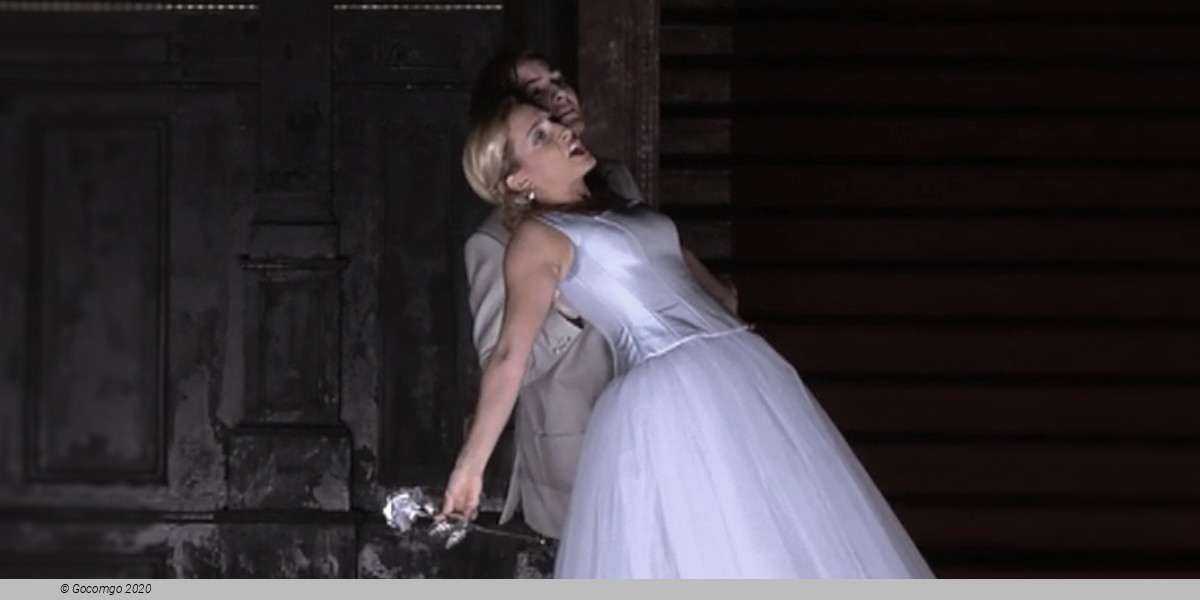
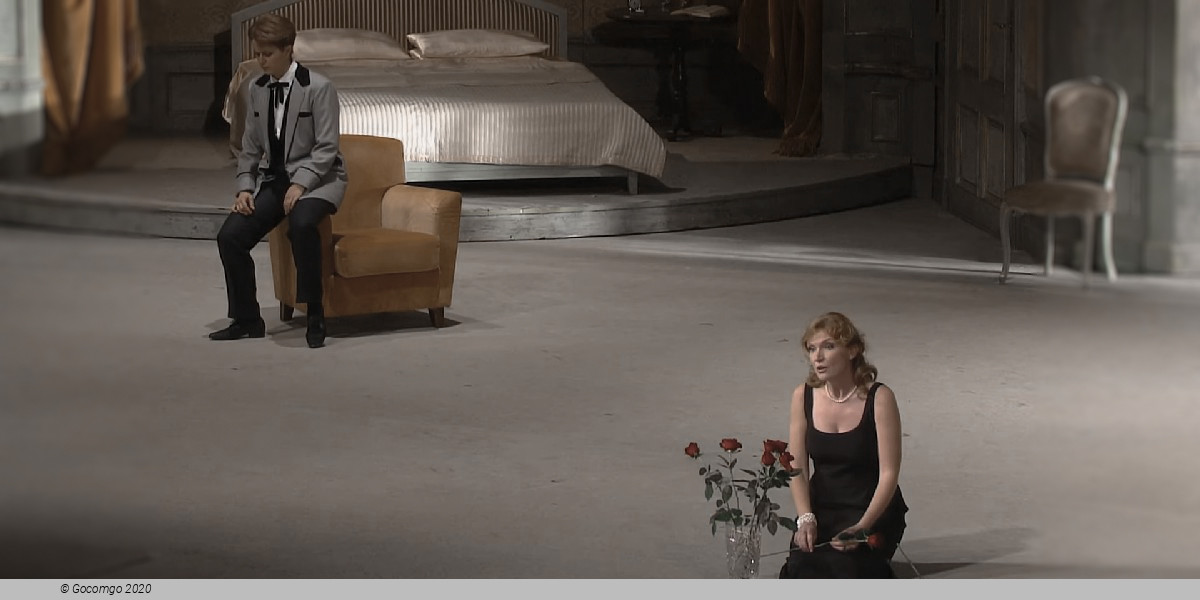
"Time, is a strange thing", sings the Marschallin. These words rarely sound such a tragic note as they do in Claus Guth's production. He summons up bitter sweet reflection about life and death in Strauss and Hofmannsthal's masterpiece. "There's more about the past in the present than one can guess", wrote Hofmannsthal about his comedy for music. His profound, yet light-footed Der Rosenkavalier is about wanting to hold on to the present and letting go of a love (and life) that has run its course, overlapping with the start of a new love. The turbulent story starts with the noisy entrance of Baron Ochs auf Lerchenau, who is hellbent on living out his erotic desires. He allows himself to be deceived by the androgynous charms of young Octavian when he slips into the role of the chambermaid Mariandl, to keep his relationship with the Marschallin secret. In the end the Baron stands there, duped. How far will Octavian and Sophie's love take them?
Time: 1740s, in the first years of the reign of Empress Maria Theresa
Place: Vienna
Act 1
The Marschallin's bedroom
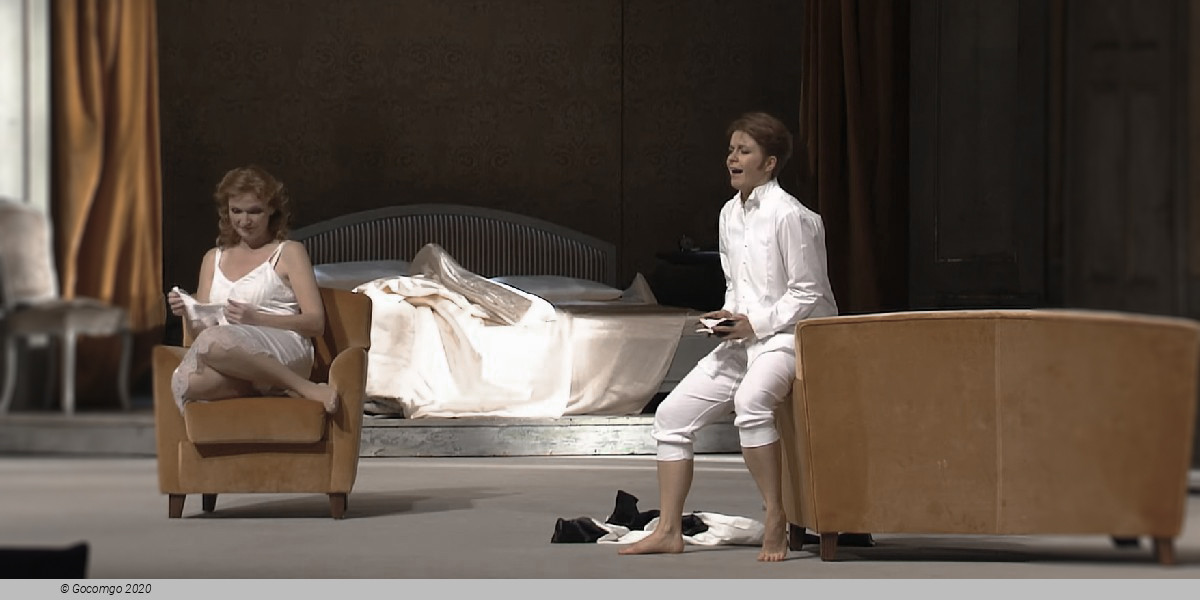
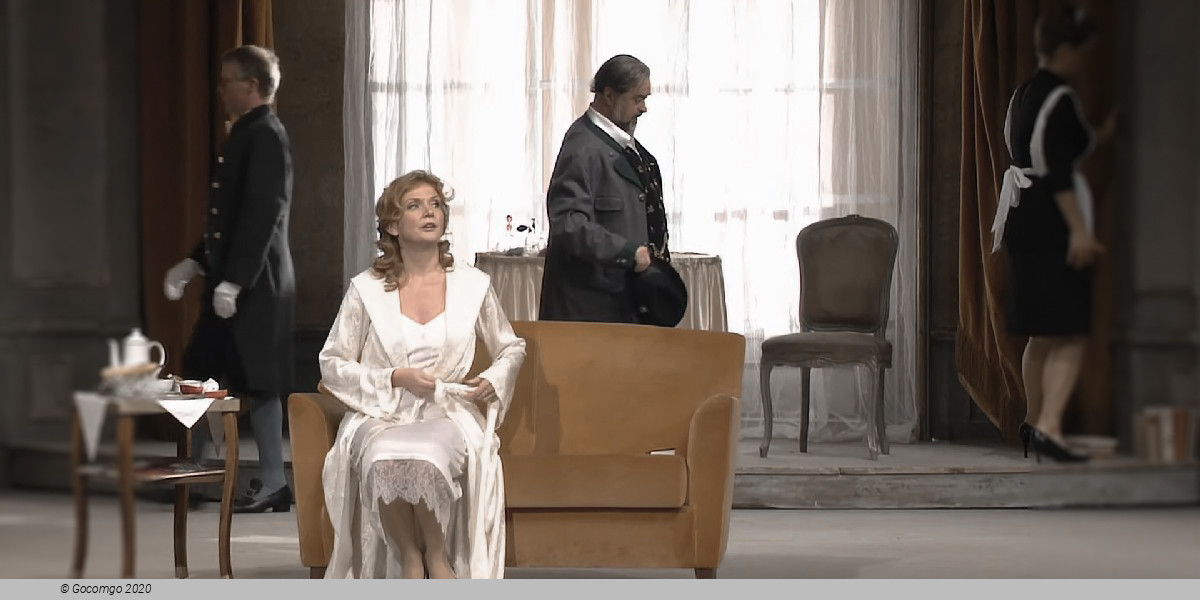
Princess Marie Therese von Werdenberg (known as the Marschallin, the title given to a Field Marshal's wife) and her much younger lover, Count Octavian Rofrano, are lounging in bed together just before daybreak ("Wie du warst! Wie du bist"). Loud voices are soon heard outside, and the Marschallin has Octavian hide, believing that her husband has returned early from a hunting trip. Octavian emerges in a skirt and bonnet ("Befehl'n fürstli' Gnad'n, i bin halt noch nit recht...") and tries to sneak away, but the Marschallin's country cousin, Baron Ochs auf Lerchenau, bursts in through the same door.
The Baron is newly engaged to Sophie Faninal ("Selbstverständlich empfängt mich Ihro Gnaden"), the daughter of a wealthy merchant, though this does not keep him from making lewd comments at the disguised Octavian. Ochs has come to ask two favors: he wants to borrow his cousin's notary to write the marriage contract, and he wants her recommendation of a young nobleman to serve as his Rosenkavalier ("Knight of the Rose"), who will deliver the traditional silver engagement rose to Sophie. The Marschallin instructs "Mariandel" to fetch Octavian's miniature portrait and present it to the Baron. Ochs easily accepts Octavian as his Rosenkavalier, deciding that the "maid" must be that young count's "bastard sister", then insists that the Marschallin allow "Mariandel" to come and work for his new bride. She refuses as politely as possible and finally dismisses the "maid".
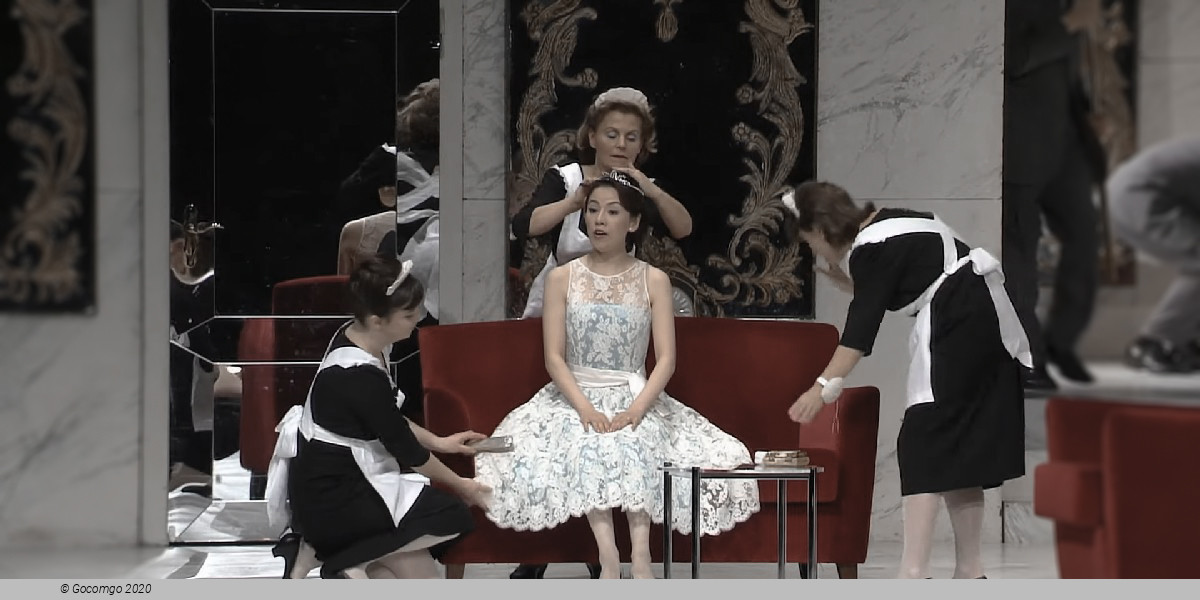
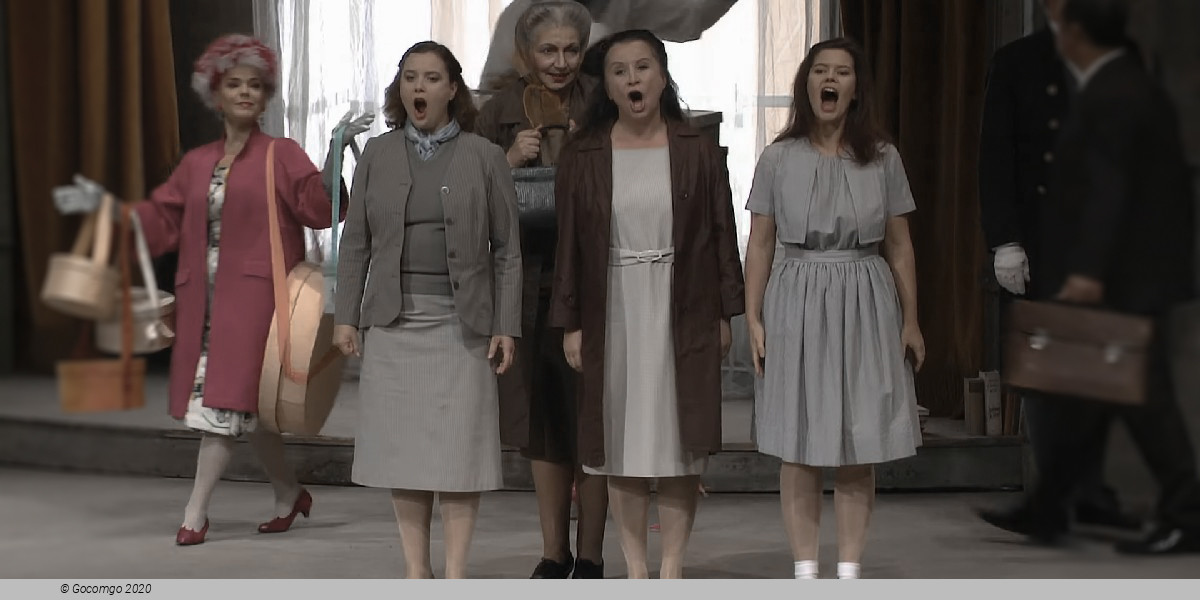
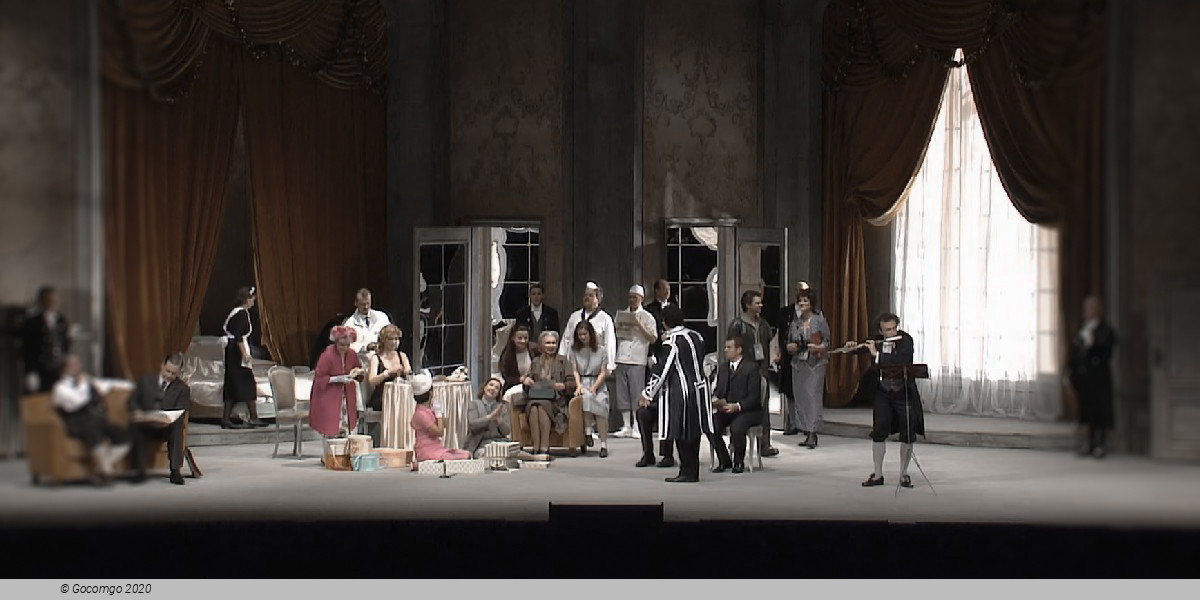
A busy reception scene ensues as the room fills with vendors and supplicants to the Marschallin ("Drei arme adelige Waisen"), who ignores the former and aids the latter. A tenor sent by the Portuguese ambassador serenades her ("Di rigori armato") while Ochs sits down with the notary. Two Italian intriguers, Valzacchi and Annina, present scandal sheets for sale, which the Marschallin coldly declines. Ochs tries to stipulate a gift from Sophie's family consisting of all their properties, free from mortgages, and quickly loses patience with the notary's attempts to explain that this is illegal. Amidst all the activity, the Marschallin remarks to her hairdresser: "My dear Hippolyte, today you have made me look like an old woman." ("Mein lieber Hippolyte"). This so disturbs her that she orders the room to be emptied. As the people file out, Valzacchi and Annina offer Baron Ochs their spying services. He asks whether they know anything about "Mariandel"; they promptly lie and claim to know all about her.
The Marschallin, now alone, ponders her waning youth and the unhappiness of her forced marriage, perceiving the same in store for Sophie Faninal ("Da geht er hin..."). Octavian returns, dressed again in men's clothes ("Ach, du bist wieder da"). When he sees that the Marschallin is out of sorts, he assumes it is from her earlier fear that he might have been discovered. But she is still thinking of the passage of time (a clock is heard chiming thirteen times) and tells him that, very soon, he will leave her for someone younger and prettier. Octavian reacts with frustration, and the Marschallin turns him away. Too late, she realizes that she has neglected to kiss him goodbye. With nothing else to be done, she summons her young page, Mohammed, to take the silver rose to Octavian, then stares pensively into her hand mirror (or similar) as the curtain falls.
Act 2
The von Faninals' palace
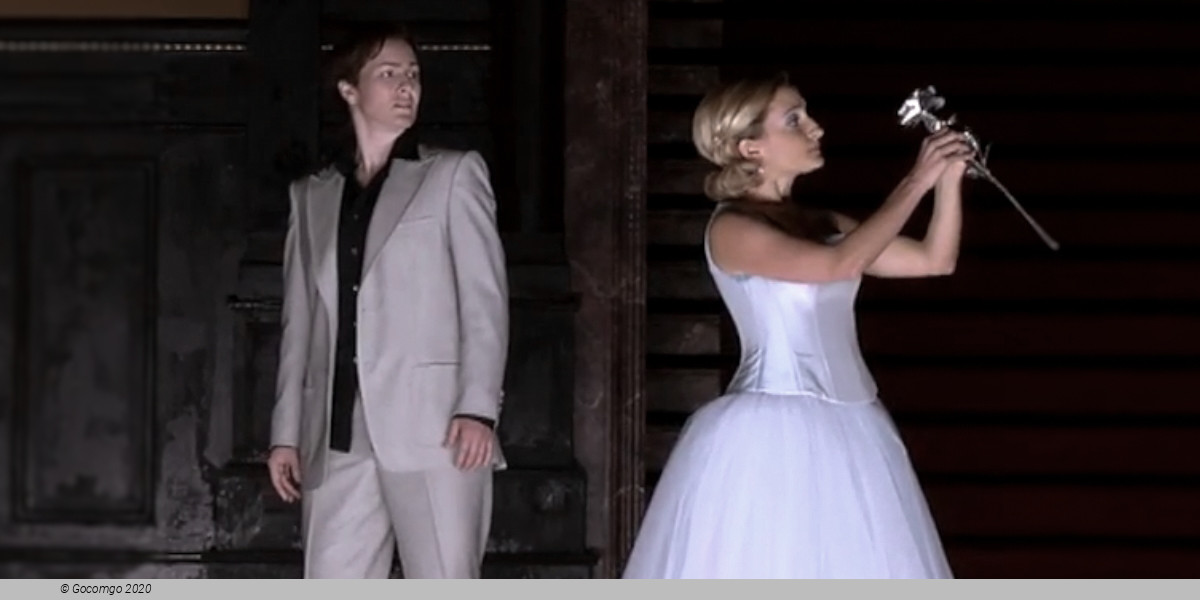
The next day, Herr von Faninal and Sophie exultantly await the arrival of the Rosenkavalier ("Ein ernster Tag, ein grosser Tag!"). Following tradition, Faninal departs before the Knight appears, saying that he will return with the bridegroom. Sophie prays to keep her sense of humility through all the rapid changes happening in her life, but she is repeatedly interrupted by her duenna, Marianne, who reports from the window on the Rosenkavalier's elaborate entourage ("In dieser feierlichen Stunde der Prüfung"). Octavian arrives with great pomp, dressed all in silver, and presents the silver rose to Sophie ("Mir ist die Ehre widerfahren..."). She smells it, saying it is as sweet as a greeting from Heaven itself. Octavian, instantly smitten, joins her avowal that they will remember this moment until death.
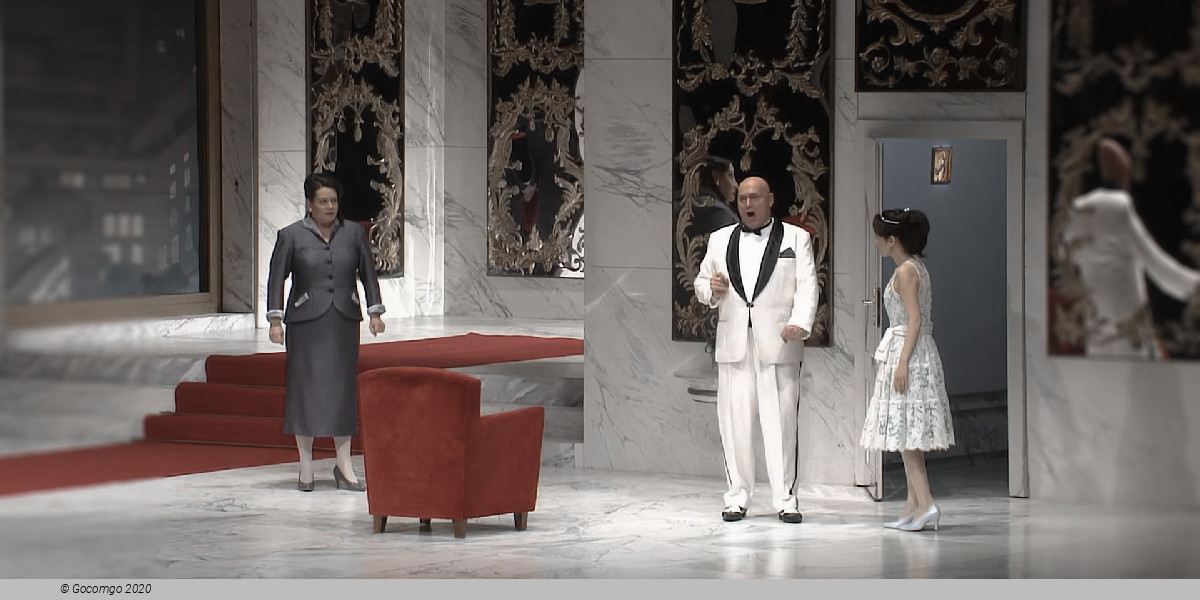
They settle into a chaperoned conversation. Sophie reveals that she already knows Octavian's full name – Octavian Maria Ehrenreich Bonaventura Fernand Hyacinth Rofrano – from studying the catalogue of Austrian nobility to prepare for her marriage. She even knows his nickname: Quinquin, which only intimate friends (including the Marschallin) call him. She adds that she likes him very much. Ochs then enters with Faninal ("Jetzt aber kommt mein Herr Zukünftiger") and wastes no time revealing his character to the bride, loudly examining Sophie's body and comparing her to "an unbroken filly" when she protests. Once he leaves the room with Faninal to finalize the marriage contract, Sophie and Octavian quickly agree that she will not marry the Baron under any circumstances.
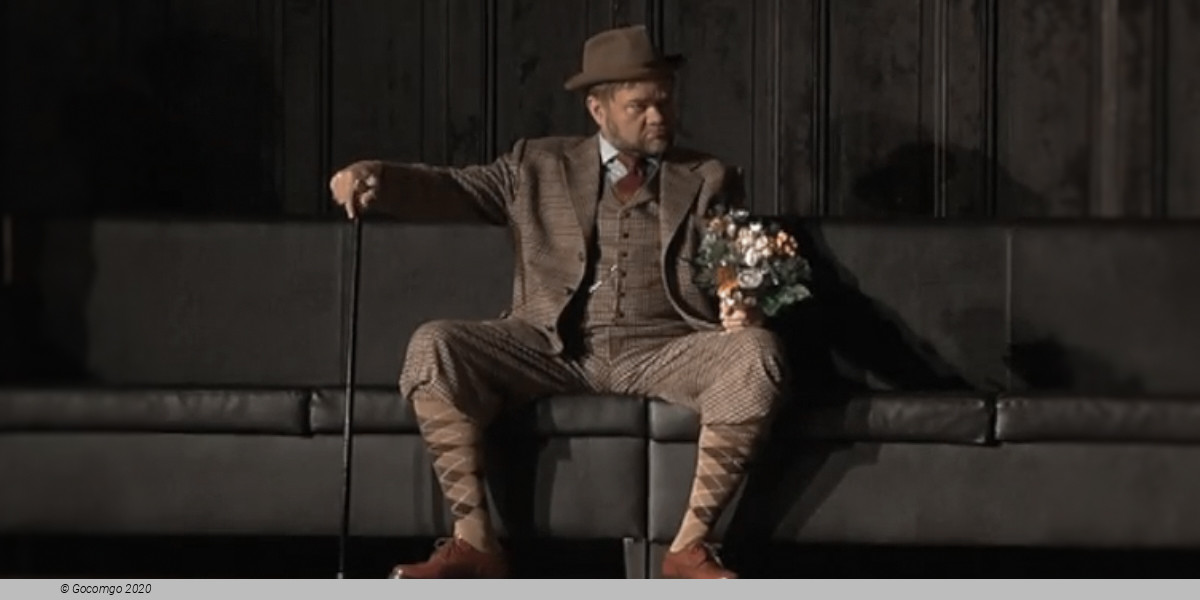
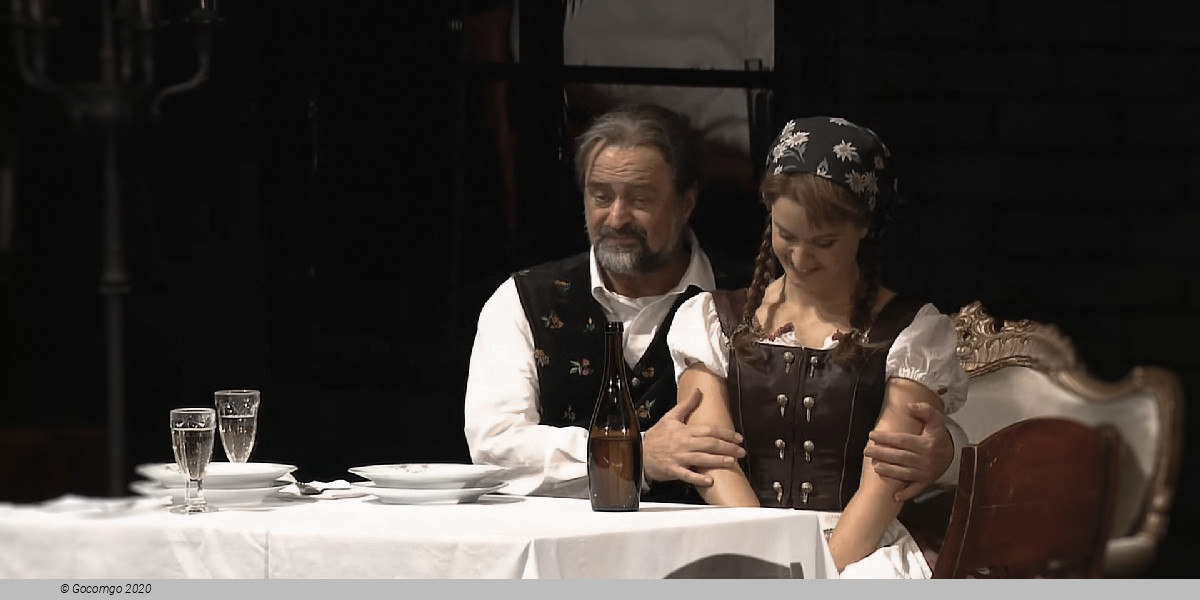
The young lovers' rapturous duet ("Mit Ihren Augen voll Tränen") is soon interrupted by Valzacchi and Annina, who surprise them and call for Ochs. Octavian challenges the Baron to a duel. Ochs runs forward, scratches his arm on the point of Octavian's drawn sword, and screams so that Faninal and the rest of the household come rushing in. Sophie begs her father to call off the wedding, to no avail: Octavian is asked to leave, and Sophie is sent to her room. Ochs is left on the divan, his arm in a sling, nursing a bottle of port and fantasies of revenge against Octavian. But Annina brings him something that raises his spirits much more quickly: a letter signed by "Mariandel," the "chambermaid" from Act 1, asking for a tryst. At this, Ochs forgets his sling and waltzes across the stage, ignoring Annina's hints for a tip - and missing her quiet promise to get even ("Da lieg' ich!").
Act 3
A private room in a shabby inn
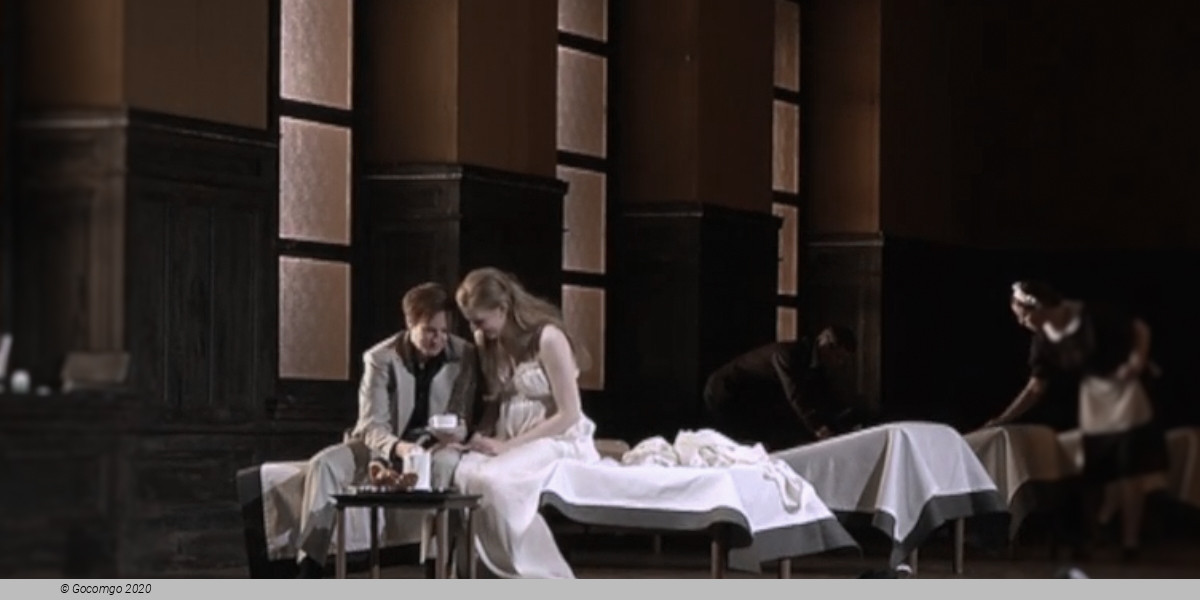
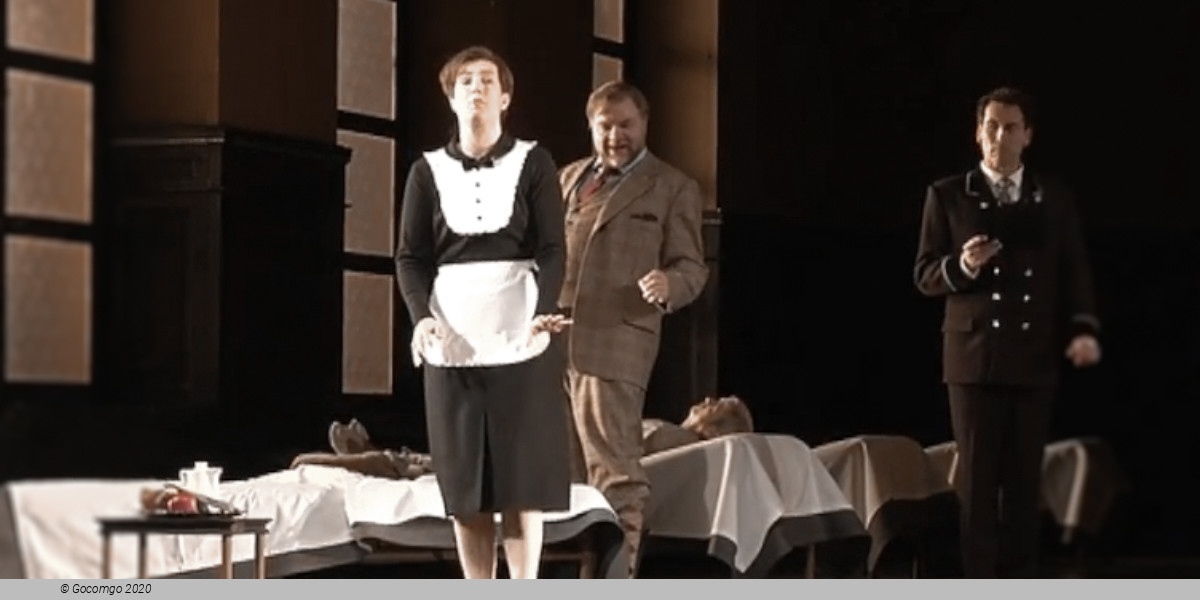
Valzacchi and Annina, fed up with the Baron, help Octavian prepare a trap the following evening. Elaborate preparations are seen in pantomime before Ochs arrives with "Mariandel," ready for a cozy dinner at a table set for two.
In spite of himself, Ochs is disturbed by "Mariandel's" uncanny resemblance to his nemesis Octavian, and he keeps catching glimpses of strange apparitions in the room. A disguised Annina bursts in, calling Ochs her husband and the father of her (numerous) children, who crowd around him crying "Papa! Papa!" The Baron calls for the police; to his unpleasant surprise, the vice squad treats him with suspicion, and Valzacchi is suddenly claiming not to know him. The police inspector asks about the "woman" accompanying him, and Ochs lies that "she" is his fiancée, Sophie Faninal - just in time for Herr von Faninal to arrive, demanding to know why Ochs' messenger (presumably Valzacchi) has summoned him to this disreputable place. When asked if "Mariandel" is his daughter, Faninal retorts in a rage that his daughter is outside. The real Sophie enters and announces once and for all that she does not consider Baron Ochs her bridegroom. Her apoplectic father staggers out, leaning on her shoulder.
"Mariandel" now offers to make a statement in private, and retires behind a screen with the Police Inspector. Soon Ochs sees articles of women's clothing coming into view. He rages against the vice squad, but is interrupted by the arrival of the Marschallin. The Police Inspector greets her before clearing the room, and she explains to the Baron that he has been had. Sophie returns, and Octavian emerges, to confirm that they set up a "masquerade" together to break his engagement. Ochs, glancing back and forth between Octavian and the Marschallin, now grasps the nature of their relationship and asks for hush money. But he is cowed by the Marschallin's force of will (if not the sight of Octavian's sword) and ingloriously departs, pursued by children and bill collectors.
The Marschallin, Sophie, and Octavian are left alone, and Octavian does not know what to do. The Marschallin introduces herself to Sophie, recognizing that the day she feared has come (Trio: "Marie Theres'!" / "Hab' mir's gelobt"), and releases Octavian to be with the woman he truly loves. She then withdraws, with a promise to Sophie that she will offer Faninal a face-saving ride home in her carriage. As soon as she is gone, Sophie and Octavian run to each other's arms. Faninal and the Marschallin return to find them locked in an embrace. With a last, bittersweet look toward her lost lover, the Marschallin heads for the carriage with Faninal. Sophie and Octavian follow after another brief but ecstatic love duet ("Ist ein Traum" / "Spür' nur dich"). The opera ends with little Mohammed trotting in to retrieve Sophie's dropped handkerchief, then racing out again after the others.




 Untermainanlage 11