
Oper Frankfurt 18 December 2023 - Christmas Eve | GoComGo.com

Christmas Eve

Oper Frankfurt, Opera House, Frankfurt am Main, Germany
All photos (8)
Select date and time
7 PM

E-tickets: Print at home or at the box office of the event if so specified. You will find more information in your booking confirmation email.

You can only select the category, and not the exact seats.
If you order 2 or 3 tickets: your seats will be next to each other.
If you order 4 or more tickets: your seats will be next to each other, or, if this is not possible, we will provide a combination of groups of seats (at least in pairs, for example 2+2 or 2+3).

Important Info
Type: Opera
City: Frankfurt am Main, Germany
Starts at: 19:00
Acts: 4
Intervals: 1
Duration: 3h
Sung in: Russian
Titles in: German,English

E-tickets: Print at home or at the box office of the event if so specified. You will find more information in your booking confirmation email.

You can only select the category, and not the exact seats.
If you order 2 or 3 tickets: your seats will be next to each other.
If you order 4 or more tickets: your seats will be next to each other, or, if this is not possible, we will provide a combination of groups of seats (at least in pairs, for example 2+2 or 2+3).

Overview

Performance of the Year 2022 (Opernwelt) is back for the first time after its celebrated first run.

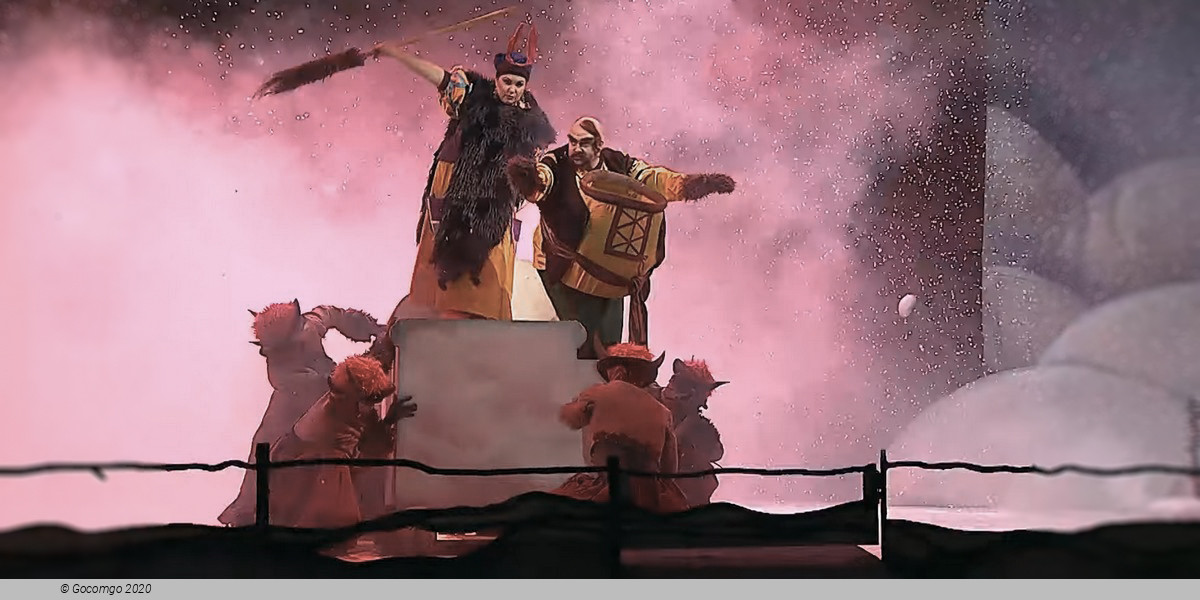
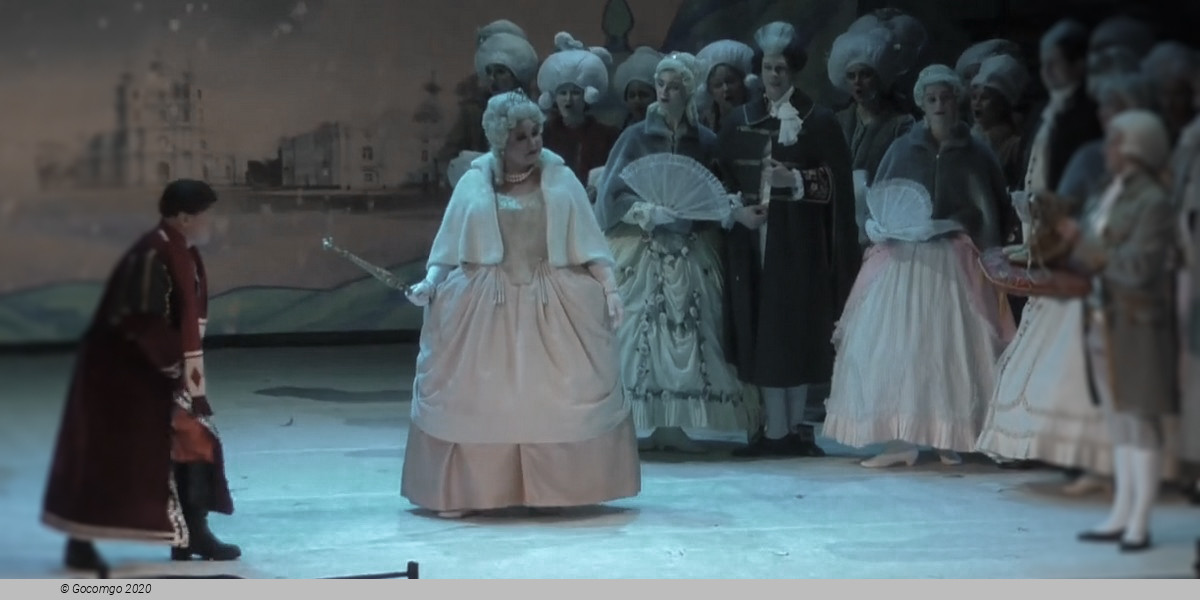
Rimsky Korsakov combined a satirical realistic portrayal of Christmas in a village with surprises: smith Wakula’s love for the rich farmer’s daughter Oksana is unrequited. She says she'll only marry him if he brings her the Tsarina’s golden shoes. While Wakula, with the Devil’s help, flies off to the capital, the return of sun gods Koljada and Owsen hail the winter solstice. The end of the season of darkness is near, and Wakula manages to win Oksana around in the end too. Irrisitible magic begins to cast its spell from the opening bars. The composer investigating his protagonists' secrets with relish, while making the stars dance in shimmering colours.

History
Premiere of this production: 10 December 1895, Mariinsky Theatre

Christmas Eve is an opera in four acts with music and libretto by Nikolai Rimsky-Korsakov. Composed between 1894 and 1895, Rimsky-Korsakov based his opera on a short story, "Christmas Eve", from Nikolai Gogol's Evenings on a Farm Near Dikanka.

Synopsis

Act 1

Tableau 1: Christmas Eve in the hamlet of Dikanka

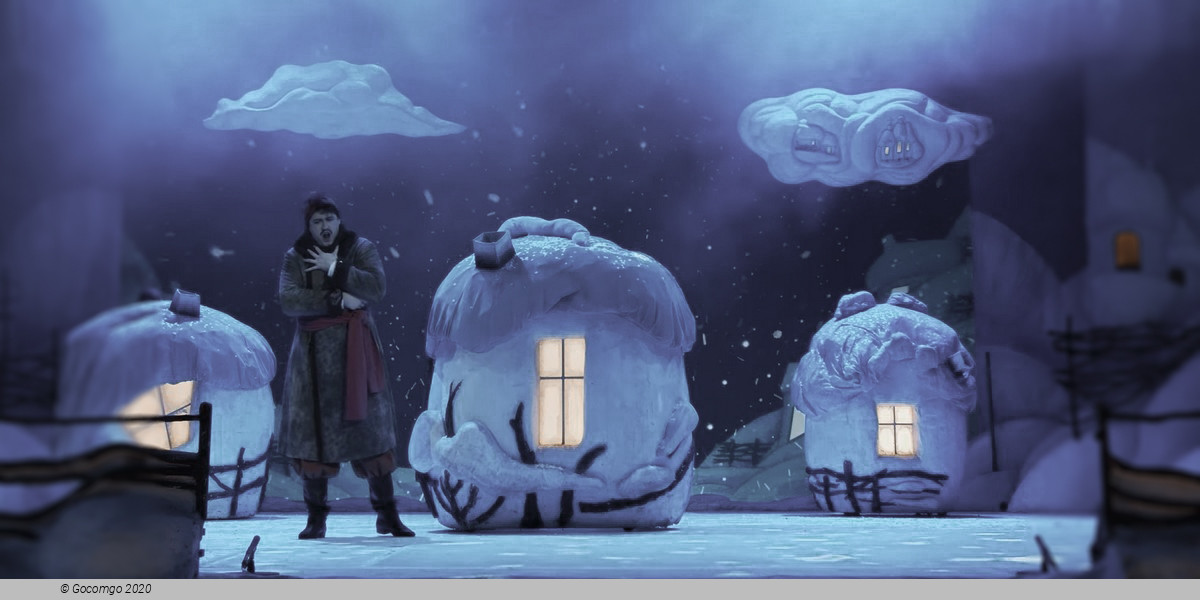
The widow Solokha agrees to help the Devil steal the moon. The Devil is annoyed with Solokha's son Vakula, who painted an icon mocking him. The Devil decides to create a snowstorm to prevent Vakula from seeing his beloved Oksana. While the storm rages, Solokha rides up to the sky and steals the moon, while the Deacon and Oksana's father, Chub, are unable to find their way.

Tableau 2: Interior of Chub's house

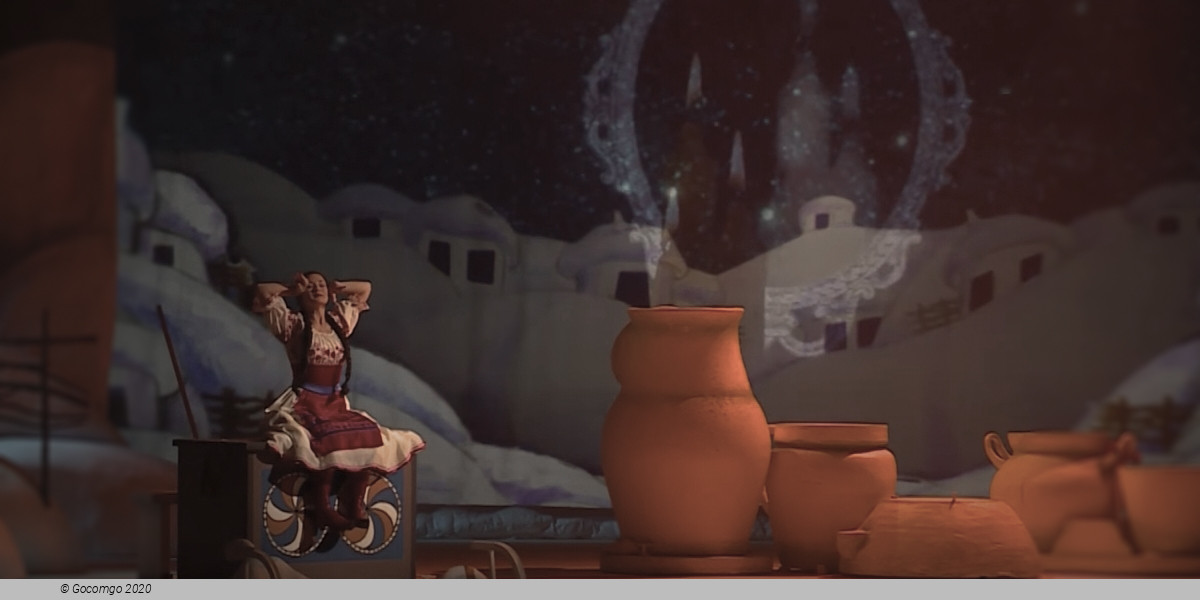
Oksana is alone and lonely at home. She passes through several moods and the music follows her with gradually accelerating tempos. At one point, Vakula enters and watches her admiring herself. She teases him, and he says he loves her, but she replies that she will only marry him if he brings her a pair of the Empress's slippers. Chub comes back out of the storm, and Vakula, not recognizing him and taking him for a rival, chases him out by striking him. Seeing what he has done, Oksana sends Vakula away in a miserable state. Young people from the village come around singing Ukrainian Christmas carols. Oksana realizes she still loves Vakula.

Act 2

Tableau 3: Solokha's house

The Devil is just getting cosy at Solokha's hut when in succession the mayor, the priest and Chub arrive to seduce her each hiding in a sack when the next arrives. Vakula hauls the four heavy sacks to his smithy.

Tableau 4: Vakula's smithy

Vakula puts down his sacks. Young men and women, including Oksana, gather singing Kolyadki and having fun. Vakula, however, is bored and dejected. Oksana taunts Vakula one last time about the Tsaritsa's slippers. Vakula gives his farewell to the lads and to Oksana, exclaiming that he will perhaps meet them in another world. He leaves the sacks - from which the four men emerge.

Act 3

Tableau 5: Inside Patsyuk's house

Patsyuk makes magic vareniki jump into his mouth. Vakula has come to request assistance from him. Patsyuk advises him that in order to obtain the help of the devil, he must go to the devil. Vakula puts down his sack, and the devil jumps out and tries to get his soul in exchange for Oksana. Vakula, however, grabs him by his neck, and climbs on his back. He forces the devil to fly him to St. Petersburg.

Tableau 6: Space. Moon and stars

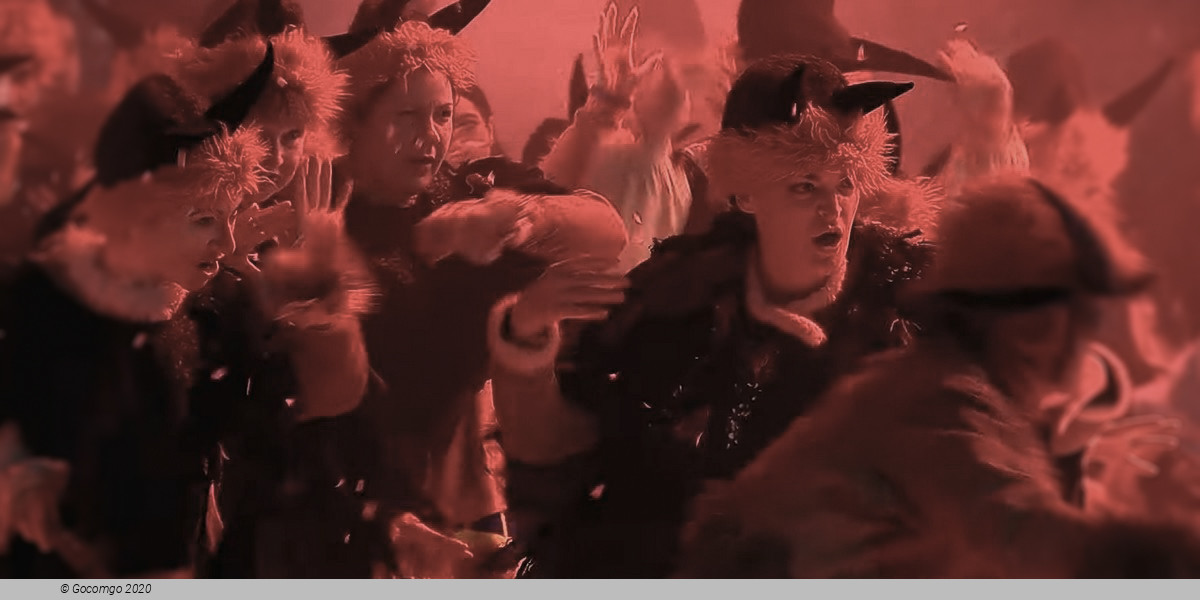
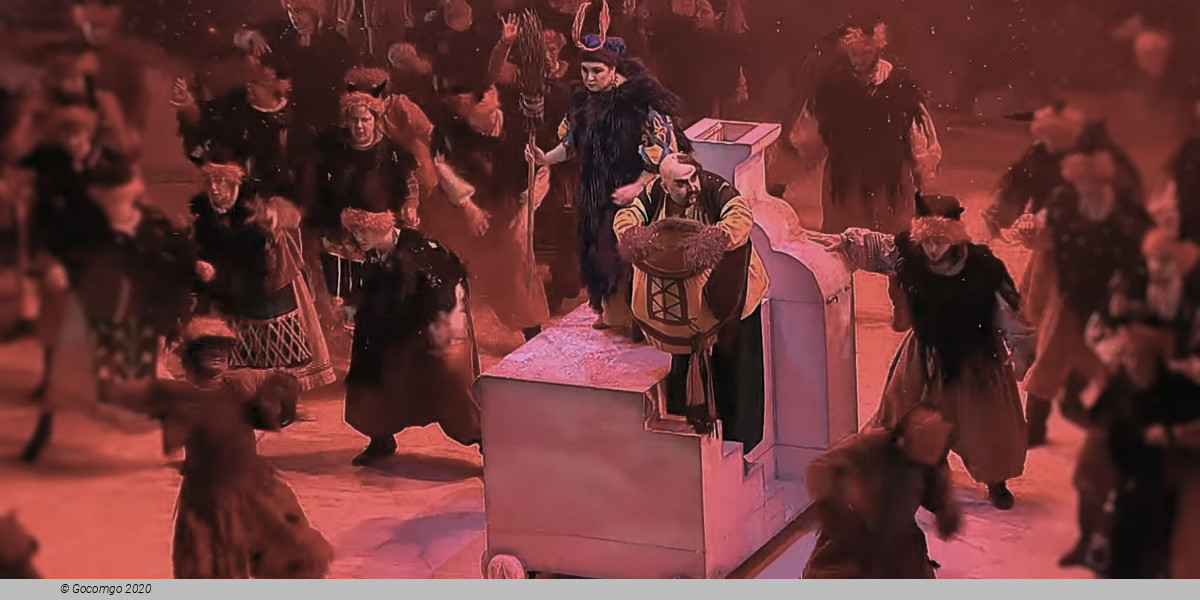
We witness the charming "Games and Dances of the Stars". This is followed by the "Diabolical Kolyadka" in which Patsyuk, riding a mortar, and Solokha, on her broom, attempt to stop Vakula. He succeeds, however, in getting through, and the lights of St. Petersburg become visible through the clouds.

Tableau 7: A palace. A sumptuous room, brightly lit

The Devil puts down Vakula in the tsaritsa's court and disappears into the fireplace. Vakula joins a group of Zaporozhian Cossacks who are petitioning the tsaritsa. A chorus sings the tsaritsa's praises in a magnificent polonaise. The tsaritsa addresses the Cossacks. Vakula requests the tsaritsa's boots to the music of a minuet, and his wish is granted because of its unusual and amusing nature. The Devil takes Vakula away as Russian and Cossack dances commence.

Tableau 8: Space. Night

Vakula returns home on the devil's back. We witness the procession of Kolyada (young girl in a carriage) and Ovsen (boy on a boar's back). On approaching Dikanka, we hear church bells and a choir.

Act 4

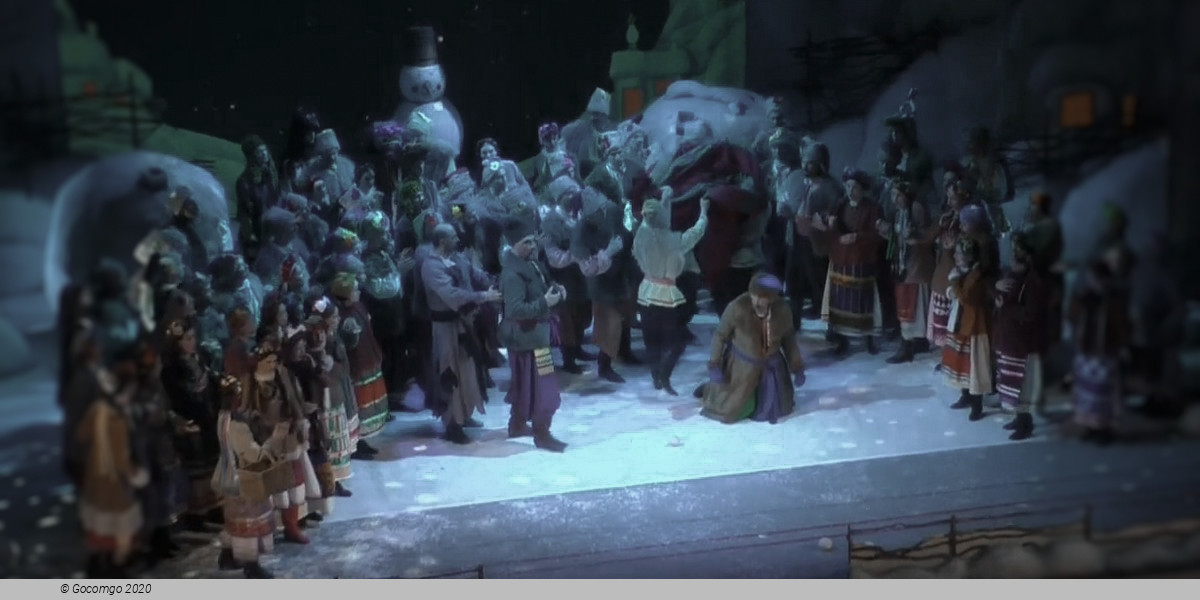
Tableau 9: Christmas Day. Courtyard beside Chub's house

Oksana listens to some women exchanging gossip about Vakula, who is believed to have committed suicide. Alone, Oksana sings an aria expressing her regret that she had treated Vakula harshly, and wishing for his return. He appears with the boots, followed by Chub. Vakula asks Chub for Oksana's hand in marriage and Chub assents. Vakula and Oksana sing a duet. Other characters enter and ask Vakula about his disappearance.

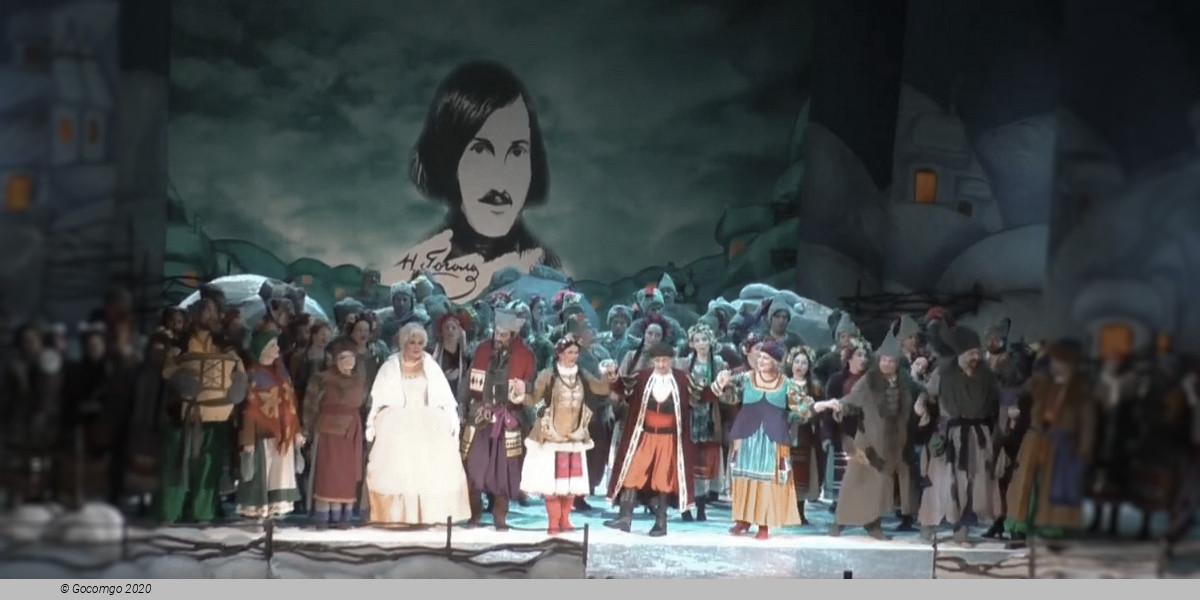
Epilogue: In memory of Gogol

Vakula announces that he will relate his story to the beekeeper Panko the Gingerhead (i.e., Gogol), who will write a story of Christmas Eve. There is general rejoicing.

Venue Info

Oper Frankfurt - Frankfurt am Main
Location   Untermainanlage 11

The Oper Frankfurt (Frankfurt Opera) is one of the leading opera companies in Europe, and voted best "Opera house of the year" several times since 1996.

Opera in Frankfurt am Main has a long tradition, with many world premieres such as Franz Schreker's Der ferne Klang in 1912, Fennimore und Gerda by Frederick Delius in 1919, and Carl Orff's Carmina Burana in 1937. Frankfurt's international recognition began in the Gielen Era, 1977 to 1987, when Michael Gielen and stage directors such as Ruth Berghaus collaborated.

A historic opera house from 1880 was destroyed in World War II, and reconstructed as a concert hall, Alte Oper. The present opera house, built in 1963, is under one roof with the stage for drama. The opera orchestra is called Frankfurter Opern- und Museumsorchester. Today's venue for Baroque and contemporary opera is the Bockenheimer Depot, a former tram depot.

Oper Frankfurt is part of the Städtische Bühnen Frankfurt.

Frankfurt's first opera was Johann Theile's Adam und Eva, performed in 1698 by Johann Velten's touring company. The young Goethe's first operas in his home town of Frankfurt were productions by Theobald Marchand's company.

1782 – 1880
Opened in 1782, the Comoedienhaus was the first permanent venue of the Frankfurt Theater (drama and opera). In 1878 German violinist Willy Hess took up the leadership of the Oper Frankfurt. He resigned from that post in 1886 to take up a professorship in the Rotterdam Conservatorium voor Muziek.

1880 – 1944
The first representative opera house of the city was inaugurated in Frankfurt in 1880 at Opernplatz. Under the direction of the first Intendant Emil Claar and the first Kapellmeister Felix Otto Dessoff, the house was opened with Mozart's opera Don Giovanni.

During the 1920s, the opera in Frankfurt had more prominent Jewish singers than any other company in Germany, including the tenor Hermann Schramm, bass Hans Erl (the first King in Schreker's Der Schatzgräber), baritone Richard Breitenfeld and contralto Magda Spiegel, who also toured with Frankfurt Opera performing Wagner in the Netherlands. These singers were forced to leave the opera in June 1933. Orff's Carmina Burana was premiered at Oper Frankfurt in 1937. Jewish members of the opera company among those rounded up at 9 November 1938 at the Festhalle Frankfurt, where Erl sang In diesen Heilgen Hallen, from the Magic Flute for the deportees. Members of Frankfurt Opera were sent to Auschwitz and other camps where they perished.

1945 – 1970s
The opera house was damaged in an air raid in January 1944, and then almost completely destroyed in March. A new house for opera and play was built, completed in 1963 at the Theaterplatz (now Willy-Brandt-Platz). In 1952, Georg Solti became Generalmusikdirektor (GMD) and Intendant of the Oper Frankfurt, where he remained in charge for nine years.

The Gielen Era
From 1977 to 1987, Frankfurt Opera was led by Michael Gielen. This decade became known as the "Gielen Era", notable for the music of a conductor who was also a composer, and directors including Ruth Berghaus and Hans Neuenfels, whose productions of standard works such as Verdi's Aida and Wagner's Ring Cycle were thought-provoking. Operas which received their world premieres at the house were also performed again, including Franz Schreker's Die Gezeichneten.

1987 – present
The stage of the opera house was destroyed by a fire in November 1987. The opera house was rebuilt and opened in April 1991. Many famous singers started their career with the company, including Franz Völker, Edda Moser, Cheryl Studer and Diana Damrau, and many established artists have been engaged there in recent seasons including Christian Gerhaher, whose roles here have included Monteverdi's L'Orfeo and his first Wolfram in Wagner's Tannhäuser, Piotr Beczała in Massenet's Werther and Jan-Hendrik Rootering in Wagner's Parsifal.

Since 2002, Bernd Loebe has served as Intendant of the company. The company's current GMD is Sebastian Weigle, since 2008. Weigle has made commercial recordings of opera with the company for the OEHMS Classics label. He is scheduled to stand down as GMD of Oper Frankfurt at the close of the 2022–2023 season. In October 2021, the company announced the appointment of Thomas Guggeis as the next GMD of the company, effective with the 2023–2024 season, with an initial contract of 5 years.

Oper Frankfurt was voted 1996, 2003, 2015, 2018 and 2020 "Opera House of the Year" by the magazine Opernwelt.

Important Info
Type: Opera
City: Frankfurt am Main, Germany
Starts at: 19:00
Acts: 4
Intervals: 1
Duration: 3h
Sung in: Russian
Titles in: German,English
Top of page