
Oper Frankfurt 22 October 2022 - Capriccio | GoComGo.com

Capriccio

Oper Frankfurt, Opera House, Frankfurt am Main, Germany
All photos (6)
Select date and time
7:30 PM

E-tickets: Print at home or at the box office of the event if so specified. You will find more information in your booking confirmation email.

You can only select the category, and not the exact seats.
If you order 2 or 3 tickets: your seats will be next to each other.
If you order 4 or more tickets: your seats will be next to each other, or, if this is not possible, we will provide a combination of groups of seats (at least in pairs, for example 2+2 or 2+3).

Important Info
Type: Opera
City: Frankfurt am Main, Germany
Starts at: 19:30
Acts: 1
Duration: 2h 20min
Sung in: German
Titles in: German,English

E-tickets: Print at home or at the box office of the event if so specified. You will find more information in your booking confirmation email.

You can only select the category, and not the exact seats.
If you order 2 or 3 tickets: your seats will be next to each other.
If you order 4 or more tickets: your seats will be next to each other, or, if this is not possible, we will provide a combination of groups of seats (at least in pairs, for example 2+2 or 2+3).

Overview

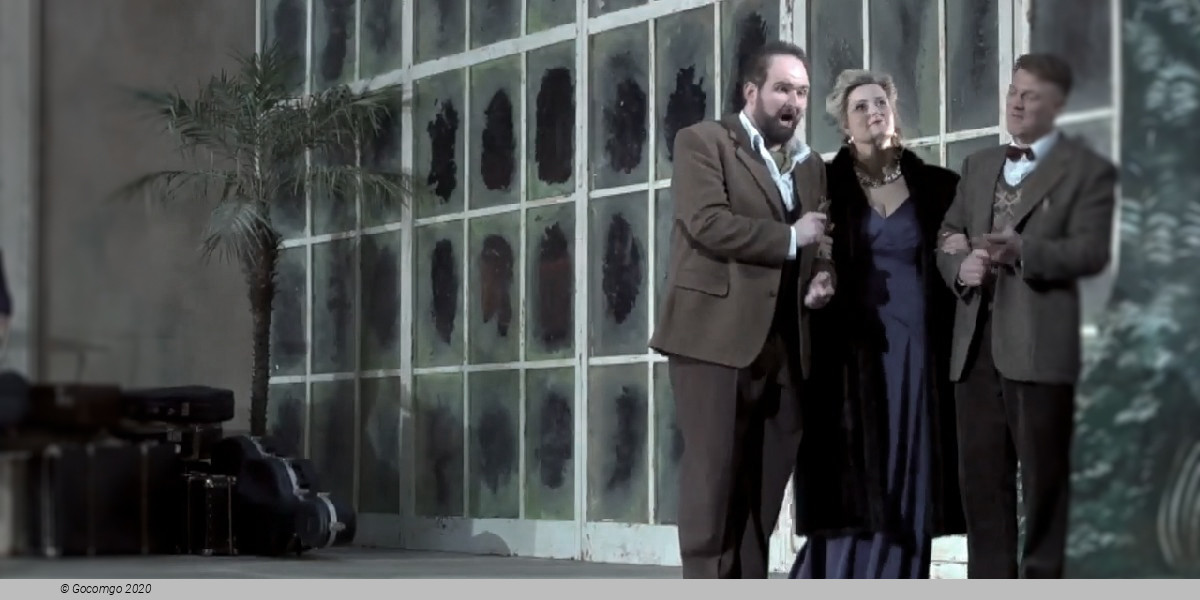
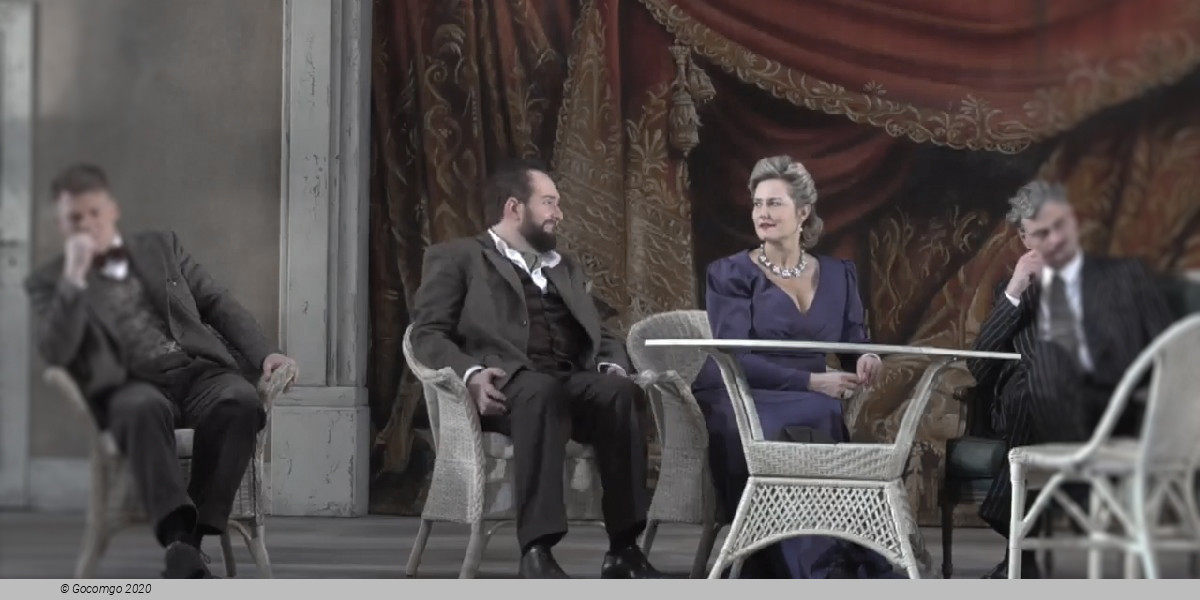
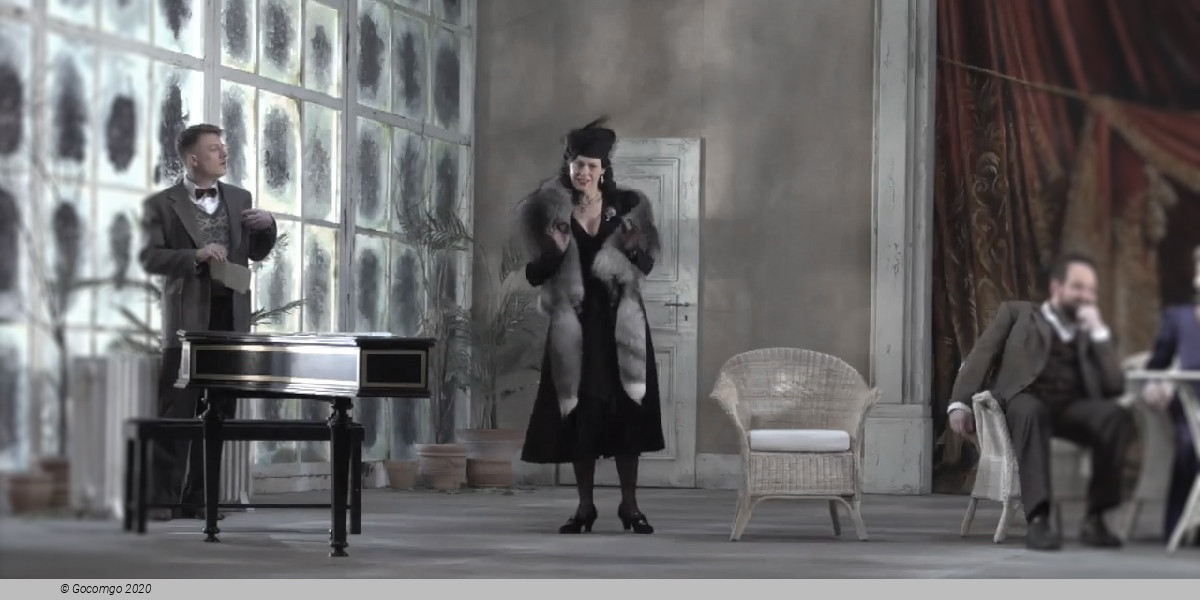
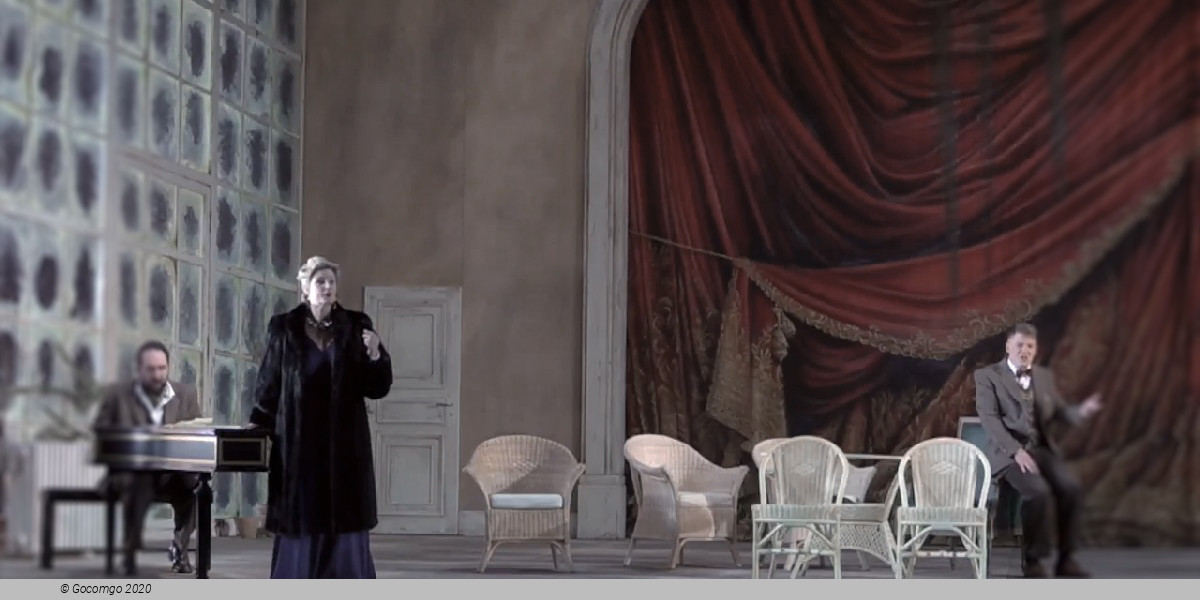
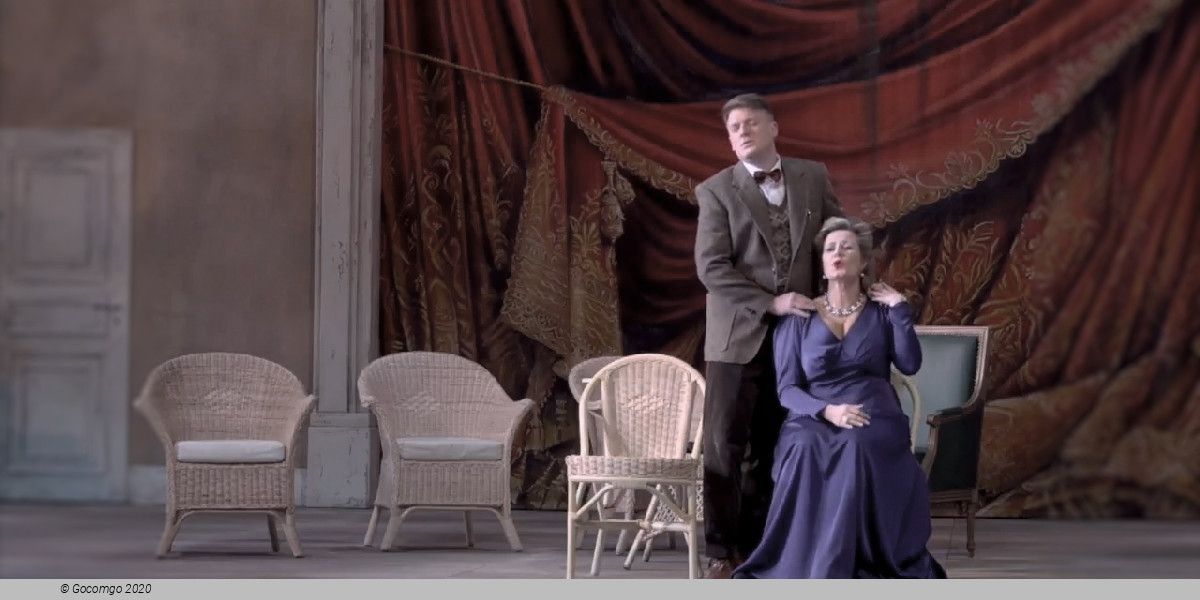
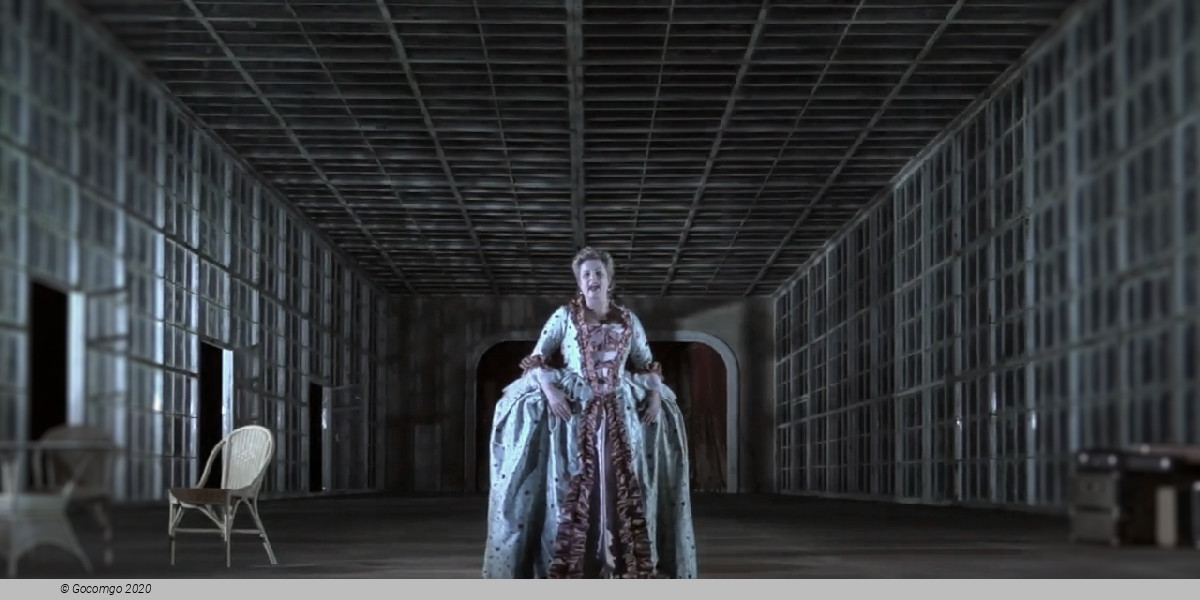
Brigitte Fassbaender‘s take on events that could have taken place in Paris in 1775, plays out in set and costumes by Johannes Leiacker inspired by the times when the work was composed: the 1940s – a time when the German national socialists’ cultural politics, even in France, was to entertain more than anything else - much like Strauss's last work for the stage, Capriccio.

When he was 78 Richard Strauss wrote a discours à l’art pour l’art, called Capriccio, in which artists and aristocrats argue in light-footed Parlando style with wit and poignancy about the merits of music and words in opera. The composer Flamand and poet Olivier, vying for arts-smitten countess Madeleine, personificate the argument. His “Conversation Piece for Music”, with stylistic side glances at Mozart and Wagner - Strauss' orienteering stars - turns into a reflection on what or how opera was, is and could be.

History
Premiere of this production: 28 October 1942, Nationaltheater München

Capriccio is the final opera by German composer Richard Strauss, subtitled "A Conversation Piece for Music". The opera received its premiere performance at the Nationaltheater München on 28 October 1942. Clemens Krauss and Strauss wrote the German libretto. However, the genesis of the libretto came from Stefan Zweig in the 1930s, and Joseph Gregor further developed the idea several years later. Strauss then took on the libretto, but finally recruited Krauss as his collaborator on the opera. Most of the final libretto is by Krauss.

Synopsis

Place: A château near Paris
Time: About 1775

At the Countess Madeleine's château, a rehearsal of Flamand's newly composed sextet is in progress. (This sextet is in reality a very fine composition for string sextet and is played in concert form as a piece of chamber music, independent of the opera.) Olivier and Flamand debate the relative powers of words and music. They engage in a rather furious argument which is semi-spoken rather than sung in definable arias. The theatre director La Roche wakes from a nap, and reminds them both that impresarios and actors are necessary to bring their work to life. Olivier has written a new play for the Countess's birthday the next day, which will be directed by La Roche, with the Count and the famous actress Clairon performing. La Roche, Olivier and Flamand proceed to a rehearsal.

The Count, the Countess's brother, teases his sister about her two suitors, Flamand and Olivier, and tells her that her love of music is due in part to the attentions that Flamand pays her. In turn, she tells her brother that his love of words is in keeping with his attraction to the actress Clairon. The Countess admits that she cannot decide which of her suitors she prefers. Clairon arrives, and she and the Count read a scene from Olivier's play, which culminates in a love sonnet. They leave to join La Roche at the rehearsal.

Olivier tells the Countess that he means the sonnet for her. Flamand then sets the sonnet to music, while Olivier declares his love for the Countess. Flamand sings them his new composition, accompanying himself on the harpsichord. Olivier feels that Flamand has ruined his poem, while the Countess marvels at the magic synthesis of words and music. Olivier is asked to make cuts to his play and leaves for La Roche's rehearsal. Flamand declares his love for the Countess and poses the question – which does she prefer, poetry or music? She asks him to meet her in the library the next morning at 11, when she will give him her decision. She orders chocolate in the drawing-room. [At this point, some directors bring down the curtain and there is an interval.] The actors and La Roche return from their rehearsal and the Count declares that he is bewitched by Clairon. Madeleine tells him of her reluctance to choose between her two suitors, and the brother and sister gently tease each other again. Refreshments are served as dancers and two Italian singers entertain the guests. The Count, Countess, Flamand, Olivier, Clairon and La Roche reflect on the respective merits of dance, music and poetry. The discussion is lively, even aggressive on the part of the men. The Count declares that "opera is an absurd thing".

La Roche describes his planned two-part birthday entertainment for the Countess, the "Birth of Pallas Athene" followed by the "Fall of Carthage". The guests laugh and mock his extravagant ideas, but La Roche, in a monologue of the merits, attacks what he sees as the weakness of these contemporary youngsters, whose creations fail to reach the heart; he defends his faith in the theatre of the past and his own work as a mature director and a preserver of the great traditions of the arts. He challenges Flamand and Olivier to create new masterworks that will reveal real people in all their complexity. The Countess manages to reconcile the three, urging them to make peace, pointing out how their arts are interdependent; she commissions the pair to collaborate on an opera. They search for a plot and it is the Count, "who doesn't care much for music, he prefers military marches" teases his sister, who hits on the bold idea of an opera which depicts the very events of that afternoon, the characters to be real people "like us", just as La Roche wishes – the ending to be decided by the Countess.

The Count and Clairon depart for Paris with the theatre company. In a witty touch, the next scene consists of the servants commenting, as they clean up the room after the guests have all left, on how absurd it would be to portray servants in an opera. "Soon everyone will be an actor," they sing. They deride their employers for 'playing' at the theatre and discuss who the Countess might be in love with. The Major-Domo discovers the prompter, Monsieur Taupe, who has fallen asleep and has been left behind. In a scene of much humour, Monsieur Taupe explains that it is actually he who is the most important person in the theatre – without him, there would be no entertainment. The Major-Domo listens patiently and then arranges for food and his transport home.

As evening falls, the Countess returns, having dressed for supper, and learns from the Major-Domo that her brother has gone to Paris with Clairon, leaving her to dine alone. The Major-Domo reminds her that both Olivier and Flamand will meet her in the library in the morning to learn the ending of the opera. Alone, and still undecided as to both the ending of the opera and her choice of lover, she sings of the inseparability of words and music. In like manner she tells herself that if she chooses one she will win him but lose the other. She consults her image in the mirror, asking "Is there any ending that isn't trivial?" The Major-Domo announces that "Dinner is served" and the Countess slowly leaves the room.

The opera is a light-hearted treatment of a serious subject: the relative importance of music, poetry, dance and theatre, cleverly set as an opera within an opera.

Venue Info

Oper Frankfurt - Frankfurt am Main
Location   Untermainanlage 11

The Oper Frankfurt (Frankfurt Opera) is one of the leading opera companies in Europe, and voted best "Opera house of the year" several times since 1996.

Opera in Frankfurt am Main has a long tradition, with many world premieres such as Franz Schreker's Der ferne Klang in 1912, Fennimore und Gerda by Frederick Delius in 1919, and Carl Orff's Carmina Burana in 1937. Frankfurt's international recognition began in the Gielen Era, 1977 to 1987, when Michael Gielen and stage directors such as Ruth Berghaus collaborated.

A historic opera house from 1880 was destroyed in World War II, and reconstructed as a concert hall, Alte Oper. The present opera house, built in 1963, is under one roof with the stage for drama. The opera orchestra is called Frankfurter Opern- und Museumsorchester. Today's venue for Baroque and contemporary opera is the Bockenheimer Depot, a former tram depot.

Oper Frankfurt is part of the Städtische Bühnen Frankfurt.

Frankfurt's first opera was Johann Theile's Adam und Eva, performed in 1698 by Johann Velten's touring company. The young Goethe's first operas in his home town of Frankfurt were productions by Theobald Marchand's company.

1782 – 1880
Opened in 1782, the Comoedienhaus was the first permanent venue of the Frankfurt Theater (drama and opera). In 1878 German violinist Willy Hess took up the leadership of the Oper Frankfurt. He resigned from that post in 1886 to take up a professorship in the Rotterdam Conservatorium voor Muziek.

1880 – 1944
The first representative opera house of the city was inaugurated in Frankfurt in 1880 at Opernplatz. Under the direction of the first Intendant Emil Claar and the first Kapellmeister Felix Otto Dessoff, the house was opened with Mozart's opera Don Giovanni.

During the 1920s, the opera in Frankfurt had more prominent Jewish singers than any other company in Germany, including the tenor Hermann Schramm, bass Hans Erl (the first King in Schreker's Der Schatzgräber), baritone Richard Breitenfeld and contralto Magda Spiegel, who also toured with Frankfurt Opera performing Wagner in the Netherlands. These singers were forced to leave the opera in June 1933. Orff's Carmina Burana was premiered at Oper Frankfurt in 1937. Jewish members of the opera company among those rounded up at 9 November 1938 at the Festhalle Frankfurt, where Erl sang In diesen Heilgen Hallen, from the Magic Flute for the deportees. Members of Frankfurt Opera were sent to Auschwitz and other camps where they perished.

1945 – 1970s
The opera house was damaged in an air raid in January 1944, and then almost completely destroyed in March. A new house for opera and play was built, completed in 1963 at the Theaterplatz (now Willy-Brandt-Platz). In 1952, Georg Solti became Generalmusikdirektor (GMD) and Intendant of the Oper Frankfurt, where he remained in charge for nine years.

The Gielen Era
From 1977 to 1987, Frankfurt Opera was led by Michael Gielen. This decade became known as the "Gielen Era", notable for the music of a conductor who was also a composer, and directors including Ruth Berghaus and Hans Neuenfels, whose productions of standard works such as Verdi's Aida and Wagner's Ring Cycle were thought-provoking. Operas which received their world premieres at the house were also performed again, including Franz Schreker's Die Gezeichneten.

1987 – present
The stage of the opera house was destroyed by a fire in November 1987. The opera house was rebuilt and opened in April 1991. Many famous singers started their career with the company, including Franz Völker, Edda Moser, Cheryl Studer and Diana Damrau, and many established artists have been engaged there in recent seasons including Christian Gerhaher, whose roles here have included Monteverdi's L'Orfeo and his first Wolfram in Wagner's Tannhäuser, Piotr Beczała in Massenet's Werther and Jan-Hendrik Rootering in Wagner's Parsifal.

Since 2002, Bernd Loebe has served as Intendant of the company. The company's current GMD is Sebastian Weigle, since 2008. Weigle has made commercial recordings of opera with the company for the OEHMS Classics label. He is scheduled to stand down as GMD of Oper Frankfurt at the close of the 2022–2023 season. In October 2021, the company announced the appointment of Thomas Guggeis as the next GMD of the company, effective with the 2023–2024 season, with an initial contract of 5 years.

Oper Frankfurt was voted 1996, 2003, 2015, 2018 and 2020 "Opera House of the Year" by the magazine Opernwelt.

Important Info
Type: Opera
City: Frankfurt am Main, Germany
Starts at: 19:30
Acts: 1
Duration: 2h 20min
Sung in: German
Titles in: German,English
Top of page