
Metropolitan Opera tickets 27 November 2026 - Samson et Dalila | GoComGo.com

Samson et Dalila

Metropolitan Opera, Metropolitan Opera, New York, USA
All photos (7)
Select date and time
7:30 PM
From
US$ 101

E-tickets: Print at home or at the box office of the event if so specified. You will find more information in your booking confirmation email.

You can only select the category, and not the exact seats.
If you order 2 or 3 tickets: your seats will be next to each other.
If you order 4 or more tickets: your seats will be next to each other, or, if this is not possible, we will provide a combination of groups of seats (at least in pairs, for example 2+2 or 2+3).

Important Info
Type: Opera
City: New York, USA
Starts at: 19:30
Acts: 3
Intervals: 2
Duration: 3h 35min
Sung in: French
Titles in: English,German,Spanish

E-tickets: Print at home or at the box office of the event if so specified. You will find more information in your booking confirmation email.

You can only select the category, and not the exact seats.
If you order 2 or 3 tickets: your seats will be next to each other.
If you order 4 or more tickets: your seats will be next to each other, or, if this is not possible, we will provide a combination of groups of seats (at least in pairs, for example 2+2 or 2+3).

Cast
Performers
Mezzo-Soprano: Aigul Akhmetshina (Dalila)
Bass: Morris Robinson (Old Hebrew)
Baritone: Quinn Kelsey (High Priest of Dagon)
Conductor: Giacomo Sagripanti
Bass-Baritone: Alfred Walker (Abimélech)
Tenor: Clay Hilley (Samson)
Creators
Composer: Camille Saint-Saëns
Choreographer: Austin McCormick
Director: Darko Tresnjak
Librettist: Ferdinand Lemaire
Overview

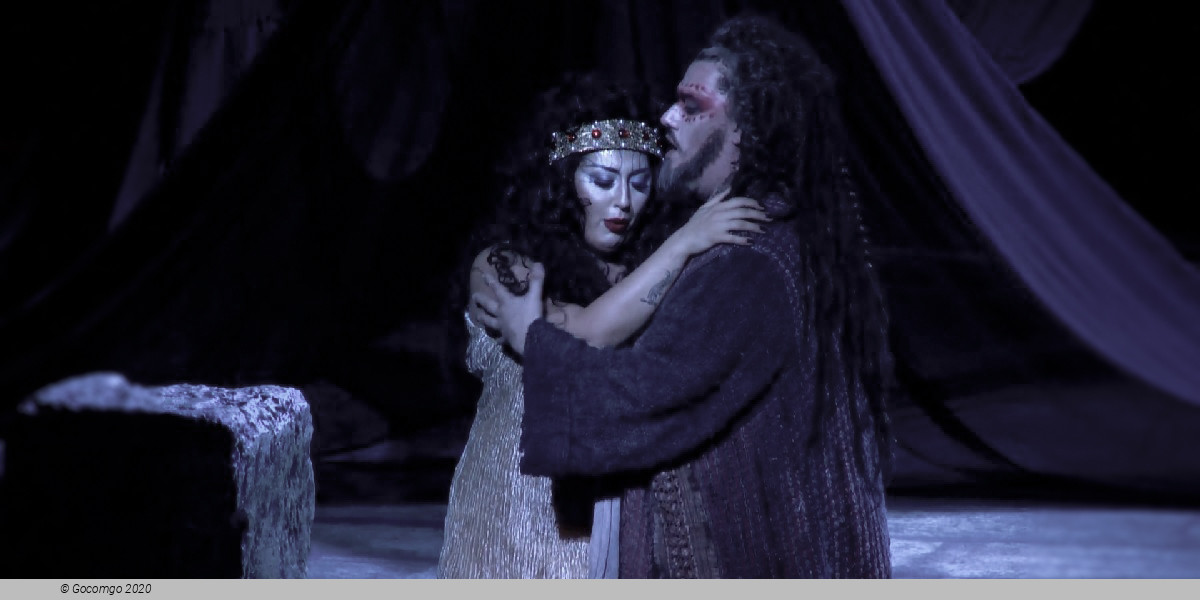
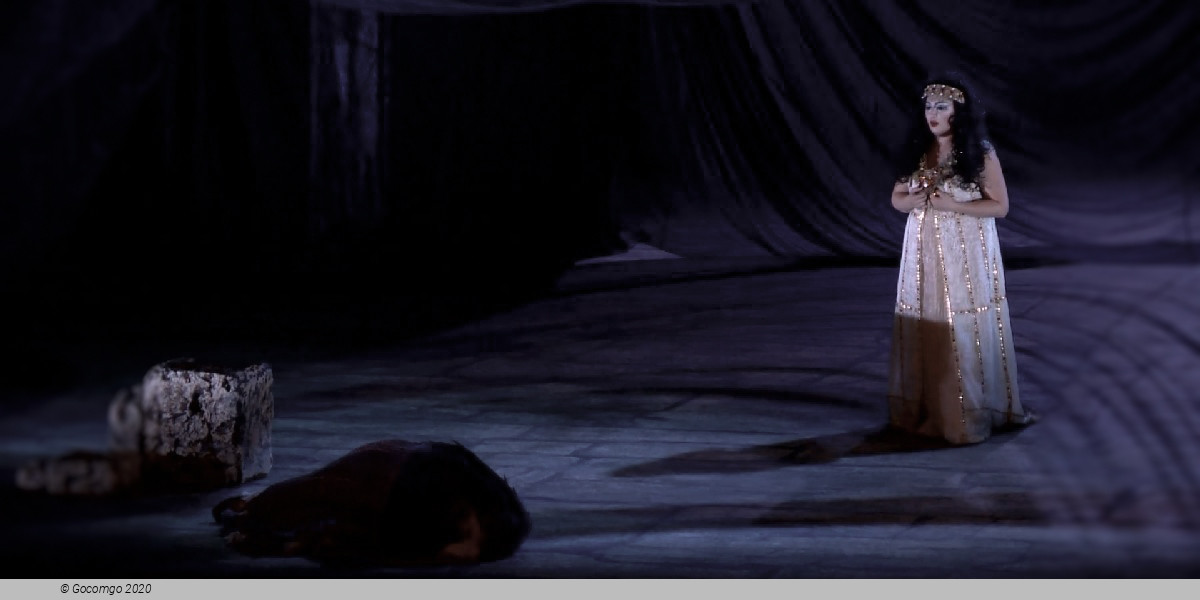
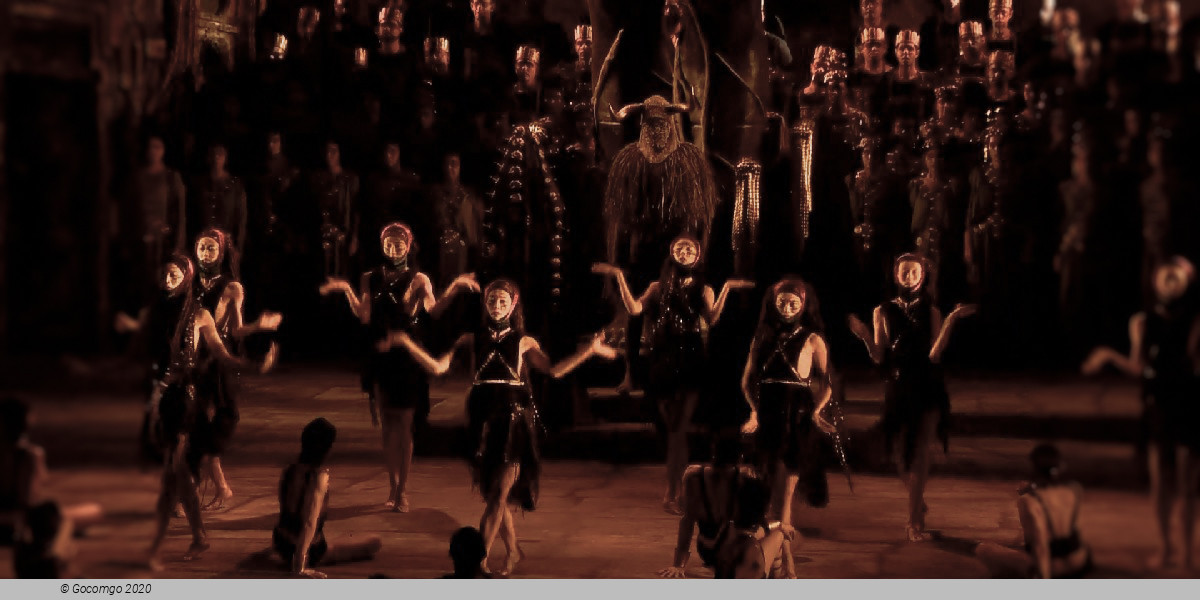
Sacred, scandalous, and irresistibly alluring, Saint-Saëns’s spectacular take on the biblical hero of legendary strength and the seductive Philistine whose beauty overpowers him returns in the Met’s larger-than-life production. Featuring a massive orchestra and chorus and some of opera’s most spellbinding tunes, this masterpiece of French grand opera is a feast for the eyes and ears, with an electrifying cast led by the formidable star pairing of mezzo-soprano Aigul Akhmetshina and tenor Clay Hilley, who makes a notable company debut.

History
Premiere of this production: 02 December 1877, Ducal Theatre, Weimar

Samson and Delilah (French: Samson et Dalila) is a grand opera in three acts and four scenes by Camille Saint-Saëns to a French libretto by Ferdinand Lemaire. It was first performed in Weimar at the Grossherzogliches (Grand Ducal) Theater (now the Staatskapelle Weimar) on 2 December 1877 in a German translation.

Synopsis

Place: Gaza
Time: c. 1150 BC

Act 1
A square in Gaza at night

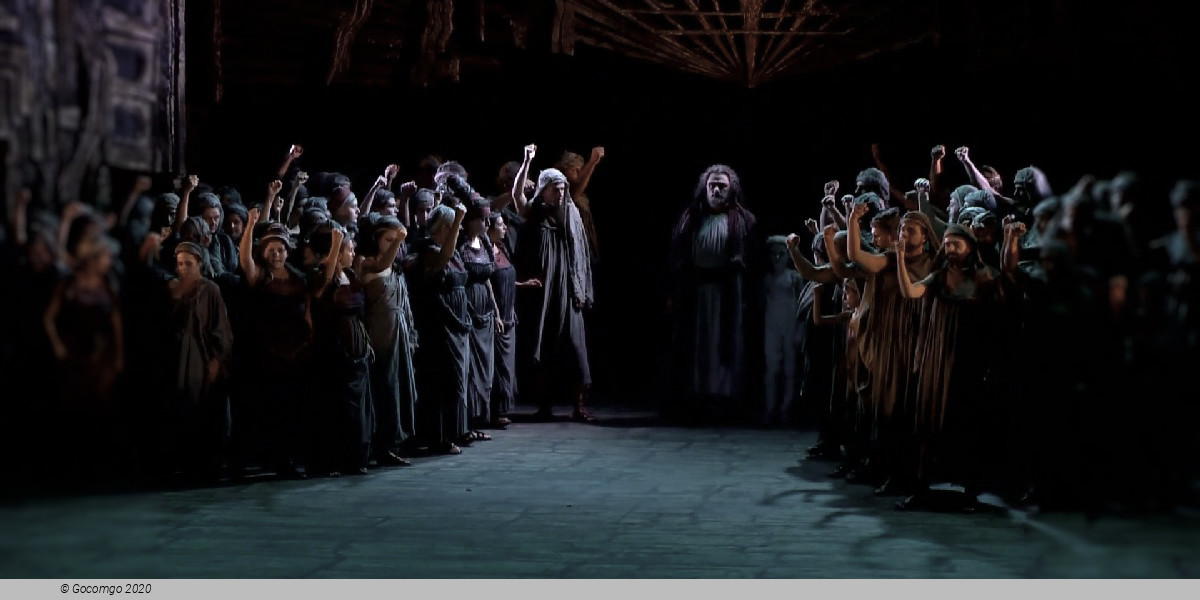
In a square outside the temple of Dagon, a group of Hebrews beg Jehovah for relief from their bondage to the Philistines in a melancholy chorus ("Dieu d'Israël – God of Israel"), which leads into a fugue ("Nous avons vu nos cités renversées – We have seen our cities overturned"). Samson tries to revive the Israelites' morale and faith in God ("Arrêtez, ô mes frères – Stop, O my brothers") in a rousing aria set against the chorus's continuous prayer. Abimelech, the Philistine governor, appears and taunts the Israelites, saying that they are helpless because their god has abandoned them. He further states that his god, Dagon, is far superior ("Ce Dieu que votre voix implore – This God that your voice implores"). The Hebrews cower in fear before Abimelech until Samson incites them into defiant action. Enraged, Abimelech attacks an unarmed Samson with his sword. Samson manages to wrest the sword from Abimelech and kills him.

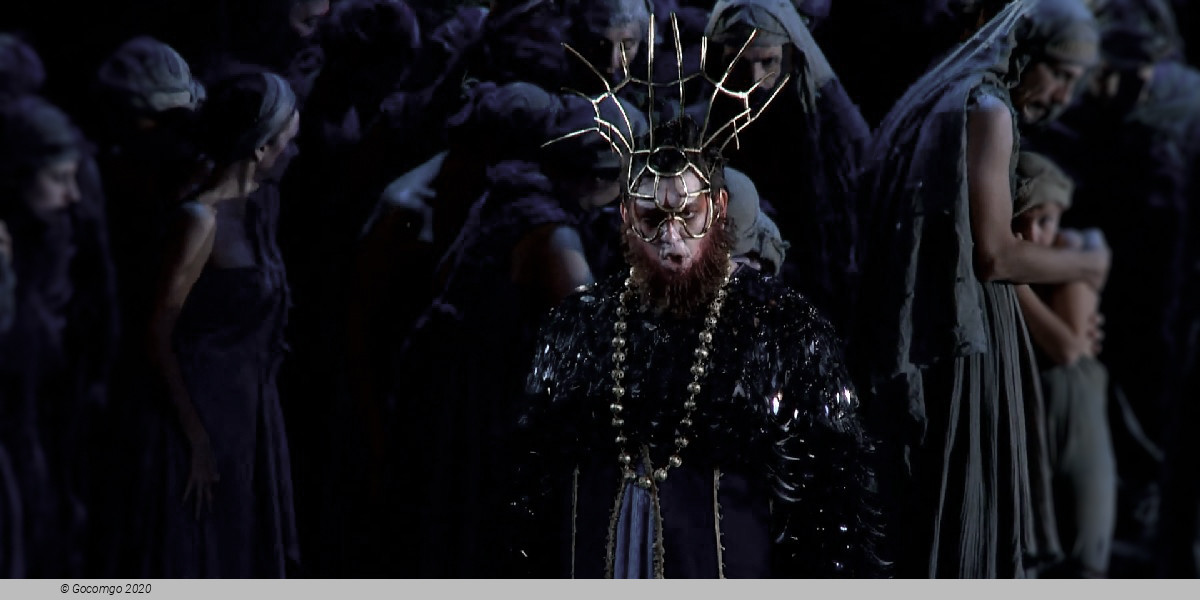
Afraid of what might now happen, the Hebrews flee, abandoning Samson. The High Priest of Dagon comes from the Philistine temple and curses the Hebrews and Samson's prodigious strength. A messenger arrives and informs the High Priest that the Hebrews are destroying the harvest. He responds with a further curse that alludes to his plot to utilize Dalila's beauty to outwit Samson's strength ("Qu'enfin une compagne infâme trahisse son amour! – Finally an infamous companion betray his love!").

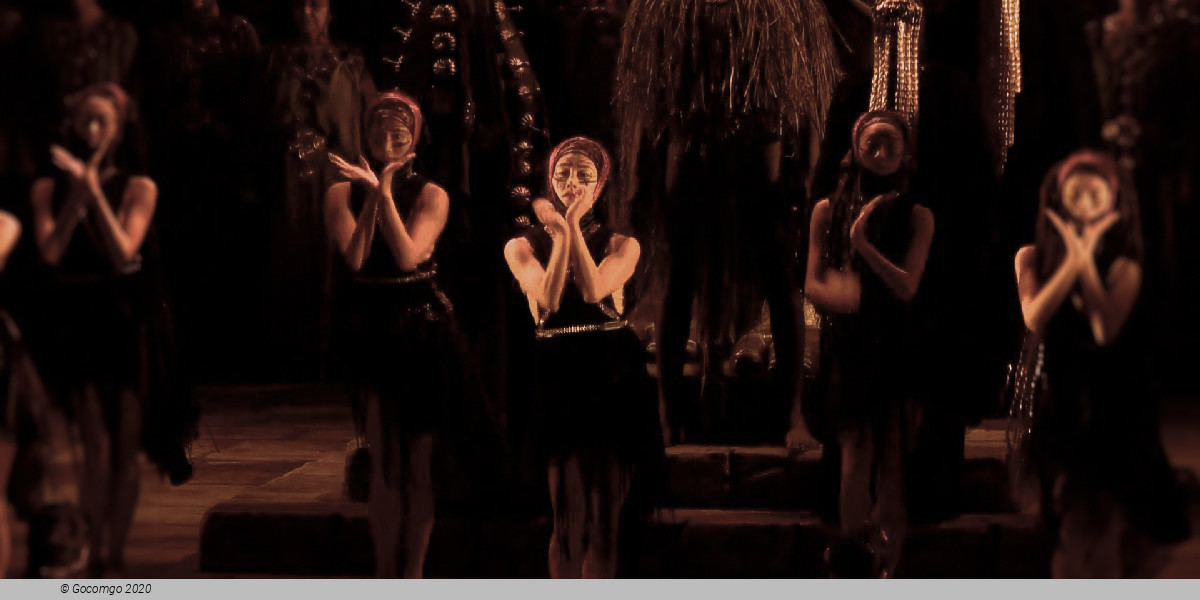
As dawn breaks the Hebrews lift up a humble prayer to God in a style reminiscent of plainchant. Out of the temple emerges Dalila along with several priestesses of Dagon. As they walk down the temple steps, they sing of the pleasures of spring. Dalila engages seductively with Samson proclaiming that he has won her heart and bids him to come with her to her home in the valley of Sorek. As she tries to charm him, a trio forms as an old Hebrew warns of the danger this woman presents and Samson prays for God's protection from Dalila's charms. In an attempt to seduce Samson away from his leadership of the Israelite uprising, Dalila and the priestesses begin a sexually charged dance for him accompanied by a tambourine. After the dance, Dalila sings how spring is blossoming all around her yet, in her heart, she feels like it is still winter ("Printemps qui commence – Spring begins"). As Samson struggles with his desire for Dalila, the old Hebrew repeats his cautionary plea. His warning, however, is made in vain and the curtain closes as Samson meets Delilah's gaze with every intention of going to her nearby dwelling.

Act 2
Delilah's retreat in the Valley of Sorek

Dalila knows that Samson is entranced with her and will come to her instead of leading the revolution against the Philistines. Sitting on a rock outside the entrance to her retreat, she sings triumphantly about her power to ensnare Samson. She says that all of his strength is hopeless to withstand love's onslaught ("Amour! viens aider ma faiblesse – Love! come help my weakness").

Distant lightning is seen as the High Priest arrives to report that Samson and the Hebrews have conquered the Philistines. He attempts to achieve Samson's capture by offering Dalila gold, but she refuses saying she cares not for money but only for revenge. Her desire to hurt Samson is motivated solely by her loyalty to her gods and her hatred for the Hebrews. Dalila and the High Priest sing a duet expressing their mutual abhorrence for Samson and the Hebrews. Dalila vows to discover the secret of Samson's strength.

Now alone, Dalila contemplates her chances of success. Samson, intent on taking his place as the leader of the Hebrew revolt, emerges to say his last farewell as distant lightning is once again seen. In an attempt to close the trap which she has set for Samson, Dalila tells Samson seductively that she is completely his if he wants her. She begs him to respond to her caresses, hoping that he will finally let go of all other things and concentrate completely on her. His admission Je t'aime! introduces her main aria "Mon cœur s'ouvre à ta voix – My heart opens to your voice", which becomes a duet on the second verse when Samson joins her in song. Now that Dalila has him in her power, she feigns disbelief in his constancy and demands that he show his love by confiding in her the secret of his strength. Samson hears rolling thunder again which now seems like a warning from God and refuses. Dalila weeps and scorns Samson and runs into her dwelling. Samson is momentarily torn but then follows Dalila inside. Not long afterward, having finally learned that the secret of Samson's strength is his long hair, she calls to hidden Philistine soldiers, who rush in to capture and blind Samson.

Act 3

The city of Gaza

Scene 1: In a dungeon at Gaza

His hair shorn and now blind and shackled, Samson is turning a mill-wheel and praying for his people, who will suffer for his sin. He hears their voices, echoing the Hebrews' lament from act 1. Overcome with remorse, Samson offers his life in sacrifice, while the Hebrews are heard in the distance lamenting his fate.

Scene 2: In the Temple of Dagon

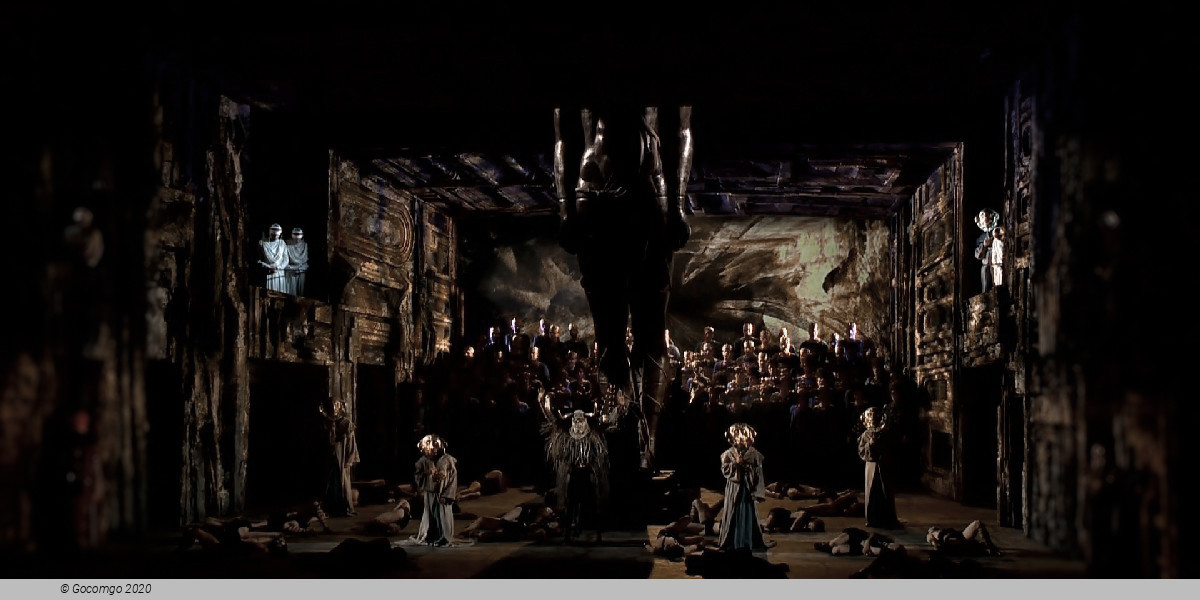
A musical interlude is played as the scene changes to the temple of Dagon, where the Philistines are preparing a sacrifice to commemorate their victory. The priests and priestesses of Dagon sing softly, reprising the song to spring from act 1. The music turns savage as the priests dance a wild Bacchanale. Following the dance, Samson enters led by a boy. He is ridiculed by the High Priest and the crowd. Dalila taunts Samson further by recounting to him the details of her devious plot in a variant of her love song. When the priests try to force him to kneel before Dagon, he asks the boy to lead him to the two main pillars of the temple, then telling the child to flee. Samson prays to God to restore his strength, and pushes down the pillars and the temple with them, crushing himself and his enemies. The curtain falls.

Venue Info

Metropolitan Opera - New York
Location   30 Lincoln Center

The Metropolitan Opera is an opera company based in New York City, resident at the Metropolitan Opera House at the Lincoln Center for the Performing Arts. The Metropolitan Opera is the largest classical music theatre in North America. It presents about 27 different operas each year from late September through May. As of 2018, the company's current music director is Yannick Nézet-Séguin.

The Metropolitan Opera Company was founded in 1883 as an alternative to New York's old established Academy of Music opera house. The subscribers to the Academy's limited number of private boxes represented the highest stratum in New York society. By 1880, these "old money" families were loath to admit New York's newly wealthy industrialists into their long-established social circle. Frustrated with being excluded, the Metropolitan Opera's founding subscribers determined to build a new opera house that would outshine the old Academy in every way. A group of 22 men assembled at Delmonico's restaurant on April 28, 1880. They elected officers and established subscriptions for ownership in the new company. The new theater, built at 39th and Broadway, would include three tiers of private boxes in which the scions of New York's powerful new industrial families could display their wealth and establish their social prominence. The first Met subscribers included members of the Morgan, Roosevelt, and Vanderbilt families, all of whom had been excluded from the Academy. The new Metropolitan Opera House opened on October 22, 1883, and was an immediate success, both socially and artistically. The Academy of Music's opera season folded just three years after the Met opened.

The operas are presented in a rotating repertory schedule, with up to seven performances of four different works staged each week. Performances are given in the evening Monday through Saturday with a matinée on Saturday. Several operas are presented in new productions each season. Sometimes these are borrowed from or shared with other opera companies. The rest of the year's operas are given in revivals of productions from previous seasons. The 2015–16 season comprised 227 performances of 25 operas.

The operas in the Met's repertoire consist of a wide range of works, from 18th-century Baroque and 19th-century Bel canto to the Minimalism of the late 20th century. These operas are presented in staged productions that range in style from those with elaborate traditional decors to others that feature modern conceptual designs.

The Met's performing company consists of a large symphony-sized orchestra, a chorus, a children's choir, and many supporting and leading solo singers. The company also employs numerous free-lance dancers, actors, musicians, and other performers throughout the season. The Met's roster of singers includes both international and American artists, some of whose careers have been developed through the Met's young artists programs. While many singers appear periodically as guests with the company, others, such as Renée Fleming and Plácido Domingo, long maintained a close association with the Met, appearing many times each season until they retired.

Important Info
Type: Opera
City: New York, USA
Starts at: 19:30
Acts: 3
Intervals: 2
Duration: 3h 35min
Sung in: French
Titles in: English,German,Spanish
Top of page