Time: The reign of Henry IV, 1399 to 1413
Place: Windsor, England
Act 1
A room at the Garter Inn
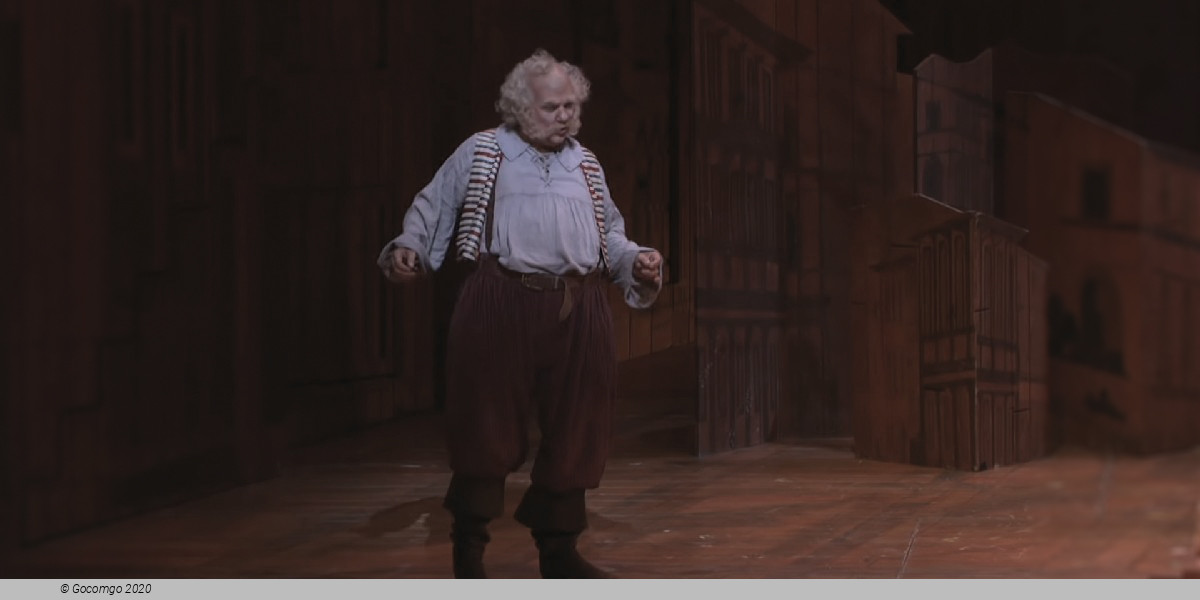
Falstaff and his servants, Bardolfo and Pistola, are drinking at the inn. Dr Caius bursts in and accuses Falstaff of burgling his house and Bardolfo of picking his pocket. Falstaff laughs at him; he leaves, vowing only to go drinking with honest, sober companions in future. When the innkeeper presents a bill for the wine, Falstaff tells Bardolfo and Pistola that he needs more money, and plans to obtain it by seducing the wives of two rich men, one of whom is Ford. Falstaff hands Bardolfo a love-letter to one of the wives (Alice Ford), and hands Pistola an identical letter addressed to the other (Meg). Bardolfo and Pistola refuse to deliver the letters, claiming that honour prevents them from obeying him. Falstaff loses his temper and rants at them, saying that "honour" is nothing but a word, with no meaning (Monologue: L'onore! Ladri ... ! / "Honour! You rogues ... !") Brandishing a broom, he chases them out of his sight.
Ford's garden
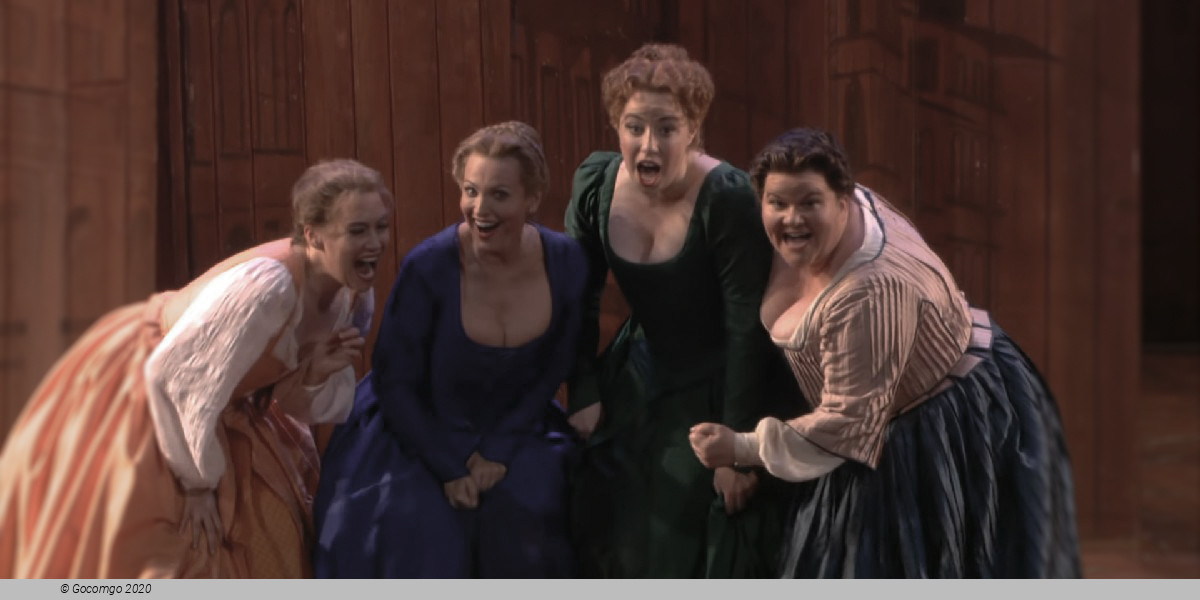
Alice and Meg have received Falstaff's letters. They compare them, see that they are identical and, together with Mistress Quickly and Nannetta Ford, resolve to punish Falstaff. Meanwhile, Bardolfo and Pistola warn Ford of Falstaff's plan. Ford resolves to disguise himself and visit Falstaff and set a trap for him.
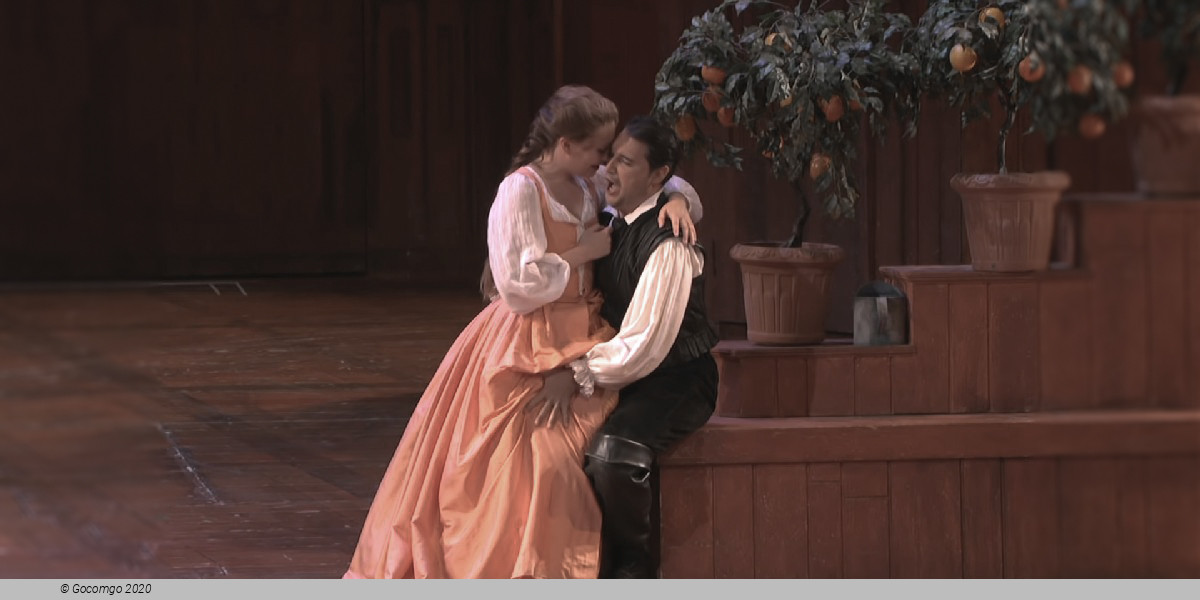
A young, handsome fellow called Fenton is in love with Ford's daughter Nannetta, but Ford wants her to marry Dr. Caius, who is wealthy and respected. Fenton and Nannetta enjoy a moment of privacy, but are interrupted by the return of Alice, Meg and Mistress Quickly. The act ends with an ensemble in which the women and the men separately plan revenge on Falstaff, the women gleefully anticipating an enjoyable prank, while the men angrily mutter dire threats.
Act 2
A room at the Garter Inn
Falstaff is alone at the inn. Bardolfo and Pistola, now in the pay of Ford, enter and beg Falstaff to allow them to re-enter his service, secretly planning to spy on him for Ford. Mistress Quickly enters and tells him that Alice is in love with him and will be alone in Ford's home that afternoon, from two o'clock until three o'clock, just time for an amorous dalliance. Falstaff celebrates his potential success ("Va, vecchio John" / "Go, old Jack, go your own way").
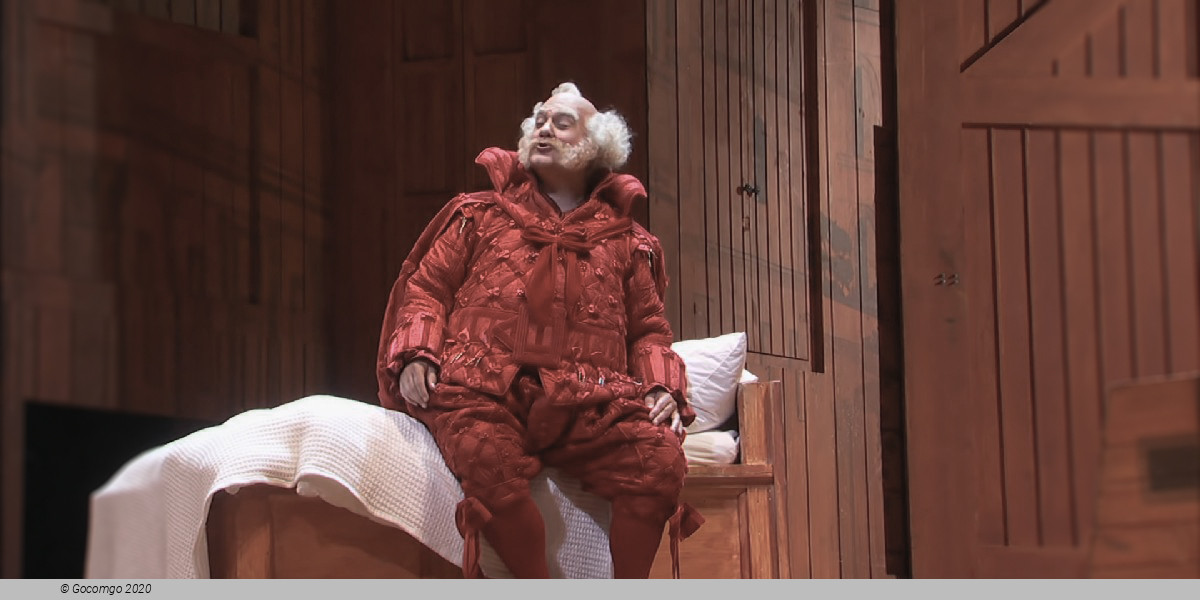
Ford arrives, masquerading as a wealthy stranger, using the false name "Signor Fontana". He tells Falstaff that he is in love with Alice, but she is too virtuous to entertain him. He offers to pay Falstaff to use his impressive title and (alleged) charms to seduce her away from her virtuous convictions, after which he ("Fontana") might have a better chance of seducing her himself. Falstaff, delighted at the prospect of being paid to seduce the wealthy and beautiful woman, agrees, and reveals that he already has a rendezvous arranged with Alice for two o'clock – the hour when Ford is always absent from home. Ford is consumed with jealousy, but conceals his feelings. Falstaff withdraws to a private room to change into his finest clothes, and Ford, left alone, reflects on the evil of an uncertain marriage and vows to have revenge (È sogno o realtà? / "Is it a dream or reality?"). When Falstaff returns in his finery, they leave together with elaborate displays of mutual courtesy.
A room in Ford's house
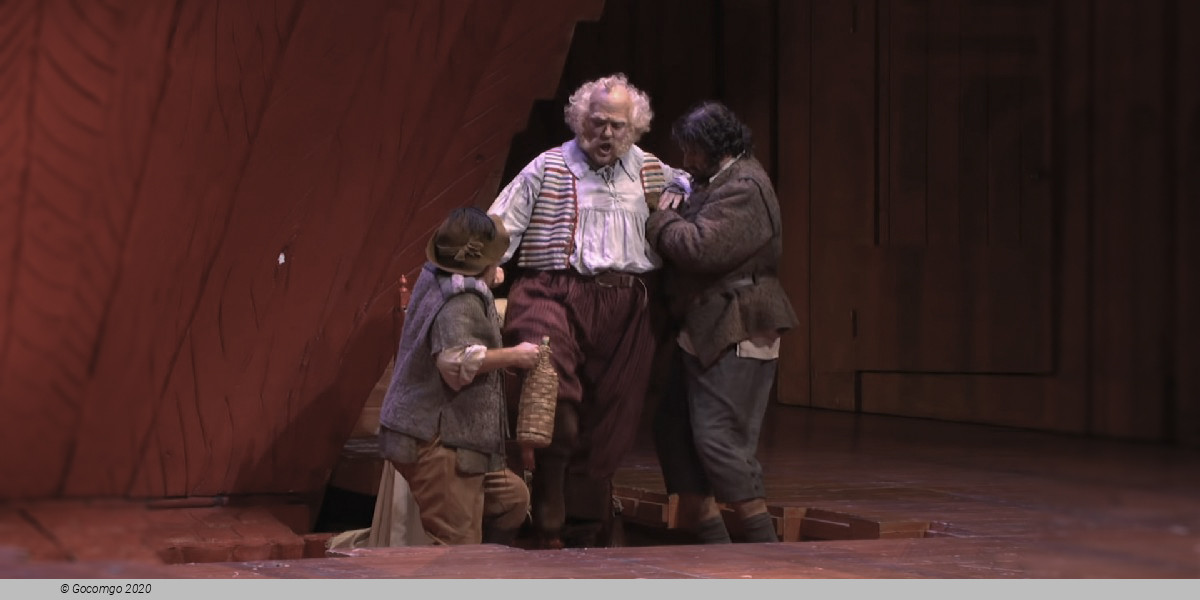
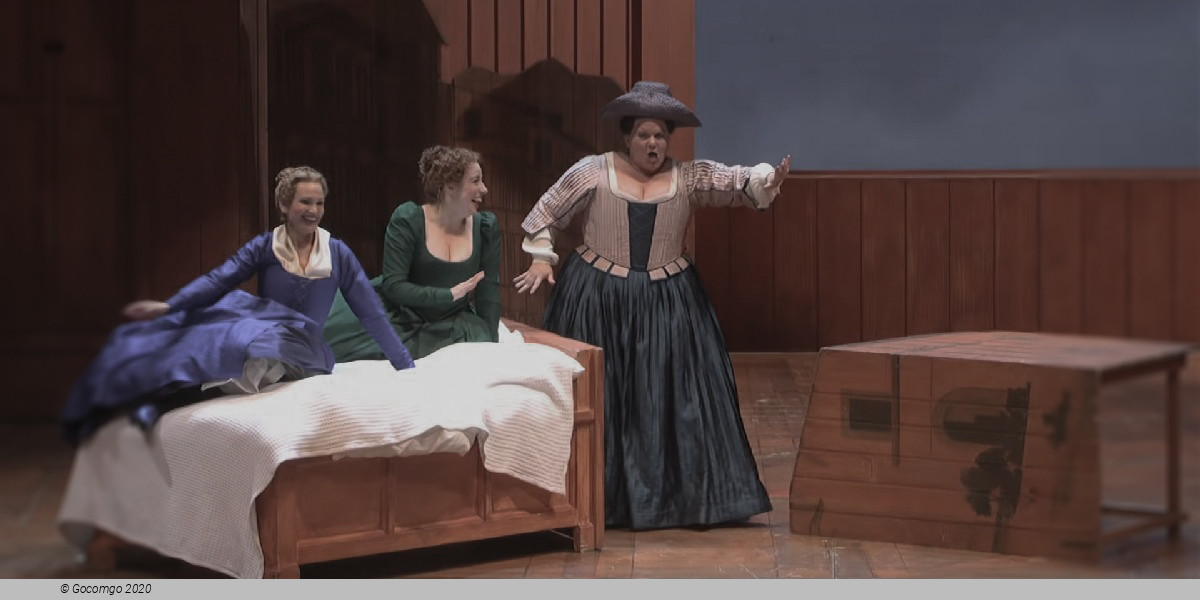
The three women plot their strategy ("Gaie Comari di Windsor" / "Merry wives of Windsor, the time has come!"). Alice notices that Nannetta is too unhappy and anxious to share their gleeful anticipation. This is because Ford plans to marry her to Dr Caius, a man old enough to be her grandfather; the women reassure her that they will prevent it. Mistress Quickly announces Falstaff's arrival, and Mistress Ford has a large laundry basket and a screen placed in readiness. Falstaff attempts to seduce Alice with tales of his past youth and glory ("Quand'ero paggio del Duca di Norfolk" / "When I was page to the Duke of Norfolk I was slender"). Mistress Quickly rushes in, shouting that Ford has returned home unexpectedly with a retinue of henchmen to catch his wife's lover. Falstaff hides first behind the screen, but realizes that Ford will likely look for him there. The women urge him to hide in the laundry basket, which he does. In the meantime Fenton and Nannetta hide behind the screen for another moment of privacy. Ford and his men storm in and search for Falstaff, and hear the sound of Fenton and Nannetta kissing behind the screen. They assume it is Falstaff with Alice, but instead they find the young lovers. Ford orders Fenton to leave. Badly cramped and almost suffocating in the laundry hamper, Falstaff moans with discomfort while the men resume the search of the house. Alice orders her servants to throw the laundry basket through the window into the River Thames, where Falstaff endures the jeers of the crowd. Ford, seeing that Alice had never intended to betray him, smiles happily.
Act 3
Before the inn
Falstaff, cold and discouraged, glumly curses the sorry state of the world. Some mulled wine soon improves his mood. Mistress Quickly arrives and delivers another invitation to meet Alice. Falstaff at first wants nothing to do with it, but she persuades him. He is to meet Alice at midnight at Herne's Oak in Windsor Great Park dressed up as the ghost of Herne the Hunter who, according to local superstition, haunts the area near the tree, and appears there at midnight with a band of supernatural spirits. He and Mistress Quickly go inside the inn. Ford has realized his error in suspecting his wife, and they and their allies have been watching secretly. They now concoct a plan for Falstaff's punishment: dressed as supernatural creatures, they will ambush and torment him at midnight. Ford draws Dr. Caius aside and privately proposes a separate plot to marry him to Nannetta: Nannetta will be disguised as Queen of the Fairies, Caius will wear a monk's costume, and Ford will join the two of them with a nuptial blessing. Mistress Quickly overhears and quietly vows to thwart Ford's scheme.
Herne's Oak in Windsor Park on a moonlit midnight
Fenton arrives at the oak tree and sings of his happiness ("Dal labbro il canto estasiato vola" / "From my lips, a song of ecstasy flies") ending with "Lips that are kissed lose none of their allure." Nannetta enters to finish the line with "Indeed, they renew it, like the moon." The women arrive and disguise Fenton as a monk, telling him that they have arranged to spoil Ford's and Caius's plans. Nannetta, as the Fairy Queen, instructs her helpers ("Sul fil d'un soffio etesio" / "On the breath of a fragrant breeze, fly, nimble spirits") before all the characters arrive on the scene. Falstaff's attempted love scene with Alice is interrupted by the announcement that witches are approaching, and the men, disguised as elves and fairies, soundly thrash Falstaff. In the middle of the beating, he recognizes Bardolfo in disguise. The joke is over, and Falstaff acknowledges that he has received his due. Ford announces that a wedding shall ensue. Caius and the Queen of the Fairies enter. A second couple, also in masquerade, ask Ford to deliver the same blessing for them as well. Ford conducts the double ceremony. Caius finds that instead of Nannetta, his bride is the disguised Bardolfo, and Ford has unwittingly blessed the marriage of Fenton and Nannetta. Ford accepts the fait accompli with good grace. Falstaff, pleased to find himself not the only dupe, proclaims that all the world is folly, and all are figures of fun (Tutto nel mondo è burla ... Tutti gabbati!...Ma ride ben chi ride La risata final. / "Everything in the world is a jest ... but he laughs well who laughs the final laugh"). The entire company repeats his proclamation in a bewildering ten-voice fugue.




 30 Lincoln Center