

Mariinsky Theatre tickets 12 March 2026 - La fille mal gardée. Performance by the Primorsky Stage of the Mariinsky Theatre | GoComGo.com

La fille mal gardée. Performance by the Primorsky Stage of the Mariinsky Theatre

Mariinsky Theatre, Mariinsky Theatre, Saint Petersburg, Russia
All photos (9)
Select date and time
7 PM
Request for Tickets
Important Info
Type: Ballet
City: Saint Petersburg, Russia
Starts at: 19:00
Acts: 2
Intervals: 1
Duration: 2h 30min

E-tickets: Print at home or at the box office of the event if so specified. You will find more information in your booking confirmation email.

You can only select the category, and not the exact seats.
If you order 2 or 3 tickets: your seats will be next to each other.
If you order 4 or more tickets: your seats will be next to each other, or, if this is not possible, we will provide a combination of groups of seats (at least in pairs, for example 2+2 or 2+3).

Cast
Performers
Ballet company: The Mariinsky Ballet of the Primorsky Stage
Creators
Composer: Ferdinand Hérold
Choreographer: Jean Dauberval
Choreographer: Oleg Vinogradov
Overview

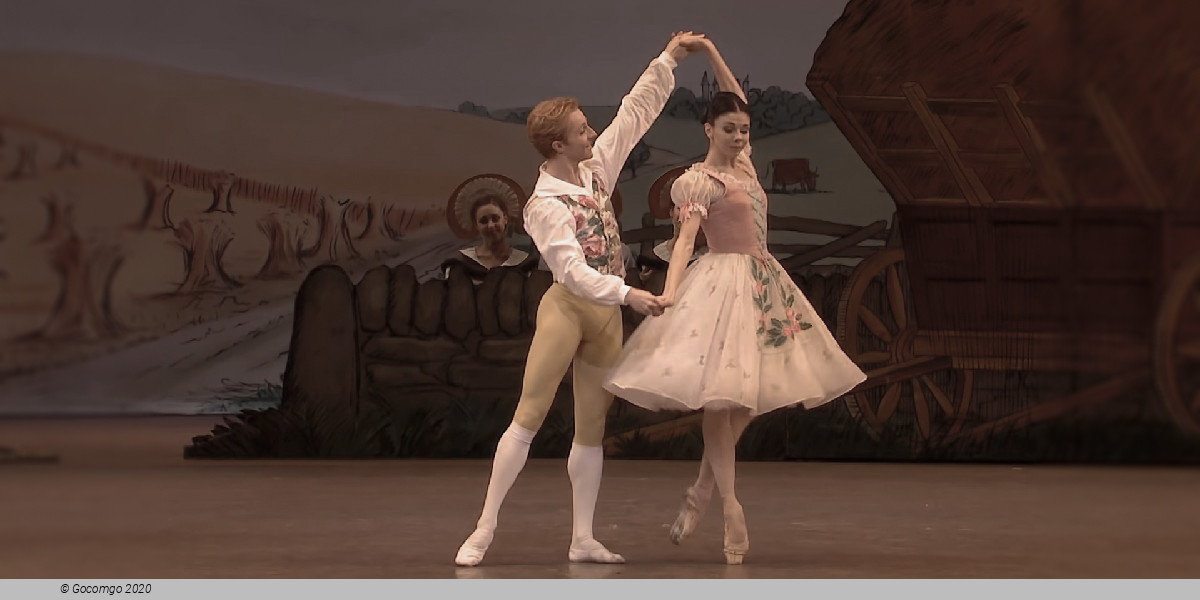
La fille mal gardée is a ballet enigma. It has an uncomplicated plot, and its music (in the version available to us today) has been long considered “secondary”. Yet it is the oldest ballet still in the repertoire of the world’s leading theatres. The key to its mystery is in a remarkable combination of sincerity, wit, melodic charm, and profound choreographic wisdom that speaks to the audience in the universal language of love, humor, and zest for life.

The ballet was born during an era when the genre was gradually shifting away from the conventions of aristocratic court art toward more lively plots accessible to a wider audience. It was premiered on July 1, 1789, in Bordeaux, just two weeks before the storming of the Bastille, which proved symbolic: the old world was collapsing, and a new art bringing ordinary people into spotlight was being born on stage.

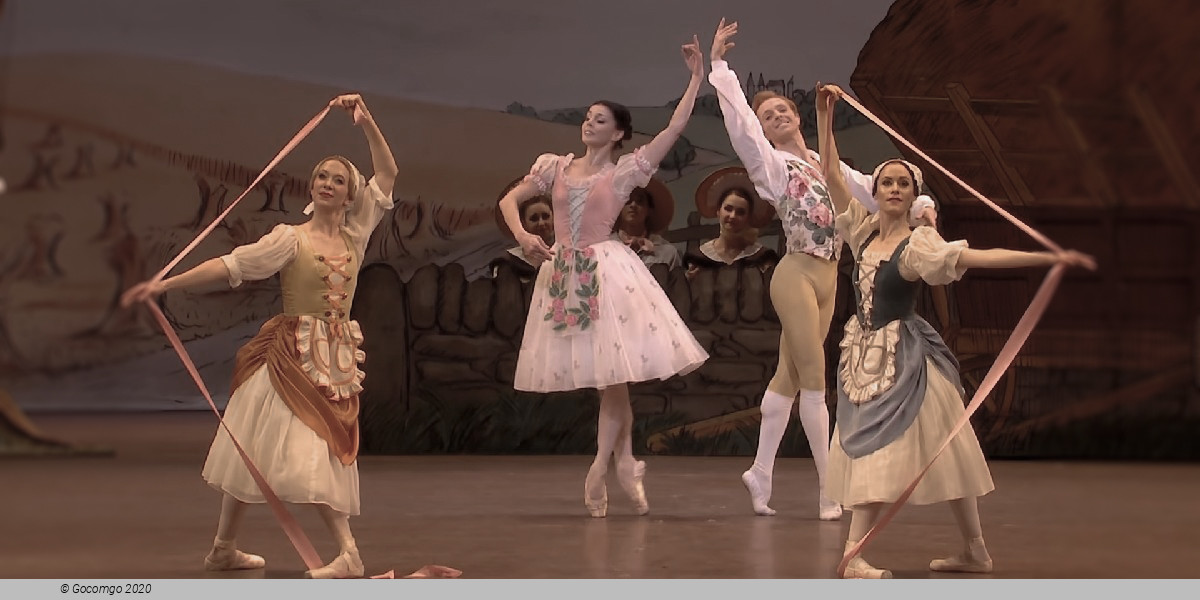
The ballet was choreographed by Jean Dauberval, a student of the great reformer Noverre. Dauberval brought to fruition his teacher’s idea of pantomime ballet, where emotions are expressed not through conventional gestures, but through realistic play. He transferred the action from mythological palaces to a French farm, making peasants the central figures.

The music for the first production was written by the now-forgotten Pierre Gaveaux, who composed a medley of songs and arias popular with his contemporaries. In 1828, the renowned French choreographer Jean Aumer decided to revive Dauberval’s ballet and commissioned the composer Louis Hérold to create a completely new score. Hérold accomplished the task brilliantly, bringing forth a coherent, elegantly orchestrated score in the spirit of comic opera, instead of the former eclectic medley. Into his work, Hérold masterfully incorporated French folk motifs (for example, the popular ditty "There's No Confidence in the Gendarme"), galops, waltzes, and pastoral ensembles. The music goes beyond the mere accompaniment to the dance; it plays the leading role, setting up an atmosphere of a carefree village festival.

Despite its apparent lightness, Hérold’s score possesses the qualities of a symphonic development. It stands out among the typical ballet scores of the era due to its leitmotifs, thematic contrasts, and rich orchestration (woodwinds for pastoral scenes and brass for comic effects).

The ballet La fille mal gardée has gone beyond the genre boundaries, becoming a monument to European musical and theatrical culture, a link between the era of Dauberval and Petipa, and the modern theatre. And it is thanks to Louis Hérold’s sunny, graceful, and witty music that this pastoral trifle of the late 18th century has gained its eternal youth and continues to enchant audiences worldwide.

It is also worth mentioning that over the years, this ballet has attracted the most renowned and outstanding choreographers, such as Charles Didelot, Marius Petipa, Yury Grigorovich, and many others. On the Primorsky Stage of the Mariinsky Theatre, Oleg Vinogradov’s version will be performed. Oleg Maryash

History
Premiere of this production: 01 July 1789, Grand Théâtre de Bordeaux in Bordeaux, France

La Fille mal gardée is one of the oldest and most important works in the modern ballet repertory, having been kept alive throughout its long performance history by way of many revivals. The work has undergone many changes of title and has had no fewer than six scores, some of which were adaptations of older music.

Synopsis

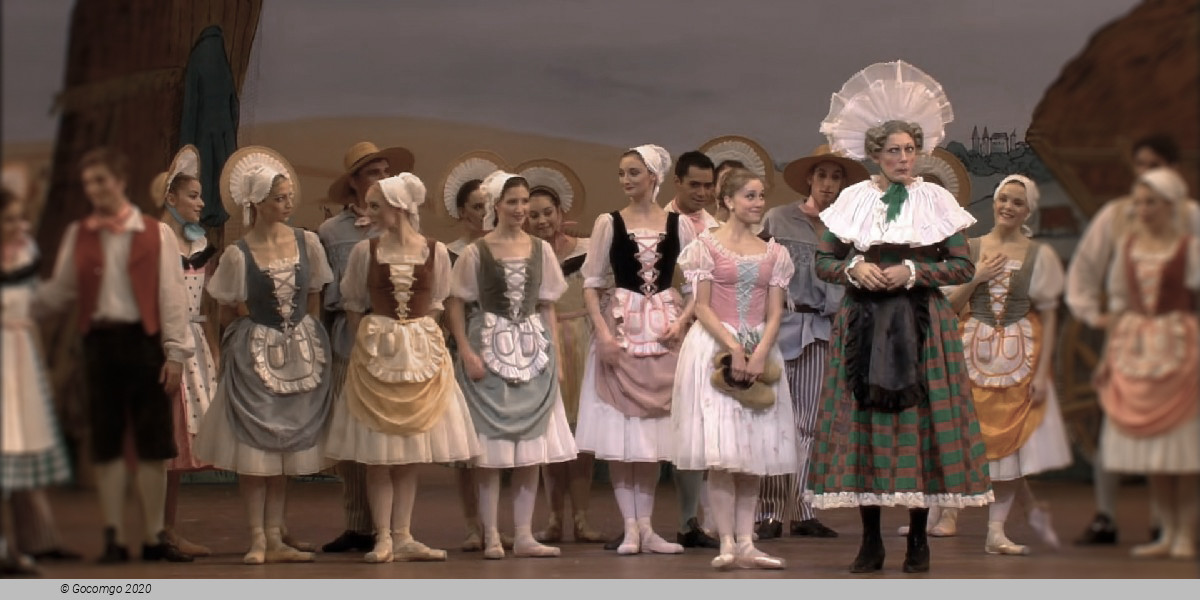
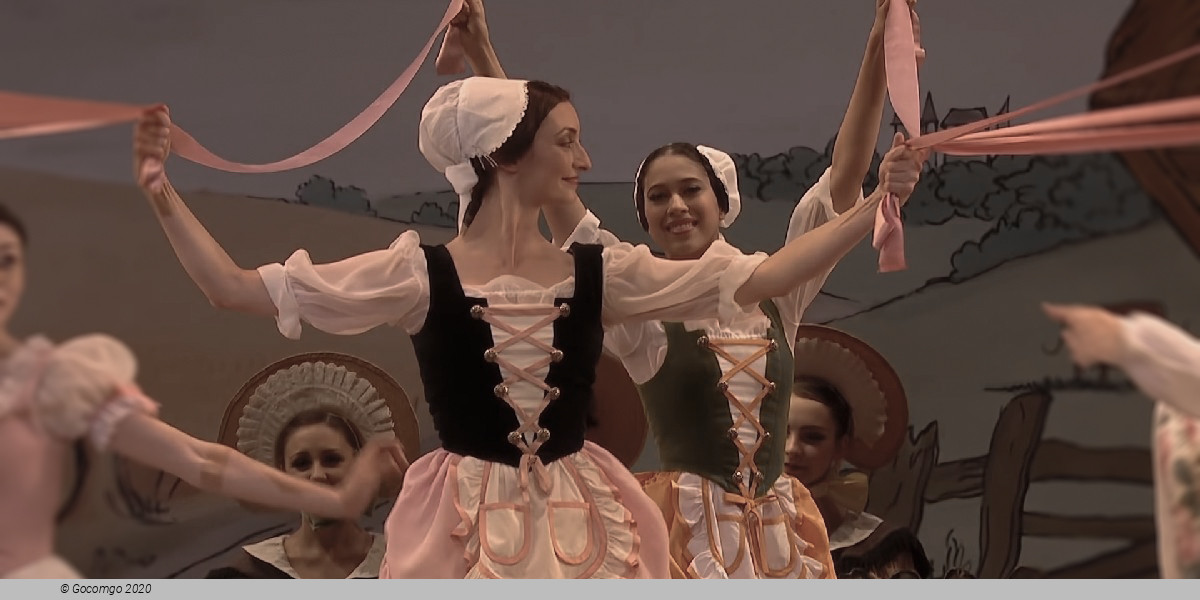
Lise and Colas are in love and want to marry. However, the Widow Simone wants Lise to marry the dimwitted, but extremely rich, Alain, and has arranged (with Alain's father Thomas) for a marriage contract between Lise and Alain. The Widow Simone does her best to keep Lise and Colas apart, but is unsuccessful in her attempts to do so.

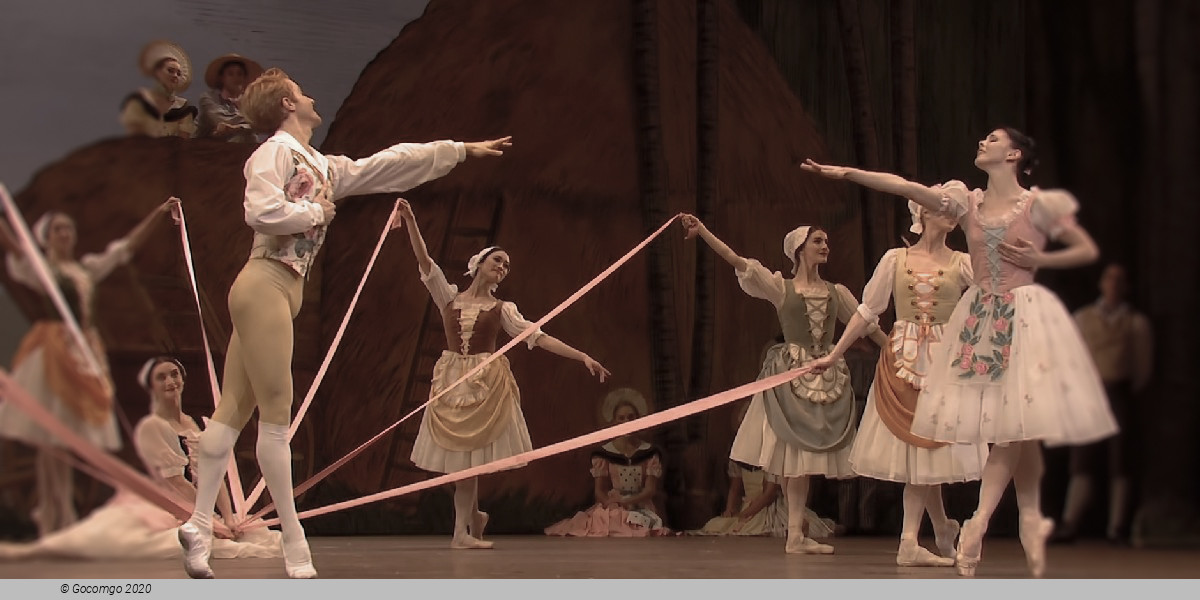
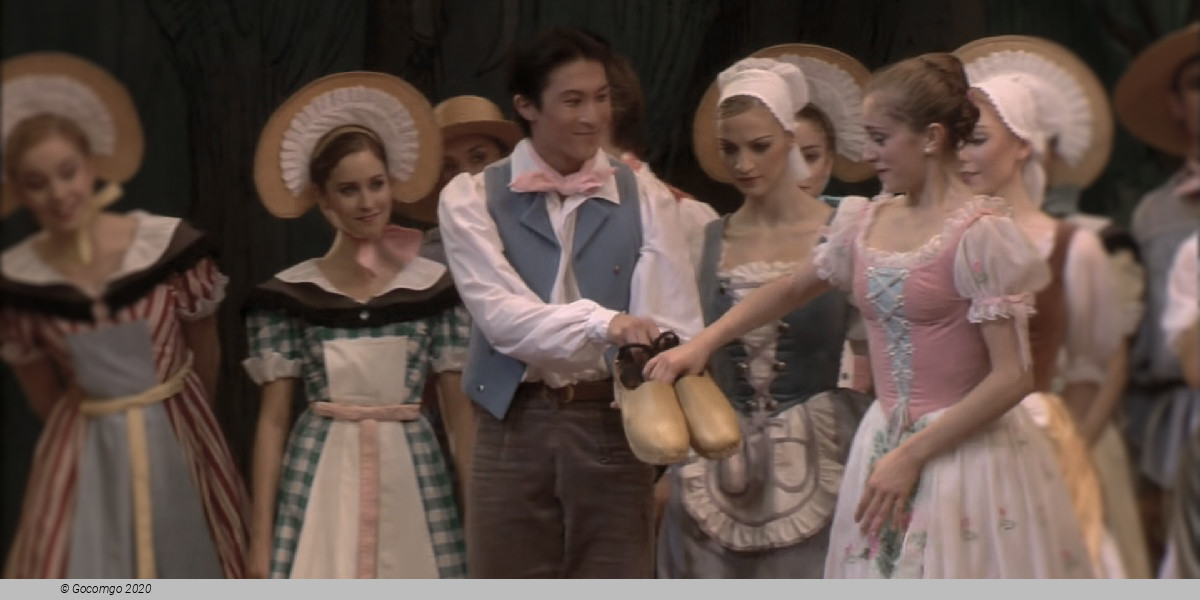
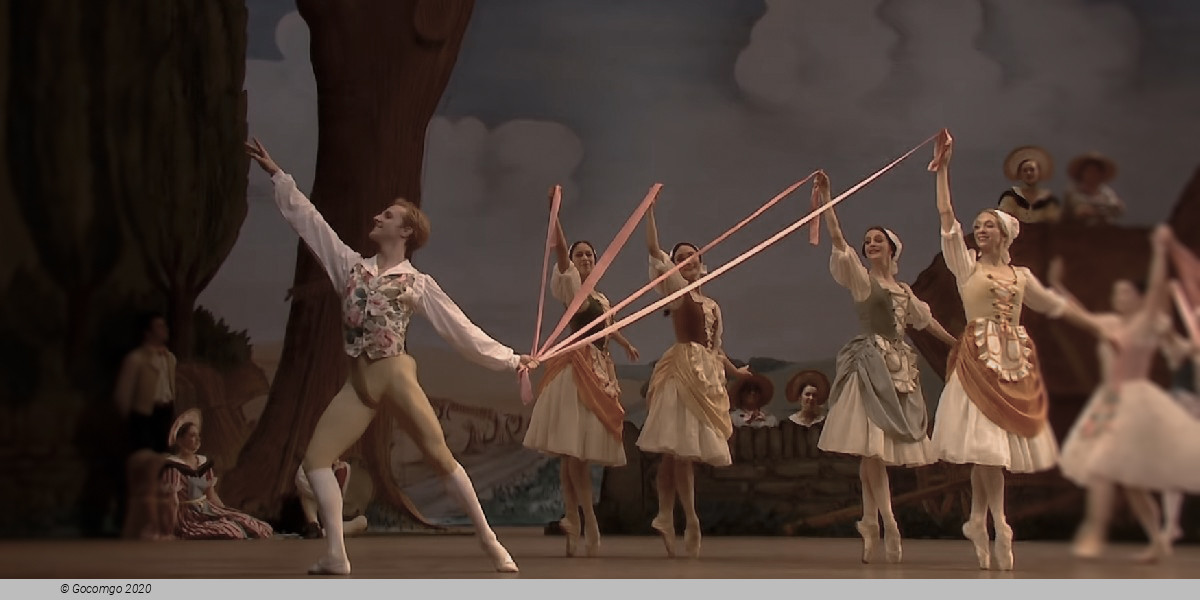
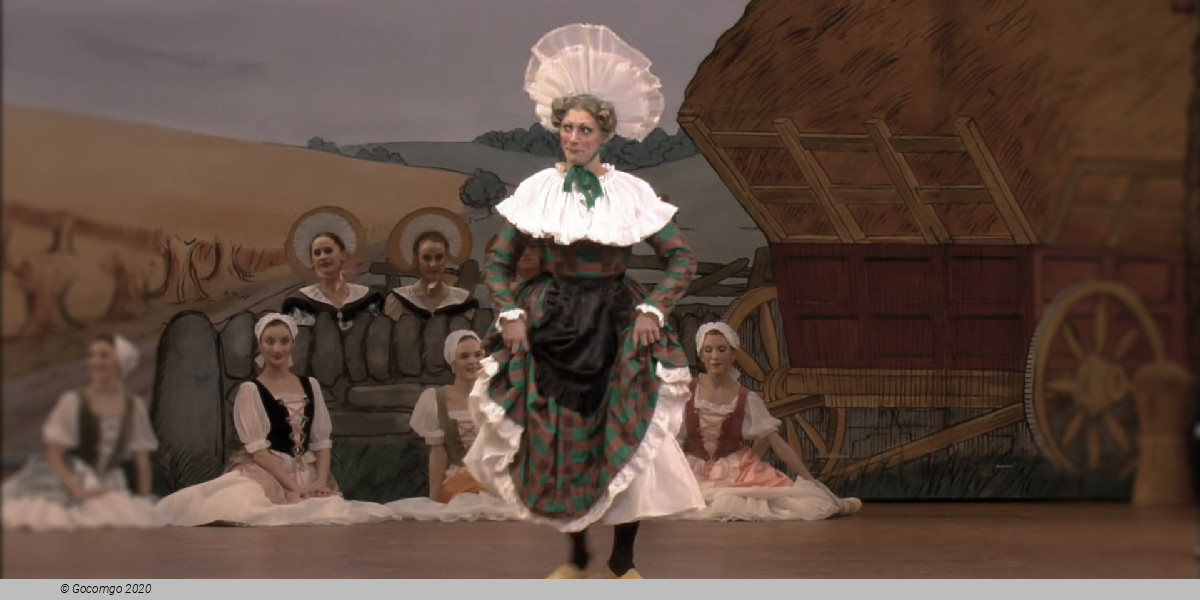
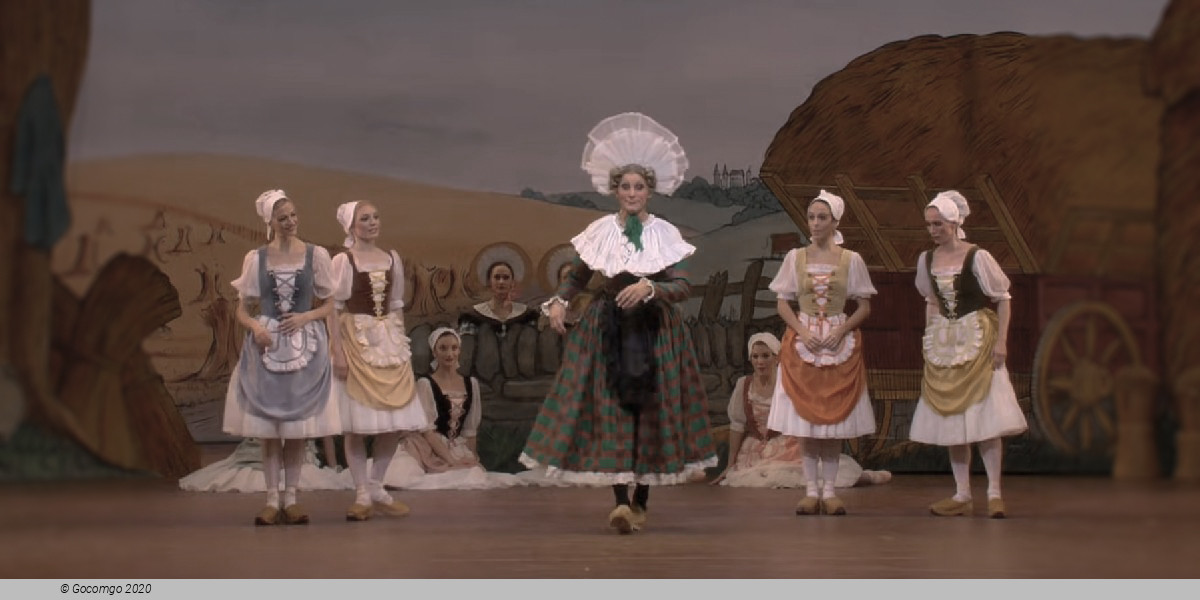
At harvest time the Widow Simone and Lise are taken to the field for a picnic lunch by Thomas and Alain. The farm workers join in a ribbon dance around a maypole, and the girls also join in a clog dance with the Widow Simone. There is a thunderstorm and everyone rushes for shelter. Alain is carried away on the wind by his open umbrella.

The Widow Simone and Lise return to their home. The widow wants Lise to sit down at the spinning wheel and spin, but Lise spins while she is up dancing, nearly strangling the widow. After a while, the widow wants Lise to dance, and Lise shows signs of unhappiness, but obliges. The widow takes a tambourine to play in time with Lise's dancing. When the widow is asleep, Lise tries to steal the key from the widow's pocket, to prevent the widow from locking her in, but is unsuccessful. The crops are brought in by the farm workers, and the widow then leaves the house (after locking the door behind her to prevent Lise from leaving the house). Lise thinks about Colas and mimes being the mother of a large number of children. To her embarrassment, Colas suddenly rises from the stacked crops. At the sound of the Widow Simone's returning to the house, Lise and Colas look around desperately for a place where he can hide. Not finding anywhere suitable in the living room, Lise takes Colas to her room, and she returns to the living room just before Widow Simone enters the house. The Widow Simone orders Lise to go to her room and put on her wedding dress for her forthcoming marriage to Alain. The horrified Lise tries to remain where she is, but the Widow Simone pushes Lise into her room and locks the door.

Thomas arrives with his son Alain (who is still clutching his umbrella). They are accompanied by a notary who is to act as witness to the marriage. The farm workers (friends of both Lise and Colas) also arrive. The Widow Simone gives Alain the key to Lise's room. When Alain unlocks the door to Lise's room, Lise appears in her wedding dress, accompanied by Colas. Thomas and Alain take offence, and the enraged Thomas tears up the marriage contract. Thomas, Alain and the notary leave the house in dudgeon. Lise and Colas then beg the Widow Simone to look favourably upon their suit. Love conquers all and the widow relents. Joyfully celebrating the happy outcome for Lise and Colas, everyone leaves, and the house is left quiet and empty, until Alain returns for his umbrella which he had accidentally left behind. So Alain is also happy with the love of his life – his umbrella.

Venue Info

Mariinsky Theatre - Saint Petersburg
Location   1 Theatre Square

The Mariinsky Theatre is a historic theatre of opera and ballet in Saint Petersburg, Russia. Opened in 1860, it became the preeminent music theatre of late 19th-century Russia, where many of the stage masterpieces of Tchaikovsky, Mussorgsky, and Rimsky-Korsakov received their premieres. Through most of the Soviet era, it was known as the Kirov Theatre. Today, the Mariinsky Theatre is home to the Mariinsky Ballet, Mariinsky Opera and Mariinsky Orchestra. Since Yuri Temirkanov's retirement in 1988, the conductor Valery Gergiev has served as the theatre's general director.

The theatre is named after Empress Maria Alexandrovna, wife of Tsar Alexander II. There is a bust of the Empress in the main entrance foyer. The theatre's name has changed throughout its history, reflecting the political climate of the time.

The theatre building is commonly called the Mariinsky Theatre. The companies that operate within it have for brand recognition purposes retained the Kirov name, acquired during the Soviet era to commemorate the assassinated Leningrad Communist Party leader Sergey Kirov (1886–1934).

The Imperial drama, opera and ballet troupe in Saint Petersburg was established in 1783, at the behest of Catherine the Great, although an Italian ballet troupe had performed at the Russian court since the early 18th century. Originally, the ballet and opera performances were given in the wooden Karl Knipper Theatre on Tsaritsa Meadow, near the present-day Tripartite Bridge (also known as the Little Theatre or the Maly Theatre). The Hermitage Theatre, next door to the Winter Palace, was used to host performances for an elite audience of aristocratic guests invited by the Empress.

A permanent theatre building for the new company of opera and ballet artists was designed by Antonio Rinaldi and opened in 1783. Known as the Imperial Bolshoi Kamenny Theatre the structure was situated on Carousel Square, which was renamed Theatre Square in honour of the building. Both names – "Kamenny" (Russian word for "stone") and "Bolshoi" (Russian word for "big") – were coined to distinguish it from the wooden Little Theatre. In 1836, the Bolshoi Kamenny Theatre was renovated to a design by Albert Cavos (son of Catterino Cavos, an opera composer), and served as the principal theatre of the Imperial Ballet and opera.

On 29 January 1849, the Equestrian circus (Конный цирк) opened on Theatre Square. This was also the work of the architect Cavos. The building was designed to double as a theatre. It was a wooden structure in the then-fashionable neo-Byzantine style. Ten years later, when this circus burnt down, Albert Cavos rebuilt it as an opera and ballet house with the largest stage in the world. With a seating capacity of 1,625 and a U-shaped Italian-style auditorium, the theatre opened on 2 October 1860, with a performance of A Life for the Tsar. The new theatre was named Mariinsky after its imperial patroness, Empress Maria Alexandrovna.

Under Yuri Temirkanov, Principal Conductor from 1976 to 1988, the Opera Company continued to stage innovative productions of both modern and classic Russian operas. Although functioning separately from the Theatre’s Ballet Company, since 1988 both companies have been under the artistic leadership of Valery Gergiev as Artistic Director of the entire Theatre.

The Opera Company has entered a new era of artistic excellence and creativity. Since 1993, Gergiev’s impact on opera there has been enormous. Firstly, he reorganized the company’s operations and established links with many of the world's great opera houses, including the Royal Opera House, Covent Garden, the Metropolitan Opera, the Opéra Bastille, La Scala, La Fenice, the Israeli Opera, the Washington National Opera and the San Francisco Opera. Today, the Opera Company regularly tours to most of these cities.

Gergiev has also been innovative as far as Russian opera is concerned: in 1989, there was an all-Mussorgsky festival featuring the composer’s entire operatic output. Similarly, many of Prokofiev’s operas were presented from the late 1990s. Operas by non-Russian composers began to be performed in their original languages, which helped the Opera Company to incorporate world trends. The annual international "Stars of the White Nights Festival" in Saint Petersburg, started by Gergiev in 1993, has also put the Mariinsky on the world’s cultural map. That year, as a salute to the imperial origins of the Mariinsky, Verdi's La forza del destino, which received its premiere in Saint Petersburg in 1862, was produced with its original sets, costumes and scenery. Since then, it has become a characteristic of the "White Nights Festival" to present the premieres from the company’s upcoming season during this magical period, when the hours of darkness practically disappear as the summer solstice approaches.

Presently, the Company lists on its roster 22 sopranos (of whom Anna Netrebko may be the best known); 13 mezzo-sopranos (with Olga Borodina familiar to US and European audiences); 23 tenors; eight baritones; and 14 basses. With Gergiev in charge overall, there is a Head of Stage Administration, a Stage Director, Stage Managers and Assistants, along with 14 accompanists.

Important Info
Type: Ballet
City: Saint Petersburg, Russia
Starts at: 19:00
Acts: 2
Intervals: 1
Duration: 2h 30min
Top of page