

Lyric Opera House 26 November 2023 - Jenůfa | GoComGo.com

Jenůfa

Lyric Opera House, Chicago, USA
All photos (9)
Select date and time
2 PM

E-tickets: Print at home or at the box office of the event if so specified. You will find more information in your booking confirmation email.

You can only select the category, and not the exact seats.
If you order 2 or 3 tickets: your seats will be next to each other.
If you order 4 or more tickets: your seats will be next to each other, or, if this is not possible, we will provide a combination of groups of seats (at least in pairs, for example 2+2 or 2+3).

Important Info
Type: Opera
City: Chicago, USA
Starts at: 14:00
Intervals: 2
Duration: 3h 5min
Sung in: Czech
Titles in: English

E-tickets: Print at home or at the box office of the event if so specified. You will find more information in your booking confirmation email.

You can only select the category, and not the exact seats.
If you order 2 or 3 tickets: your seats will be next to each other.
If you order 4 or more tickets: your seats will be next to each other, or, if this is not possible, we will provide a combination of groups of seats (at least in pairs, for example 2+2 or 2+3).

Overview

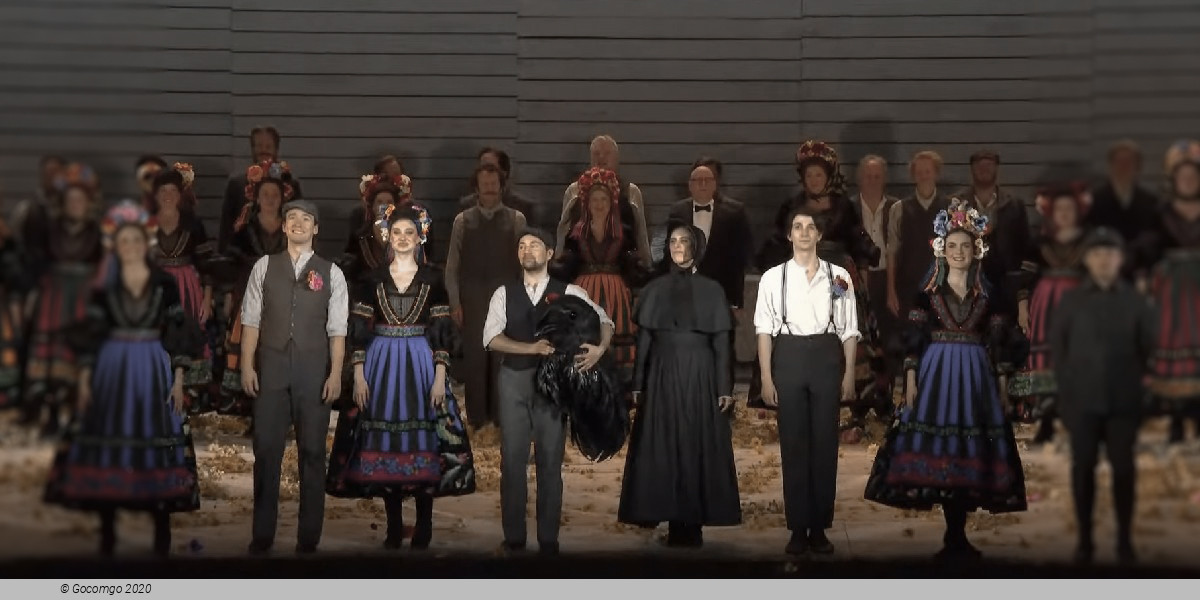
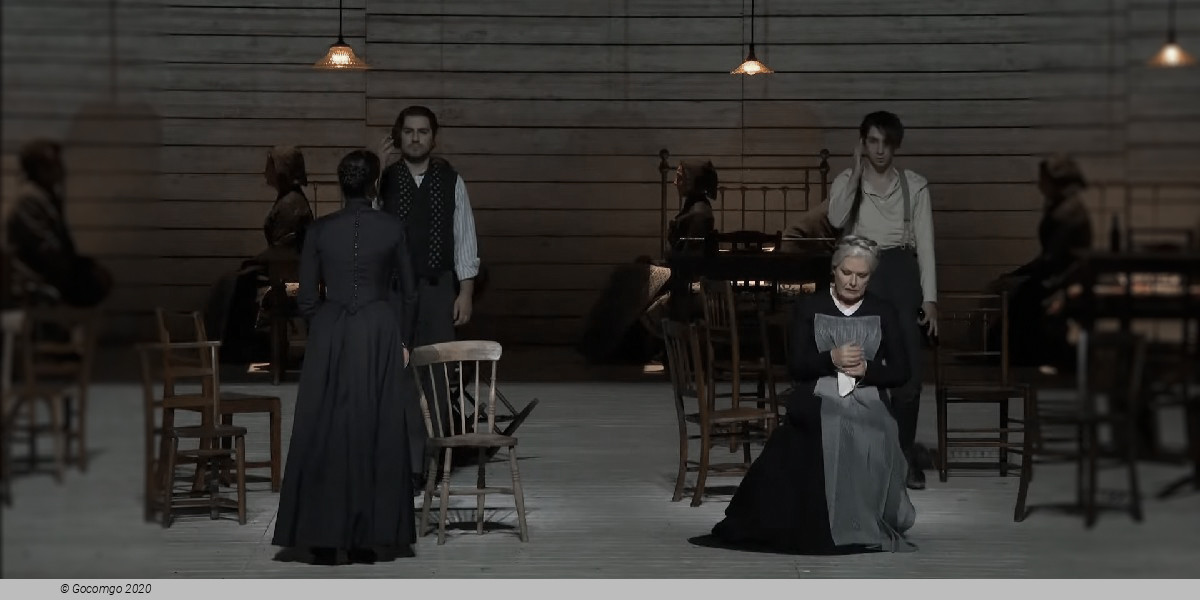
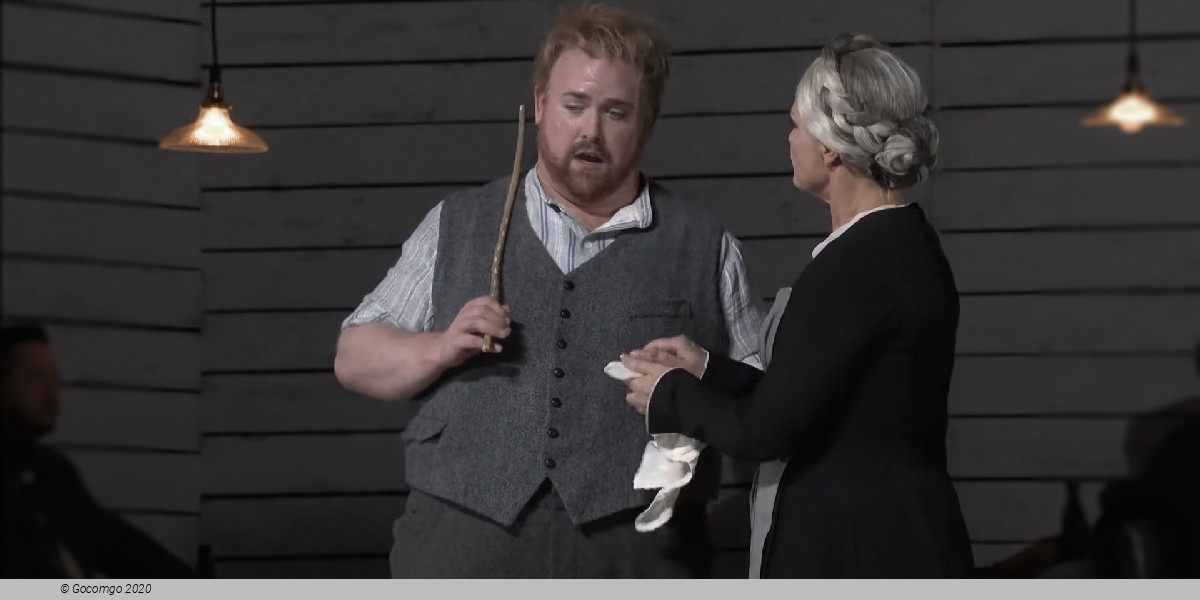
Performing Janáček’s magnificent score at Lyric Opera of Chicago will be an enthralling cast led by two of the finest dramatic sopranos of our time: opera’s newest superstar, Lise Davidsen, and the legendary Nina Stemme, Lyric’s sensational Elektra in 2019. Czech maestro Jakob Hrůša will bring unique authenticity to this unforgettable music, leading Claus Guth’s mesmerizing production.

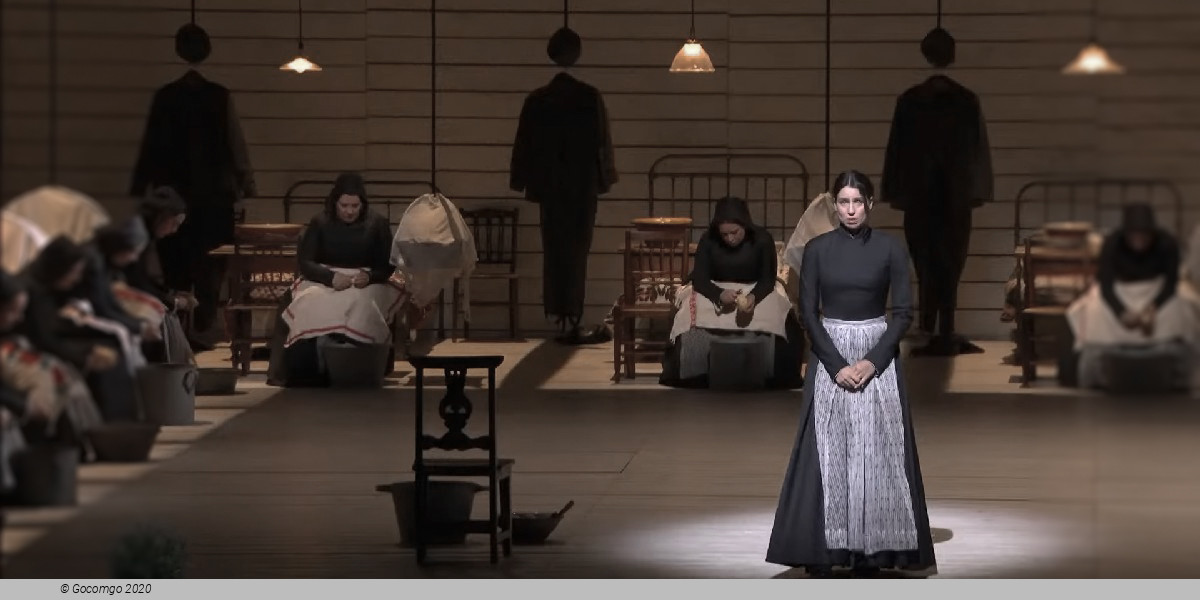
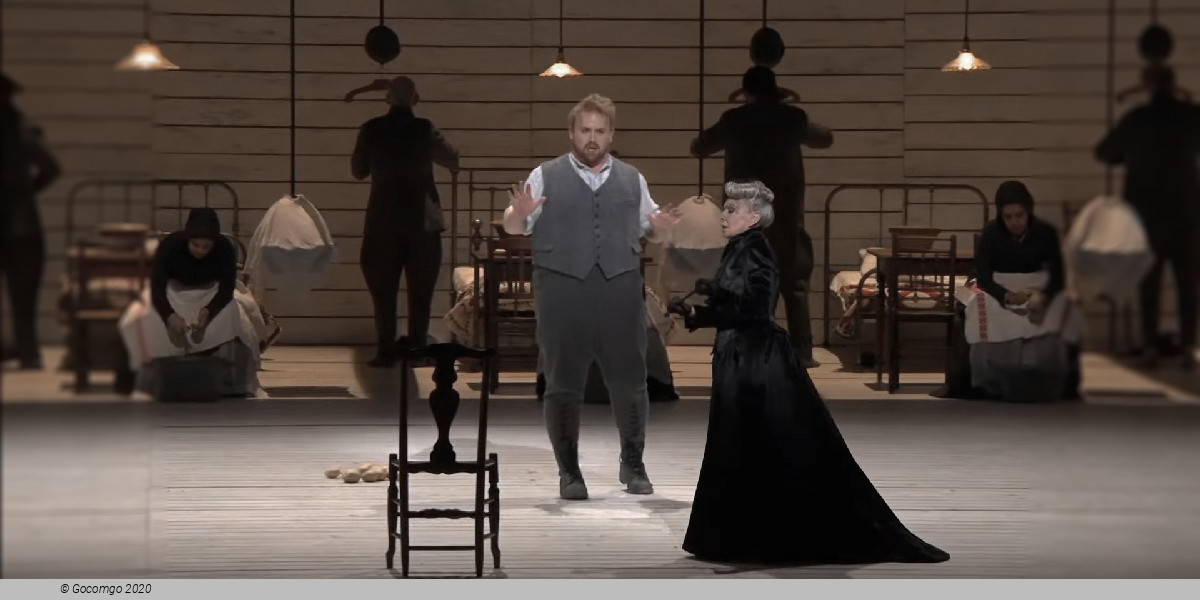
Janáček’s Jenůfa is a dark and stunning masterpiece, both musically and dramatically. In this profoundly moving story, the Kostelnička secretly drowns her foster-daughter Jenůfa’s illegitimate child, hoping to save Jenůfa — and herself — from shame and humiliation. When the murder is discovered, the Kostelnička accepts the consequences, but Jenůfa ends the opera with hope for the future.

Production by the Royal Opera House, Covent Garden.

History
Premiere of this production: 21 January 1904, National Theatre, Brno

Jenůfa ("Her Stepdaughter" in Czech) is an opera in three acts by Leoš Janáček to a Czech libretto by the composer, based on the play Její pastorkyňa by Gabriela Preissová. It was first performed at the National Theatre, Brno on 21 January 1904. Composed between 1896 and 1902, it is among the first operas written in prose.

Synopsis

Place:  A Moravian village
Time: the nineteenth century

The plot depends on a tangled set of village relationships. Before the opera begins, the mill-owner Grandmother Buryja's two sons have both married twice, fathered children, and died. Their wives have also died, except for the Kostelnička (widow of the churchwarden), the younger son's second wife and Jenůfa's stepmother. Custom dictates that only Števa, the elder son's child by his first marriage, will inherit the mill, leaving his half-brother Laca and cousin Jenůfa to earn their livings.

Act 1

Jenůfa, Laca, and Grandmother Buryja wait for Števa to return home. Jenůfa, in love with Števa and secretly pregnant with his child, worries that he may have been drafted into the army. Laca, in love with Jenůfa, expresses bitterness against his half-brother's favored position at home. As he complains he plays with a knife and, finding it blunt, gives it to the mill foreman to be sharpened.

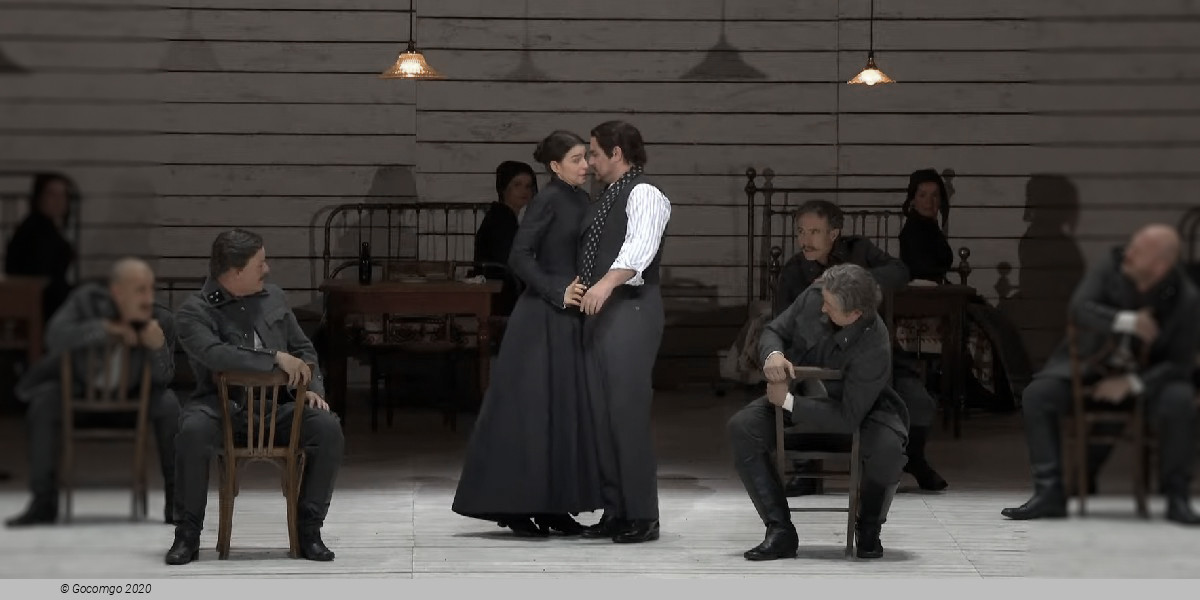
The foreman informs the family that Števa has not been drafted, to Jenůfa's relief and Laca's increased frustration. The others leave, and Jenůfa waits to greet Števa. He appears with a group of soldiers, drunk and boasting of his prowess with the girls. He calls for music and drags the miserable Jenůfa into dancing with him.

Then Kostelnička steps into this rowdy scene, silences the musicians and, shocked by Števa's behavior, forbids him to marry Jenůfa until he can stay sober for one full year. The soldiers and the family leave Števa and Jenůfa alone, and she begs him to love her, but he, unaware of her pregnancy, gives her casual answers and leaves.

Laca returns, as bitter as ever. He attempts to goad Jenůfa into criticizing Števa, but she takes her lover's side despite everything. Laca rages that Števa would never even look at her if it weren't for her rosy cheeks, then slashes her across the cheek with his knife.

Act 2

Months later, it is winter. The baby has been born, but Števa has not yet come to visit his child. Jenůfa's face is still disfigured, but she is happy in her love for the baby. While Jenůfa sleeps, the Kostelnička summons Števa and demands that he take responsibility. He answers that while he will provide money in secret, no one must know the baby is his. His love for Jenůfa died when Laca spoiled her beauty, and he is now engaged to marry Karolka, the mayor's pretty daughter.

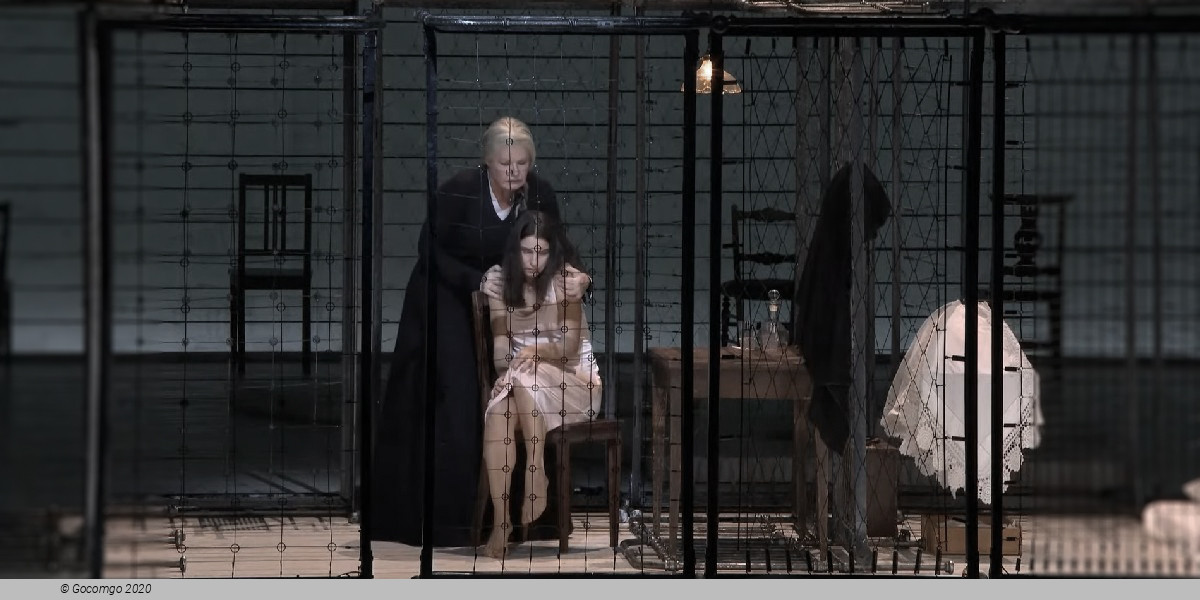
Števa leaves, and Laca enters. He still doesn't know the truth about the baby, and when the Kostelnička tells him, his first reaction is disgust at the thought of taking Števa's child under his wing. Fearful that Jenůfa will be left with no one to marry, Kostelnička hastily lies that the baby is dead. Laca leaves, and the Kostelnička is faced with the necessity of making the lie true. She wraps the baby in a shawl and leaves the house.

Jenůfa wakes up and says a prayer for her child's future, but the Kostelnička, returning, tells her that the baby died while she slept. Laca appears and comforts Jenůfa gently, asking that they spend the rest of their lives together. Seeing the tenderness of the couple, the Kostelnička tries to convince herself that she has acted for the best.

Act 3

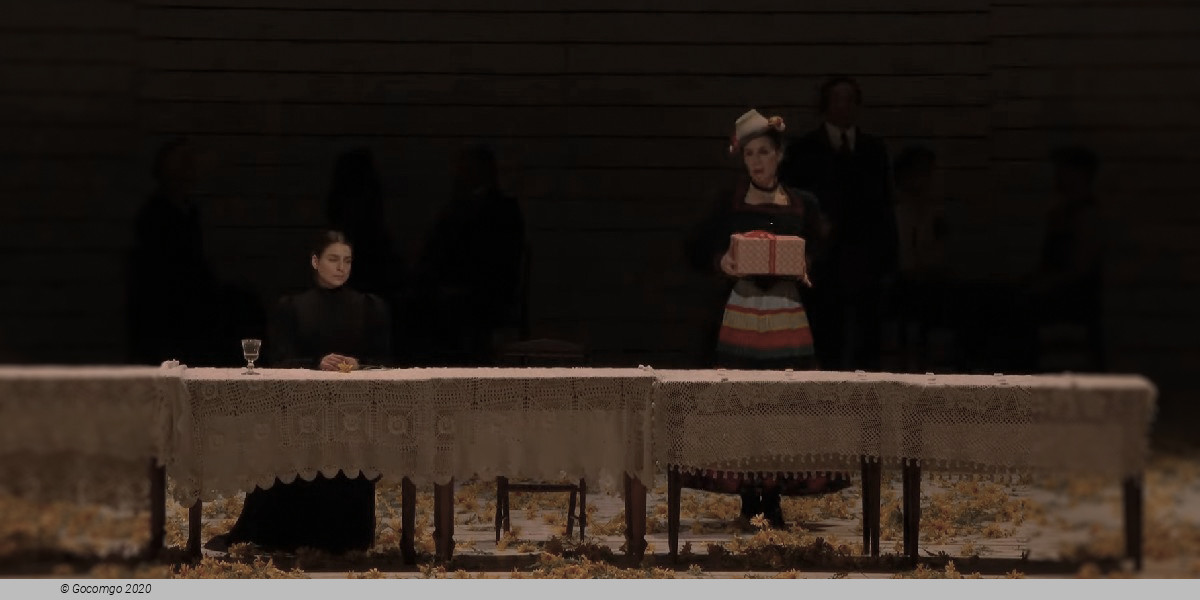
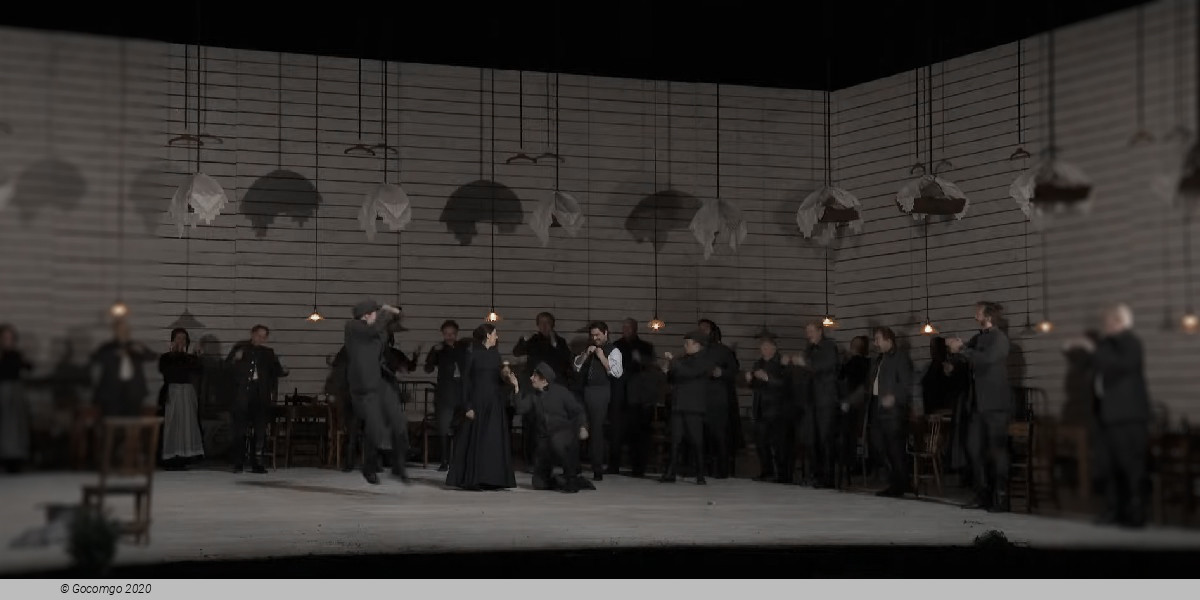
It is now spring, and Laca and Jenůfa's wedding day. All seems right again, except that the Kostelnička is a nervous wreck. Števa and Karolka visit, and a chorus of village girls sings a wedding song. Just then, screams are heard. The body of the baby has been discovered in the mill-stream under the melting ice. Jenůfa immediately says that the baby is hers, and in her grief appears guilty of the murder. The village is ready to exact immediate justice against Jenůfa, but the Kostelnička calms them and says that the crime is hers. Hearing the whole story, Jenůfa forgives her stepmother. The crowd takes the Kostelnička off to jail. Jenůfa and Laca are left alone. Jenůfa asks Laca to leave her, as she cannot expect him to marry her now. He replies that he will not leave her, and that he wishes to spend the rest of his life with her.

Venue Info

Lyric Opera House - Chicago
Location   20 North Wacker Drive

The world-renowned Lyric Opera of Chicago performs in one of North America's most beautiful opera houses, the Lyric Opera House at 20 North Wacker Drive.

In 2017, Lyric Opera of Chicago as house manager of the theater announced that the Joffrey Ballet planned to move from its longtime performance venue at the Auditorium Theatre to the opera house in 2020. The announcement coincided with Lyric's presentation of a new production of Gluck's Orfeo ed Euridice by choreographer John Neumeier; the production fused the musical and ballet elements of the opera and featured the Joffrey Ballet.

Opened as the Civic Opera House in 1929, the building was the vision of utility magnate Samuel Insull (1859–1938), a populist billionaire known as "the Prince of Electricity." Insull, the president of the Chicago Civic Opera Association, wanted to erect a new opera house to replace Louis B. Sullivan's Auditorium Building on South Michigan Avenue as the home of the Chicago Civic Opera — one that would be democratic in scope, and would be housed in and supported by a commercial office building.

The design team chosen by Insull, the Chicago architectural firm of Graham, Anderson, Probst & White, wanted the Civic Opera Building to symbolize "the spirit of a community which is still youthful and not much hampered by traditions." The firm was already famous for designing the Field Museum of Natural History, the Wrigley Building on North Michigan Avenue, and the Continental Illinois Bank Building on South LaSalle Street. In the 1930s the firm created the massive Merchandise Mart Building, also on the Chicago River.

From its opening on Nov. 4, 1929 (just six days after the stock-market crash) until Lyric Opera of Chicago was founded in 1954 (as Lyric Theatre), the Lyric Opera House was home to the Chicago Civic Opera, Chicago Grand Opera Company, Chicago City Opera Company and Chicago Opera Company.

Over the years the Lyric Opera House has also hosted visiting opera and dance companies, as well as touring operettas, musical shows, and a great number of orchestral, dance, and vocal concerts. The adjoining Civic Theatre, at the north end of the block-long building, was used to present plays (including the premiere of Tennessee Williams' The Glass Menagerie), dance performances, and films; for a considerable time it also served as a television studio.

The Civic Opera Building is a majestic limestone skyscraper with a 45-story office tower and two 22-story wings. Shaped like a gigantic throne facing the Chicago River between Washington and Madison streets, it was completed after just 22 months of planning and construction.

The auditorium and its backstage areas occupy approximately one-third of the total space of the building. The distinguishing feature on the Wacker Drive side of the Civic Opera Building is the colonnaded portico that runs the entire length of the building. At the south end, large bronze doors open onto the grand foyer of the Lyric Opera House, whose gilt cornices glitter beneath the sparkling lights of Austrian crystal chandeliers and elaborately stenciled ceilings.

The magnificent space, named the Daniel F. and Ada L. Rice Grand Foyer in honor of major benefactors in 1994, features a floor and wainscoting of pink and gray Tennessee marble, and fluted Roman travertine columns and pilasters. The 40-foot-high columns are topped with carved capitals covered in gold leaf. An imposing grand double staircase leads to the mezzanine foyer.

The decorative character of the entire building is a hybrid of Art Nouveau and Art Deco styles. Comedy-tragedy masks and cornucopia of instruments abound as playful ornaments around entrances, inspired by the Paris Opera House designed by Jean-Louis-Charles Garnier.

The famous painted fire curtain (depicting the parade scene from Aida) and the interior decoration details of the Lyric Opera House were created by American artist Jules Guerin in a palette of salmon pinks, roses, olives, golds and bronzes.

In 1993, Lyric Opera of Chicago purchased all of the theater and backstage space in the Civic Opera Building. Previously Lyric Opera had rented the auditorium and backstage areas.

A massive $100-million renovation of the backstage area commenced in 1993, and continued during Lyric's off-seasons (mid-March through early September) through 1996. The improvements made during this project allowed Lyric Opera to continue producing world-class opera well into the 21st century. The purchase and renovation was made possible by Lyric's $100-million "Building on Greatness" capital campaign. The Lyric Opera of Chicago/Chicago Symphony Orchestra Facilities Fund helped launch Lyric's campaign with a $50 million commitment.

The final phase of renovations took place between early April and early August of 1996 when all 3,563 seats, along with the carpeting, were removed from the auditorium so that artisans could clean and completely repaint. Previously, the theater had never been fully repainted since it opened in 1929 — just patched and touched up as needed over the years.

During the summer of 1996 more than 30 highly skilled artisans from around the country worked in the Lyric Opera House six days a week, 10 hours a day, applying 2,000 gallons of gold paint to the elegant ornamentation of the auditorium, Rice Grand Foyer, and all lobbies. The painters also hand-stenciled and hand-detailed the exquisite colorful ornamentation that adorns the Lyric Opera House ceilings.

Every seat in the auditorium was beautifully refurbished for the first time since 1929. The metal portions were repainted and the wood arms were refinished; the upholstery, seat and back of each chair were replaced. 6,000 square yards of new deep-red carpeting were installed in the theater and lobbies of the Lyric Opera House. The 31 boxes on the mezzanine level were rebuilt and enlarged by 18 inches.

A new 500-pound mainstage curtain was installed, made of 580 yards of heavy-weight wool velour and silk fringe to replicate the original 1929 curtain. All the bronze decorative features and railings in the Lyric Opera House were polished to a just-like-new sheen. The beautiful travertine marble was thoroughly cleaned.

Backstage, a 40-foot-high, 40,000-pound soundproof door was installed to acoustically separate the scenery handling area from the mainstage. During the renovation 32 miles of new rope and cable were installed backstage to update the scenery rigging system. Additionally, 170 miles of electrical wiring and 38 miles of electrical conduit were installed throughout the Lyric Opera House.

Important Info
Type: Opera
City: Chicago, USA
Starts at: 14:00
Intervals: 2
Duration: 3h 5min
Sung in: Czech
Titles in: English
Top of page