






Lyric Opera House 25 January 2023 - Hansel and Gretel | GoComGo.com

Hansel and Gretel

Lyric Opera House, Chicago, USA
All photos (8)
Select date and time
7 PM
Request for Tickets
Important Info
Type: Opera
City: Chicago, USA
Starts at: 19:00
Intervals: 1
Duration: 2h 20min
Sung in: German
Titles in: English

E-tickets: Print at home or at the box office of the event if so specified. You will find more information in your booking confirmation email.

You can only select the category, and not the exact seats.
If you order 2 or 3 tickets: your seats will be next to each other.
If you order 4 or more tickets: your seats will be next to each other, or, if this is not possible, we will provide a combination of groups of seats (at least in pairs, for example 2+2 or 2+3).

Overview

When this universally cherished production debuted 20 years ago, it captivated Chicago audiences. It did the same in 2012, and this season it returns again by popular demand.

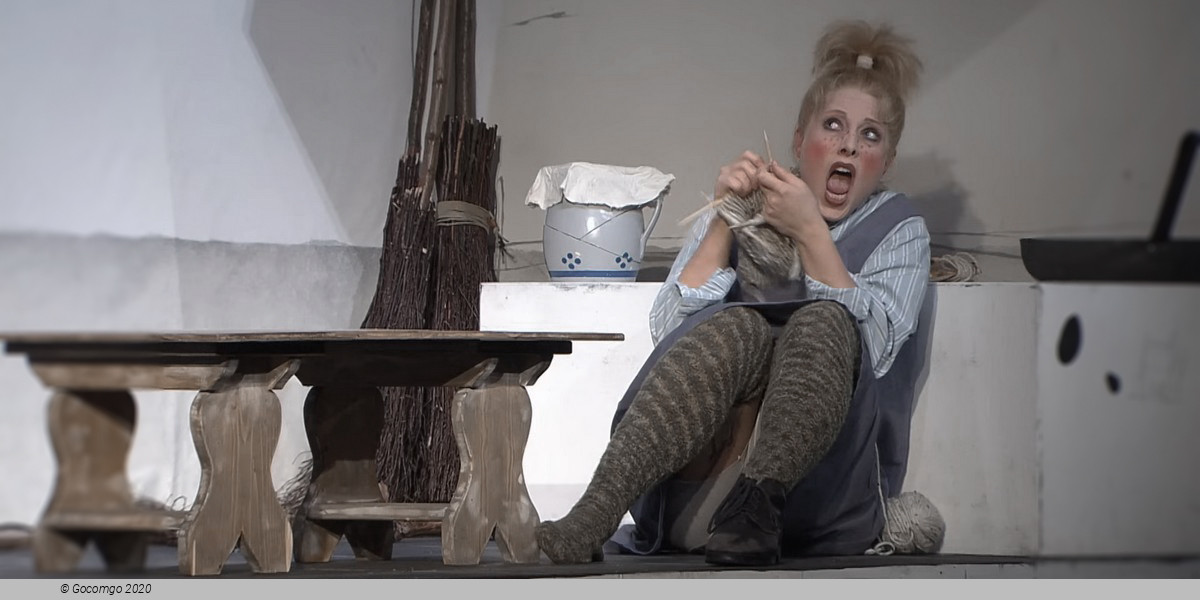
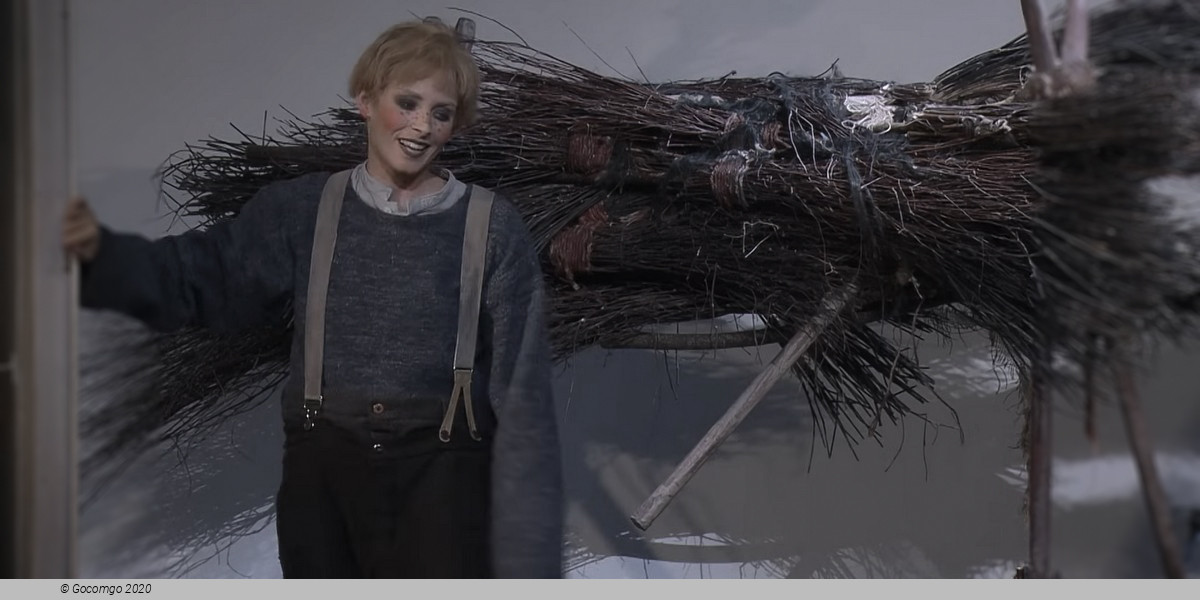
This rivetingly modern, astonishingly inventive view of the Brothers Grimm's fairytale features an eye-popping production that does full justice to Humperdinck's glorious score. You'll be rooting for Hansel and Gretel at every moment in their battle against the witch in the massive, industrial-strength kitchen, and you'll be moved by the "Dream Ballet." From the exquisite "Evening Prayer" to the uproarious "Witch's Ride," this ever-fresh, whimsical masterpiece is packed with musical gems that make it a wonderful introduction to opera for audiences of all ages.

Coproduction originally made possible by the Vance Family Fund, with additional funding from BP America Inc.

Lyric’s presentation of Humperdinck’s Hansel and Gretel is generously made possible by ITW.

History
Premiere of this production: 23 December 1893, Hoftheater in Weimar

Hansel and Gretel is an opera by nineteenth-century composer Engelbert Humperdinck, who described it as a Märchenoper (fairy-tale opera). The libretto was written by Humperdinck's sister, Adelheid Wette, based on the Grimm brothers' fairy tale "Hansel and Gretel". It is much admired for its folk music-inspired themes, one of the most famous being the "Abendsegen" ("Evening Benediction") from act 2.

Synopsis

Act 1

Scene 1: At home

Gretel stitches a stocking, and Hansel is making a broom. Gretel sings to herself as she works. Hänsel mocks her, singing to the same tune a song about how hungry he is. He wishes for mother to come home. Gretel tells him to be quiet and reminds him of what father always says: "When the need is greatest, God the Lord puts out His hand." Hansel complains that one cannot eat words, and Gretel cheers him up by telling him a secret: A neighbor has given mother a jug of milk, and tonight she will make a rice pudding for them to eat. Hansel, excited, tastes the cream on the top of the milk. Gretel scolds him and tells him he should get back to work. Hansel says that he does not want to work, he would rather dance. Gretel agrees, and they begin to dance around.

Scene 2

Mother enters, and she is furious when she finds that Hansel and Gretel have not been working. As she threatens to beat them with a stick, she knocks over the jug of milk. Mother sends Hansel and Gretel to the haunted Ilsenstein forest to look for strawberries. Alone, she expresses her sorrow that she is unable to feed her children, and asks God for help.

Scene 3

From far off, father sings about how hungry he is. He bursts into the house, roaring drunk, and kisses mother roughly. She pushes him away and scolds him for being drunk. He surprises her by taking from his pack a feast: Bacon, butter, flour, sausages, fourteen eggs, beans, onions, and a quarter pound of coffee. He explains to her that beyond the forest, it is almost time for a festival, and everyone is cleaning in preparation. He went from house to house and sold his brooms at the highest prices. As father and mother celebrate, he suddenly stops and asks where the children are. Mother changes the subject to the broken jug, and after she finishes telling him the story, he laughs, then asks again after the children. She tells him that they are in the Ilsenstein forest. Suddenly scared, father tells her that the forest is where the evil Gingerbread Witch (literally, "Nibbling Witch") dwells. She lures children with cakes and sweets, pushes them into her oven, where they turn to gingerbread, and then eats them. Father and mother rush to the forest to search for their children.

Act 2

Here there is a prelude which begins the act, called the "Witch-ride". Sometimes, the two acts are linked to each other, and the prelude is treated as an interlude.

Scene 1: In the forest. Sunset.

Gretel weaves a crown of flowers as she sings to herself. Hansel searches for strawberries. As Gretel finishes her crown, Hansel fills his basket. Gretel tries to put the crown on Hansel, but, saying that boys do not play with things like these, he puts it on her head instead. He tells her that she looks like the Queen of the Wood, and she says that if that's so, then he should give her a bouquet, too. He offers her the strawberries. They hear a cuckoo calling, and they begin to eat the strawberries. As the basket empties, they fight for the remaining strawberries, and finally, Hansel grabs the basket and dumps the leftovers in his mouth. Gretel scolds him and tells him that mother will be upset. She tries to look for more, but it is too dark for her to see. Hansel tries to find the way back, but he cannot. As the forest darkens, Hansel and Gretel become scared, and think they see something coming closer. Hansel calls out, "Who's there?" and a chorus of echoes calls back, "He's there!" Gretel calls, "Is someone there?" and the echoes reply, "There!" Hansel tries to comfort Gretel, but as a little man walks out of the forest, she screams.

Scene 2

The Sandman, who has just walked out of the forest, tells the children that he loves them dearly, and that he has come to put them to sleep. He puts grains of sand into their eyes, and as he leaves they can barely keep their eyes open. Gretel reminds Hansel to say their evening prayer, and after they pray, they fall asleep on the forest floor.

Scene 3

Traumpantomime. Fourteen angels come out and arrange themselves around the children to protect them as they sleep. They are presented with a gift. The forest is filled with light as the curtain falls.

Act 3

Scene 1: In the forest.

The Dew Fairy comes to wake the children. She sprinkles dew on them, sings of how wonderful it is to be alive in the morning with the beauty of the forest surrounding her, and leaves as the children stir. Gretel wakes first, and wakes the sleepy Hansel. They tell each other of their mutual dream, of angels protecting them as they slept.

Scene 2

Suddenly they notice behind them a glorious gingerbread house. The roof is slated with cakes, the windows are of licorice, and the walls are decorated with cookies. On the left side is an oven, on the right side is a cage, and around it is a fence of gingerbread children. Unable to resist temptation, they take a little bit of the house and nibble on it.

Scene 3

As the children nibble, a voice calls out, "Nibbling, nibbling, little mouse! Who's nibbling on my little house?" Hansel and Gretel decide that the voice must have been the wind, and they begin to eat the house. As Hansel breaks off another piece of the house, the voice again calls out, "Nibbling, nibbling, little mouse! Who's nibbling on my little house?" Hansel and Gretel ignore the voice, and continue eating. The witch comes out of the house and catches Hansel with a rope. As Hansel tries to escape, the witch explains that she is Rosine Leckermaul (literally, "Rosina Tastymuzzle"), and that she likes nothing better than to feed children sweets. Hansel and Gretel are suspicious of the witch, so Hansel frees himself from the rope and he and Gretel begin to run away.

The witch takes out her wand and calls out, "Stop!" Hansel and Gretel are frozen to the spot where they stand. Using the wand, the witch leads Hansel to the cage. The witch leaves him stiff and slow of movement. She tells Gretel to be reasonable, and then the witch goes inside to fetch raisins and almonds with which to fatten Hansel. Hansel whispers to Gretel to pretend to obey the witch. The witch returns, and waving her wand, says, "Hocus pocus, holderbush! Loosen, rigid muscles, hush!" Using the wand, the witch forces Gretel to dance, then tells her to go into the house and set the table. Hansel pretends to be asleep, and the witch, overcome with excitement, describes how she plans to cook and eat Gretel.

The witch wakes up Hansel and has him show her his finger. He puts out a bone instead, and she feels it instead. Disappointed that he is so thin, the witch calls for Gretel to bring out raisins and almonds. As the witch tries to feed Hansel, Gretel steals the wand from the witch's pocket. Waving it towards Hansel, Gretel whispers, "Hocus pocus, holderbush! Loosen rigid muscles, hush!" As the witch turns around and wonders at the noise, Hansel discovers that he can move freely again.

The witch tells Gretel to peek inside the oven to see if the gingerbread is done. Hansel softly calls out to her to be careful. Gretel pretends that she does not know what the witch means. The witch tells her to lift herself a little bit and bend her head forward. Gretel says that she is "a goose" and doesn't understand, then asks the witch to demonstrate. The witch, frustrated, opens the oven and leans forward. Hansel springs out of the cage, and he and Gretel shove the witch into the oven. They dance. The oven begins to crackle and the flames burn fiercely, and with a loud crash it explodes.

Scene 4

Around Hansel and Gretel, the gingerbread children have turned back into humans. They are asleep and unable to move, but they sing to Hansel and Gretel, asking to be touched. Hansel is afraid, but Gretel strokes one on the cheek, and he wakes up, but is still unable to move. Hansel and Gretel touch all the children, then Hansel takes the witch's wand and, waving it, calls out the magic words, freeing the children from the spell.

Scene 5

Father is heard in the distance, calling for Hansel and Gretel. He and mother enter and embrace Hansel and Gretel. Meanwhile, the gingerbread children pull out from the ruins of the oven the witch, who has turned into gingerbread. Father gathers Hansel, Gretel and the other children around and tells them to look at this miracle. He explains that this is heaven's punishment for evil deeds and reminds them, "When the need is greatest, God the Lord puts out His hand."

Venue Info

Lyric Opera House - Chicago
Location   20 North Wacker Drive

The world-renowned Lyric Opera of Chicago performs in one of North America's most beautiful opera houses, the Lyric Opera House at 20 North Wacker Drive.

In 2017, Lyric Opera of Chicago as house manager of the theater announced that the Joffrey Ballet planned to move from its longtime performance venue at the Auditorium Theatre to the opera house in 2020. The announcement coincided with Lyric's presentation of a new production of Gluck's Orfeo ed Euridice by choreographer John Neumeier; the production fused the musical and ballet elements of the opera and featured the Joffrey Ballet.

Opened as the Civic Opera House in 1929, the building was the vision of utility magnate Samuel Insull (1859–1938), a populist billionaire known as "the Prince of Electricity." Insull, the president of the Chicago Civic Opera Association, wanted to erect a new opera house to replace Louis B. Sullivan's Auditorium Building on South Michigan Avenue as the home of the Chicago Civic Opera — one that would be democratic in scope, and would be housed in and supported by a commercial office building.

The design team chosen by Insull, the Chicago architectural firm of Graham, Anderson, Probst & White, wanted the Civic Opera Building to symbolize "the spirit of a community which is still youthful and not much hampered by traditions." The firm was already famous for designing the Field Museum of Natural History, the Wrigley Building on North Michigan Avenue, and the Continental Illinois Bank Building on South LaSalle Street. In the 1930s the firm created the massive Merchandise Mart Building, also on the Chicago River.

From its opening on Nov. 4, 1929 (just six days after the stock-market crash) until Lyric Opera of Chicago was founded in 1954 (as Lyric Theatre), the Lyric Opera House was home to the Chicago Civic Opera, Chicago Grand Opera Company, Chicago City Opera Company and Chicago Opera Company.

Over the years the Lyric Opera House has also hosted visiting opera and dance companies, as well as touring operettas, musical shows, and a great number of orchestral, dance, and vocal concerts. The adjoining Civic Theatre, at the north end of the block-long building, was used to present plays (including the premiere of Tennessee Williams' The Glass Menagerie), dance performances, and films; for a considerable time it also served as a television studio.

The Civic Opera Building is a majestic limestone skyscraper with a 45-story office tower and two 22-story wings. Shaped like a gigantic throne facing the Chicago River between Washington and Madison streets, it was completed after just 22 months of planning and construction.

The auditorium and its backstage areas occupy approximately one-third of the total space of the building. The distinguishing feature on the Wacker Drive side of the Civic Opera Building is the colonnaded portico that runs the entire length of the building. At the south end, large bronze doors open onto the grand foyer of the Lyric Opera House, whose gilt cornices glitter beneath the sparkling lights of Austrian crystal chandeliers and elaborately stenciled ceilings.

The magnificent space, named the Daniel F. and Ada L. Rice Grand Foyer in honor of major benefactors in 1994, features a floor and wainscoting of pink and gray Tennessee marble, and fluted Roman travertine columns and pilasters. The 40-foot-high columns are topped with carved capitals covered in gold leaf. An imposing grand double staircase leads to the mezzanine foyer.

The decorative character of the entire building is a hybrid of Art Nouveau and Art Deco styles. Comedy-tragedy masks and cornucopia of instruments abound as playful ornaments around entrances, inspired by the Paris Opera House designed by Jean-Louis-Charles Garnier.

The famous painted fire curtain (depicting the parade scene from Aida) and the interior decoration details of the Lyric Opera House were created by American artist Jules Guerin in a palette of salmon pinks, roses, olives, golds and bronzes.

In 1993, Lyric Opera of Chicago purchased all of the theater and backstage space in the Civic Opera Building. Previously Lyric Opera had rented the auditorium and backstage areas.

A massive $100-million renovation of the backstage area commenced in 1993, and continued during Lyric's off-seasons (mid-March through early September) through 1996. The improvements made during this project allowed Lyric Opera to continue producing world-class opera well into the 21st century. The purchase and renovation was made possible by Lyric's $100-million "Building on Greatness" capital campaign. The Lyric Opera of Chicago/Chicago Symphony Orchestra Facilities Fund helped launch Lyric's campaign with a $50 million commitment.

The final phase of renovations took place between early April and early August of 1996 when all 3,563 seats, along with the carpeting, were removed from the auditorium so that artisans could clean and completely repaint. Previously, the theater had never been fully repainted since it opened in 1929 — just patched and touched up as needed over the years.

During the summer of 1996 more than 30 highly skilled artisans from around the country worked in the Lyric Opera House six days a week, 10 hours a day, applying 2,000 gallons of gold paint to the elegant ornamentation of the auditorium, Rice Grand Foyer, and all lobbies. The painters also hand-stenciled and hand-detailed the exquisite colorful ornamentation that adorns the Lyric Opera House ceilings.

Every seat in the auditorium was beautifully refurbished for the first time since 1929. The metal portions were repainted and the wood arms were refinished; the upholstery, seat and back of each chair were replaced. 6,000 square yards of new deep-red carpeting were installed in the theater and lobbies of the Lyric Opera House. The 31 boxes on the mezzanine level were rebuilt and enlarged by 18 inches.

A new 500-pound mainstage curtain was installed, made of 580 yards of heavy-weight wool velour and silk fringe to replicate the original 1929 curtain. All the bronze decorative features and railings in the Lyric Opera House were polished to a just-like-new sheen. The beautiful travertine marble was thoroughly cleaned.

Backstage, a 40-foot-high, 40,000-pound soundproof door was installed to acoustically separate the scenery handling area from the mainstage. During the renovation 32 miles of new rope and cable were installed backstage to update the scenery rigging system. Additionally, 170 miles of electrical wiring and 38 miles of electrical conduit were installed throughout the Lyric Opera House.

Important Info
Type: Opera
City: Chicago, USA
Starts at: 19:00
Intervals: 1
Duration: 2h 20min
Sung in: German
Titles in: English
Top of page