



Hungarian State Opera House 16 February 2024 - Dancetriptych: The Wooden Prince. The Miraculous Mandarin. Dance Suite | GoComGo.com

Dancetriptych: The Wooden Prince. The Miraculous Mandarin. Dance Suite

Hungarian State Opera House, Opera House, Budapest, Hungary
All photos (4)
Select date and time
7 PM

E-tickets: Print at home or at the box office of the event if so specified. You will find more information in your booking confirmation email.

You can only select the category, and not the exact seats.
If you order 2 or 3 tickets: your seats will be next to each other.
If you order 4 or more tickets: your seats will be next to each other, or, if this is not possible, we will provide a combination of groups of seats (at least in pairs, for example 2+2 or 2+3).

Important Info
Type: Ballet
City: Budapest, Hungary
Starts at: 19:00
Duration: 2h

E-tickets: Print at home or at the box office of the event if so specified. You will find more information in your booking confirmation email.

You can only select the category, and not the exact seats.
If you order 2 or 3 tickets: your seats will be next to each other.
If you order 4 or more tickets: your seats will be next to each other, or, if this is not possible, we will provide a combination of groups of seats (at least in pairs, for example 2+2 or 2+3).

Overview

Three one-act dance pieces in two parts

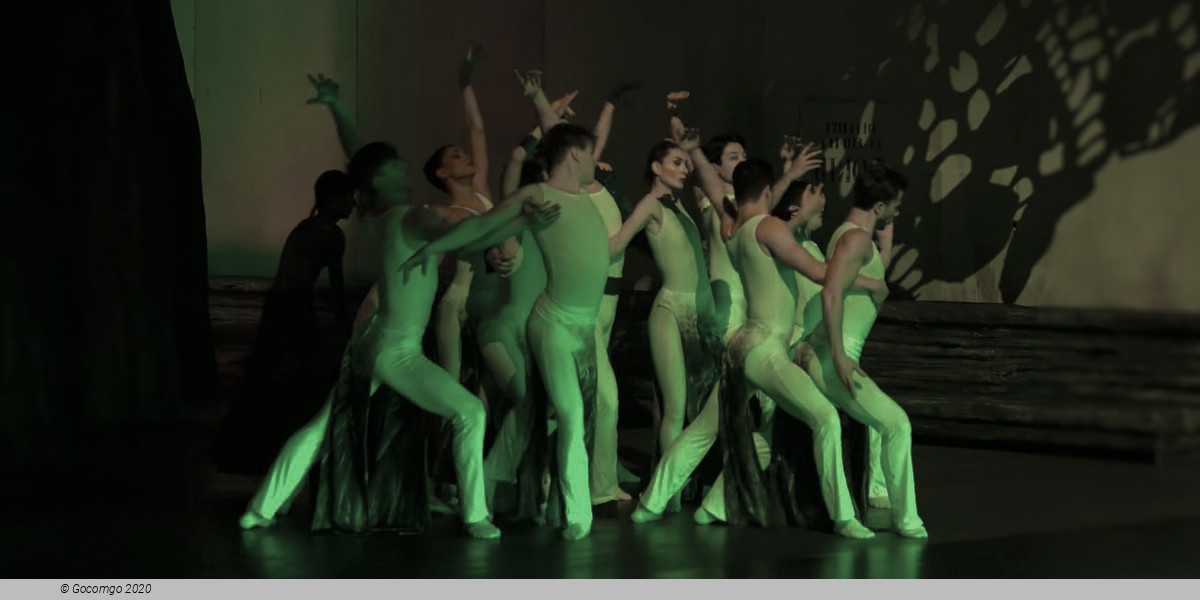
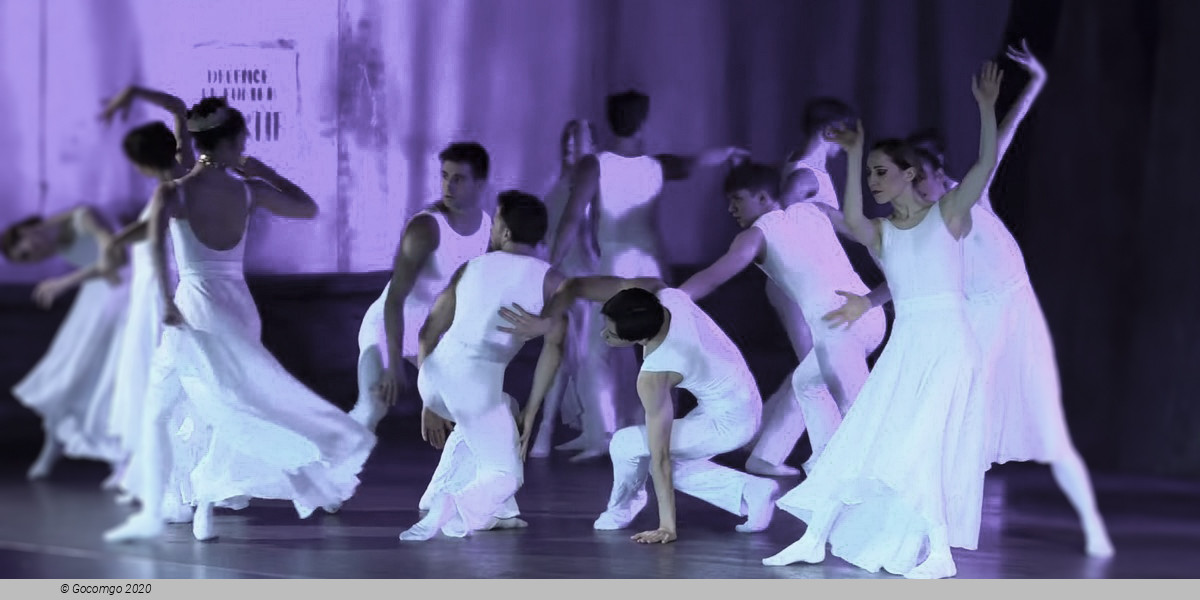
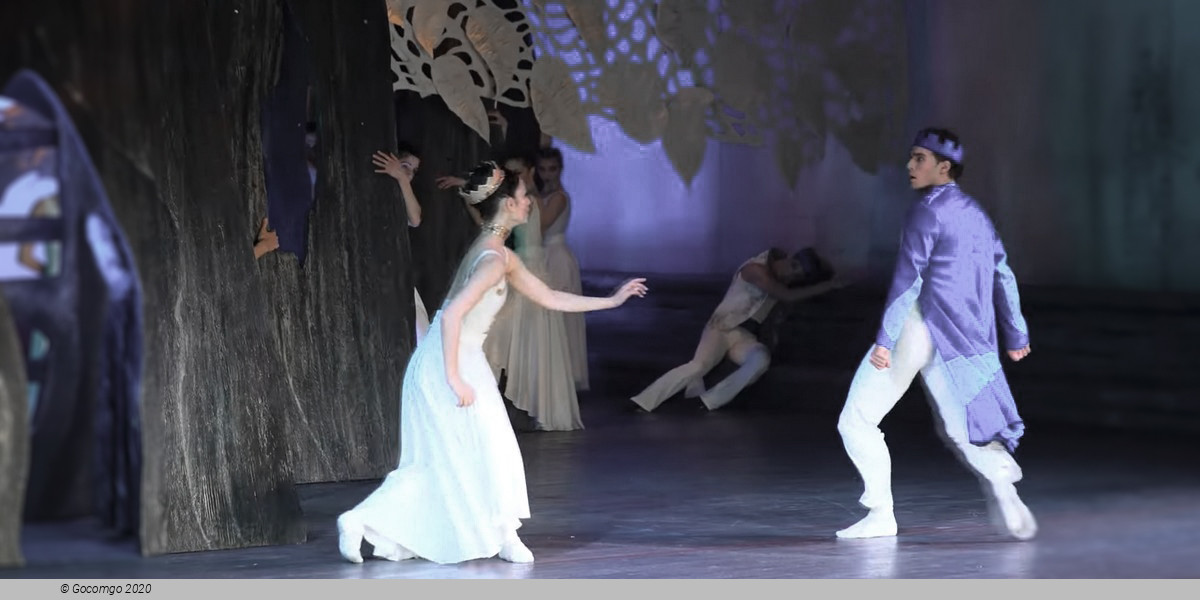
“There is no date in the half-a-century history of our Opera House as important as the premier day of Béla Bartók’s first pantomime ballet The Wooden Prince on 12 May 1917. It was the first time that the Hungarian spirit, the genius of Vörösmarty, Petőfi and Ady’s nation was expressed in its true greatness and absolute authenticity in the music played in the Hungarian opera”, writes musicologist Aladár Tóth, who later became the director of the OPERA. The piece that has been part of the repertoire almost constantly in the 105 years passed since its original premier has been staged by several renowned choreographers. This mixture of a fairytale-like world of a forest and the realistically deep and human struggles of men and women, is brought to life by László Velekei, ballet director of Győr Ballet.

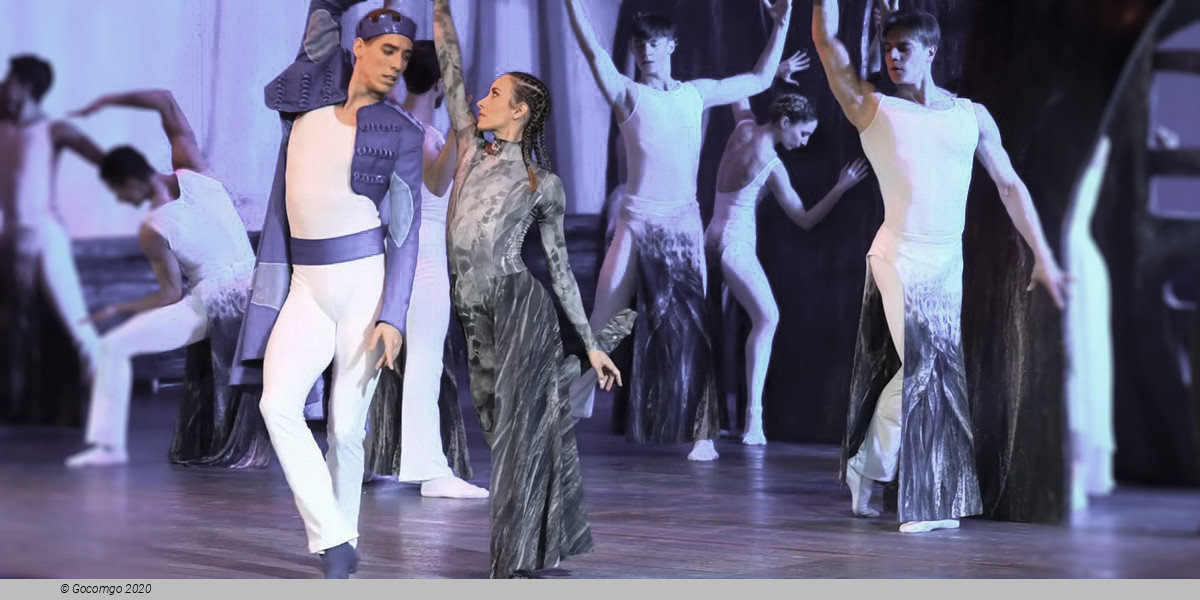
Today we mostly find disturbing The Miraculous Mandarin, which is based on Menyhért Lengyel’s pantomime play full of erotica, sexuality and abuse. But at the time of its original premiere in Cologne, it was truly scandalous. Whether disturbing or scandalous, it is certainly an influential work, which travelled the world accordingly. It was played in numerous countries of Europe, America and Asia, and even in South Africa. In the 2023/24 season, this ballet is choreographed by Marianna Venekei, who explores the inner worlds of the characters and discovers the increasing depths of their personalities, combines past and present to find a way to reach a 21st-century audience while staying true to the music of Béla Bartók.

Dance Suite is a well-known 1923 orchestral work by the Hungarian composer Béla Bartók. New ballet work choreographed by Kristóf Várnagy.

History
Premiere of this production: 12 May 1917, Budapest Opera

The Wooden Prince is a one-act pantomime ballet composed by Béla Bartók in 1914–1916 (orchestrated 1916–1917) to a scenario by Béla Balázs. It was first performed at the Budapest Opera on 12 May 1917 under the conductor Egisto Tango.

Premiere of this production: 27 November 1926, Cologne Opera, Cologne

The Miraculous Mandarin is a one act pantomime ballet composed by Béla Bartók between 1918 and 1924, and based on the 1916 story by Melchior Lengyel. Premiered on 27 November 1926 conducted by Eugen Szenkar at the Cologne Opera, Germany, it caused a scandal and was subsequently banned on moral grounds. Although more successful at its Prague premiere, it was generally performed during the rest of Bartók's life in the form of a concert suite, which preserves about two-thirds of the original pantomime's music.

Synopsis

After an orchestral introduction depicting the chaos of the big city, the action begins in a room belonging to three tramps. They search their pockets and drawers for money, but find none. They then force a girl to stand by the window and attract passing men into the room. The girl begins a lockspiel—a "decoy game", or saucy dance. She first attracts a shabby old rake, who makes comical romantic gestures. The girl asks, "Got any money?" He replies, "Who needs money? All that matters is love." He begins to pursue the girl, growing more and more insistent until the tramps seize him and throw him out.

The girl goes back to the window and performs a second lockspiel. This time, she attracts a shy young man, who also has no money. He begins to dance with the girl. The dance grows more passionate, then the tramps jump him and throw him out too.

The girl goes to the window again and begins her dance. The tramps and girl see a bizarre figure in the street, soon heard coming up the stairs. The tramps hide, and the figure, a mandarin (wealthy Chinese man), stands immobile in the doorway. The tramps urge the girl to lure him closer. She begins another saucy dance, the Mandarin's passions slowly rising. Suddenly, he leaps up and embraces the girl. They struggle and she escapes; he begins to chase her. The tramps leap on him, strip him of his valuables, and attempt to suffocate him under pillows and blankets. However, he continues to stare at the girl. They stab him three times with a rusty sword; he almost falls, but throws himself again at the girl. The tramps grab him again and hang him from a lamp hook. The lamp falls, plunging the room into darkness, and the Mandarin's body begins to glow with an eerie blue-green light. The tramps and girl are terrified. Suddenly, the girl knows what they must do. She tells the tramps to release the Mandarin; they do. He leaps at the girl again, and this time she does not resist and they embrace. With the Mandarin's longing fulfilled, his wounds begin to bleed and he dies.

Venue Info

Hungarian State Opera House - Budapest
Location   Andrássy út 22

The Hungarian State Opera House (Hungarian: Magyar Állami Operaház) is a neo-Renaissance opera house located in central Budapest, on Andrássy út. The Hungarian State Opera House is the main opera house of the country and the second largest opera house in Budapest and in Hungary. Today, the opera house is home to the Budapest Opera Ball, a society event dating back to 1886. The Theatre was designed by Miklós Ybl, a major figure of 19th-century Hungarian architecture.

Construction began in 1875, funded by the city of Budapest and by Emperor Franz Joseph I of Austria-Hungary, and the new house opened to the public on the 27 September 1884. Before the closure of the "Népszínház" in Budapest, it was the third largest opera building in the city; today it is the second largest opera house in Budapest and in Hungary.

Touring groups had performed operas in the city from the early 19th century, but as Legány notes, "a new epoch began after 1835 when part of the Kasa National Opera and Theatrical Troupe arrived in Buda". They took over the Castle Theatre and, in 1835, were joined by another part of the troupe, after which performances of operas were given under conductor Ferenc Erkel. By 1837 they had established themselves at the Magyar Színház (Hungarian Theatre) and by 1840, it had become the "Nemzeti Színház" (National Theatre). Upon its completion, the opera section moved into the Hungarian Royal Opera House, with performances quickly gaining a reputation for excellence in a repertory of about 45 to 50 operas and about 130 annual performances. 

Many important artists were guests here including the composer Gustav Mahler, who was director in Budapest from 1888 to 1891 and Otto Klemperer, who was music director for three years from 1947 to 1950.

It is a richly decorated building and is considered one of the architect's masterpieces. It was built in neo-Renaissance style, with elements of Baroque. Ornamentation includes paintings and sculptures by leading figures of Hungarian art including Bertalan Székely, Mór Than, and Károly Lotz. Although in size and capacity it is not among the greatest, in beauty and the quality of acoustics the Budapest Opera House is considered to be amongst the finest opera houses in the world.

The auditorium holds 1,261 people. It is horseshoe-shaped and – according to measurements done in the 1970s by a group of international engineers – has the third best acoustics in Europe after La Scala in Milan and the Palais Garnier in Paris. Although many opera houses have been built since the Budapest Opera House is still among the best in terms of acoustics.

In front of the building are statues of Ferenc Erkel and Franz Liszt. Liszt is the best-known Hungarian composer. Erkel composed the Hungarian national anthem, and was the first music director of the Opera House; he was also the founder of the Budapest Philharmonic Orchestra.

Each year the season lasts from September to the end of June and, in addition to opera performances, the House is home to the Hungarian National Ballet.

There are guided tours of the building in six languages (English, German, Spanish, French, Italian, and Hungarian) almost every day.

Important Info
Type: Ballet
City: Budapest, Hungary
Starts at: 19:00
Duration: 2h
Top of page