
Gran Teatre del Liceu 1 February 2022 - The Queen of Spades | GoComGo.com

The Queen of Spades

Gran Teatre del Liceu, Main Stage, Barcelona, Spain
All photos (9)
Select date and time
7 PM

E-tickets: Print at home or at the box office of the event if so specified. You will find more information in your booking confirmation email.

You can only select the category, and not the exact seats.
If you order 2 or 3 tickets: your seats will be next to each other.
If you order 4 or more tickets: your seats will be next to each other, or, if this is not possible, we will provide a combination of groups of seats (at least in pairs, for example 2+2 or 2+3).

Important Info
Type: Opera
City: Barcelona, Spain
Starts at: 19:00
Acts: 3
Duration: 3h 50min

E-tickets: Print at home or at the box office of the event if so specified. You will find more information in your booking confirmation email.

You can only select the category, and not the exact seats.
If you order 2 or 3 tickets: your seats will be next to each other.
If you order 4 or more tickets: your seats will be next to each other, or, if this is not possible, we will provide a combination of groups of seats (at least in pairs, for example 2+2 or 2+3).

Overview

Alongside Eugene Onegin, Tchaikovsky's greatest contribution to the opera.

Thanks to his brother Modest's libretto, based on a free adaptation of a tale by Pushkin, P. I. Tchaikovsky was able to respond in just 44 days to a commission from the Russian Imperial Theatres and Pikovaya Dama was born.

For the young Herman, paradise consists of rising in society and gambling. He accordingly sacrifices his love for Lisa to his obsession with finding a magic formula for winning at cards which is in the possession of an old countess. After driving Lisa to suicide, Herman himself dies, deceived by the Countess's ghost.

The tragedy of this complex Romantic hero, haunted by his passion for gambling and driven by fate to the loss of his lover and to crime and death, is counterpointed by elements from the world of dreams and the supernatural.

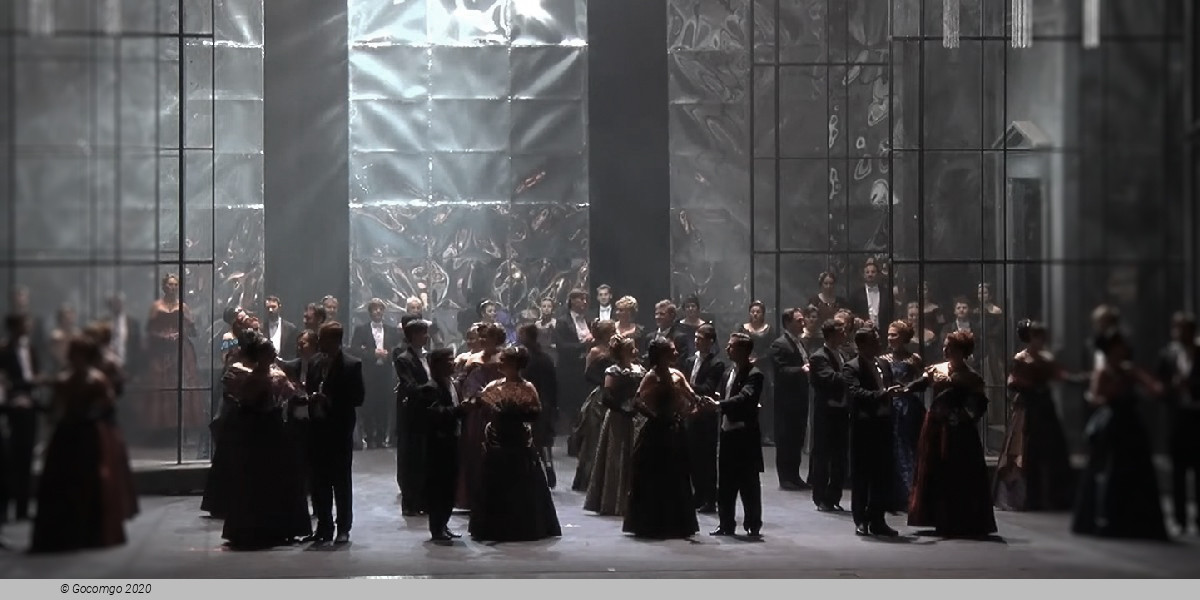
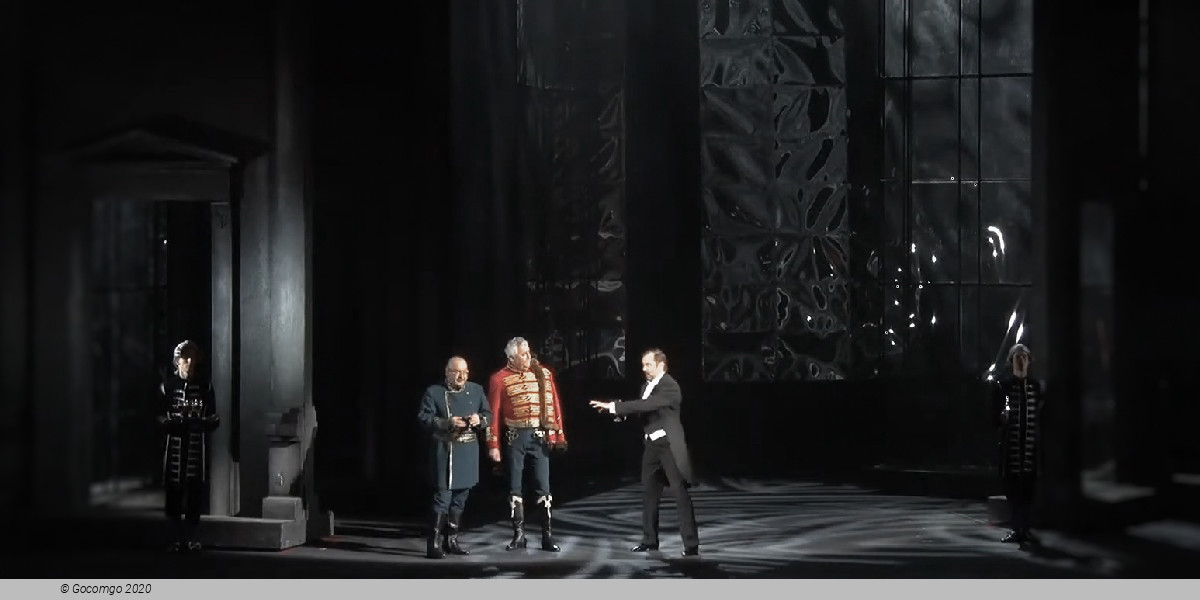
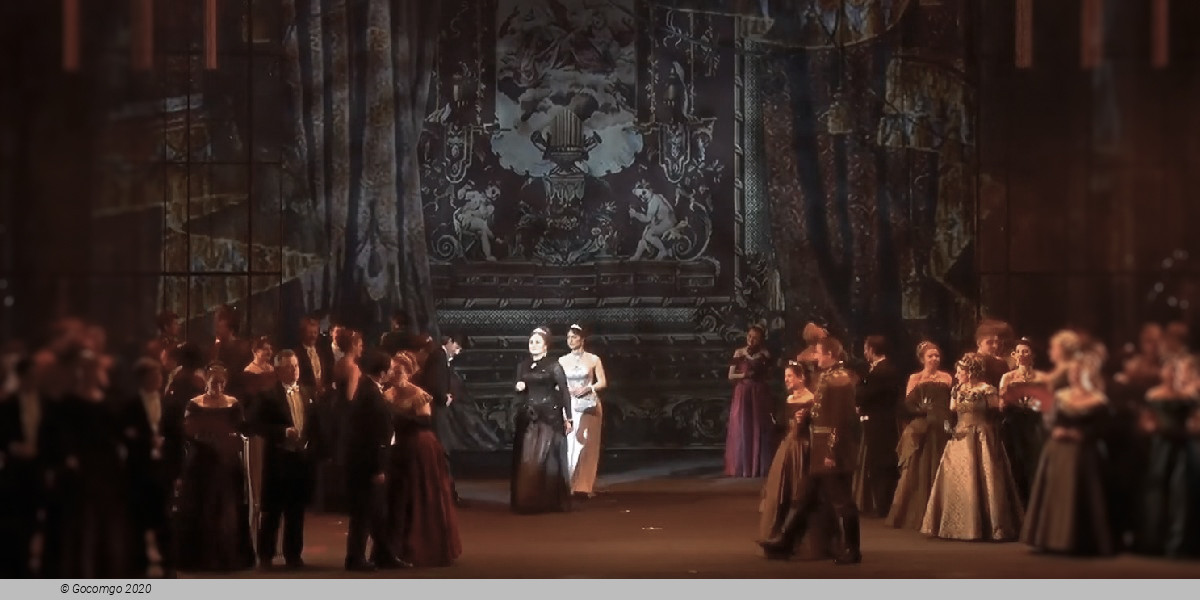
Gilbert Deflo's opulent production transports us to a far-off age and underscores the composer's own scathing portrait of society, for beneath the amiable appearance of the Russia of Catherine the Great, a lost generation lies hidden. Tchaikovsky's score evokes the court, streets and river banks of Saint Petersburg through the deliberate recreation of 18th century musical forms and allusions to popular and religious music but never sacrifices his characteristically fervent lyricism. The Queen of Spades ranks alongside Eugene Onegin as his greatest contribution to the world of opera.

History
Premiere of this production: 29 March 1890, Mariinsky Theatre, St. Petersburg

The Queen of Spades is an opera in three acts (seven scenes) by Pyotr Ilyich Tchaikovsky to a Russian libretto by the composer's brother Modest Tchaikovsky, based on a short story of the same name by Alexander Pushkin, but with a dramatically altered plot. The premiere took place in 1890 in St. Petersburg (at the Mariinsky Theatre), Russia.

Synopsis

Time: The close of the 18th century

Place: St. Petersburg, Russia

Act 1

Scene 1

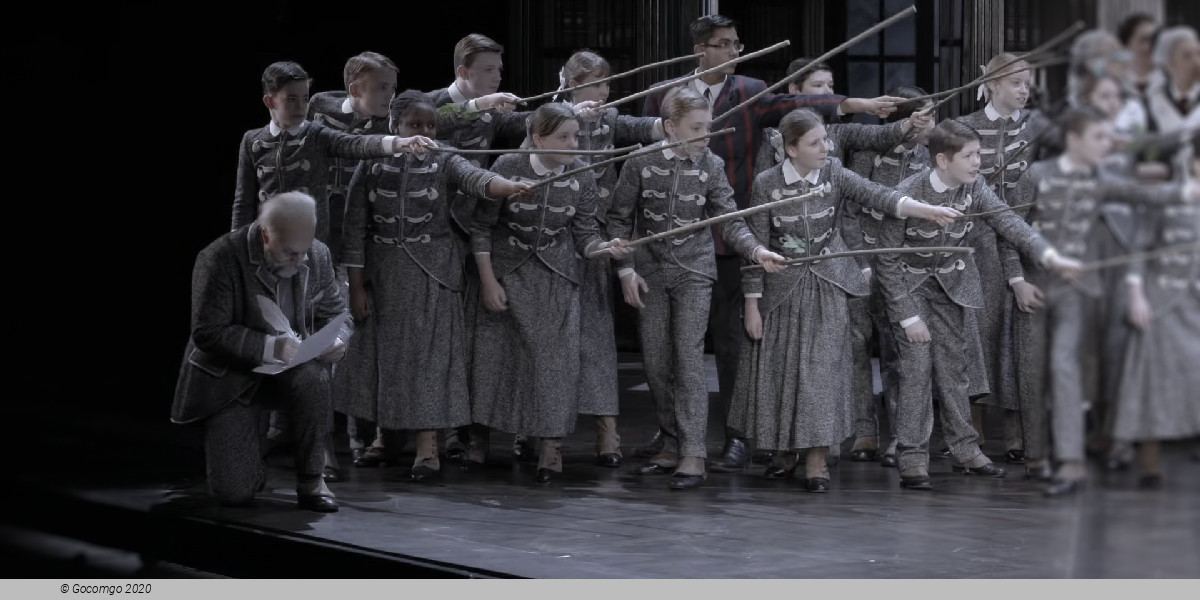
During the reign of Catherine the Great (1762–96), children are at play in St. Petersburg's Summer Garden pretending to be soldiers. Two officers — Tsurin and Chekalinsky — enter, the former complaining about his bad luck at gambling. They remark that another officer, Herman, seems obsessed with the gaming table but never bets, being frugal and methodical. Herman appears with Tomsky, who remarks that his friend hardly seems like his old self: is anything bothering him? Herman admits he is in love with a girl above his station whose name he does not even know. When Prince Yeletsky, an officer, strolls into the park, Chekalinsky congratulates him on his recent engagement. Yeletsky declares his happiness while Herman, aside, curses him enviously. Yeletsky points out his fiancée, Liza, who has just appeared with her grandmother, the old Countess. Catching sight of Herman, the two women note they have seen him before, staring at them with frightening intensity. Herman realizes that Liza is his unknown beloved. When Yeletsky and the women leave, Herman is lost in thought as the other officers discuss the Countess: known as the Queen of Spades and formerly as the Muscovite Venus, due to her beauty, she succeeded at gambling in her youth by trading amorous favors for the winning formula of Count St. Germain in Paris. Tomsky says only two men, her husband and, later on, her young lover, ever learned the secret of playing three special cards, because she was warned by an apparition to beware a "third suitor" who would kill her trying to force it from her. Musing on the winning sequence of three cards, the others lightly suggest that this might be the way for Herman to win without risking any money. Threatened by approaching thunder, all leave except Herman, who vows to learn the Countess's secret.

Scene 2

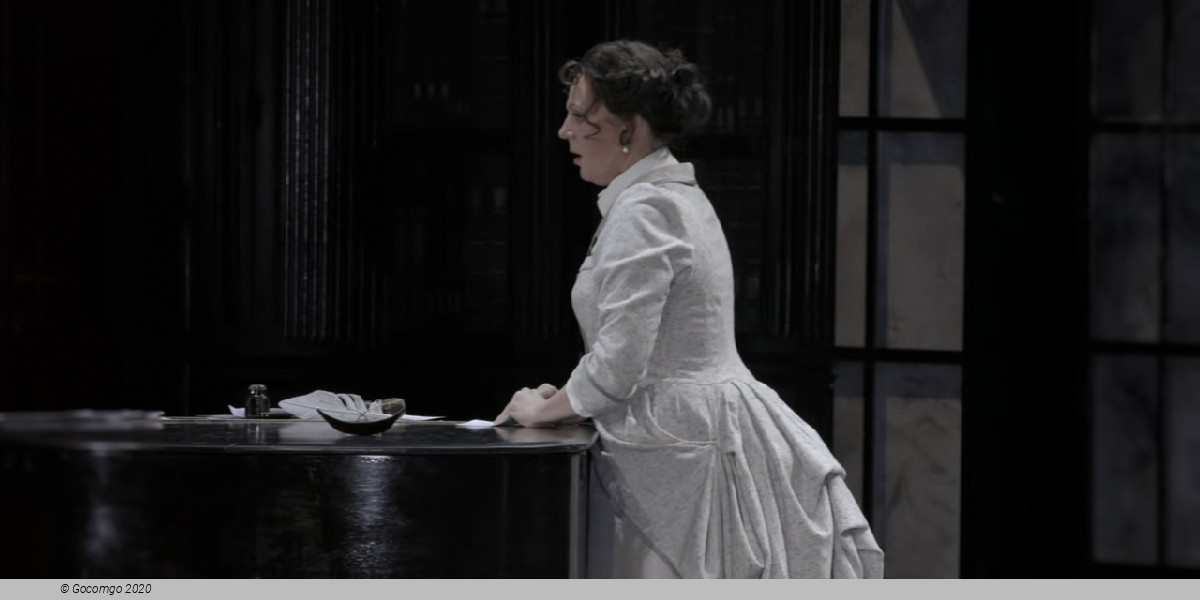
At home, Liza plays the spinet as she and her friend Pauline sing a duet about evening in the countryside. Their girlfriends ask to hear more, so Pauline launches into a sad ballad, followed by a dancelike song. As the merriment increases, Liza remains pensively apart. A Governess chides the girls for indulging in unbecoming folk dancing and asks the visitors to leave. Pauline, the last to go, urges Liza to cheer up; Liza replies that after a storm there is a beautiful night and asks the maid, Masha, not to close the French windows to the balcony. Alone, Liza voices her unhappiness with her engagement; she has been stirred by the romantic look of the young man in the park. To her shock, Herman appears on the balcony. Claiming he is about to shoot himself over her betrothal to another, he begs her to take pity on him. When the Countess is heard knocking, Liza hides Herman and opens the door to the old woman, who tells her to shut the windows and go to bed. After the Countess retires, Liza asks Herman to leave but is betrayed by her feelings and falls into his embrace.

Act 2

Scene 1

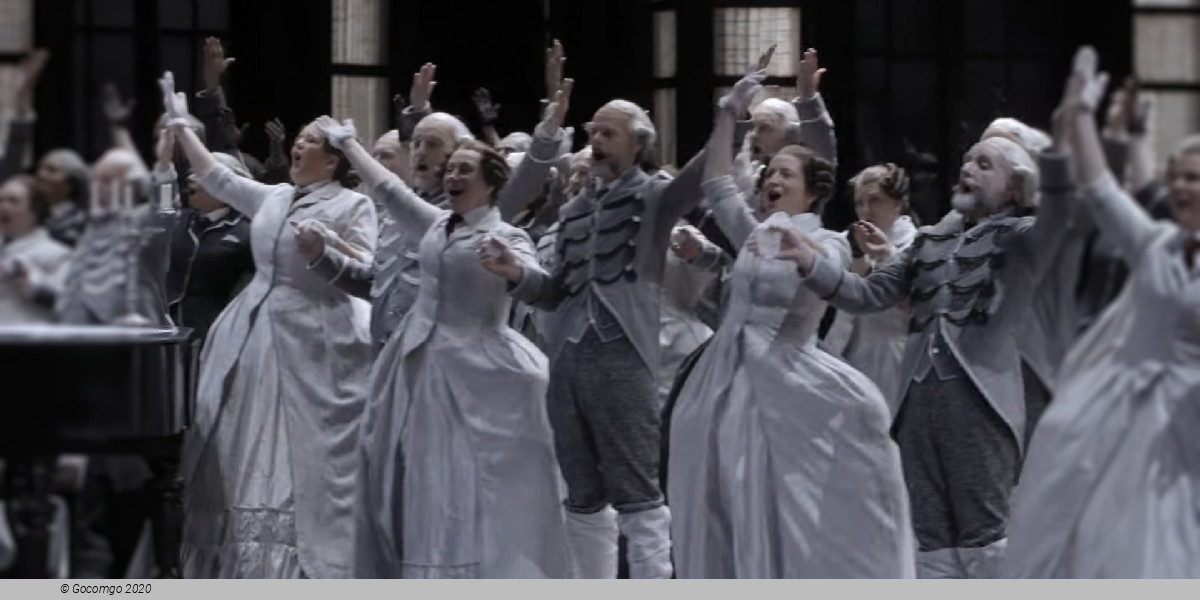
Not long afterward, at a masked ball, Herman's comrades comment on his obsession with the secret of the winning cards. Yeletsky passes with Liza, noting her sadness and reassuring her of his love ("Ya vas lyublyu" "I love you"). Herman receives a note from Liza, asking him to meet her later. Tsurin and Chekalinsky sneak up behind him with the intent of playing a joke on him, muttering he is the "third suitor" who will learn the Countess's secret, then melt into the crowd as Herman wonders whether he is hearing things. The master of ceremonies announces a tableau of shepherdesses. Liza slips Herman the key to her grandmother's room, saying the old woman will not be there the next day, but Herman insists on coming that very night. Thinking fate is handing him the Countess's secret, he leaves. The guests' attention turns to the imminent arrival of Catherine the Great, for which a polonaise by Osip Kozlovsky is played and sung in greeting.

Scene 2

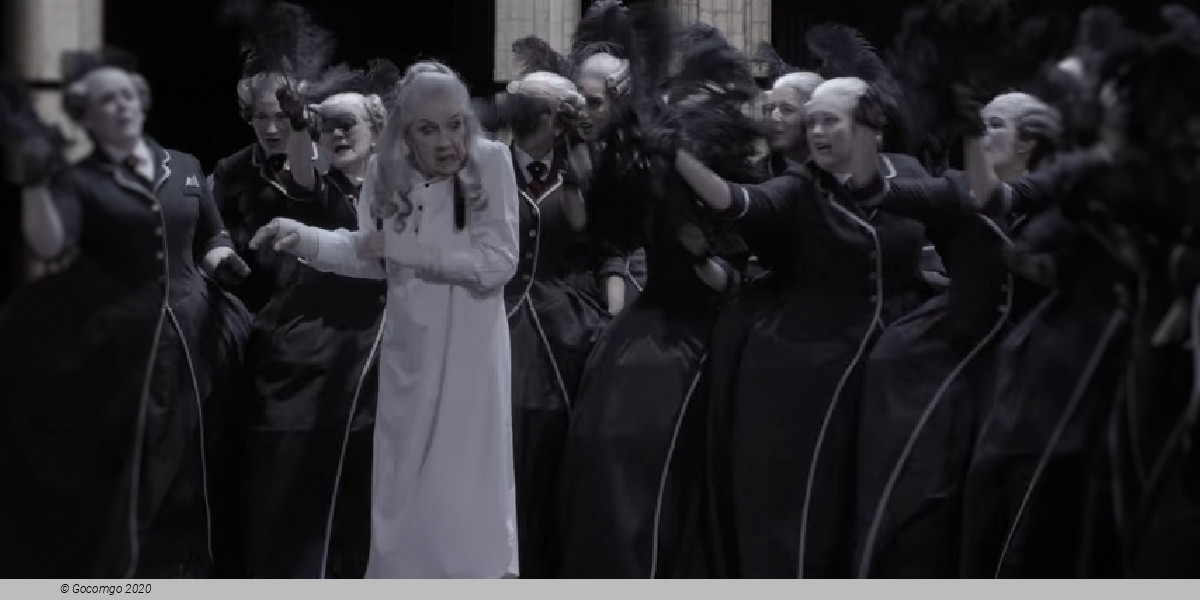
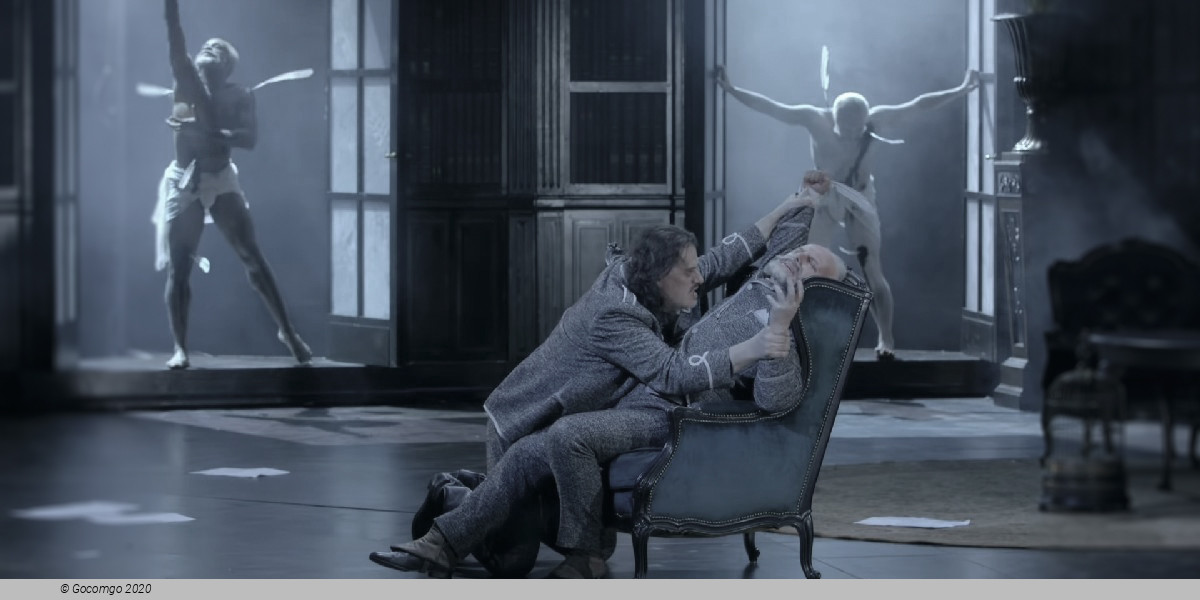
Herman slips into the Countess's room and looks in fascination at her portrait as the "Muscovite Venus"; musing how their fates, he feels, are linked: one of them will die because of the other. He lingers too long before he can go to Liza's room and hears the Countess's retinue coming, so he conceals himself as the old lady approaches. The Countess deplores the manners of the day and reminisces about the better times of her youth, when she sang in Versailles "Je crains de lui parler la nuit" (Laurette's Aria) from André Grétry's opera Richard Cœur-de-Lion before the Pompadour herself. As she dozes off, Herman stands before her. She awakens in horror as he pleads with her to tell him her secret. When she remains speechless, he grows desperate and threatens her with a pistol — at which she dies of fright. Liza rushes in, only to learn that the lover to whom she gave her heart was more interested in the Countess's secret. She orders him out and falls sobbing.

Act 3

Scene 1

In his room at the barracks, as the winter wind howls, Herman reads a letter from Liza, who wants him to meet her at midnight by the river bank. He imagines he hears the chorus chanting at the old Countess's funeral, then is startled by a knock at the window. The old woman's ghost appears, announcing that against her will she must tell him the secret so that he can marry and save Liza. Dazed, Herman repeats the three cards she tells him — three, seven, ace.

Scene 2

By the Winter Canal, Liza waits for Herman: it is already near midnight, and though she clings to a forlorn hope that he still loves her, she sees her youth and happiness swallowed in darkness. At last he appears, but after uttering words of reassurance, he starts to babble wildly about the Countess and her secret. No longer even recognizing Liza, he rushes away. Realizing that all is lost, she commits suicide.

Scene 3

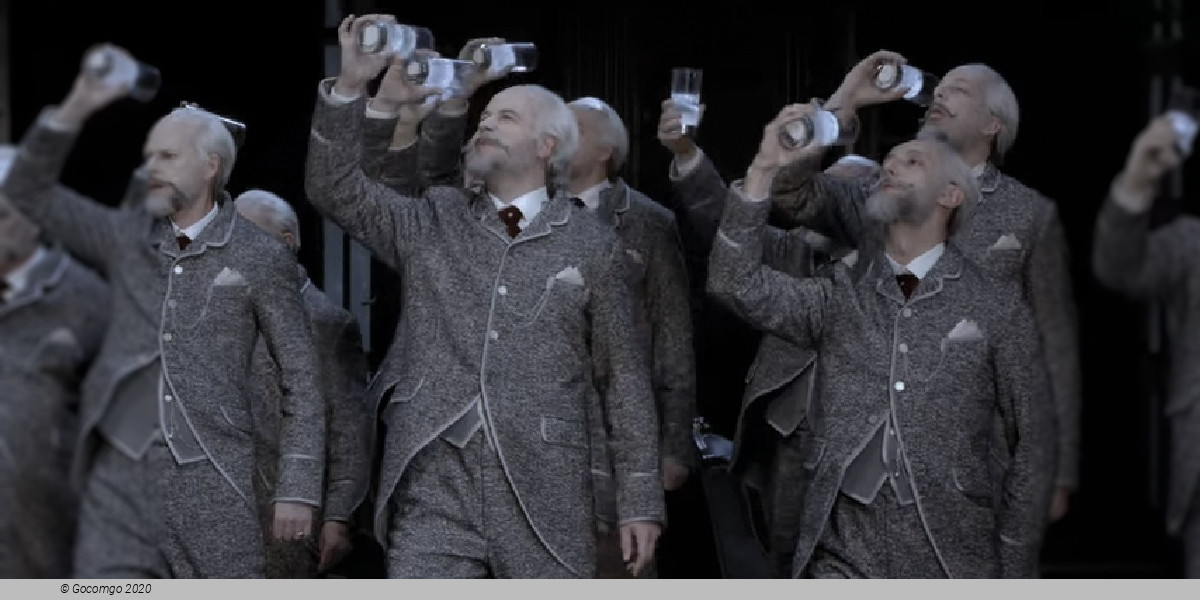
At a gambling house, Herman's fellow officers are finishing supper and getting ready to play faro. Yeletsky, who has not gambled before, joins the group because his engagement has been broken: "unlucky in love, lucky at cards". Tomsky entertains the others with a song. Then Chekalinsky leads a traditional gamblers' song. Settling down to play, they are surprised when Herman arrives, wild and distracted. Yeletsky senses a confrontation and asks Tomsky to be his second if a duel should result. Herman, intent only on betting, starts with a huge bet of 40,000 rubles. He bets the three and wins, upsetting the others with his maniacal expression. Next he bets the seven and wins again. At this he takes a wine glass and declares that life is but a game. Yeletsky accepts his challenge to bet on the next round. Herman bets everything he has on the ace but when he shows his card he is told he is holding the queen of spades. Seeing the Countess's ghost laughing at her vengeance, Herman takes his own life and asks Yeletsky's and Liza's forgiveness. The others pray for his tormented soul.

Venue Info

Gran Teatre del Liceu - Barcelona
Location   La Rambla, 51-59

The Gran Teatre del Liceu, or simply Liceu in Catalan, is a main opera house in Barcelona, Catalonia, located on the central street of the city - La Rambla. The Liceu opened on 4 April 1847.

The Gran Teatre del Liceu dates back to 1837 when at the instigation of Manuel Gibert, a battalion of the National Militia formed the institutional core of the future Teatre in the unused monastery of Montsió (currently Portal del Ángel): a dramatic society of aficionados devoted to the performing arts. The first show premiered on 21 August 1837: El marido de mi mujer, by Ventura de la Vega, a dance number and a skit.

Origins (1837–1847)
In 1837, the Liceo Filodramático de Montesión (Philodramatic Lyceum of Montesión, now named Conservatori Superior de Música del Liceu) was founded in Barcelona to promote musical education (hence the name "Liceo", or lyceum) and organize scenic representations of opera performed by Liceo students.

A theatre was built in the convent building — named Teatro de Montesión or Teatro del Liceo de Montesión — and plays and operas were performed: the first was Vicenzo Bellini's Norma (3 February 1838). The repertoire was Italian, the most performed composers being Donizetti and Mercadante as well as Bellini and Rossini. The Barcelona premiere of Hérold's Zampa was held here.

In 1838, the society changed its name to Liceo Dramático Filarmónico de S. M. la Reina Isabel II (Dramatic Philharmonic Lyceum of H.M. Queen Isabel II). Lack of space, as well as pressures, brought to bear by a group of nuns (who were the former proprietors of the convent and had recovered rights to return), motivated the Liceu to leave its headquarters in 1844. The last theatre performance was on 8 September.

The Trinitarian convent building located in the center of the town at la Rambla was purchased. The managers of the Liceu entrusted Joaquim de Gispert d'Anglí with a project to make the construction of the new building viable. Two different societies were created: a "building society" and an "auxiliary building society". Shareholders of the building society obtained the right of use in perpetuity of some theatre boxes and seats in exchange for their economic contributions. Those of the second society contributed the rest of the money necessary in exchange for property of other spaces in the building including some shops and a private club called the Círculo del Liceo.

In contrast with many other European cities, where the monarchy took on the responsibility of the building and upkeep of opera houses, the Liceu was funded by private shareholders of what would become the Societat del Gran Teatre del Liceu (Great Liceu Theatre Society), organized similarly to a trading company or society. This is reflected in the building's architecture; for example, there exists no royal box. The Queen did not contribute to the construction, so the name of the society was changed to Liceo Filarmónico Dramático, removing the Queen's name from it.

Miquel Garriga i Roca was the architect contracted; the construction began on 11 April 1845. The theatre was inaugurated on 4 April 1847.

Opening, fire, and rebuilding (1847–1862)
The inauguration presented a mixed program including the premieres of José Melchior Gomis' musical Ouverture, a historical play Don Fernando de Antequera by Ventura de la Vega, the ballet La rondeña (The girl from Ronda) by Josep Jurch, and a cantata Il regio himene with music by the musical director of the theatre Marià Obiols. The first complete opera, Donizetti's Anna Bolena was presented on 17 April. At this point, Liceu was the biggest opera house in Europe with 3,500 seats. Other operas performed in the Liceu during the first year were (in chronological order): I due Foscari (Verdi), Il bravo (Mercadante), Parisina d'Este (Donizetti), Giovanna d'Arco (Verdi), Leonora (Mercadante), Ernani (Verdi), Norma (Bellini), Linda di Chamounix (Donizetti) and Il barbiere di Siviglia (Rossini).

The building was severely damaged by fire on 9 April 1861, but it was rebuilt by the architect Josep Oriol Mestres and re-opened on 20 April 1862, performing Bellini's I puritani. From the old building, only the facade, the entrance hall, and the foyer (Mirrors Hall) remained.

Bombing and civil war (1862–1940)
On 7 November 1893, on the opening night of the season and during the second act of the opera Guillaume Tell by Rossini, two Orsini bombs were thrown into the stalls of the opera house. Only one of the bombs exploded; some twenty people were killed and many more were injured. The attack was executed by anarchist Santiago Salvador and deeply shocked Barcelona, becoming a symbol of the turbulent social unrest of the time. The Liceu re-opened its doors on 18 January 1894, but the seats occupied by those killed were not used for a number of years. The second bomb was put in the Van Gogh Museum in 2007 during an exhibit on Barcelona around 1900.

In 1909, the auditorium ornamentation was renewed. Spanish neutrality during World War I allowed the Catalan textile industry to amass enormous wealth by supplying the warring parties. The 1920s were prosperous years and the Liceu became fully established as a leading opera house welcoming better singers, the orchestra leaders of the time, and companies such as Sergei Diaghilev's Ballets Russes.

When the Second Spanish Republic was proclaimed in 1931, political instability meant that the Liceu suffered a severe financial crisis which was only overcome through subsidies from the Barcelona City Council and the government of Catalonia. During the Spanish Civil War, the Liceu was nationalized and took the name the Teatre del Liceu – Teatre Nacional de Catalunya (Liceu Opera House – the National Theatre of Catalonia). The opera seasons were suspended. After the war, it was returned to its original owners in 1939.

"Silver Age" and crisis (1940–1980)
From 1940 to the 1960s, the seasons were high-quality ones. 1955, thanks to the creation of a special board, saw a historic event when for the first time since its foundation, the Bayreuth Festival was staged away from its normal venue. Performances of Parsifal, Tristan und Isolde, and Die Walküre with innovative stage sets by Wieland Wagner were enthusiastically received.

In the 1970s, an economic crisis affected the theatre and the privately based organization could not afford the increasing budgets of modern opera productions and general quality declined.

New direction and second fire (1980–1994)
The death of Joan Antoni Pàmias in 1980 revealed the need for the intervention of the official bodies if the institution was to remain a leading opera house. In 1981, the Generalitat de Catalunya, with Barcelona's City Council and the Societat del Gran Teatre del Liceu, created the Consorci del Gran Teatre del Liceu (Consortium of the Great Liceu Theater) responsible for the theatre's management.

The Deputation of Barcelona and the Spanish Ministry of Culture joined the Consortium in 1985 and 1986 respectively. The Consortium managed to quickly attract the public back to the Liceu owing to a considerable improvement in its artistic standard. This included a more complete and up-to-date perspective of the very nature of an opera performance, a great improvement in the choir and orchestra, careful casting, and attracting the interest of the public to other aspects of productions besides the leading roles alone. This approach, coupled with the new economic support and more demanding and discerning public, resulted in a high standard of production.

The seasons organized by the Consortium maintained high standards in casting, production, and public loyalty, as measured by public attendance, but all this came to a halt with a fire on 31 January 1994. The building was destroyed by a fire caused by a spark that accidentally fell on the curtain during a routine repair. At this time, Paul Hindemith's Mathis der Maler was performing at the theatre and the following opera to be performed was Puccini's Turandot.

The public and institutional response were unanimous on the need to rebuild a new opera house on the same site with improved facilities. The new Liceu is the result of a series of actions to preserve those parts of the building unaffected by the fire, the same ones as had survived the fire in 1861. The auditorium was rebuilt with the same layout, except for the roof paintings which were replaced with new artworks by Perejaume, and state-of-the-art stage technology.

To rebuild and improve the theatre, it became public. The Fundació del Gran Teatre del Liceu (Liceu Great Theater Foundation) was created and the Societat del Gran Teatre del Liceu handed over the ownership of the building to the Foundation. Some owners disagreed with the decision, which was challenged unsuccessfully in court.

Reopening (1994–present)
From 1994 until the reopening in 1999, the opera seasons in Barcelona took place in: Palau Sant Jordi arena (only some massive performances in 1994), Palau de la Música Catalana, and Teatre Victòria. The rebuilt, improved, and the expanded theatre opened on 7 October 1999, with Puccini's Turandot as previewed in 1994 before the fire. The new venue had the same traditional horseshoe-shaped auditorium as before but with greatly improved technical, rehearsal, office, and educational facilities, a new rehearsal hall, a new chamber opera and small performances hall, and much more public space. Architects for the rebuilding project were Ignasi de Solà-Morales and Xavier Fabré i Lluís Dilmé.

Surtitles, projected onto a screen above the proscenium, are used for all opera performances and some lieder concerts. The electronic libretto system provides translations (to English, Spanish, or Catalan) onto small individual monitors for most of the seats.

Important Info
Type: Opera
City: Barcelona, Spain
Starts at: 19:00
Acts: 3
Duration: 3h 50min
Top of page