
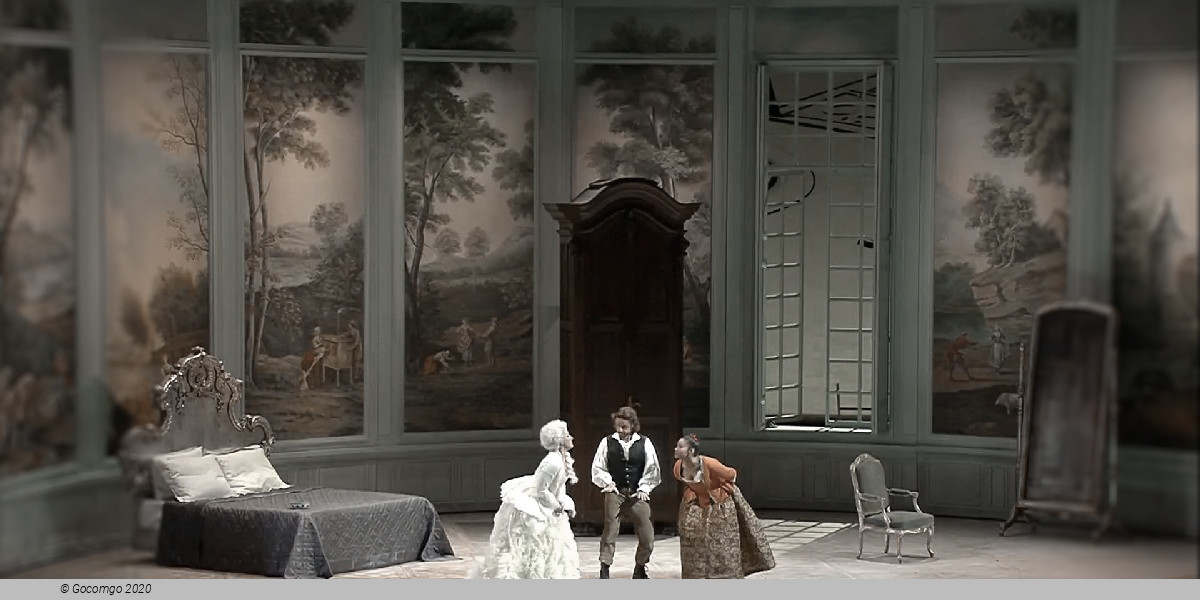
Gran Teatre del Liceu 23 April 2022 - Le nozze di Figaro | GoComGo.com

Le nozze di Figaro

Gran Teatre del Liceu, Main Stage, Barcelona, Spain
All photos (11)
Select date and time
6 PM

E-tickets: Print at home or at the box office of the event if so specified. You will find more information in your booking confirmation email.

You can only select the category, and not the exact seats.
If you order 2 or 3 tickets: your seats will be next to each other.
If you order 4 or more tickets: your seats will be next to each other, or, if this is not possible, we will provide a combination of groups of seats (at least in pairs, for example 2+2 or 2+3).

Important Info
Type: Opera
City: Barcelona, Spain
Starts at: 18:00
Duration: 3h 40min

E-tickets: Print at home or at the box office of the event if so specified. You will find more information in your booking confirmation email.

You can only select the category, and not the exact seats.
If you order 2 or 3 tickets: your seats will be next to each other.
If you order 4 or more tickets: your seats will be next to each other, or, if this is not possible, we will provide a combination of groups of seats (at least in pairs, for example 2+2 or 2+3).

Overview

An ageless mirror, an inexhaustible handbook for life.

Marc Minkowski and Ivan Alexandre have taken up an ambitious and novel challenge: that of making the three operas written by Lorenzo Da Ponte and Wolfgang Amadeus Mozart – which resemble the tessellae of a splendid mosaic – into three-part series which will be staged four times.

Each opera is a masterpiece in its own right but they also have several features in common: respect for the unities of classical drama (unity of place, time and action) and the similarities between the characters (Countess-Donna Elvira / Don Giovanni-Count, and so on). Thus each libretto appears in its true colours when the opera is seen in conjunction with the other two because certain traits are completed and clarified.

Staging them one after the other, as in a festival, affords the audience new insights by enabling them to immerse themselves in the turbulent lives of the motley gallery of characters. All the women share the suffering caused by the violence of the male characters. Their only refuge is feminine solidarity and their menfolk, after abusing their freedom, are invariably met with forgiveness.

This new perspective brings new meanings to light, confronting the audience with the notion of seduction and raising crucial questions such as: “What does it mean to be a man or a woman in present-day society?”, “What limits do we put on our desires?”, “What does it mean to form a couple today?” or “What are the consequences of our impulses and of abuse?”.

For seduction lies at the core of this trilogy, which is an ageless mirror, an inexhaustible handbook for life, and a folle journée as well, during which così fan tutt(i), while all voices unite to sing "Viva la libertà!".


Production: Drottningholms Slottsteater

History
Premiere of this production: 01 May 1786, Burgtheater, Vienna

Le Nozze di Figaro (The Marriage of Figaro) is an opera buffa (comic opera) in four acts composed in 1786 by Wolfgang Amadeus Mozart, with an Italian libretto written by Lorenzo Da Ponte. It tells how the servants Figaro and Susanna succeed in getting married, foiling the efforts of their philandering employer Count Almaviva to seduce Susanna and teaching him a lesson in fidelity. The opera is a cornerstone of the repertoire and appears consistently among the top ten in the Operabase list of most frequently performed operas.

Synopsis

The play is set at the castle of Aguas Frescas, three leagues from Seville.

Act I

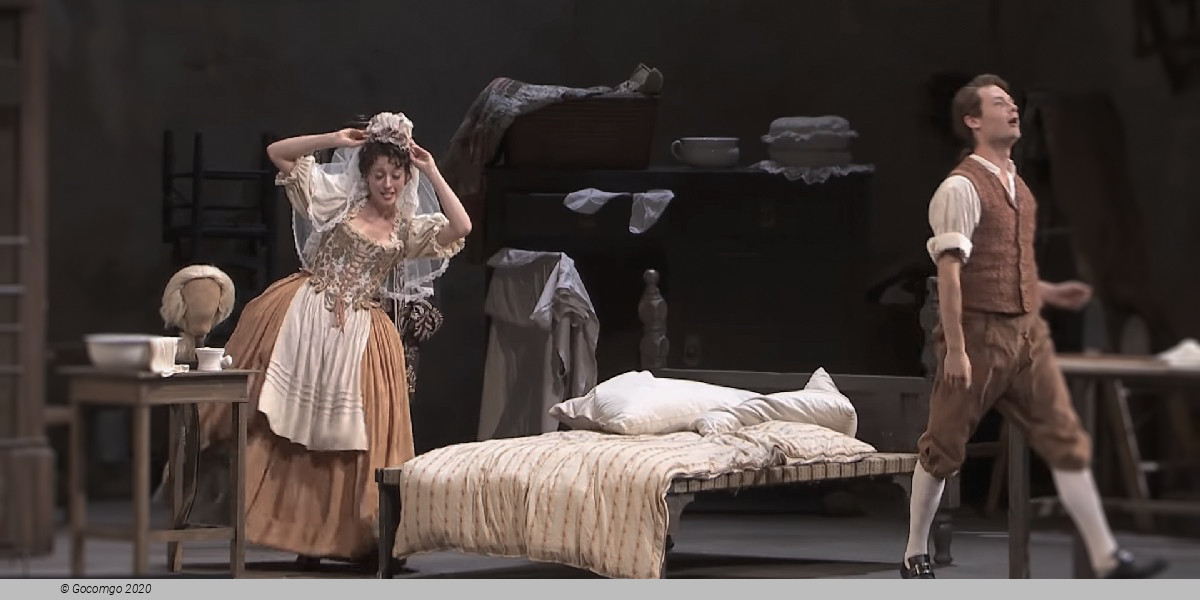
The play begins in a room in the Count's castle—the bedroom to be shared by Figaro and Suzanne after their wedding, which is set to occur later that day. Suzanne reveals to Figaro her suspicion that the Count gave them this particular room because it is so close to his own, and that the Count has been pressing her to begin an affair with him. Figaro at once goes to work trying to find a solution to this problem. Then Dr. Bartholo and Marceline pass through, discussing a lawsuit they are to file against Figaro, who owes Marceline a good deal of money and has promised to marry her if he fails to repay the sum; his marriage to Suzanne will potentially void the contract. Bartholo relishes the news that Rosine is unhappy in her marriage, and they discuss the expectation that the Count will take Figaro's side in the lawsuit if Suzanne should submit to his advances. Marceline herself is in love with Figaro, and hopes to discourage Suzanne from this.

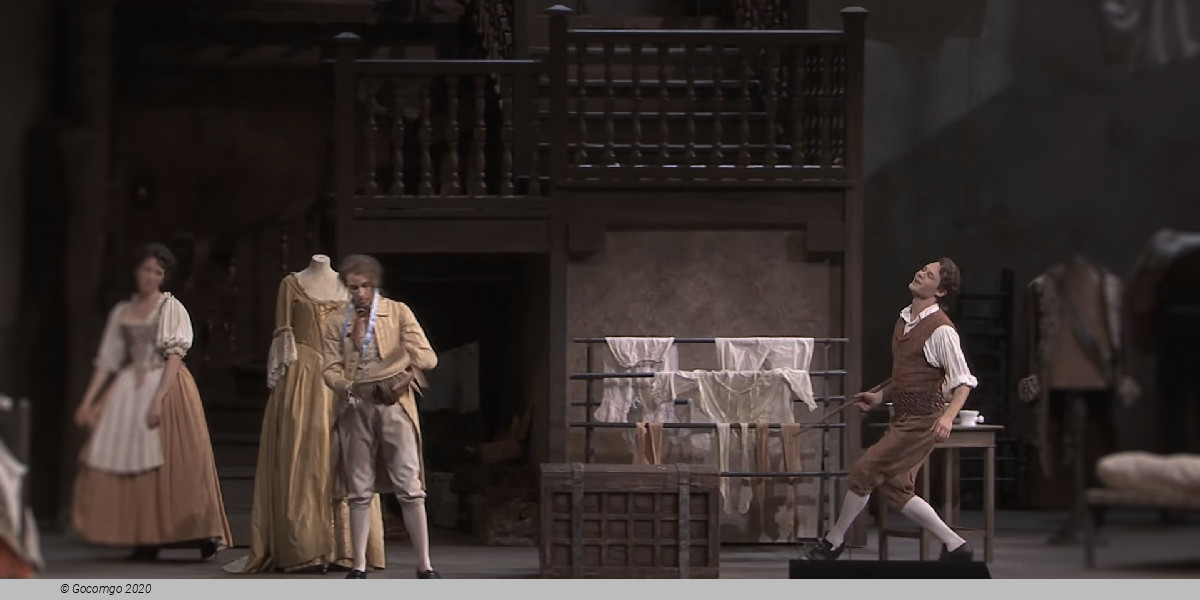
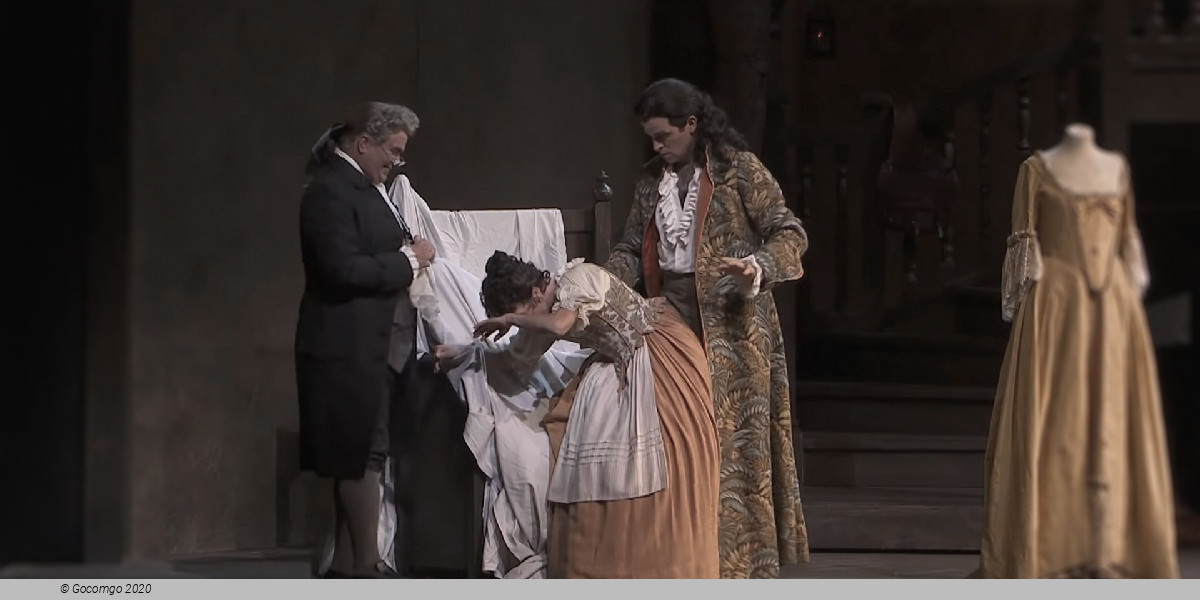
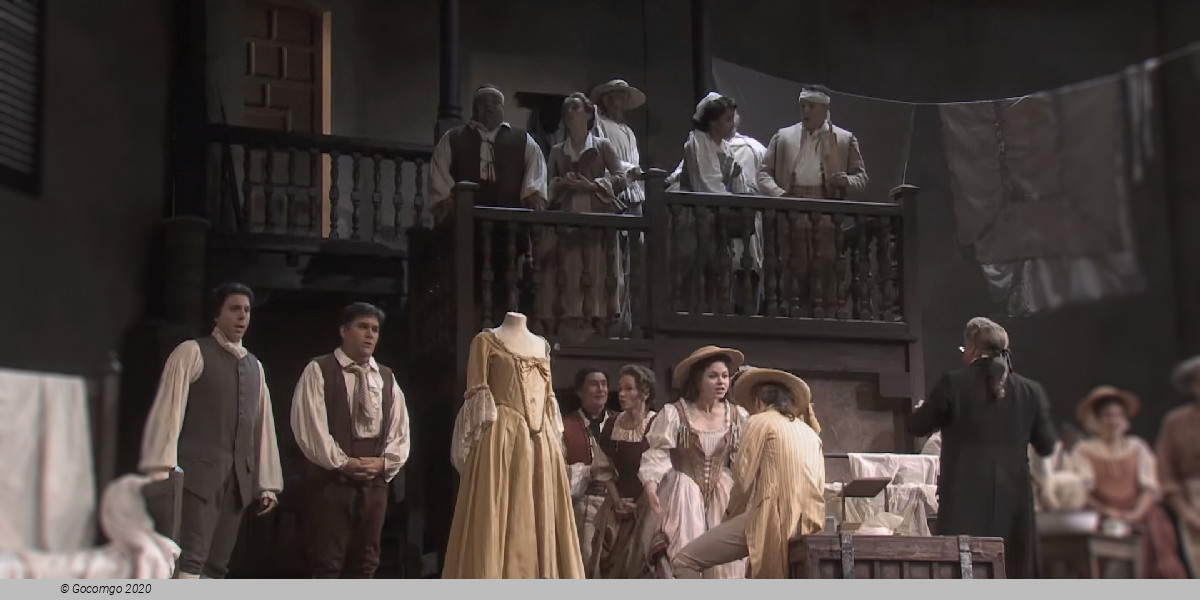
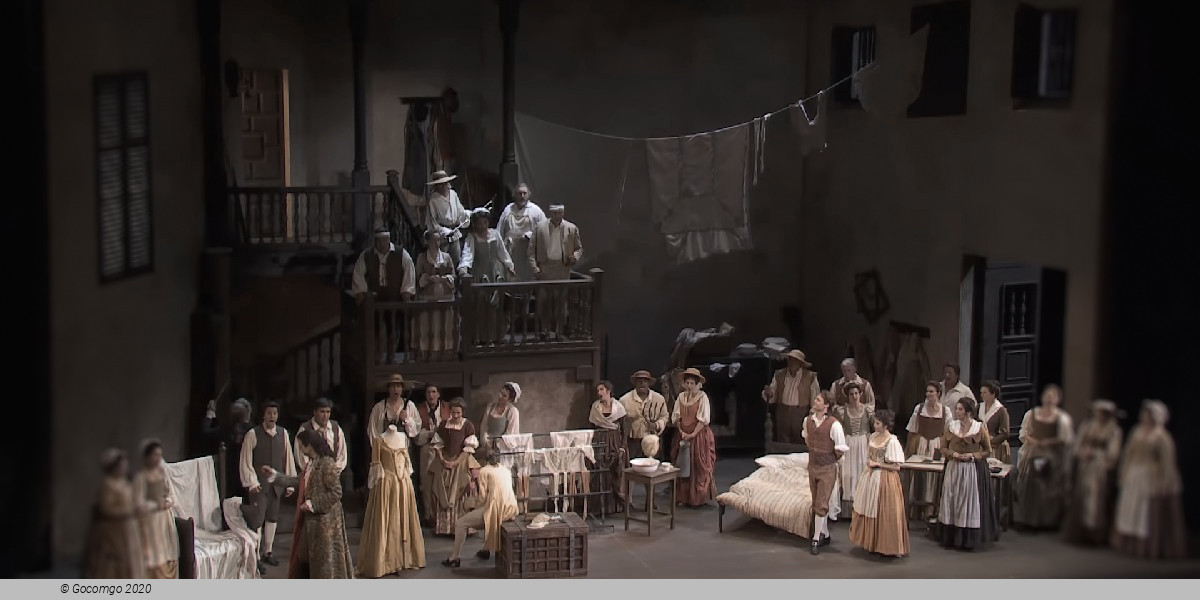
After a brief confrontation between Marceline and Suzanne, a young pageboy named Chérubin comes to tell Suzanne that he has been dismissed for being caught hiding in the bedroom of Fanchette. The conversation is interrupted by the entrance of the Count, and since Suzanne and Chérubin do not want to be caught alone in a bedroom together, Chérubin hides behind an armchair. When the Count enters, he propositions Suzanne (who continues to refuse to sleep with him). They are then interrupted by Bazile's entrance. Again, not wanting to be found in a bedroom with Suzanne, the Count hides behind the armchair. Chérubin is forced to throw himself on top of the armchair so the Count will not find him, and Suzanne covers him with a dress so Bazile cannot see him. Bazile stands in the doorway and begins to tell Suzanne all the latest gossip. When he mentions a rumour that there is a relationship between the Countess and Chérubin, the Count becomes outraged and stands up, revealing himself. The Count justifies his firing Chérubin to Bazile and the horrified Suzanne (now worried that Bazile will believe that she and the Count are having an affair). The Count re-enacts finding Chérubin behind the door in Fanchette's room by lifting the dress covering Chérubin, accidentally uncovering Chérubin's hiding spot for the second time. The Count is afraid that Chérubin will reveal the earlier conversation in which he was propositioning Suzanne, and so decides to send him away at once as a soldier. Figaro then enters with the Countess, who is still oblivious to her husband's plans. A troupe of wedding guests enters with him, intending to begin the wedding ceremony immediately. The Count is able to persuade them to hold it back a few more hours, giving himself more time to enact his plans.

Act II
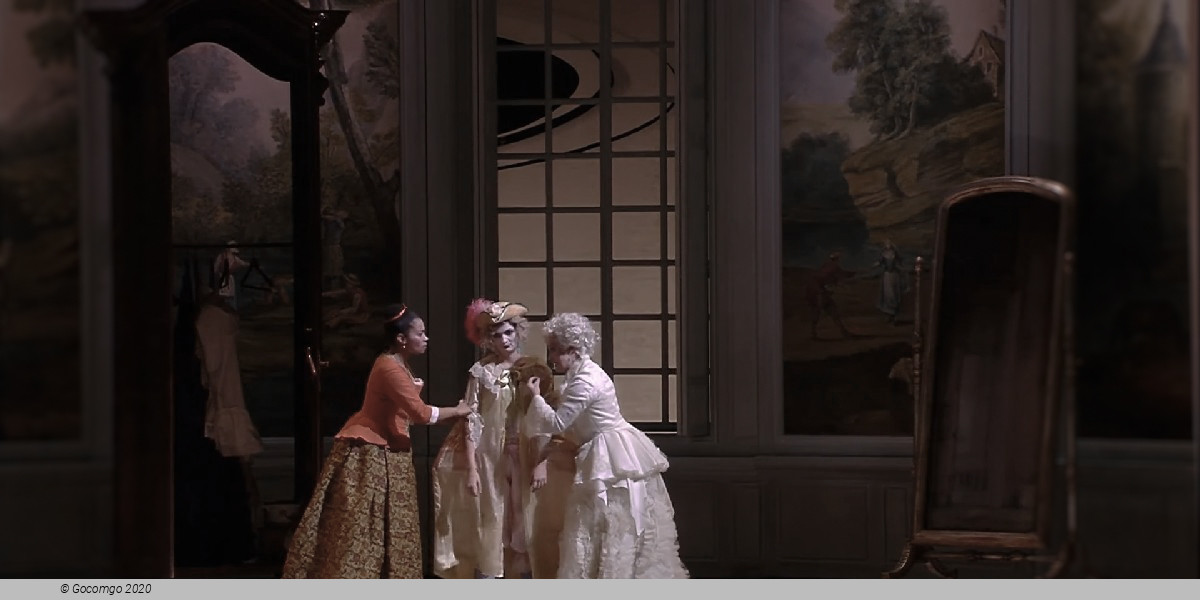
The scene is the Countess's bedroom. Suzanne has just broken the news of the Count's action to the Countess, who is distraught. Figaro enters and tells them that he has set in motion a new plan to distract the Count from his intentions toward Suzanne by starting a false rumour that the Countess is having an affair and that her lover will appear at the wedding; this, he hopes, will motivate the Count to let the wedding go ahead. Suzanne and the Countess have doubts about the effectiveness of the plot; they decide to tell the Count that Suzanne has agreed to his proposal, and then to embarrass him by sending out Chérubin dressed in Suzanne's gown to meet him. They stop Chérubin from leaving and begin to dress him, but just when Suzanne steps out of the room, the Count comes in. Chérubin hides, half dressed, in the adjoining dressing room while the Count grows increasingly suspicious, especially after having just heard Figaro's rumour of the Countess's affair. He leaves to get tools to break open the dressing room door, giving Chérubin enough time to escape through the window and Suzanne time to take his place in the dressing room; when the Count opens the door, it appears that Suzanne was inside there all along. Just when it seems he calms down, the gardener Antonio runs in screaming that a half-dressed man just jumped from the Countess's window. The Count's fears are settled again once Figaro takes credit to being the jumper, claiming that he started the rumour of the Countess having an affair as a prank and that while he was waiting for Suzanne he became frightened of the Count's wrath, jumping out the window in terror. Just then Marceline, Bartholo and the judge Brid'oison come to inform Figaro that his trial is starting.

Act III
Figaro and the Count exchange a few words, until Suzanne, at the insistence of the Countess, goes to the Count and tells him that she has decided that she will begin an affair with him, and asks he meet her after the wedding. The Countess has actually promised to appear at the assignation in Suzanne's place. The Count is glad to hear that Suzanne has seemingly decided to go along with his advances, but his mood sours again once he hears her talking to Figaro and saying it was only done so they might win the case.

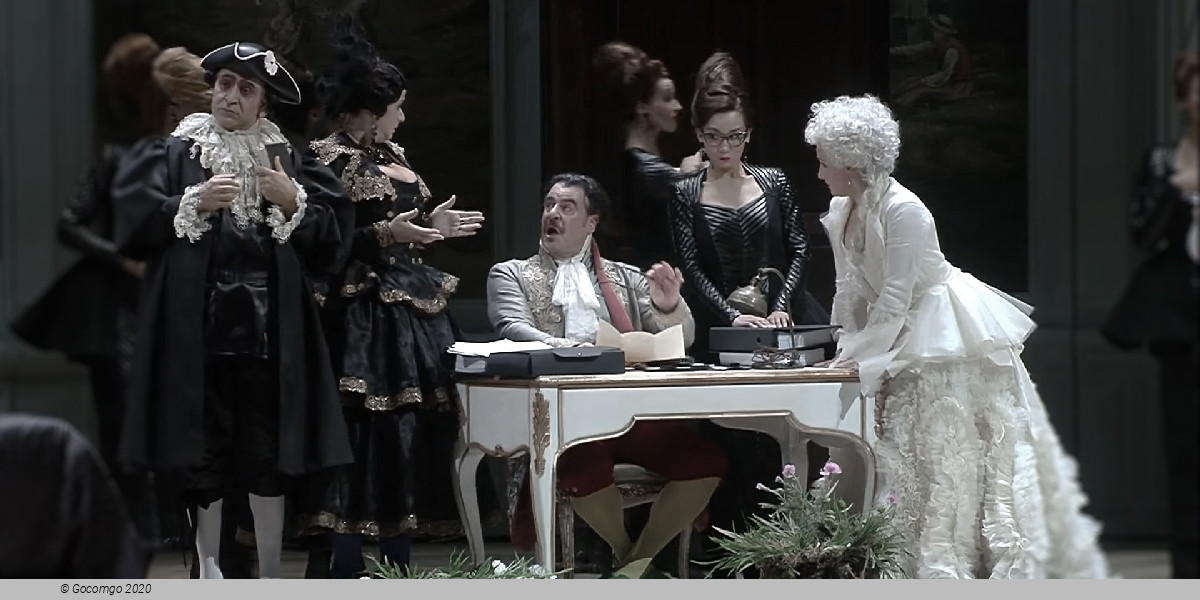
Court is then held, and after a few minor cases, Figaro's trial occurs. Much is made of the fact that Figaro has no middle or last name, and he explains that it is because he was kidnapped as a baby and doesn't know his real name. The Count rules in Marceline's favour, effectively forcing Figaro to marry her, when Marceline suddenly recognizes a birthmark (or scar or tattoo; the text is unclear) in the shape of a spatule (lobster) on Figaro's arm—he is her son, and Dr. Bartholo is his father. Just then Suzanne runs in with enough money to repay Marceline, given to her by the Countess. At this, the Count storms off in outrage.

Figaro is thrilled to have rediscovered his parents, but Suzanne's uncle, Antonio, insists that Suzanne cannot marry Figaro now, because he is illegitimate. Marceline and Bartholo are persuaded to marry in order to correct this problem.

Act IV
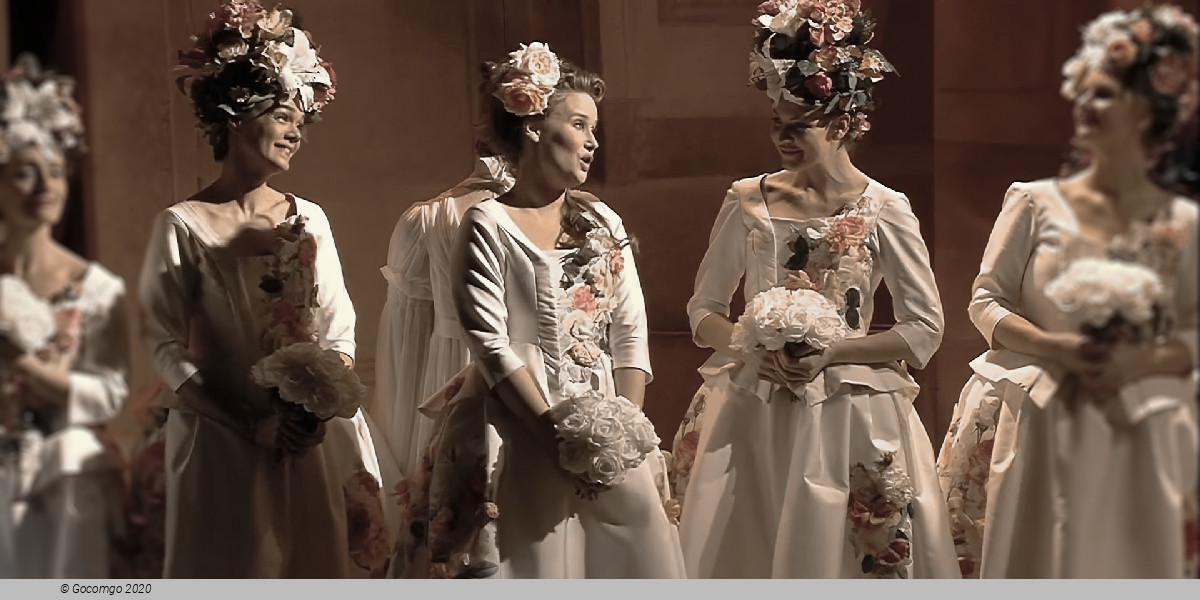
Figaro and Suzanne talk before the wedding, and Figaro tells Suzanne that if the Count still thinks she is going to meet him in the garden later, she should just let him stand there waiting all night. Suzanne promises, but the Countess grows upset when she hears this news, thinking that Suzanne is in the Count's pocket and is wishing she had kept their rendezvous a secret. As she leaves, Suzanne falls to her knees, and agrees to go through with the plan to trick the Count. Together they write a note to him entitled "A New Song on the Breeze" (a reference to the Countess's old habit of communicating with the Count through sheet music dropped from her window), which tells him that she will meet him under the chestnut trees. The Countess lends Suzanne a pin from her dress to seal the letter, but as she does so, the ribbon from Chérubin falls out of the top of her dress. At that moment, Fanchette enters with Chérubin disguised as a girl, a shepherdess, and girls from the town to give the Countess flowers. As thanks, the Countess kisses Chérubin on the forehead. Antonio and the Count enter—Antonio knows Chérubin is disguised because they dressed him at his daughter's (Fanchette's) house. The Countess admits to hiding Chérubin in her room earlier and the Count is about to punish him. Fanchette suddenly admits that she and the Count have been having an affair, and that, since he has promised he will give her anything she desires, he must not punish Chérubin but give him to her as a husband. Later, the wedding is interrupted by Bazile, who had wished to marry Marceline himself; but once he learns that Figaro is her son he is so horrified that he abandons his plans. Later, Figaro witnesses the Count opening the letter from Suzanne, but thinks nothing of it. After the ceremony, he notices Fanchette looking upset, and discovers that the cause is her having lost the pin that was used to seal the letter, which the Count had told her to give back to Suzanne. Figaro nearly faints at the news, believing Suzanne's secret communication means that she has been unfaithful and, restraining tears, he announces to Marceline that he is going to seek vengeance on both the Count and Suzanne.

Act V

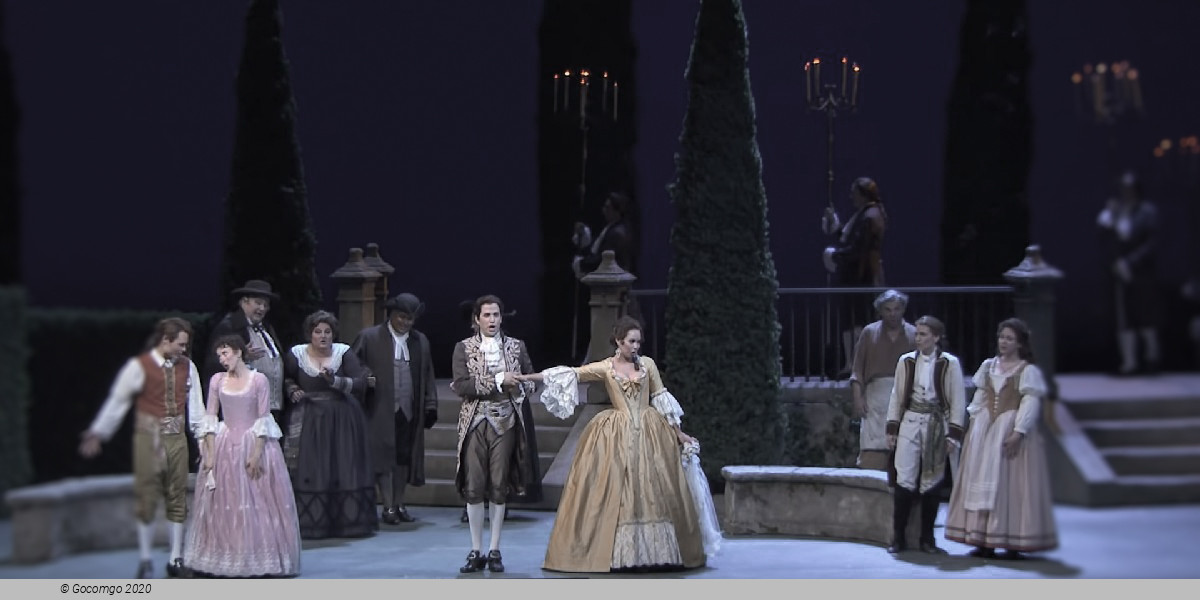
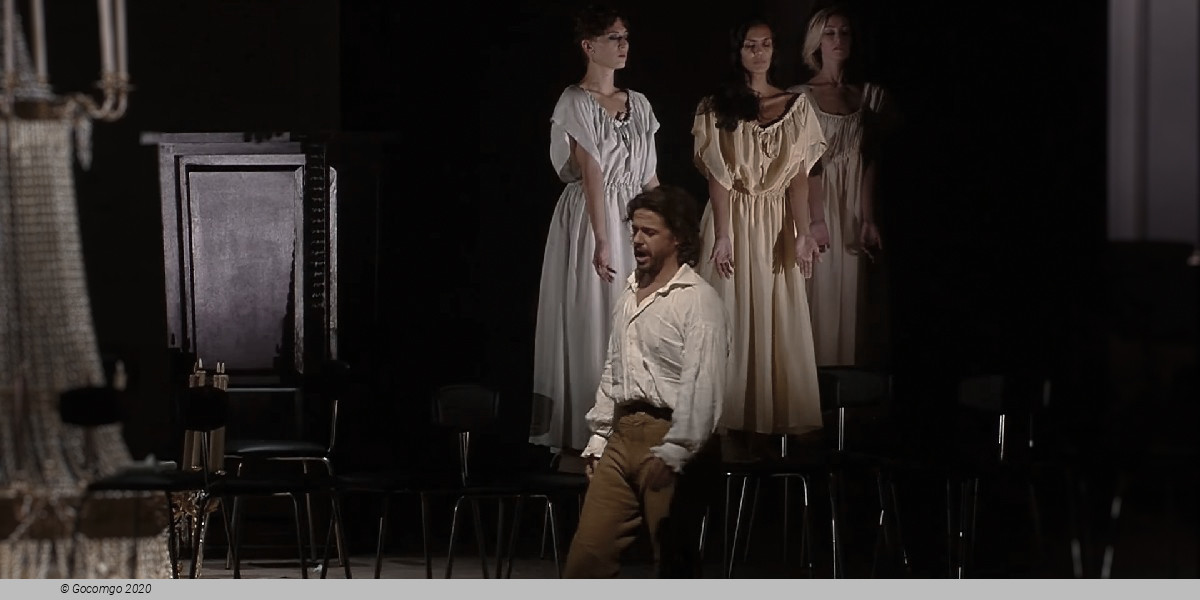
In the castle gardens beneath a grove of chestnut trees, Figaro has called together a group of men and instructs them to call together everyone they can find: he intends to have them all walk in on the Count and Suzanne in flagrante delicto, humiliating the pair and also ensuring ease of obtaining a divorce. After a tirade against the aristocracy and the unhappy state of his life, Figaro hides nearby. The Countess and Suzanne then enter, each dressed in the other's clothes. They are aware that Figaro is watching, and Suzanne is upset that her husband would doubt her so much as to think she would ever really be unfaithful to him. Soon afterward the Count comes, and the disguised Countess goes off with him. Figaro is outraged, and goes to the woman he thinks is the Countess to complain; he realises that he is talking to his own wife Suzanne, who scolds him for his lack of confidence in her. Figaro agrees that he was being stupid, and they are quickly reconciled. Just then the Count comes out and sees what he thinks is his own wife kissing Figaro, and races to stop the scene. At this point, all the people who had been instructed to come on Figaro's orders arrive, and the real Countess reveals herself. The Count falls to his knees and begs her for forgiveness, which she grants. After all other loose ends are tied up, the cast breaks into song before the curtain falls.

Figaro's speech
One of the defining moments of the play—and Louis XVI's particular objection to the piece—is Figaro's long monologue in the fifth act, directly challenging the Count:

No, my lord Count, you shan't have her... you shall not have her! Just because you are a great nobleman, you think you are a great genius—Nobility, fortune, rank, position! How proud they make a man feel! What have you done to deserve such advantages? Put yourself to the trouble of being born—nothing more. For the rest—a very ordinary man! Whereas I, lost among the obscure crowd, have had to deploy more knowledge, more calculation and skill merely to survive than has sufficed to rule all the provinces of Spain for a century!
[...]
I throw myself full-force into the theatre. Alas, I might as well have put a stone round my neck! I fudge up a play about the manners of the Seraglio; a Spanish author, I imagined, could attack Mahomet without scruple; but immediately some envoy from goodness-knows-where complains that some of my lines offend the Sublime Porte, Persia, some part or other of the East Indies, the whole of Egypt, the kingdoms of Cyrenaica, Tripoli, Tunis, Algiers and Morocco. Behold my comedy scuppered to please a set of Mohammedan princes—not one of whom I believe can read—who habitually beat a tattoo on our shoulders to the tune of "Down with the Christian dogs!" Unable to break my spirit, they decided to take it out on my body. My cheeks grew hollowed: my time was out. I saw in the distance the approach of the fell sergeant, his quill stuck into his wig.
[...]
I'd tell him that stupidities acquire importance only in so far as their circulation is restricted, that unless there is liberty to criticize, praise has no value, and that only trivial minds are apprehensive of trivial scribbling

Venue Info

Gran Teatre del Liceu - Barcelona
Location   La Rambla, 51-59

The Gran Teatre del Liceu, or simply Liceu in Catalan, is a main opera house in Barcelona, Catalonia, located on the central street of the city - La Rambla. The Liceu opened on 4 April 1847.

The Gran Teatre del Liceu dates back to 1837 when at the instigation of Manuel Gibert, a battalion of the National Militia formed the institutional core of the future Teatre in the unused monastery of Montsió (currently Portal del Ángel): a dramatic society of aficionados devoted to the performing arts. The first show premiered on 21 August 1837: El marido de mi mujer, by Ventura de la Vega, a dance number and a skit.

Origins (1837–1847)
In 1837, the Liceo Filodramático de Montesión (Philodramatic Lyceum of Montesión, now named Conservatori Superior de Música del Liceu) was founded in Barcelona to promote musical education (hence the name "Liceo", or lyceum) and organize scenic representations of opera performed by Liceo students.

A theatre was built in the convent building — named Teatro de Montesión or Teatro del Liceo de Montesión — and plays and operas were performed: the first was Vicenzo Bellini's Norma (3 February 1838). The repertoire was Italian, the most performed composers being Donizetti and Mercadante as well as Bellini and Rossini. The Barcelona premiere of Hérold's Zampa was held here.

In 1838, the society changed its name to Liceo Dramático Filarmónico de S. M. la Reina Isabel II (Dramatic Philharmonic Lyceum of H.M. Queen Isabel II). Lack of space, as well as pressures, brought to bear by a group of nuns (who were the former proprietors of the convent and had recovered rights to return), motivated the Liceu to leave its headquarters in 1844. The last theatre performance was on 8 September.

The Trinitarian convent building located in the center of the town at la Rambla was purchased. The managers of the Liceu entrusted Joaquim de Gispert d'Anglí with a project to make the construction of the new building viable. Two different societies were created: a "building society" and an "auxiliary building society". Shareholders of the building society obtained the right of use in perpetuity of some theatre boxes and seats in exchange for their economic contributions. Those of the second society contributed the rest of the money necessary in exchange for property of other spaces in the building including some shops and a private club called the Círculo del Liceo.

In contrast with many other European cities, where the monarchy took on the responsibility of the building and upkeep of opera houses, the Liceu was funded by private shareholders of what would become the Societat del Gran Teatre del Liceu (Great Liceu Theatre Society), organized similarly to a trading company or society. This is reflected in the building's architecture; for example, there exists no royal box. The Queen did not contribute to the construction, so the name of the society was changed to Liceo Filarmónico Dramático, removing the Queen's name from it.

Miquel Garriga i Roca was the architect contracted; the construction began on 11 April 1845. The theatre was inaugurated on 4 April 1847.

Opening, fire, and rebuilding (1847–1862)
The inauguration presented a mixed program including the premieres of José Melchior Gomis' musical Ouverture, a historical play Don Fernando de Antequera by Ventura de la Vega, the ballet La rondeña (The girl from Ronda) by Josep Jurch, and a cantata Il regio himene with music by the musical director of the theatre Marià Obiols. The first complete opera, Donizetti's Anna Bolena was presented on 17 April. At this point, Liceu was the biggest opera house in Europe with 3,500 seats. Other operas performed in the Liceu during the first year were (in chronological order): I due Foscari (Verdi), Il bravo (Mercadante), Parisina d'Este (Donizetti), Giovanna d'Arco (Verdi), Leonora (Mercadante), Ernani (Verdi), Norma (Bellini), Linda di Chamounix (Donizetti) and Il barbiere di Siviglia (Rossini).

The building was severely damaged by fire on 9 April 1861, but it was rebuilt by the architect Josep Oriol Mestres and re-opened on 20 April 1862, performing Bellini's I puritani. From the old building, only the facade, the entrance hall, and the foyer (Mirrors Hall) remained.

Bombing and civil war (1862–1940)
On 7 November 1893, on the opening night of the season and during the second act of the opera Guillaume Tell by Rossini, two Orsini bombs were thrown into the stalls of the opera house. Only one of the bombs exploded; some twenty people were killed and many more were injured. The attack was executed by anarchist Santiago Salvador and deeply shocked Barcelona, becoming a symbol of the turbulent social unrest of the time. The Liceu re-opened its doors on 18 January 1894, but the seats occupied by those killed were not used for a number of years. The second bomb was put in the Van Gogh Museum in 2007 during an exhibit on Barcelona around 1900.

In 1909, the auditorium ornamentation was renewed. Spanish neutrality during World War I allowed the Catalan textile industry to amass enormous wealth by supplying the warring parties. The 1920s were prosperous years and the Liceu became fully established as a leading opera house welcoming better singers, the orchestra leaders of the time, and companies such as Sergei Diaghilev's Ballets Russes.

When the Second Spanish Republic was proclaimed in 1931, political instability meant that the Liceu suffered a severe financial crisis which was only overcome through subsidies from the Barcelona City Council and the government of Catalonia. During the Spanish Civil War, the Liceu was nationalized and took the name the Teatre del Liceu – Teatre Nacional de Catalunya (Liceu Opera House – the National Theatre of Catalonia). The opera seasons were suspended. After the war, it was returned to its original owners in 1939.

"Silver Age" and crisis (1940–1980)
From 1940 to the 1960s, the seasons were high-quality ones. 1955, thanks to the creation of a special board, saw a historic event when for the first time since its foundation, the Bayreuth Festival was staged away from its normal venue. Performances of Parsifal, Tristan und Isolde, and Die Walküre with innovative stage sets by Wieland Wagner were enthusiastically received.

In the 1970s, an economic crisis affected the theatre and the privately based organization could not afford the increasing budgets of modern opera productions and general quality declined.

New direction and second fire (1980–1994)
The death of Joan Antoni Pàmias in 1980 revealed the need for the intervention of the official bodies if the institution was to remain a leading opera house. In 1981, the Generalitat de Catalunya, with Barcelona's City Council and the Societat del Gran Teatre del Liceu, created the Consorci del Gran Teatre del Liceu (Consortium of the Great Liceu Theater) responsible for the theatre's management.

The Deputation of Barcelona and the Spanish Ministry of Culture joined the Consortium in 1985 and 1986 respectively. The Consortium managed to quickly attract the public back to the Liceu owing to a considerable improvement in its artistic standard. This included a more complete and up-to-date perspective of the very nature of an opera performance, a great improvement in the choir and orchestra, careful casting, and attracting the interest of the public to other aspects of productions besides the leading roles alone. This approach, coupled with the new economic support and more demanding and discerning public, resulted in a high standard of production.

The seasons organized by the Consortium maintained high standards in casting, production, and public loyalty, as measured by public attendance, but all this came to a halt with a fire on 31 January 1994. The building was destroyed by a fire caused by a spark that accidentally fell on the curtain during a routine repair. At this time, Paul Hindemith's Mathis der Maler was performing at the theatre and the following opera to be performed was Puccini's Turandot.

The public and institutional response were unanimous on the need to rebuild a new opera house on the same site with improved facilities. The new Liceu is the result of a series of actions to preserve those parts of the building unaffected by the fire, the same ones as had survived the fire in 1861. The auditorium was rebuilt with the same layout, except for the roof paintings which were replaced with new artworks by Perejaume, and state-of-the-art stage technology.

To rebuild and improve the theatre, it became public. The Fundació del Gran Teatre del Liceu (Liceu Great Theater Foundation) was created and the Societat del Gran Teatre del Liceu handed over the ownership of the building to the Foundation. Some owners disagreed with the decision, which was challenged unsuccessfully in court.

Reopening (1994–present)
From 1994 until the reopening in 1999, the opera seasons in Barcelona took place in: Palau Sant Jordi arena (only some massive performances in 1994), Palau de la Música Catalana, and Teatre Victòria. The rebuilt, improved, and the expanded theatre opened on 7 October 1999, with Puccini's Turandot as previewed in 1994 before the fire. The new venue had the same traditional horseshoe-shaped auditorium as before but with greatly improved technical, rehearsal, office, and educational facilities, a new rehearsal hall, a new chamber opera and small performances hall, and much more public space. Architects for the rebuilding project were Ignasi de Solà-Morales and Xavier Fabré i Lluís Dilmé.

Surtitles, projected onto a screen above the proscenium, are used for all opera performances and some lieder concerts. The electronic libretto system provides translations (to English, Spanish, or Catalan) onto small individual monitors for most of the seats.

Important Info
Type: Opera
City: Barcelona, Spain
Starts at: 18:00
Duration: 3h 40min
Top of page