
Gran Teatre del Liceu 21 July 2022 - Norma | GoComGo.com

Norma

Gran Teatre del Liceu, Main Stage, Barcelona, Spain
All photos (5)
Select date and time
7 PM

E-tickets: Print at home or at the box office of the event if so specified. You will find more information in your booking confirmation email.

You can only select the category, and not the exact seats.
If you order 2 or 3 tickets: your seats will be next to each other.
If you order 4 or more tickets: your seats will be next to each other, or, if this is not possible, we will provide a combination of groups of seats (at least in pairs, for example 2+2 or 2+3).

Important Info
Type: Opera
City: Barcelona, Spain
Starts at: 19:00
Acts: 2
Duration: 3h 10min

E-tickets: Print at home or at the box office of the event if so specified. You will find more information in your booking confirmation email.

You can only select the category, and not the exact seats.
If you order 2 or 3 tickets: your seats will be next to each other.
If you order 4 or more tickets: your seats will be next to each other, or, if this is not possible, we will provide a combination of groups of seats (at least in pairs, for example 2+2 or 2+3).

Overview

Outstanding production made by Àlex Ollé for London's Royal Opera House.

“We should not be ashamed to weep from emotion as we listen to it”
Richard Wagner

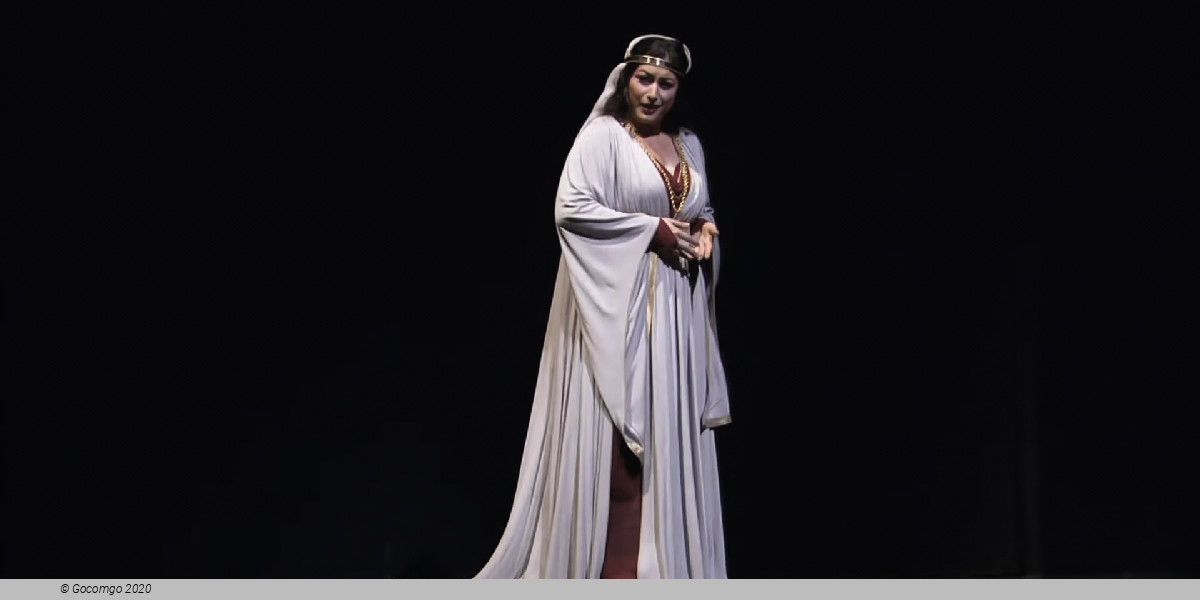
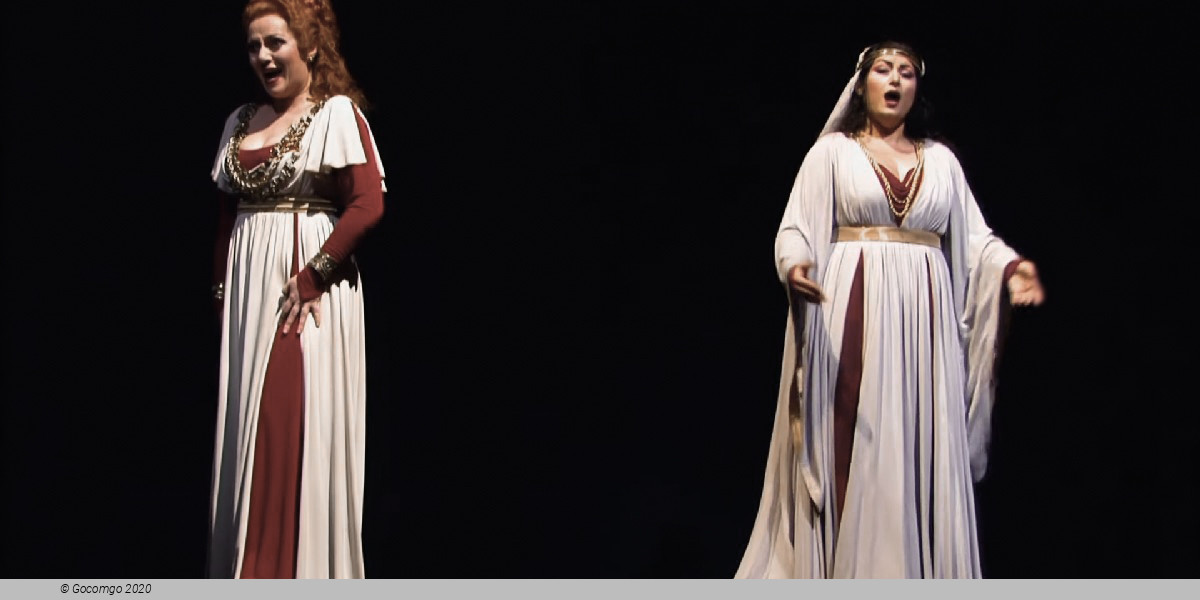
The high priestess Norma is the spiritual leader of the revolt against the Roman but she is also in love with Pollione, the leader of the forces of occupation which are oppressing her people, and has already borne him two children. Her betrayal threatens the survival of the community.

Norma's discovery that Pollione is now in love with her friend Adalgisa triggers off a series of emotional reactions: after furiously calling on her people to rise in arms she ultimately decides to sacrifice her own life. Paradise for her is the haven of religious faith, but also Pollione's love and her people's well-being.

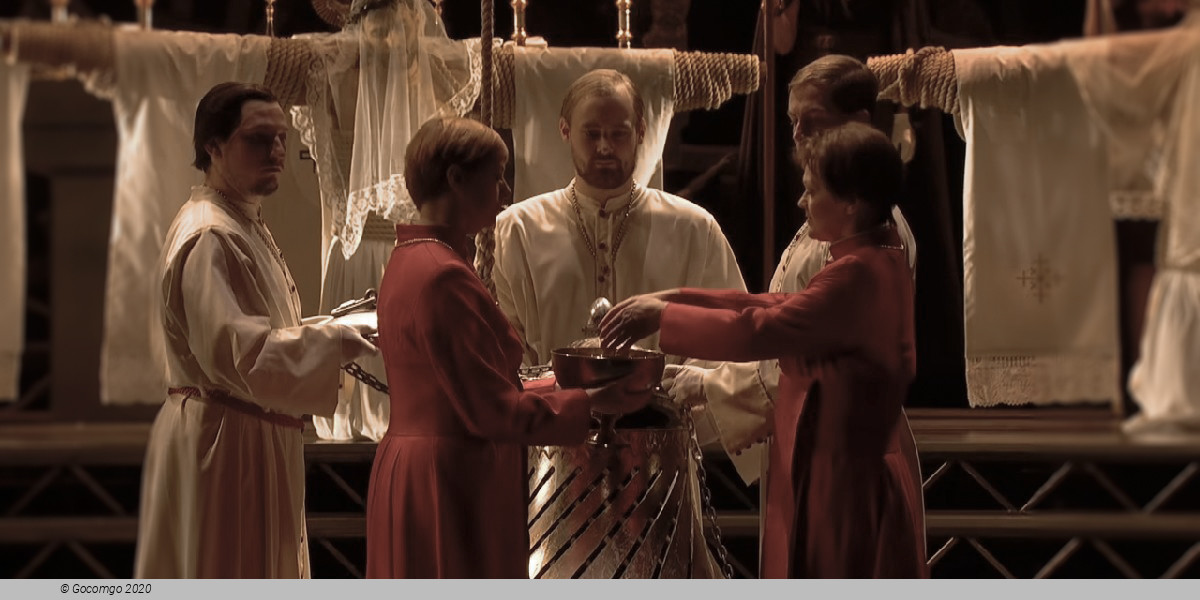
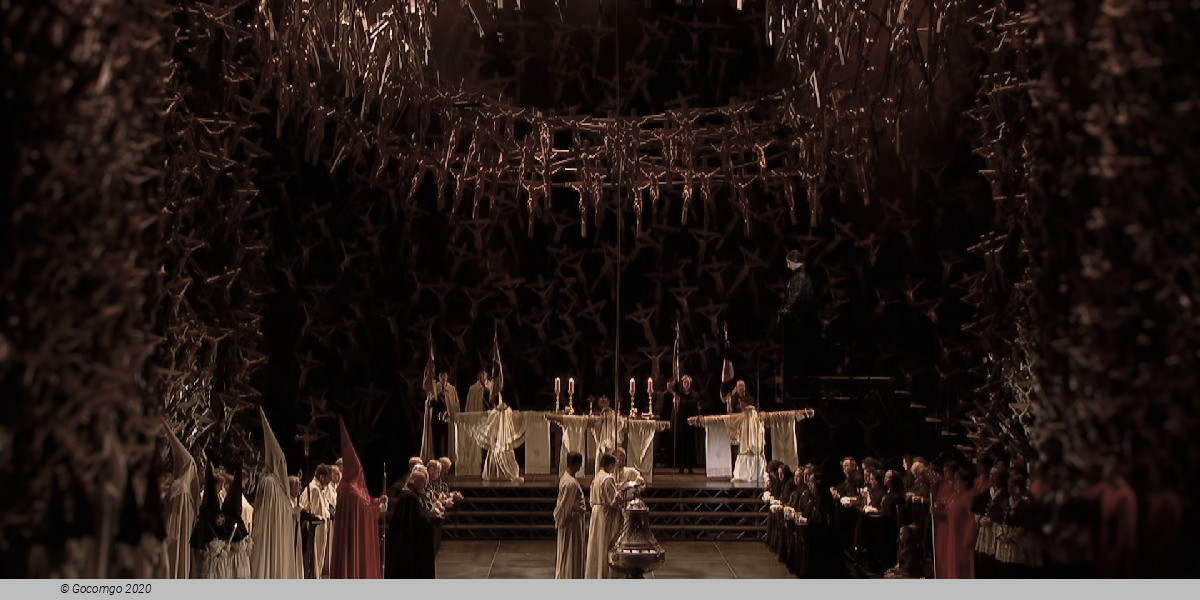
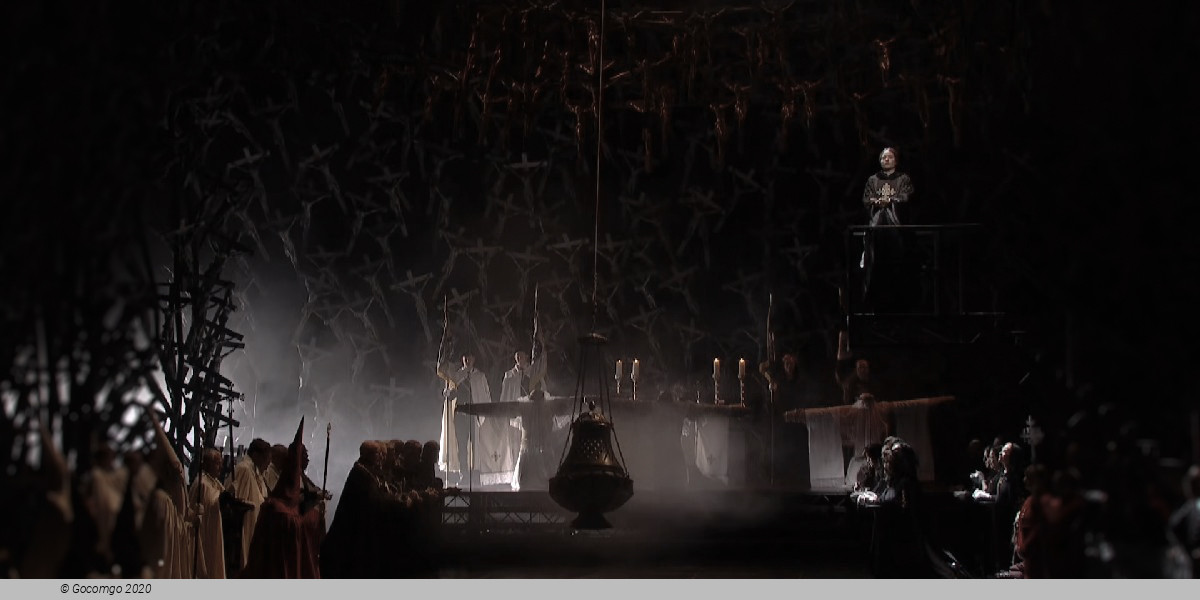
This outstanding production was originally made by Àlex Ollé for London's Royal Opera House. It takes an up-to-date approach, setting the action against the background of an oppressive religion. While exploring the clash between individual desires and those of the community, Ollé depicts religion as a binding force and a way of making sense of the world, but also as a means for repressing any individual who violates the law. Torn between her own will and her people's freedom, Norma is also the powerless captive of collective references (social mores, revered ancient symbols and beliefs). Her doubts and fragility take on present-day connotations in the face of a religion verging on fanaticism, the blind instrument of an inflexible law. Norma, an obedient daughter, betrayed lover and desperate mother, is stifled by norms.

Left with no way out, she becomes a veritable heroine who confesses her guilt and is willing to die. This tale of the purifying power of sacrifice features one of the most difficult and emblematic leading roles in the history of opera. A masterpiece of bel canto, it was only the third opera staged at the Liceu in its very first season, in 1847, and is the perfect example of a tragedy in music.

Production: Norma was produced in association with the Royal Opera House Covent Garden in London. This production was seen for the first time in London at the Royal Opera House on 12 September 2016.

History
Premiere of this production: 26 December 1831, Teatro alla Scala, Milan

Norma by Alexandre Soumet. It was first produced at La Scala in Milan on 26 December 1831. The opera is regarded as a leading example of the bel canto genre, and the soprano prayer "Casta diva" in act 1 is a famous piece.

Synopsis

Place: Gaul
Time: c. 100-50 BCE (Roman occupation)

Act 1
Sinfonia
Scene 1: The grove of the druids

Oroveso leads the druids in a procession in the forest to pray for victory against the invading Romans: (Oroveso and druids: "Ite sul colle, o Druidi" / "Go up on the hill, O druids"). The druids pray that Norma will come and have the courage to broker peace with the Romans: (Druids and Oroveso: "Dell'aura tua profetica" / "With thy prophetic aura, imbue her, O terrible God".) All leave to go to the temple.

Pollione and Flavio enter. Although Norma has secretly broken her vows in order to love him and has borne him two children, Pollione tells Flavio that he no longer loves her, having fallen in love with the priestess Adalgisa. But he expresses some remorse, describing his dream in which Adalgisa was beside him at the altar of Venus and a huge storm arose: (Pollione, aria: "Meco all'altar di Venere" / "With me at the altar in Rome was Adalgisa dressed in white, veiled all in white.") The storm presaged disaster for them both: "Thus does Norma punish her faithless lover," he declares. They hear the trumpets sounding to announce Norma's arrival. Flavio urges his friend to leave, but Pollione stands firm, proclaiming that he will confront them with a superior power and overthrow their altars: (Cabaletta: "Me protegge, me difende" / "I am protected and defended")

As Norma leads the druids and priestesses, the crowd proclaims: "Norma viene" / "Norma is coming" and, as Oroveso awaits her, they describe her dress and manner. All kneel as she approaches. "The time is not ripe for our revenge", she declares, stating that Rome will perish one day by being worn down. Then, with the mistletoe in hand, she approaches the altar with a plea to the moon (the "Chaste Goddess"): (cavatina: "Casta diva" / "Chaste goddess"). Continuing, she pleads that the goddess shed upon earth that peace which she has created in heaven. She calls for all to complete the rites and then clear the uninitiated from the grove. To herself, she declares that she cannot hurt Pollione, but desires that things return to where they used to be: (Cabaletta: "Ah! bello a me ritorna" / "Return to me, O beautiful one"). The assembled crowd accepts her cautious approach, and all leave the grove.

Later that night: The Temple of Irminsul in the grove

Adalgisa prays at the temple, remembering with some sorrow how she became involved with Pollione. He enters, telling her that she prays to a cruel god and is not trying to invoke the god of love. While she appears to reject him, he declares (Aria: "Va crudele" /"Go, O cruel one") but he is convinced that he cannot leave her; he is distraught, but she is equally torn, until the moment when he declares that he must return to Rome the following day. He begs Adalgisa to go with him: (Duet: Pollione, then Adalgisa, then together: "Vieni in Roma" / "Come to Rome"). She resists him, but finally appears to agree that they will leave together the following day.

Scene 2: Norma's dwelling

Alessandro Sanquirico's set design for act 1, scene 2, for the original production
Norma appears to be upset and orders her maid, Clotilde, to take the two children away from her, expressing very conflicted feelings about them. She tells Clotilde that Pollione has been recalled to Rome, but does not know if he will take her or how he feels about leaving his children. As Adalgisa approaches, the children are taken away.

Adalgisa tells Norma she has fallen in love with a Roman, whom she does not name. As she describes how she fell in love while waiting at the temple and seeing "his handsome face" appear, Norma recalls (as an aside) her own feelings for Pollione ("my passions, too, burned like this"), and more and more, their experiences of falling in love run parallel: (Norma and Adalgisa, duet: "Sola, furtiva al tempio" / "Often I would wait for him"). Adalgisa pleads for help and forgiveness, and Norma pledges that she will do that and will also free her from her vows as a priestess: (Norma: "Ah! sì, fa core, abbracciami" / "Yes, take heart, embrace me". Adalgisa: "Ripeti, o ciel, ripetimi" / "Say that again, heavens, say again")

Norma asks Adalgisa to describe the man whom she loves. Responding, she tells her that he is a Roman, and, at that moment, turns to indicate that it is Pollione who is just then entering the room. As Norma furiously turns to confront Pollione, Adalgisa is confused: Norma: "Oh! non tremare, o perfido" / "O faithless man, do not tremble".

Forcing the priestess to realise that she is the victim of a huge deception, Norma addresses Adalgisa. (Trio: each sings in succession, beginning with Norma: "Oh! di qual sei tu vittima" / "Oh, you are the victim"; then Adalgisa: "Oh! qual traspare orribile" / "What horror has been revealed"; then the two women together, followed by Pollione alone: "Norma! de' tuoi rimproveri" / "Norma, do not reproach me now", continuing with "Please give this wretched girl some respite"; after which all three repeat their words, singing at first singly, then together.)

There follow angry exchanges among the three, Norma declaring Pollione to be a traitor; he trying to persuade Adalgisa to leave with him; and she angrily telling him to go away. When he declares that it is his fate to leave Norma, she encourages the young priestess to go with him, but the latter declares that she would rather die. Norma then demands that her lover go, leaving behind his children—and his honour. (Finale: brief duet, Adalgisa and Pollione: he declares his love, and she her desire to Norma not to be the cause of grief to her. Trio: Norma continues to rage at Pollione, Adalgisa repeats her desire to make him return to Norma, and Pollione curses the day when he met Norma.) Then the sound of the druids calling Norma to the temple is heard. They report that the angry god, Irminsul, has spoken. Pollione storms out.

Act 2
Orchestral introduction
Scene 1: Norma's dwelling
Norma looks at both of her sons, who are asleep. She considers killing them. Advancing towards them with knife upraised, she hesitates. (Recitative: "Dormono entrambi ... non vedran la mano che li percuote" / "They are both asleep ... they shall not see the hand which strikes them.") But she cannot bring herself to do it: (Aria: "Teneri, teneri figli" / "My dear, dear sons") The children wake up and she calls for Clotilde, demanding that Adalgisa be brought to her.

The young priestess enters, concerned at how pale Norma looks. Norma makes her swear to do everything she asks and, upon her agreement, tells her that she is entrusting the two children to her care and states that they should be taken to the Roman camp to their father Pollione, a man whom she hopes will make a better mate for Adalgisa than he was for her. Adalgisa is aghast. Norma: "I beg you for his children's sake." (Duet, first Norma: "Deh! con te, con te li prendi" / "Please, take them with you") Adalgisa tells her that she will never leave Gaul and only agreed to the request in order to do what was good for Norma. (Duet, Adalgisa: "Vado al campo") In the duet, Adalgisa agrees to go to the Roman camp and tell Pollione of Norma's grief but her hope is to persuade him to return to Norma. She then renounces Pollione: (Duet: "Mira, o Norma" / "Look, o Norma") They sing together, each expressing her own thoughts and feelings until Norma realises that Adalgisa will give up Pollione and remain with her: (Cabaletta: Duet, Norma and Adalgisa: "Si fino all'ore estreme" / "Until the last hour")

Scene 2: The grove
The druid warriors gather and prepare themselves to attack the Romans. Oroveso enters with news from the gods: the time has not arrived to strike. Somewhat frustrated, the soldiers accept the decision.

Scene 3: The temple of Irminsul
Norma enters. (Aria: "Ei tornerà" / "He will come back") Then Clotilde arrives with news that Adalgisa has failed to persuade Pollione to return. Although Norma questions whether she should have trusted her, she then learns from her servant that Adalgisa is returning and wishes to take her vows at the altar and that the Roman has sworn to abduct her from the temple. In anger, Norma strikes a gong-like shield as a summons to war. Trumpets sound and Oroveso and the druids all rush in, demanding to know what is happening. They hear Norma's answer and the soldiers take up the refrain: "Guerra, guerra!" / "War, war!", while Norma proclaims "Blood, blood! Revenge!"

In order for Norma to complete the rites to authorise going to war, Oroveso demands to know who will be the sacrificial victim. At that moment, Clotilde rushes in to announce that a Roman has desecrated the temple, but that he has been apprehended. It is Pollione who is led in, and Norma is urged to take the sacrificial knife to stab him but, approaching him, she is unable to perform the deed. The assembled crowd demands to know why, but she dismisses them, stating that she needs to question her victim.

The crowd departs: (Duet, Norma and Pollione: "In mia man alfin tu sei" / "At last you are in my hands"). Norma demands that he forever shun Adalgisa; only then will she release him and never see him again. He refuses, and she vents her anger by telling him that she will then kill her children. "Strike me instead", he demands, "so that only I alone will die", but she quickly asserts that not only will all the Romans die, but so will Adalgisa, who has broken her vows as a priestess. This prompts him to plead for her life. (Cabaletta: Norma and Pollione: "Già mi pasco ne' tuoi sguardi" / "Already I take pleasure in the looks you give me".) When Pollione demands the knife, she calls the priests to assemble. Norma announces that it would be better to sacrifice a priestess who has broken her vows, and orders the pyre to be lit. Oroveso demands to know who is to be sacrificed while Pollione begs that she stays silent. Norma then wonders to herself if she is not in fact the guilty one, then reveals that it is she who is to be the victim: a high priestess who has broken her vows, has become involved with the enemy, and has borne his children. (Aria, Norma to Pollione: "Qual cor tradisti" / "The heart you betrayed"; Duet: Norma and Pollione; ensemble, Norma, Oroveso, Pollione, druids, priests: each expresses his/her sorrow, anger, pleas to Norma, with Oroveso learning for the first time that Norma is a mother.)

In the concerted finale, Norma pleads with Oroveso to spare her children ("Deh! non volerli vittime" / "Please don't make them victims"). As she prepares to leap into the flames, the re-enamoured Pollione joins her, declaring "your pyre is mine as well. There, a holier and everlasting love will begin".

Venue Info

Gran Teatre del Liceu - Barcelona
Location   La Rambla, 51-59

The Gran Teatre del Liceu, or simply Liceu in Catalan, is a main opera house in Barcelona, Catalonia, located on the central street of the city - La Rambla. The Liceu opened on 4 April 1847.

The Gran Teatre del Liceu dates back to 1837 when at the instigation of Manuel Gibert, a battalion of the National Militia formed the institutional core of the future Teatre in the unused monastery of Montsió (currently Portal del Ángel): a dramatic society of aficionados devoted to the performing arts. The first show premiered on 21 August 1837: El marido de mi mujer, by Ventura de la Vega, a dance number and a skit.

Origins (1837–1847)
In 1837, the Liceo Filodramático de Montesión (Philodramatic Lyceum of Montesión, now named Conservatori Superior de Música del Liceu) was founded in Barcelona to promote musical education (hence the name "Liceo", or lyceum) and organize scenic representations of opera performed by Liceo students.

A theatre was built in the convent building — named Teatro de Montesión or Teatro del Liceo de Montesión — and plays and operas were performed: the first was Vicenzo Bellini's Norma (3 February 1838). The repertoire was Italian, the most performed composers being Donizetti and Mercadante as well as Bellini and Rossini. The Barcelona premiere of Hérold's Zampa was held here.

In 1838, the society changed its name to Liceo Dramático Filarmónico de S. M. la Reina Isabel II (Dramatic Philharmonic Lyceum of H.M. Queen Isabel II). Lack of space, as well as pressures, brought to bear by a group of nuns (who were the former proprietors of the convent and had recovered rights to return), motivated the Liceu to leave its headquarters in 1844. The last theatre performance was on 8 September.

The Trinitarian convent building located in the center of the town at la Rambla was purchased. The managers of the Liceu entrusted Joaquim de Gispert d'Anglí with a project to make the construction of the new building viable. Two different societies were created: a "building society" and an "auxiliary building society". Shareholders of the building society obtained the right of use in perpetuity of some theatre boxes and seats in exchange for their economic contributions. Those of the second society contributed the rest of the money necessary in exchange for property of other spaces in the building including some shops and a private club called the Círculo del Liceo.

In contrast with many other European cities, where the monarchy took on the responsibility of the building and upkeep of opera houses, the Liceu was funded by private shareholders of what would become the Societat del Gran Teatre del Liceu (Great Liceu Theatre Society), organized similarly to a trading company or society. This is reflected in the building's architecture; for example, there exists no royal box. The Queen did not contribute to the construction, so the name of the society was changed to Liceo Filarmónico Dramático, removing the Queen's name from it.

Miquel Garriga i Roca was the architect contracted; the construction began on 11 April 1845. The theatre was inaugurated on 4 April 1847.

Opening, fire, and rebuilding (1847–1862)
The inauguration presented a mixed program including the premieres of José Melchior Gomis' musical Ouverture, a historical play Don Fernando de Antequera by Ventura de la Vega, the ballet La rondeña (The girl from Ronda) by Josep Jurch, and a cantata Il regio himene with music by the musical director of the theatre Marià Obiols. The first complete opera, Donizetti's Anna Bolena was presented on 17 April. At this point, Liceu was the biggest opera house in Europe with 3,500 seats. Other operas performed in the Liceu during the first year were (in chronological order): I due Foscari (Verdi), Il bravo (Mercadante), Parisina d'Este (Donizetti), Giovanna d'Arco (Verdi), Leonora (Mercadante), Ernani (Verdi), Norma (Bellini), Linda di Chamounix (Donizetti) and Il barbiere di Siviglia (Rossini).

The building was severely damaged by fire on 9 April 1861, but it was rebuilt by the architect Josep Oriol Mestres and re-opened on 20 April 1862, performing Bellini's I puritani. From the old building, only the facade, the entrance hall, and the foyer (Mirrors Hall) remained.

Bombing and civil war (1862–1940)
On 7 November 1893, on the opening night of the season and during the second act of the opera Guillaume Tell by Rossini, two Orsini bombs were thrown into the stalls of the opera house. Only one of the bombs exploded; some twenty people were killed and many more were injured. The attack was executed by anarchist Santiago Salvador and deeply shocked Barcelona, becoming a symbol of the turbulent social unrest of the time. The Liceu re-opened its doors on 18 January 1894, but the seats occupied by those killed were not used for a number of years. The second bomb was put in the Van Gogh Museum in 2007 during an exhibit on Barcelona around 1900.

In 1909, the auditorium ornamentation was renewed. Spanish neutrality during World War I allowed the Catalan textile industry to amass enormous wealth by supplying the warring parties. The 1920s were prosperous years and the Liceu became fully established as a leading opera house welcoming better singers, the orchestra leaders of the time, and companies such as Sergei Diaghilev's Ballets Russes.

When the Second Spanish Republic was proclaimed in 1931, political instability meant that the Liceu suffered a severe financial crisis which was only overcome through subsidies from the Barcelona City Council and the government of Catalonia. During the Spanish Civil War, the Liceu was nationalized and took the name the Teatre del Liceu – Teatre Nacional de Catalunya (Liceu Opera House – the National Theatre of Catalonia). The opera seasons were suspended. After the war, it was returned to its original owners in 1939.

"Silver Age" and crisis (1940–1980)
From 1940 to the 1960s, the seasons were high-quality ones. 1955, thanks to the creation of a special board, saw a historic event when for the first time since its foundation, the Bayreuth Festival was staged away from its normal venue. Performances of Parsifal, Tristan und Isolde, and Die Walküre with innovative stage sets by Wieland Wagner were enthusiastically received.

In the 1970s, an economic crisis affected the theatre and the privately based organization could not afford the increasing budgets of modern opera productions and general quality declined.

New direction and second fire (1980–1994)
The death of Joan Antoni Pàmias in 1980 revealed the need for the intervention of the official bodies if the institution was to remain a leading opera house. In 1981, the Generalitat de Catalunya, with Barcelona's City Council and the Societat del Gran Teatre del Liceu, created the Consorci del Gran Teatre del Liceu (Consortium of the Great Liceu Theater) responsible for the theatre's management.

The Deputation of Barcelona and the Spanish Ministry of Culture joined the Consortium in 1985 and 1986 respectively. The Consortium managed to quickly attract the public back to the Liceu owing to a considerable improvement in its artistic standard. This included a more complete and up-to-date perspective of the very nature of an opera performance, a great improvement in the choir and orchestra, careful casting, and attracting the interest of the public to other aspects of productions besides the leading roles alone. This approach, coupled with the new economic support and more demanding and discerning public, resulted in a high standard of production.

The seasons organized by the Consortium maintained high standards in casting, production, and public loyalty, as measured by public attendance, but all this came to a halt with a fire on 31 January 1994. The building was destroyed by a fire caused by a spark that accidentally fell on the curtain during a routine repair. At this time, Paul Hindemith's Mathis der Maler was performing at the theatre and the following opera to be performed was Puccini's Turandot.

The public and institutional response were unanimous on the need to rebuild a new opera house on the same site with improved facilities. The new Liceu is the result of a series of actions to preserve those parts of the building unaffected by the fire, the same ones as had survived the fire in 1861. The auditorium was rebuilt with the same layout, except for the roof paintings which were replaced with new artworks by Perejaume, and state-of-the-art stage technology.

To rebuild and improve the theatre, it became public. The Fundació del Gran Teatre del Liceu (Liceu Great Theater Foundation) was created and the Societat del Gran Teatre del Liceu handed over the ownership of the building to the Foundation. Some owners disagreed with the decision, which was challenged unsuccessfully in court.

Reopening (1994–present)
From 1994 until the reopening in 1999, the opera seasons in Barcelona took place in: Palau Sant Jordi arena (only some massive performances in 1994), Palau de la Música Catalana, and Teatre Victòria. The rebuilt, improved, and the expanded theatre opened on 7 October 1999, with Puccini's Turandot as previewed in 1994 before the fire. The new venue had the same traditional horseshoe-shaped auditorium as before but with greatly improved technical, rehearsal, office, and educational facilities, a new rehearsal hall, a new chamber opera and small performances hall, and much more public space. Architects for the rebuilding project were Ignasi de Solà-Morales and Xavier Fabré i Lluís Dilmé.

Surtitles, projected onto a screen above the proscenium, are used for all opera performances and some lieder concerts. The electronic libretto system provides translations (to English, Spanish, or Catalan) onto small individual monitors for most of the seats.

Important Info
Type: Opera
City: Barcelona, Spain
Starts at: 19:00
Acts: 2
Duration: 3h 10min
Top of page