
Gran Teatre del Liceu 25 April 2022 - Così fan tutte | GoComGo.com

Così fan tutte

Gran Teatre del Liceu, Main Stage, Barcelona, Spain
All photos (6)
Select date and time
7 PM

E-tickets: Print at home or at the box office of the event if so specified. You will find more information in your booking confirmation email.

You can only select the category, and not the exact seats.
If you order 2 or 3 tickets: your seats will be next to each other.
If you order 4 or more tickets: your seats will be next to each other, or, if this is not possible, we will provide a combination of groups of seats (at least in pairs, for example 2+2 or 2+3).

Important Info
Type: Opera
City: Barcelona, Spain
Starts at: 19:00
Duration: 3h 20min

E-tickets: Print at home or at the box office of the event if so specified. You will find more information in your booking confirmation email.

You can only select the category, and not the exact seats.
If you order 2 or 3 tickets: your seats will be next to each other.
If you order 4 or more tickets: your seats will be next to each other, or, if this is not possible, we will provide a combination of groups of seats (at least in pairs, for example 2+2 or 2+3).

Overview

An ageless mirror, an inexhaustible handbook for life.

Marc Minkowski and Ivan Alexandre have taken up an ambitious and novel challenge: that of making the three operas written by Lorenzo Da Ponte and Wolfgang Amadeus Mozart – which resemble the tessellae of a splendid mosaic – into three-part series which will be staged four times.

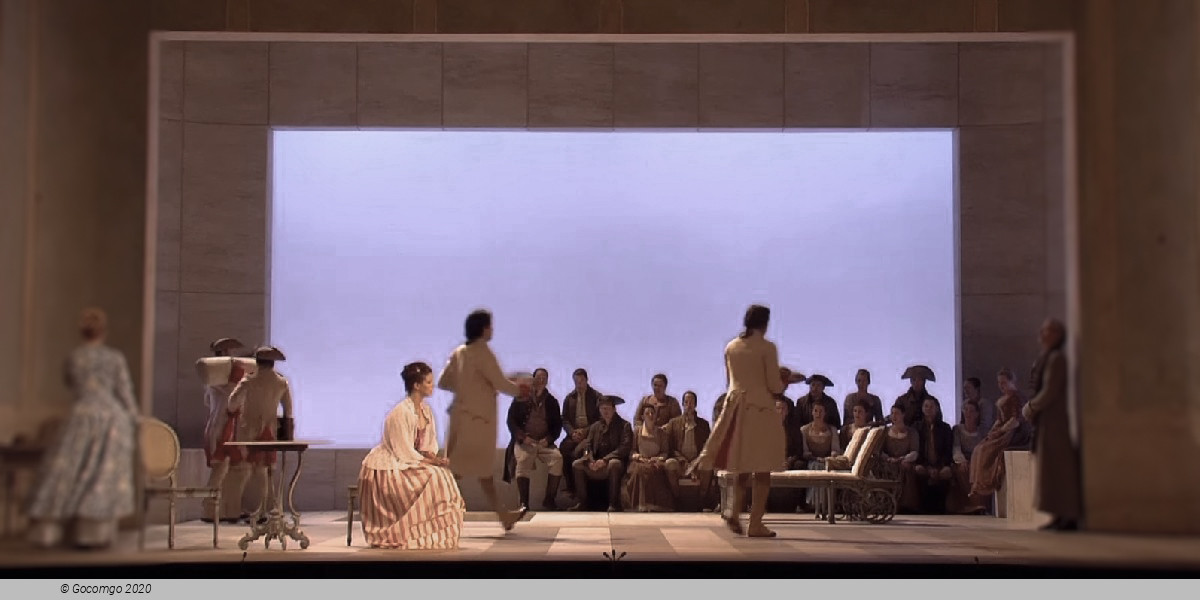
Each opera is a masterpiece in its own right but they also have several features in common: respect for the unities of classical drama (unity of place, time and action) and the similarities between the characters (Countess-Donna Elvira / Don Giovanni-Count, and so on). Thus each libretto appears in its true colours when the opera is seen in conjunction with the other two because certain traits are completed and clarified.

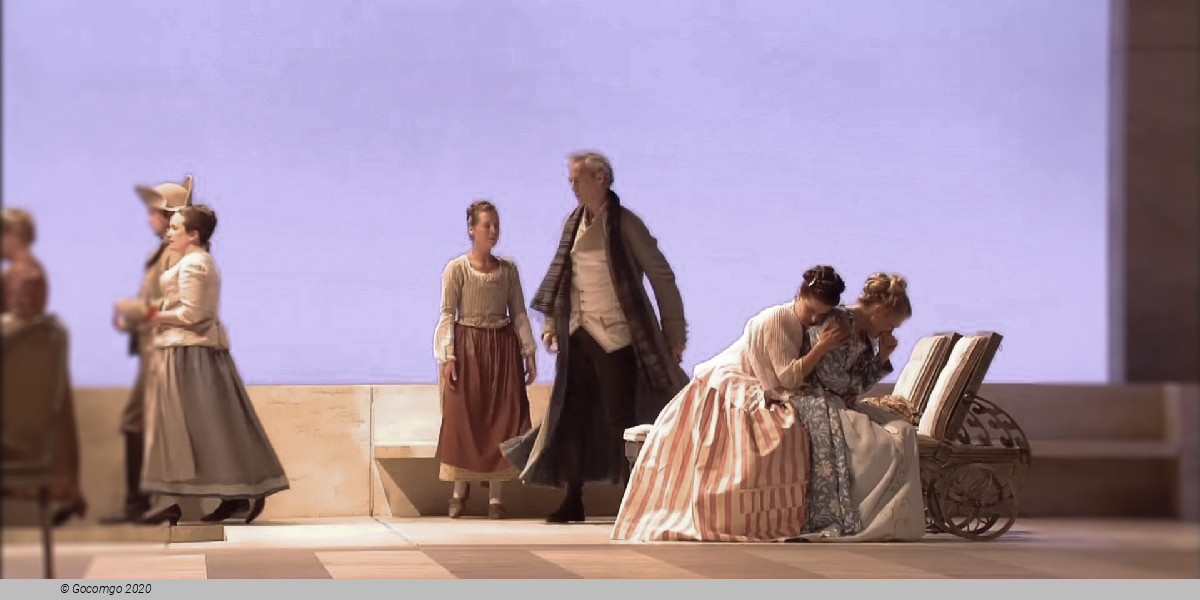
Staging them one after the other, as in a festival, affords the audience new insights by enabling them to immerse themselves in the turbulent lives of the motley gallery of characters. All the women share the suffering caused by the violence of the male characters. Their only refuge is feminine solidarity and their menfolk, after abusing their freedom, are invariably met with forgiveness.

This new perspective brings new meanings to light, confronting the audience with the notion of seduction and raising crucial questions such as: “What does it mean to be a man or a woman in present-day society?”, “What limits do we put on our desires?”, “What does it mean to form a couple today?” or “What are the consequences of our impulses and of abuse?”.

For seduction lies at the core of this trilogy, which is an ageless mirror, an inexhaustible handbook for life, and a folle journée as well, during which così fan tutt(i), while all voices unite to sing "Viva la libertà!".

Production: Drottningholms Slottsteater

History
Premiere of this production: 26 January 1790, Burgtheater, Vienna

Così fan tutte, ossia La scuola degli amanti (All Women Do It, or The School for Lovers), is an Italian-language opera buffa in two acts by Wolfgang Amadeus Mozart first performed on 26 January 1790 at the Burgtheater in Vienna, Austria. The libretto was written by Lorenzo Da Ponte who also wrote Le nozze di Figaro and Don Giovanni.

Synopsis

Mozart and Da Ponte use the theme of "fiancée swapping", which dates back to the 13th century; notable earlier versions are found in Boccaccio's Decameron and Shakespeare's play Cymbeline. Elements from Shakespeare's The Taming of the Shrew are also present. Furthermore, it incorporates elements of the myth of Procris as found in Ovid's Metamorphoses, vii.

Place: Naples
Time: the 18th century

Act 1
Scene 1: A coffeehouse

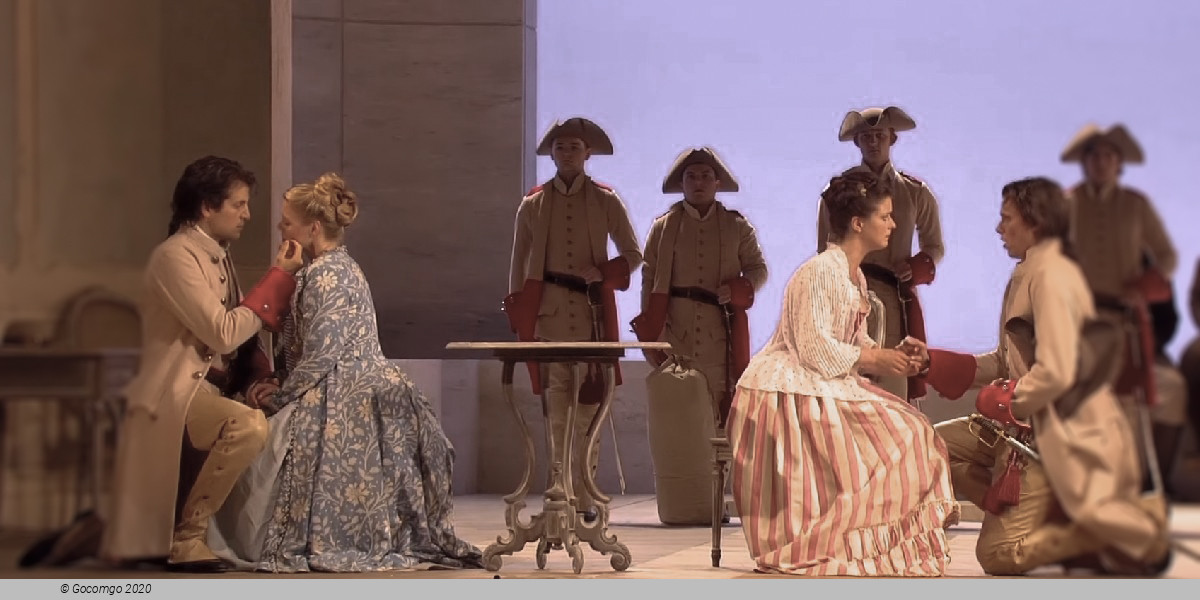
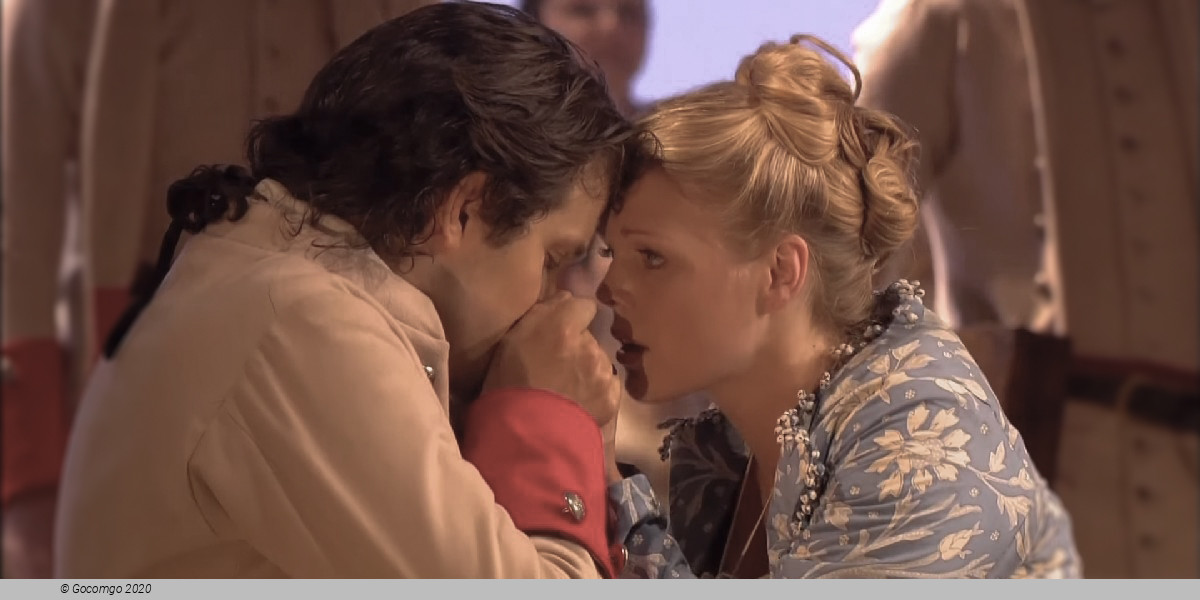
In a cafe, Ferrando and Guglielmo (two officers) express certainty that their fiancées (Dorabella and Fiordiligi, respectively) will be eternally faithful. Don Alfonso expresses skepticism and claims that there is no such thing as a faithful woman. He lays a wager with the two officers, claiming he can prove in a day's time that those two, like all women, are fickle. The wager is accepted: the two officers will pretend to have been called off to war; soon thereafter they will return in disguise and each attempt to seduce the other's lover. The scene shifts to the two women, who are praising their men (duet: "Ah guarda sorella"—"Ah look sister"). Alfonso arrives to announce the bad news: the officers have been called off to war. Ferrando and Guglielmo arrive, brokenhearted, and bid farewell (quintet: "Sento, o Dio, che questo piede è restio"—"I feel, oh God, that my foot is reluctant"). As the boat with the men sails off to sea, Alfonso and the sisters wish them safe travel (trio: "Soave sia il vento"—"May the wind be gentle"). Alfonso, left alone, gloatingly predicts that the women (like all women) will prove unfaithful (arioso: "Oh, poverini, per femmina giocare cento zecchini?"—"Oh, poor little ones, to wager 100 sequins on a woman").

Scene 2: A room in the sisters' home

Despina, the maid, arrives and asks what is wrong. Dorabella bemoans the torment of having been left alone (aria: "Smanie implacabili"—"Torments implacable"). Despina mocks the sisters, advising them to take new lovers while their betrotheds are away (aria: "In uomini, in soldati, sperare fedeltà?"—"In men, in soldiers, you hope for faithfulness?"). After they leave, Alfonso arrives. He fears Despina will recognize the men through their disguises, so he bribes her into helping him to win the bet. The two men then arrive, dressed as mustachioed Albanians (sextet: "Alla bella Despinetta"—"Meet the pretty Despinetta"). The sisters enter and are alarmed by the presence of strange men in their home. The "Albanians" tell the sisters that they were led by love to them (the sisters). However, the sisters refuse to give in. Fiordiligi asks the "Albanians" to leave and pledges to remain faithful (aria: "Come scoglio"—"Like a rock"). The "Albanians" continue the attempt to win over the sisters' hearts, Guglielmo going so far as to point out all of his manly attributes (aria: "Non siate ritrosi"—"Don't be shy"), but to no avail. Ferrando, left alone and sensing victory, praises his love (aria: "Un'aura amorosa"—"A loving breath").

Scene 3: A garden

The sisters are still pining. Despina has asked Don Alfonso to let her take over the seduction plan. Suddenly, the "Albanians" burst in the scene and threaten to poison themselves if they are not allowed the chance to woo the sisters. As Alfonso tries to calm them, they drink the "poison" and pretend to pass out. Soon thereafter, a "doctor" (Despina in disguise) arrives on the scene and, using magnet therapy, is able to revive the "Albanians". The men, pretending to hallucinate, demand a kiss from Dorabella and Fiordiligi (whom the "Albanians" call goddesses) who stand before them. The sisters refuse, even as Alfonso and the doctor (Despina) urge them to acquiesce.

Act 2
Scene 1: The sisters' bedroom

Despina urges them to succumb to the "Albanians"' overtures (aria: "Una donna a quindici anni"—"A fifteen year old woman"). After she leaves, Dorabella confesses to Fiordiligi that she is tempted, and the two agree that a mere flirtation will do no harm and will help them pass the time while they wait for their lovers to return (duet: "Prenderò quel brunettino"—"I will take the brunette one").

Scene 2: The garden

Dorabella and the disguised Guglielmo pair off, as do the other two. The conversation is haltingly uncomfortable, and Ferrando departs with Fiordiligi. Now alone, Guglielmo attempts to woo Dorabella. She does not resist strongly, and soon she has given him a medallion (with Ferrando's portrait inside) in exchange for a heart-shaped locket (duet: "Il core vi dono"—"I give you my heart"). Ferrando is less successful with Fiordiligi (Ferrando's aria: "Ah, lo veggio"—"Ah, I see it" and Fiordiligi's aria: "Per pietà, ben mio, perdona"—"Please, my beloved, forgive"), so he is enraged when he later finds out from Guglielmo that the medallion with his portrait has been so quickly given away to a new lover. Guglielmo at first sympathises with Ferrando (aria: "Donne mie, la fate a tanti"—"My ladies, you do it to so many"), but then gloats, because his betrothed is faithful.

Scene 3: The sisters' room

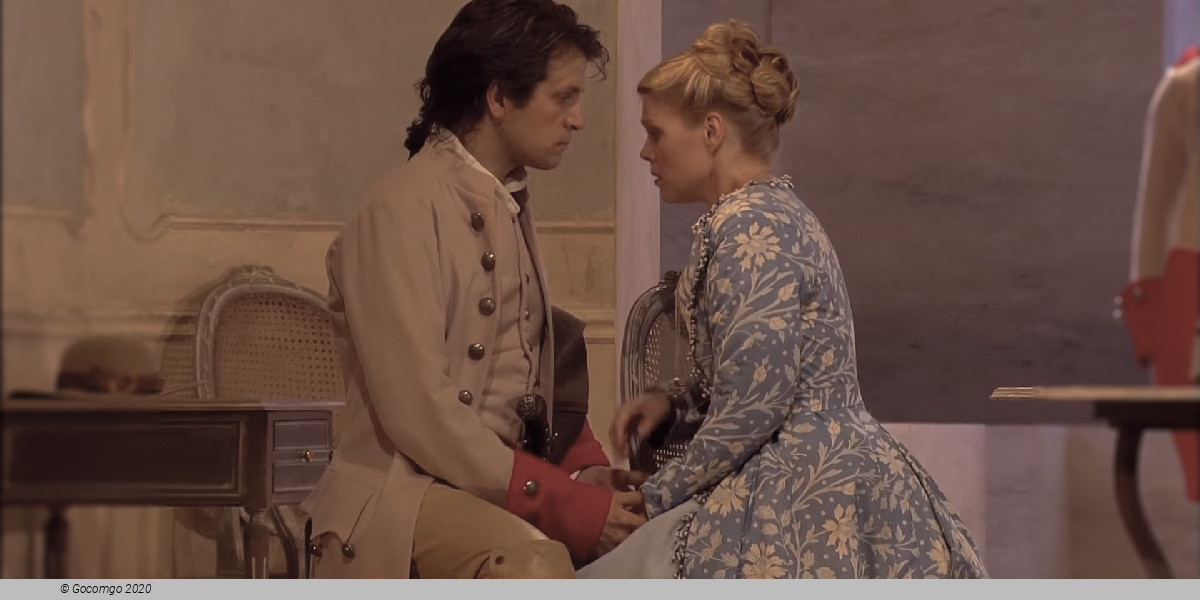
Dorabella admits her indiscretion to Fiordiligi ("È amore un ladroncello"—"Love is a little thief"). Fiordiligi, upset by this development, decides to go to the army and find her betrothed. Before she can leave, though, Ferrando arrives and continues his attempted seduction. Fiordiligi finally succumbs and falls into his arms (duet: "Fra gli amplessi"—"In the embraces"). Guglielmo is distraught while Ferrando turns Guglielmo's earlier gloating back on him. Alfonso, winner of the wager, tells the men to forgive their fiancées. After all: "Così fan tutte"—"All women are like that".

Scene 4:

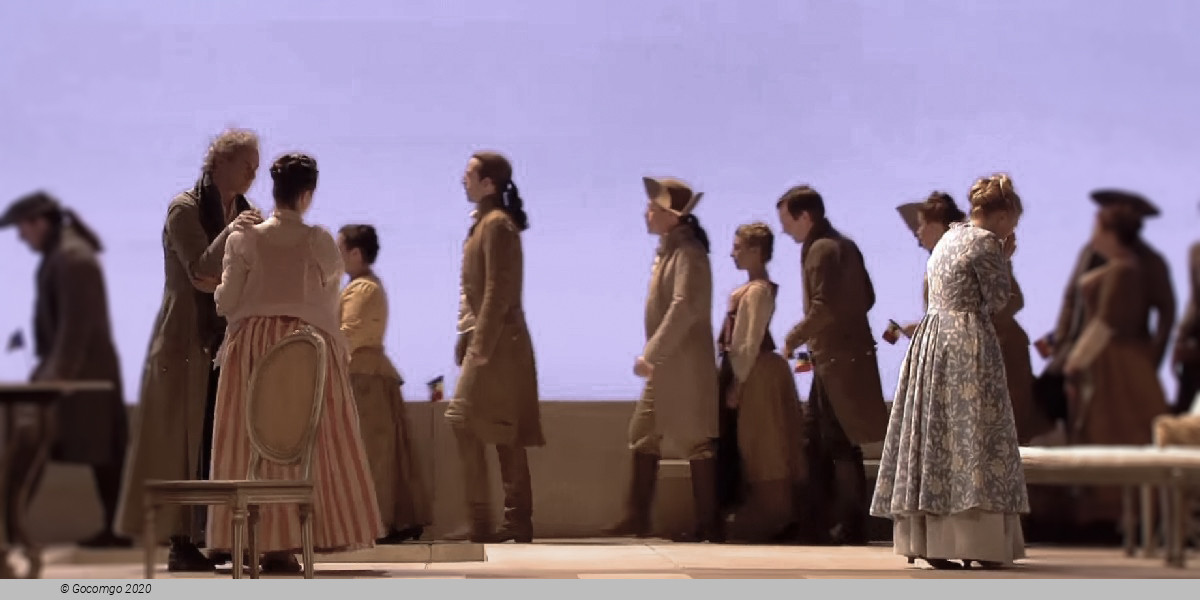
The scene begins as a double wedding for the sisters and their "Albanian" grooms. Despina, in disguise as a notary, presents the marriage contract, which all sign. Directly thereafter, military music is heard in the distance, indicating the return of the officers. Alfonso confirms the sisters' fears: Ferrando and Guglielmo are on their way to the house. The "Albanians" hurry off to hide (actually, to change out of their disguises). They return as the officers, professing their love. Alfonso drops the marriage contract in front of the officers, and, when they read it, they become enraged. They then depart and return moments later, half in Albanian disguise, half as officers. Despina has been revealed to be the notary, and the sisters realize they have been duped. All is ultimately forgiven, as the entire group praises the ability to accept life's unavoidable good times and bad times.

Venue Info

Gran Teatre del Liceu - Barcelona
Location   La Rambla, 51-59

The Gran Teatre del Liceu, or simply Liceu in Catalan, is a main opera house in Barcelona, Catalonia, located on the central street of the city - La Rambla. The Liceu opened on 4 April 1847.

The Gran Teatre del Liceu dates back to 1837 when at the instigation of Manuel Gibert, a battalion of the National Militia formed the institutional core of the future Teatre in the unused monastery of Montsió (currently Portal del Ángel): a dramatic society of aficionados devoted to the performing arts. The first show premiered on 21 August 1837: El marido de mi mujer, by Ventura de la Vega, a dance number and a skit.

Origins (1837–1847)
In 1837, the Liceo Filodramático de Montesión (Philodramatic Lyceum of Montesión, now named Conservatori Superior de Música del Liceu) was founded in Barcelona to promote musical education (hence the name "Liceo", or lyceum) and organize scenic representations of opera performed by Liceo students.

A theatre was built in the convent building — named Teatro de Montesión or Teatro del Liceo de Montesión — and plays and operas were performed: the first was Vicenzo Bellini's Norma (3 February 1838). The repertoire was Italian, the most performed composers being Donizetti and Mercadante as well as Bellini and Rossini. The Barcelona premiere of Hérold's Zampa was held here.

In 1838, the society changed its name to Liceo Dramático Filarmónico de S. M. la Reina Isabel II (Dramatic Philharmonic Lyceum of H.M. Queen Isabel II). Lack of space, as well as pressures, brought to bear by a group of nuns (who were the former proprietors of the convent and had recovered rights to return), motivated the Liceu to leave its headquarters in 1844. The last theatre performance was on 8 September.

The Trinitarian convent building located in the center of the town at la Rambla was purchased. The managers of the Liceu entrusted Joaquim de Gispert d'Anglí with a project to make the construction of the new building viable. Two different societies were created: a "building society" and an "auxiliary building society". Shareholders of the building society obtained the right of use in perpetuity of some theatre boxes and seats in exchange for their economic contributions. Those of the second society contributed the rest of the money necessary in exchange for property of other spaces in the building including some shops and a private club called the Círculo del Liceo.

In contrast with many other European cities, where the monarchy took on the responsibility of the building and upkeep of opera houses, the Liceu was funded by private shareholders of what would become the Societat del Gran Teatre del Liceu (Great Liceu Theatre Society), organized similarly to a trading company or society. This is reflected in the building's architecture; for example, there exists no royal box. The Queen did not contribute to the construction, so the name of the society was changed to Liceo Filarmónico Dramático, removing the Queen's name from it.

Miquel Garriga i Roca was the architect contracted; the construction began on 11 April 1845. The theatre was inaugurated on 4 April 1847.

Opening, fire, and rebuilding (1847–1862)
The inauguration presented a mixed program including the premieres of José Melchior Gomis' musical Ouverture, a historical play Don Fernando de Antequera by Ventura de la Vega, the ballet La rondeña (The girl from Ronda) by Josep Jurch, and a cantata Il regio himene with music by the musical director of the theatre Marià Obiols. The first complete opera, Donizetti's Anna Bolena was presented on 17 April. At this point, Liceu was the biggest opera house in Europe with 3,500 seats. Other operas performed in the Liceu during the first year were (in chronological order): I due Foscari (Verdi), Il bravo (Mercadante), Parisina d'Este (Donizetti), Giovanna d'Arco (Verdi), Leonora (Mercadante), Ernani (Verdi), Norma (Bellini), Linda di Chamounix (Donizetti) and Il barbiere di Siviglia (Rossini).

The building was severely damaged by fire on 9 April 1861, but it was rebuilt by the architect Josep Oriol Mestres and re-opened on 20 April 1862, performing Bellini's I puritani. From the old building, only the facade, the entrance hall, and the foyer (Mirrors Hall) remained.

Bombing and civil war (1862–1940)
On 7 November 1893, on the opening night of the season and during the second act of the opera Guillaume Tell by Rossini, two Orsini bombs were thrown into the stalls of the opera house. Only one of the bombs exploded; some twenty people were killed and many more were injured. The attack was executed by anarchist Santiago Salvador and deeply shocked Barcelona, becoming a symbol of the turbulent social unrest of the time. The Liceu re-opened its doors on 18 January 1894, but the seats occupied by those killed were not used for a number of years. The second bomb was put in the Van Gogh Museum in 2007 during an exhibit on Barcelona around 1900.

In 1909, the auditorium ornamentation was renewed. Spanish neutrality during World War I allowed the Catalan textile industry to amass enormous wealth by supplying the warring parties. The 1920s were prosperous years and the Liceu became fully established as a leading opera house welcoming better singers, the orchestra leaders of the time, and companies such as Sergei Diaghilev's Ballets Russes.

When the Second Spanish Republic was proclaimed in 1931, political instability meant that the Liceu suffered a severe financial crisis which was only overcome through subsidies from the Barcelona City Council and the government of Catalonia. During the Spanish Civil War, the Liceu was nationalized and took the name the Teatre del Liceu – Teatre Nacional de Catalunya (Liceu Opera House – the National Theatre of Catalonia). The opera seasons were suspended. After the war, it was returned to its original owners in 1939.

"Silver Age" and crisis (1940–1980)
From 1940 to the 1960s, the seasons were high-quality ones. 1955, thanks to the creation of a special board, saw a historic event when for the first time since its foundation, the Bayreuth Festival was staged away from its normal venue. Performances of Parsifal, Tristan und Isolde, and Die Walküre with innovative stage sets by Wieland Wagner were enthusiastically received.

In the 1970s, an economic crisis affected the theatre and the privately based organization could not afford the increasing budgets of modern opera productions and general quality declined.

New direction and second fire (1980–1994)
The death of Joan Antoni Pàmias in 1980 revealed the need for the intervention of the official bodies if the institution was to remain a leading opera house. In 1981, the Generalitat de Catalunya, with Barcelona's City Council and the Societat del Gran Teatre del Liceu, created the Consorci del Gran Teatre del Liceu (Consortium of the Great Liceu Theater) responsible for the theatre's management.

The Deputation of Barcelona and the Spanish Ministry of Culture joined the Consortium in 1985 and 1986 respectively. The Consortium managed to quickly attract the public back to the Liceu owing to a considerable improvement in its artistic standard. This included a more complete and up-to-date perspective of the very nature of an opera performance, a great improvement in the choir and orchestra, careful casting, and attracting the interest of the public to other aspects of productions besides the leading roles alone. This approach, coupled with the new economic support and more demanding and discerning public, resulted in a high standard of production.

The seasons organized by the Consortium maintained high standards in casting, production, and public loyalty, as measured by public attendance, but all this came to a halt with a fire on 31 January 1994. The building was destroyed by a fire caused by a spark that accidentally fell on the curtain during a routine repair. At this time, Paul Hindemith's Mathis der Maler was performing at the theatre and the following opera to be performed was Puccini's Turandot.

The public and institutional response were unanimous on the need to rebuild a new opera house on the same site with improved facilities. The new Liceu is the result of a series of actions to preserve those parts of the building unaffected by the fire, the same ones as had survived the fire in 1861. The auditorium was rebuilt with the same layout, except for the roof paintings which were replaced with new artworks by Perejaume, and state-of-the-art stage technology.

To rebuild and improve the theatre, it became public. The Fundació del Gran Teatre del Liceu (Liceu Great Theater Foundation) was created and the Societat del Gran Teatre del Liceu handed over the ownership of the building to the Foundation. Some owners disagreed with the decision, which was challenged unsuccessfully in court.

Reopening (1994–present)
From 1994 until the reopening in 1999, the opera seasons in Barcelona took place in: Palau Sant Jordi arena (only some massive performances in 1994), Palau de la Música Catalana, and Teatre Victòria. The rebuilt, improved, and the expanded theatre opened on 7 October 1999, with Puccini's Turandot as previewed in 1994 before the fire. The new venue had the same traditional horseshoe-shaped auditorium as before but with greatly improved technical, rehearsal, office, and educational facilities, a new rehearsal hall, a new chamber opera and small performances hall, and much more public space. Architects for the rebuilding project were Ignasi de Solà-Morales and Xavier Fabré i Lluís Dilmé.

Surtitles, projected onto a screen above the proscenium, are used for all opera performances and some lieder concerts. The electronic libretto system provides translations (to English, Spanish, or Catalan) onto small individual monitors for most of the seats.

Important Info
Type: Opera
City: Barcelona, Spain
Starts at: 19:00
Duration: 3h 20min
Top of page