
Gran Teatre del Liceu 22 January 2020 - Aida | GoComGo.com

Aida

Gran Teatre del Liceu, Barcelona, Spain
All photos (7)
Select date and time
8 PM
Request for Tickets
Important Info
Type: Classical Concert
City: Barcelona, Spain
Starts at: 20:00
Acts: 4
Intervals: 3
Duration: 4h

E-tickets: Print at home or at the box office of the event if so specified. You will find more information in your booking confirmation email.

You can only select the category, and not the exact seats.
If you order 2 or 3 tickets: your seats will be next to each other.
If you order 4 or more tickets: your seats will be next to each other, or, if this is not possible, we will provide a combination of groups of seats (at least in pairs, for example 2+2 or 2+3).

Programme
Giuseppe Verdi: Aida
Overview

The historic production, with sets by Mestres Cabanes, returns to the Liceu with Rowley, Margaine and Meade

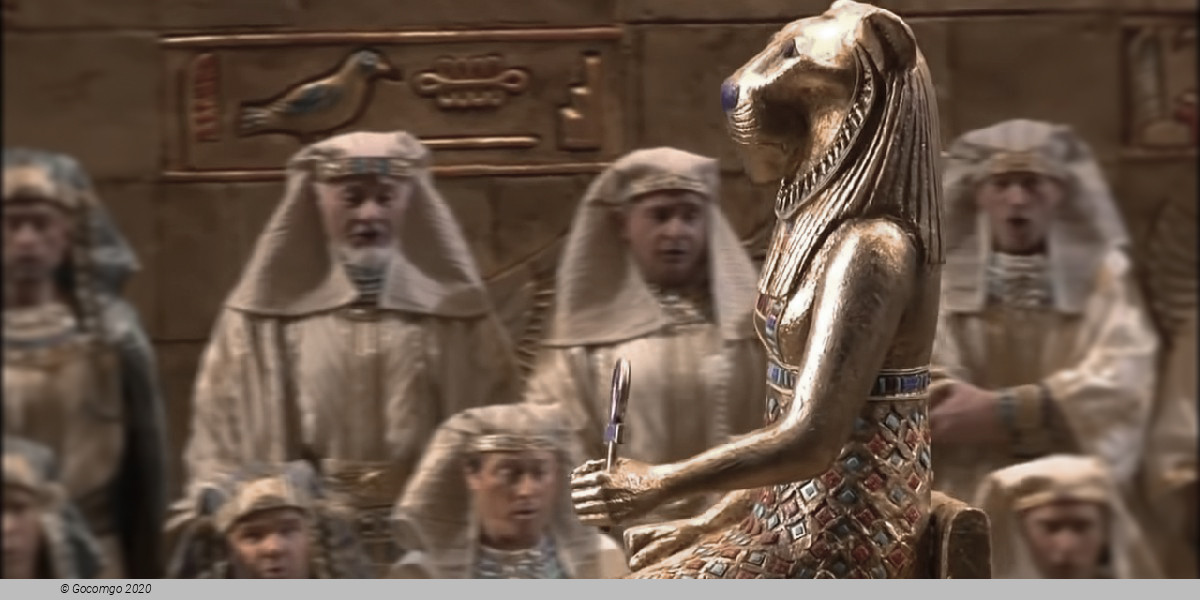
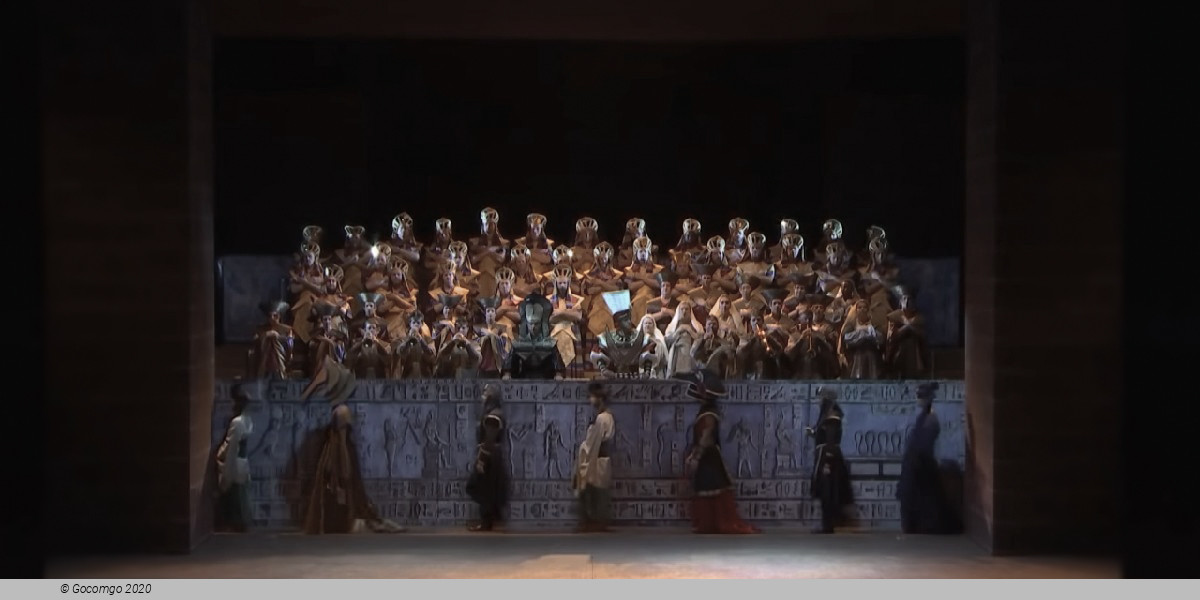
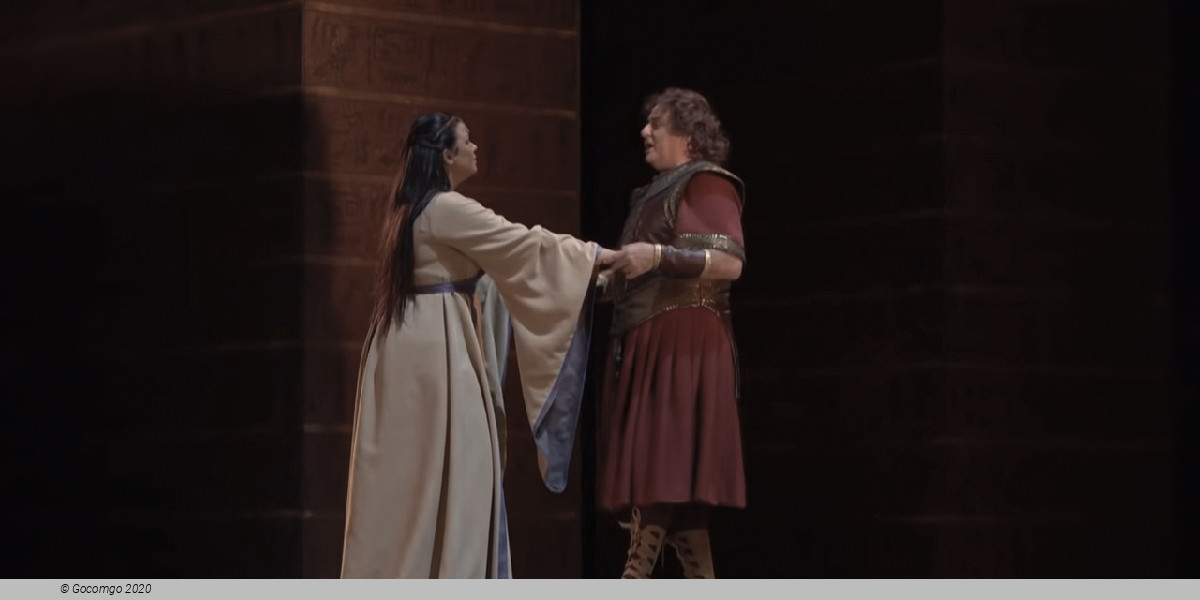
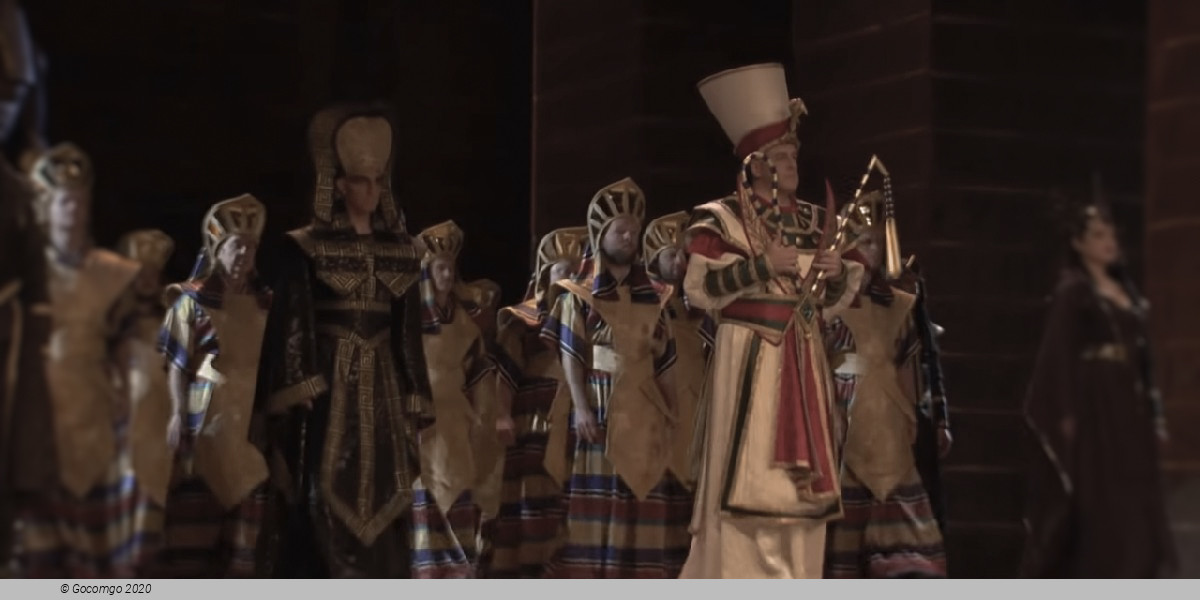
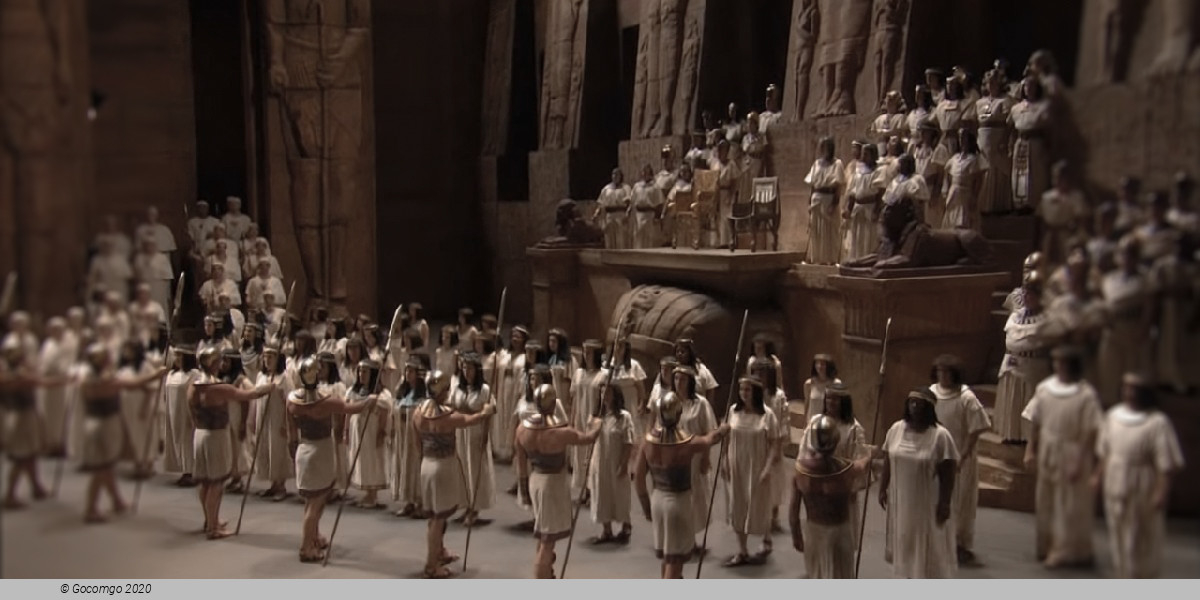
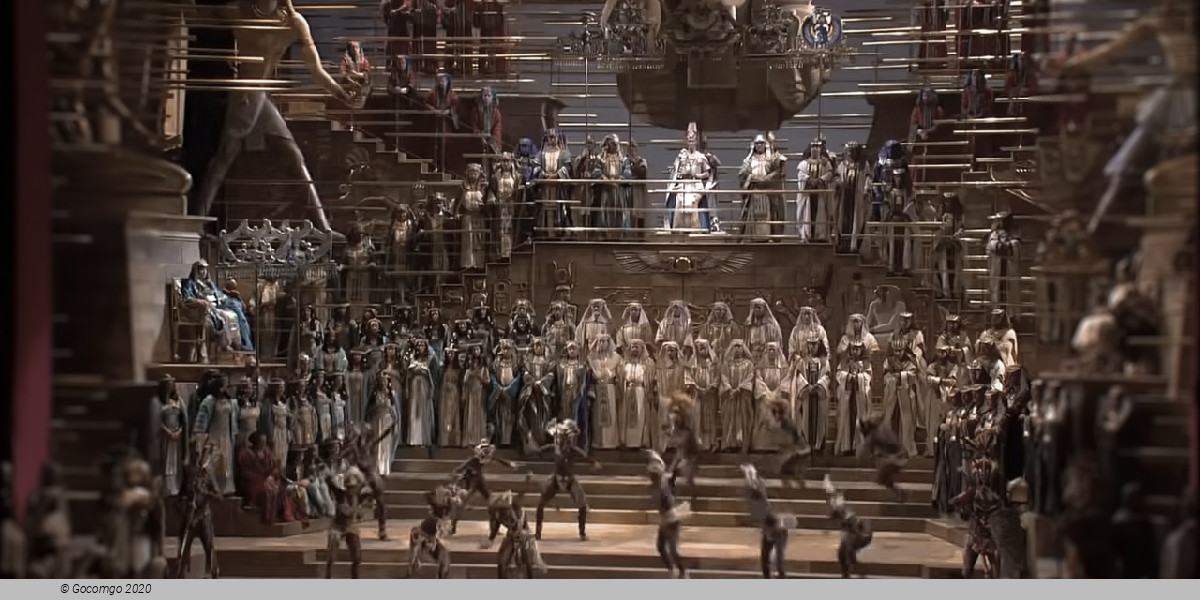
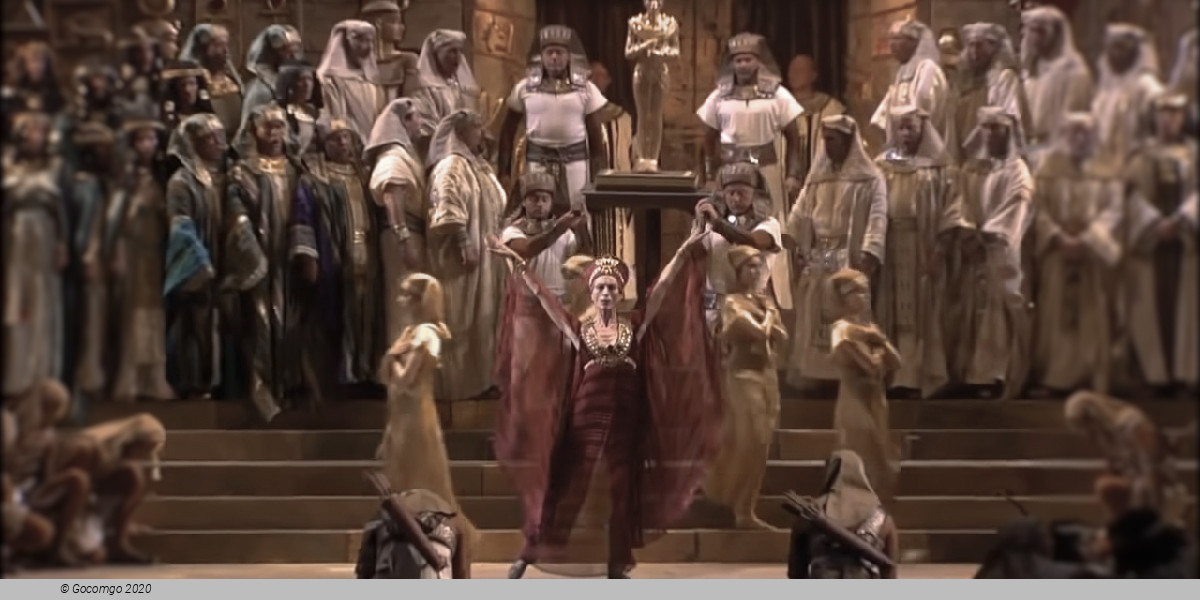
Aida as our parents, grandparents and great-grandparents saw it, set against the hyper-realist scenery designed in 1945 by the Catalan artist from Manresa, Josep Mestres Cabanes. This splendid creation of the great Catalan school of set design emphasizes the grandeur – and also the intimacy – of Verdi's third-before-last opera, remaining true to the historicist tradition without ever lapsing into kitsch.

In his tensely dramatic Aida, the 58-year-old Verdi displays his colossal strength and musical and theatrical savoir-faire to relate the love triangle that causes Aida, Amneris and Radamès to pursue their passion, love and hatred to the very last consequences. The background of Ancient Egypt –  the work was written to mark the opening of the Suez Canal – provides the excuse for the grandiose choral and symphonic scenes, which alternate with exquisite arias throughout the extensive score.

The Liceu debut of American soprano Angela Meade.

Opera in four acts. Libretto by Antonio Ghislanzoni. World premiere: 24/12/1871 at the Cairo Opera House. First Barcelona performance: 16/04/1876 at the Teatre Principal. First Liceu performance: 25/02/1877. Last Liceu performance: 30/07/2012. Number of Liceu performances: 456.

History
Premiere of this production: 24 December 1871, Khedivial Opera House in Cairo

Aida is an opera in four acts by Giuseppe Verdi to an Italian libretto by Antonio Ghislanzoni. Set in the Old Kingdom of Egypt, it was commissioned by Cairo's Khedivial Opera House and had its première there on 24 December 1871, in a performance conducted by Giovanni Bottesini. Today the work holds a central place in the operatic canon, receiving performances every year around the world; at New York's Metropolitan Opera alone, Aida has been sung more than 1,100 times since 1886. Ghislanzoni's scheme follows a scenario often attributed to the French Egyptologist Auguste Mariette, but Verdi biographer Mary Jane Phillips-Matz argues that the source is actually Temistocle Solera.

Synopsis

Backstory: The Egyptians have captured and enslaved Aida, an Ethiopian princess. An Egyptian military commander, Radamès, struggles to choose between his love for her and his loyalty to the King of Egypt. To complicate the story further, the King's daughter Amneris is in love with Radamès, although he does not return her feelings.

Act 1

Scene 1: A hall in the King's palace; through the rear gate the pyramids and temples of Memphis are visible

Ramfis, the high priest of Egypt, tells Radamès, the young warrior, that war with the Ethiopians seems inevitable, and Radamès hopes that he will be chosen as the Egyptian commander (Ramfis, Radamès: "Sì, corre voce l'Etiope ardisca" / Yes, it is rumored that Ethiopia dares once again to threaten our power).

Radamès dreams both of gaining victory on the battlefield and of Aida, an Ethiopian slave, with whom he is secretly in love (Radamès: "Se quel guerrier io fossi! ... Celeste Aida" / Heavenly Aida). Aida, who is also secretly in love with Radamès, is the captured daughter of the Ethiopian King Amonasro, but her Egyptian captors are unaware of her true identity. Her father has invaded Egypt to deliver her from servitude.

Amneris, the daughter of the Egyptian King, enters the hall. She too loves Radamès, but fears that his heart belongs to someone else (Radamès, Amneris: "Quale insolita gioia nel tuo sguardo" / In your looks I trace a joy unwonted).

Aida appears and, when Radamès sees her, Amneris notices that he looks disturbed. She suspects that Aida could be her rival, but is able to hide her jealousy and approach Aida (Amneris, Aida, Radamès: "Vieni, o diletta, appressati" / Come, O delight, come closer).

The King enters, along with the High Priest, Ramfis, and the whole palace court. A messenger announces that the Ethiopians, led by King Amonasro, are marching towards Thebes. The King declares war and proclaims that Radamès is the man chosen by the goddess Isis to be the leader of the army (The King, Messenger, Radamès, Aida, Amneris, Ramfis, chorus: "Alta cagion v'aduna .. Guerra, guerra, guerra!" / Oh fate o'er Egypt looming .. War, war, war!). Upon receiving this mandate from the King, Radamès proceeds to the temple of Vulcan to take up the sacred arms (The King, Radamès, Aida, Amneris, chorus: "Su! del Nilo al sacro lido" .. (reprise) "Guerra, guerra guerra!" / On! Of Nilus' sacred river, guard the shores .. (reprise) War, war, war!).

Alone in the hall, Aida feels torn between her love for her father, her country, and Radamès (Aida: "Ritorna vincitor" / Return a conqueror).

Scene 2: Inside the Temple of Vulcan

Solemn ceremonies and dances by the priestesses take place (High Priestess, chorus, Radamès: "Possente Ftha ... Tu che dal nulla" / O mighty Ptah). This is followed by the installation of Radamès to the office of commander-in-chief (High Priestess, chorus, Ramfis, Radamès: "Immenso Ftha .. Mortal, diletto ai Numi" / O mighty one, guard and protect!). All present in the temple pray fervently for the victory of Egypt and protection for their warriors ("Nume, custode e vindice"/ Hear us, O guardian deity).

Act 2

Scene 1: The chamber of Amneris

Dances and music to celebrate Radamès' victory take place (Chorus, Amneris: "Chi mai fra gli inni e i plausi" / Our songs his glory praising). However, Amneris is still in doubt about Radamès' love and wonders whether Aida is in love with him. She tries to forget her doubt, entertaining her worried heart with the dance of Moorish slaves (Chorus, Amneris: "Vieni: sul crin ti piovano" / Come bind your flowing tresses).

When Aida enters the chamber, Amneris asks everyone to leave. By falsely telling Aida that Radamès has died in the battle, she tricks her into professing her love for him. In grief, and shocked by the news, Aida confesses that her heart belongs to Radamès eternally (Amneris, Aida: "Fu la sorte dell'armi a' tuoi funesta" / The battle's outcome was cruel for your people).

This confession fires Amneris with rage, and she plans on taking revenge on Aida. Ignoring Aida's pleadings (Amneris, Aida, chorus: "Su! del Nilo al sacro lido" / Up! at the sacred shores of the Nile), Amneris leaves her alone in the chamber.

Scene 2: The grand gate of the city of Thebes

Radamès returns victorious and the troops march into the city (Chorus, Ramfis: "Gloria all'Egitto, ad Iside" / Glory to Egypt, to Isis!).

The Egyptian king decrees that on this day the triumphant Radamès may have anything he wishes. The Ethiopian captives are led onstage in chains, Amonasro among them. Aida immediately rushes to her father, who whispers to her to conceal his true identity as King of Ethiopia from the Egyptians. Amonasro deceptively proclaims to the Egyptians that the Ethiopian king (referring to himself) has been slain in battle. Aida, Amonasro, and the captured Ethiopians plead with the Egyptian King for mercy, but Ramfis and the Egyptian priests call for their death (Aida, Amneris, Radamès, The King, Amonasro, chorus: "Che veggo! .. Egli? .. Mio padre! .. Anch'io pugnai .. Struggi, o Re, queste ciurme feroci" / What do I see?.. Is it he? My father? .. Destroy, O King, these ferocious creatures).

Claiming the reward promised by the King of Egypt, Radamès pleads with him to spare the lives of the prisoners and to set them free. The King grants Radamès' wish, and declares that he (Radamès) will be his (the King's) successor and will marry the King's daughter (Amneris). (Aida, Amneris, Radamès, Ramfis, The King, Amonasro, chorus: "O Re: pei sacri Numi! .. Gloria all'Egitto" / O King, by the sacred gods ... Glory to Egypt!). At Ramfis' suggestion to the King, Aida and Amonasro remain as hostages to ensure that the Ethiopians do not avenge their defeat.

Act 3

On the banks of the Nile, near the Temple of Isis

Prayers are said (Chorus, High Priestess, Ramfis, Amneris: "O tu che sei d'Osiride" / O thou who to Osiris art) on the eve of Amneris and Radamès' wedding in the Temple of Isis. Outside, Aida waits to meet with Radamès as they had planned (Aida: "Qui Radamès verra .. O patria mia" / Oh, my dear country!).

Amonasro appears and orders Aida to find out the location of the Egyptian army from Radamès. Aida, torn between her love for Radamès and her loyalty to her native land and to her father, reluctantly agrees. (Aida, Amonasro: "Ciel, mio padre! .. Rivedrai le foreste imbalsamate" / Once again shalt thou gaze). When Radamès arrives, Amonasro hides behind a rock and listens to their conversation.

Radamès affirms that he will marry Aida ("Pur ti riveggo, mia dolce Aida .. Nel fiero anelito"; "Fuggiam gli ardori inospiti .. Là, tra foreste vergini" / I see you again, my sweet Aida!), and Aida convinces him to flee to the desert with her.

In order to make their escape easier, Radamès proposes that they use a safe route without any fear of discovery and reveals the location where his army has chosen to attack. Upon hearing this, Amonasro comes out of hiding and reveals his identity. Radamès realizes, to his extreme dismay, that he has unwittingly revealed a crucial military secret to the enemy. At the same time, Amneris and Ramfis leave the temple and, seeing Radamès in conference with the enemy, call for the imperial guards. Amonasro draws a dagger, intending to kill Amneris and Ramfis before the guards can hear them, but Radamès disarms him, quickly orders him to flee with Aida, and surrenders himself to the imperial guards as Aida and Amonasro run off. The guards arrest him as a traitor.

Act 4

Scene 1: A hall in the Temple of Justice. To one side is the door leading to Radamès' prison cell

Amneris desires to save Radamès ("L'aborrita rivale a me sfuggia" / My hated rival has escaped me). She calls for the guard to bring him to her.

She asks Radamès to deny the accusations, but Radamès, who does not wish to live without Aida, refuses. He is relieved to know Aida is still alive and hopes she has reached her own country (Amneris, Radamès: "Già i Sacerdoti adunansi" / Already the priests are assembling).

Offstage, Ramfis recites the charges against Radamès and calls on him to defend himself, but he stands mute, and is condemned to death as a traitor. Amneris, who remains onstage, protests that he Radamès is innocent, and pleads with the priests to show mercy. The priests sentence him to be buried alive; Amneris weeps and curses the priests as he is taken away (Judgment scene, Amneris, Ramfis, and chorus: "Ahimè! .. morir mi sento .. Radamès, e deciso il tuo fato" / Alas .. I feel death .. Radamès, your fate is decided).

Scene 2: The lower portion of the stage shows the vault in the Temple of Vulcan; the upper portion represents the temple itself

Radamès has been taken into the lower floor of the temple and sealed up in a dark vault, where he thinks that he is alone. As he hopes that Aida is in a safer place, he hears a sigh and then sees Aida. She has hidden herself in the vault in order to die with Radamès (Radamès and Aida: "La fatal pietra sovra me si chiuse." / The fatal stone now closes over me). They accept their terrible fate (Radamès: "Morir! Si pura e bella" / To die! So pure and lovely!) and bid farewell to Earth and its sorrows. Above the vault in the temple of Vulcan, Amneris weeps and prays to the goddess Isis. In the vault below, Aida dies in Radamès' arms as the priests, offstage, pray to the god Ftha. (Chorus, Aida, Radamès, Amneris: "Immenso Ftha" / Almighty Ptah).

Venue Info

Gran Teatre del Liceu - Barcelona
Location   La Rambla, 51-59

The Gran Teatre del Liceu, or simply Liceu in Catalan, is a main opera house in Barcelona, Catalonia, located on the central street of the city - La Rambla. The Liceu opened on 4 April 1847.

The Gran Teatre del Liceu dates back to 1837 when at the instigation of Manuel Gibert, a battalion of the National Militia formed the institutional core of the future Teatre in the unused monastery of Montsió (currently Portal del Ángel): a dramatic society of aficionados devoted to the performing arts. The first show premiered on 21 August 1837: El marido de mi mujer, by Ventura de la Vega, a dance number and a skit.

Origins (1837–1847)
In 1837, the Liceo Filodramático de Montesión (Philodramatic Lyceum of Montesión, now named Conservatori Superior de Música del Liceu) was founded in Barcelona to promote musical education (hence the name "Liceo", or lyceum) and organize scenic representations of opera performed by Liceo students.

A theatre was built in the convent building — named Teatro de Montesión or Teatro del Liceo de Montesión — and plays and operas were performed: the first was Vicenzo Bellini's Norma (3 February 1838). The repertoire was Italian, the most performed composers being Donizetti and Mercadante as well as Bellini and Rossini. The Barcelona premiere of Hérold's Zampa was held here.

In 1838, the society changed its name to Liceo Dramático Filarmónico de S. M. la Reina Isabel II (Dramatic Philharmonic Lyceum of H.M. Queen Isabel II). Lack of space, as well as pressures, brought to bear by a group of nuns (who were the former proprietors of the convent and had recovered rights to return), motivated the Liceu to leave its headquarters in 1844. The last theatre performance was on 8 September.

The Trinitarian convent building located in the center of the town at la Rambla was purchased. The managers of the Liceu entrusted Joaquim de Gispert d'Anglí with a project to make the construction of the new building viable. Two different societies were created: a "building society" and an "auxiliary building society". Shareholders of the building society obtained the right of use in perpetuity of some theatre boxes and seats in exchange for their economic contributions. Those of the second society contributed the rest of the money necessary in exchange for property of other spaces in the building including some shops and a private club called the Círculo del Liceo.

In contrast with many other European cities, where the monarchy took on the responsibility of the building and upkeep of opera houses, the Liceu was funded by private shareholders of what would become the Societat del Gran Teatre del Liceu (Great Liceu Theatre Society), organized similarly to a trading company or society. This is reflected in the building's architecture; for example, there exists no royal box. The Queen did not contribute to the construction, so the name of the society was changed to Liceo Filarmónico Dramático, removing the Queen's name from it.

Miquel Garriga i Roca was the architect contracted; the construction began on 11 April 1845. The theatre was inaugurated on 4 April 1847.

Opening, fire, and rebuilding (1847–1862)
The inauguration presented a mixed program including the premieres of José Melchior Gomis' musical Ouverture, a historical play Don Fernando de Antequera by Ventura de la Vega, the ballet La rondeña (The girl from Ronda) by Josep Jurch, and a cantata Il regio himene with music by the musical director of the theatre Marià Obiols. The first complete opera, Donizetti's Anna Bolena was presented on 17 April. At this point, Liceu was the biggest opera house in Europe with 3,500 seats. Other operas performed in the Liceu during the first year were (in chronological order): I due Foscari (Verdi), Il bravo (Mercadante), Parisina d'Este (Donizetti), Giovanna d'Arco (Verdi), Leonora (Mercadante), Ernani (Verdi), Norma (Bellini), Linda di Chamounix (Donizetti) and Il barbiere di Siviglia (Rossini).

The building was severely damaged by fire on 9 April 1861, but it was rebuilt by the architect Josep Oriol Mestres and re-opened on 20 April 1862, performing Bellini's I puritani. From the old building, only the facade, the entrance hall, and the foyer (Mirrors Hall) remained.

Bombing and civil war (1862–1940)
On 7 November 1893, on the opening night of the season and during the second act of the opera Guillaume Tell by Rossini, two Orsini bombs were thrown into the stalls of the opera house. Only one of the bombs exploded; some twenty people were killed and many more were injured. The attack was executed by anarchist Santiago Salvador and deeply shocked Barcelona, becoming a symbol of the turbulent social unrest of the time. The Liceu re-opened its doors on 18 January 1894, but the seats occupied by those killed were not used for a number of years. The second bomb was put in the Van Gogh Museum in 2007 during an exhibit on Barcelona around 1900.

In 1909, the auditorium ornamentation was renewed. Spanish neutrality during World War I allowed the Catalan textile industry to amass enormous wealth by supplying the warring parties. The 1920s were prosperous years and the Liceu became fully established as a leading opera house welcoming better singers, the orchestra leaders of the time, and companies such as Sergei Diaghilev's Ballets Russes.

When the Second Spanish Republic was proclaimed in 1931, political instability meant that the Liceu suffered a severe financial crisis which was only overcome through subsidies from the Barcelona City Council and the government of Catalonia. During the Spanish Civil War, the Liceu was nationalized and took the name the Teatre del Liceu – Teatre Nacional de Catalunya (Liceu Opera House – the National Theatre of Catalonia). The opera seasons were suspended. After the war, it was returned to its original owners in 1939.

"Silver Age" and crisis (1940–1980)
From 1940 to the 1960s, the seasons were high-quality ones. 1955, thanks to the creation of a special board, saw a historic event when for the first time since its foundation, the Bayreuth Festival was staged away from its normal venue. Performances of Parsifal, Tristan und Isolde, and Die Walküre with innovative stage sets by Wieland Wagner were enthusiastically received.

In the 1970s, an economic crisis affected the theatre and the privately based organization could not afford the increasing budgets of modern opera productions and general quality declined.

New direction and second fire (1980–1994)
The death of Joan Antoni Pàmias in 1980 revealed the need for the intervention of the official bodies if the institution was to remain a leading opera house. In 1981, the Generalitat de Catalunya, with Barcelona's City Council and the Societat del Gran Teatre del Liceu, created the Consorci del Gran Teatre del Liceu (Consortium of the Great Liceu Theater) responsible for the theatre's management.

The Deputation of Barcelona and the Spanish Ministry of Culture joined the Consortium in 1985 and 1986 respectively. The Consortium managed to quickly attract the public back to the Liceu owing to a considerable improvement in its artistic standard. This included a more complete and up-to-date perspective of the very nature of an opera performance, a great improvement in the choir and orchestra, careful casting, and attracting the interest of the public to other aspects of productions besides the leading roles alone. This approach, coupled with the new economic support and more demanding and discerning public, resulted in a high standard of production.

The seasons organized by the Consortium maintained high standards in casting, production, and public loyalty, as measured by public attendance, but all this came to a halt with a fire on 31 January 1994. The building was destroyed by a fire caused by a spark that accidentally fell on the curtain during a routine repair. At this time, Paul Hindemith's Mathis der Maler was performing at the theatre and the following opera to be performed was Puccini's Turandot.

The public and institutional response were unanimous on the need to rebuild a new opera house on the same site with improved facilities. The new Liceu is the result of a series of actions to preserve those parts of the building unaffected by the fire, the same ones as had survived the fire in 1861. The auditorium was rebuilt with the same layout, except for the roof paintings which were replaced with new artworks by Perejaume, and state-of-the-art stage technology.

To rebuild and improve the theatre, it became public. The Fundació del Gran Teatre del Liceu (Liceu Great Theater Foundation) was created and the Societat del Gran Teatre del Liceu handed over the ownership of the building to the Foundation. Some owners disagreed with the decision, which was challenged unsuccessfully in court.

Reopening (1994–present)
From 1994 until the reopening in 1999, the opera seasons in Barcelona took place in: Palau Sant Jordi arena (only some massive performances in 1994), Palau de la Música Catalana, and Teatre Victòria. The rebuilt, improved, and the expanded theatre opened on 7 October 1999, with Puccini's Turandot as previewed in 1994 before the fire. The new venue had the same traditional horseshoe-shaped auditorium as before but with greatly improved technical, rehearsal, office, and educational facilities, a new rehearsal hall, a new chamber opera and small performances hall, and much more public space. Architects for the rebuilding project were Ignasi de Solà-Morales and Xavier Fabré i Lluís Dilmé.

Surtitles, projected onto a screen above the proscenium, are used for all opera performances and some lieder concerts. The electronic libretto system provides translations (to English, Spanish, or Catalan) onto small individual monitors for most of the seats.

Important Info
Type: Classical Concert
City: Barcelona, Spain
Starts at: 20:00
Acts: 4
Intervals: 3
Duration: 4h
Top of page