
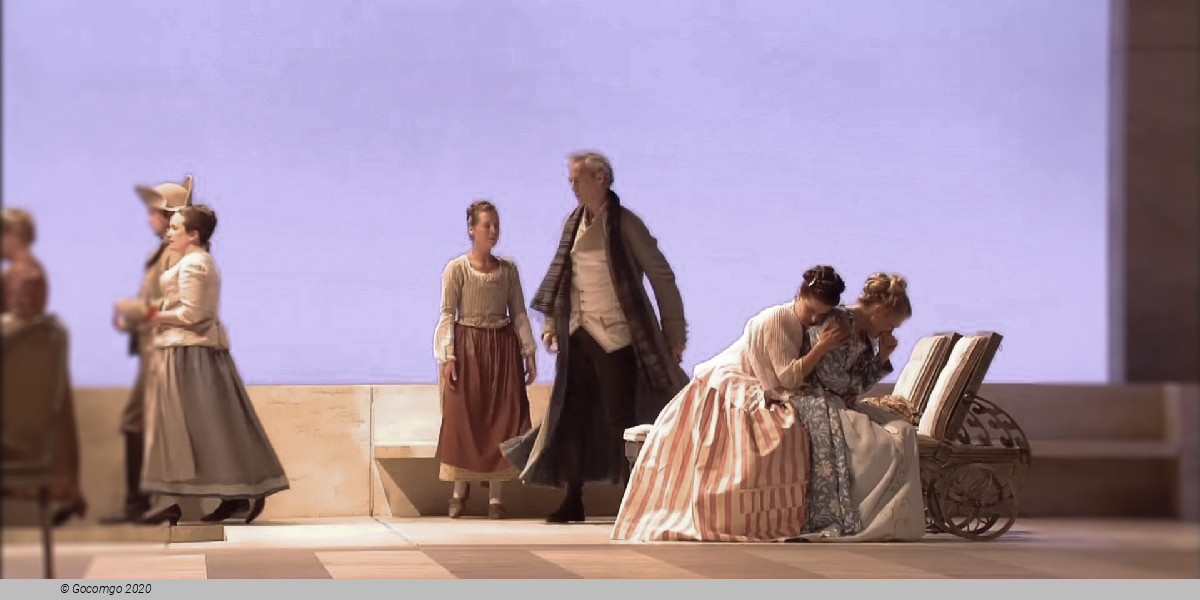
Elbphilharmonie 29 January 2021 - Kammerorchester Basel / Giovanni Antonini | GoComGo.com

Kammerorchester Basel / Giovanni Antonini

Elbphilharmonie, Grosser Saal, Hamburg, Germany
All photos (7)
Select date and time
8 PM
Request for Tickets
Important Info
Type: Classical Concert
City: Hamburg, Germany
Starts at: 20:00
Acts: 2
Duration:
Sung in: Italian

E-tickets: Print at home or at the box office of the event if so specified. You will find more information in your booking confirmation email.

You can only select the category, and not the exact seats.
If you order 2 or 3 tickets: your seats will be next to each other.
If you order 4 or more tickets: your seats will be next to each other, or, if this is not possible, we will provide a combination of groups of seats (at least in pairs, for example 2+2 or 2+3).

Programme
Wolfgang Amadeus Mozart: Kammerorchester Basel / Giovanni Antonini
Overview

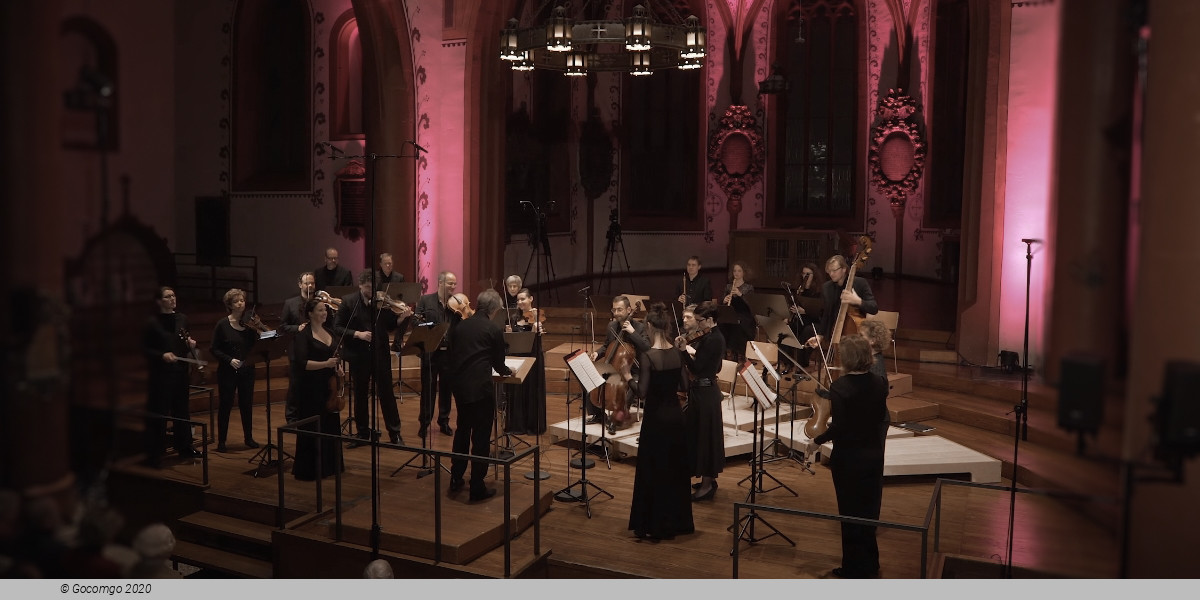
It is not the first time that Giovanni Antonini, the charismatic and historically informed head of Il Giardino Armonico, has joined forces with the Basel Chamber Orchestra and brings great operas to the Elbphilharmonie stage.

"Big" doesn't mean pompous, but rather worked out musically down to the smallest detail. The great thing comes from the incredible transparency he is able to demand from every score. A well-cast vocal ensemble will also be at his side in Mozart's “Così fan tutte” in 2021. Among other things with Julia Kleiter in the role of Fiordiligi, who already impressed the audience at the Salzburg Festival in 2016 - "with a soprano as bright as a bell, sparkling clean intonation and intimate expression." Is that how everyone does it? Hardly likely!

Concert performance in Italian

History
Premiere of this production: 26 January 1790, Burgtheater, Vienna

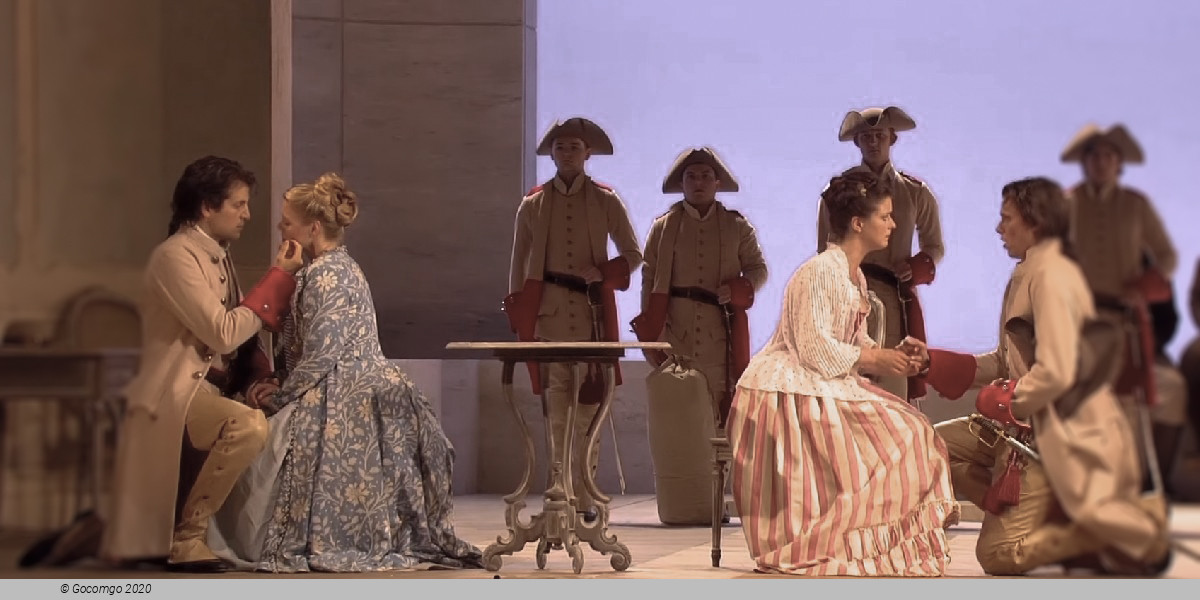
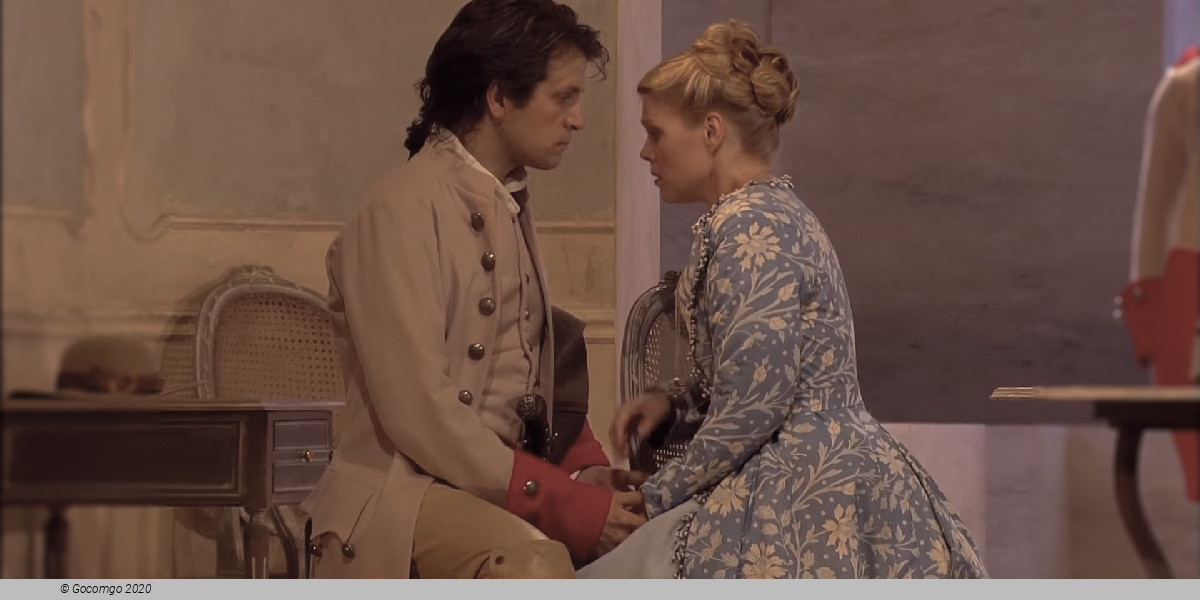
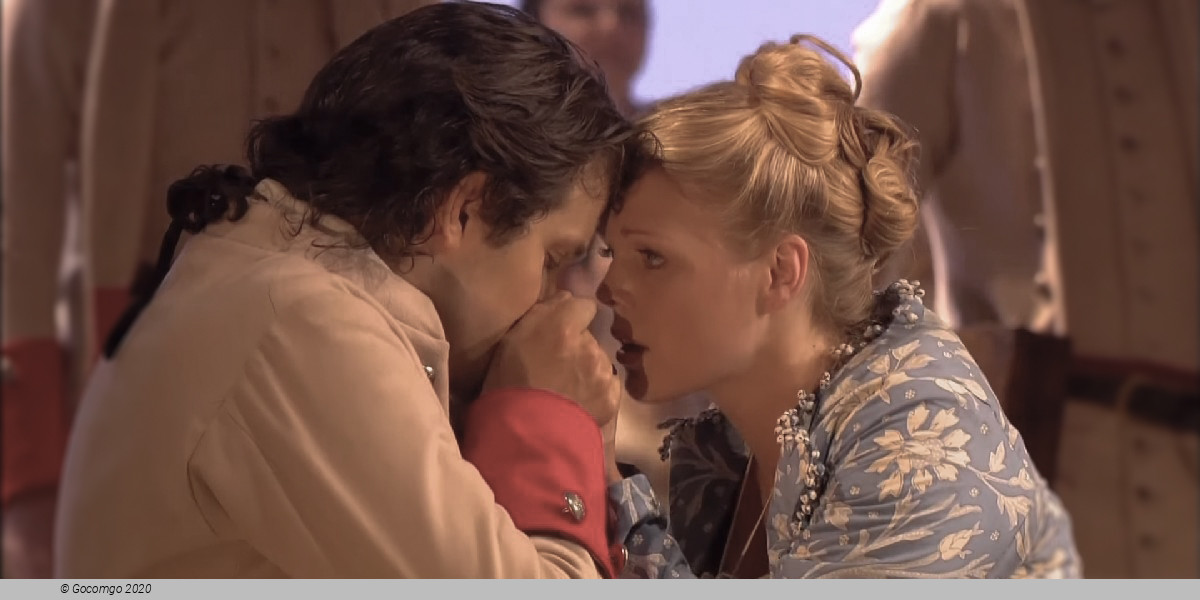
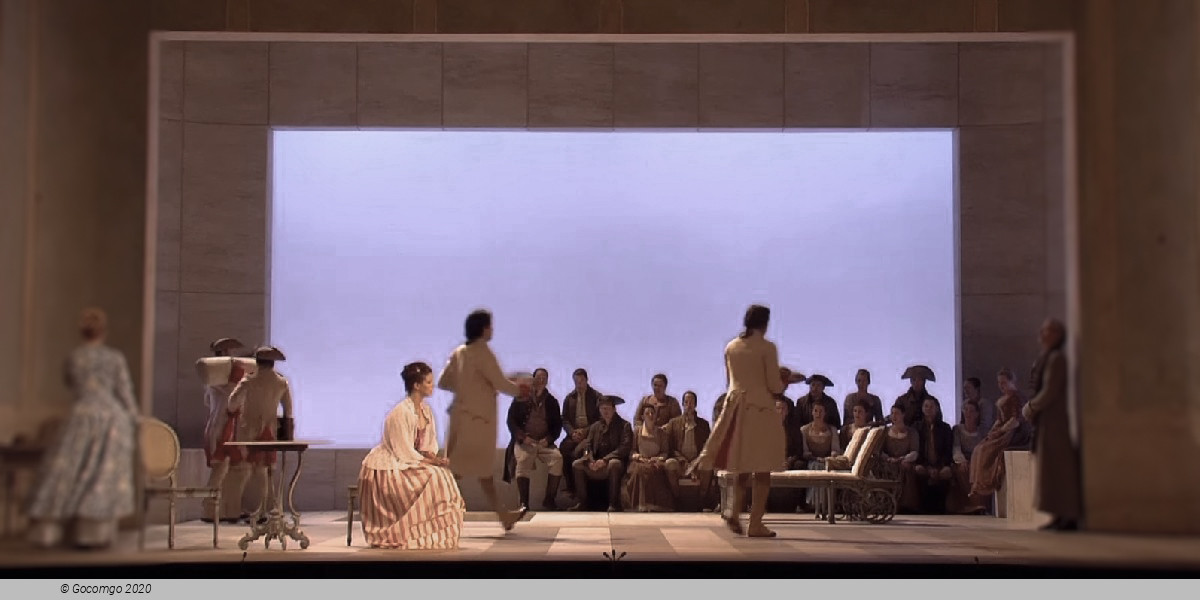
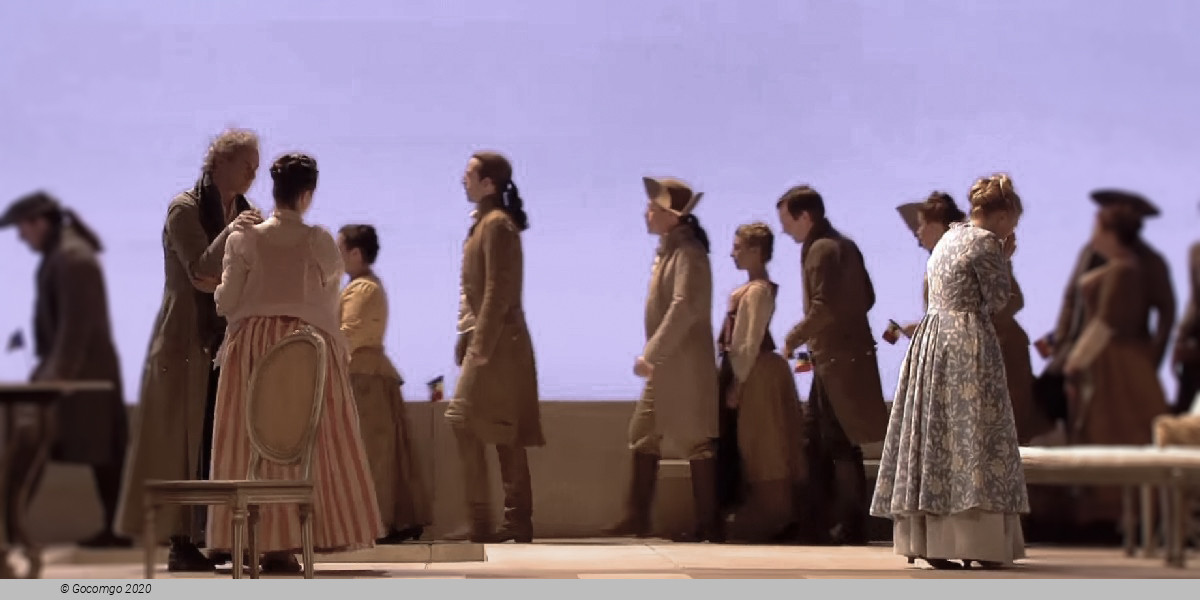
Così fan tutte, ossia La scuola degli amanti (All Women Do It, or The School for Lovers), is an Italian-language opera buffa in two acts by Wolfgang Amadeus Mozart first performed on 26 January 1790 at the Burgtheater in Vienna, Austria. The libretto was written by Lorenzo Da Ponte who also wrote Le nozze di Figaro and Don Giovanni.

Synopsis

Mozart and Da Ponte use the theme of "fiancée swapping", which dates back to the 13th century; notable earlier versions are found in Boccaccio's Decameron and Shakespeare's play Cymbeline. Elements from Shakespeare's The Taming of the Shrew are also present. Furthermore, it incorporates elements of the myth of Procris as found in Ovid's Metamorphoses, vii.

Place: Naples
Time: the 18th century

Act 1
Scene 1: A coffeehouse

In a cafe, Ferrando and Guglielmo (two officers) express certainty that their fiancées (Dorabella and Fiordiligi, respectively) will be eternally faithful. Don Alfonso expresses skepticism and claims that there is no such thing as a faithful woman. He lays a wager with the two officers, claiming he can prove in a day's time that those two, like all women, are fickle. The wager is accepted: the two officers will pretend to have been called off to war; soon thereafter they will return in disguise and each attempt to seduce the other's lover. The scene shifts to the two women, who are praising their men (duet: "Ah guarda sorella"—"Ah look sister"). Alfonso arrives to announce the bad news: the officers have been called off to war. Ferrando and Guglielmo arrive, brokenhearted, and bid farewell (quintet: "Sento, o Dio, che questo piede è restio"—"I feel, oh God, that my foot is reluctant"). As the boat with the men sails off to sea, Alfonso and the sisters wish them safe travel (trio: "Soave sia il vento"—"May the wind be gentle"). Alfonso, left alone, gloatingly predicts that the women (like all women) will prove unfaithful (arioso: "Oh, poverini, per femmina giocare cento zecchini?"—"Oh, poor little ones, to wager 100 sequins on a woman").

Scene 2: A room in the sisters' home

Despina, the maid, arrives and asks what is wrong. Dorabella bemoans the torment of having been left alone (aria: "Smanie implacabili"—"Torments implacable"). Despina mocks the sisters, advising them to take new lovers while their betrotheds are away (aria: "In uomini, in soldati, sperare fedeltà?"—"In men, in soldiers, you hope for faithfulness?"). After they leave, Alfonso arrives. He fears Despina will recognize the men through their disguises, so he bribes her into helping him to win the bet. The two men then arrive, dressed as mustachioed Albanians (sextet: "Alla bella Despinetta"—"Meet the pretty Despinetta"). The sisters enter and are alarmed by the presence of strange men in their home. The "Albanians" tell the sisters that they were led by love to them (the sisters). However, the sisters refuse to give in. Fiordiligi asks the "Albanians" to leave and pledges to remain faithful (aria: "Come scoglio"—"Like a rock"). The "Albanians" continue the attempt to win over the sisters' hearts, Guglielmo going so far as to point out all of his manly attributes (aria: "Non siate ritrosi"—"Don't be shy"), but to no avail. Ferrando, left alone and sensing victory, praises his love (aria: "Un'aura amorosa"—"A loving breath").

Scene 3: A garden

The sisters are still pining. Despina has asked Don Alfonso to let her take over the seduction plan. Suddenly, the "Albanians" burst in the scene and threaten to poison themselves if they are not allowed the chance to woo the sisters. As Alfonso tries to calm them, they drink the "poison" and pretend to pass out. Soon thereafter, a "doctor" (Despina in disguise) arrives on the scene and, using magnet therapy, is able to revive the "Albanians". The men, pretending to hallucinate, demand a kiss from Dorabella and Fiordiligi (whom the "Albanians" call goddesses) who stand before them. The sisters refuse, even as Alfonso and the doctor (Despina) urge them to acquiesce.

Act 2
Scene 1: The sisters' bedroom

Despina urges them to succumb to the "Albanians"' overtures (aria: "Una donna a quindici anni"—"A fifteen year old woman"). After she leaves, Dorabella confesses to Fiordiligi that she is tempted, and the two agree that a mere flirtation will do no harm and will help them pass the time while they wait for their lovers to return (duet: "Prenderò quel brunettino"—"I will take the brunette one").

Scene 2: The garden

Dorabella and the disguised Guglielmo pair off, as do the other two. The conversation is haltingly uncomfortable, and Ferrando departs with Fiordiligi. Now alone, Guglielmo attempts to woo Dorabella. She does not resist strongly, and soon she has given him a medallion (with Ferrando's portrait inside) in exchange for a heart-shaped locket (duet: "Il core vi dono"—"I give you my heart"). Ferrando is less successful with Fiordiligi (Ferrando's aria: "Ah, lo veggio"—"Ah, I see it" and Fiordiligi's aria: "Per pietà, ben mio, perdona"—"Please, my beloved, forgive"), so he is enraged when he later finds out from Guglielmo that the medallion with his portrait has been so quickly given away to a new lover. Guglielmo at first sympathises with Ferrando (aria: "Donne mie, la fate a tanti"—"My ladies, you do it to so many"), but then gloats, because his betrothed is faithful.

Scene 3: The sisters' room

Dorabella admits her indiscretion to Fiordiligi ("È amore un ladroncello"—"Love is a little thief"). Fiordiligi, upset by this development, decides to go to the army and find her betrothed. Before she can leave, though, Ferrando arrives and continues his attempted seduction. Fiordiligi finally succumbs and falls into his arms (duet: "Fra gli amplessi"—"In the embraces"). Guglielmo is distraught while Ferrando turns Guglielmo's earlier gloating back on him. Alfonso, winner of the wager, tells the men to forgive their fiancées. After all: "Così fan tutte"—"All women are like that".

Scene 4:

The scene begins as a double wedding for the sisters and their "Albanian" grooms. Despina, in disguise as a notary, presents the marriage contract, which all sign. Directly thereafter, military music is heard in the distance, indicating the return of the officers. Alfonso confirms the sisters' fears: Ferrando and Guglielmo are on their way to the house. The "Albanians" hurry off to hide (actually, to change out of their disguises). They return as the officers, professing their love. Alfonso drops the marriage contract in front of the officers, and, when they read it, they become enraged. They then depart and return moments later, half in Albanian disguise, half as officers. Despina has been revealed to be the notary, and the sisters realize they have been duped. All is ultimately forgiven, as the entire group praises the ability to accept life's unavoidable good times and bad times.

Venue Info

Elbphilharmonie - Hamburg
Location   Platz der Deutschen Einheit 4

The Elbphilharmonie (Elbe Philharmonic Hall) is a concert hall in the HafenCity quarter of Hamburg, Germany, on the Grasbrook peninsula of the Elbe River. It is one of the largest and acoustically most advanced concert halls in the world. It is popularly nicknamed Elphi.

The new glassy construction resembles a hoisted sail, water wave, iceberg or quartz crystal resting on top of an old brick warehouse (Kaispeicher A, built in 1963) near the historical Speicherstadt. The project is the result of a private initiative by the architect and real estate developer Alexander Gérard and his wife Jana Marko, an art historian, who commissioned the original design by the Swiss architecture firm Herzog & de Meuron. and developed and promoted the project (since 2003 in cooperation with the Hamburg-based real estate developer and investor Dieter Becken) for 3,5 years until the City of Hamburg decided to develop the project by itself. It is the key project of the new Hafencity development and the tallest inhabited building in Hamburg, with a final height of 108 metres (354 ft).

The Elbphilharmonie was officially inaugurated with concerts of the NDR Elbphilharmonie Orchestra and a light show on 11 January 2017.

History

On 2 April 2007, the foundation stone was laid in the warehouse Kaispeicher A, in the presence of then First Mayor of Hamburg Ole von Beust, Hochtief Construction AG CEO Henner Mahlstedt, the project coordinator for the City of Hamburg Hartmut Wegener (dismissed in 2008 for mismanagement of the project), Hamburg Minister of Culture Karin von Welck and architect Pierre de Meuron.

In 2007, the construction was scheduled to be finished by 2010 with an estimated cost of €241 million. In November 2008, after the original contract was amended, the costs for the project were estimated at €450 million. In August 2012, the costs were re-estimated to be over €500 million, which should also cover the increased cost for a strengthened roof. Construction work officially ended on 31 October 2016 at a cost of €866 million.

The first public test concert at the Elbphilharmonie was held on 25 November 2016. The official opening concert took place on 11 January 2017 with a performance by the NDR Elbphilharmonie Orchestra under direction of Thomas Hengelbrock. The first musical selection was "Pan" from Benjamin Britten's Six Metamorphoses after Ovid.

Building

The building is designed as a cultural and residential complex. The original 1966 brick façade of the Kaispeicher A, formerly a warehouse, was retained at the base of the building. On top of this a footprint-matching superstructure rests on its own foundation exhibiting a glassy exterior and a wavy roof line. About one thousand glass windows are curved. The building has 26 floors with the first eight floors within the brick façade. It reaches its highest point with 108 meters at the western side. The footprint of the building measures 120,000 m2. A curved escalator from the main entrance at the east side connects the ground floor with an observation deck, the Plaza, at the 8th floor, the top of the brick section. The Plaza is accessible by the public. It offers a view of Hamburg and the Elbe. From the Plaza the foyer of the concert hall can be reached.

The Elbphilharmonie has three concert venues. The Great Concert Hall can accommodate 2,100 visitors whereby the performers are in the center of the hall surrounded by the audience in the vineyard style arrangement. The acoustics were designed by Yasuhisa Toyota who installed about 10,000 individually microshaped drywall plates to disperse sound waves. The Great Concert Hall contains a pipe organ with 69 registers built by Klais Orgelbau. The Recital Hall is intended for the performance of recitals, chamber music and jazz concerts; it can hold an audience of 550 people. In addition, there is the Kaistudio that allows for 170 visitors and is intended to serve educational activities. The consultant for the scenography of the concert hall was Ducks Scéno.

The easternmost part of the building is rented by Westin as the Westin Hamburg Hotel that opened on 4 November 2016. The hotel offers 244 rooms between the 9th and 20th floors. The lobby in the 8th floor can be accessed from the Plaza. The upper floors west of the concert hall accommodate 45 luxury apartments. The complex also houses conference rooms, restaurants, bars, and a spa. A parking garage for 433 cars is part of the building complex as well.

Important Info
Type: Classical Concert
City: Hamburg, Germany
Starts at: 20:00
Acts: 2
Duration:
Sung in: Italian
Top of page