
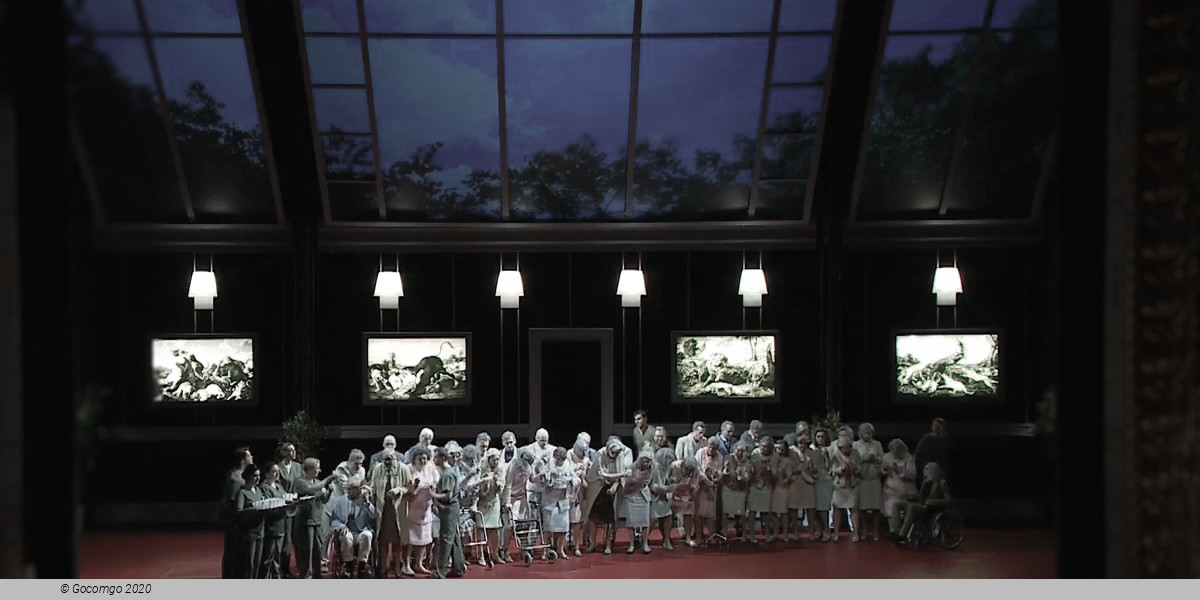
Dutch National Opera: Pagliacci / Cavalleria rusticana Tickets | Event Dates & Schedule | GoComGo.com

Pagliacci / Cavalleria rusticana Tickets

Dutch National Opera, Amsterdam, Netherlands
All photos (7)
1 / 7
Available Dates: 5 - 23 Sep, 2026 (7 events)
Important Info
Type: Opera
City: Amsterdam, Netherlands
Duration: 3h with 1 interval
Acts: 3
Intervals: 1
Sung in: Italian

E-tickets: Print at home or at the box office of the event if so specified. You will find more information in your booking confirmation email.

You can only select the category, and not the exact seats.
If you order 2 or 3 tickets: your seats will be next to each other.
If you order 4 or more tickets: your seats will be next to each other, or, if this is not possible, we will provide a combination of groups of seats (at least in pairs, for example 2+2 or 2+3).

Cast
Performers
Choose the date to see the peformers
Overview

Pagliacci / Cavalleria rusticana at Teatro Colón presents two iconic verismo operas in a powerful double bill, exploring passion, jealousy, honor, and betrayal through intense drama, vivid characters, and richly expressive music, performed on the grand stage of one of the world’s great opera houses.

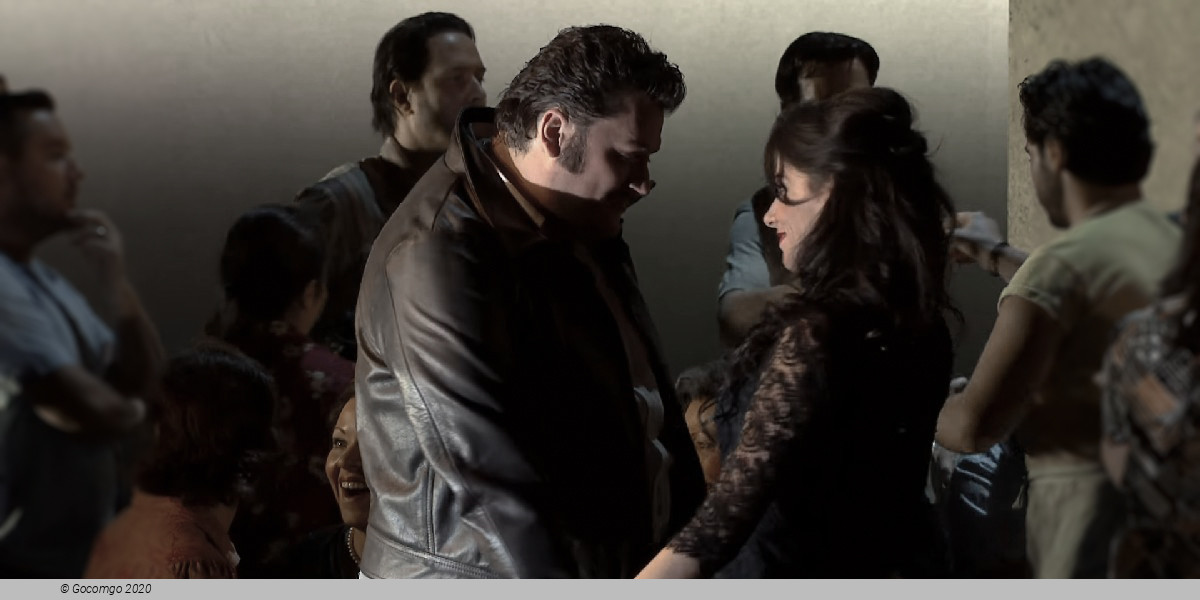
The double bill Pagliacci by Ruggero Leoncavallo and Cavalleria rusticana by Pietro Mascagni is a cornerstone of the Italian verismo tradition, presented at Teatro Colón with dramatic intensity and musical grandeur. Performed together, these two one-act operas offer a compelling exploration of raw human emotion, where love, jealousy, honor, and revenge unfold with relentless force.

Cavalleria rusticana

Set in a rural Sicilian village on Easter morning, Cavalleria rusticana portrays a tightly woven community governed by tradition and honor. The opera centers on a love triangle between Turiddu, Santuzza, and Lola, whose relationships spiral into betrayal and violence. Mascagni’s score is intensely lyrical and emotionally direct, culminating in the famous Intermezzo, a moment of haunting calm before tragedy strikes. The opera exposes the destructive power of passion within a rigid social code, ending in an inevitable act of vengeance.

Pagliacci

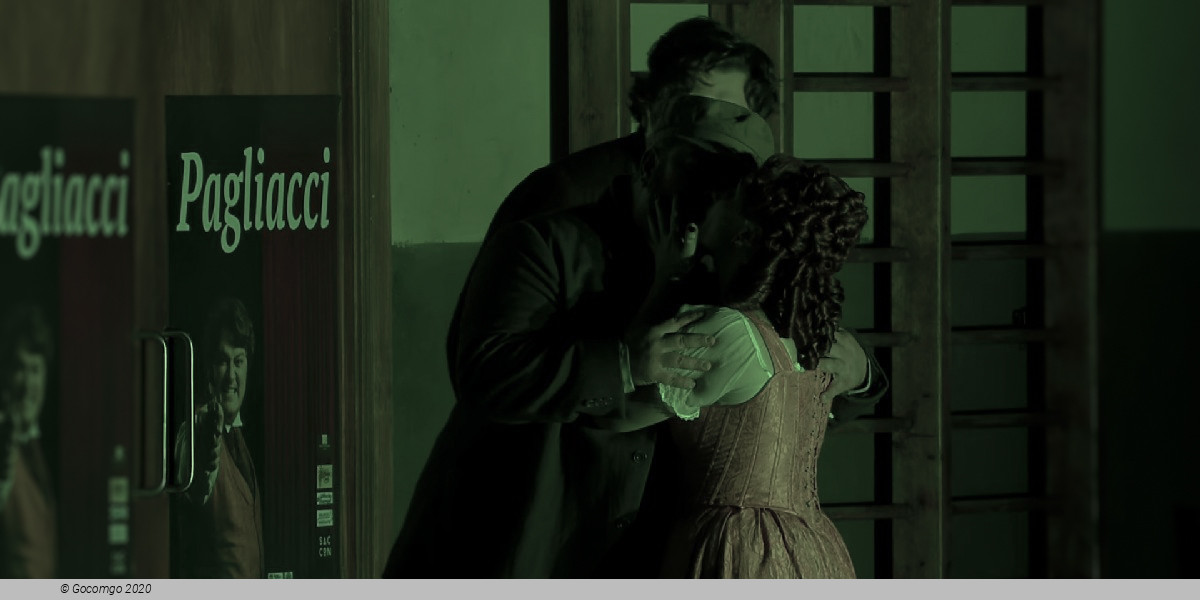
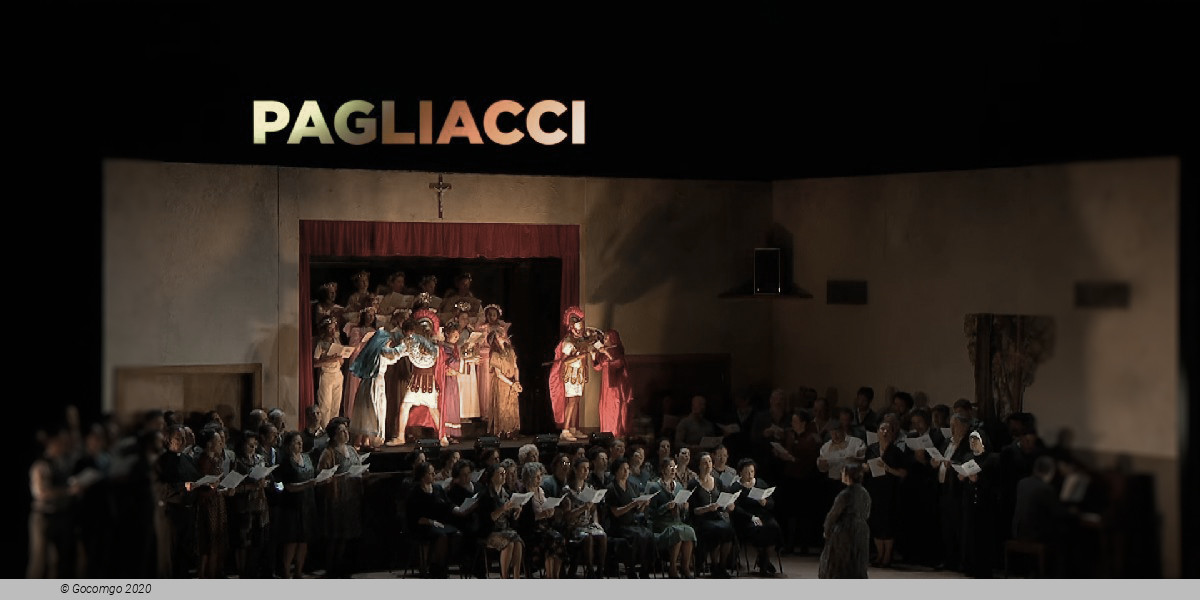
Pagliacci moves from village ritual to theatrical illusion, telling the story of a traveling troupe of actors whose staged comedy mirrors their real-life drama. Canio, the troupe’s leader, discovers his wife Nedda’s infidelity, and the boundaries between performance and reality dissolve. The opera reaches its emotional peak in Canio’s aria “Vesti la giubba,” where laughter masks despair. As the play-within-a-play unfolds, jealousy erupts into violence, and the opera concludes with a shocking act of murder onstage.

The Teatro Colón Experience

At Teatro Colón, this double bill is distinguished by its powerful orchestral sound, expressive vocal performances, and immersive theatrical staging. The theater’s acoustics allow the intensity of the verismo style to emerge with striking clarity, while the production emphasizes psychological realism and dramatic tension. Choral scenes bring the weight of community presence, contrasting with the intimate anguish of the protagonists.

Together, Pagliacci and Cavalleria rusticana form a unified dramatic statement: two tragic stories of ordinary people driven to extreme actions by uncontrollable emotions. At Teatro Colón, the pairing stands as a gripping evening of opera, combining musical brilliance with uncompromising human drama.

History
Premiere of this production: 21 May 1892, Teatro Dal Verme, Milan

Pagliacci is an Italian opera in a prologue and two acts, with music and libretto by Ruggero Leoncavallo. It is the only Leoncavallo opera that is still widely performed. Opera companies have frequently staged Pagliacci with Cavalleria rusticana by Mascagni, a double bill known colloquially as 'Cav and Pag'.

Synopsis

Place: Calabria, near Montalto, on the Feast of the Assumption
Time: between 1865 and 1870

Prologue

During the overture, the curtain rises. From behind a second curtain, Tonio, dressed as his commedia character Taddeo, addresses the audience (Si può?... Si può?... Signore! Signori! ... Un nido di memorie). He reminds the audience that actors have feelings too, and that the show is about real people.

Act 1

At three o'clock in the afternoon, the commedia troupe enters the village to the cheering of the villagers. Canio describes the night's performance: the troubles of Pagliaccio. He says the play will begin at "ventitré ore", an agricultural method of time-keeping that means the play will begin an hour before sunset. As Nedda steps down from the cart, Tonio offers his hand, but Canio pushes him aside and helps her down himself.

The villagers suggest drinking at the tavern. Canio and Beppe accept, but Tonio stays behind. The villagers tease Canio that Tonio is planning an affair with Nedda. Canio warns everyone that while he may act the foolish husband in the play, in real life he will not tolerate other men making advances to Nedda. Shocked, a villager asks if Canio really suspects her. He says no, and sweetly kisses her on the forehead. As the church bells ring vespers, he and Beppe leave for the tavern, leaving Nedda alone.

Nedda is frightened by Canio's vehemence (Qual fiamma avea nel guardo), but the birdsong comforts her (Stridono lassù). Tonio returns and confesses his love for her, but she laughs. Enraged, Tonio grabs Nedda, but she takes a whip, strikes him and drives him off. Silvio, who is Nedda's lover, comes from the tavern, where he has left Canio and Beppe drinking. He asks Nedda to elope with him after the performance and, though she is afraid, she agrees. Tonio, who has been eavesdropping, leaves to inform Canio so that he might catch Silvio and Nedda together. Canio and Tonio return and, as Silvio escapes, Nedda calls after him, "I will always be yours!"

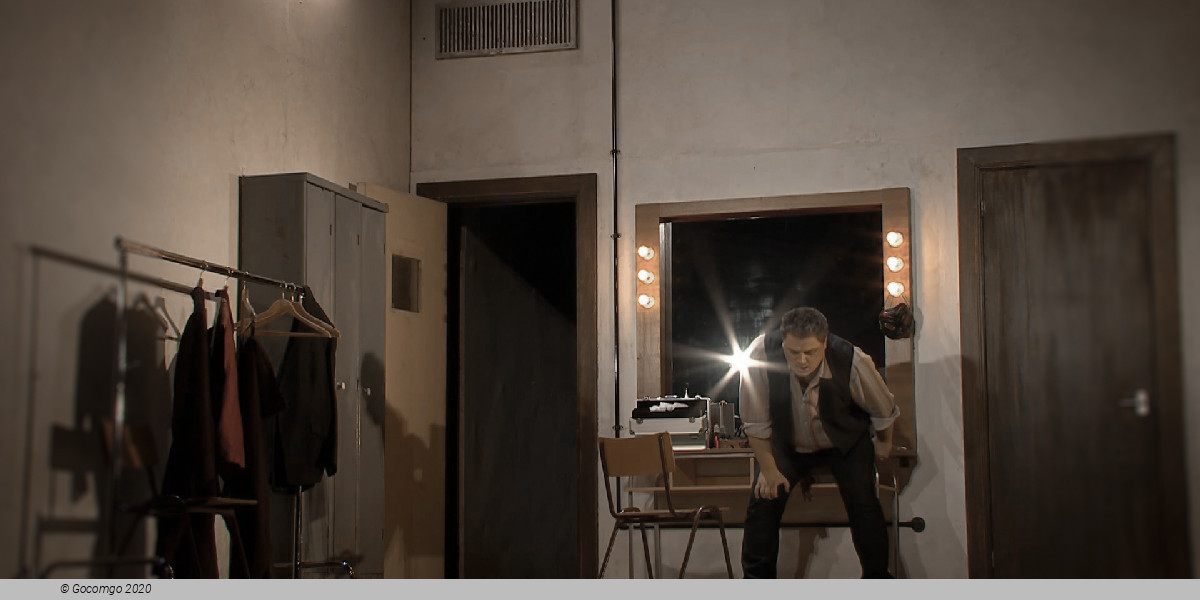
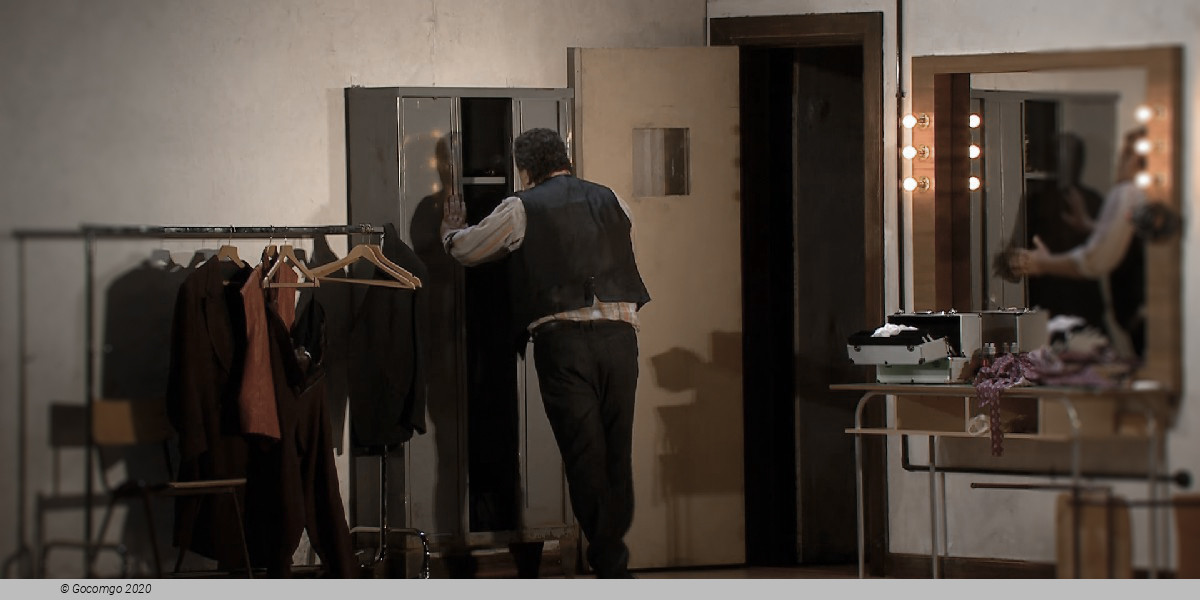
Canio chases Silvio, but does not catch him and does not see his face. He demands that Nedda tell him the name of her lover, but she refuses. He threatens her with a knife, but Beppe disarms him. Beppe insists that they prepare for the performance. Tonio tells Canio that her lover will give himself away at the play. Canio is left alone to put on his costume and prepares to laugh (Vesti la giubba – "Put on the costume").

Act 2

As the crowd arrives, Nedda, costumed as Colombina, collects their money. She whispers a warning to Silvio, and the crowd cheers as the play begins.

Colombina's husband Pagliaccio has gone away until morning, and Taddeo is at the market. She anxiously awaits her lover Arlecchino, who comes to serenade her (O Colombina) from beneath her window. Taddeo returns and confesses his love, but she mocks him. She lets Arlecchino in through the window. He boxes Taddeo's ears and kicks him out of the room, and the audience laughs.

Arlecchino and Colombina dine, and he gives her a sleeping potion to use later. When Pagliaccio returns, Colombina will drug him and elope with Arlecchino. Taddeo bursts in, warning that Pagliaccio is suspicious of his wife and is about to return. As Arlecchino escapes through the window, Colombina tells him, "I will always be yours!"

As Canio (as Pagliaccio) enters, he hears Nedda (as Colombina) and exclaims "Name of God! Those same words!" He tries to continue the play, but loses control and demands to know her lover's name. Nedda, hoping to keep to the performance, calls Canio by his stage name "Pagliaccio," to remind him of the audience's presence. He answers with his arietta: No! Pagliaccio non son! He sings that if his face is pale, it is not from the stage makeup but from the shame she has brought him. The crowd, impressed by his emotional performance, which they do not realize is real, cheers him.

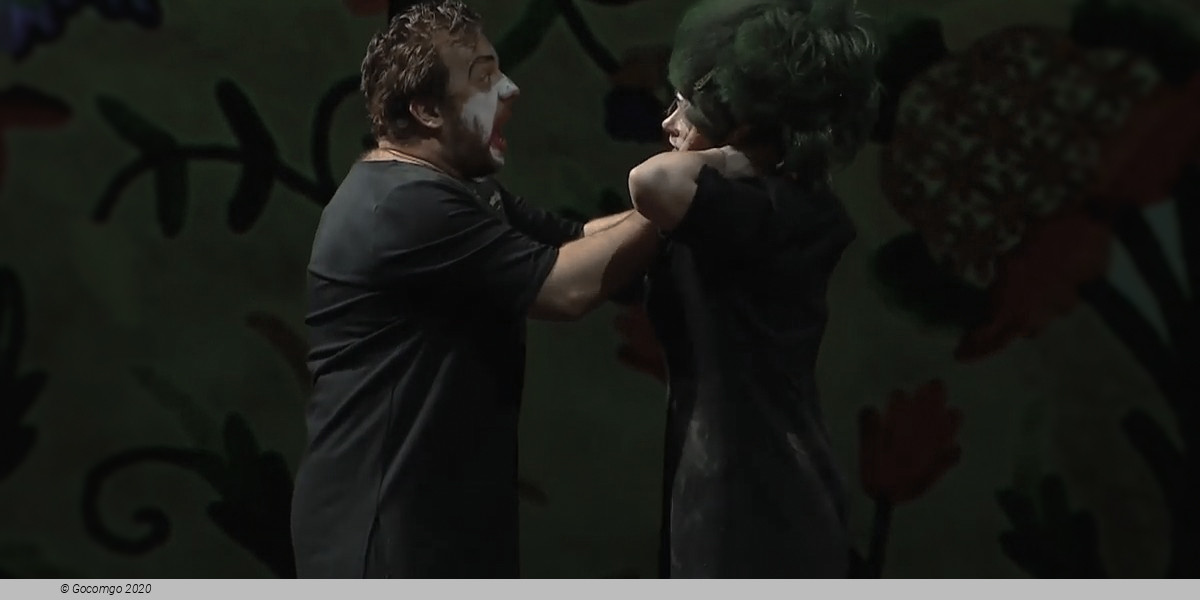
Nedda, trying to continue the play, admits that she has been visited by the innocent Arlecchino. Canio, furious and forgetting the play, demands the name of her lover. Nedda swears she will never tell him, and it becomes apparent that they are not acting. Beppe asks Tonio to intervene, but Tonio refrains and prevents Beppe from halting the action. Silvio begins to fight his way toward the stage. Canio, grabbing a knife from the table, stabs Nedda. As she dies, she calls: "Help! Silvio!" Silvio attacks Canio, but Canio kills Silvio also. The horrified audience then hears the celebrated final line:

La commedia è finita! – "The comedy is finished!"

Venue Info

Dutch National Opera - Amsterdam
Location   Amstel 3

The Dutch National Opera is the largest theatre production house in the Netherlands. Situated in the heart of Amsterdam, the iconic theatre of Dutch National Opera & Ballet offers a magnificent view of the River Amstel and the famous Magere Brug (Skinny Bridge). The various spaces form an inspiring backdrop for a whole range of special events.

Dutch National Opera & Ballet is a young theatre with a long history. The plans for building a new theatre ran parallel to the plans for a new city hall. The first discussions held by the Amsterdam city council about building a new city hall and opera house go back to 1915. At that time, the plans were specifically for an opera house, since ballet was a relatively unknown art form back then.

Ideas for the site of the new city hall and opera house were continually changing, and the idea that both buildings could form a single complex only emerged much later. Sites considered for the new city hall were initially the Dam, followed by the Frederiksplein, and finally the Waterlooplein.

In 1955, the city council commissioned the firm of architects Berghoef and Vegter to draft a design for a city hall on the Waterlooplein. The draft was approved, but in 1964 the council ended the association with the architects, as the final design was nothing like the original plans they had been shown. In 1967, a competition was held for a new design, with the Viennese architect Wilhelm Holzbauer emerging as the winner. Amsterdam's financial problems, however, meant that the plans for the new city hall were put on hold for several years.

DNO has its own choir of sixty singers and technical staff of 260. DNO historically has not had its own resident orchestra, and so various orchestras of the Netherlands, including the Netherlands Philharmonic Orchestra (NPO), the Netherlands Chamber Orchestra (NKO), the Royal Concertgebouw Orchestra, the Rotterdam Philharmonic Orchestra, the Radio Filharmonisch Orkest and the Asko/Schönberg ensemble have provided the orchestral forces for DNO productions.

DNO produces on average eleven productions per year. While most performances are in the Dutch National Opera & Ballet building, the company has also performed in the Stadsschouwburg, at the Carré Theatre, and on the Westergasfabriek industrial site in Amsterdam. For many years, the June production has been organized as part of the Holland Festival and includes the participation of the Royal Concertgebouw Orchestra. DNO has lent its productions to foreign companies, such as the Metropolitan Opera, the Brooklyn Academy of Music, the Lincoln Center Festival in New York, as well as the Adelaide Festival in Australia.

Since 1988, the French-Lebanese theatre director Pierre Audi has been the artistic director of DNO. Audi is scheduled to conclude his DNO tenure in 2018. In April 2017, DNO announced the appointment of Sophie de Lint as the company's next artistic director, effective 1 September 2018.

Hartmut Haenchen was chief conductor from 1986 to 1999, in parallel with holding the title of chief conductor of the NPO. He subsequently held the title of principal guest conductor with DNO. Subsequent chief conductors have been Edo de Waart (1999-2004) and Ingo Metzmacher (2005-2008). In March 2009, DNO announced the appointment of Marc Albrecht as the orchestra's next chief conductor, with the 2011-2012 season, for an initial contract of four years. This return to a single chief conductor at both DNO and the NPO/NKO allows for the NPO to become the principal opera orchestra for DNO. Albrecht is scheduled to stand down as chief conductor of DNO at the end of the 2019-2020 season.

Important Info
Type: Opera
City: Amsterdam, Netherlands
Duration: 3h with 1 interval
Acts: 3
Intervals: 1
Sung in: Italian

E-tickets: Print at home or at the box office of the event if so specified. You will find more information in your booking confirmation email.

You can only select the category, and not the exact seats.
If you order 2 or 3 tickets: your seats will be next to each other.
If you order 4 or more tickets: your seats will be next to each other, or, if this is not possible, we will provide a combination of groups of seats (at least in pairs, for example 2+2 or 2+3).

From
$ 150
Top of page