
Dutch National Opera 2 February 2020 - Nabucco | GoComGo.com
All photos (5)
Select date and time
2 PM
Request for Tickets
Important Info
Type: Opera
City: Amsterdam, Netherlands
Starts at: 14:00
Acts: 4
Intervals: 1
Duration: 2h 40min
Sung in: Italian
Titles in: Dutch,English

E-tickets: Print at home or at the box office of the event if so specified. You will find more information in your booking confirmation email.

You can only select the category, and not the exact seats.
If you order 2 or 3 tickets: your seats will be next to each other.
If you order 4 or more tickets: your seats will be next to each other, or, if this is not possible, we will provide a combination of groups of seats (at least in pairs, for example 2+2 or 2+3).

Overview

Nabucco is a biblical drama in both narrative and scale and was the young Verdi’s breakthrough composition. Perhaps best known for the beautiful chorus of the slaves, this is the first time this beloved opera is being mounted at Dutch National Opera & Ballet.

SLAVE CHORUS

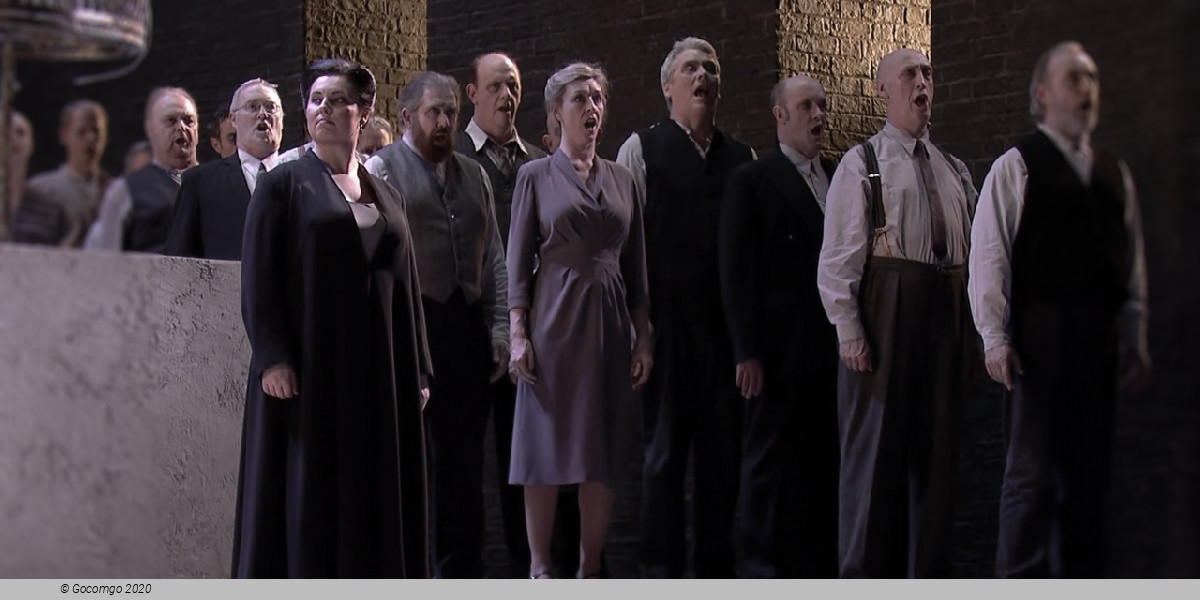
‘Va pensiero’, the slave chorus in which the Israelites lament the loss of their homeland and Babylonian exile, is a song almost everyone knows. In Verdi’s time this was a sentiment to which fellow Italians could relate. To this day, the beloved melody from Nabucco is Italy’s unofficial second national anthem.

PLOT OF NABUCCO

Nabucco tells the story of the persecution of the Jews by the king of Babylon. In a fit of madness, Nabucco commands that he be worshipped as God, and is instantly struck down by lightning. His power-hungry eldest daughter Abigaille seizes the throne. But just when all appears lost, Nabucco regains his sanity.

VERDI’S PIONEERING STYLE

The prominence of the chorus in Nabucco, spirited rhythms and perfect dramatic timing are all typical of Verdi’s pioneering style.

TEAM AND CAST OF NABUCCO

Having conducted Il trovatore and Il barbiere di Siviglia at DNO, Maurizio Benini returns once more to lead the Residentie OrkestAndreas Homoki is back for his sixth time at DNO, after directing Carmen (1999), Capriccio (2000), Lulu (2002) and Die Frau ohne Schatten (2008). Nabucco and Zaccaria are formidable baritone and bass roles sung by George Petean and Dmitry Belosselskiy, respectively. Soprano Anna Pirozzi brings her powerful low range and acting talent to the rewarding role of Abigaille. All three are appearing at DNO for the first time.

LEADING ROLE FOR THE CHORUS OF DUTCH NATIONAL OPERA

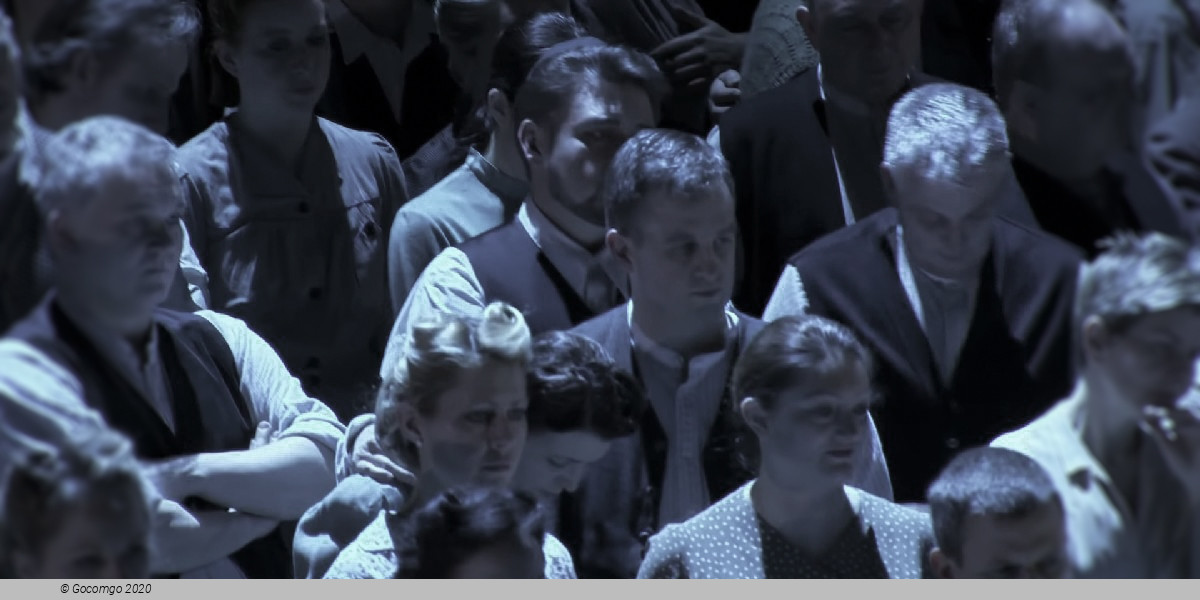
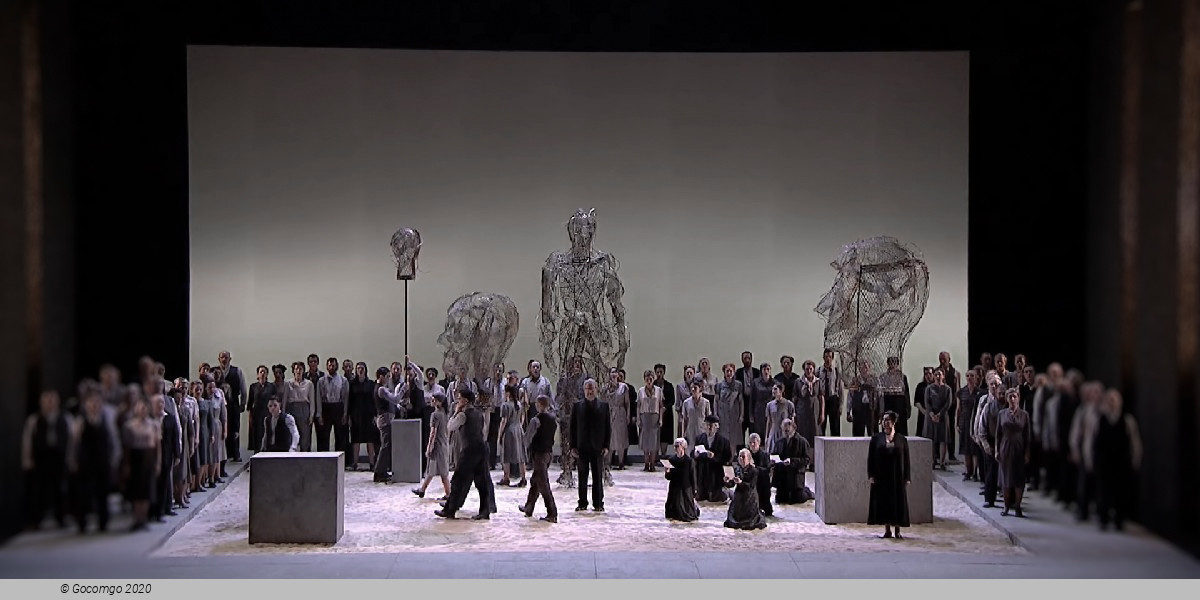
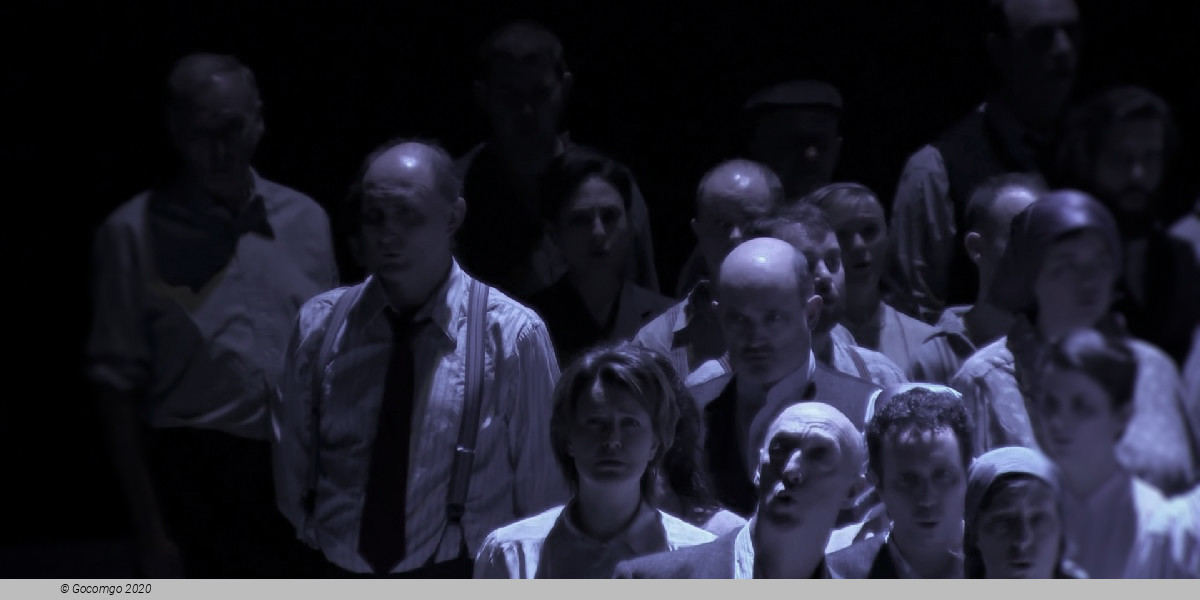
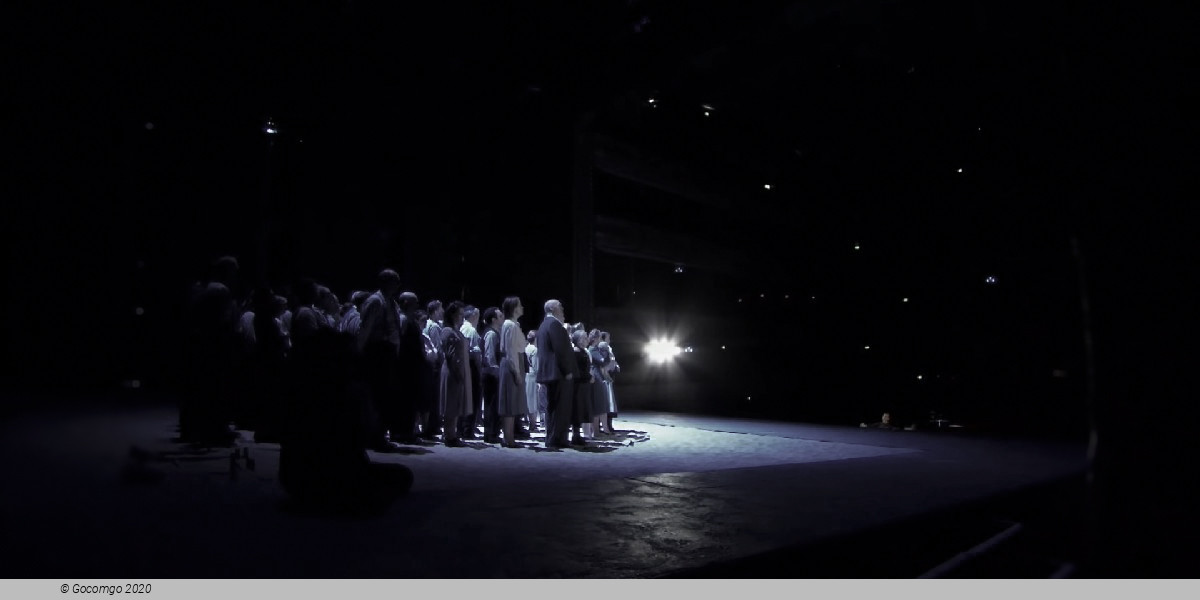
The chorus also features prominently in Nabucco and is one of the opera’s main protagonists.

The Chorus of Dutch National Opera pairs unsurpassed vocal quality with a wealth of stage experience. Among its many highlights are Boris GodunovLes Troyens, Parsifal, Guillaume TellGurre-LiederLa forza del destinoDas Floss der Medusa and Oedipe. Ching-Lien Wu is the artistic director. The DNO Chorus was named the Best Opera Chorus of 2016 by Opernwelt magazine.

History
Premiere of this production: 09 March 1842, Teatro alla Scala, Milan

Nabucco (short for Nabucodonosor) is an Italian-language opera in four acts composed in 1841 by Giuseppe Verdi to an Italian libretto by Temistocle Solera. The libretto is based on biblical books of Jeremiah and Daniel and the 1836 play by Auguste Anicet-Bourgeois and Francis Cornu, although Antonio Cortese's ballet adaptation of the play (with its necessary simplifications), given at La Scala in 1836, was a more important source for Solera than the play itself.

Synopsis

Time: 587 BC
Place: Jerusalem and Babylon

Act 1: Jerusalem

'Thus saith the Lord, Behold, I shall deliver this city into the hand of the King of Babylon, and he will burn it with fire' (Jeremiah 21:10)
Interior of the Temple of Solomon

The Israelites pray as the Babylonian army advances on their city ("Gli arredi festivi giù cadano infranti" / "Throw down and destroy all festive decorations"). The High Priest Zaccaria tells the people not to despair but to trust in God ("D'Egitto là su i lidi" / "On the shores of Egypt He saved the life of Moses"). The presence of a hostage, Fenena, younger daughter of Nabucco, King of Babylon, may yet secure peace ("Come notte a sol fulgente" / "Like darkness before the sun"). Zaccaria entrusts Fenena to Ismaele, nephew of the King of Jerusalem and a former envoy to Babylon. Left alone, Fenena and Ismaele recall how they fell in love when Ismaele was held prisoner by the Babylonians, and how Fenena helped him to escape to Israel. Nabucco's supposed elder daughter, Abigaille, enters the temple with Babylonian soldiers in disguise. She, too, loves Ismaele. Discovering the lovers, she threatens Ismaele: if he does not give up Fenena, Abigaille will accuse her of treason. If Ismaele returns Abigaille's love, however, Abigaille will petition Nabucco on the Israelites' behalf. Ismaele tells Abigaille that he cannot love her and she vows revenge. Nabucco enters with his warriors ("Viva Nabucco" / "Long live Nabucco"). Zaccaria defies him, threatening to kill Fenena if Nabucco attacks the temple. Ismaele intervenes to save Fenena, which removes any impediment from Nabucco destroying the temple. He orders this, while Zaccaria and the Israelites curse Ismaele as a traitor.

Act 2: The Impious One

'Behold, the whirlwind of the Lord goeth forth, it shall fall upon the head of the wicked' (Jeremiah 30:23)
Scene 1: Royal apartments in Babylon

Nabucco has appointed Fenena regent and guardian of the Israelite prisoners, while he continues the battle against the Israelites. Abigaille has discovered a document that proves she is not Nabucco's real daughter, but the daughter of slaves. She reflects bitterly on Nabucco's refusal to allow her to play a role in the war with the Israelites and recalls past happiness ("Anch'io dischiuso un giorno" / "I too once opened my heart to happiness"). The High Priest of Bel informs Abigaille that Fenena has released the Israelite captives. He plans for Abigaille to become ruler of Babylon, and with this intention has spread the rumour that Nabucco has died in battle. Abigaille determines to seize the throne ("Salgo già del trono aurato" / "I already ascend the golden throne").

Scene 2: A room in the palace

Zaccaria reads over the Tablets of Law ("Vieni, o Levita" / "Come, oh Levite!"), then goes to summon Fenena. A group of Levites accuse Ismaele of treachery. Zaccaria returns with Fenena and his sister Anna. Anna tells the Levites that Fenena has converted to Judaism, and urges them to forgive Ismaele. Abdallo, a soldier, announces the death of Nabucco and warns of the rebellion instigated by Abigaille. Abigaille enters with the High Priest of Bel and demands the crown from Fenena. Unexpectedly, Nabucco himself enters; pushing through the crowd, he seizes the crown and declares himself not only king of the Babylonians but also their god. The high priest Zaccaria curses him and warns of divine vengeance; an incensed Nabucco in turn orders the death of the Israelites. Fenena reveals to him that she has embraced the Jewish religion and will share the Israelites' fate. Nabucco is furious and repeats his conviction that he is now divine ("Non son più re, son dio" / "I am no longer King! I am God!"). There is a crash of thunder and Nabucco promptly loses his senses. The crown falls from his head and is picked up by Abigaille, who pronounces herself ruler of the Babylonians.

Act 3: The Prophecy

'Therefore the wild beasts of the desert with the wild beasts of the islands shall dwell there, and the owls shall dwell therein'. (Jeremiah 50:39)
Scene 1: The Hanging Gardens of Babylon

Abigaille is now Queen of Babylon. The High Priest of Bel presents her with the death warrant for the Israelites, as well as for Fenena. Nabucco, still insane, tries to reclaim the throne without success. Though his consent to the death warrant is no longer necessary, Abigaille tricks him into signing it. When Nabucco learns that he has consigned his (true) daughter to death, he is overcome with grief and anger. He tells Abigaille that he is not in fact her father and searches for the document evidencing her true origins as a slave. Abigaille mocks him, produces the document and tears it up. Realizing his powerlessness, Nabucco pleads for Fenena's life ("Oh di qual onta aggravasi questo mio crin canuto" / "Oh, what shame must my old head suffer"). Abigaille is unmoved and orders Nabucco to leave her.

Scene 2: The banks of the River Euphrates

The Israelites long for their homeland ("Va, pensiero, sull'ali dorate" / "Fly, thought, on golden wings"). The high priest Zaccaria once again exhorts them to have faith: God will destroy Babylon. The Israelites are inspired by his words.

Act 4: The Broken Idol

'Bel is confounded, Merodach is broken to pieces; her idols are confounded, her images are broken in pieces.' (Jeremiah 50:2)
Scene 1: The royal apartments, Babylon

Nabucco awakens, still confused and raving. He sees Fenena in chains being taken to her death. In despair, he prays to the God of the Hebrews. He asks for forgiveness, and promises to rebuild the temple in Jerusalem and convert to Judaism if his prayers are answered ("Dio di Giuda" / "God of Judah!"). Miraculously, his strength and reason are immediately restored. Abdallo and loyal soldiers enter to release him. Nabucco resolves to rescue Fenena and the Israelites as well as to punish the traitors.

Scene 2: The Hanging Gardens of Babylon

Fenena and the Israelite prisoners are led in to be sacrificed ("Va! La palma del martirio" / "Go, win the palm of martyrdom"). Fenena serenely prepares for death. Nabucco rushes in with Abdallo and other soldiers. He declares that he will rebuild the Temple of Jerusalem and worship the God of the Israelites, ordering the destruction of the idol of Bel. At his word, the idol falls to the ground of its own accord and shatters into pieces. Nabucco tells the Israelites that they are now free and all join in praise of Jehovah. Abigaille enters, supported by soldiers. She has poisoned herself. She begs forgiveness of Fenena, prays for God's mercy and dies. Zaccaria proclaims Nabucco the servant of God and king of kings.

Venue Info

Dutch National Opera - Amsterdam
Location   Amstel 3

The Dutch National Opera is the largest theatre production house in the Netherlands. Situated in the heart of Amsterdam, the iconic theatre of Dutch National Opera & Ballet offers a magnificent view of the River Amstel and the famous Magere Brug (Skinny Bridge). The various spaces form an inspiring backdrop for a whole range of special events.

Dutch National Opera & Ballet is a young theatre with a long history. The plans for building a new theatre ran parallel to the plans for a new city hall. The first discussions held by the Amsterdam city council about building a new city hall and opera house go back to 1915. At that time, the plans were specifically for an opera house, since ballet was a relatively unknown art form back then.

Ideas for the site of the new city hall and opera house were continually changing, and the idea that both buildings could form a single complex only emerged much later. Sites considered for the new city hall were initially the Dam, followed by the Frederiksplein, and finally the Waterlooplein.

In 1955, the city council commissioned the firm of architects Berghoef and Vegter to draft a design for a city hall on the Waterlooplein. The draft was approved, but in 1964 the council ended the association with the architects, as the final design was nothing like the original plans they had been shown. In 1967, a competition was held for a new design, with the Viennese architect Wilhelm Holzbauer emerging as the winner. Amsterdam's financial problems, however, meant that the plans for the new city hall were put on hold for several years.

DNO has its own choir of sixty singers and technical staff of 260. DNO historically has not had its own resident orchestra, and so various orchestras of the Netherlands, including the Netherlands Philharmonic Orchestra (NPO), the Netherlands Chamber Orchestra (NKO), the Royal Concertgebouw Orchestra, the Rotterdam Philharmonic Orchestra, the Radio Filharmonisch Orkest and the Asko/Schönberg ensemble have provided the orchestral forces for DNO productions.

DNO produces on average eleven productions per year. While most performances are in the Dutch National Opera & Ballet building, the company has also performed in the Stadsschouwburg, at the Carré Theatre, and on the Westergasfabriek industrial site in Amsterdam. For many years, the June production has been organized as part of the Holland Festival and includes the participation of the Royal Concertgebouw Orchestra. DNO has lent its productions to foreign companies, such as the Metropolitan Opera, the Brooklyn Academy of Music, the Lincoln Center Festival in New York, as well as the Adelaide Festival in Australia.

Since 1988, the French-Lebanese theatre director Pierre Audi has been the artistic director of DNO. Audi is scheduled to conclude his DNO tenure in 2018. In April 2017, DNO announced the appointment of Sophie de Lint as the company's next artistic director, effective 1 September 2018.

Hartmut Haenchen was chief conductor from 1986 to 1999, in parallel with holding the title of chief conductor of the NPO. He subsequently held the title of principal guest conductor with DNO. Subsequent chief conductors have been Edo de Waart (1999-2004) and Ingo Metzmacher (2005-2008). In March 2009, DNO announced the appointment of Marc Albrecht as the orchestra's next chief conductor, with the 2011-2012 season, for an initial contract of four years. This return to a single chief conductor at both DNO and the NPO/NKO allows for the NPO to become the principal opera orchestra for DNO. Albrecht is scheduled to stand down as chief conductor of DNO at the end of the 2019-2020 season.

Important Info
Type: Opera
City: Amsterdam, Netherlands
Starts at: 14:00
Acts: 4
Intervals: 1
Duration: 2h 40min
Sung in: Italian
Titles in: Dutch,English
Top of page