
Dutch National Opera 10 December 2019 - La Cenerentola | GoComGo.com

La Cenerentola

Dutch National Opera, Amsterdam, Netherlands
All photos (6)
Select date and time
8 PM
Request for Tickets
Important Info
Type: Opera
City: Amsterdam, Netherlands
Starts at: 20:00
Acts: 2
Intervals: 1
Duration: 3h 5min
Sung in: Italian
Titles in: Dutch,English

E-tickets: Print at home or at the box office of the event if so specified. You will find more information in your booking confirmation email.

You can only select the category, and not the exact seats.
If you order 2 or 3 tickets: your seats will be next to each other.
If you order 4 or more tickets: your seats will be next to each other, or, if this is not possible, we will provide a combination of groups of seats (at least in pairs, for example 2+2 or 2+3).

Overview

In its first-ever staging at Dutch National Opera & Ballet, the exuberant fairy tale opera La Cenerentola (Cinderella) promises to be a fun-filled and unforgettable December performance to enchant the whole family. Special children’s ticket prices apply for La Cenerentola!


CINDERELLA

True love
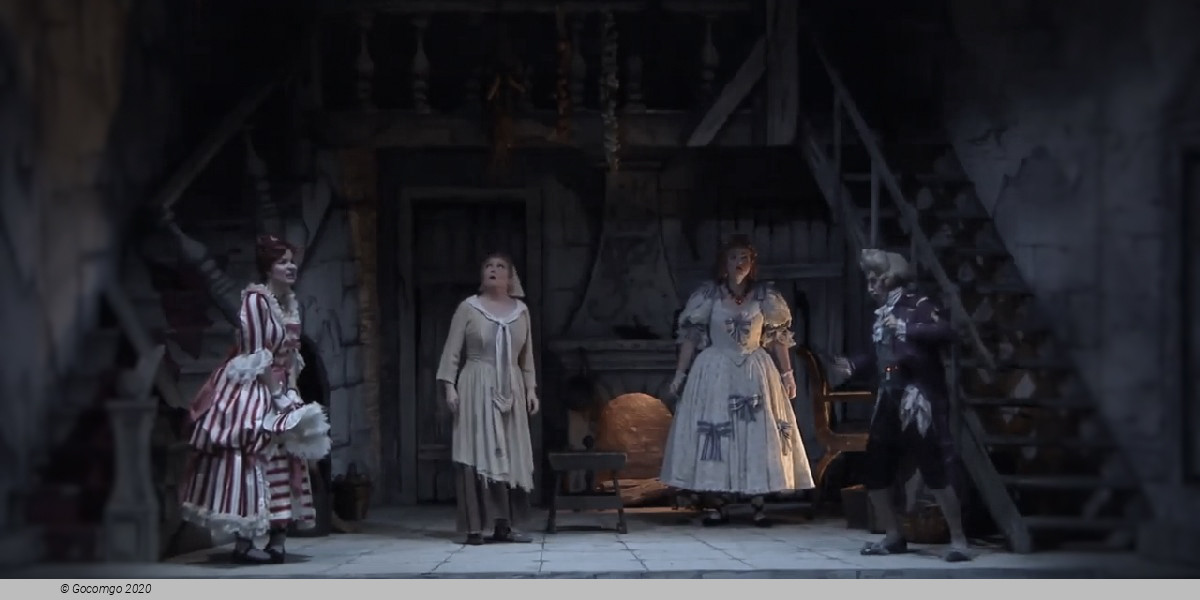
Directed by Laurent PellyLa Cenerentola follows Angelina – Rossini’s Cinderella – as she discovers true love in the form of her prince. In a twist on the classic tale, she first has to overcome not a wicked stepmother, but an evil stepfather.

Colourful costumes
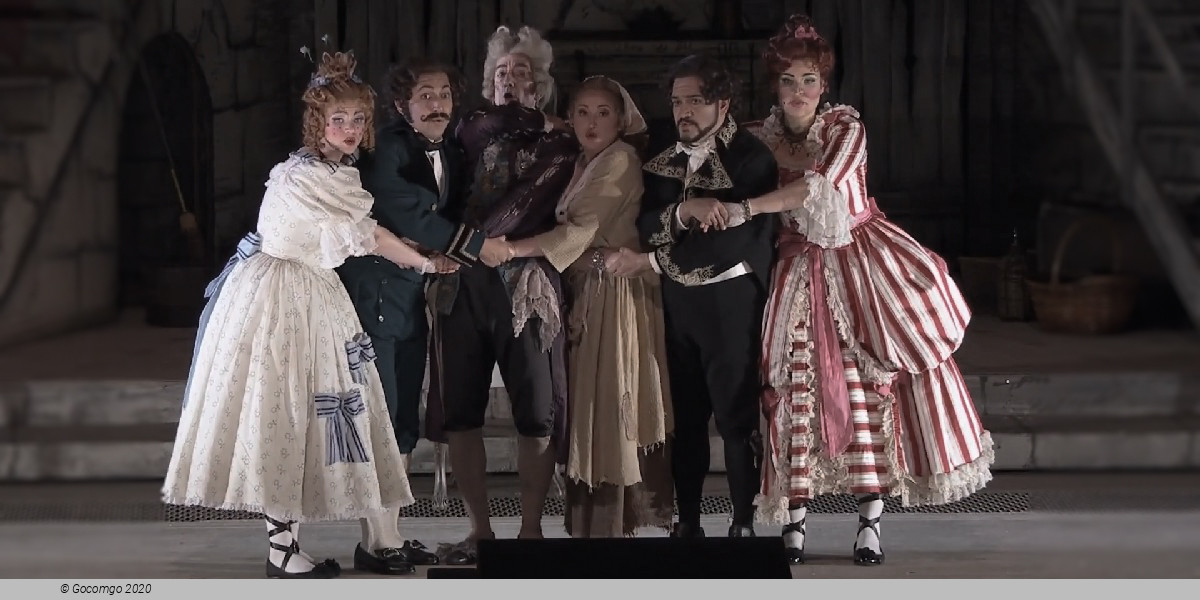
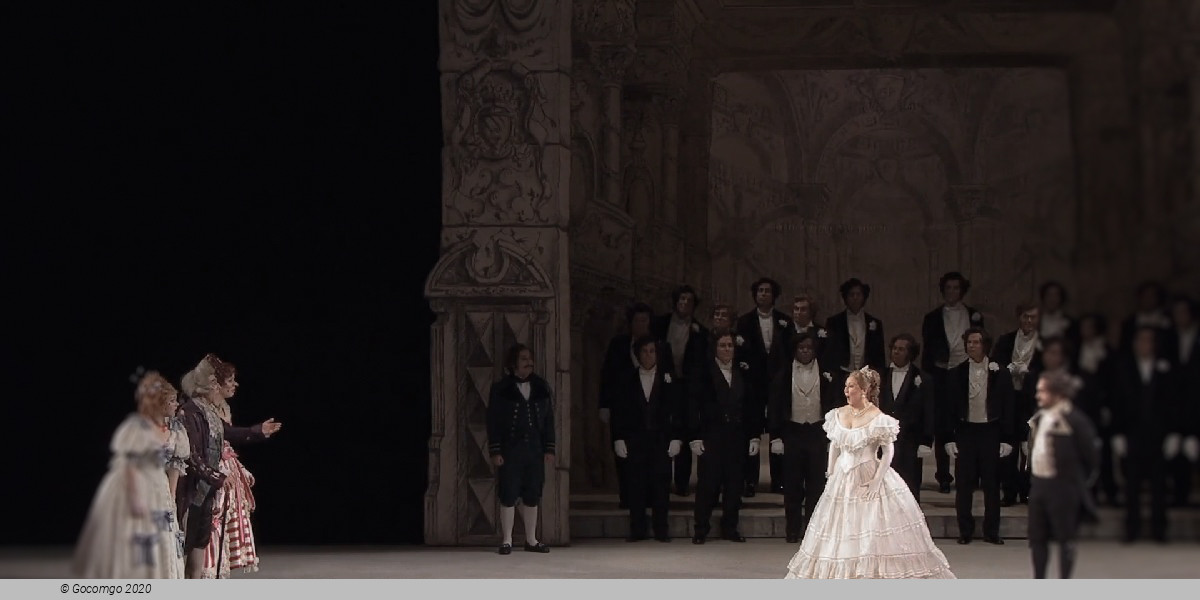
Though La Cenerentola doesn’t include the traditional pumpkin carriage or glass slippers, there are fancy dresses galore! As always, Laurent Pelly designs his own colourful costumes.

BACKGROUND
 

Rossini
Signature elements are Rossini’s lively ensembles and demanding solos with dizzying coloratura (runs) particularly for Angelina – a.k.a. Cinderella – and her fairy tale prince, Don Ramiro.

Popular opera
The world première (1817) of La Cenerentola in Rome during carnival season ended in a fiasco. The singers baulked at the difficult score and their performance failed to impress the audience. But Rossini was undaunted: ‘Idiots! Before the carnival is over, all Rome will love her…’ He was right. The opera swiftly became a runaway success in Italy and beyond. After the composer’s death, La Cenerentola disappeared from the stage, but after 1920 it enjoyed resurging popularity.

History
Premiere of this production: 25 January 1817, Teatro Valle, Rome

La Cenerentola, ossia La bontà in trionfo (Cinderella, or Goodness Triumphant) is an operatic dramma giocoso in two acts by Gioachino Rossini. The libretto was written by Jacopo Ferretti, based on the fairy tale Cendrillon by Charles Perrault. The opera was first performed in Rome's Teatro Valle on 25 January 1817.

Synopsis

In this variation of the fairy tale, the wicked stepmother is replaced by a stepfather, Don Magnifico. The Fairy Godmother is replaced by Alidoro, a philosopher and tutor to the Prince. Cinderella is identified not by a glass slipper but by her bracelet. The supernatural elements that traditionally characterize the Cinderella story were removed from the libretto, simply for ease of staging.

Time: Late 18th century – early 19th century
Place: Salerno (Italy)

Act 1

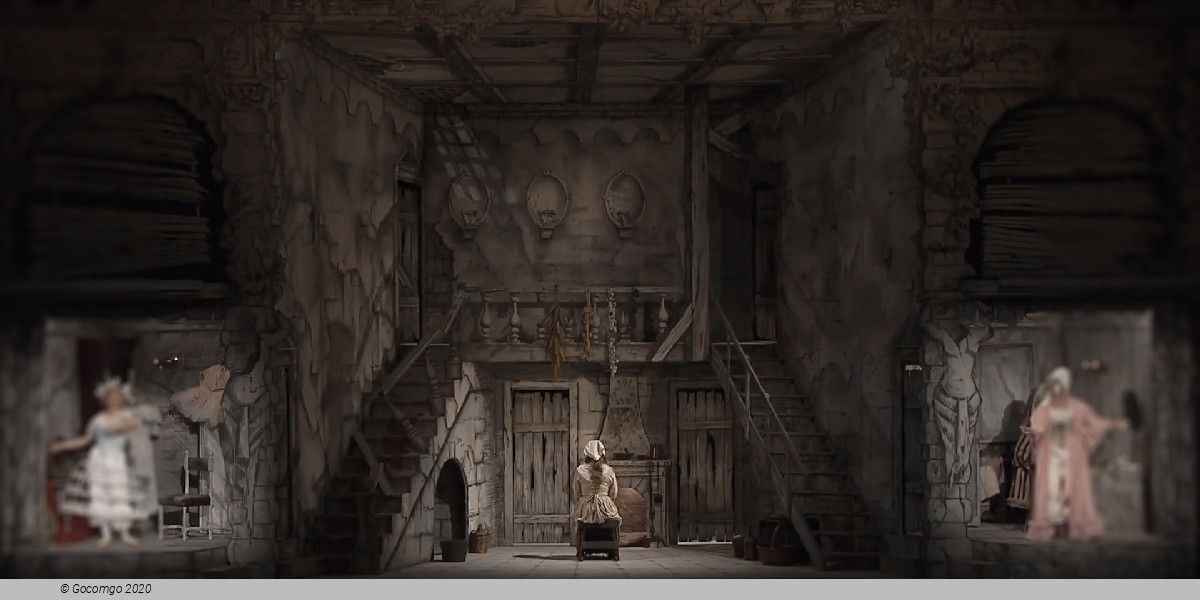
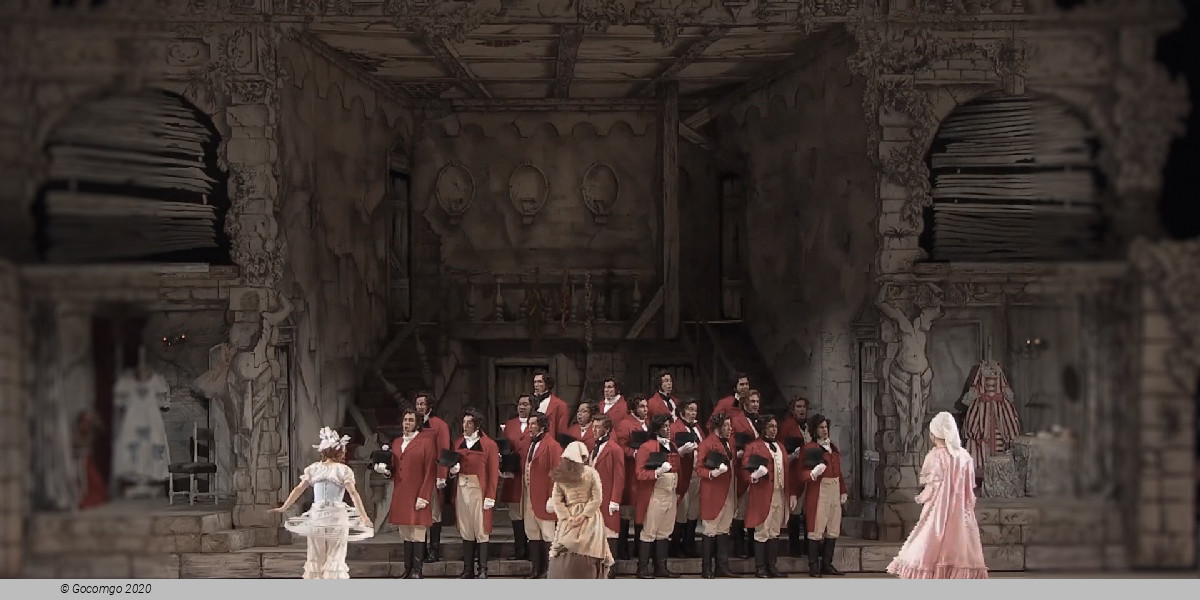
Angelina, known to her stepfather and stepsisters as "Cenerentola", is forced to serve as the maid in her own home. She sings of a king who married a common girl ("Una volta c’era un rè"). A beggar arrives; her stepsisters, Clorinda and Tisbe, want to send him away, but Cenerentola gives him bread and coffee. Courtiers follow, announcing that Prince Ramiro will come to visit while he searches for the most beautiful girl in the land to wed. Cenerentola's stepfather, Don Magnifico, hopes to use this as an opportunity to save his own failing fortune.

When the room is empty, Ramiro enters alone, disguised as a valet. The "beggar" - in fact, his tutor, Alidoro - has informed him of a goodhearted young woman spotted here. Ramiro intends to find her incognito. Cenerentola returns, and she and Ramiro are attracted to each other (duet: "Un soave non-so che"), but when he asks who she is, she's overwhelmed and flees.

Finally, the "prince" arrives – the real valet, Dandini, who has taken his master's place - and Magnifico, Clorinda, and Tisbe fall over themselves to flatter him. He invites the family to a ball that evening, where he plans to find his bride; Cenerentola asks to join them, but Magnifico refuses (quintet: "Signor, una parola"). This callousness isn't lost on Ramiro. Alidoro, still in his rags, returns to inquire after a third daughter in the house; Magnifico claims she has died. Left alone with Cenerentola, Alidoro promises to take her to the ball himself, and that God will reward her kindness ("Là del ciel nell’arcano profondo").

The prince and his valet have retired to Ramiro's country house in some confusion, as neither of Magnifico's daughters resembled the worthy bride Alidoro had described. When Clorinda and Tisbe arrive, Dandini gives them a little test: he offers his "valet" to whichever sister the "prince" does not marry. The ladies are outraged at the idea of marrying a servant. Alidoro then arrives with a beautiful, unknown lady who strangely resembles Cenerentola. Unable to make sense of the situation, they all sit down to supper, feeling as if they are in a dream.

Act 2

Magnifico frets over the competition his daughters now face from the strange lady ("Sia qualunque delle figlie"), but Cenerentola isn't interested in the "prince," saying she's fallen in love with his servant. An overjoyed Ramiro steps forward; however, Cenerentola tells him that she's going home and doesn't want him to follow her. If he really cares for her, she says, he will find her, giving him one of a matching pair of bracelets. The prince determines to do exactly that ("Sì, ritrovarla io giuro").

Meanwhile, Magnifico confronts the disguised Dandini, insisting that he choose one of his daughters to marry. Dandini tries to stall, but is forced to admit that he's actually the valet and not the prince at all (duet: "Un segreto d’importanza").

A furious Magnifico and his daughters return home, where they order Cenerentola, back in rags, to serve them. A storm is thundering outside. Alidoro sabotages Ramiro's carriage so that it breaks down in front of Magnifico's manor, forcing the prince to take refuge within. Cenerentola and Ramiro recognize each other's bracelets; the others comment on the situation (sextet: "Siete voi?"). When Ramiro threatens Cenerentola's recalcitrant family, she asks him to forgive them.

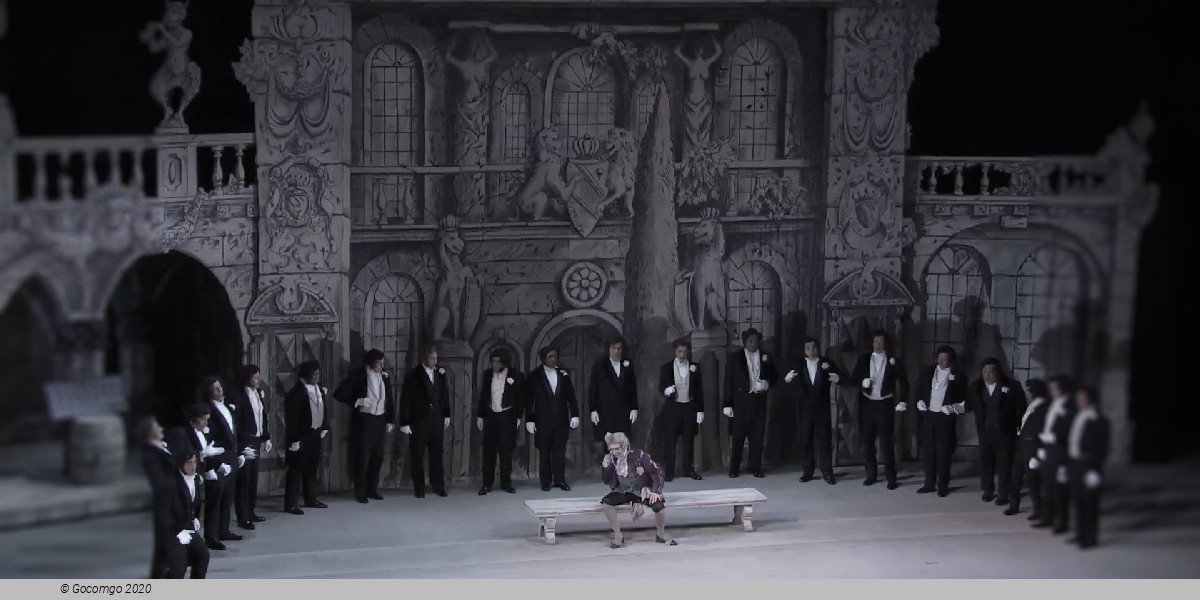
Ramiro and Cenerentola are married, and celebrate their wedding at the palace. Magnifico tries to win the favor of the new princess, but she asks only to be acknowledged, at last, as his daughter. She reflects on the misfortune to which she was born and the sudden reversal of her fate, then forgives her family for all her past unhappiness, adding that her days of sitting sadly by the fire are over ("Nacqui all'affanno... Non più mesta"). Everyone present acknowledges that she truly is worthy of the throne.

Venue Info

Dutch National Opera - Amsterdam
Location   Amstel 3

The Dutch National Opera is the largest theatre production house in the Netherlands. Situated in the heart of Amsterdam, the iconic theatre of Dutch National Opera & Ballet offers a magnificent view of the River Amstel and the famous Magere Brug (Skinny Bridge). The various spaces form an inspiring backdrop for a whole range of special events.

Dutch National Opera & Ballet is a young theatre with a long history. The plans for building a new theatre ran parallel to the plans for a new city hall. The first discussions held by the Amsterdam city council about building a new city hall and opera house go back to 1915. At that time, the plans were specifically for an opera house, since ballet was a relatively unknown art form back then.

Ideas for the site of the new city hall and opera house were continually changing, and the idea that both buildings could form a single complex only emerged much later. Sites considered for the new city hall were initially the Dam, followed by the Frederiksplein, and finally the Waterlooplein.

In 1955, the city council commissioned the firm of architects Berghoef and Vegter to draft a design for a city hall on the Waterlooplein. The draft was approved, but in 1964 the council ended the association with the architects, as the final design was nothing like the original plans they had been shown. In 1967, a competition was held for a new design, with the Viennese architect Wilhelm Holzbauer emerging as the winner. Amsterdam's financial problems, however, meant that the plans for the new city hall were put on hold for several years.

DNO has its own choir of sixty singers and technical staff of 260. DNO historically has not had its own resident orchestra, and so various orchestras of the Netherlands, including the Netherlands Philharmonic Orchestra (NPO), the Netherlands Chamber Orchestra (NKO), the Royal Concertgebouw Orchestra, the Rotterdam Philharmonic Orchestra, the Radio Filharmonisch Orkest and the Asko/Schönberg ensemble have provided the orchestral forces for DNO productions.

DNO produces on average eleven productions per year. While most performances are in the Dutch National Opera & Ballet building, the company has also performed in the Stadsschouwburg, at the Carré Theatre, and on the Westergasfabriek industrial site in Amsterdam. For many years, the June production has been organized as part of the Holland Festival and includes the participation of the Royal Concertgebouw Orchestra. DNO has lent its productions to foreign companies, such as the Metropolitan Opera, the Brooklyn Academy of Music, the Lincoln Center Festival in New York, as well as the Adelaide Festival in Australia.

Since 1988, the French-Lebanese theatre director Pierre Audi has been the artistic director of DNO. Audi is scheduled to conclude his DNO tenure in 2018. In April 2017, DNO announced the appointment of Sophie de Lint as the company's next artistic director, effective 1 September 2018.

Hartmut Haenchen was chief conductor from 1986 to 1999, in parallel with holding the title of chief conductor of the NPO. He subsequently held the title of principal guest conductor with DNO. Subsequent chief conductors have been Edo de Waart (1999-2004) and Ingo Metzmacher (2005-2008). In March 2009, DNO announced the appointment of Marc Albrecht as the orchestra's next chief conductor, with the 2011-2012 season, for an initial contract of four years. This return to a single chief conductor at both DNO and the NPO/NKO allows for the NPO to become the principal opera orchestra for DNO. Albrecht is scheduled to stand down as chief conductor of DNO at the end of the 2019-2020 season.

Important Info
Type: Opera
City: Amsterdam, Netherlands
Starts at: 20:00
Acts: 2
Intervals: 1
Duration: 3h 5min
Sung in: Italian
Titles in: Dutch,English
Top of page