
Dutch National Opera 24 June 2020 - Beethoven | GoComGo.com

Beethoven

Dutch National Opera, Amsterdam, Netherlands
All photos (1)
Select date and time
8:15 PM
Request for Tickets
Important Info
Type: Ballet
City: Amsterdam, Netherlands
Starts at: 20:15

E-tickets: Print at home or at the box office of the event if so specified. You will find more information in your booking confirmation email.

You can only select the category, and not the exact seats.
If you order 2 or 3 tickets: your seats will be next to each other.
If you order 4 or more tickets: your seats will be next to each other, or, if this is not possible, we will provide a combination of groups of seats (at least in pairs, for example 2+2 or 2+3).

Overview

WORLD PREMIERE

INSPIRED BY GREAT COMPOSITIONS

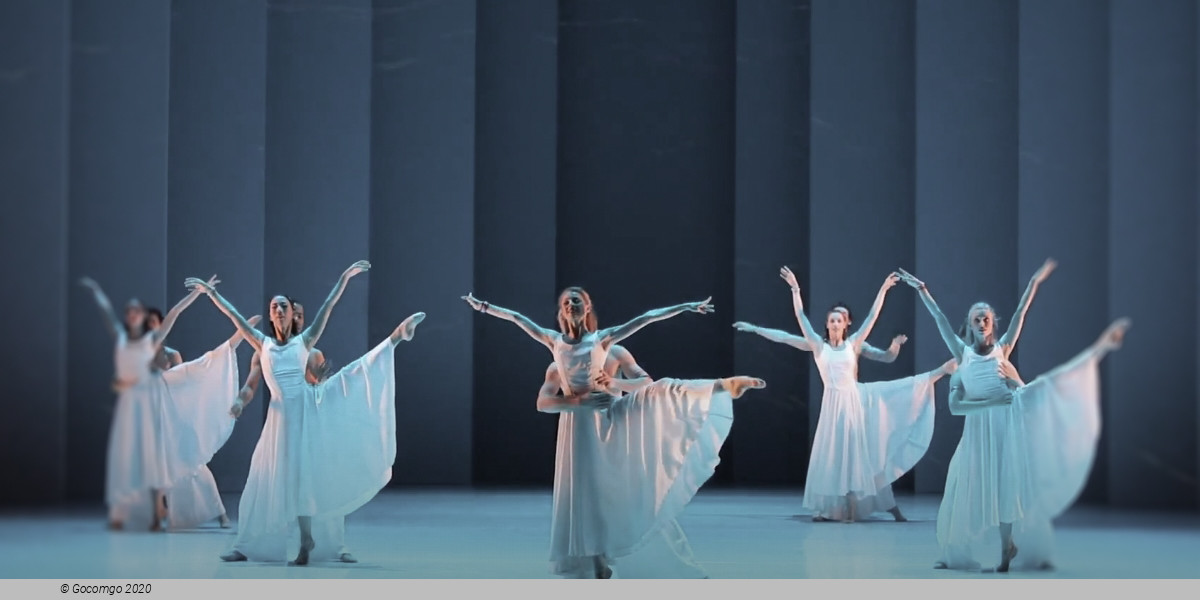
At the 2020 Holland Festival, Dutch National Ballet will present the world premiere of Beethoven. George Balanchine once remarked that ‘Dance should leave Beethoven well alone – there’s no choreographing to his music’. But plenty of choreographers have since proved him false. Making ballet to Beethoven may not be easy, but the results are sensational! In honour of his 250th birthday, Dutch National Ballet presents two masterpieces and one new creation inspired by the grand master’s music.


In his entire career, Beethoven wrote only a single ballet: Die Geschöpfe des Prometheus – an allegorical ballet d’action composed in 1801 for the imperial court at Vienna. The music was well-received, but apart from a brief synopsis – Prometheus steals fire from the gods to give to two mortals – nothing of the choreography survives. In Back to Beethoven, Dutch National Ballet presents the world première of a new, abstracted translation of the Die Geschöpfe des Prometheus. Following in the footsteps of the DNB’s original three ‘Vans’ and their 1975 co-creation Collective Symphony, Beethoven’s ballet will be recreated by a trio of rising young choreographers: Wubkje Kuindersma, Ernst Meisner and Remi Wörtmeyer.

A burst of energy

Probably the first to prove Balanchine wrong was – who else? – Hans van Manen. At its première in 1971, his sublime choreography to Beethoven’s Grosse Fuge string quartet was lauded as ‘the most notable European ballet of the decade’. Recent performances of the dazzling double quartet were hailed by the press as ‘Brilliant and beautiful to behold’ and ‘a super-charged burst of energy’. Today, it is one of Van Manen’s most frequently danced ballets worldwide.

Alongside Hans van Manen and Rudi van Dantzig, Toer van Schayk was one of Dutch National Ballet’s famous original three ‘Vans’. In 1986 he was inspired by Beethoven’s Seventh to create a new ballet fuelled purely by the music and sizzling with colour, vitality and zest for life. At its première and later performances it was received with cheers and standing ovations, and in 1987 was crowned with a VSCD Choreography Award.

History
Premiere of this production: 28 March 1801, Burgtheater in Vienna

The Creatures of Prometheus (German: Die Geschöpfe des Prometheus), Op. 43, is a ballet composed in 1801 by Ludwig van Beethoven following the libretto of Salvatore Viganò. The ballet premiered on 28 March 1801 at the Burgtheater in Vienna and was given 28 performances. It is the only full length ballet by Beethoven.

Premiere of this production: Schuppanzigh Quartet

The Große Fuge (or Grosse Fuge, also known in English as Great Fugue or Grand Fugue), Op. 133, is a single-movement composition for string quartet by Ludwig van Beethoven. An immense double fugue, it was universally condemned by contemporary critics. A reviewer writing for Allgemeine musikalische Zeitung in 1826 described the fugue as "incomprehensible, like Chinese" and "a confusion of Babel". However, critical opinion of the work has risen steadily since the beginning of the 20th century. The work is now considered among Beethoven's greatest achievements. Igor Stravinsky said that " it is an absolutely contemporary piece of music that will be contemporary forever."

Premiere of this production: 08 December 1813

The Symphony No. 7 in A major, Op. 92, is a symphony in four movements composed by Ludwig van Beethoven between 1811 and 1812, while improving his health in the Bohemian spa town of Teplice. The work is dedicated to Count Moritz von Fries.

At its premiere, Beethoven was noted as remarking that it was one of his best works. The second movement, Allegretto, was the most popular movement and had to be encored. The instant popularity of the Allegretto resulted in its frequent performance separate from the complete symphony.

Synopsis

For Act I of this ballet, Beethoven wrote an Overture and an Introduction, followed by these three numbers:

No. 1 Poco Adagio
No. 2 Adagio - allegro con brio
No. 3 Minuetto
For Act II, he wrote another 13 numbers:

No. 4 Maestoso
No. 5 Adagio
No. 6 Un poco Adagio
No. 7 Grave
No. 8 Allegro con brio
No. 9 Adagio
No. 10 Pastorale
No. 11 Andante
No. 12 Maestoso
No. 13 Allegro
No. 14 Andante
No. 15 Andantino
No. 16 Finale

Venue Info

Dutch National Opera - Amsterdam
Location   Amstel 3

The Dutch National Opera is the largest theatre production house in the Netherlands. Situated in the heart of Amsterdam, the iconic theatre of Dutch National Opera & Ballet offers a magnificent view of the River Amstel and the famous Magere Brug (Skinny Bridge). The various spaces form an inspiring backdrop for a whole range of special events.

Dutch National Opera & Ballet is a young theatre with a long history. The plans for building a new theatre ran parallel to the plans for a new city hall. The first discussions held by the Amsterdam city council about building a new city hall and opera house go back to 1915. At that time, the plans were specifically for an opera house, since ballet was a relatively unknown art form back then.

Ideas for the site of the new city hall and opera house were continually changing, and the idea that both buildings could form a single complex only emerged much later. Sites considered for the new city hall were initially the Dam, followed by the Frederiksplein, and finally the Waterlooplein.

In 1955, the city council commissioned the firm of architects Berghoef and Vegter to draft a design for a city hall on the Waterlooplein. The draft was approved, but in 1964 the council ended the association with the architects, as the final design was nothing like the original plans they had been shown. In 1967, a competition was held for a new design, with the Viennese architect Wilhelm Holzbauer emerging as the winner. Amsterdam's financial problems, however, meant that the plans for the new city hall were put on hold for several years.

DNO has its own choir of sixty singers and technical staff of 260. DNO historically has not had its own resident orchestra, and so various orchestras of the Netherlands, including the Netherlands Philharmonic Orchestra (NPO), the Netherlands Chamber Orchestra (NKO), the Royal Concertgebouw Orchestra, the Rotterdam Philharmonic Orchestra, the Radio Filharmonisch Orkest and the Asko/Schönberg ensemble have provided the orchestral forces for DNO productions.

DNO produces on average eleven productions per year. While most performances are in the Dutch National Opera & Ballet building, the company has also performed in the Stadsschouwburg, at the Carré Theatre, and on the Westergasfabriek industrial site in Amsterdam. For many years, the June production has been organized as part of the Holland Festival and includes the participation of the Royal Concertgebouw Orchestra. DNO has lent its productions to foreign companies, such as the Metropolitan Opera, the Brooklyn Academy of Music, the Lincoln Center Festival in New York, as well as the Adelaide Festival in Australia.

Since 1988, the French-Lebanese theatre director Pierre Audi has been the artistic director of DNO. Audi is scheduled to conclude his DNO tenure in 2018. In April 2017, DNO announced the appointment of Sophie de Lint as the company's next artistic director, effective 1 September 2018.

Hartmut Haenchen was chief conductor from 1986 to 1999, in parallel with holding the title of chief conductor of the NPO. He subsequently held the title of principal guest conductor with DNO. Subsequent chief conductors have been Edo de Waart (1999-2004) and Ingo Metzmacher (2005-2008). In March 2009, DNO announced the appointment of Marc Albrecht as the orchestra's next chief conductor, with the 2011-2012 season, for an initial contract of four years. This return to a single chief conductor at both DNO and the NPO/NKO allows for the NPO to become the principal opera orchestra for DNO. Albrecht is scheduled to stand down as chief conductor of DNO at the end of the 2019-2020 season.

Important Info
Type: Ballet
City: Amsterdam, Netherlands
Starts at: 20:15
Top of page