
Dutch National Opera 26 May 2022 - Anna Bolena | GoComGo.com

Anna Bolena

Dutch National Opera, Main Stage, Amsterdam, Netherlands
All photos (6)
Select date and time
7 PM

E-tickets: Print at home or at the box office of the event if so specified. You will find more information in your booking confirmation email.

You can only select the category, and not the exact seats.
If you order 2 or 3 tickets: your seats will be next to each other.
If you order 4 or more tickets: your seats will be next to each other, or, if this is not possible, we will provide a combination of groups of seats (at least in pairs, for example 2+2 or 2+3).

Important Info
Type: Opera
City: Amsterdam, Netherlands
Starts at: 19:00
Acts: 2
Intervals: 1
Duration: 3h 5min
Sung in: Italian

E-tickets: Print at home or at the box office of the event if so specified. You will find more information in your booking confirmation email.

You can only select the category, and not the exact seats.
If you order 2 or 3 tickets: your seats will be next to each other.
If you order 4 or more tickets: your seats will be next to each other, or, if this is not possible, we will provide a combination of groups of seats (at least in pairs, for example 2+2 or 2+3).

Overview

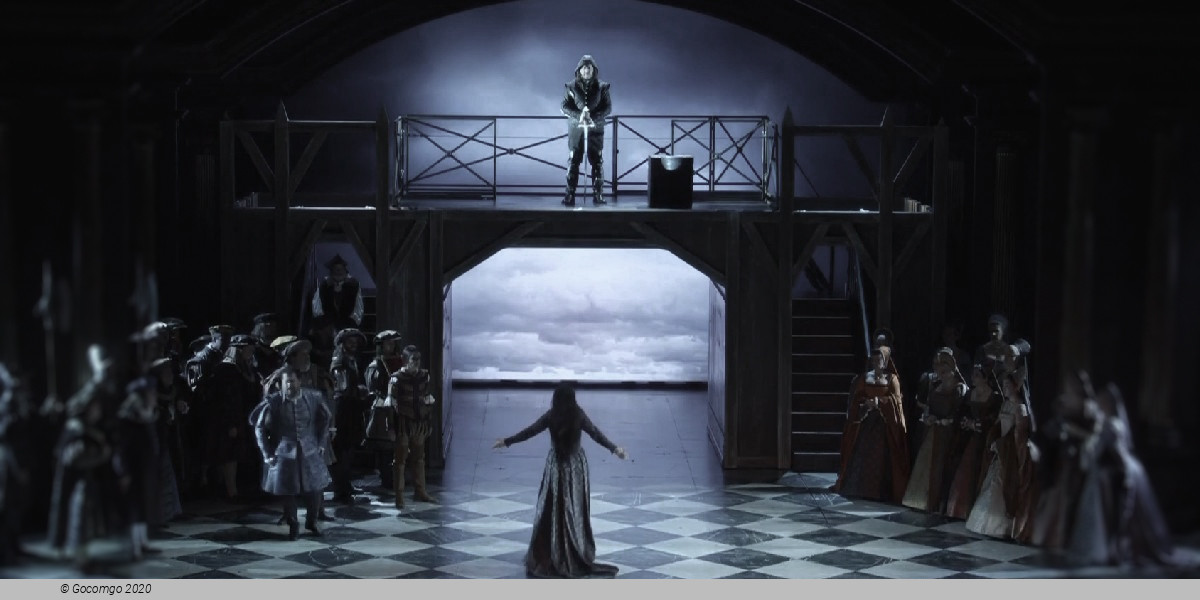
‘Success, Triumph, Delirium!’ – exclaimed the audience at the 1830 premiere of Anna Bolena in Milan. The opera about the tragic fate of the English queen marked one of the most impressive moments in the career of the bel canto composer Donizetti. With his magnificent, melodious music, he transformed historical facts into a world of intense emotions, deeply moving to this day.

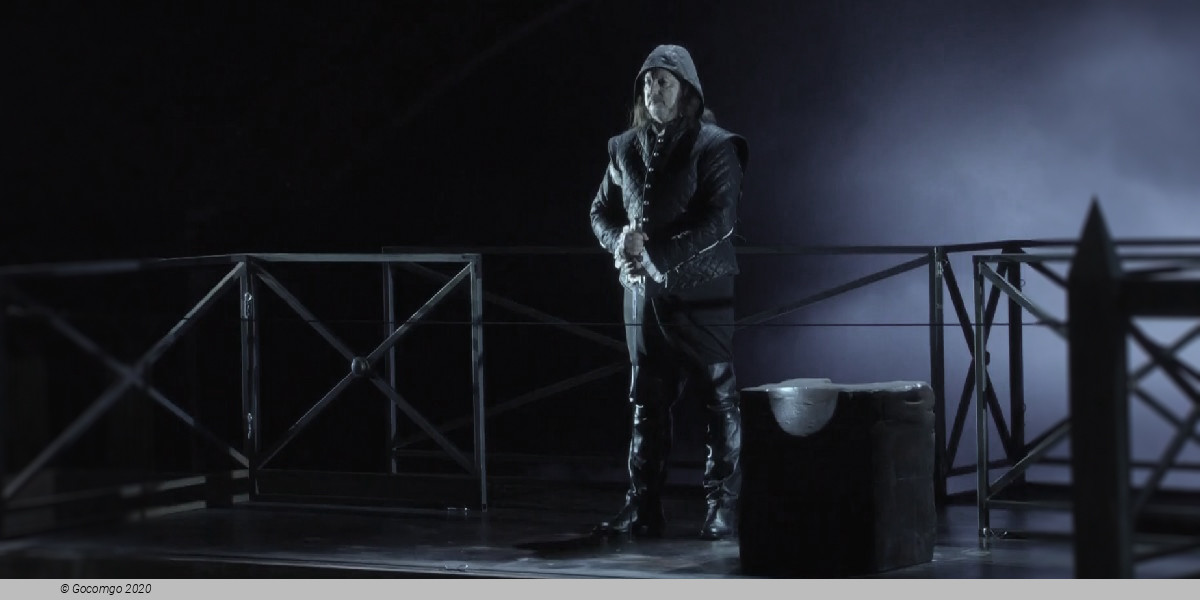
Anna Bolena is based on the life of Anne Boleyn, mother of Queen Elizabeth I. She was the second wife of King Henry VIII, who had her removed so he could marry his mistress, Jane Seymour. It is an opera about power, passion, honor, and vulnerability during turbulent times, with tragic consequences.

Internationally acclaimed Dutch opera director Jetske Mijnssen, winner of the ‘Grand Prix de la Critique’ in 2016, delves deep into the psyche of the opera’s characters. At the musical helm of this project is Italian conductor Enrique Mazzola, Chicago Lyric Opera’s new music director. He is internationally acknowledged as the bel canto specialist and leads the Netherlands Chamber Orchestra in this production.

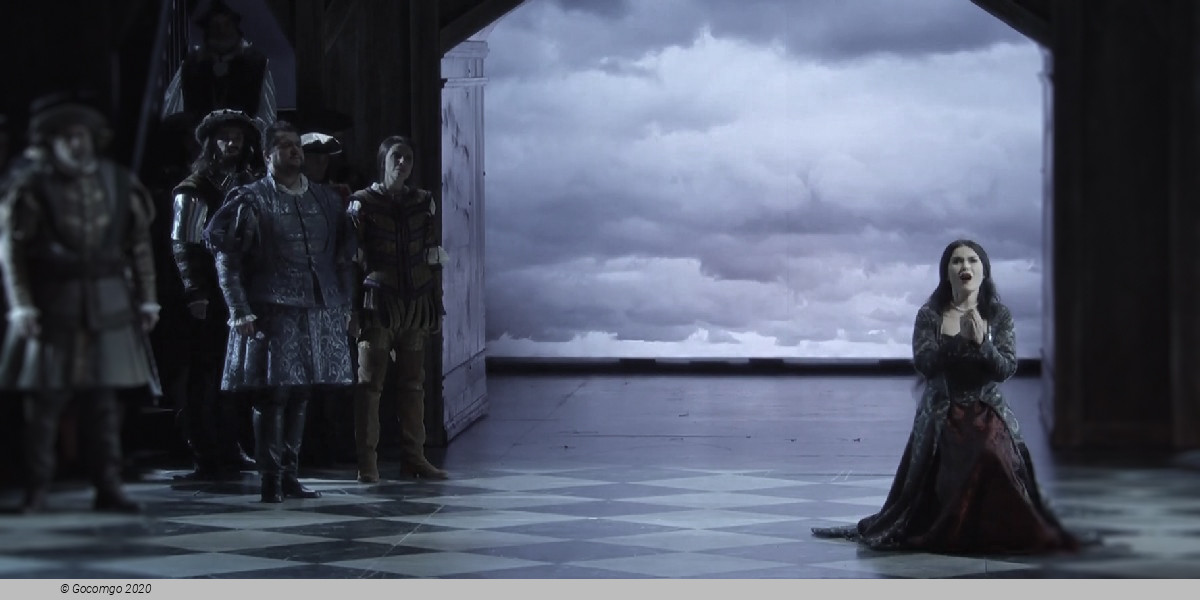
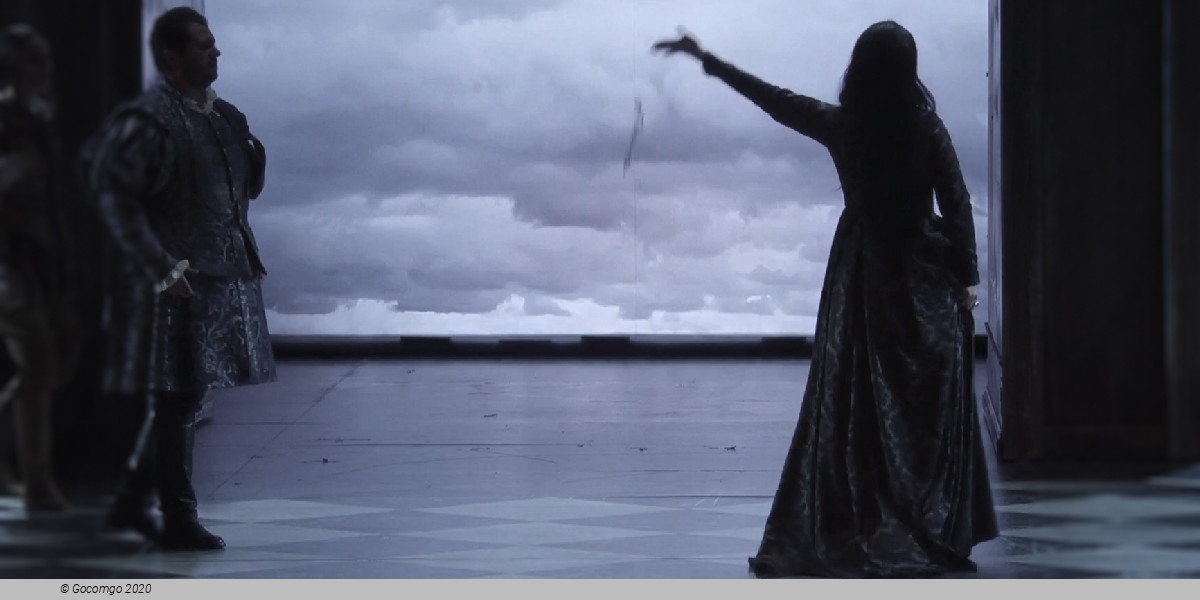
For this production, a wonderful cast of great voices and strong theatrical personalities has been brought together. The fantastic Latvian soprano Marina Rebeka, who is one of the very few soloists in the world who can sing all three of the Donizetti queens, will perform the title role.

Coproduction with Palau de les Arts Reina Sofia (Valencia) and Teatro di San Carlo (Naples)

History
Premiere of this production: 26 December 1830, Teatro Carcano, Milan

Anna Bolena is a tragic opera (tragedia lirica) in two acts composed by Gaetano Donizetti. Felice Romani wrote the Italian libretto after Ippolito Pindemonte's Enrico VIII ossia Anna Bolena and Alessandro Pepoli's Anna Bolena, both recounting the life of Anne Boleyn, the second wife of England's King Henry VIII.

Synopsis

Time: 1536
Place: Windsor and London

Act 1
Scene One: Night. Windsor Castle, Queen's apartments

Courtiers comment that the queen’s star is setting, because the king’s fickle heart burns with another love.

Jane Seymour enters to attend a call by the Queen; Anna enters and notes that people seem sad. The queen admits to Jane that she is troubled. At the queen’s request, her page Smeaton plays the harp and sings in an attempt to cheer the people present. The queen asks him to stop. Unheard by any one else, she says to herself that the ashes of her first love are still burning, and that she is now unhappy in her vain splendor. All leave, except Jane.

Henry VIII enters and tells Jane that soon she will have no rival, that the altar has been prepared for her, and that she will have husband, sceptre, and throne. Each leaves by a different door.

Scene Two: Day. Around Windsor Castle

Lord Rochefort, Anna’s brother, is surprised to meet Lord Richard Percy, who has been called back to England from exile by Henry VIII. Percy asks if it is true that the Queen is unhappy and that the King has changed. Rochefort answers that love is never content.

Hunters enter. Percy is agitated at the prospect of possibly seeing Anna, who was his first love. Henry and Anna enter and express surprise at seeing Percy. Henry does not allow Percy to kiss his hand, but says that Anna has given him assurances of Percy’s innocence but she still has feelings for Percy. Henry VIII tells Hervey, an officer of the king, to spy on every step and every word of Anna and Percy.

Scene Three: Windsor Castle, close to the Queen's apartments

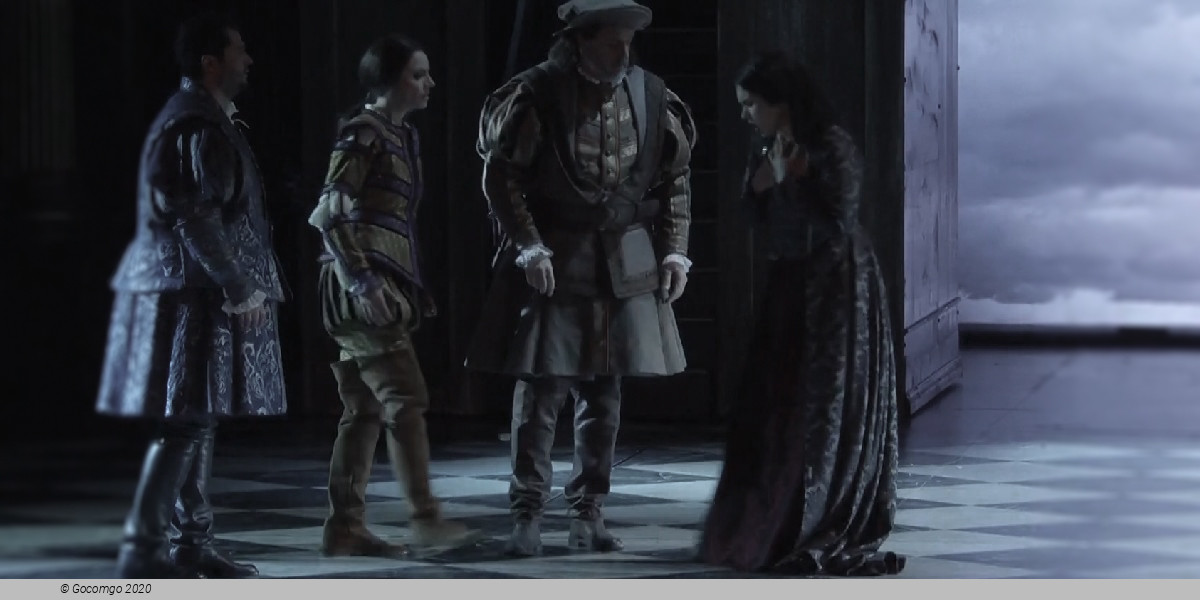
Smeaton takes a locket from his breast containing Anna’s portrait. He has stolen it and has come to return it. He hears a sound and hides behind a screen. Anna and Rochefort enter. Rochefort asks Anna to hear Percy. Then he leaves. Smeaton peeps out from behind the screen, but cannot escape. Percy enters. Percy says that he sees that Anna is unhappy. She tells him that the king now loathes her. Percy says that he still loves her. Anna tells him not to speak to her of love. Before leaving, Percy asks whether he can see Anna again. She says no. He draws his sword to stab himself, and Anna screams. In the mistaken belief that Percy is attacking Anna, Smeaton rushes out from behind the screen. Smeaton and Percy are about to fight. Anna faints, and Rochefort rushes in. Just then, Henry VIII enters and sees the unsheathed swords. Summoning attendants, he says that these persons have betrayed their king. Smeaton says that it is not true, and tears open his tunic to offer his breast to the king for slaying if he is lying. The locket with Anna’s portrait falls at the king’s feet. The king snatches it up. He orders that the offenders be dragged to dungeons. Anna says to herself that her fate is sealed.

Act 2

Scene One: London. Antechamber of the Queen's apartments

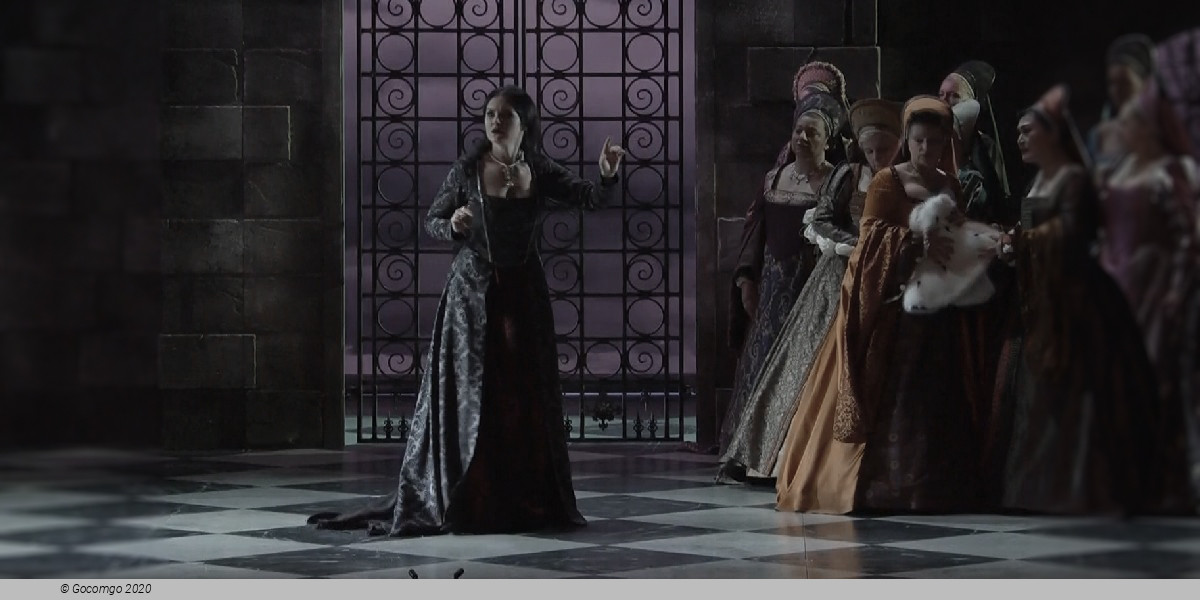
The guards note that even Jane Seymour has stayed away from Anna. Anna enters with a retinue of ladies, who tell her to place her trust in heaven. Hervey enters and says that the Council of Peers has summoned the ladies into its presence. The ladies leave with Hervey. Jane enters and says that Anna can avoid being put to death by admitting guilt. Anna says that she will not buy her life with infamy. She expresses the hope that her successor will wear a crown of thorns. Jane admits that she is to be the successor. Anna tells her to leave, but says that Henry VIII alone is the guilty one. Jane leaves, deeply upset.

Scene Two: Antechamber leading into the hall where the Council of Peers is meeting

Hervey tells courtiers that Anna is lost, because Smeaton has talked and has revealed a crime. Henry VIII enters. Hervey says that Smeaton has fallen into the trap. Henry VIII tells Hervey to continue to let Smeaton believe that he has saved Anna's life. Anna and Percy are brought in, separately. Henry VIII says that Anna has made love to the page Smeaton, and that there are witnesses. He says that both Anna and Percy will die. Percy says that it is written in heaven that he and Anna are married. They are led away by guards.

Jane enters. She says that she does not want to be the cause of Anna's death. Henry VIII says that she will not save Anna by leaving. Hervey enters and says that the Council has dissolved the royal marriage and has condemned Anna and her accomplices to death. Courtiers and Jane ask the king to be merciful. He tells them to leave.

Scene Three: Tower of London

Percy and Rochefort are together in their cell. Hervey enters and says that the king has pardoned them. They ask about Anna. Hearing that she is to be executed, they choose to be executed also. They leave, surrounded by guards.

In Anna's cell, a chorus of ladies comment on her madness and grief. Anna enters, she imagines that it is her wedding day to the king. Then she imagines that she sees Percy, and she asks him to take her back to her childhood home (Donizetti used the theme from the English/American song Home Sweet Home as part of Anna’s Mad Scene to underscore her longing). Percy, Rochefort and Smeaton are brought in. Smeaton throws himself at Anna's feet and says that he accused her in the belief that he was saving her life. In her delirium, Anna asks him why he is not playing his lute. The sound of cannon is heard. Anna comes to her senses. She is told that Jane and Henry VIII are being acclaimed by the populace on their wedding day. Anna says that she does not invoke vengeance on the wicked couple. She faints. Guards enter to lead the prisoners to the block. Smeaton, Percy and Rochefort say that one victim has already been sacrificed.

Venue Info

Dutch National Opera - Amsterdam
Location   Amstel 3

The Dutch National Opera is the largest theatre production house in the Netherlands. Situated in the heart of Amsterdam, the iconic theatre of Dutch National Opera & Ballet offers a magnificent view of the River Amstel and the famous Magere Brug (Skinny Bridge). The various spaces form an inspiring backdrop for a whole range of special events.

Dutch National Opera & Ballet is a young theatre with a long history. The plans for building a new theatre ran parallel to the plans for a new city hall. The first discussions held by the Amsterdam city council about building a new city hall and opera house go back to 1915. At that time, the plans were specifically for an opera house, since ballet was a relatively unknown art form back then.

Ideas for the site of the new city hall and opera house were continually changing, and the idea that both buildings could form a single complex only emerged much later. Sites considered for the new city hall were initially the Dam, followed by the Frederiksplein, and finally the Waterlooplein.

In 1955, the city council commissioned the firm of architects Berghoef and Vegter to draft a design for a city hall on the Waterlooplein. The draft was approved, but in 1964 the council ended the association with the architects, as the final design was nothing like the original plans they had been shown. In 1967, a competition was held for a new design, with the Viennese architect Wilhelm Holzbauer emerging as the winner. Amsterdam's financial problems, however, meant that the plans for the new city hall were put on hold for several years.

DNO has its own choir of sixty singers and technical staff of 260. DNO historically has not had its own resident orchestra, and so various orchestras of the Netherlands, including the Netherlands Philharmonic Orchestra (NPO), the Netherlands Chamber Orchestra (NKO), the Royal Concertgebouw Orchestra, the Rotterdam Philharmonic Orchestra, the Radio Filharmonisch Orkest and the Asko/Schönberg ensemble have provided the orchestral forces for DNO productions.

DNO produces on average eleven productions per year. While most performances are in the Dutch National Opera & Ballet building, the company has also performed in the Stadsschouwburg, at the Carré Theatre, and on the Westergasfabriek industrial site in Amsterdam. For many years, the June production has been organized as part of the Holland Festival and includes the participation of the Royal Concertgebouw Orchestra. DNO has lent its productions to foreign companies, such as the Metropolitan Opera, the Brooklyn Academy of Music, the Lincoln Center Festival in New York, as well as the Adelaide Festival in Australia.

Since 1988, the French-Lebanese theatre director Pierre Audi has been the artistic director of DNO. Audi is scheduled to conclude his DNO tenure in 2018. In April 2017, DNO announced the appointment of Sophie de Lint as the company's next artistic director, effective 1 September 2018.

Hartmut Haenchen was chief conductor from 1986 to 1999, in parallel with holding the title of chief conductor of the NPO. He subsequently held the title of principal guest conductor with DNO. Subsequent chief conductors have been Edo de Waart (1999-2004) and Ingo Metzmacher (2005-2008). In March 2009, DNO announced the appointment of Marc Albrecht as the orchestra's next chief conductor, with the 2011-2012 season, for an initial contract of four years. This return to a single chief conductor at both DNO and the NPO/NKO allows for the NPO to become the principal opera orchestra for DNO. Albrecht is scheduled to stand down as chief conductor of DNO at the end of the 2019-2020 season.

Important Info
Type: Opera
City: Amsterdam, Netherlands
Starts at: 19:00
Acts: 2
Intervals: 1
Duration: 3h 5min
Sung in: Italian
Top of page