
English National Opera: Rusalka Tickets | Event Dates & Schedule | GoComGo.com

Rusalka Tickets

English National Opera, London, Great Britain
Important Info
Type: Opera
City: London, Great Britain
Duration: 3h
Acts: 3
Sung in: English
Titles in: English

E-tickets: Print at home or at the box office of the event if so specified. You will find more information in your booking confirmation email.

You can only select the category, and not the exact seats.
If you order 2 or 3 tickets: your seats will be next to each other.
If you order 4 or more tickets: your seats will be next to each other, or, if this is not possible, we will provide a combination of groups of seats (at least in pairs, for example 2+2 or 2+3).

Cast
Performers
Choose the date to see the peformers
Overview

Leaving your world for love can come at a terrible price.

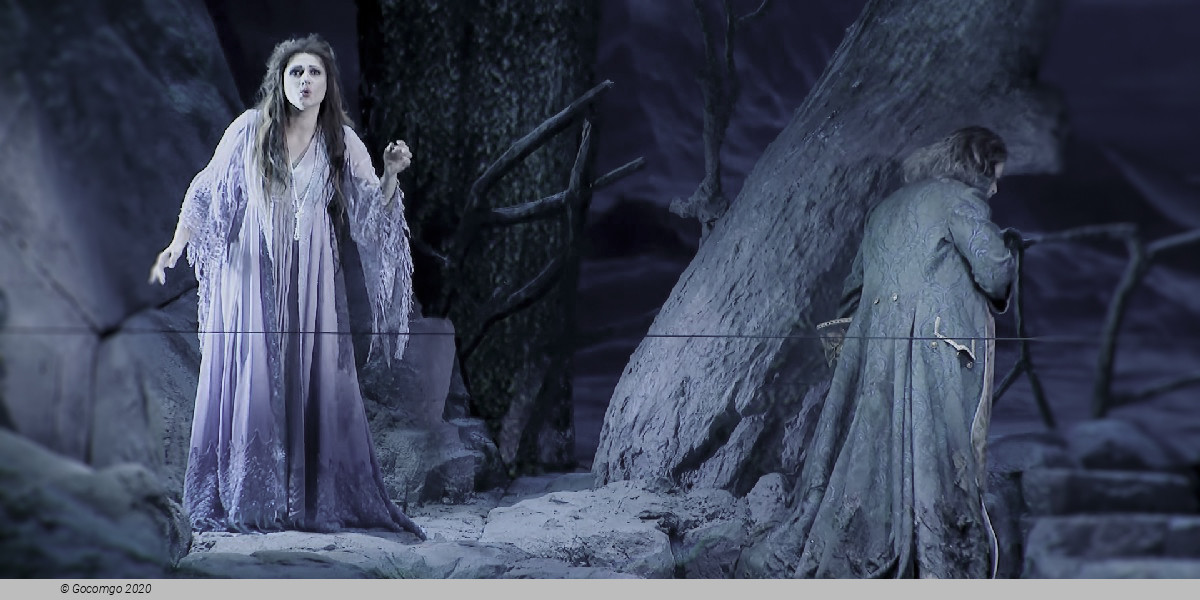
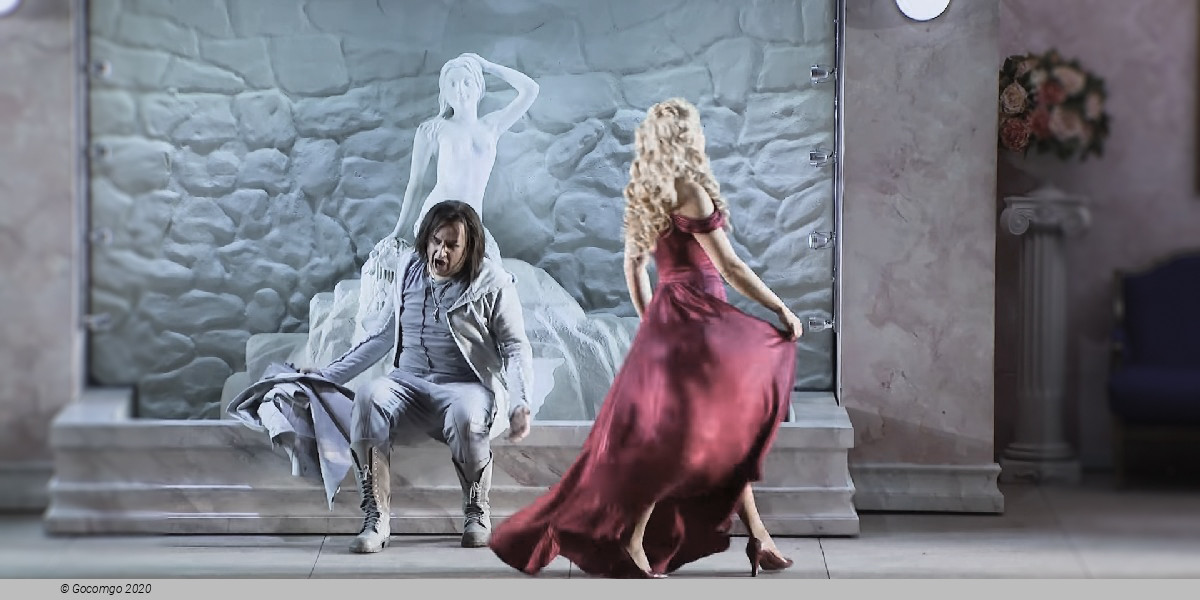
Dvořák’s best-loved opera, Rusalka is inspired by Slavic myths and folk-tales about a water-nymph that chooses to become human to win her Prince, mirroring Hans Christian Anderson’s The Little Mermaid.

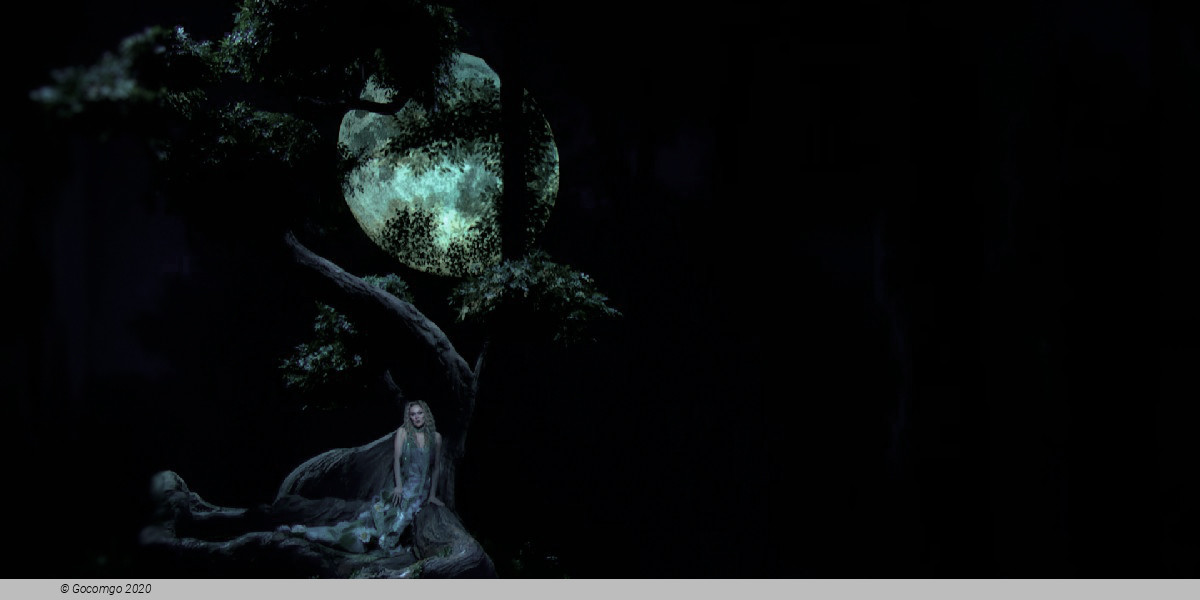
The opera displays Dvořák’s exceptional gift for melody and orchestration and features the beautiful aria ‘Song to the Moon’.

Our new production is directed by Tatjana Gürbaca (Opernwelt Director of the Year 2013) and conducted by Antony Hermus. Both are making their ENO debuts.

Leading the cast is Corinne Winters in the title role. She returns to ENO after her UK debut as Violetta in La traviata in 2013.

Olivier Award-nominated David Butt Philip plays the Prince and David Soar is the Water Spirit. We welcome back mezzo Patricia Bardon as Ježibaba and soprano Claire Rutter as the Foreign Princess.

ENO Harewood Artists Katie Coventry, Nadine Benjamin, Idunnu Münch and Katie Stevenson complete the main cast.

History
Premiere of this production: 31 March 1901, Prague

Rusalka is an opera by Antonín Dvořák. The Czech libretto was written by the poet Jaroslav Kvapil (1868–1950) based on the fairy tales of Karel Jaromír Erben and Božena Němcová. A rusalka is a water sprite from Slavic mythology, usually inhabiting a lake or river. Rusalka is one of the most successful Czech operas and represents a cornerstone of the repertoire of Czech opera houses.

Synopsis

Featuring the much-loved aria ‘Song to the Moon’, Dvořák’s most famous opera displays the composers exceptional gifts for melody and opulent orchestration.

Inspired by fairy tales such as The Little Mermaid, Rusalka is a powerful exploration of a woman who grows beyond her world to seek happiness;  learning the true meaning of love, understanding and forgiveness.

Act 1

A meadow by the edge of a lake

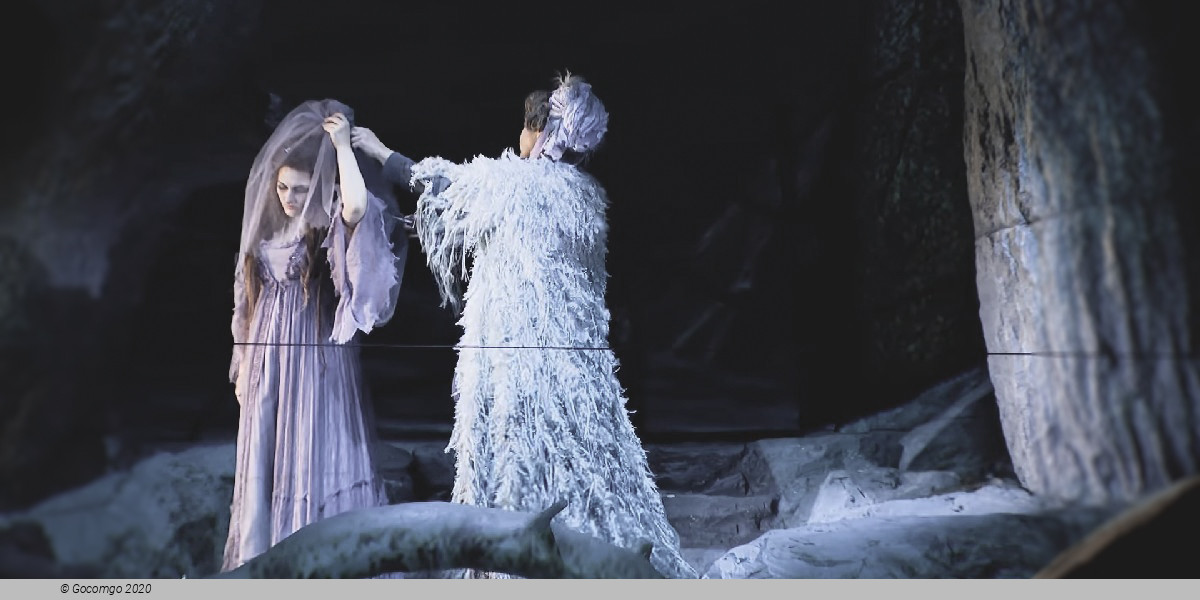
Three wood-sprites tease the Water-Gnome, ruler of the lake. Rusalka, the Water-Nymph, tells her father she has fallen in love with a human Prince who comes to hunt around the lake, and she wants to become human to embrace him. He tells her it is a bad idea, but nonetheless steers her to a witch, Ježibaba, for assistance. Rusalka sings her "Song to the Moon", asking it to tell the Prince of her love. Ježibaba tells Rusalka that, if she becomes human, she will lose the power of speech and immortality; moreover, if she does not find love with the Prince, he will die and she will be eternally damned. Rusalka agrees to the terms and drinks a potion. The Prince, hunting a white doe, finds Rusalka, embraces her, and leads her away, as her father and sisters lament.

Act 2

The garden of the Prince's castle

A Gamekeeper and his nephew, the Kitchen-Boy, note that the Prince is to be married to a mute and nameless bride. They suspect witchcraft and doubt it will last, as the Prince is already lavishing attentions on a Foreign Princess who is a wedding guest. The Foreign Princess, jealous, curses the couple. The prince rejects Rusalka. Rusalka then goes back to the lake with her father the Water Gnome. Though she has now won the Prince's affections, the Foreign Princess is disgusted by the Prince's fickleness and betrayal and she scorns him, telling him to follow his rejected bride to Hell.

Act 3

A meadow by the edge of a lake

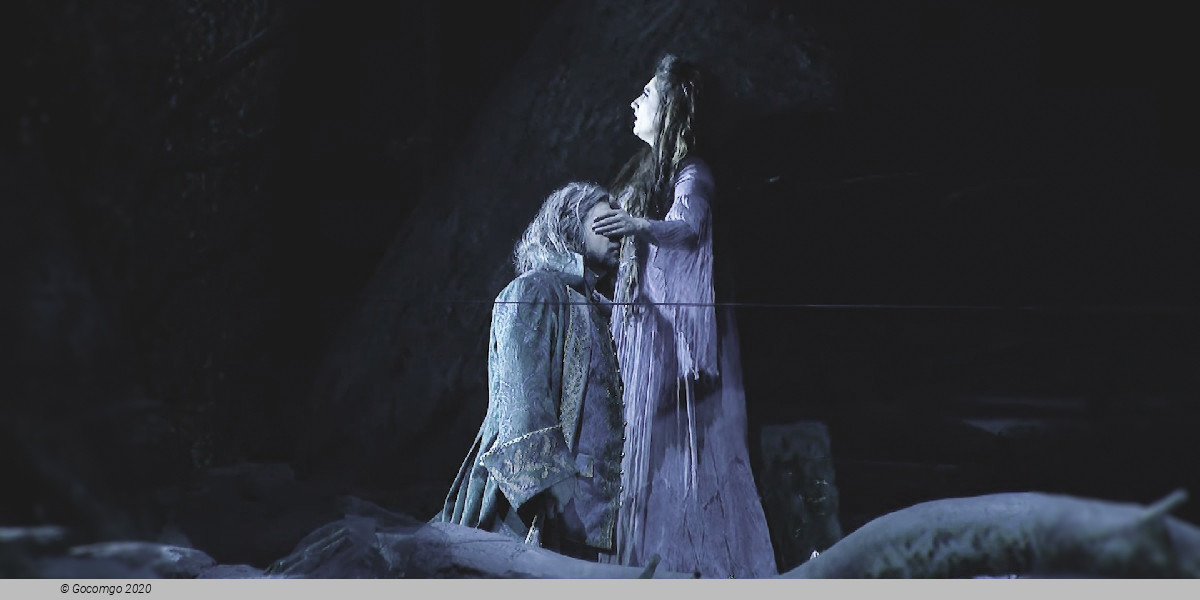
Rusalka asks Ježibaba for a solution to her woes and is told she can save herself if she kills the Prince with the dagger she is given. Rusalka rejects this, throwing the dagger into the lake. Rusalka becomes a bludička, a spirit of death living in the depths of the lake, emerging only to lure humans to their deaths. The Gamekeeper and the Kitchen Boy consult Ježibaba about the Prince, who, they say, has been betrayed by Rusalka. The Water-Goblin says that it was actually the Prince that betrayed Rusalka. The wood-sprites mourn Rusalka's plight. The Prince, searching for his white doe, comes to the lake, senses Rusalka, and calls for her. He asks her to kiss him, even knowing her kiss means death and damnation. They kiss and he dies; and the Water-Goblin comments that "All sacrifices are futile." Rusalka thanks the Prince for letting her experience human love, commends his soul to God, and returns to her place in the depths of the lake as a demon of death.

Venue Info

English National Opera - London
Location   St Martin's Ln, Charing Cross

English National Opera (ENO) is an opera company based in London, resident at the London Coliseum in St Martin's Lane. It is one of the two principal opera companies in London, along with The Royal Opera, Covent Garden. ENO's productions are sung in English.

The company's origins were in the late 19th century, when the philanthropist Emma Cons, later assisted by her niece Lilian Baylis, presented theatrical and operatic performances at the Old Vic, for the benefit of local people. Baylis subsequently built up both the opera and the theatre companies, and later added a ballet company; these evolved into ENO, the Royal National Theatre and The Royal Ballet, respectively.

Baylis acquired and rebuilt the Sadler's Wells theatre in north London, a larger house, better suited to opera than the Old Vic. The opera company grew there into a permanent ensemble in the 1930s. During the Second World War, the theatre was closed and the company toured British towns and cities. After the war, the company returned to its home, but it continued to expand and improve. By the 1960s, a larger theatre was needed. In 1968, the company moved to the London Coliseum and adopted its present name in 1974.

Among the conductors associated with the company have been Colin Davis, Reginald Goodall, Charles Mackerras, Mark Elder and Edward Gardner. The current music director of ENO is Martyn Brabbins. Noted directors who have staged productions at ENO have included David Pountney, Jonathan Miller, Nicholas Hytner, Phyllida Lloyd and Calixto Bieito. ENO's current artistic director is Daniel Kramer. In addition to the core operatic repertoire, the company has presented a wide range of works, from early operas by Monteverdi to new commissions, operetta and Broadway shows.

The company has aimed to present the standard operatic repertoire, sung in English, and has staged all the major operas of Mozart, Wagner and Puccini, and a wide range of Verdi's operas. Under Mackerras and his successors the Czech repertoire has featured strongly, and a broad range of French and Russian operas has been presented. The company has for decades laid stress on opera as drama, and has avoided operas where vocal display takes precedence over musical and dramatic content. In addition to the operatic staples, ENO has a history of presenting new works, and latterly of commissioning them.

In 1966, under the company's head of design, Margaret Harris, Sadler's Wells Theatre Design Course was founded; it later became Motley Theatre Design Course. ENO Baylis, founded in 1985, is the education department of ENO; it aims to introduce new audiences to opera and "to deepen and enrich the experience of current audiences in an adventurous, creative and engaging manner."The programme offers training for students and young professionals, and also workshops, commissions, talks and debates.

Important Info
Type: Opera
City: London, Great Britain
Duration: 3h
Acts: 3
Sung in: English
Titles in: English

E-tickets: Print at home or at the box office of the event if so specified. You will find more information in your booking confirmation email.

You can only select the category, and not the exact seats.
If you order 2 or 3 tickets: your seats will be next to each other.
If you order 4 or more tickets: your seats will be next to each other, or, if this is not possible, we will provide a combination of groups of seats (at least in pairs, for example 2+2 or 2+3).

Top of page