

Deutsche Oper Berlin 18 May 2024 - Siegfried | GoComGo.com

Siegfried

Deutsche Oper Berlin, Main Stage, Berlin, Germany
All photos (9)
Select date and time
4 PM

E-tickets: Print at home or at the box office of the event if so specified. You will find more information in your booking confirmation email.

You can only select the category, and not the exact seats.
If you order 2 or 3 tickets: your seats will be next to each other.
If you order 4 or more tickets: your seats will be next to each other, or, if this is not possible, we will provide a combination of groups of seats (at least in pairs, for example 2+2 or 2+3).

Important Info
Type: Opera
City: Berlin, Germany
Starts at: 16:00
Intervals: 2
Duration: 5h 45min
Sung in: German
Titles in: German,English

E-tickets: Print at home or at the box office of the event if so specified. You will find more information in your booking confirmation email.

You can only select the category, and not the exact seats.
If you order 2 or 3 tickets: your seats will be next to each other.
If you order 4 or more tickets: your seats will be next to each other, or, if this is not possible, we will provide a combination of groups of seats (at least in pairs, for example 2+2 or 2+3).

Overview

Cycle 1

The three cycles are sold exclusively as a four-performance package. An exchange between the individual cycles is not possible. 

The second day. A scenic festival in three days and one eve.

The two middle sections of the tetralogy set out two ways of experiencing life. On the one hand, we are presented in THE VALKYRIE with Brünnhilde, whose maturation process takes her from her discovery of sorrow and empathy to a conscious reflection on what it is to be human. By contrast, Siegfried’s path is mapped out solely as a function of his sensory experience. Where initially the young man’s self-image stems only from his exploration of his own boundless strength, other senses and sensibilities soon come to bear, along with awakening sexuality. SIEGFRIED presents an encounter not only between man and woman but between two principles – Siegfried’s innate, unquestioned vigor on one side and Brünnhilde’s wisdom born of observation on the other. And as these two diametrical forces unite in a loving clinch, the end of the opera seems to be presenting the basis for a renewal of human society.

History
Premiere of this production: 16 August 1876, Bayreuth Festspielhaus

Siegfried is the third of the four music dramas that constitute Der Ring des Nibelungen (The Ring of the Nibelung), by Richard Wagner. It premiered at the Bayreuth Festspielhaus on 16 August 1876, as part of the first complete performance of The Ring cycle.

Synopsis

Act 1

Scene 1
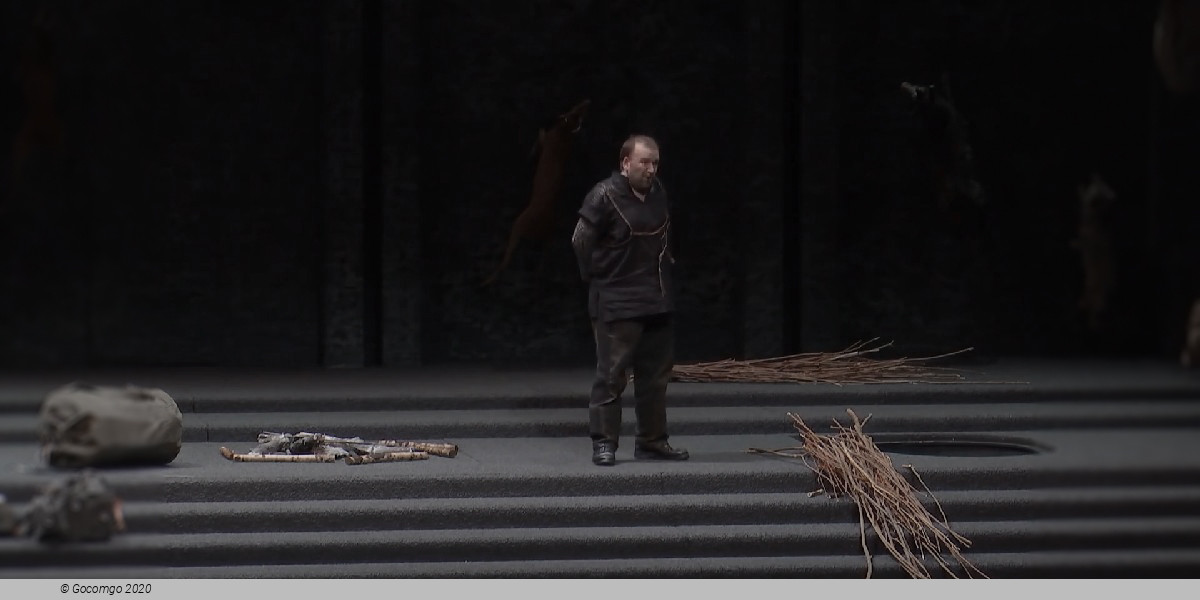
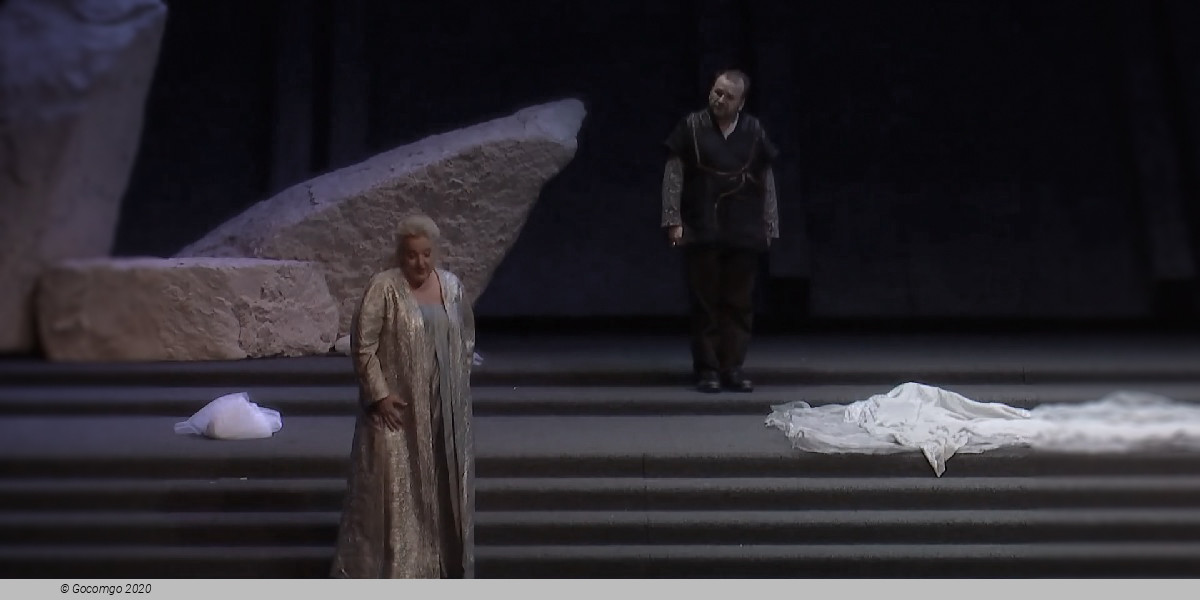
A cave in rocks in the forest. An orchestral introduction includes references to leitmotifs including themes relating to the original hoard plundered by the Nibelung Alberich, and one in B-flat minor associated with the Nibelungs themselves. As the curtain rises, Alberich's brother, the dwarf Mime, is forging a sword. Mime is plotting to obtain the ring of power originally created by his brother Alberich. He has raised the human boy Siegfried as a foster child, to kill Fafner, who obtained the ring and other treasures in the opera Das Rheingold and has since transformed himself from a giant to a dragon. Mime needs a sword for Siegfried to use, but the youth has contemptuously broken every sword Mime has made. Siegfried returns from his wanderings in the forest with a wild bear in tow, and immediately breaks the new sword. After a whining speech by Mime about ingratitude, and how Mime has brought him up from a mewling infant ("Als zullendes Kind"), Siegfried senses why he keeps coming back to Mime although he despises him: he wants to know his parentage. Mime is forced to explain that he encountered Siegfried's mother, Sieglinde when she was in labor; she died giving birth to Siegfried. He shows Siegfried the broken pieces of the sword Nothung, which she had left in his custody. Siegfried orders him to reforge the sword; Mime, however, is unable to accomplish this. Siegfried departs, leaving Mime in despair.

Scene 2
An old man (Wotan in disguise) arrives at the door and introduces himself as the Wanderer. In return for the hospitality due a guest, he wagers his head on answering any three questions Mime may ask. The dwarf asks the Wanderer to name the races that live beneath the ground, on the earth, and in the skies. These are the Nibelung, the Giants, and the Gods, as the Wanderer answers correctly. The Wanderer then induces Mime to wager his own head on three further riddles: the race most beloved of Wotan, but most harshly treated; the name of the sword that can destroy Fafner; and the person who can repair the sword. Mime answers the first two questions: the Wälsungs (Siegmund and Sieglinde whose tale is told in the opera Die Walküre) and the sword Nothung. Mime has no problem with the first two questions, but cannot answer the last one. Wotan spares Mime, telling him that only "he who does not know fear" can reforge Nothung, and leaves Mime's head forfeit to that person.

Scene 3
Mime despairs as he imagines the ferocity of the dragon Fafner, while "the orchestra paints a dazzling picture of flickering lights and roaring flames". Siegfried returns and is annoyed by Mime's lack of progress. Mime realizes that Siegfried is "the one who does not know fear" and that unless he can instill fear in him, Siegfried will kill him as the Wanderer foretold. He tells Siegfried that fear is an essential craft; Siegfried is eager to learn it, and Mime promises to teach him by taking him to Fafner. Since Mime was unable to forge Nothung, Siegfried decides to do it himself. He succeeds by shredding the metal, melting it, and casting it anew. In the meantime, Mime brews a poisoned drink to offer Siegfried after the youth has defeated the dragon. After he finishes forging the sword, Siegfried demonstrates its strength by chopping the anvil in half with it.

Act 2

Scene 1
Deep in the forest. The Wanderer arrives at the entrance to Fafner's cave, where Alberich is keeping vigil. The two enemies recognize each other. Alberich boasts of his plans to regain the ring and rule the world. Wotan states that he does not intend to interfere, only to observe. He even offers to awaken the dragon so that Alberich can bargain with him. Alberich warns the dragon that a hero is coming to kill him, and offers to prevent the fight in exchange for the ring. Fafner dismisses the threat, declines Alberich's offer, and returns to sleep. Wotan leaves and Alberich withdraws, muttering threats.

Scene 2
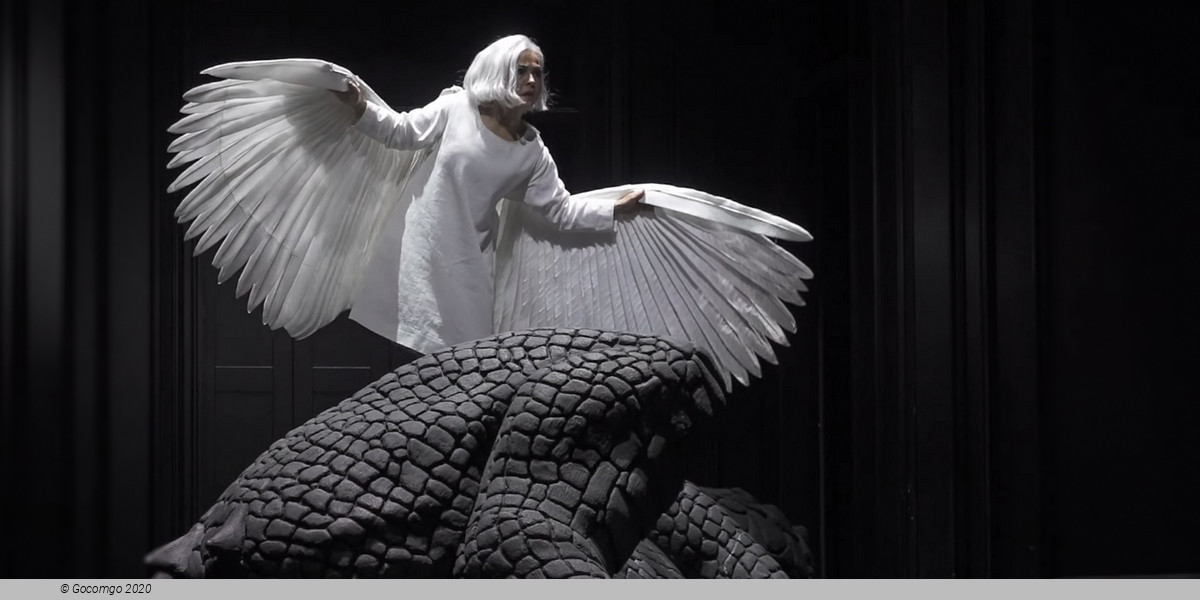
At daybreak, Siegfried and Mime arrive. After assuring Siegfried that the dragon will teach him what fear is, Mime withdraws. As Siegfried waits for the dragon to appear, he hears a woodbird singing. He attempts to mimic the bird's song using a reed pipe, but is unsuccessful. He then plays a tune on his horn, which brings Fafner out of his cave. After a short exchange, they fight; Siegfried stabs Fafner in the heart with Nothung. In his last moments, Fafner learns Siegfried's name, and tells him to beware of treachery. When Siegfried withdraws his sword from Fafner's body, his hands are burned by the dragon's blood and he puts his finger in his mouth. On tasting the blood, he finds that he can understand the woodbird's song. Following its instructions, he takes the ring and the magic helmet Tarnhelm from Fafner's hoard.

Scene 3
Outside the cave, Alberich and Mime quarrel over the treasure. Alberich hides as Siegfried comes out of the cave. Siegfried complains to Mime that he has still not learned the meaning of fear. Mime offers him the poisoned drink; however, the magic power of the dragon's blood allows Siegfried to read Mime's treacherous thoughts, and he stabs him to death. He throws Mime's body into the treasure cave and places Fafner's body in the cave entrance to block it. The woodbird now sings of a woman sleeping on a rock surrounded by magic fire. Siegfried, wondering if he can learn fear from this woman, follows the bird towards the rock.

Act 3

Scene 1
At the foot of Brünnhilde's rock. The Wanderer summons Erda, the earth goddess. Erda, appearing confused, is unable to offer any advice. Wotan informs her that he no longer fears the end of the gods; indeed, it is his desire. His heritage will be left to Siegfried the Wälsung, and Brünnhilde (Erda's and Wotan's child), who will "work the deed that redeems the World." Dismissed, Erda sinks back into the earth.

Scene 2
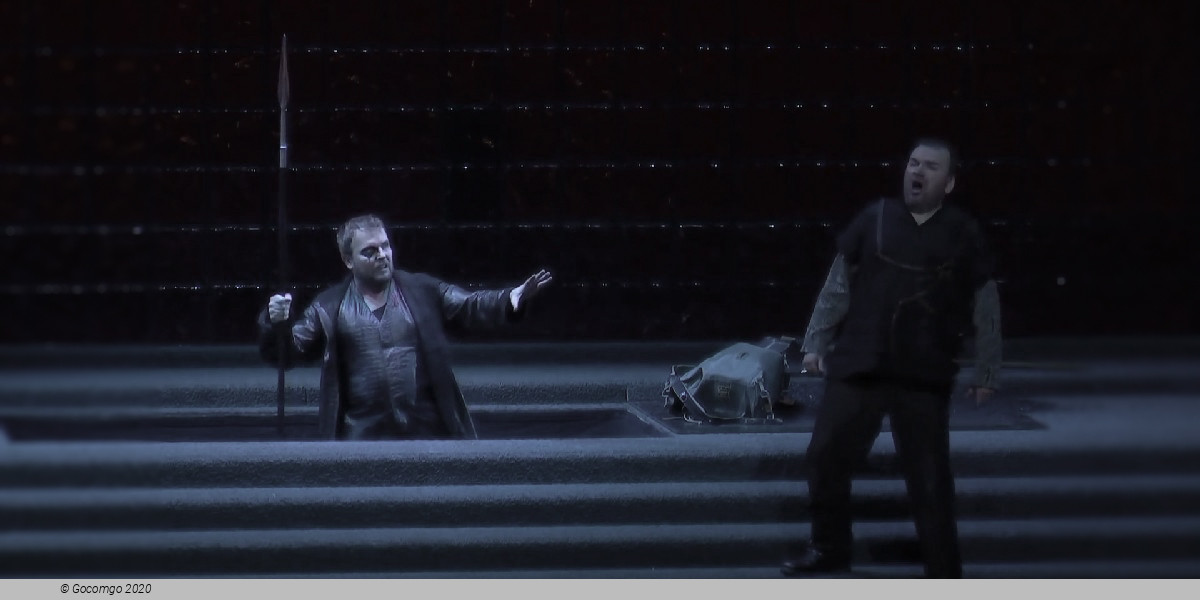
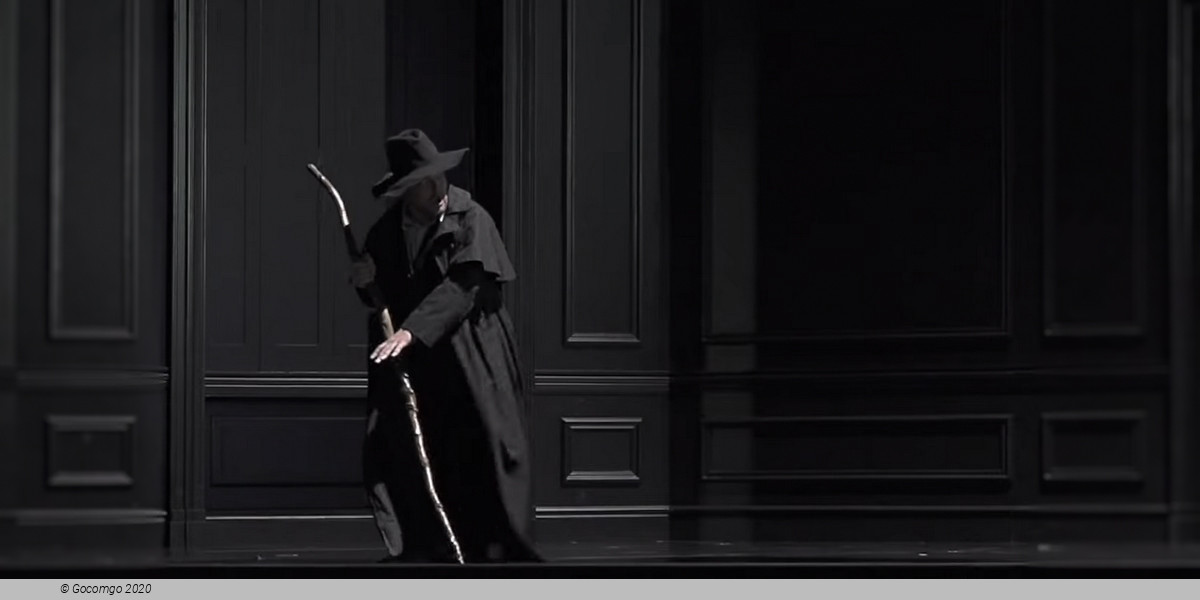
Siegfried arrives, and the Wanderer questions the youth. Siegfried, who does not recognize his grandfather, answers insolently and starts down the path toward Brünnhilde's rock. The Wanderer blocks his path, but Siegfried mocks him, laughing at his floppy hat and his missing eye, and breaks his spear (the symbol of Wotan's authority) with a blow from Nothung. Wotan calmly gathers up the pieces and vanishes.

Scene 3
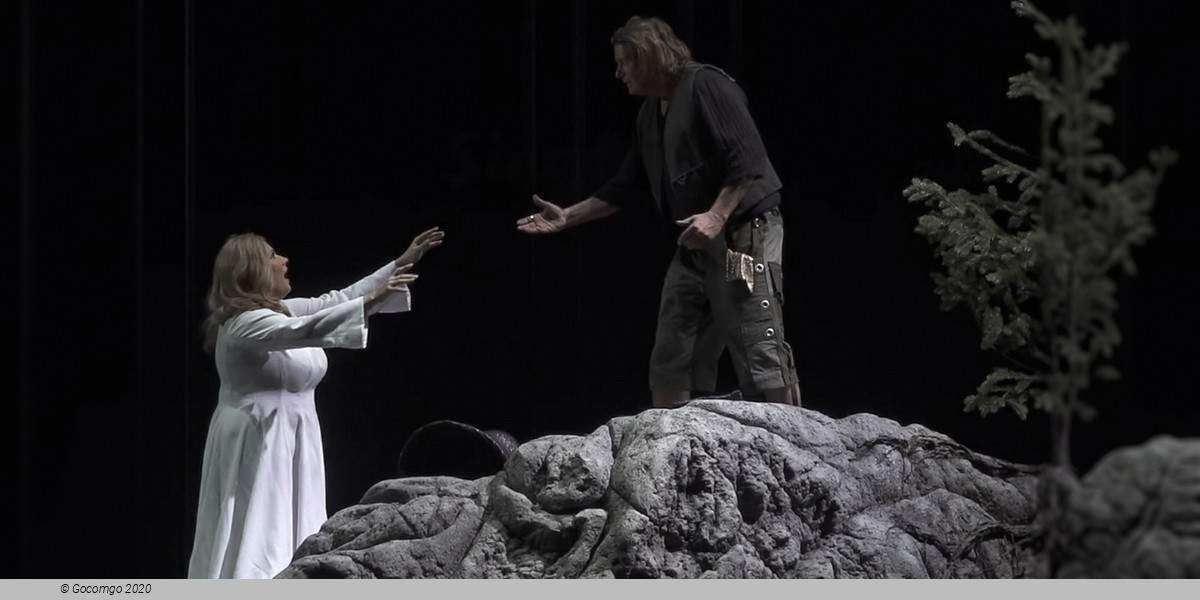
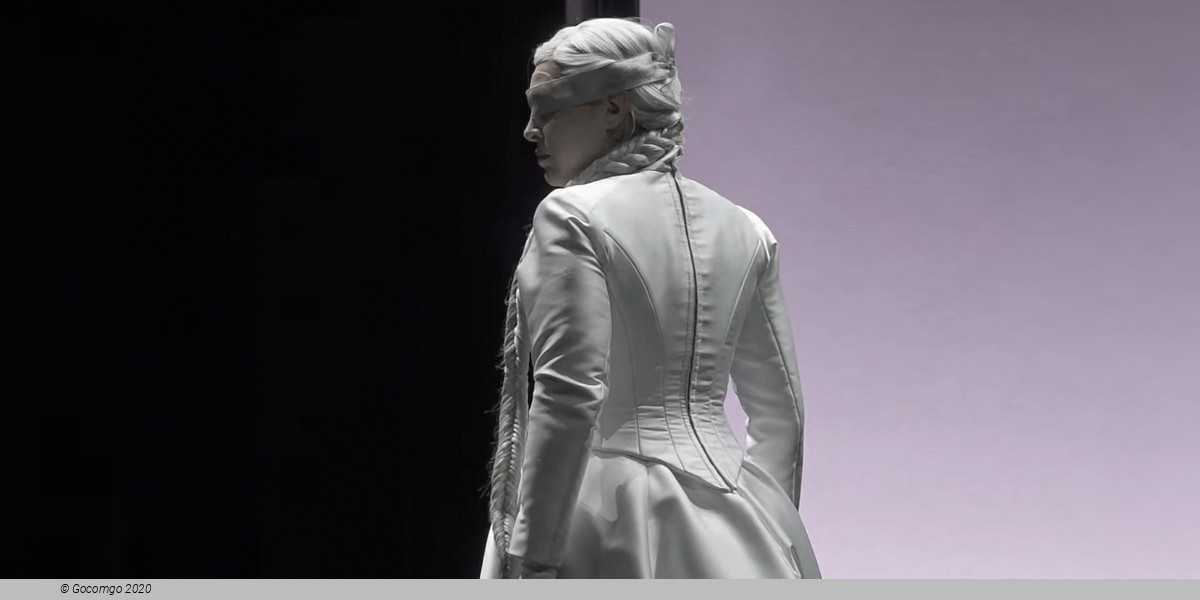
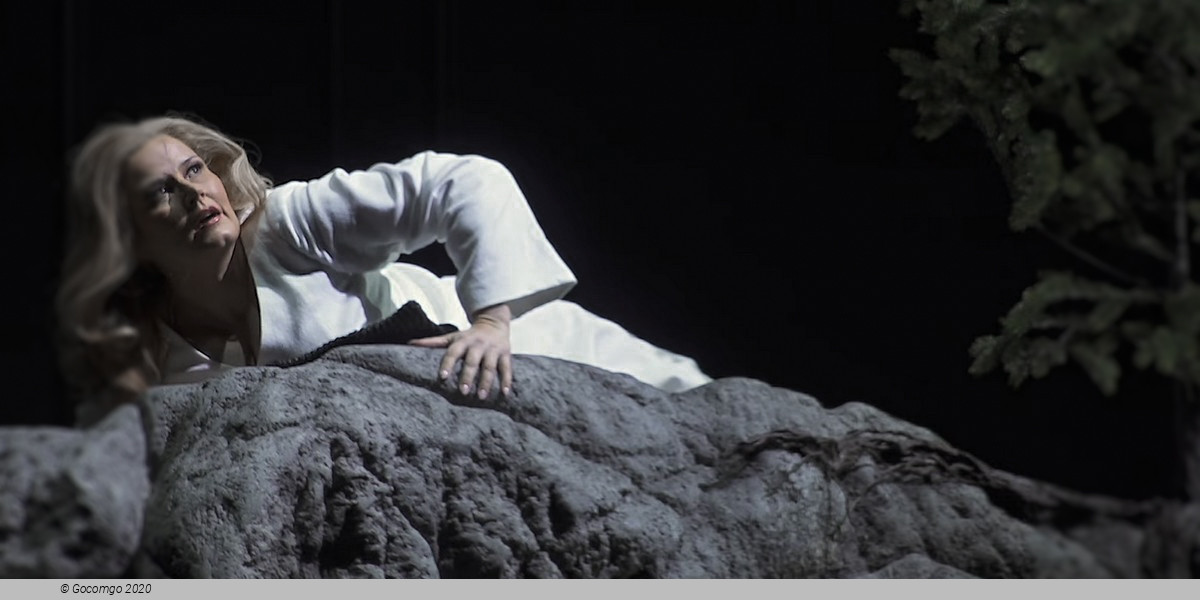
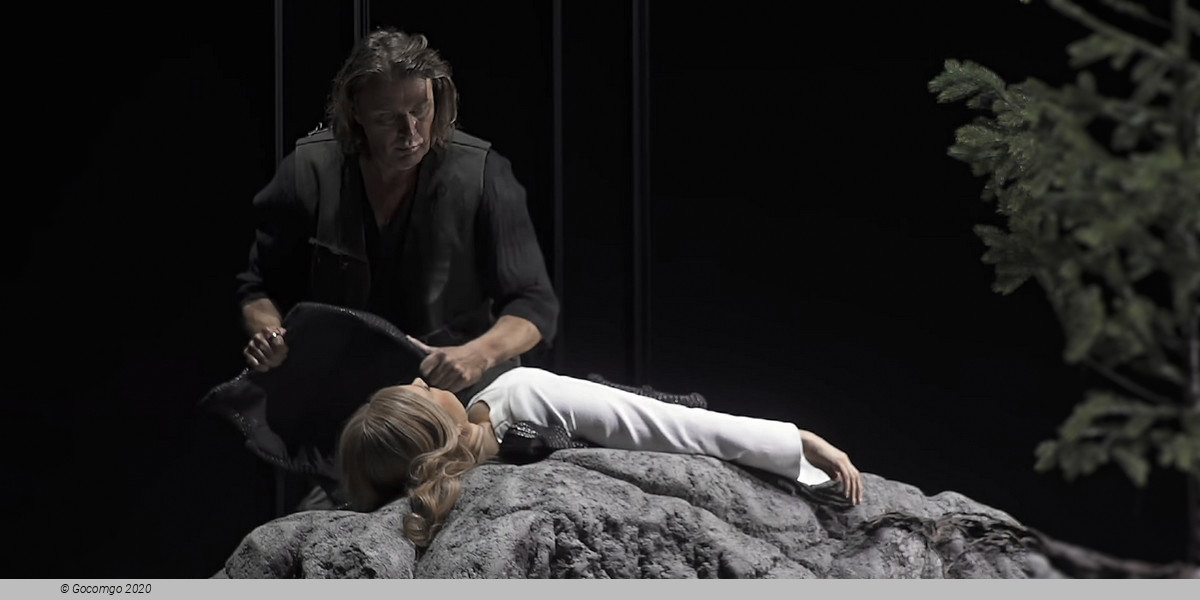
Siegfried passes through the ring of fire, emerging on Brünnhilde's rock. At first, he thinks the sleeping armored figure is a man. However, when he removes the armor, he finds a woman beneath. At the sight of the first woman he has ever seen, Siegfried at last experiences fear. In desperation, he kisses Brünnhilde, waking her from her magic sleep. Hesitant at first, Brünnhilde is won over by Siegfried's love, and renounces the world of the gods. Together, they hail "light-bringing love, and laughing death."

Venue Info

Deutsche Oper Berlin - Berlin
Location   Bismarckstraße 35

Venue's Capacity: 1698

The Deutsche Oper Berlin is an opera company located in the Charlottenburg district of Berlin, Germany. The resident building is the country's second-largest opera house and also home to the Berlin State Ballet. Since 2004 the Deutsche Oper Berlin, like the Staatsoper Unter den Linden (Berlin State Opera), the Komische Oper Berlin, the Berlin State Ballet, and the Bühnenservice Berlin (Stage and Costume Design), has been a member of the Berlin Opera Foundation.

The company's history goes back to the Deutsches Opernhaus built by the then independent city of Charlottenburg—the "richest town of Prussia"—according to plans designed by Heinrich Seeling from 1911. It opened on November 7, 1912 with a performance of Beethoven's Fidelio, conducted by Ignatz Waghalter. In 1925, after the incorporation of Charlottenburg by the 1920 Greater Berlin Act, the name of the resident building was changed to Städtische Oper (Municipal Opera).

With the Nazi seizure of power in 1933, the opera was under control of the Reich Ministry of Public Enlightenment and Propaganda. Minister Joseph Goebbels had the name changed back to Deutsches Opernhaus, competing with the Berlin State Opera in Mitte controlled by his rival, the Prussian minister-president Hermann Göring. In 1935, the building was remodeled by Paul Baumgarten and the seating reduced from 2300 to 2098. Carl Ebert, the pre-World War II general manager, chose to emigrate from Germany rather than endorse the Nazi view of music, and went on to co-found the Glyndebourne opera festival in England. He was replaced by Max von Schillings, who acceded to enact works of "unalloyed German character". Several artists, like the conductor Fritz Stiedry and the singer Alexander Kipnis, followed Ebert into emigration. The opera house was destroyed by a RAF air raid on 23 November 1943. Performances continued at the Admiralspalast in Mitte until 1945. Ebert returned as general manager after the war.

After the war, in what was now West Berlin, the company, again called Städtische Oper, used the nearby Theater des Westens; its opening production was Fidelio, on 4 September 1945. Its home was finally rebuilt in 1961 but to a much-changed, sober design by Fritz Bornemann. The opening production of the newly named Deutsche Oper, on 24 September, was Mozart's Don Giovanni.

Past Generalmusikdirektoren (GMD, general music directors) have included Bruno Walter, Kurt Adler, Ferenc Fricsay, Lorin Maazel, Gerd Albrecht, Jesús López-Cobos, and Christian Thielemann. In October 2005, the Italian conductor Renato Palumbo was appointed GMD as of the 2006/2007 season. In October 2007, the Deutsche Oper announced the appointment of Donald Runnicles as their next Generalmusikdirektor, effective August 2009, for an initial contract of five years. Simultaneously, Palumbo and the Deutsche Oper mutually agreed to terminate his contract, effective November 2007.

On the evening of 2 June 1967, Benno Ohnesorg, a student taking part in the German student movement, was shot in the streets around the opera house. He had been protesting against the visit to Germany by the Shah of Iran, who was attending a performance of Mozart's The Magic Flute.

In 1986 the American Berlin Opera Foundation was founded.

In April 2001, the Italian conductor Giuseppe Sinopoli died at the podium while conducting Verdi's Aida, at age 54.

In September 2006, the Deutsche Oper's Intendantin (general manager) Kirsten Harms drew criticism after she cancelled the production of Mozart's opera Idomeneo by Hans Neuenfels, because of fears that a scene in it featuring the severed heads of Jesus, Buddha and Muhammad would offend Muslims, and that the opera house's security might come under threat if violent protests took place. Critics of the decision include German Ministers and the German Chancellor Angela Merkel. The reaction from Muslims has been mixed — the leader of Germany's Islamic Council welcomed the decision, whilst a leader of Germany's Turkish community, criticising the decision, said:

This is about art, not about politics ... We should not make art dependent on religion — then we are back in the Middle Ages.

At the end of October 2006, the opera house announced that performances of Mozart's opera Idomeneo would then proceed. Kirsten Harms, after announcing in 2009 that she would not renew her contract beyond 2011, was bid farewell in July of that year.

Important Info
Type: Opera
City: Berlin, Germany
Starts at: 16:00
Intervals: 2
Duration: 5h 45min
Sung in: German
Titles in: German,English
Top of page